

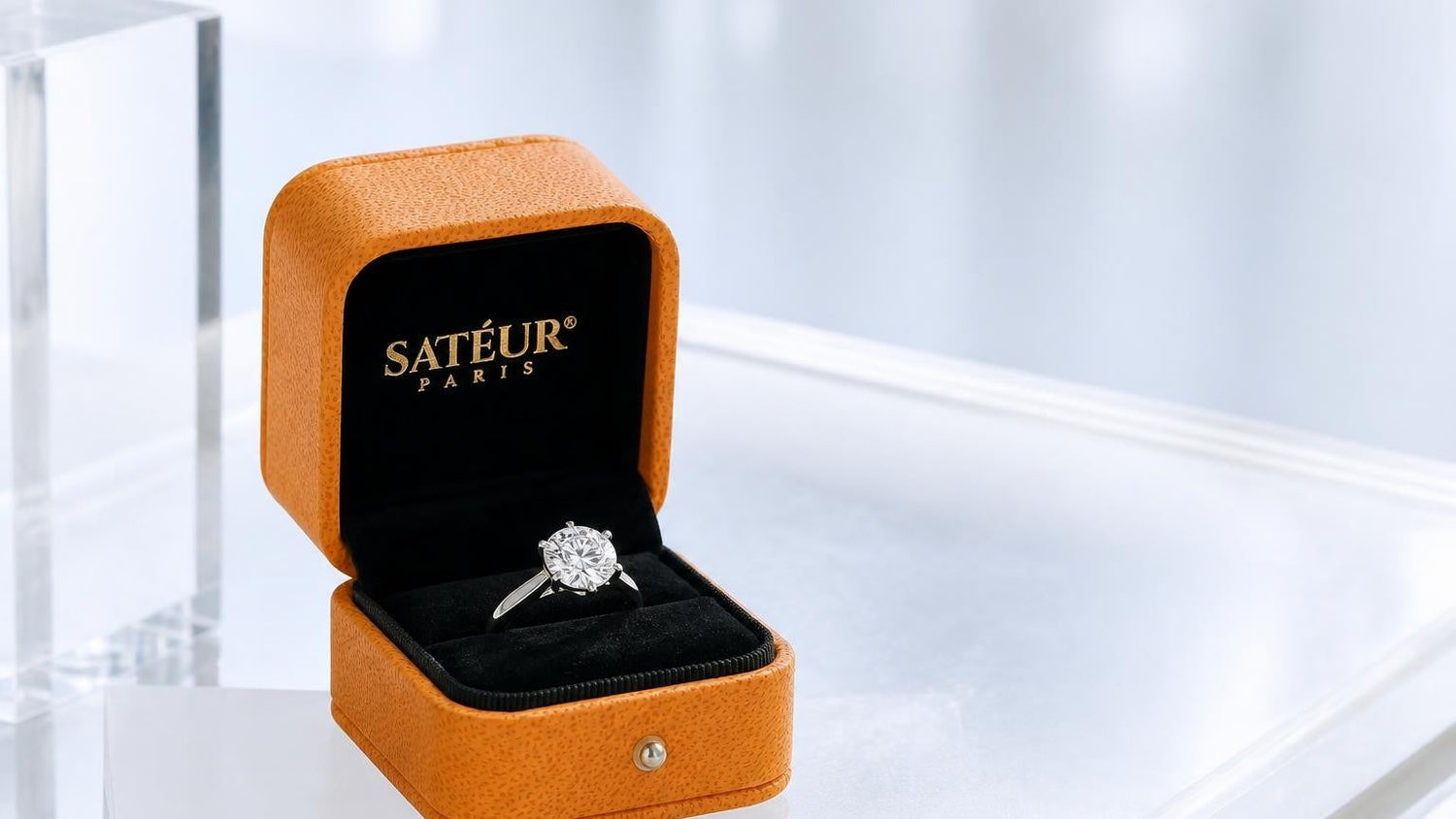
Lab Grown Diamond Pros and Cons: What to Know
Lab grown diamonds have shifted from niche curiosity to mainstream choice. More than half of couples choosing engagement rings in 2025 selected a lab grown stone, according to industry surveys. The reasons are clear: identical chemistry to mined diamonds, IGI certification, and a price that is 60–80% lower. But the decision is not without trade-offs. Resale dynamics, depreciation, and the question of what you are actually optimising for all deserve honest attention.
This guide covers the real pros and cons of lab grown diamonds — and introduces a third option worth understanding before you decide.

Key Takeaways
- Lab grown diamonds are chemically, physically, and optically identical to mined diamonds — same Mohs 10 hardness, same carbon crystal structure, same brilliance.
- The primary advantage is price: lab grown diamonds typically cost 60–80% less than mined stones of equivalent grade.
- The primary limitation is resale value — lab grown diamonds have depreciated rapidly and carry little secondary-market value today.
- IGI certification is the industry standard for lab grown diamonds; a certificate confirms cut, colour, clarity, and carat weight.
- If budget is the main driver, a diamond simulant — such as Satéur Gems® — delivers the look of a flawless diamond at a fraction of the price of either option.
- More than half of couples choosing engagement rings in 2025 selected a lab grown stone, making it a mainstream rather than niche choice.
What Is a Lab Grown Diamond
A lab grown diamond is a real diamond. That sentence is worth starting with because confusion persists in the market. Lab grown diamonds share the same carbon crystal structure, the same Mohs 10 hardness, and the same optical properties as diamonds extracted from the earth. The only difference is origin.
Two processes produce them. High Pressure High Temperature (HPHT) replicates the geological conditions deep underground. Chemical Vapour Deposition (CVD) grows a diamond layer by layer from a carbon-rich gas. Both routes produce stones that a gemological laboratory grades by the same 4Cs — cut, colour, clarity, and carat — used for mined diamonds.
An IGI certificate for a lab grown diamond confirms those four grades, states the growth method, and identifies the stone as laboratory-grown. It is not a lesser document than a certificate for a mined stone; the grading criteria are identical. The certificate is simply honest about origin.
Browse the full range of lab created diamond rings to see how certified stones compare across different cuts and settings.

Advantages of Lab Grown Diamonds
- Significantly lower price. Lab grown diamonds cost 60–80% less than mined equivalents at equivalent grades. A 1-carat, G colour, VS2 clarity lab grown stone that sells for around $1,500 would cost $5,000 or more as a mined diamond.
- Identical physical and optical properties. The diamond on your finger is the same material whether it formed underground over millions of years or in a laboratory over weeks. Hardness, refractive index, and brilliance are unchanged.
- IGI certification available. Reputable lab grown diamonds come with grading certificates from recognised bodies such as IGI. You know exactly what you are buying before you commit.
- Access to larger stones at realistic budgets. The price gap means a budget that reaches a 0.5-carat mined diamond can reach a 1.5-carat lab grown stone of the same grade. Size and quality are no longer mutually exclusive for most buyers.
- Reduced environmental footprint. Lab grown diamonds avoid the land disturbance, water consumption, and carbon emissions associated with large-scale mining operations, though energy use in production varies by facility and power source.
- Supply chain transparency. A laboratory origin removes concerns about conflict sourcing. The provenance is known and verifiable.
For those considering a larger stone, 3 carat lab grown diamond rings are now accessible at price points that were not reachable with mined equivalents.
Limitations of Lab Grown Diamonds
- Rapid depreciation. This is the most significant limitation. As production scales and prices fall, lab grown diamonds purchased today are likely to be worth considerably less in five to ten years. Secondary-market demand is thin.
- No investment case. A mined diamond of exceptional rarity can hold or appreciate in value. Lab grown diamonds do not carry that characteristic. They are a purchase for wearing, not holding.
- Perception gap with some buyers. A segment of the jewellery market still associates "diamond" with mined stone. For buyers whose audience includes that segment — family, a partner with traditional preferences — that perception is worth accounting for.
- Energy-intensive production. The environmental benefit relative to mining depends heavily on the energy source powering the facility. HPHT and CVD both require significant electricity; a facility running on coal-generated power narrows the environmental advantage considerably.
- Still a premium over simulants. Lab grown diamonds are less expensive than mined diamonds. They remain more expensive than high-quality diamond simulants that achieve a visually similar result at a fraction of the price.
Lab Grown vs. Mined Diamond: Key Differences
The comparison below covers the most relevant properties for a buying decision. Both columns represent real diamonds — the distinction is origin and price.
| Attribute | Lab Grown Diamond | Mined Diamond |
|---|---|---|
| Chemical composition | Pure carbon, cubic crystal | Pure carbon, cubic crystal |
| Hardness (Mohs) | 10 | 10 |
| Optical character | Isotropic — single refraction, classic diamond brilliance | Isotropic — single refraction, classic diamond brilliance |
| Certification | IGI, GIA lab grown reports | GIA, AGS, IGI |
| Price (1ct, G, VS2) | ~$1,200–$1,800 | ~$4,500–$6,500 |
| Resale value | Low — market still developing | Moderate — established secondary market |
| Environmental footprint | Lower on land impact; energy use varies | Significant land, water, carbon impact |
| Origin transparency | Fully verifiable | Variable — Kimberley Process covers most |
Price Comparison and Value
Price is where lab grown diamonds deliver their clearest advantage over mined stones.
A budget of $3,000 reaches a 1.5-carat, G colour, VS2 clarity lab grown diamond. The equivalent mined stone in those grades typically starts above $6,000. At the upper end, a 3-carat lab grown diamond with excellent cut grades is accessible under $10,000; a mined equivalent begins at $30,000 or more depending on colour and clarity tier.
That gap means buyers can access a stone size and grade combination that was previously out of reach. The gem itself is chemically identical. The difference is origin and price.
The caveat worth stating clearly: lower purchase price does not mean better long-term value. Lab grown diamond prices have declined as production has scaled. A stone purchased today may be worth considerably less in five to ten years as supply continues to grow. Buyers who treat a diamond as a store of value should factor this into the calculation. Buyers whose priority is the stone worn daily rather than the secondary market will find the price advantage difficult to argue against.
Explore the lab diamond collection to compare stones across cut and carat weight.

Durability and Longevity
Lab grown diamonds score 10 on the Mohs hardness scale. Mined diamonds score 10. There is no difference.
Hardness at 10 means a diamond is the hardest known natural material. It will not scratch under normal daily wear conditions. A lab grown diamond set in an engagement ring and worn every day will maintain its surface integrity over decades, exactly as a mined stone would. The thermal and optical properties are also identical — both stones disperse light the same way and handle temperature variation the same way.
Durability is not a trade-off with lab grown diamonds. It is one of the areas where the comparison with mined stones is genuinely equal.
Satéur Gems®: Diamond-Look Alternative at a Fraction of the Price
Lab grown and mined diamonds are not the only options. For buyers whose primary goal is the look of a flawless diamond — without the cost of either — there is a third category worth understanding.
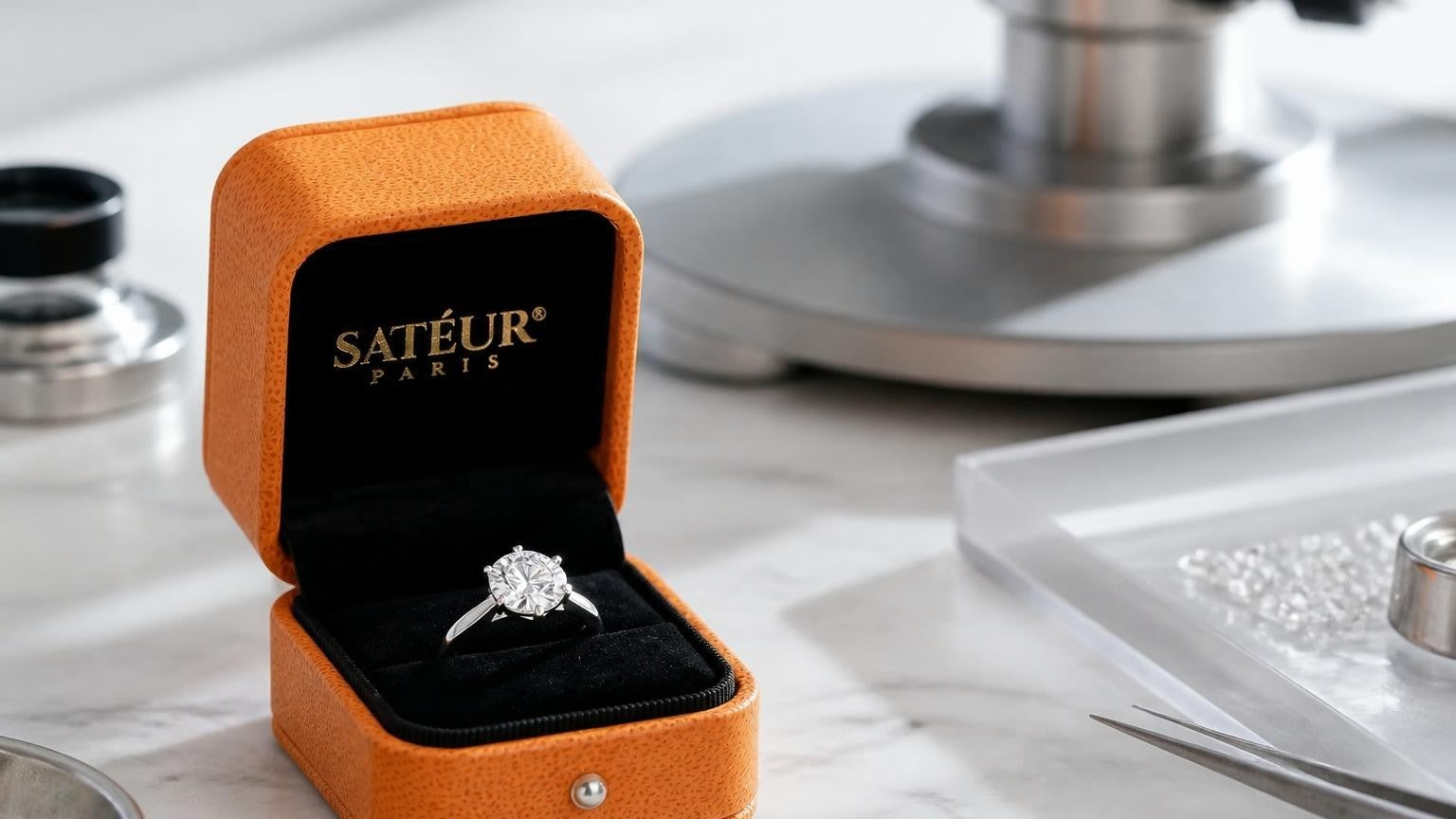
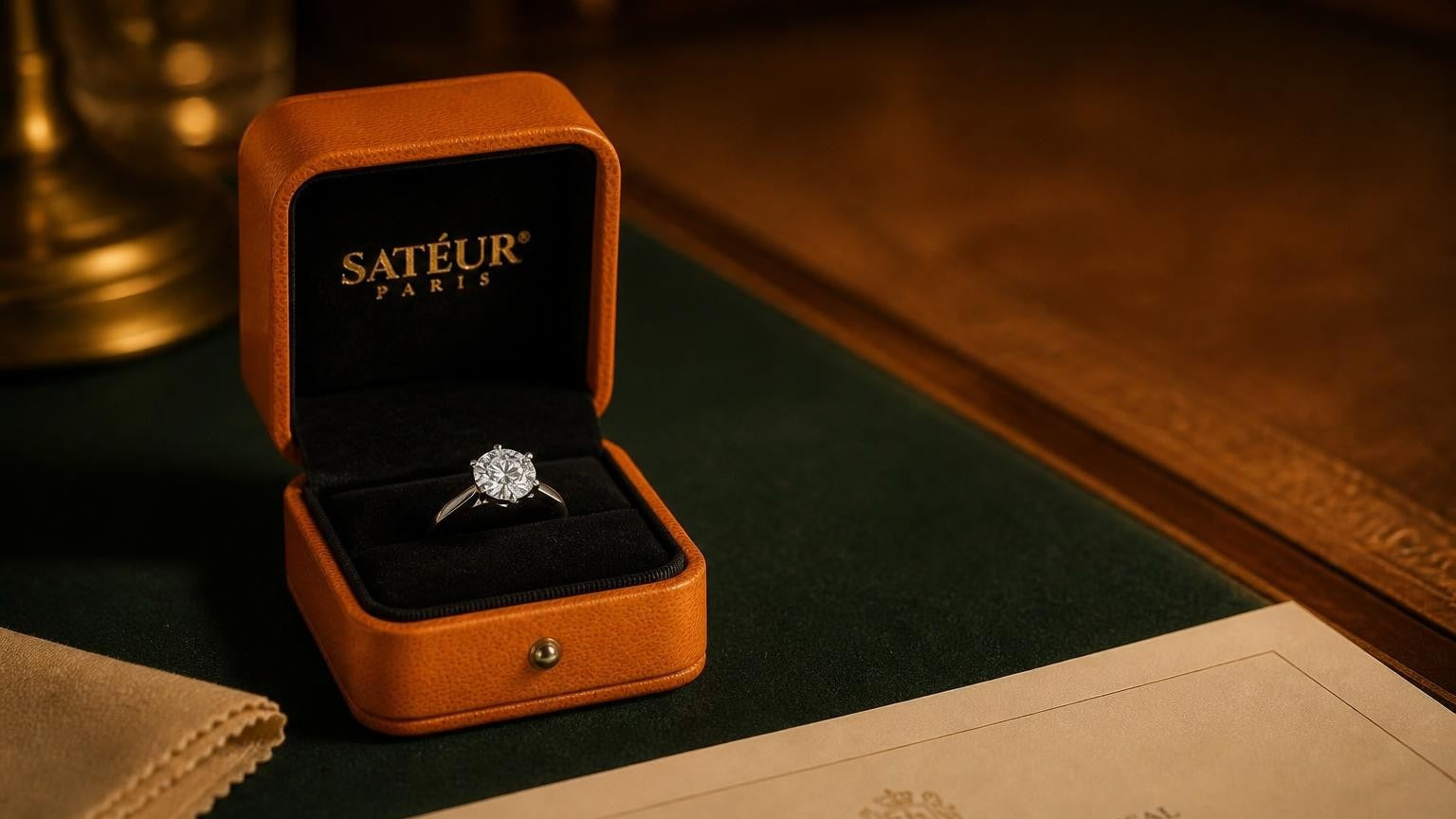
Satéur Gems® is a trademarked diamond simulant. It is not a diamond — lab grown or otherwise — and Satéur is transparent about that. What Gems® is engineered to deliver is the clean white brilliance of a flawless diamond. The specifications: D–E colour grade, Excellent cut, Mohs hardness of approximately 8.8. The visual result is a stone indistinguishable from a high-grade diamond with the naked eye.
The price point changes the conversation entirely. The Satéur Destinée Diamond Ring™ in Gems® starts from approximately $88. Compared to a mined diamond of similar visual appearance, that represents roughly 1% of the price. Compared to a lab grown diamond of equivalent look, it is still a fraction of the cost.
The trade-off is equally clear: Gems® carries no diamond certification. It scores approximately 8.8 on Mohs rather than 10. It is not positioned as a resale asset. For buyers who want to wear the look of a flawless diamond without the price of one — whether as a first ring, an everyday piece, or a considered alternative — Gems® answers a different question than the diamond tiers do.
Discover the Satéur Destinée Diamond Ring™ — from $88 →

Frequently Asked Questions
What is the main difference between lab grown and mined diamonds?
The only meaningful difference is origin. Lab grown diamonds are produced in controlled facilities over one to three weeks using HPHT or CVD processes. Mined diamonds form over billions of years under the earth's surface. Both are pure crystalline carbon, graded on the same cut, colour, clarity, and carat scale. There is no chemical or optical difference between them.
Are lab grown diamonds real diamonds?
Yes. Lab grown diamonds are real diamonds in every measurable sense — chemical composition, crystal structure, hardness, and optical properties. They are certified by the same gemological laboratories that certify mined diamonds, including IGI and GIA. The term "lab grown" refers to their origin, not their category.
How much can you save by choosing a lab grown diamond?
Lab grown diamonds typically cost 60–80% less than mined diamonds of equivalent size, colour, and clarity. A $3,000 budget reaches a 1.5-carat, G colour, VS2 clarity lab grown diamond; the equivalent mined stone in those grades typically starts above $6,000. The exact saving depends on the specific stone, retailer, and market conditions at the time of purchase.
Do lab grown diamonds last as long as mined diamonds?
Yes. Lab grown and mined diamonds both score 10 on the Mohs hardness scale — the maximum. They are equally resistant to scratching and surface damage under normal daily wear conditions. There is no durability difference between a lab grown and a mined diamond of the same quality.
What should you consider when comparing lab grown, mined, and diamond simulant options?
The key variables are certification, budget, and intent. If you want a certified real diamond with IGI documentation, lab grown diamonds deliver that at 60–80% below mined prices. If budget is the primary driver and the visual appearance of a high-grade diamond is the goal without requiring diamond certification, a trademarked diamond simulant like Satéur Gems® offers the look of a flawless diamond starting from approximately $88. Resale potential, emotional significance of origin, and daily wear requirements all factor into the right choice for each buyer.
Is a lab grown diamond a good choice for an engagement ring?
For most buyers, yes. A lab grown diamond is a real, certified diamond that performs identically to a mined stone over decades of daily wear. The price advantage means buyers typically access a larger or higher-grade stone within their budget. The consideration worth factoring in is resale: lab grown diamond prices have declined as production has scaled, and the secondary market is still developing. If the ring is chosen to be worn and appreciated rather than sold, the case for lab grown is straightforward.
Choosing Between Lab Grown, Mined, and Diamond Simulant Gemstones
The decision comes down to what you are actually optimising for — and being honest about that answer makes the choice clear.
If you want a certified real diamond with documented grades and all the material identity that entails, a lab grown diamond delivers that at 60–80% below the mined diamond price. The science supports them. The certification infrastructure supports them. The majority of couples choosing engagement rings in 2025 agreed. See the full range of lab created diamond rings to find the grade and size that fit your budget.
If you want the look of a flawless diamond at a price that changes the conversation entirely, Satéur Gems® offer something neither diamond category can match: the clean white brilliance of a D–E colour, Excellent cut stone starting from approximately $88, at roughly 1% of the mined diamond equivalent. No certification, but a visual result that holds up with the naked eye.
If origin, rarity, and secondary market standing matter above all else, mined diamonds remain the category with the longest track record — at a price premium that reflects it.
None of these is the universally right answer. Each is the right answer for a specific set of priorities. Understanding which priorities are yours is what makes the choice a confident one.
Satéur Destinée Diamond Ring
A real, IGI-certified lab-grown diamond, hand-set in solid 18K gold — a fraction of the mined-diamond price.
Compare to a $10,000 mined diamond
Joined by 100,000+ couples across 150+ countries.
Shop the Destinée Diamond RingFree worldwide shipping · 30-day returns · Lifetime Satéur Care
















Lascia un commento
Questo sito è protetto da hCaptcha e applica le Norme sulla privacy e i Termini di servizio di hCaptcha.