

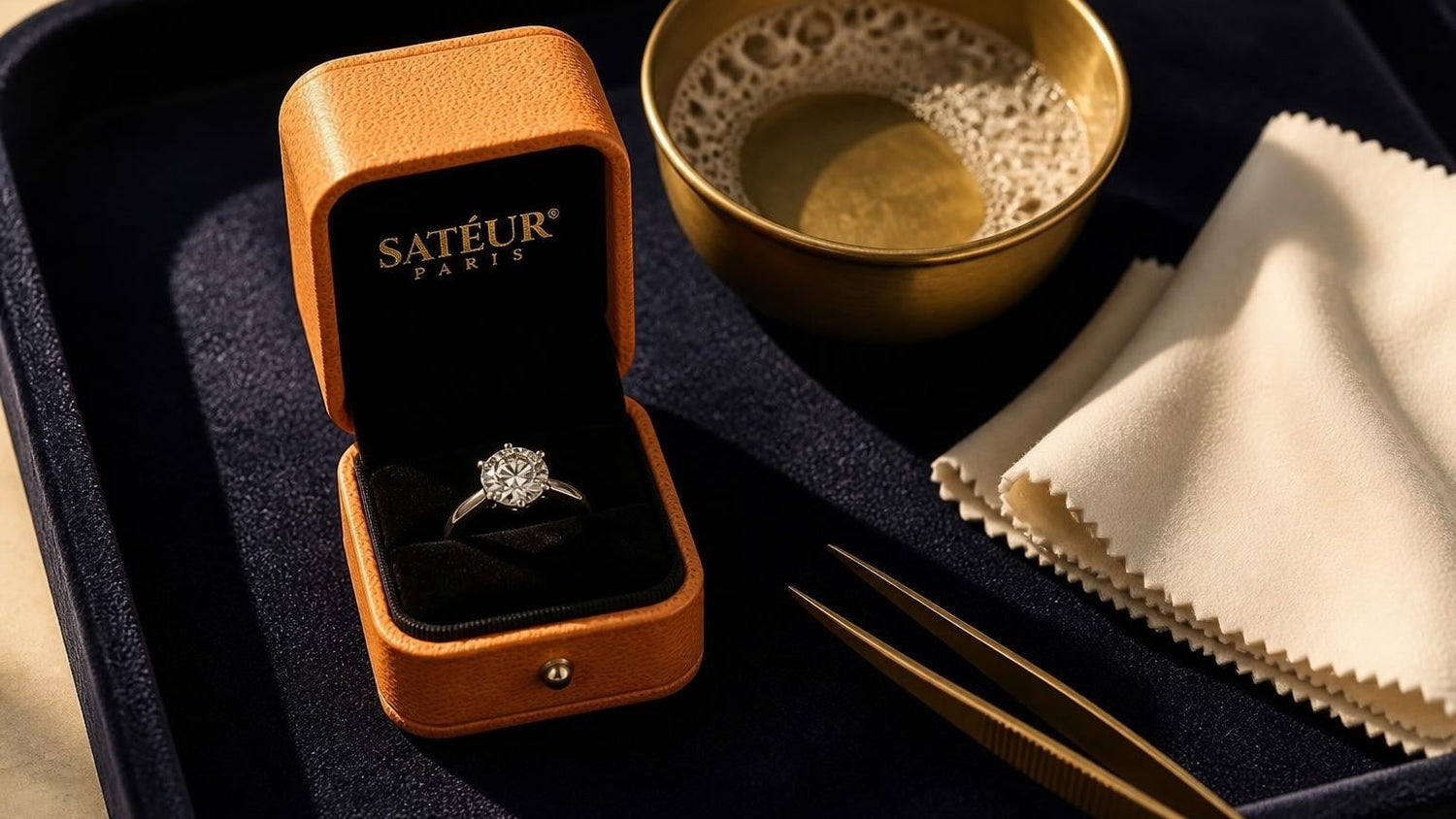
How to Clean a Diamond Ring at Home
A diamond ring loses up to 40% of its visual brilliance from a thin film of soap residue, skin oils, and daily build-up — not from wear. Restoring that sparkle takes nothing more than warm water, a drop of mild dish soap, and five minutes. This guide covers the safest at-home cleaning method, which DIY solutions damage more than they clean, and when an ultrasonic cleaner is the right tool for a deeper result.
Key Takeaways
- Warm water and mild dish soap is the safest, most effective at-home method for cleaning a diamond ring.
- Soak for 20–30 minutes, then gently scrub with a soft-bristled brush — particularly beneath the setting where oils concentrate.
- Avoid acetone, bleach, vinegar, and baking soda — each damages gold finishes, metal settings, or gemstones over time.
- Ultrasonic cleaners restore brilliance effectively but can loosen prong settings; inspect the setting before each use.
- Satéur Gems® require identical care to traditional diamonds — no special solutions, no additional precautions.
- For a ring worn daily, a quick clean every one to two weeks maintains peak brilliance.
How to Clean a Diamond Ring at Home
The most effective at-home method needs only a few items from your kitchen. This process is safe for diamond rings, rings set with Satéur Gems® and moissanite, and 18k gold finish or platinum settings.
What you will need: a small bowl, warm water, one drop of mild dish soap, a soft-bristled toothbrush, and a lint-free cloth.
- Step 1 — Soak. Fill a small bowl with warm water and add a single drop of mild dish soap. Place the ring in the solution and leave it for 20 to 30 minutes. This loosens oils and residue without abrasion; the soak does most of the work.
- Step 2 — Brush gently. Using a soft-bristled toothbrush, gently scrub the gemstone — particularly the underside behind the setting, where skin oils accumulate and reduce brilliance most quickly. Light, circular motions on the prongs and band.
- Step 3 — Rinse. Rinse under warm running water with the drain plugged or the ring held in a fine-mesh strainer. Never rinse directly over an open drain.
- Step 4 — Dry. Pat dry with a lint-free cloth, then air-dry fully before storing. Avoid paper towels, which can micro-scratch polished metal over time.
This is the method recommended by professional jewellers worldwide — gentle on every Satéur gem tier, no specialist equipment required. For guidance on how often to clean your engagement ring, the ring-care pillar covers scheduling by ring type and lifestyle.

Warm Water and Dish Soap: The Safest Method
Mild dish soap cuts through grease and skin oils without harsh solvents. A drop in warm water lifts residue from gemstone facets and metal crevices without affecting the setting or the gem's surface.
Temperature matters. Warm — not hot — water loosens oils without stressing prong settings. Any brush harder than soft-bristled risks micro-scratching polished metal; the damage is invisible initially but cumulative over years.
The area that repays most attention: directly beneath the gemstone, where back facets are enclosed by the setting. This is where build-up concentrates most, and where a minute of careful brushing restores more brilliance than the entire soak-and-rinse cycle alone.
DIY Cleaning Solutions to Avoid
Several household remedies circulate as diamond ring cleaning solutions. Some are harmless. Others cause measurable damage.
- Bleach or chlorine. Oxidises gold alloys, causing irreversible discolouration and brittleness in 18k gold finish settings.
- Acetone. Strips protective finishes from metal and can cloud certain simulants over repeated use.
- Vinegar. Mild acidity etches softer gemstone surfaces and degrades gold alloy settings over time.
- Baking soda paste. Even a fine paste creates micro-scratches on polished metal — damage that requires professional polishing to reverse.
- Toothpaste. Abrasive silica scratches 18k gold finish and softer gemstones. A persistent myth, and measurably harmful.
The gentle soap-and-water method outperforms every one of these. Where a deeper clean is needed, an ultrasonic cleaner is the correct next step.

Ultrasonic Cleaners: When to Use Them
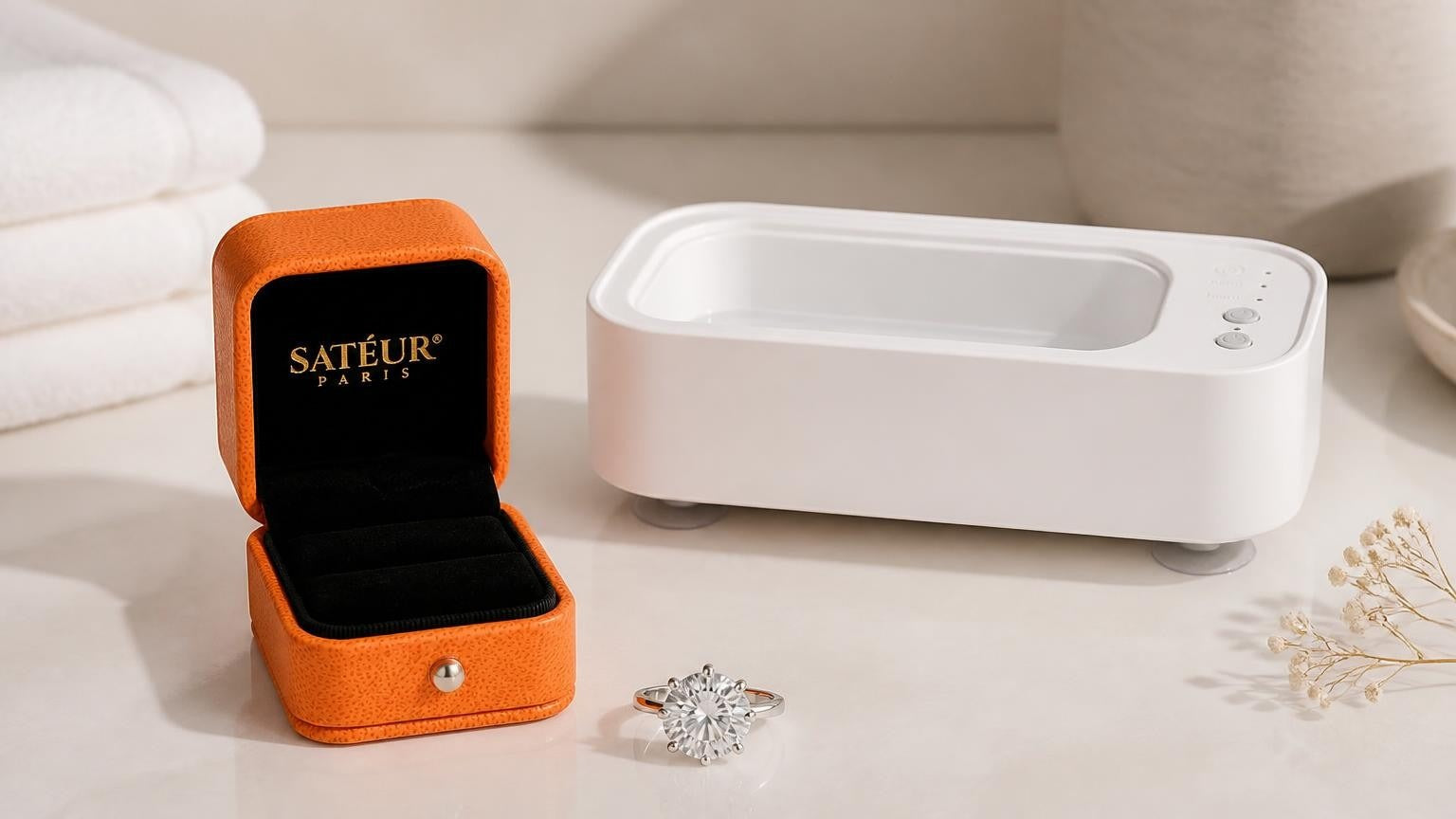
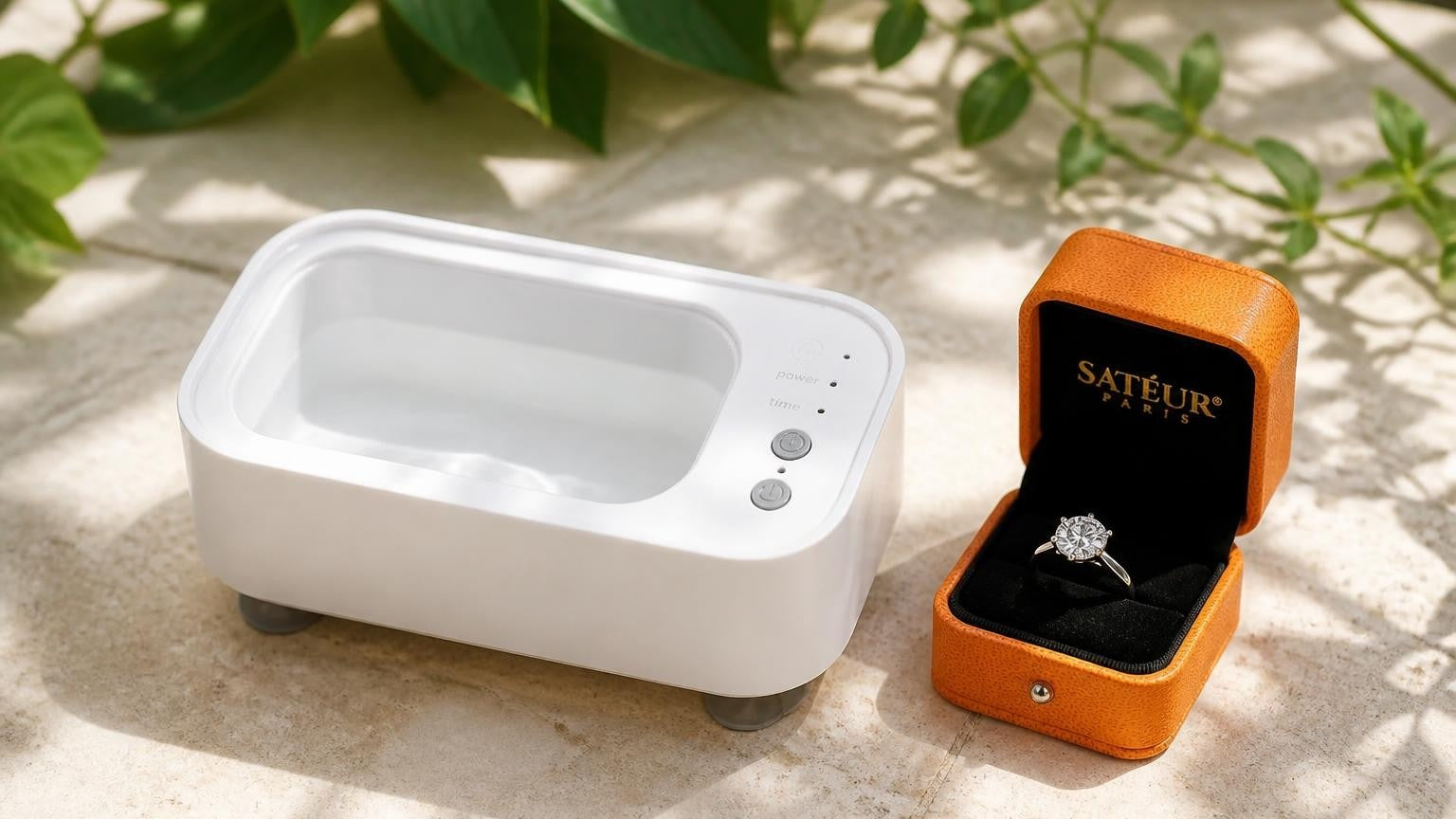
Ultrasonic cleaners use high-frequency sound waves transmitted through water to dislodge microscopic particles from gemstone facets and metal crevices. They are highly effective — particularly for rings with intricate pavé or channel settings where a soft brush cannot reach every surface.
There are caveats. Ultrasonic vibrations can loosen prong settings over time, particularly if a prong has experienced minor wear. Before use, inspect the setting under good light. If any prong appears shifted, have it assessed first. For well-maintained rings with secure settings, a monthly cycle is reasonable.
Emeralds, opals, pearls, and stones with surface-reaching fractures should not be ultrasonically cleaned. Moissanite and Satéur Gems® are both safe — their hardness and structural integrity handle the vibration without issue. The Satéur Ultrasonic Jewelry Cleaner (2nd Gen) is designed specifically for fine jewellery and is the recommended tool for at-home deep cleaning.

Cleaning Rings with Multiple Stones
Rings set with multiple smaller stones — pavé, eternity, or channel-set designs — accumulate residue in the gaps between gemstones. Extend the soak to 30–40 minutes to allow the solution to fully penetrate the setting. Use a soft brush at a slight angle to reach between stones, working from the side with short strokes. Rinse thoroughly — trapped soap residue reduces brilliance just as effectively as the original build-up.
For eternity rings, inspect and clean the underside of the shank carefully. This area accumulates heavy build-up and is consistently overlooked. An ultrasonic cleaner is the most effective solution for complex settings where a brush cannot reach every enclosed crevice.
How Often Should You Clean Your Ring
A ring worn daily accumulates visible build-up within one to two weeks. Skin oils, hand creams, and soap residue reduce brilliance gradually — not damage, but surface residue that restores completely with cleaning.
A practical schedule:
- Every one to two weeks: warm water and dish soap (five minutes). Maintains peak brilliance.
- Monthly: an ultrasonic clean, where the setting permits.
- Annually: professional inspection — prong integrity, rhodium plating, and wear caught early.
The single most effective habit: remove the ring before applying hand cream or washing up. Limiting direct contact with these products reduces cleaning frequency significantly.

Satéur Gems®: Low-Maintenance Sparkle
Satéur Gems® — the trademarked diamond simulant at the heart of The 1% Ring collection — require exactly the same gentle care as traditional diamonds. No special solutions. No modified routine.
Their diamond-accurate brilliance — the clean, restrained white light across the facets — responds to cleaning in the same way as a mined diamond. Warm soap and water fully restores sparkle. The ultrasonic cleaner is safe. Bleach and acetone remain things to avoid, as with any fine jewellery. Satéur Gems® do not cloud, grey, or lose cut precision over time. What you clean is what you keep.
For those who want the look of a $10,000 diamond at approximately 1% of the cost, the engagement ring collection brings that standard to every setting and stone size. The New Diamond Standard asks only for the care any fine gemstone deserves.
Satéur Destinée Ring™
The look of a flawless diamond, for 1% of the price.
Compare to a $10,000 mined diamond
Joined by 100,000+ couples across 150+ countries.
Discover The 1% RingFree worldwide shipping · 30-day returns · Lifetime Satéur Care
Frequently Asked Questions About Diamond Ring Care
Can I use dish soap to clean my diamond ring?
Yes — a single drop of mild dish soap in warm water is the safest at-home method. It cuts through oils and residue without damaging the gemstone or setting. Standard washing-up liquid works well; avoid harsh detergents with added degreasers.
How often should I clean my diamond ring?
A ring worn daily benefits from a warm-water and soap clean every one to two weeks. A deeper ultrasonic clean or professional service once a month keeps brilliance consistent and the setting inspected.
Is it safe to use baking soda or vinegar on a diamond ring?
Neither is recommended. Baking soda is mildly abrasive and scratches polished metal over repeated use. Vinegar's mild acidity etches softer gemstone surfaces and degrades gold alloy settings. Warm water and dish soap achieves better results with no risk.
Can ultrasonic cleaners damage my diamond ring?
Ultrasonic cleaners are safe for diamonds, Satéur Gems®, and moissanite. The risk is with prong settings that have minor wear — vibration can accelerate loosening. Inspect before each use and avoid for emeralds, opals, or pearls.
What is the best way to clean a ring with multiple small stones?
Extend the soak to 30–40 minutes, then use a soft-bristled brush at a slight angle between stones. Rinse thoroughly — trapped residue reduces brilliance as much as the original build-up. An ultrasonic cleaner is most effective for intricate multi-stone settings.
How do I clean the metal setting without damaging the stone?
The same soap-and-water method cleans both gemstone and setting safely. Focus the brush on the prongs and underside of the setting, where residue concentrates. For 18k gold finish, avoid bleach, chlorine, and acetone — all cause discolouration over time.

















Lascia un commento
Questo sito è protetto da hCaptcha e applica le Norme sulla privacy e i Termini di servizio di hCaptcha.