

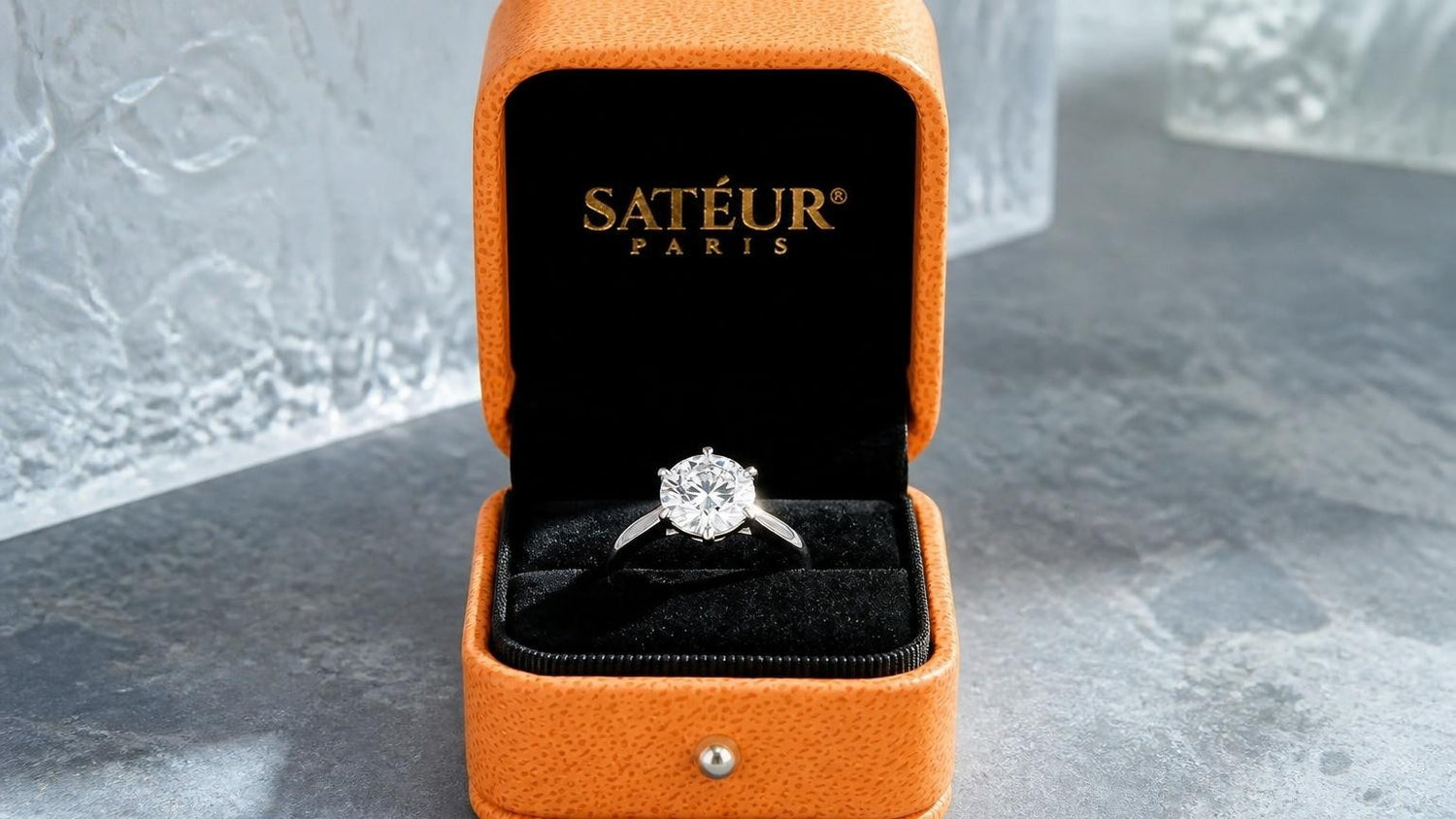
Is a CZ Diamond Real or Fake? The Honest Answer
Cubic zirconia is neither fake nor a diamond. It is a real, synthetic gemstone — a crystalline compound of zirconium dioxide, grown in a laboratory and cut to reflect light in a way that resembles a diamond. The honest answer to "is a CZ diamond real or fake?" is: real gemstone, not a diamond. The confusion arises from marketing that has blurred the line between diamond simulants and the stones that earn that title with permanence. Cubic zirconia earns neither. It is a starting point, not a destination. For those exploring diamond alternatives worth keeping for life, understanding exactly where CZ falls short — and what has replaced it — matters.
Key Takeaways
- Cubic zirconia is a real synthetic gemstone (zirconium dioxide) — but it is not a diamond, chemically or structurally.
- CZ rates 8–8.5 on the Mohs hardness scale; diamond rates 10. The difference is visible within 2–3 years of wear.
- Diamonds maintain their sparkle and clarity for decades. CZ typically clouds, scratches, and loses brilliance within a year of daily wear.
- Satéur Gems® are a trademarked diamond simulant with D–E colour grading and Excellent cut specifications — delivering the clean, white brilliance of a flawless diamond for approximately 1% of the price.
- Every Satéur stone — Gems® and moissanite alike — stays brilliant for life. CZ does not.
What Is Cubic Zirconia?
Cubic zirconia is a synthesised crystalline form of zirconium dioxide (ZrO₂). It does not occur naturally in gem-quality form; it is grown in a laboratory under precisely controlled temperatures. First developed for commercial gem use in the 1970s, CZ quickly became the dominant mass-market diamond simulant because it could be produced cheaply and at scale. It is optically clear, can be cut with facets, and reflects white light in a way that superficially resembles a diamond.
The key word is superficially. Cubic zirconia and diamonds share almost nothing at the molecular level. Diamond is pure carbon, formed under extraordinary geological pressure over billions of years. CZ is a zirconium compound. They have different crystal structures, different optical properties, and very different durability profiles. Calling a CZ stone a "CZ diamond" is a category error that has persisted because the industry found it useful — not because it is accurate.
How Cubic Zirconia and Diamonds Differ
The differences between cubic zirconia and diamonds are structural, optical, and durability-based. Each has real consequences for how the stone performs over time.
| Property | Cubic Zirconia | Diamond |
|---|---|---|
| Composition | Zirconium dioxide (ZrO₂) | Carbon (C) |
| Mohs hardness | 8–8.5 | 10 |
| Refractive index | ~2.15–2.18 | ~2.42 |
| Durability (daily wear) | Clouds and scratches within 1–3 years | Maintains brilliance for decades |
| Price range | Very low — a few pounds per carat | £2,000–£15,000+ per carat |
| Colour grading | Usually colourless (no grading standard) | D–Z (GIA scale) |
The hardness gap matters most. At 8–8.5 on the Mohs scale, cubic zirconia is softer than quartz — the material in common household dust. Every day you wear a CZ stone, microscopic abrasions accumulate on the surface. Within two to three years of regular wear, the facets become dull, the stone loses its ability to reflect light cleanly, and the overall effect is one of apparent cheapness — not because the stone was ever truly luxurious, but because its surface integrity could not hold.
This is the central problem with cubic zirconia as a diamond alternative. It is not that CZ is "fake." It is that it fails to perform the role for which it was purchased.

Appearance: Colour, Clarity, and Sparkle
When new, a well-cut cubic zirconia can resemble a diamond to a casual glance. Both are colourless, both reflect light from faceted surfaces. The differences become apparent under sustained observation — and they become dramatic over time.
Diamond has a refractive index of approximately 2.42, producing the crisp, concentrated brilliance that has defined the category for centuries. Cubic zirconia has a lower refractive index (~2.15–2.18) and tends to display more diffused, rainbow-coloured light dispersion — which can read as "sparkly" in low-light environments but lacks the precise white brilliance of a fine diamond. More critically, CZ has no grading standard. There is no equivalent of the GIA's D–Z colour scale, no clarity grading, no certification. You are buying an approximation.
Satéur Gems® operate at a different standard entirely. They carry D–E colour grading and Excellent cut specifications — the same framework used to evaluate the finest mined diamonds. The result is the clean, white brilliance of a flawless diamond, graded and delivered with precision. The difference, compared to cubic zirconia, is not subtle. For those interested in understanding how light performance compares across diamond simulant categories, our guide on how real and fake diamonds appear under UV light examines optical behaviour in detail.
Durability and Longevity Compared

Durability is where the honest assessment of cubic zirconia becomes most important — particularly for engagement rings and jewellery worn daily.
CZ at 8–8.5 Mohs will scratch from contact with materials harder than itself: quartz sand particles, granite countertops, other gemstones. These scratches are typically too small to see individually, but collectively they create a haze across the surface that blocks and scatters light. The process is gradual but irreversible without repolishing. Most CZ settings are not designed to be repolished, nor would the cost be justified.
Diamond, at Mohs 10, is the hardest natural material known. It does not scratch from everyday contact. A well-maintained diamond ring bought today will look identical in forty years. This permanence is part of what justifies the price — the cost is spread across decades.
Satéur stones — both our Gems® simulant and our moissanite — are built for exactly this long-term standard. Unlike cubic zirconia, which clouds and scratches within a year, every Satéur stone stays brilliant for life. This is not a marketing claim. It follows from the material properties: both are substantially harder than CZ and structured to hold their surface integrity under daily wear.
Price: Why Diamonds Cost More
Mined diamonds command their price through a combination of genuine scarcity, deep cultural conditioning, and the supply chain structures that have governed the industry for over a century. A one-carat, D-colour, VS2 mined diamond typically costs £4,000–£8,000 at retail. The stone's beauty is real. So is the price.
Cubic zirconia costs a small fraction of that — sometimes as little as £5–£15 for a one-carat equivalent stone. This low entry cost has driven its mass-market adoption. But as discussed, the cost-to-longevity ratio is poor. A CZ stone that loses its brilliance within two years has delivered a worse value outcome than a more expensive stone that holds its look for a lifetime.
The more intelligent question is not "how much does it cost?" but "what does it deliver over time?" On that basis, cubic zirconia costs less initially and delivers less permanently. The comparison between CZ and diamonds is, ultimately, not a close one in either direction: CZ is far cheaper, and diamonds are far more durable. The interesting category is everything in between — simulants that combine accessible pricing with genuine, lasting performance.

Satéur Destinée Ring™
The look of a flawless diamond, for approximately 1% of the price.
Compare to a $10,000 mined diamond
Joined by 100,000+ couples across 150+ countries.
Discover The 1% RingFree worldwide shipping · 30-day returns · Lifetime Satéur Care
Satéur Gems®: Diamond-Look Value at a Fraction of the Cost
The Satéur Gems® is The Maison's trademarked diamond simulant — engineered to deliver the clean, white brilliance of a flawless diamond, graded to D–E colour standards, cut to Excellent specification. It is not cubic zirconia. It is not moissanite. It is a distinct trademarked gemstone designed around one purpose: to look like a flawless diamond, with the naked eye, and to stay that way.
Where cubic zirconia retails as a commodity and performs as one, Satéur Gems® is the product of deliberate gem-crafting at a Maison standard. Entry from £88. Compare that to the mined equivalent — a D-colour, Excellent-cut diamond of comparable carat weight can cost £10,000 or more. The visual difference, across the table, is indistinguishable with the naked eye. The price difference is not.
Our moissanite tier, separately, offers a lab-created gemstone with its own distinct character: approximately 9.25 on the Mohs scale and a vivid, rainbow-forward fire that is more pronounced than a diamond. Both tiers — Gems® and moissanite — are built to last a lifetime. Neither behaves like cubic zirconia.

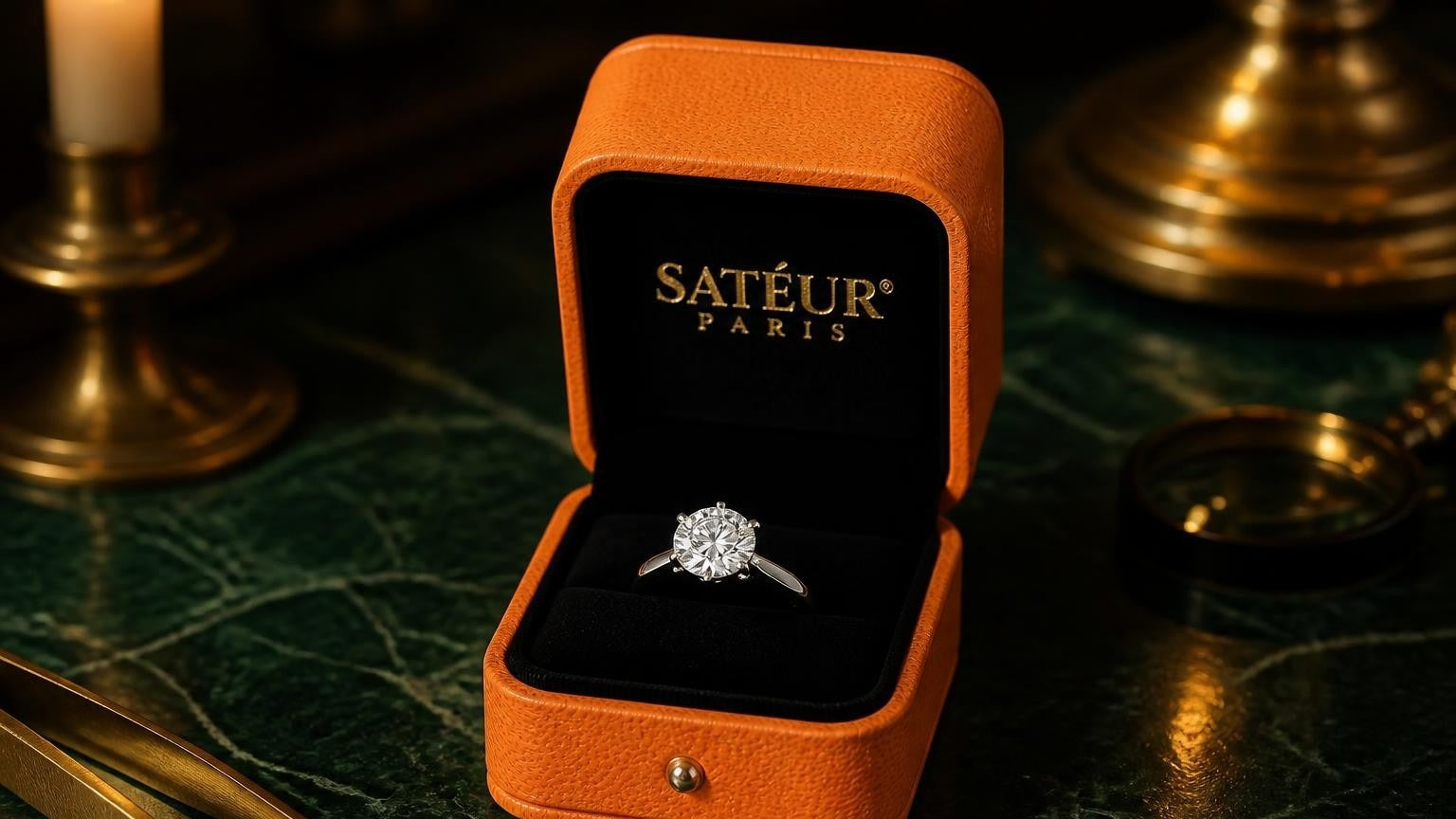
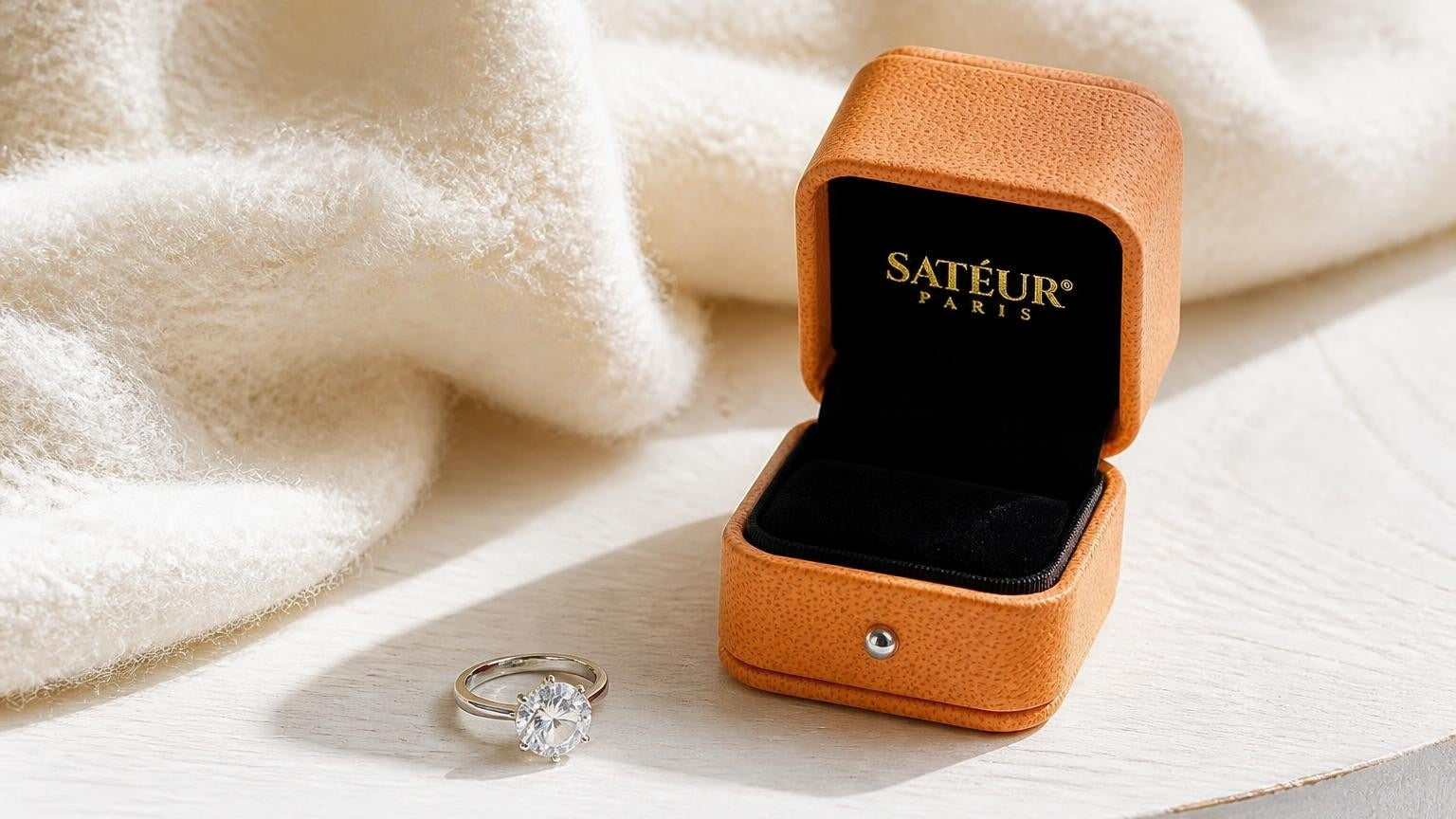
The Satéur Destinée Ring™ — The 1% Ring® — is the starting point for those who have decided that a brilliant, lasting stone should not require a decade of savings. It is the product that built The New Diamond Standard®. For those who want that standard in ring form, the engagement rings collection covers every cut and setting from solitaires to halo designs. For earrings, the earrings collection offers the same long-term brilliance in a format that suits daily wear.
FAQ: Cubic Zirconia and Diamond Questions
What is the main difference between cubic zirconia and a diamond?
The composition is completely different. Diamond is pure carbon formed under extreme geological pressure; cubic zirconia is a synthetic crystalline compound of zirconium dioxide (ZrO₂). They have different hardness ratings (CZ: 8–8.5 Mohs; diamond: 10), different optical properties, and very different durability profiles. Calling CZ a "diamond" is inaccurate regardless of its appearance at initial purchase.
How long does cubic zirconia last compared to diamond?
Cubic zirconia typically shows visible cloudiness, surface scratching, and loss of brilliance within two to three years of daily wear. Diamond maintains its sparkle and clarity for decades — in many cases indefinitely. The durability gap stems from hardness: CZ at 8–8.5 Mohs scratches from contact with everyday materials; diamond at Mohs 10 does not.
Why does cubic zirconia cloud over time?
CZ is softer than quartz — a common component of household dust and environmental particulate. Over time, microscopic abrasions accumulate across the faceted surface, scattering rather than reflecting light. The stone's surface integrity degrades, and the cumulative effect is a dull, hazy appearance. This process is gradual and largely irreversible without professional repolishing.
What colour grades are available in diamond simulants?
Cubic zirconia does not carry a formal colour grading standard. Satéur Gems®, by contrast, are graded to D–E colour — the top tier on the GIA scale used for mined diamonds. This grading indicates near-colourless to colourless appearance, consistent with a fine, flawless diamond. Moissanite is also typically available in D–F colour equivalents from reputable producers.
How does the sparkle of a diamond simulant compare to a real diamond?
A well-graded diamond simulant — particularly Satéur Gems®, with its D–E colour and Excellent cut — produces the clean, white brilliance of a flawless diamond. Cubic zirconia produces a more diffused light return that can read as "sparkly" when new, but lacks diamond-accurate optical precision and degrades quickly. Moissanite produces more rainbow fire than a diamond — vivid and distinctive, but different in character from the restrained white brilliance diamonds are known for.
What is a more affordable alternative to mined diamonds for engagement rings?
The most intelligent alternative depends on your priorities. If you want the closest optical match to a fine diamond — the clean, white brilliance, graded to D–E colour, built to last a lifetime — Satéur Gems® delivers that from £88, compared to £4,000–£10,000 for a comparable mined stone. If you prefer a lab-created gemstone that is openly certifiable and carries its own vivid character, Satéur moissanite at around 9.25 Mohs is an outstanding choice. Cubic zirconia is neither — it is an entry-level simulant that does not hold its performance over time.
















Laat een reactie achter
Deze site wordt beschermd door hCaptcha en het privacybeleid en de servicevoorwaarden van hCaptcha zijn van toepassing.