

How Often Should You Clean Your Engagement Ring?
An engagement ring accumulates residue from daily life — hand cream, soap film, natural skin oils — and even the most brilliant gemstone dims when light cannot reach it cleanly. The answer to how often to clean your engagement ring follows a simple three-tier cadence: a quick rinse each week, a deeper home clean each month, and a professional service every six to twelve months. Getting that cadence right keeps the ring performing the way it was designed to perform.
Key Takeaways
- Quick rinse weekly — warm water, mild soap, soft brush; two minutes.
- Deeper home soak monthly — 20–30 minutes in soapy water, gentle scrub under the setting.
- Professional cleaning every 6–12 months — prong inspection included, not optional.
- Satéur Gems® (~8.8 Mohs) and moissanite (~9.25 Mohs) are both extremely durable and hold their brilliance for life with routine care.
- 18k gold finish responds best to mild soap and soft cloths — no abrasives, no harsh chemicals.
- Ultrasonic cleaners are safe for Satéur Gems® and moissanite; avoid them for stones with visible inclusions or surface treatments.
Daily Wear and Routine Maintenance
Daily wear is the primary cause of film build-up. Lotions, serums, cooking oils, and the natural oils from fingertips settle into the space between a gemstone and its setting. A quick rinse under warm running water — combined with a drop of mild dish soap and a soft toothbrush to reach beneath the basket — takes under two minutes and removes the day's accumulation before it bonds and hardens.
For rings worn every day, this weekly ritual is the most effective single habit available to the wearer. It requires no specialist equipment and no professional visit. A soft lint-free cloth to pat dry completes the routine. Used consistently, it keeps a well-made ring looking near-new between deeper cleans and meaningfully extends the interval before professional engagement ring care is needed.
What to avoid: abrasive cloths or paper towels that micro-scratch polished metal, toothpaste (too abrasive for any fine finish), and extended contact with bleach or chlorinated water. The 18k gold finish on Satéur rings responds well to gentle care and poorly to anything caustic. As a rule, put the ring on after applying creams and perfumes — not before.
How Often Should You Clean Your Engagement Ring at Home — The Monthly Deep Clean
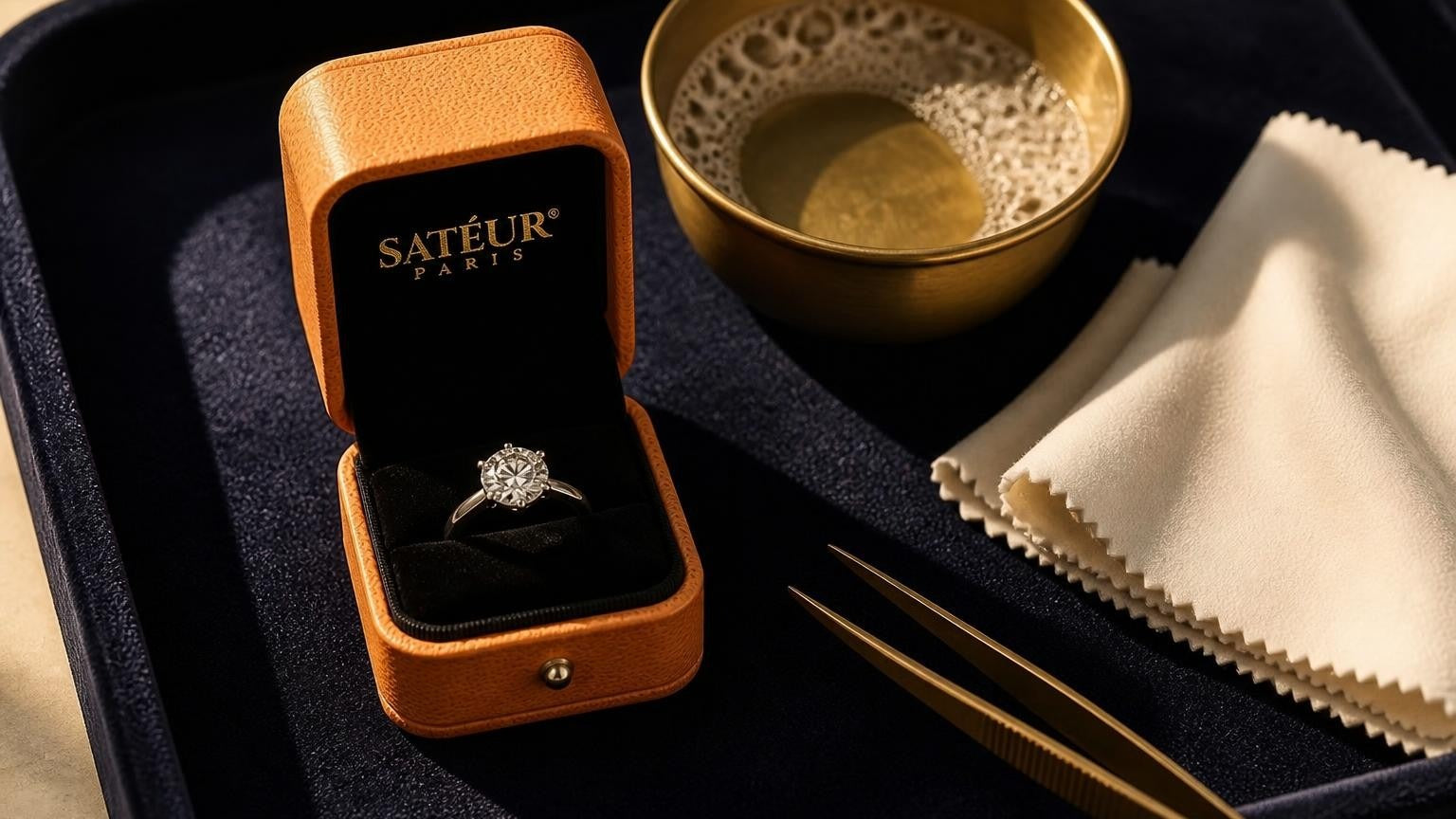
Once a month, extend the routine. Fill a small bowl with warm water and a few drops of mild dish soap. Place the ring in the solution and leave it to soak for 20 to 30 minutes. The soak loosens stubborn residue that a quick rinse will not reach — the film that accumulates inside the prong basket, along the band's inner curve, and in any decorative milgrain or pavé detail.
After soaking, work a soft-bristle toothbrush gently around the gemstone and beneath the setting. Rinse thoroughly under warm water — hold the ring over a bowl rather than directly over an open drain — and dry with a lint-free cloth. Take this moment to inspect the setting. If a prong feels rough to the touch or the stone has any perceivable movement, treat that as a signal to book a professional appointment before the next stage of the cycle. Catching a loosened prong at this point costs a fraction of what a lost stone costs.

When to Schedule Professional Cleaning
Professional cleaning is recommended every six to twelve months for an engagement ring worn daily. The frequency adjusts to lifestyle: someone who works with their hands, applies products frequently, or spends time near saltwater or pools benefits from the shorter six-month interval. A ring worn primarily for evenings and occasions can comfortably go twelve months between services.
The professional visit is about more than cleaning. It is an inspection. A jeweller examines the security of each prong — the small metal claws holding the gemstone in place — and looks for signs of wear at the setting before damage occurs. Loose prongs are the principal cause of lost stones. They are identified and corrected at precisely this appointment.
Good engagement ring care, like any considered maintenance practice, prevents rather than repairs. The cost of two professional cleans per year is a fraction of the cost of re-setting a stone or repairing a damaged shank.
How Jewellers Clean Engagement Rings
A professional jewellery cleaning follows a short, deliberate sequence. The ring is placed in an ultrasonic cleaner — a machine that passes high-frequency sound waves through a cleaning solution, dislodging particles from surfaces and cavities that no brush can reach. It then moves to a steam cleaner, which uses pressurised hot steam to flush away remaining residue and restore brilliance to every facet.
The jeweller then inspects the setting under magnification. Prongs are assessed for wear and tightened if needed. The metal finish may be lightly polished. The ring leaves the appointment both clean and structurally verified — the same discipline applied to any instrument built to last.

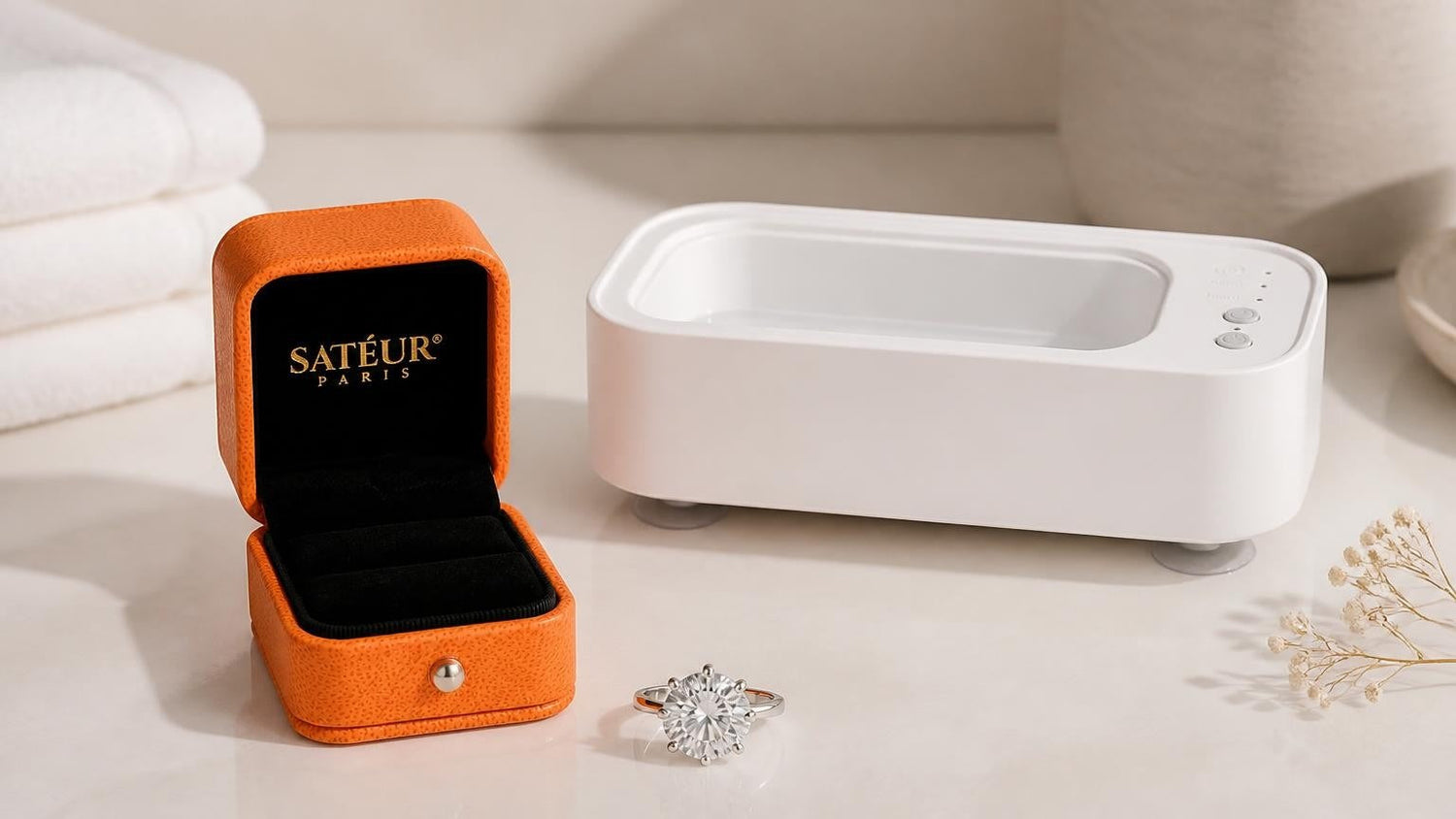
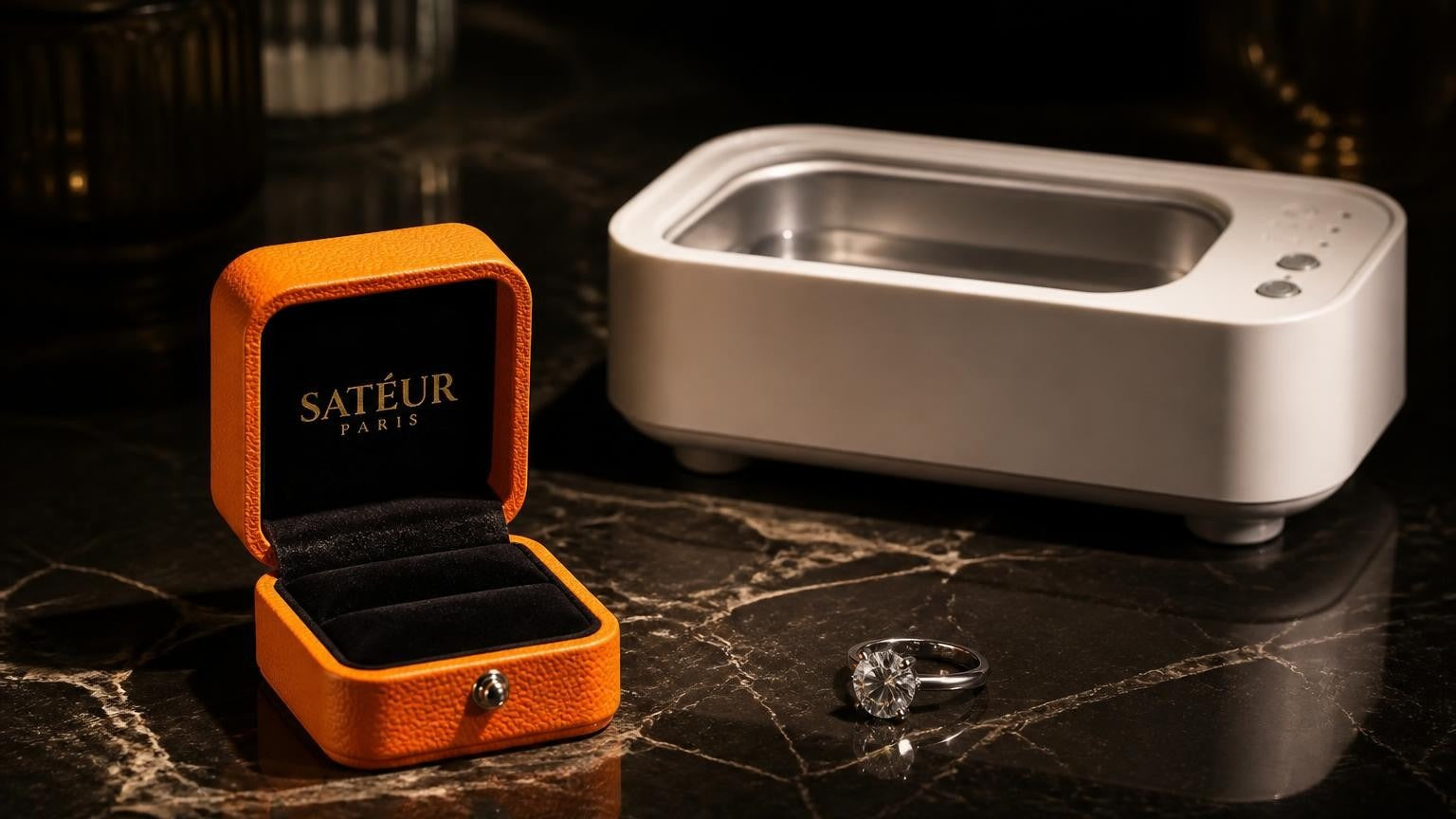
The Satéur Ultrasonic Jewelry Cleaner replicates the first stage of this professional process at home. Designed for Satéur Gems® and moissanite, it produces a meaningful upgrade in brilliance between professional visits. Used periodically — once every few months — it complements the weekly rinse and monthly soak without replacing the professional inspection cycle.
What to Avoid When Cleaning at Home
Several common household products cause more harm than good on fine jewellery. Chlorine bleach weakens metal alloys at soldered joins over time. Acetone — found in nail polish remover — can damage certain treatments and strip surface finishes. Abrasive scrubs and rough cloths micro-scratch polished metal, converting a bright finish into a soft accumulated haze over months and years.
Boiling water is occasionally suggested in online guides and should be avoided entirely. The thermal shock can stress settings and, for stones carrying natural inclusions or surface treatments, cause fracturing. For Satéur Gems® and moissanite this risk to the stone is negligible given their hardness — but the metal setting is not immune. There is no cleaning benefit to boiling water that mild warm soapy water does not already provide more safely.
The principle is simple: mild soap, warm water, a soft brush. Anything more aggressive belongs at a professional appointment, not at the bathroom sink.
The Cost of Professional Cleaning
Professional jewellery cleaning is generally modest in cost. Many independent jewellers offer the service at no charge for rings purchased with them. For rings brought in from elsewhere, the fee typically falls between £10 and £40 in the United Kingdom, with comparable ranges in Europe and North America.
Some retailers offer care plans that include two professional cleans per year alongside prong inspections and minor repairs. For a ring worn daily, that arrangement repays itself many times over. A single re-tipping of a worn prong costs more than several years of preventive visits. Professional cleaning is maintenance budgeted proportionately to the value of the piece.

Satéur Gems: Durable and Low-Maintenance Beauty
Not all gemstones require the same level of care. Satéur Gems® — the trademarked diamond simulant at the heart of The 1% Ring® — are among the more forgiving gemstones to maintain. At approximately 8.8 Mohs, they resist scratching from everyday contact. Their signature quality is the clean, white brilliance of a flawless diamond — a property of their cut and optical character that returns fully with routine cleaning.
Moissanite, at approximately 9.25 Mohs, shares the same durability profile and responds to the same care routine. Both gemstones suit the three-tier cadence above without special accommodation. Neither requires sensitivity around ultrasonic cleaning; neither demands anything beyond the mild soap and soft brush protocol described here.
The 18k gold finish on Satéur rings is the area where care makes the most visible long-term difference. Chemical exposure — bleach, chlorine, harsh solvents — affects the finish over time in ways that have no effect on the stone. Keep the finish away from those products, and the metal holds its warmth for years. This is the essence of thoughtful engagement ring care: consistent, simple habits that allow a piece built to The New Diamond Standard to remain exactly that.

Satéur Destinée Ring™
The look of a flawless diamond, for 1% of the price.
Compare to a $10,000 mined diamond
Joined by 100,000+ couples across 150+ countries.
Discover The 1% RingFree worldwide shipping · 30-day returns · Lifetime Satéur Care
Frequently Asked Questions About Ring Care
How often should I clean my engagement ring at home?
A quick rinse with mild soap and a soft brush once a week keeps daily film from accumulating. A deeper 20–30 minute soak in warm soapy water once a month removes stubborn residue from the setting. Together, these two habits keep most engagement rings looking their best between professional visits every six to twelve months.
Can I use an ultrasonic cleaner on my engagement ring?
For rings set with Satéur Gems® or moissanite, yes. Both gemstones are robust enough for ultrasonic cleaning and respond well to it. Exercise caution with stones that carry visible natural inclusions or surface treatments — the vibration can stress existing fractures. The Satéur Ultrasonic Jewelry Cleaner is designed specifically for Satéur gemstones and produces a professional-grade result at home.
What is the best method for at-home cleaning without damaging the stone?
Warm water, a few drops of mild dish soap, and a soft-bristle toothbrush. Soak for 20–30 minutes to loosen residue, scrub gently around and beneath the setting, rinse thoroughly, and dry with a lint-free cloth. Avoid toothpaste, bleach, acetone, and anything abrasive. This approach is safe for Satéur Gems®, moissanite, and 18k gold finish alike.
How much does professional engagement ring cleaning cost?
Typically between £10 and £40 at an independent jeweller, and often complimentary for rings purchased with that jeweller. Some care plans include twice-yearly professional cleans as part of a broader service package. The prong inspection that accompanies the clean is the principal value of the appointment — it catches wear before a stone is at risk.
What do jewellers do when they professionally clean an engagement ring?
The standard process moves from ultrasonic cleaning to steam cleaning, then to a magnified inspection. Prongs are assessed for wear and tightened where needed. The metal finish may be lightly polished. The ring leaves the appointment both thoroughly clean and structurally confirmed — the equivalent of a service interval for any precision piece.
How can I keep my engagement ring looking new between cleanings?
Remove the ring before applying hand creams, perfumes, and sunscreens. Put it on after washing hands rather than before. Avoid wearing it into chlorinated or salt water. Store it in a soft pouch or its original box — the Satéur orange box keeps the ring protected and the gem clear of contact scratching. These habits reduce build-up rate and extend the window in which the ring looks its best without intervention.

















Laat een reactie achter
Deze site wordt beschermd door hCaptcha en het privacybeleid en de servicevoorwaarden van hCaptcha zijn van toepassing.