

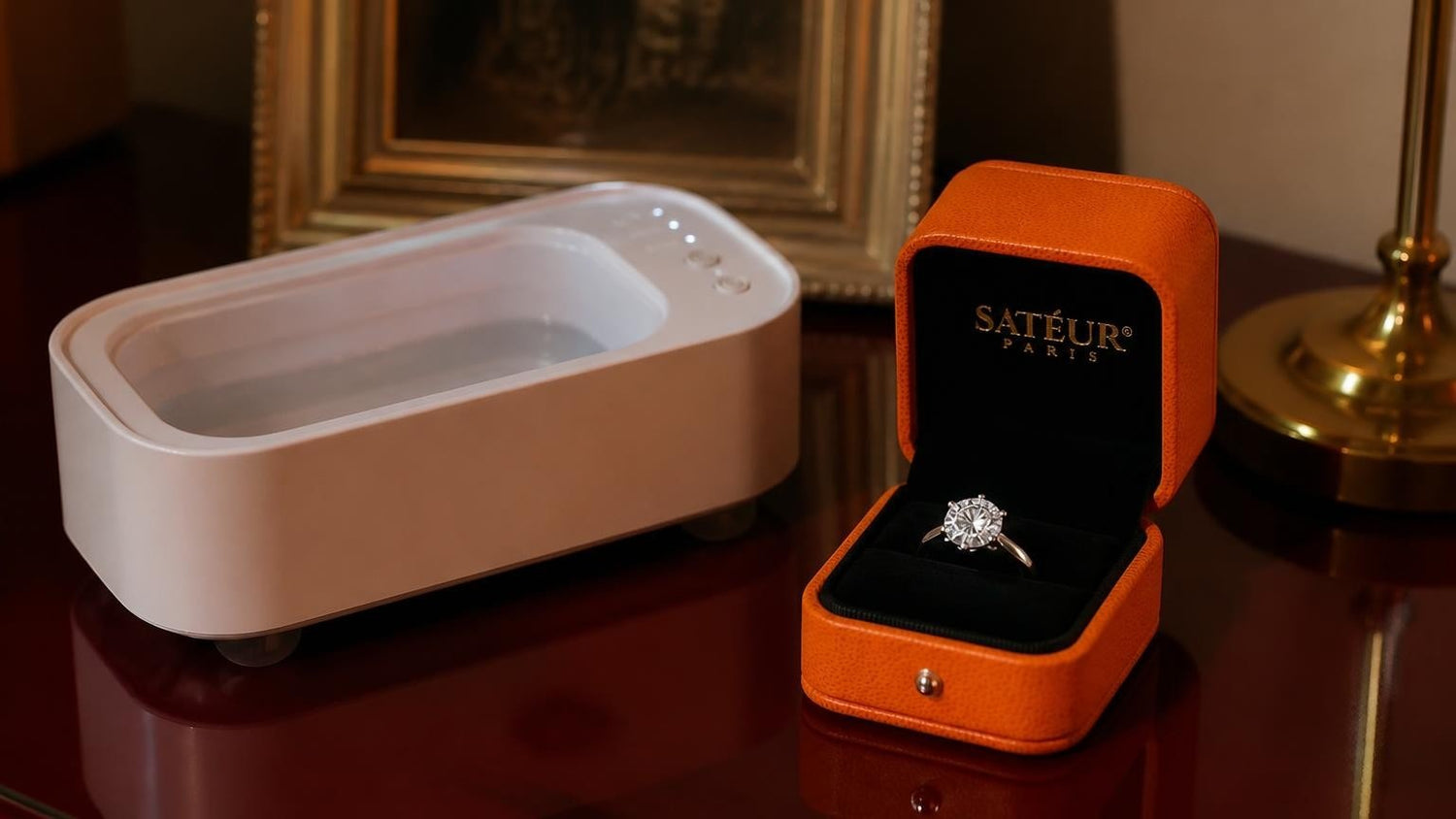
Jewelry Cleaner Solution: The Complete Care Guide
Brilliance is not permanent by accident. Every fine piece — a solitaire engagement ring, a pair of diamond-look earrings, a gold-finished necklace worn daily — accumulates skin oil, lotion residue, and micro-debris that dull the surface over time. The right jewelry cleaner solution reverses that dulling within minutes, without touching the metal or gemstone integrity. The wrong one — bleach, acetone, or an overly alkaline formula — can strip a gold finish or etch a softer gemstone irreversibly.
This guide covers the chemistry behind effective jewelry cleaner formulas, the step-by-step method for cleaning rings, earrings, and silver at home, safe-use rules for moissanite and Satéur Gems® pieces, and the precise moment when professional cleaning becomes worthwhile.
Key Takeaways
- A quality jewelry cleaner solution uses mild surfactants and water-based chemistry — safe for gold, platinum, silver, and diamond surfaces.
- Warm water and a drop of mild dish soap is effective for routine home jewelry cleaning of most pieces.
- Satéur Gems® (≈8.8 Mohs) and moissanite (≈9.25 Mohs) are both extremely durable and safe for gentle home-cleaning routines.
- A soft cloth removes surface dust; a soft brush reaches prong settings and pavé detail that a cloth cannot.
- Ultrasonic cleaners accelerate the process significantly — safe for diamonds, moissanite, and Satéur Gems® but not for all gemstone types.
- Professional cleaning is recommended annually for engagement rings and heirloom pieces with deep-set residue.
Why Jewelry Cleaner Solution Matters
Fine jewelry requires gentle, regular cleaning to maintain brilliance and restore lustre. This is not cosmetic maintenance alone — it is structural. Accumulated oils trap microscopic grit against settings and prongs, and that grit acts as an abrasive during wear. A diamond that appears dull to the eye is often optically intact; it is simply coated. Restoring it takes minutes, not money.
A quality jewelry cleaner solution typically contains surfactants — compounds that reduce surface tension so water can lift oils from metal and stone surfaces — combined with a neutral or mildly alkaline pH base. These formulas are safe for 18k gold finish, platinum, and most gemstones including diamonds. They are not the same as household cleaners, which often contain bleach, ammonia at high concentration, or abrasives. The distinction matters when the pieces involved represent significant value or sentimental weight.
For Satéur Gems® — our trademarked diamond simulant, priced at roughly 1% of mined diamond equivalents — the care routine is identical to that of traditional diamonds. The gemstones are extremely durable, built for everyday wear, and respond to the same mild cleaning chemistry. Our ultrasonic cleaning guide covers the deeper clean in four steps if you want to go further than hand-washing.

How to Clean Engagement Rings at Home
The simplest and most consistently effective home method requires nothing proprietary: warm water, one drop of mild dish soap, a small bowl, and a soft-bristled brush. This method works for diamonds, moissanite, Satéur Gems®, and the majority of gold and platinum settings.
Step 1. Fill a small bowl with warm (not hot) water. Add one drop of mild, dye-free dish soap. Avoid anything containing bleach, alcohol above 20%, or citrus-based degreasers — these can strip the 18k gold finish on plated pieces over time.
Step 2. Place the ring or earrings in the solution and allow to soak for two to three minutes. The surfactants in the soap begin lifting oil deposits on contact; the soak loosens what the brush will then clear.
Step 3. Use a soft-bristled brush — an unused toothbrush or a dedicated jewelry brush — to work gently around the prongs, under the setting, and across the band. A soft cloth alone will not reach these recessed areas. The goal is debris removal from the setting architecture, not surface polishing.
Step 4. Rinse thoroughly under cool, running water. Ensure the drain is covered or the piece is held firmly — many rings have been lost to open drains. Rinse until no soap trace remains; residual surfactant leaves a film that re-dulls quickly.
Step 5. Dry with a clean, lint-free soft cloth. Pat rather than rub. Set aside on a clean surface for air-drying before storing.
For engagement rings worn daily, this cleaning routine every one to two weeks maintains consistent brilliance. Silver jewelry benefits from the same method but may require a silver-specific cleaner for tarnish — warm water and soap do not reverse oxidation, only remove surface debris.
Best Practices for Diamond and Fine Jewelry Care
The principles governing safe jewelry cleaning are consistent whether the stone is a mined diamond, a lab-created gemstone, or a Satéur Gems® piece giving the clean white brilliance of a flawless diamond. Hardness and chemical resistance determine what a piece can tolerate.
Diamonds sit at 10 on the Mohs scale — the hardest natural mineral. Moissanite rates approximately 9.25, making it exceptional for daily wear. Satéur Gems® comes in at approximately 8.8 Mohs — extremely durable, built for everyday wear, and indistinguishable from a diamond with the naked eye. Both tier gemstones withstand routine home cleaning with mild solutions without issue.
What to avoid across all fine pieces:
- Bleach and chlorine. Bleach degrades gold alloys over time, causing brittleness in prong settings. Even low concentrations in swimming pool water can affect a ring worn for years.
- Acetone and nail polish remover. Dissolves certain adhesives used in costume jewelry settings and can cloud the surface of some gemstones.
- Abrasive cloths or toothpaste. Toothpaste contains micro-abrasives designed for enamel — these scratch soft metal surfaces and can etch the facets of lower-hardness gemstones.
- Ultrasonic cleaners with fracture-filled or treated stones. Stones with internal fractures or clarity enhancements can be disrupted by ultrasonic vibration. For diamonds, moissanite, and Satéur Gems® — which are not fracture-filled — ultrasonic cleaning is safe and highly effective.
A jewelry cleaner solution designed specifically for diamond and fine jewelry typically uses a combination of mild non-ionic surfactants, water, and sometimes a small amount of isopropyl alcohol (below 10%) for faster drying. These formulas clean without stripping plating, degrading settings, or leaving residue.

Satéur Gems®: Long-Term Care for Diamond-Look Pieces
A Satéur Gems® piece represents the same investment logic that defines The New Diamond Standard — the clean white brilliance of a flawless diamond, for roughly 1% of the price. That value proposition holds only when the piece is maintained as well as a traditional diamond ring would be.
The good news: it requires exactly the same care. Satéur Gems® at approximately 8.8 Mohs does not scratch under normal wear, does not cloud or tarnish in the way that lower-hardness simulants can, and responds to every method described in this guide. There is no proprietary cleaner required, no specialist treatment, no fragility to plan around.
The 18k gold finish on Satéur settings warrants one note: avoid prolonged exposure to chlorine, bleach, or harsh alkaline cleaners. This is identical advice to that given for solid gold fine jewelry. Mild dish soap, a soft cloth, and periodic deep-cleaning with an ultrasonic device — this routine will maintain a Satéur piece for years.
Over 100,000 customers across 150+ countries have found the same maintenance discipline applied to a Satéur Gems® ring as to a mined diamond ring — and the visual result is the same. Brilliance maintained with care does not announce its price. It simply holds.

Satéur® Ultrasonic Jewelry Cleaner (2nd Generation)
Professional-grade ultrasonic cleaning at home. Safe for diamonds, moissanite, and Satéur Gems®. The most thorough jewelry cleaner solution available — without the specialist price.
Compare to a $10,000 mined diamond
Joined by 100,000+ couples across 150+ countries.
Discover the Ultrasonic CleanerFree worldwide shipping · 30-day returns · Lifetime Satéur Care
Safe Cleaning Methods for Silver and Platinum
Silver jewelry presents a different challenge from gold and platinum: tarnish. Tarnish is a chemical reaction (silver sulphide) rather than physical dirt, and it cannot be resolved with surfactant-based jewelry cleaner solution alone. It requires either a mild abrasive polish or a reduction reaction to reverse.
For light tarnish on silver rings or earrings, a paste of bicarbonate of soda and water applied with a soft cloth, then rinsed thoroughly, is effective. For heavier tarnish, the aluminium foil method — boiling water, bicarbonate of soda, and aluminium foil in a bowl — reverses oxidation electrochemically without abrasion. Neither method is suitable for silver pieces set with soft gemstones.
Platinum, by contrast, requires no special chemistry. It does not tarnish, does not react to household chemicals the way gold alloys can, and develops a patina over time that many wearers appreciate. Warm water with mild dish soap, plus a soft brush, is all that is needed for platinum jewelry cleaning. Occasional professional polishing will restore the original mirror finish if desired.
Both silver and platinum benefit from storage in anti-tarnish pouches or cloths when not in regular use. Air exposure accelerates tarnish on silver; a sealed environment slows it dramatically.

When to Use Professional Cleaning Services
Home cleaning addresses surface debris and maintains daily brilliance. Professional cleaning — performed by a jeweller using industrial ultrasonic equipment, steam cleaning, and polishing tools — addresses what home methods cannot: deep-set residue in micro-channels, worn prong tips, loosened settings, and accumulated oxidation in recessed areas.
Professional cleaning is recommended annually for engagement rings worn daily. The cleaning process also provides an opportunity for the jeweller to inspect prong integrity and setting security — not for the aesthetic purpose of appraisal, but for the practical purpose of ensuring a stone is not at risk of loss. This is maintenance, not assessment.
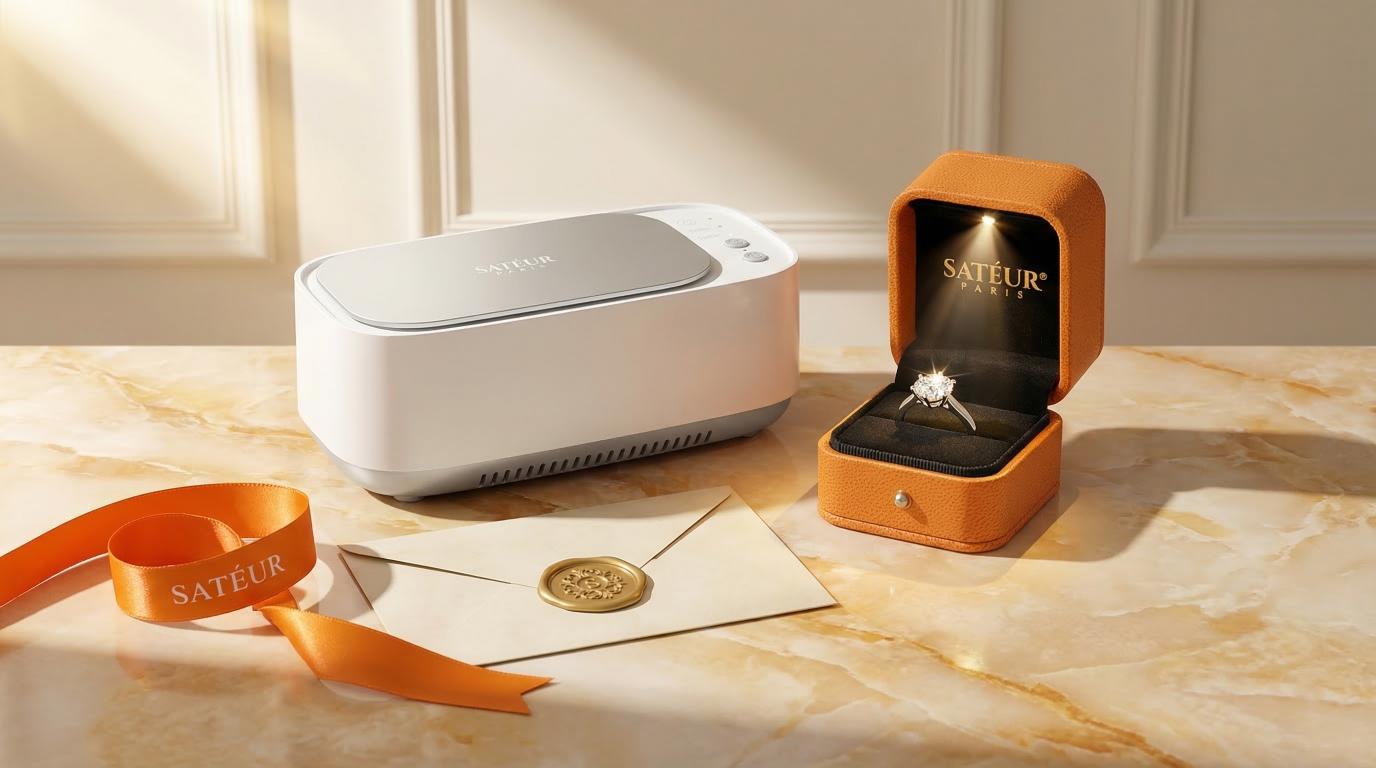
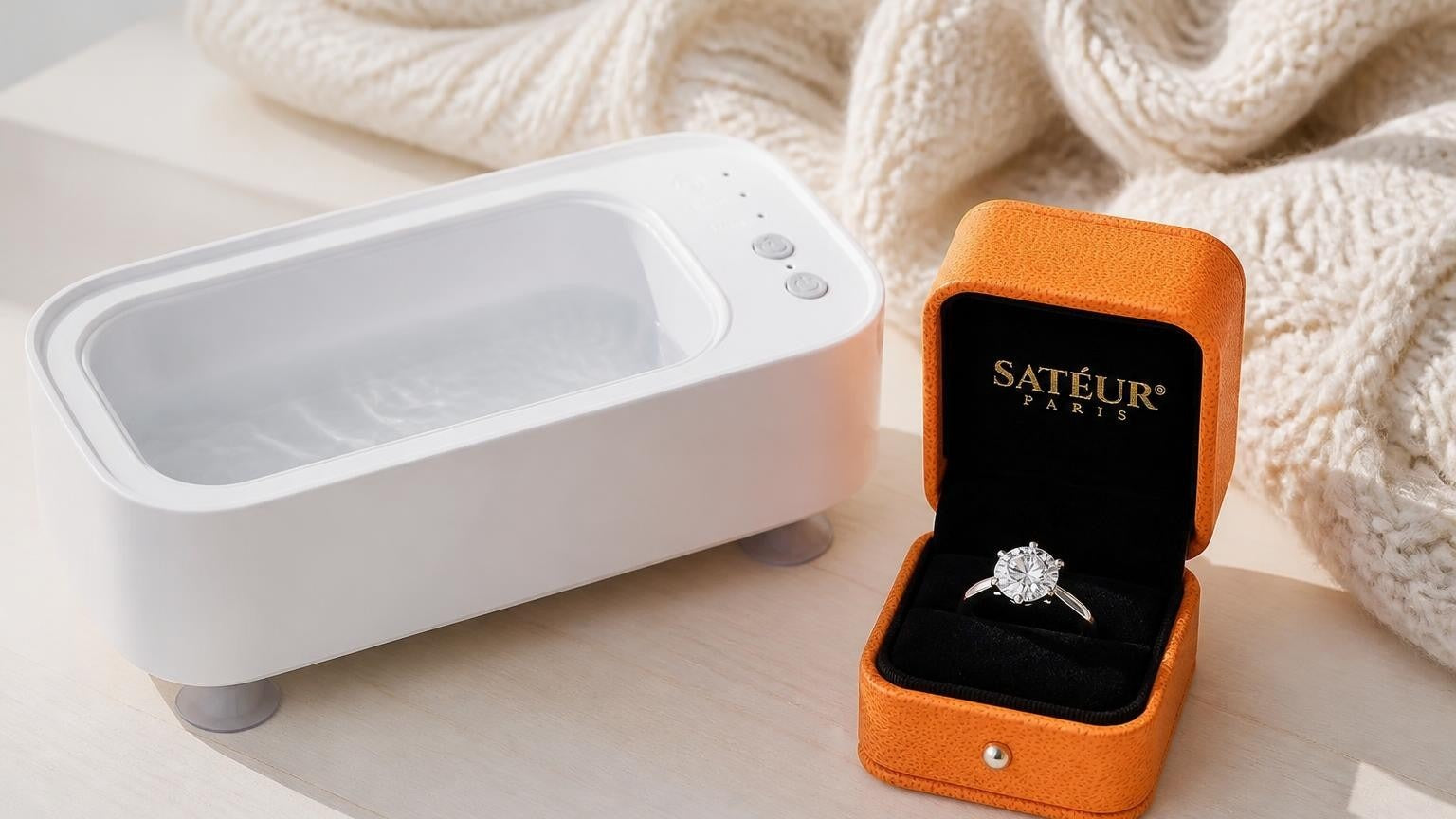
The Satéur jewelry cleaner machine collection bridges the gap between hand-washing and professional service. An ultrasonic cleaner at home — operating at 42,000Hz frequency — agitates a cleaning solution to reach recesses no brush can access. For most wearers of fine diamond-look pieces, this represents the optimal maintenance rhythm: weekly hand-wash, monthly ultrasonic, annual professional inspection.
The investment in correct care is small relative to the value of the pieces being maintained — and entirely consistent with the intelligent choice that led to acquiring them in the first place.
Frequently Asked Questions
What is the safest jewelry cleaner solution for engagement rings?
The safest and most broadly effective method is warm water with one drop of mild, dye-free dish soap, applied with a soft-bristled brush and followed by a thorough rinse. This is safe for diamonds, moissanite, Satéur Gems®, and all common metal types including 18k gold finish, platinum, and sterling silver. Avoid bleach, acetone, or abrasive compounds. For a deeper clean, a commercial jewelry cleaner solution containing mild non-ionic surfactants is appropriate for diamond and equivalent-hardness gemstones.
Can you clean diamond rings with dish soap and water?
Yes. Warm water and a small amount of mild dish soap is a consistently effective jewelry cleaning method for diamonds and diamond-look pieces. The dish soap's surfactants lift skin oil and lotion residue from the stone and setting surfaces. The method works equally well for moissanite and Satéur Gems® rings. Use a soft cloth to dry after rinsing; avoid paper towels, which can scratch.
How often should you clean fine jewelry at home?
For pieces worn daily — particularly engagement rings — a gentle clean every one to two weeks maintains consistent brilliance. Monthly use of an ultrasonic cleaner provides a deeper clean for recessed settings. Annual professional cleaning is recommended for engagement rings to address deep-set debris and allow prong inspection. Silver jewelry may need more frequent attention due to tarnish from air exposure.
Is a soft cloth or brush better for cleaning delicate pieces?
Both have distinct roles. A soft cloth removes surface dust and fingerprints from accessible areas and is ideal for polishing the band after cleaning. A soft brush — with gentle, natural-bristle or nylon tips — reaches under prongs, around the girdle of a stone, and into pavé settings that a cloth cannot access. For a thorough jewelry cleaning routine, use both: the brush to loosen debris from the setting during the soak, the cloth to finish and dry.
What jewelry cleaner solution works for both gold and platinum?
Mild dish soap in warm water works safely for both gold (including 18k gold finish) and platinum. Commercial jewelry cleaner solutions labelled for diamond and fine jewelry are also safe for both metals. The key exclusions are bleach, chlorine compounds, and high-concentration alcohol or acetone — avoid these regardless of metal type. Platinum is less reactive than gold alloys, but the same gentle approach applies.
Should you use ultrasonic cleaners on all types of fine jewelry?
Ultrasonic cleaners are safe for diamonds, moissanite, Satéur Gems®, and most pieces set in gold or platinum. They are not suitable for pieces with fracture-filled or treated stones, for soft gemstones such as opals or pearls, or for pieces with loose settings. For the standard fine jewelry collection — including engagement rings set with diamond-equivalent gemstones — an ultrasonic cleaner is an effective and time-efficient complement to hand-washing. Our four-step ultrasonic cleaning guide walks through safe use in detail.
















Laat een reactie achter
Deze site wordt beschermd door hCaptcha en het privacybeleid en de servicevoorwaarden van hCaptcha zijn van toepassing.