


Engagement Ring Styles Chart: Every Setting, Shape, and Stone Explained
The engagement ring you choose communicates something before a word is spoken. Its setting, its shape, its metal — all of it reads as a statement of taste and intention. Before that decision, there is architecture to understand. This engagement ring styles chart covers every major ring setting, the stone shapes that define them, and what each combination communicates about the person wearing it.
Solitaire, halo, three-stone, pavé, vintage, tension, bezel — each style is a distinct design philosophy. The right ring is not the most popular or the most expensive. It is the one built for the life you are actually living and the way you see yourself wearing it for the next fifty years.

Key Takeaways
- Solitaire, halo, three-stone, and pavé settings account for the majority of engagement ring selections across all demographics.
- Stone shape — round brilliant, oval, cushion, emerald, princess — changes how a ring reads on the hand, its apparent size, and how light is handled.
- Setting security varies considerably: bezel and channel-set pavé offer the most protection for active lifestyles; high-prong solitaires maximise brilliance.
- Satéur Gems® D-E colour stones with Excellent cut grades deliver the clean white brilliance of a flawless diamond at approximately 1% of mined diamond pricing.
- Entry-level Satéur Gems® engagement rings begin at approximately $138, enabling a considered ring style choice without financial compromise.
- Metal choice — platinum, 18K white gold finish, yellow gold — interacts with every setting style and changes how the stone reads in daylight and candlelight.
Engagement Ring Styles: A Visual Chart
Before choosing a stone, choose a vocabulary. The setting is the structural decision — it determines how the stone is held, how light enters it, and what the ring communicates at a glance. The chart below covers the principal engagement ring styles alongside their defining characteristics, best stone shape pairings, and practical wearability notes.

| Style | Setting Structure | Best Stone Shapes | Visual Character | Wearability |
|---|---|---|---|---|
| Solitaire | Single centre stone on a plain or cathedral band; four- or six-prong, or bezel | Round brilliant, oval, princess, emerald | Clean, timeless, architectural — the stone does all the work | Excellent — minimal snag risk, easy to clean |
| Halo | Centre stone surrounded by a ring of smaller pavé-set gems that frame and amplify | Round, cushion, oval, pear, heart | Romantic, light-maximising — increases apparent stone size | Good — more intricate; needs regular cleaning around the halo |
| Three-Stone | Centre stone flanked by two matching or complementary side stones | Round, oval, emerald, pear; matched or tapered sides | Symbolic, balanced, narrative — past, present, future | Very good — side stones well secured in most configurations |
| Pavé | Small round brilliants set flush along the band, separated by minimal metal beads or prongs | Any centre shape; round brilliants typically line the band | Glittering, full-coverage — continuous sparkle across the whole band | Good — channel pavé variant is more secure for active daily wear |
| Vintage / Antique | Milgrain beading, filigree, engraved scrollwork; often lower settings | Old European cut, oval, pear, marquise, rose cut | Romantic, storied, artisanal — signals a preference for handcraft | Good — prong and metalwork detail needs periodic professional attention |
| Tension | Stone suspended between two metal ends using compression; no prongs visible | Round, princess, cushion | Architectural, modern, confident — the stone appears to float | Moderate — requires precise ring sizing; less adjustable than prong settings |
| Bezel | A full metal rim encircles the entire girdle of the stone | Round, oval, cushion — any smooth-girdle shape | Sleek, minimal, secure — low-profile and extremely modern | Excellent — the most protective setting; ideal for active lifestyles |
| Channel | Rows of stones set within a groove channel cut into the band metal, no exposed prongs | Round brilliant, princess (band stones); any centre | Clean, structured — stones appear flush with the band surface | Excellent — most secure pavé variant; practically snag-proof |

Understanding Ring Settings and Stone Shapes
A ring's setting and its centre stone are two separate decisions — but they speak to each other constantly. A six-prong solitaire reads differently from a four-prong one. A bezel-set oval is a different proposal from a halo-set oval. Understanding how setting and shape interact is the foundation of any informed ring choice.
The solitaire is the most enduring configuration in fine jewellery. A single stone, a single band, nothing to distract from the gem's own light. It rewards quality: a D-E colour stone with an Excellent cut grade reads as flawless at any scale, and the solitaire architecture ensures every facet is fully visible. The four-prong variant maximises brilliance by allowing more light into the pavilion from below; the six-prong is marginally more secure and carries a slightly more traditional formality. Both are correct.
The halo was designed to amplify. A ring of smaller stones around a centre stone increases the perceived size of the gem and creates a continuous sparkle effect that extends beyond the centre. It is a particularly effective choice for oval, cushion, and pear shapes, where the halo's curvature mirrors the stone's outline. The visual result is generous — romantic, maximalist, and clearly legible from a distance. Double halos stack two rings of stones and read as particularly bold.
Three-stone settings carry meaning. The conventional interpretation — past, present, future — has made this style a significant choice at anniversaries and milestone engagements. Structurally, it is balanced and well-secured. Side stones may match the centre in shape or contrast it deliberately: a round brilliant flanked by tapered baguettes reads as formal and directional; matching oval trios feel more organic and contemporary. The relative scale of centre to side stones matters — a centre that dominates commands attention; matched scales feel unified.
Pavé bands add light to the ring without changing its silhouette. Small round brilliant stones are set close together along the band, separated only by minimal metal beads or prongs. The effect catches every angle of light and gives the band its own brilliance independent of the centre stone. Channel-set pavé — where stones sit within a groove rather than on the surface — is the more practical variant for everyday active wear; no exposed prongs means nothing to catch or bend.
Vintage and antique styles draw from a long tradition of handcraft: milgrain beading at the edges, scrollwork engraving on the under-gallery, filigree metalwork beneath the centre stone. These details require skilled artisanship to execute and to maintain, which is part of their appeal. A vintage-style ring signals a preference for considered, artisanal making over machine-finished uniformity. Old European cuts — the predecessor to the modern round brilliant — carry a warm, lower-contrast sparkle that suits these settings naturally.
Bezel and tension settings represent the clean-line alternative. The bezel encircles the stone's entire girdle in metal, which protects it completely and creates an uninterrupted line between stone and band. The tension setting suspends the stone between two metal ends using compression, creating the visual impression that the gem floats unsupported. Both require precise execution — but the visual payoff is architectural and distinct.
Popular Engagement Ring Styles Explained
Within the taxonomy above, certain configurations have emerged as dominant across markets and generations — not by accident, but because they solve the core problem well: maximum brilliance, clear legibility, appropriate scale for daily wear.
Round Brilliant Solitaire
The round brilliant solitaire remains the most-chosen engagement ring style globally. The 58-facet round brilliant cut is the most precisely engineered diamond cut in the industry, designed specifically to return the maximum white light to the eye. In a solitaire setting, the cut does all the work — nothing competes with it. The stone's sparkle is the visual event. This is why the Satéur Destinée Ring™ — a 1.00 carat round brilliant Satéur Gems® in an 18K white gold finish — became the foundational piece in the Satéur range. The geometry is correct. The proportion is considered. The 1% Ring® exists because this configuration is the one most people picture when they picture an engagement ring.
Oval Halo
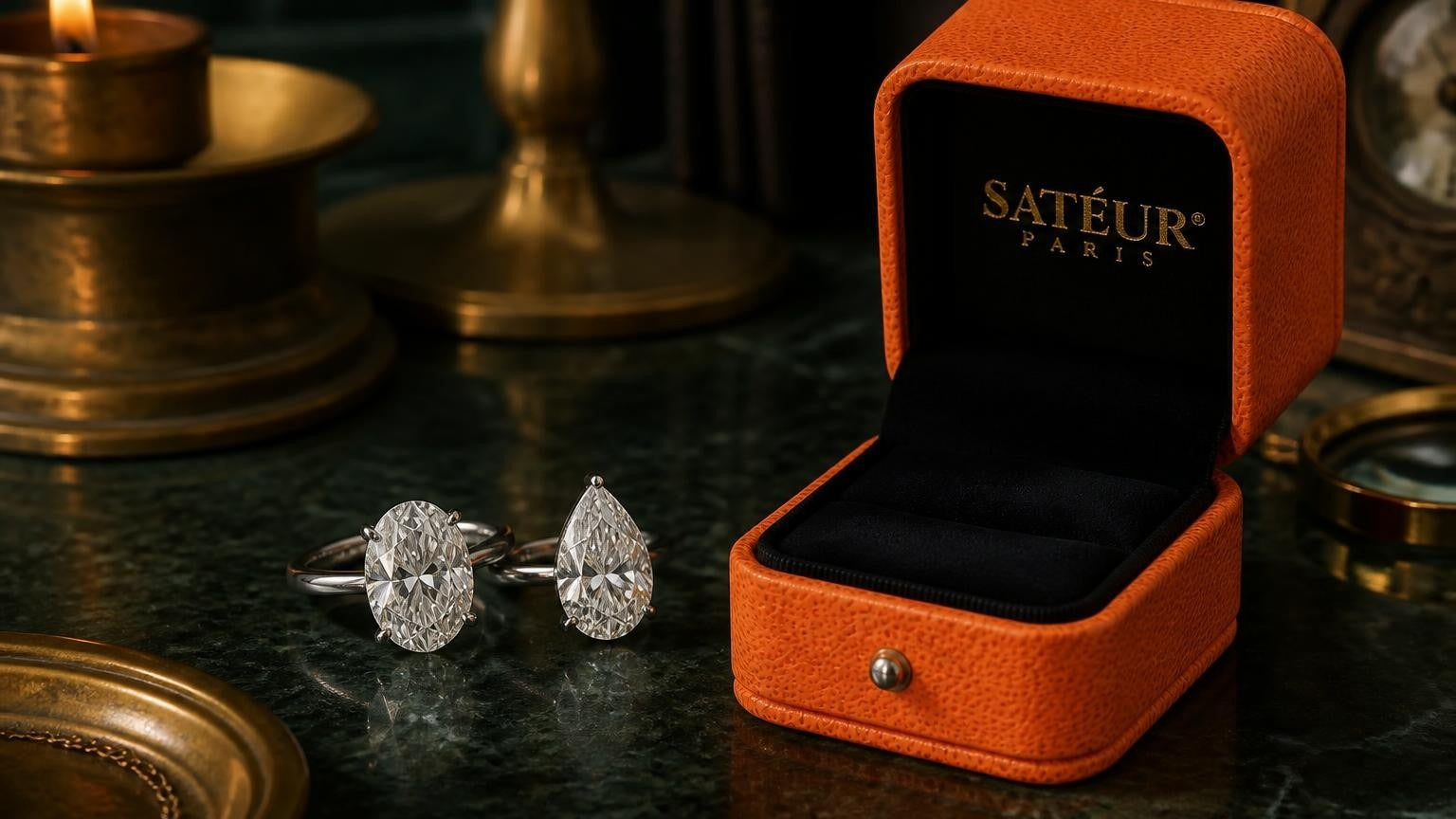
The oval halo gained significant attention in the early 2010s and has maintained its position since. The elongated oval shape creates the visual illusion of a larger stone while, for many hand proportions, being more flattering than a round brilliant. The halo amplifies both effects — and the two combined create a ring that reads significantly larger than its carat weight would suggest. Oval cuts also typically show fewer light-return dead zones than round brilliants in lower-quality stones, which means the quality-to-appearance relationship is forgiving for those working within a specific budget.
Cushion Pavé
The cushion pavé is the choice of those who prioritise warmth and presence. The cushion cut — a rounded square with large, open facets — handles light differently from a round brilliant, returning a softer glow rather than a sharp optical flash. Paired with a pavé band, it creates a continuous sparkle across the whole piece. The overall effect is warm, generous, and feminine in a way that is specific to this configuration. Cushion-cut stones in D-E colour deliver a particularly clean version of this effect, avoiding the warmer tints that can affect lower-colour grades in this cut.
Emerald Cut Solitaire
The emerald cut solitaire is for those who want to be unambiguous about their aesthetic intelligence. The emerald cut uses fewer, larger facets arranged in step formation — it does not scatter light, it reflects it in long, mirrored planes. There is no optical illusion here. The stone shows exactly what it is. This transparency makes colour and clarity grade genuinely visible; a D-E colour stone reads as distinctly cleaner than lower grades in this cut, more so than in brilliant cuts. The ring communicates restraint and directness. It is the most architecturally honest configuration in the standard vocabulary.
Princess Cut Solitaire
The princess cut — a square brilliant with right-angle corners and high facet count — offers a modern alternative to the round brilliant with comparable light return. Its geometric edge reads as more contemporary and architectural than the round, while still delivering the broad sparkle of a brilliant cut. It is the second most popular cut after round globally, and is particularly well-suited to four-prong solitaire settings where the prongs sit on the four corners and protect the stone's most vulnerable points.
How to Choose a Ring Style for Your Face Shape and Lifestyle
The relationship between ring shape and hand is real, though often overstated. The practical principle is contrast: shapes that differ from your hand proportion tend to be flattering. A long oval or marquise stone on shorter, wider fingers visually elongates. A round brilliant or cushion on longer, narrower fingers adds width and presence. Rounded shapes — oval, pear, cushion — are generally more universally flattering across different hand proportions than strictly angular ones like princess or emerald.
More practically relevant than face-shape rules: the ring style should match how you actually use your hands. A pavé band with exposed prongs catching a jumper on a Monday morning is not a sustainable luxury choice. A bezel-set stone that wears at the gym, in the shower, and at dinner without a second thought is.
For an active lifestyle — regular training, outdoor work, sport — the bezel setting and channel-set pavé are the strongest configurations in practice. Both minimise snag risk, protect the stone's girdle from impact, and require far less maintenance over years of daily wear. Both Satéur Gems® (approximately 8.8 Mohs) and Satéur Moissanite (approximately 9.25 Mohs) are extremely durable and built for everyday wear. The right stone in the right setting will hold its brilliance for life.
The choice that earns the most wear — the ring you forget is a ring because it fits your life so naturally — is always the better choice, regardless of its place in the style chart.

Satéur Destinée Ring™
The look of a flawless diamond, for 1% of the price.
Compare to a $10,000 mined diamond
Joined by 100,000+ couples across 150+ countries.
Discover The 1% RingFree worldwide shipping · 30-day returns · Lifetime Satéur Care
Satéur Gems® Engagement Rings: Brilliance at Transparent Pricing
Every engagement ring style described in this chart can be executed at two entirely different price points: the traditional mined-diamond price, or the Satéur price. The difference is not in the stone's appearance — it is in the industry's historical relationship between artificial scarcity and pricing. Satéur was founded on the decision to disengage from that relationship entirely.
Satéur Gems® is a trademarked diamond simulant engineered to D-E colour and Excellent cut specification. The result is the clean, white brilliance of a flawless diamond — diamond-accurate, restrained, with the precise optical properties of a fine colourless stone and none of the additional coloured dispersion. To the naked eye and across the table, it reads exactly as it is designed to read: a flawless diamond. The Maison does not disclose the specific material composition of Satéur Gems® — the stone is a proprietary formula and the trademark protects its identity. What matters optically is the result: D-E colour, Excellent cut, refractive index consistent with premium gem-grade stones (~2.39).
The entry point is $88 — the Satéur Destinée Ring™, a 1.00 carat round brilliant in an 18K white gold finish. A mined-diamond equivalent in the same D-E colour, Excellent cut specification would cost between $8,000 and $12,000. That gap is not a quality difference. It is the gap between scarcity pricing and the pricing of intelligent making. The 1% Ring® is the most direct expression of this position.
Over 100,000 customers across 150+ countries have chosen this path. The New Diamond Standard® is not a tagline — it is a shift in how people think about what a ring means and what a ring should cost.
Satéur also offers a moissanite tier — a lab-created gemstone with approximately 9.25 Mohs hardness and notably more fire than a diamond, with a vivid, rainbow-forward sparkle. Moissanite suits those who want high-dispersion brilliance with full material transparency. The choice between Satéur Gems® and moissanite is a question of optics preference: diamond-accurate white brilliance, or vivid high-fire brilliance. Both are available in ring configurations across all the styles in this chart.
For those who want the chemical and optical structure of a real diamond, the Satéur lab-grown diamond tier offers IGI-certified stones at a significant reduction from mined-diamond pricing.
Across all three tiers, the setting vocabulary is the same: solitaire, halo, three-stone, pavé, vintage, bezel. Every style in this chart is available. The stone you choose sits inside that architecture. The architecture is fixed. The stone is the decision.
Metal Choice and Setting Style: How They Interact
The final variable in any engagement ring style decision is metal. Metal choice interacts with setting, stone, and skin tone — and it changes how the stone reads at every moment of the day.
Platinum is the most neutral and most durable metal choice. It does not tarnish or change colour over time, and its cool, slightly blue-white tone maximises the crisp, colourless appearance of a D-E colour stone. It is the heaviest and most dense of the common ring metals, which gives it a particular feel on the hand — substantive, precise, premium.
18K white gold (in a rhodium-plated finish) reads identically to platinum when new, at a typically lower price point. Over time, the rhodium plating wears and requires re-plating — a minor maintenance procedure. The Satéur range uses an 18K white gold finish across its core settings, which provides the cool-tone, high-clarity look that maximises a D-E colour stone's appearance.
Yellow gold creates a different register entirely. Against a white D-E colour stone, a yellow gold setting adds warmth — the stone reads as slightly warmer than it is against platinum, but the contrast between the gold band and the white stone is distinctly elegant. Vintage and antique styles almost always appeared originally in yellow gold or rose gold; many buyers returning to those styles choose yellow gold for period correctness.
Rose gold is the warmest and most romantic metal choice. Against a round brilliant, the pink tone of the setting creates a warm, soft visual atmosphere. It is particularly effective with cushion and oval cuts, where the stone's own warmth complements rather than contrasts the metal.
The correct metal choice is not the most expensive or the most conventional — it is the one that reads correctly against your skin tone, suits your daily wardrobe, and matches the long-term aesthetic commitment you are making when you choose a setting style.
The engagement ring market has shifted. The decision to choose a setting, a stone, and a metal based on what is right — for your hand, your life, your aesthetic — rather than what carries the largest price receipt is no longer unconventional. Satéur's engagement ring collection is built for exactly that shift, across every style in this chart.
Frequently Asked Questions About Engagement Ring Styles
What is the difference between solitaire and halo engagement ring settings?
A solitaire setting presents a single stone on a plain or minimal band, with nothing to compete with the stone's own light. A halo setting surrounds that centre stone with a ring of smaller stones — usually round brilliants — which amplifies the perceived size of the centre gem and creates continuous sparkle around it. Solitaires read as architectural and precise; halos read as romantic and maximalist. Both settings work across all major stone shapes, from round brilliant to oval to cushion. The choice is one of visual character: restraint versus amplification.
How do I choose an engagement ring style that suits my lifestyle?
The most practical consideration is how protruding the setting is. Pavé prongs, high four-prong solitaires, and ornate vintage metalwork can catch on fabrics and require more maintenance over time. For an active lifestyle — sport, outdoor work, regular gym use — a bezel setting or channel-set pavé minimises snag risk and provides the strongest stone security. Both Satéur Gems® and Satéur Moissanite are extremely durable and built for everyday wear. The ring you wear every day without thinking about it is always the right ring.
What are the most popular engagement ring shapes right now?
Round brilliant remains the dominant shape globally, accounting for the majority of engagement ring sales. Oval has maintained strong popularity since the early 2010s. Cushion and emerald cuts have grown significantly in the past decade. Pear and marquise have re-entered popularity cycles, particularly on thinner, more delicate bands. The popularity ranking shifts by region and demographic — but round brilliant, oval, and cushion consistently account for the largest share of contemporary choices across all markets.
Does engagement ring style affect how the stone appears to the eye?
Yes, significantly. A halo setting makes a centre stone appear larger by framing it with additional light-reflecting material. A high four-prong solitaire maximises light entry from below the stone, increasing brilliance. A bezel setting, which encircles the stone in metal, slightly reduces light return at the edges but protects the stone's girdle completely. Pavé bands draw the eye along the ring's length and integrate the centre stone into a continuous sparkle effect. Setting and stone interact closely — the style choice is also a light-management decision that affects how the stone reads at every distance and in every lighting condition.
Can I customise an engagement ring style with a different metal or stone?
Yes. Metal choice — platinum, 18K white gold finish, yellow gold, rose gold — changes how the stone reads considerably. A warm yellow gold setting shifts a white stone toward a warmer, more vintage register. Platinum and white gold maximise the cool, crisp optical clarity of a D-E colour stone. Satéur Gems® — engineered to D-E colour and Excellent cut specification — reads cleanly and distinctly in any metal. The Satéur range is available in multiple metal finishes across all major ring settings, with the Destinée solitaire as the most versatile starting point for customisation across styles, metals, and carat weights.
What is the best engagement ring style for an active lifestyle?
The bezel setting is the most protective and snag-resistant configuration for an active lifestyle. It encircles the stone in a complete metal rim which protects the stone's edges from impact and eliminates the risk of prong damage or snagging. Channel-set pavé bands are the second-best practical option — stones are set within a groove flush with the band surface, with no exposed prongs. Both options are available with Satéur Gems® and Satéur Moissanite stones, both of which are extremely durable and suited to demanding daily conditions. The ring that holds up to your life without requiring daily management is always the right choice.
















Laat een reactie achter
Deze site wordt beschermd door hCaptcha en het privacybeleid en de servicevoorwaarden van hCaptcha zijn van toepassing.