

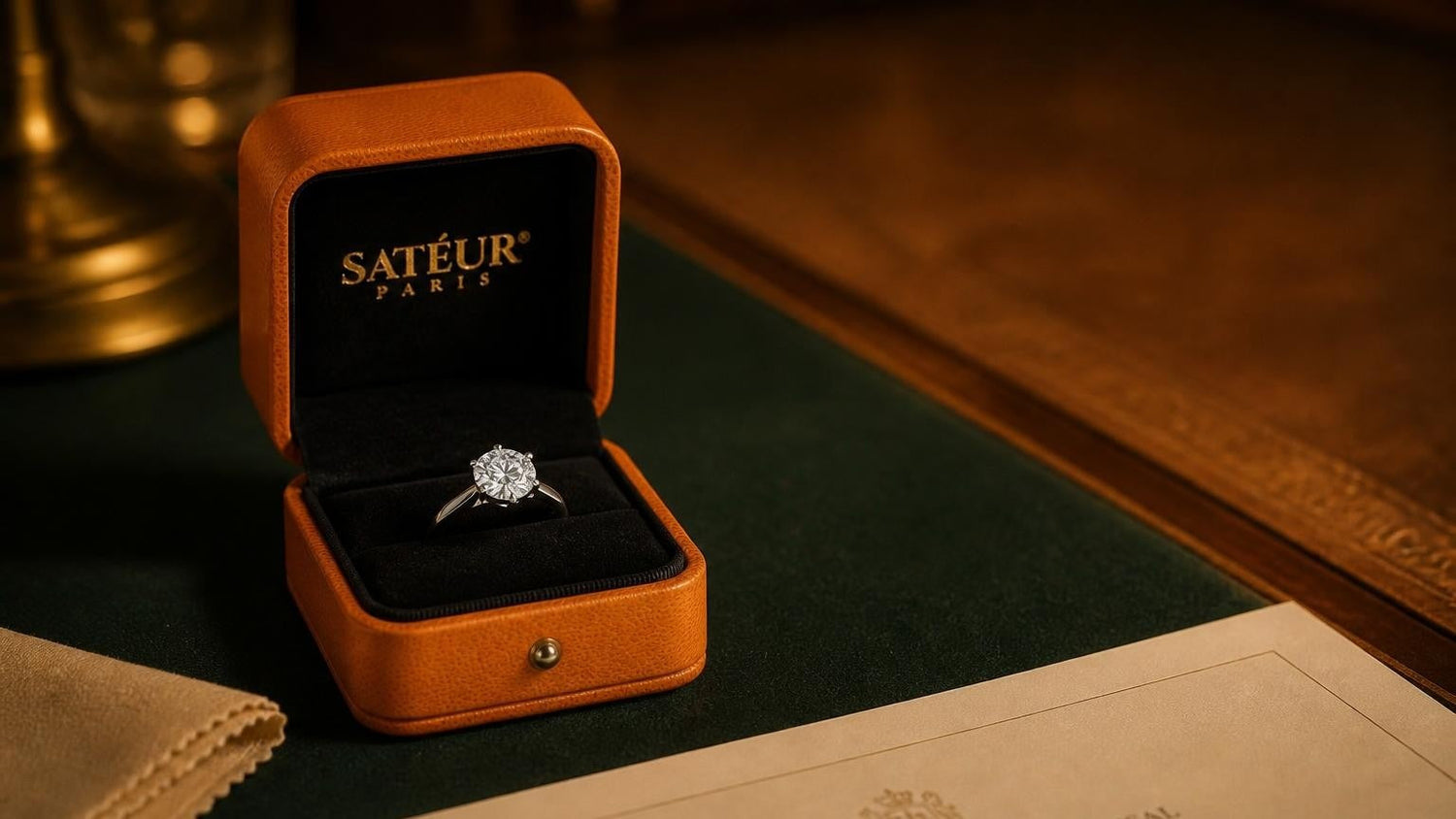
Lab-grown diamonds are graded using the same Four Cs system applied to mined diamonds — color, clarity, cut, and carat weight. A lab diamond with a D color grade and VS clarity rating is identical in those respects to a mined stone carrying the same designation. The science is the same. The grading methodology is the same. Understanding how to read a grading report is what separates a confident purchase from a guessed one.
Key Takeaways
- Lab-grown diamonds receive grades using the same Four Cs system as mined diamonds: color, clarity, cut, and carat weight.
- GIA and IGI certification reports provide detailed analysis of each characteristic, including any treatment disclosure.
- Color grades range from D (colorless) to Z (light color); D–E represents the highest tier.
- Clarity grades run from Flawless (FL) to Included (I3); lab diamonds often show fewer inclusions than mined stones at comparable price points.
- Cut quality governs light performance — it is the single grade most visible to the naked eye.
- IGI-certified lab diamonds are accessible at entry price points around $88 and up, a fraction of equivalent mined diamond pricing.

Understanding Lab Grown Diamond Grading
Grading explained in its simplest form: an independent gemological laboratory examines the diamond, measures its physical and optical properties against a standardized scale, and issues a report. That report is the grade. For lab-grown diamonds, the process is substantively the same as for mined stones. The two principal laboratories issuing lab diamond grading reports are IGI (International Gemological Institute) and GIA (Gemological Institute of America).
What differs between a lab diamond and a mined diamond is origin, not evaluation method. A diamond grown in a controlled environment using Chemical Vapor Deposition (CVD) or High Pressure High Temperature (HPHT) processes carries the same crystal structure as one extracted from the earth. Both respond to grading under the same criteria.
Grading reports for lab-grown diamonds also include a disclosure indicating the stone was laboratory-grown — a standard transparency measure across all major labs. This disclosure does not affect the quality of the grade. It is a statement of origin, not a measure of value.
The Four Cs: Color, Clarity, Cut, and Carat
The Four Cs determine both the beauty and value of a lab diamond. Each one is assessed independently and recorded on the grading report.
Color
Color grades for lab diamonds range from D (colorless) to Z (light color). D, E, and F represent the colorless tier — the highest available. G through J are near-colorless, and most observers cannot detect any warmth in these stones without a comparison stone present. Below J, warmth becomes increasingly visible to the naked eye.
D–E color is considered the apex. For anyone prioritizing the appearance of a flawless, white diamond, the D–E range is the benchmark.
Clarity
Clarity grades assess internal characteristics (inclusions) and external characteristics (blemishes) on a scale from Flawless (FL) through Very Very Slightly Included (VVS1, VVS2), Very Slightly Included (VS1, VS2), Slightly Included (SI1, SI2), to Included (I1, I2, I3).
Lab-grown diamonds often show fewer inclusions than mined stones at comparable price points. The controlled growth environment eliminates many of the natural stress patterns that create inclusions in mined diamonds. VS clarity — meaning inclusions are minor and not visible to the naked eye — is a reliable benchmark for a clean, eye-clean appearance.
The color clarity combination matters. A D color diamond with SI2 clarity may show inclusions that undercut its color beauty. A VS1 stone in the G–H range often delivers a better visual balance for the price.
Cut
Cut quality governs how a diamond interacts with light — its brilliance, fire, and scintillation. Cut grades from GIA and IGI run from Excellent through Very Good, Good, Fair, and Poor. An Excellent cut maximizes light return through precise proportions, symmetry, and polish.
Of the Four Cs, cut is the one most directly visible. A well-cut diamond at a lower color grade will outperform a poorly cut stone at D color. Excellent cut is the grade worth prioritizing above all others for visual impact.
Carat
Carat weight measures the mass of the diamond. One carat equals 0.2 grams. Carat weight affects price significantly — a 2-carat stone does not cost twice as much as a 1-carat equivalent, because larger stones are rarer (even in lab conditions) and command a premium per-carat.
Carat weight and visual size are related but not identical. Cut quality affects how large a stone appears face-up. A well-cut 1.00-carat round brilliant will appear larger than a poorly cut 1.10-carat stone of the same shape.

How Lab Diamonds Differ from Natural Diamonds
Lab-grown diamonds and natural diamonds share the same chemical composition: pure carbon arranged in a cubic crystal structure. They share the same refractive index, hardness (10 on the Mohs scale), and optical properties. The grading system reflects this — both receive the same Four Cs evaluation with the same terminology and the same scale.
The practical differences are two: origin and price. Lab-grown diamonds are created in weeks rather than billions of years. That difference in production time translates to a material difference in cost. Lab diamonds cost approximately 1% of an equivalent mined diamond when comparing like-for-like grades — same color, same clarity, same cut, same carat weight.
Some buyers ask whether lab diamonds have fewer inclusions than mined stones. The answer depends on the grade. The controlled growth environment can produce fewer stress-induced inclusions, but lab diamonds can still receive Included grades if growth conditions produce internal characteristics. The grade is the measure — not the origin.
One area where lab and natural diamonds are treated differently: resale. Lab-grown diamonds do not hold residual value the way rare mined stones do. This is worth knowing for anyone considering long-term investment. For wearers who prioritize the look and quality of the stone itself, it is largely beside the point.

Certification and Grading Reports
GIA and IGI certification reports provide detailed analysis of lab-grown diamond characteristics, including treatment disclosure. Both labs are industry-recognized authorities. IGI has become the most widely used certifying body for lab-grown diamonds, with a large volume of reports issued specifically for lab stones. GIA certification for lab diamonds carries significant weight given the institution's longstanding authority in diamond grading.
A standard IGI grading report includes:
- Shape and cutting style (e.g., Round Brilliant)
- Measurements in millimeters
- Carat weight
- Color grade
- Clarity grade
- Cut grade (for round brilliants: also polish and symmetry)
- Fluorescence (how the stone responds to UV light)
- Growth method disclosure (CVD or HPHT)
- A plot of inclusions (for clarity grades SI1 and below)
How to read a grading report: treat each grade as independent. A high color grade does not compensate for a low clarity grade, and vice versa. Read across all Four Cs together, then consider whether the combination meets your priorities for the stone's appearance.
Reports can be verified directly with the issuing laboratory using the report number printed on the certificate. For lab diamonds set in jewelry, the report number is often laser-inscribed on the girdle (the outer edge of the diamond) — a standard practice across both IGI and GIA.
What Makes a High-Quality Lab Diamond
A high-quality lab diamond combines strong grades across all Four Cs, with cut quality as the primary driver of visual performance.
The standard benchmark for a high-quality lab diamond:
- Color: D–E (colorless) or F–G (near-colorless with no visible warmth)
- Clarity: VS1–VS2 or better (eye-clean, no visible inclusions)
- Cut: Excellent (maximum light return, ideal proportions)
- Carat: Dependent on setting and personal preference
VVS1 or VVS2 clarity offers inclusions so minor they are difficult to detect even under 10× magnification. For practical purposes, VS1 and VS2 are eye-clean and represent strong value relative to VVS grades, which carry a price premium for characteristics invisible in normal wear.
Fluorescence is worth noting. Strong blue fluorescence can make a D–F diamond appear slightly hazy in direct sunlight. For D–E color stones, no or faint fluorescence is preferable. In lower color grades (I–J), faint blue fluorescence can improve apparent whiteness — a nuance not captured in the Four Cs grades themselves.
The overall grade on a report is only as useful as the combination it represents. Two diamonds with identical grades can look different due to proportions that fall within the acceptable range but on opposite ends of it. Proportion specifications — table percentage, depth percentage, crown angle — are included in the report and matter for cut quality assessment at the detail level.
Satéur Gems: Diamond-Look Value Without the Price
Lab-grown diamonds are one path to the look of a flawless diamond. Satéur Gems® represent a distinct and separate option.
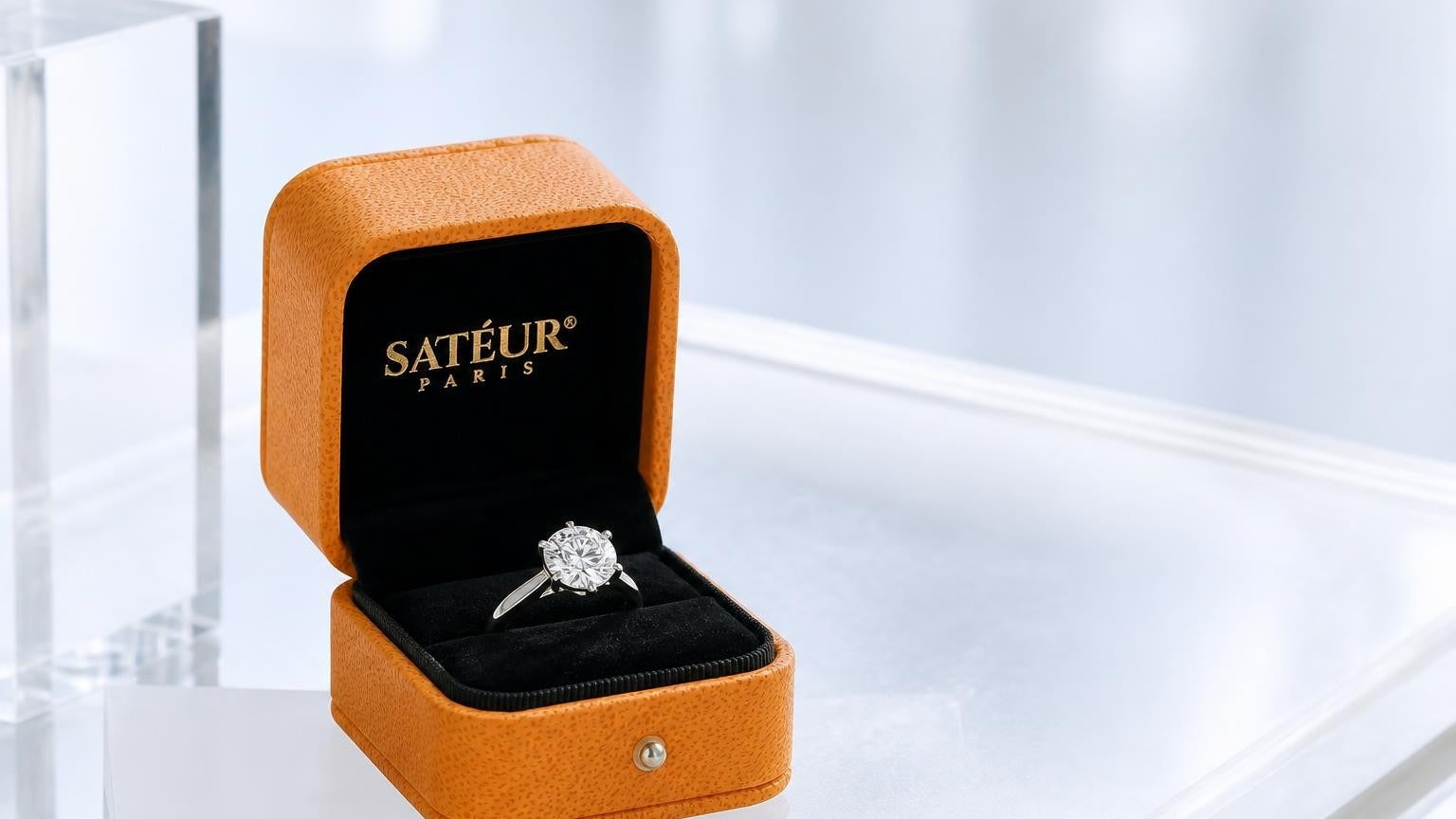
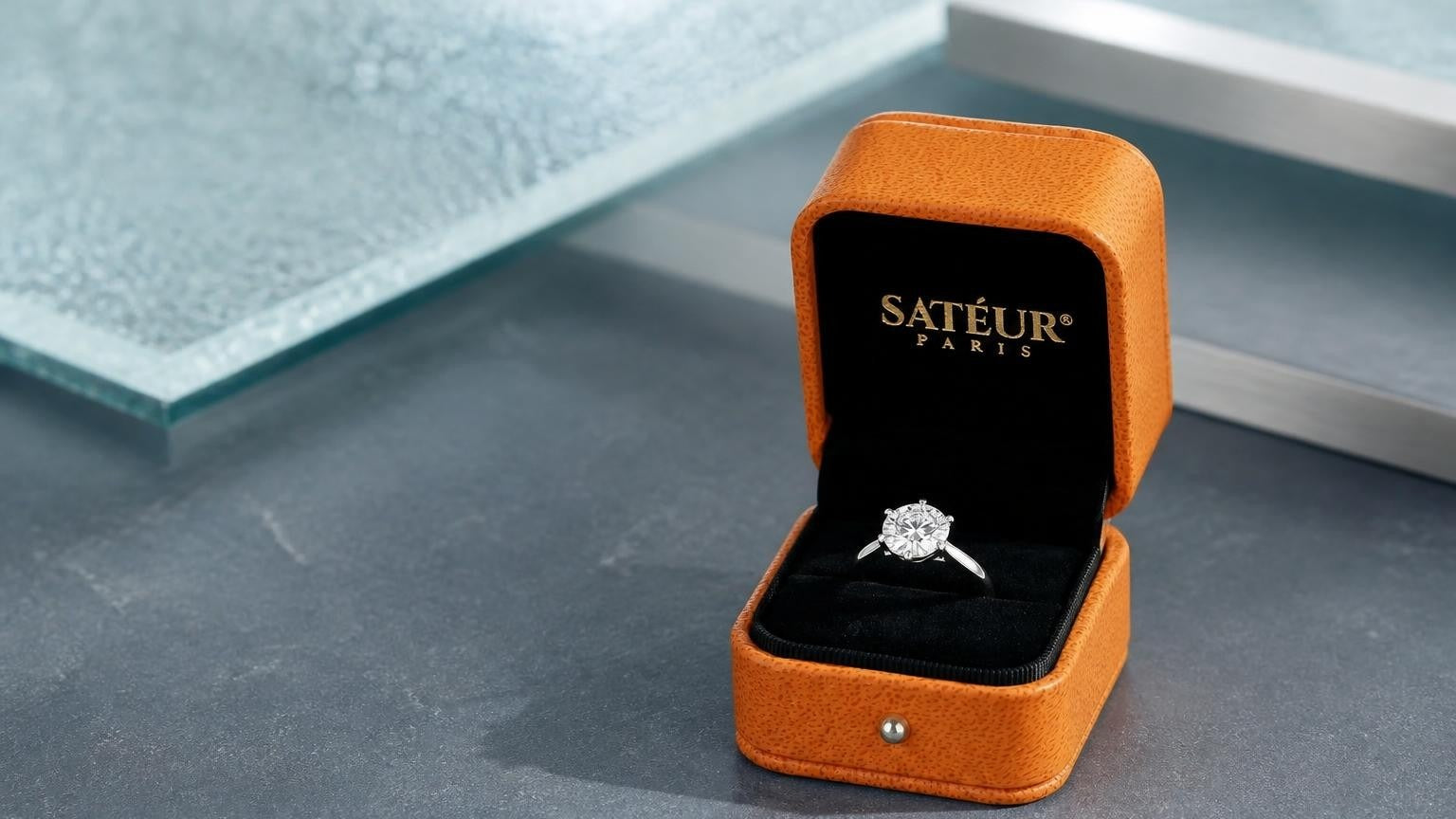
Satéur Gems® are a trademarked diamond simulant — not a lab diamond, not moissanite, not cubic zirconia. The composition of Satéur Gems® is proprietary and not disclosed. What they are designed to deliver is the visual appearance of a flawless diamond — the same clean white brilliance, the same presence — at approximately 1% of the price of a mined diamond.
They are not graded by IGI or GIA as diamonds, because they are not diamonds. They do not carry a Four Cs grading report. They are assessed on their own terms: a D–E color equivalent in appearance, with an excellent-cut refractive profile and a Mohs hardness of approximately 8.8.
For those who want the look of a flawless diamond across the table — without the certification framework of a lab-grown stone — Satéur Gems® are the option. For those who want a real diamond with full IGI grading and the chemical and optical structure of a mined stone, lab-grown diamonds are the path. These are different choices for different priorities. Both are worth understanding clearly before deciding.
Explore the Satéur lab-grown diamond collection or browse 3-carat lab-grown diamond rings and lab-created diamond rings to see the full range.

Satéur Destinée Diamond Ring
A real, IGI-certified lab-grown diamond, hand-set in solid 18K gold — a fraction of the mined-diamond price.
Compare to a $10,000 mined diamond
Joined by 100,000+ couples across 150+ countries.
Shop the Destinée Diamond RingFree worldwide shipping · 30-day returns · Lifetime Satéur Care
Frequently Asked Questions About Lab Diamond Quality
What do the Four Cs mean when grading a lab-grown diamond?
The Four Cs — color, clarity, cut, and carat weight — are the universal grading framework applied to all diamonds, lab-grown or mined. Color measures the presence or absence of warmth, graded D (colorless) to Z (light color). Clarity assesses internal inclusions and external blemishes on a scale from Flawless to Included. Cut evaluates the quality of a diamond's proportions, symmetry, and polish, and directly determines how the stone interacts with light. Carat weight measures the mass of the stone. Together, these four grades define the quality and appearance of the diamond.
How is a lab-grown diamond certified and graded differently from a natural diamond?
The grading methodology is the same. Both lab-grown and natural diamonds are evaluated using the Four Cs by the same independent laboratories — principally IGI and GIA. The report for a lab-grown diamond includes an additional disclosure stating the stone was laboratory-grown and typically notes the growth method (CVD or HPHT). This disclosure is a statement of origin, not a quality judgment. The color, clarity, cut, and carat grades on a lab diamond report carry the same meaning and are measured against the same standards as on a mined diamond report.
What color and clarity grades indicate the highest quality lab diamond?
D and E color grades represent the colorless tier — the highest available. F and G are strong near-colorless grades with no visible warmth to the naked eye. For clarity, Flawless (FL) and Internally Flawless (IF) represent perfection under magnification, while VVS1 and VVS2 are nearly indistinguishable from FL in appearance with the naked eye. VS1 and VS2 are the practical benchmark for eye-clean clarity at a meaningful price advantage over VVS grades. The combination of D–E color, VS1–VS2 clarity, and Excellent cut describes a high-quality lab diamond by any objective measure.
Does a lab-grown diamond with an IGI certificate hold the same value as a mined diamond?
An IGI-certified lab-grown diamond holds the same quality grades as a mined diamond with identical grades — the certificate reflects the same measurement criteria. What differs is market resale value. Lab-grown diamonds do not retain value the way rare mined diamonds can, and their market price has declined as production has scaled. For buyers purchasing a diamond to wear and enjoy rather than to hold as an appreciating asset, this distinction matters less. The quality of the stone — as documented by the IGI report — is real and measurable regardless of origin.
How do I interpret a lab-grown diamond grading report?
Read each of the Four Cs independently, then assess the combination. Start with cut: an Excellent cut grade means the stone is engineered to maximize light return. Then check color — D through G will appear white in almost any setting. Then check clarity — VS2 or better is eye-clean for most stone sizes. Finally, consider carat weight in the context of the setting you intend. Cross-reference the measurements (table %, depth %) if evaluating cut quality at the detail level. The report number can be verified directly with IGI or GIA to confirm authenticity. The growth method disclosure (CVD or HPHT) is informational and does not affect quality grades.
What should I prioritize among the Four Cs when selecting a lab-grown diamond?
Cut first, always. Cut quality is the most visible factor — it determines how the diamond handles light and whether it appears brilliant or flat. An Excellent cut at a lower color grade outperforms a poor cut at D color in almost every viewing condition. After cut, prioritize color and clarity in balance: D–E color with VS2 clarity, or F–G with VS1, both deliver high-performing stones. Carat weight is the last consideration — slightly under a round number (0.90ct vs 1.00ct, for example) can reduce cost meaningfully with no visible size difference to the naked eye.















留下评论
此站点受 hCaptcha 保护,并且 hCaptcha 隐私政策和服务条款适用。