

Homemade Jewelry Cleaner: Safe Methods for Every Metal and Gemstone
A homemade jewelry cleaner costs almost nothing and takes less than ten minutes. Warm water, a drop of mild dish soap, a soft toothbrush — and most rings, earrings, and necklaces emerge as bright as the day they arrived. The question is not whether DIY jewelry cleaning works. It is knowing which method belongs to which metal, which gemstone, and which level of buildup.
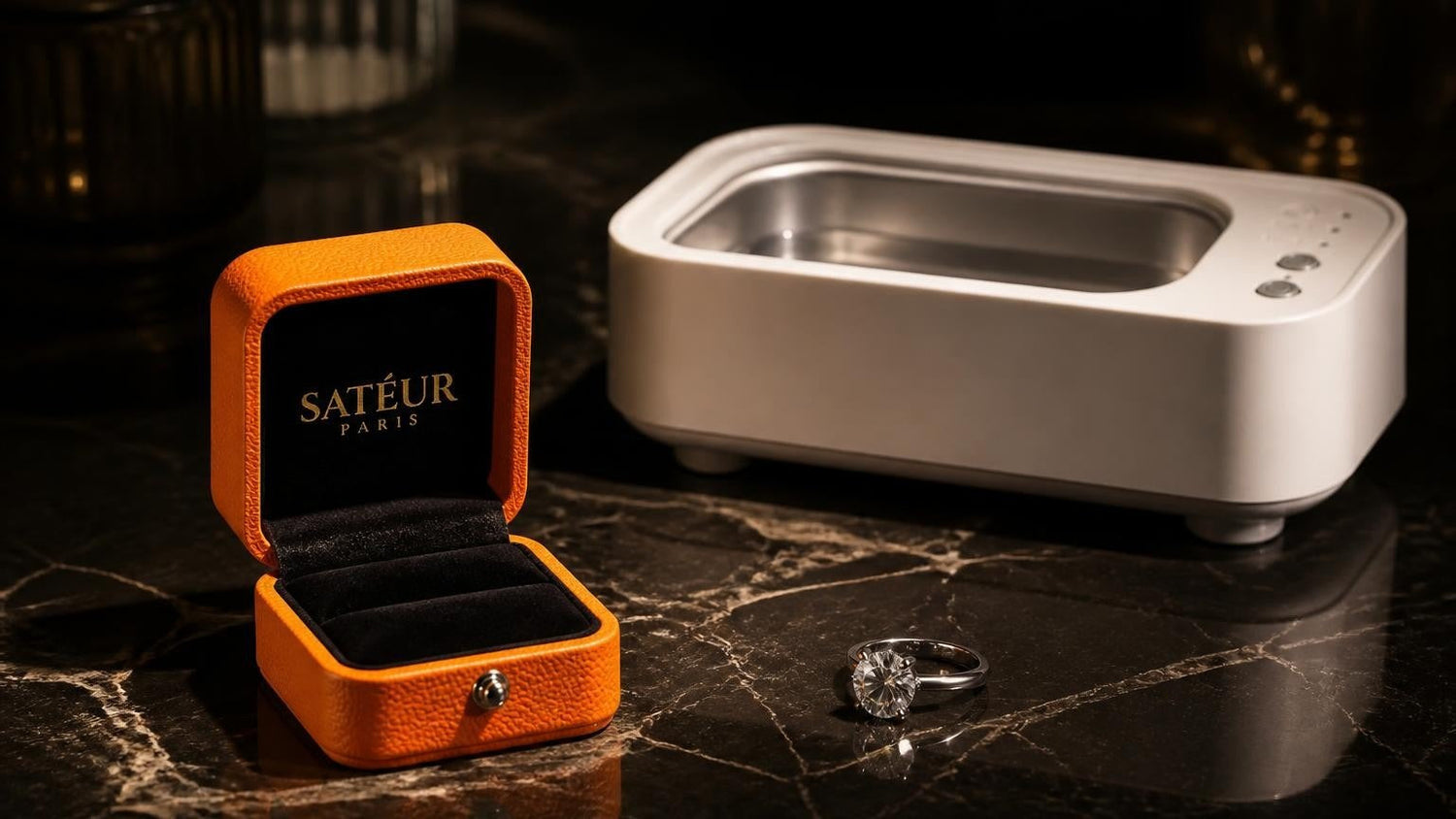
This guide covers the three baseline approaches to jewelry cleaning at home — warm water and soap, baking soda paste, white vinegar — alongside a care section for Satéur Gems®, the signature diamond-look gemstone that responds to the same gentle routine as fine diamond.
Key Takeaways
- Warm water with mild dish soap is the safest baseline for jewelry cleaning at home — compatible with gold, platinum, silver, and most gemstones.
- Baking soda paste lifts stubborn buildup from gold and platinum; use a soft toothbrush and light motion to avoid micro-scratches.
- White vinegar dissolves silver tarnish within 5–10 minutes of soaking; rinse thoroughly and dry with a lint-free cloth.
- Satéur Gems® carry D–E colour grading and an Excellent cut; their clean, white brilliance is maintained with the same gentle water-based care as fine diamond — starting at approximately $88, regular professional polishing is optional.
- Pearls, opals, and vintage enamel should never be soaked — a barely damp cloth only.
- Hot water, toothpaste, and chlorine bleach are the most common causes of preventable jewelry damage at home.

Homemade Jewelry Cleaner Methods for Routine Care
Three methods cover the vast majority of at-home jewelry cleaning. Each has a specific application, and none require specialist equipment. The principle behind all of them is the same: remove accumulated oils, skin cells, and environmental residue without disturbing the metal finish or the gemstone setting.
Choosing the right method depends on what you are cleaning — not on what is most convenient. A delicate vintage setting demands a different approach than a contemporary solitaire in 18k gold finish. Begin with the mildest option and escalate only when needed.
Why Gentle Cleaning Matters for Fine Jewelry
Every piece of fine jewelry accumulates a film over time. Skin oils, hand cream, perfume, and everyday handling settle into the facets and prongs of even the most protected ring. That film does not damage the gemstone — but it dims the brilliance that was the reason you chose the piece in the first place.
Regular, gentle jewelry cleaning — once a week for a ring worn daily — restores that optical clarity. The word "gentle" is the operative constraint. Abrasive cloths, undiluted chemical cleaners, and hot water all carry measurable risk: micro-scratches in soft metal finishes, loosened prong settings from thermal shock, and surface etching of porous gems. A soft toothbrush and warm soapy water introduce none of these risks when used with the correct technique.
For a broader survey of specialist options, the best jewelry cleaner guide covers what to look for when moving beyond the kitchen sink — from enzyme-based solutions to machine-assisted cleaning.
Warm Water and Mild Dish Soap: The Foundation
This is the starting point for almost every piece of fine jewelry. Fill a small bowl with warm — not hot — water and add two or three drops of mild dish soap. Choose a formula without moisturisers, degreasers, or antibacterial additives; those leave their own residue on the metal. Let the piece soak for three to five minutes.
After soaking, work a soft-bristled toothbrush gently around the setting, under the stone, and along the band. The toothbrush reaches the recessed areas where oils concentrate most. Rinse under cool running water, holding the piece over a closed drain or a second bowl, and pat dry with a clean, lint-free cloth. Allow it to air-dry fully before storing.
This method is safe for: solid gold, 18k gold finish, platinum, sterling silver, most diamond-look gemstones, moissanite, and lab diamonds. It is the appropriate routine for any piece worn consistently and forms the baseline of all clean jewelry practice.
Baking Soda Solutions for Stubborn Buildup
Baking soda offers mild abrasion that lifts accumulated residue from gold and platinum without scratching, provided the application is correct. Mix one tablespoon of baking soda with enough water to form a paste — roughly two teaspoons. Apply with a soft cloth or the pad of a finger, working in small circular motions along the band and around the setting.
The critical variable is tool choice. A soft toothbrush extends reach to prong channels and engraved details without increasing abrasive pressure. A medium or hard brush, or any abrasive pad, leaves micro-scratches in the metal surface that dull its finish permanently. After cleaning, rinse with warm water — baking soda residue left in settings dulls the finish over time — and dry completely with a lint-free cloth.
Baking soda is suitable for: yellow gold, white gold, and platinum. Use with caution on silver — inadequate rinsing can accelerate future tarnish. Avoid it entirely on porous gems, pearls, opals, and turquoise, where the mild alkalinity disrupts the surface structure.
White Vinegar and Soft Brush Technique
White vinegar is the most effective homemade solution for silver tarnish. The acetic acid reacts with silver sulphide — the compound responsible for grey-black darkening — and lifts it from the surface. Soak the silver piece in undiluted white vinegar for five to ten minutes, then work a soft toothbrush through any recessed or textured areas. Rinse with clean water and dry thoroughly with a lint-free cloth.
Some approaches combine white vinegar with baking soda. The brief reaction between the two creates a fizz that can dislodge surface buildup from intricate settings. For silver with deep tarnish in textured areas, a short dip in the combined mixture followed by a soft brush pass is effective — rinse immediately and completely, as the combination should not linger on metal or gemstones.
Do not use white vinegar on: pearls (the acid dissolves calcium carbonate), gemstones with surface-reaching fractures, or gold-plated jewelry where prolonged acid exposure strips the plating.
Cleaning Satéur Gems®: Clarity and Sparkle at Entry Price
Satéur Gems® — the gemstone behind The 1% Ring®, starting at approximately $138 — are graded at D–E colour with an Excellent cut. Their optical character is the clean, white brilliance of a flawless diamond: restrained, diamond-accurate, reading true across the table and to the naked eye. This is distinct from the higher-dispersion fire of moissanite; Satéur Gems® are designed to replicate the precise look of premium white diamond.
In terms of durability for daily wear, Satéur Gems® measure approximately 8.8 on the Mohs scale — extremely durable, built to hold their brilliance for life under normal conditions. That durability means a gentle warm-water and dish-soap routine, applied weekly, is all they require to maintain the optical clarity they were cut to deliver. Regular professional polishing becomes optional rather than necessary — part of what makes the $88 entry point meaningful for a gemstone of this cut quality.
The warm-water-and-soap method described above applies directly to Satéur Gems®. The sole additional consideration for the setting: the 18k gold finish responds to the same gentle approach — soft toothbrush, cool rinse, thorough drying with a lint-free cloth. Avoid any chemical cleaner not specifically formulated for gold-finish jewelry.
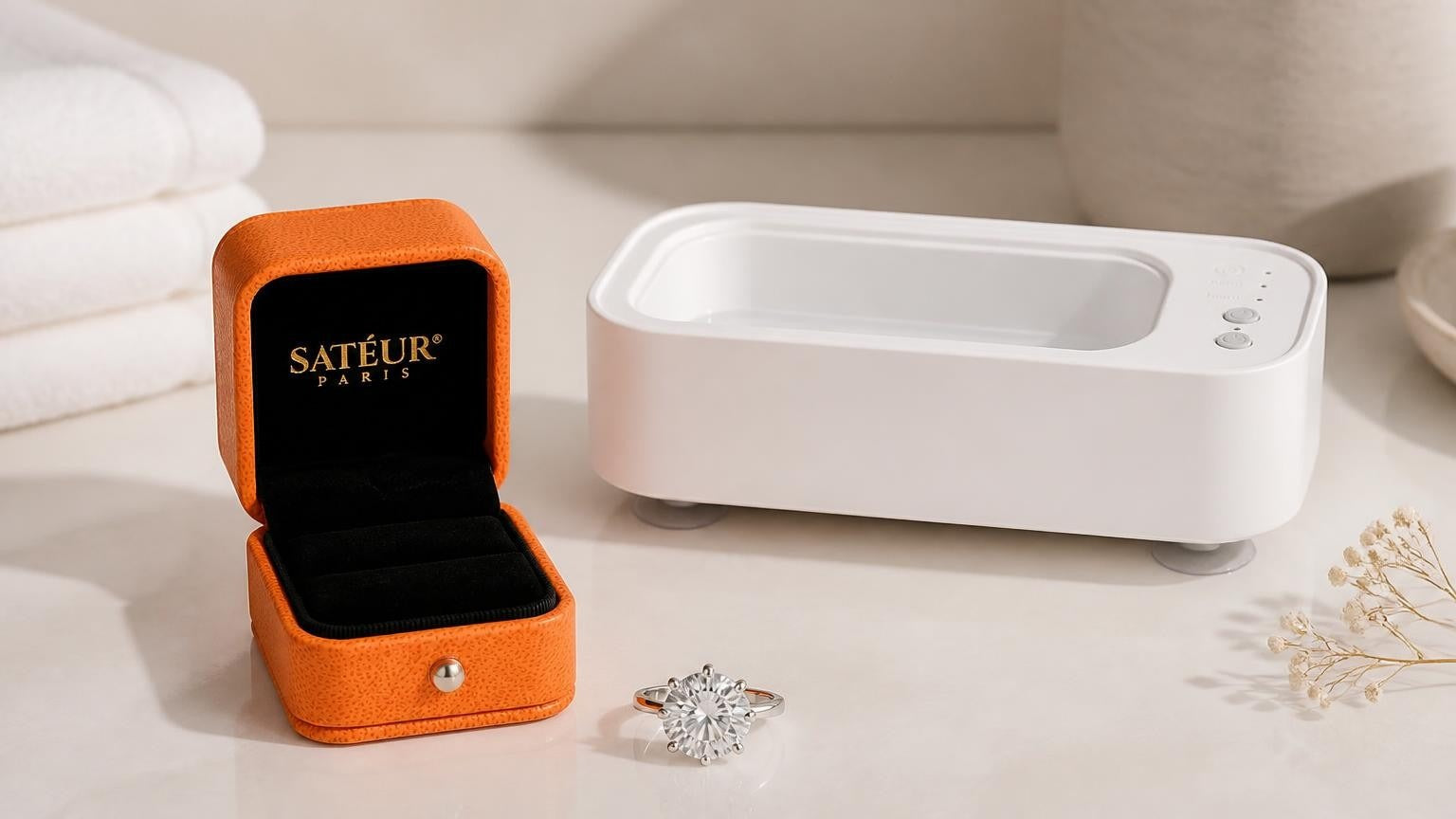
For those who want to move beyond the sink, the ultrasonic cleaner guide covers the full four-step process — and explains why the Satéur Ultrasonic Jewelry Cleaner 2nd Generation is a considered step up for a collection worn daily.

What Materials Should You Avoid
The methods above are safe precisely because they exclude the agents most likely to cause damage. Understanding what not to use is as important as the method itself.
- Chlorine bleach — corrodes gold alloys at the molecular level over repeated exposure. A single concentrated soak is sufficient to begin degrading the metal structure.
- Toothpaste — popular as a home remedy but consistently damaging. Toothpaste contains silica abrasives that scratch soft metals and many gemstone surfaces. It removes finish rather than restoring it.
- Acetone and nail polish remover — safe on mined diamond but strips the surface from many simulant gemstones and dissolves adhesive settings.
- Hot water — thermal shock loosens prongs, causes uneven metal expansion against set stones, and can fracture gems with existing inclusions.
- Ultrasonic cleaners on pearls and opals — the vibration frequency fractures the nacre layers of pearls and the water-bearing microstructure of opals. Both require only a barely damp soft cloth.
- Paper towels — contain wood fibres that micro-scratch soft metal surfaces. Use only microfibre or chamois cloth for drying and polishing.
How Often Should You Clean Your Rings
The frequency depends on how the piece is worn. A ring worn daily — particularly on the dominant hand, which contacts more surfaces — accumulates oils and residue quickly. Weekly cleaning with warm water and soap is a sustainable baseline for maintaining clean jewelry. Once a month, a deeper clean with baking soda paste or an ultrasonic cycle restores the full optical brilliance of the gemstone.
Jewelry worn occasionally — earrings reserved for evening wear, a necklace for formal occasions — requires cleaning before and after each extended wear period rather than on a fixed schedule. The goal in each case is the same: remove what has settled before it hardens into buildup that requires more aggressive treatment to clear.
For a dedicated home cleaning solution matched to your collection, the jewelry cleaner machine collection includes options suited to different jewelry types and wear frequencies.

The best jewelry cleaning routine is the one maintained consistently. A soft toothbrush, warm water, and a lint-free cloth require nothing beyond the household to keep most fine jewelry brilliant. For daily-wear pieces at the centre of a collection — a ring chosen for its diamond-accurate clarity, worn through every season — that weekly routine is the quiet commitment that preserves the decision made when first choosing it.
Frequently Asked Questions
What is the safest homemade jewelry cleaner for all metal types?
Warm water with a few drops of mild dish soap is the safest universal option for jewelry cleaning at home. It is pH-neutral, non-abrasive, and compatible with yellow gold, white gold, 18k gold finish, platinum, sterling silver, and most gemstones including diamond-look gems and moissanite. Soak for three to five minutes, use a soft toothbrush on recessed areas, rinse thoroughly under cool water, and dry with a lint-free cloth.
Can you use baking soda on gold and platinum without damage?
Yes, with the correct application. A paste of baking soda and water, applied with a soft cloth or soft-bristled toothbrush using gentle circular motion, lifts buildup from gold and platinum without scratching. The key is pressure — light touch only — and thorough rinsing to remove all residue afterward. Avoid baking soda on silver over extended use, and keep it away from porous gems, pearls, and opals entirely.
How does white vinegar remove tarnish from silver jewelry?
The acetic acid in white vinegar reacts chemically with silver sulphide — the compound that causes grey-black tarnish on silver — and dissolves the surface layer. Soaking silver pieces in undiluted white vinegar for five to ten minutes lifts the tarnish, which can then be cleared with a soft toothbrush on textured areas. Rinse thoroughly with clean water and dry completely. Not suitable for pearls, opals, or gold-plated pieces.
How often should you clean fine jewelry at home?
For rings worn daily, weekly warm-water-and-soap cleaning is an effective baseline. A deeper clean — baking soda paste or ultrasonic — once a month maintains the full optical clarity of the gemstone. Occasionally worn pieces should be cleaned before and after each extended wear period rather than on a fixed interval.
Is warm water and dish soap suitable for diamond-look gemstones?
Yes. Satéur Gems® and other diamond-look gemstones with a Mohs hardness above 8 respond well to warm water and mild dish soap. The method cleans without disturbing the cut facets or the setting structure. Avoid hot water — thermal shock can stress the prong setting — and always dry thoroughly before storing or wearing.
What materials should you never use in a homemade cleaning solution?
Chlorine bleach, toothpaste, acetone, and undiluted ammonia should never be used on fine jewelry. Bleach corrodes gold alloys; toothpaste contains abrasives that scratch metal and gemstone surfaces; acetone damages simulant gems and dissolves adhesive settings. Stick to mild dish soap for general cleaning, baking soda for gold and platinum buildup, or white vinegar for silver tarnish — and you avoid the most common causes of preventable damage.

Satéur Destinée Ring™
The look of a flawless diamond, for 1% of the price.
Compare to a $10,000 mined diamond
Joined by 100,000+ couples across 150+ countries.
Discover The 1% Ring®Free worldwide shipping · 30-day returns · Lifetime Satéur Care

















留下评论
此站点受 hCaptcha 保护,并且 hCaptcha 隐私政策和服务条款适用。