

Best Engagement Rings: What to Know Before You Choose
The best engagement rings share one quality: they were chosen with intention. Stone origin, setting, metal, and scale all matter — but the decision begins with understanding what you are actually comparing. This guide covers the landscape of engagement rings in plain terms: diamond simulants, lab-created gemstones, mined diamonds, settings, and the 4Cs that guide every serious buyer.
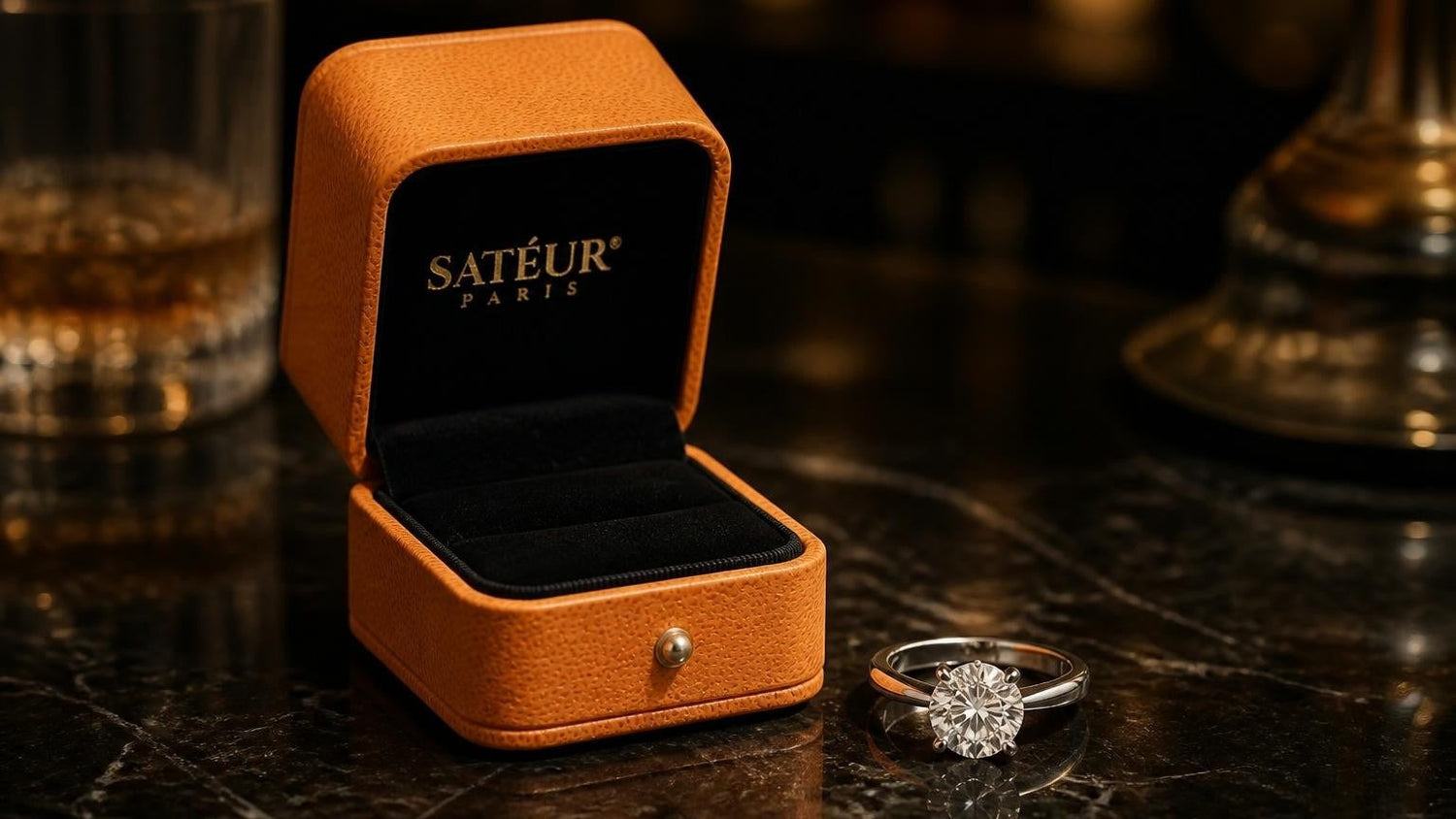
At the top of the value argument stands Satéur's The 1% Ring collection — pieces designed to deliver the look of a flawless diamond at around 1% of the traditional mined price. The Destinée Ring and the wider Satéur Gems® line are where most buyers begin that conversation.
Key Takeaways
- Diamond simulants with D-E colour equivalency deliver a diamond look at around 1% of the mined price.
- Satéur Gems® entry pricing begins at approximately $138, with engagement rings from $138.
- Moissanite (Mohs ~9.25) and Satéur Gems® (~8.8 Mohs) are both extremely durable for everyday wear.
- The 4Cs — carat, colour, clarity, and cut — apply regardless of stone origin.
- White gold, yellow gold, and platinum each offer distinct aesthetics and long-term maintenance profiles.
- Ring sizing should not be rushed — most people fall between whole and half sizes.
What Makes an Engagement Ring the Right Choice
There is no single right answer — only the wrong question. Asking which ring is the most impressive leads to the same place it always has: overspending for a credential. The better question is what quality of gem, what design, and what value story makes sense for the life you are building.
Engagement rings span an enormous range. At one end, mined diamond solitaires in platinum command prices of $8,000 to over $30,000 for a single carat of respectable quality. At the other, a well-crafted diamond simulant in 18k gold finishing can achieve an indistinguishable visual result — with the naked eye — for under $200. The difference is not always visible in the finished piece. It is a difference in where the value is assigned.
Satéur was built on this argument. The Maison's trademarked diamond simulant — Satéur Gems® — is engineered for colour accuracy in the D-E range, a cut that maximises light return, and a refractive index (~2.39) calibrated to deliver the clean, white brilliance of a fine diamond. The look is diamond-accurate. The price reflects a different set of priorities.
Diamond Simulants vs. Mined Diamonds: Value and Appearance
A diamond simulant is a gemstone designed to replicate the visual character of a mined diamond without sharing its chemical composition. The category includes Satéur Gems®, moissanite, and cubic zirconia — each with a distinct optical and durability profile.

Satéur Gems® delivers what the Maison calls diamond-accurate brilliance: the restrained, white light return of a flawless D-colour stone. Moissanite, with a higher refractive index (~2.65) and greater fire dispersion, returns more vivid rainbow light — more fire than a diamond. For buyers who want a look as close as possible to a mined diamond, the Satéur Gems® approach is the closer match.
Mined diamonds remain the original standard. A one-carat round diamond of VS2 clarity, G colour, and excellent cut averages between $5,500 and $7,500 at retail. Lab-grown diamonds — chemically identical to mined stones, IGI-certified — bring that figure down by 50 to 70 per cent, though prices have fallen significantly in recent years. Diamond simulants bring it further still, to a fraction of either.
| Stone | Mohs Hardness | Visual Character | Price Range (1ct equiv.) | Composition |
|---|---|---|---|---|
| Satéur Gems® | ~8.8 | Clean white brilliance, diamond-accurate | $138–$998 | Proprietary |
| Moissanite | ~9.25 | Vivid fire, rainbow dispersion | From ~$98 | Lab-created gemstone |
| Lab Diamond | 10 | Identical to mined diamond | $800–$3,500 | IGI-certified lab-grown diamond |
| Mined Diamond | 10 | Clean white brilliance | $5,500–$30,000+ | Natural carbon crystal |
Both Satéur Gems® and moissanite hold their brilliance for life and are built for everyday wear without reservation. The hardness difference between them is negligible in daily use — both resist scratching from virtually every material encountered outside a laboratory.
Popular Engagement Ring Settings and Metals
The setting shapes both the visual weight of the ring and its long-term durability. The most enduring choices in engagement ring design are relatively few, each with its own logic.
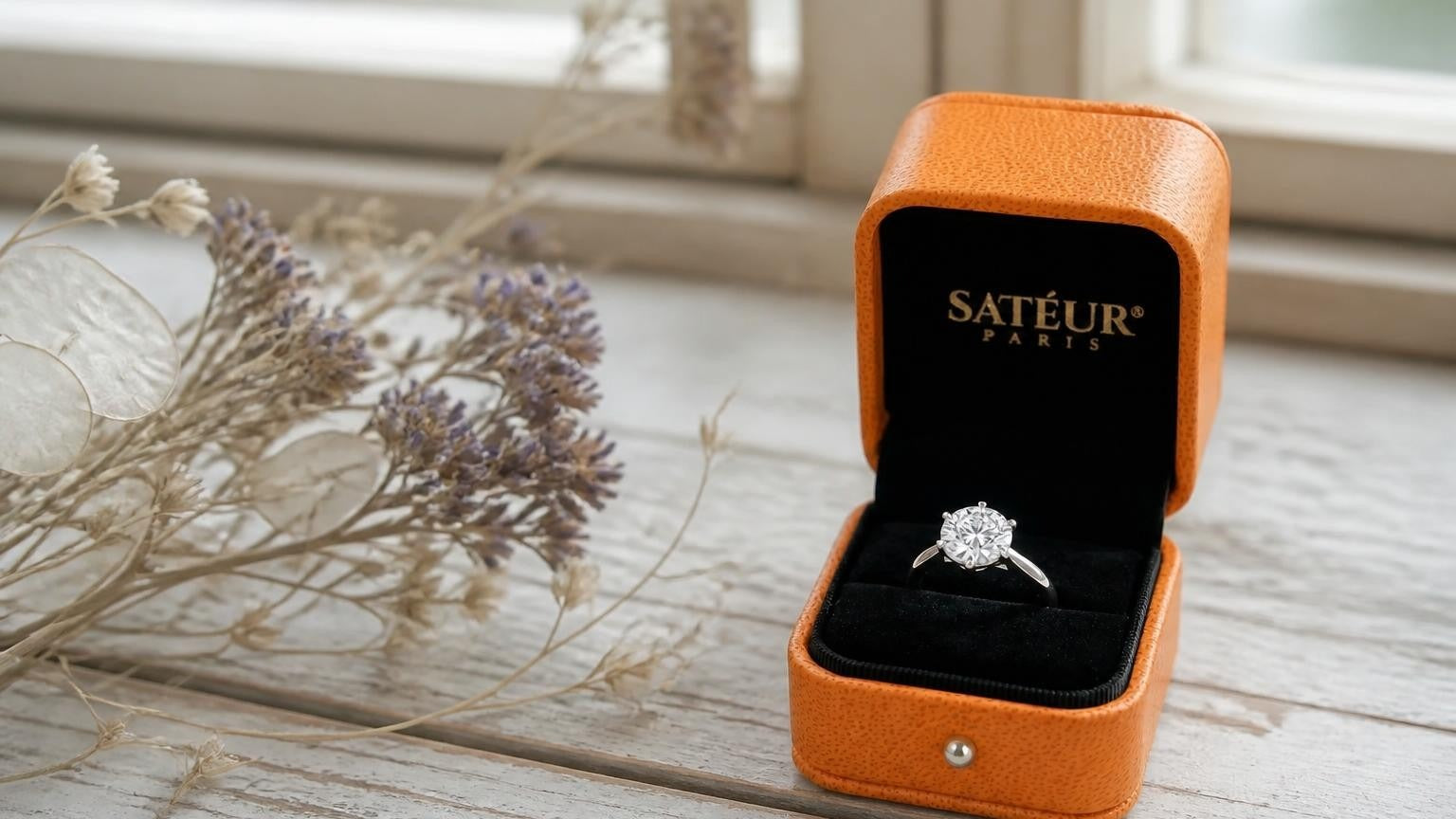
Solitaire. A single gemstone held by four or six prongs. Classic proportion. The stone is the object — nothing distracts from the gem or the light it returns. The Satéur Destinée Ring is a solitaire, in the tradition that has defined diamond rings for over a century.
Pavé and halo. A central stone surrounded by smaller diamonds or simulants set into the band or a surrounding frame. These settings increase surface brilliance but require more maintenance — small gems can loosen over time.
Three-stone. A centre stone flanked by two smaller ones. Carries symbolic weight (past, present, future) and adds visual spread without increasing the centre stone cost.
On metals:
- White gold (18k finishing) — the contemporary standard for diamond-look rings. Pairs with any skin tone. Requires periodic rhodium re-plating to maintain its bright finish.
- Yellow gold — coming back strongly, particularly in thinner bands. Warm, historically rich. More forgiving maintenance profile than white.
- Platinum — heavier, naturally white, hypoallergenic. More expensive than gold; develops a patina over time that many wearers value.
- Rose gold — warm, contemporary, distinctive. Popular in mixed-metal settings.
Satéur's pieces use 18k gold finishing across the range — giving the warmth and visual quality of gold without the cost differential of solid gold construction.

Satéur Destinée Ring™
The look of a flawless diamond, for 1% of the price.
Compare to a $10,000 mined diamond
Joined by 100,000+ couples across 150+ countries.
Shop The 1% RingFree worldwide shipping · 30-day returns · Lifetime Satéur Care
The 4Cs of Diamond Quality Explained
The Gemological Institute of America introduced the 4Cs grading system in the mid-twentieth century to standardise diamond evaluation. The framework applies to mined diamonds and lab-grown diamonds, and is a useful reference point when comparing simulants assessed against diamond equivalents.
Carat. Weight, not size. One carat equals 0.2 grams. A round 1.00ct diamond is approximately 6.5mm in diameter. Carat weight is the single largest driver of mined diamond price — doubling the weight more than doubles the cost.
Colour. Graded D (colourless) to Z (yellow tint). Most buyers cannot distinguish D from G with the naked eye. Satéur Gems® targets D-E colour equivalency — the clearest end of the scale.
Clarity. Internal inclusions and surface blemishes, graded from FL (flawless) to I3 (included). Eye-clean clarity — VS2 or better for most cuts — is the practical threshold. Satéur Gems® and moissanite are eye-clean by design.
Cut. The most impactful of the 4Cs on visual brilliance. An excellent cut maximises light return; a poor cut makes even a flawless stone appear dull. Satéur Gems® use a 58-facet cut calibrated for maximum light return within the gem's specific optical properties.

Satéur Gems®: The Look of Fine Diamond, Exceptional Value
Satéur Gems® is the Maison's trademarked diamond simulant. Its composition is proprietary. What is disclosed is the output: D-E colour equivalency, a refractive index of approximately 2.39, a Mohs hardness of ~8.8, and a 58-facet cut that returns light with the restraint and white clarity associated with a fine mined diamond.
The entry point is the Destinée Earrings at $88. The ring tier begins at $138. Compare that to a mined diamond equivalent — a 1.00ct D-colour VS2 solitaire in 18k white gold — which typically retails at $8,000 to $12,000. The look, across the table, is indistinguishable with the naked eye.
The Satéur Gems® tier accounts for over 75% of the Maison's revenue. That figure reflects what buyers actually choose once they understand what the category offers. Over 100,000 customers across 150 countries have made that decision — and continue to return.

For those who want a different stone profile, Satéur also offers moissanite — with its vivid fire and greater light dispersion — and a lab-grown diamond line with full IGI certification for buyers who want the identical chemical composition of a mined stone.
Engagement Ring Sizing and Care
Ring sizing is a practical step that most buyers underestimate. Fingers change in circumference with temperature, time of day, and body weight. The standard advice is to measure in the evening, when fingers are at their largest. Most people fall between a whole size and a half — a fact that matters when sizing cannot easily be revisited.
Satéur rings are available across a full size range. When in doubt, sizing slightly larger is preferable to undersizing. A ring can always be worn with a simple adjuster if slightly loose; a ring that is too tight causes discomfort and can be difficult to remove.
For care: Satéur Gems® and moissanite both hold their brilliance without special treatment. A soft cloth and mild soapy water is sufficient for routine cleaning. Ultrasonic cleaners are compatible with both stone types. Avoid prolonged contact with harsh chemicals on the setting — these affect the metal finish over time, not the gemstone itself.
Frequently Asked Questions About Engagement Rings
What is the difference between a diamond simulant and a mined diamond?
A diamond simulant is a gemstone that replicates the visual appearance of a mined diamond without sharing its chemical composition. Mined diamonds are carbon crystals formed under geological pressure over millions of years. Simulants — such as Satéur Gems® — are engineered to match the colour, cut, and light return of a fine diamond while being produced through a different process. The visual result, with the naked eye, is indistinguishable for well-engineered simulants in the D-E colour range.
Which metal is best for an engagement ring setting?
There is no single best answer. White gold in 18k finishing is the most popular contemporary choice for diamond-look rings — it pairs with any skin tone and ages well. Yellow gold has seen a significant return among buyers who prefer a warmer aesthetic and easier maintenance (no rhodium re-plating required). Platinum is the most durable option and hypoallergenic, but heavier and more expensive. Rose gold is distinctive and contemporary. The right choice depends on aesthetic preference and maintenance tolerance.
How do I choose the right ring size?
Measure in the evening, when fingers are at their largest due to normal daily variation. Use a ring sizer or measure an existing ring that fits well. Most people fall between whole and half sizes. When in doubt, size up slightly — a ring can always be worn with an adjuster if slightly loose, while a ring that is too tight is both uncomfortable and difficult to remove.
What does the 4Cs grading system measure?
The 4Cs — carat, colour, clarity, and cut — is a standardised framework developed by the Gemological Institute of America to evaluate diamond quality. Carat measures weight (0.2g per carat). Colour is graded D (colourless) to Z (yellow); D-E is the premium tier. Clarity grades internal inclusions from FL (flawless) to I3. Cut evaluates facet geometry and its effect on light return — an excellent cut grade is the strongest single indicator of visual brilliance. The system applies to mined and lab-grown diamonds; simulants are typically described using equivalent colour and cut terms.
Are diamond simulants durable for everyday wear?
Yes. Satéur Gems® (Mohs ~8.8) and moissanite (~9.25) are both extremely durable and built for everyday wear. A Mohs score above 8 means the gemstone resists scratching from almost every material encountered in daily life. Neither stone type requires removal for normal activities. The metal setting warrants occasional inspection over years of wear, as is true of any fine jewellery.
Can I customise an engagement ring design?
Satéur offers a considered selection of ring settings — solitaire, classic band, and statement designs — across the Gems® and moissanite tiers. The range is curated rather than fully custom: each piece is designed to stand on its own merits. For buyers who want a specific configuration outside the collection, the lab-grown diamond tier offers the widest scope for traditional jeweller customisation.
The right engagement ring is the one that reflects a considered choice. Whether that is The 1% Ring® in Satéur Gems®, a moissanite solitaire, or a lab-grown diamond depends on the optics, the values, and the budget that make sense for your situation. The Maison's view is that the difference in price between a mined diamond and a well-engineered simulant does not manifest in the ring you wear. It manifests only in the receipt.
Satéur. The New Diamond Standard®.
















اترك تعليقًا
This site is protected by hCaptcha and the hCaptcha Privacy Policy and Terms of Service apply.