

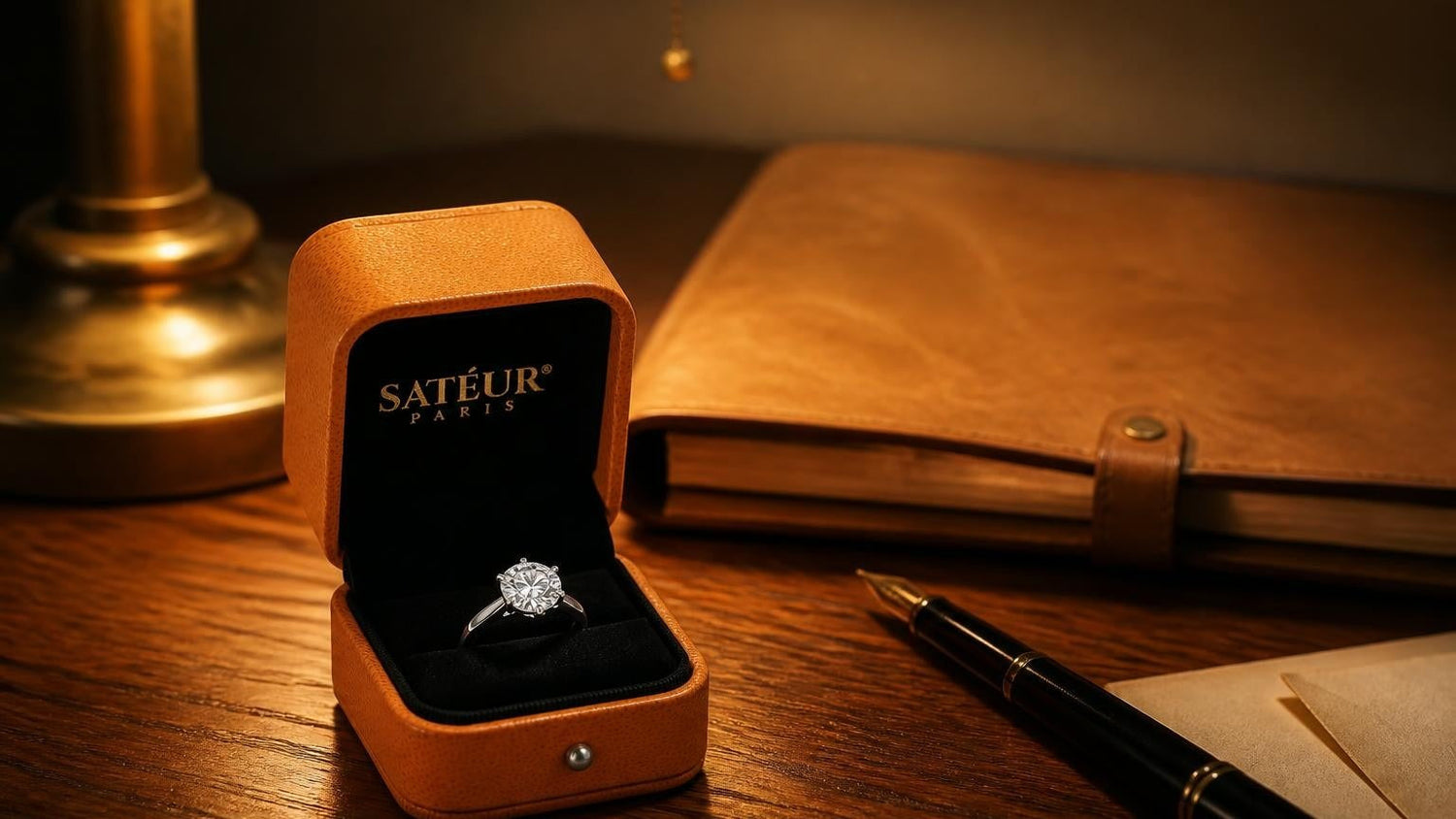
Average Engagement Ring Cost: A Clear Guide for Every Budget
The average engagement ring cost in the United States falls between $3,500 and $6,500. That figure reflects the national median across all stone types and settings — but it tells only part of the story. A traditional one-carat mined diamond ring can reach $12,000 or more. A Satéur Gems® ring that reads identically with the naked eye can start at $138. Understanding what moves the number is the most useful thing you can do before you shop.
For a complete framework, see our engagement ring cost guide — or read on for the key benchmarks by budget and stone type.
Key Takeaways
- The US average engagement ring cost ranges from $3,500 to $6,500 (Knot Survey, 2024).
- A traditional one-carat mined diamond ring typically costs $5,000–$12,000.
- Lab-created diamonds offer comparable optical properties at roughly 50% of mined diamond pricing.
- Satéur Gems® — a trademarked diamond simulant with D–E colour and Excellent cut — start from approximately $138, or about 1% of the mined diamond price.
- Moissanite, a lab-created gemstone, has a Mohs hardness of 9.25 — more fire than a diamond and built for everyday wear.
- Financial advisors recommend setting a personal budget first, not following salary multiples.
How Much Should You Spend on an Engagement Ring?
There is no universal rule. The "two months' salary" guideline was introduced by De Beers in the 1980s as a marketing device, not financial advice. Financial advisors consistently suggest determining what feels proportionate for your situation — rather than following a fixed salary multiple — especially when beginning a shared financial life.
A more useful approach: set your ceiling before you enter any store. The industry has a reliable tendency to anchor expectations upward once you are in the room. Knowing your number beforehand keeps the decision yours.
Most couples in the US spend between $3,500 and $6,500. A significant share spend less — and arrive at something they are proud of.
Average Engagement Ring Cost by Budget
The average cost of engagement ring purchases varies widely by tier. Here is a clear breakdown of what each range typically delivers:
| Budget Range | What It Buys | Typical Stone |
|---|---|---|
| Under $500 | Diamond simulants, moissanite, minimalist solitaire settings | Satéur Gems®, lab moissanite |
| $500–$2,000 | Certified moissanite, small lab diamond (under 0.5ct), sapphire | Moissanite, lab diamond, gemstone |
| $2,000–$5,000 | Lab diamond (0.5–1.0ct), entry mined diamond, custom settings | Lab diamond, mined diamond SI clarity |
| $5,000–$10,000 | Quality mined diamond (1ct, VS2 or better), platinum solitaire | Mined diamond, premium lab diamond |
| $10,000+ | Fine mined diamond (1ct+, VVS–IF, D–E colour), designer settings | Mined diamond, rare coloured stones |
The most common entry point for a high-quality appearance is the $2,000–$5,000 band. The look of the top tier, however, is now accessible well below $500 with the right stone choice.
Engagement Ring Pricing by Stone Type
Stone type is the largest single variable in engagement ring pricing. Here is where the divergence lives — and what each tier actually delivers in terms of appearance and durability.
Mined diamond: The traditional benchmark. A round-cut, one-carat stone in D–F colour and VS2 clarity costs $5,000–$12,000 for the stone alone. Price escalates sharply above 1.5 carats. The premium includes rarity, a complex supply chain, and the cultural weight built over decades of marketing.
Lab-created diamond: Chemically identical to a mined diamond, IGI-certified, and typically 40–60% less expensive for comparable cut, colour, and clarity grades. A one-carat lab diamond in D–E colour and VS2 clarity now trades in the $1,200–$2,500 range. For the lab diamond collection, ongoing price compression has continued to widen this gap.
Moissanite: A lab-created gemstone with more fire than a diamond — its higher optical dispersion produces a vivid, rainbow-forward sparkle distinct from diamond's white brilliance. Mohs hardness 9.25, built for everyday wear. A one-carat equivalent runs $300–$800 depending on grade. Explore Satéur's moissanite collection for full specifications.
Satéur Gems®: A trademarked diamond simulant engineered specifically for diamond-accurate brilliance — the clean, restrained white sparkle of a flawless stone. D–E colour, Excellent cut, Mohs hardness approximately 8.8. The appearance is indistinguishable from a fine mined diamond with the naked eye. Satéur Gems® rings begin from approximately $138 — roughly 1% of the equivalent mined diamond price.

Satéur Gems®: Flawless Diamond Look at 1% of the Price
Satéur Gems® was created to answer one question: why does the look of a flawless diamond have to cost $10,000? The answer, with precision gemcraft and uncompromising standards, is that it does not.
Satéur Gems® specifications: D–E equivalent colour, Excellent cut, refractive index approximately 2.39. The result is the diamond-accurate look that defines fine jewellery — without the mined diamond price. This is the stone behind The New Diamond Standard®.
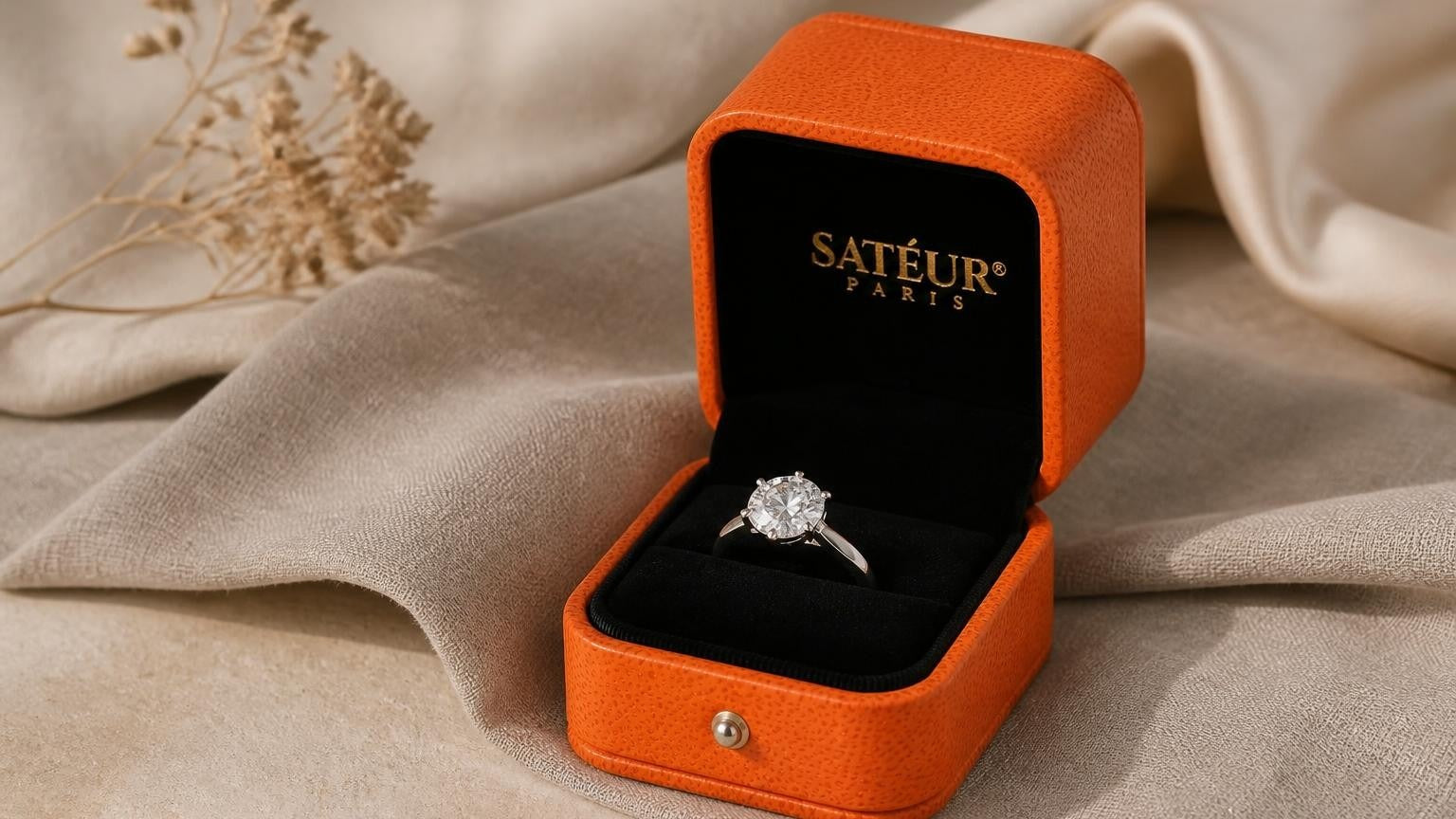
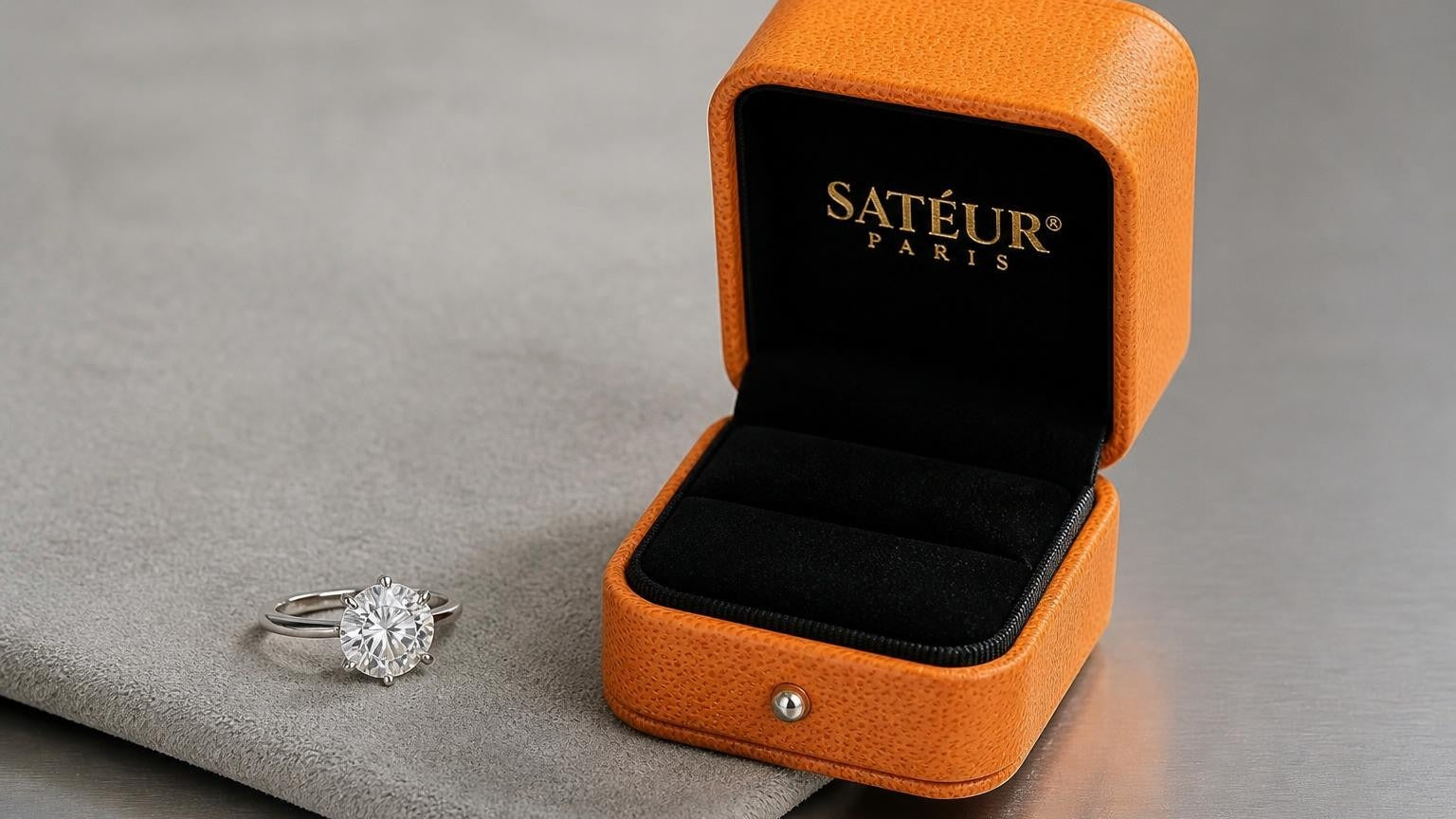
The Satéur Destinée Ring™ — The 1% Ring® — is the reference point: a 1.00 carat round-cut Satéur Gems® in an 18k gold finish setting, from $138. It is the piece that proved the premise. Compare it to a $10,000 mined diamond. The room will not know the difference.

Satéur Destinée Ring™
The look of a flawless diamond — hand-set in 18k gold finish, from $138.
Compare to a $10,000 mined diamond
Joined by 100,000+ couples across 150+ countries.
Shop Destinée RingFree worldwide shipping · 30-day returns · Lifetime Satéur Care
Setting Your Engagement Ring Budget
Once you have a stone type in mind, three variables remain: metal, setting style, and carat weight. Each moves the final price.
Metal: 14k and 18k gold — yellow, white, or rose — is the most common choice. Platinum carries a 20–40% premium over white gold. For an 18k gold finish that reads as fine jewellery, Satéur's settings deliver the look at a fraction of the solid-metal price.
Setting: A solitaire is the most cost-efficient frame for any stone. Pavé, halo, and three-stone designs add labour and additional gems, typically adding $200–$2,000 to the base price. Complexity is a matter of taste — not quality.
Carat weight: Mined diamond pricing does not scale linearly — it accelerates. A two-carat mined diamond at equivalent grade costs roughly four times a one-carat stone. With Satéur Gems® and moissanite, carat weight adds far less to the cost. Larger presence becomes accessible.
The most practical framework: decide your total number first, then work backwards. Stone type, setting, and carat weight follow from that ceiling — not the other way around.

Engagement Ring Cost by Colour and Clarity
For mined and lab-created diamonds, colour and clarity grades carry meaningful price premiums. Understanding where the real-world thresholds sit helps you spend with more precision.
Colour: The GIA colour scale runs D (colourless) to Z (light yellow). D–F grades attract the highest premiums. G–H grades are near-colourless and appear white in nearly all settings — widely considered the value intersection for buyers who want a white stone without the colourless premium.
Clarity: FL and IF grades add significant cost for a quality that is indistinguishable with the naked eye under normal wear conditions. VS2 and SI1 grades are eye-clean in most cases and represent the practical value range. VVS grades are a premium for collectors and those who value microscopic perfection.
Satéur Gems® removes this equation entirely. Every gem is produced to a consistent D–E colour and Excellent cut standard — no grade-hunting, no trade-offs.
For more detail on how these numbers compare across the market, see how much the average engagement ring actually costs.

Frequently Asked Questions About Engagement Ring Costs
What is the average cost of an engagement ring in the US?
The average engagement ring cost in the US ranges from $3,500 to $6,500, depending on location, stone type, and personal preference. The Knot's 2024 survey places the national average near $5,500 for couples purchasing a mined diamond ring. Couples who choose lab-created or simulant options spend significantly less for a comparable appearance.
How much should I actually spend on an engagement ring?
Financial advisors suggest determining what feels right for your situation rather than following a fixed salary multiple. The two-months' salary rule was a 1980s De Beers marketing construct. Set your comfortable ceiling before you begin shopping, then find the best combination of presence and quality within that number. Beginning a shared life without ring-related debt is a reasonable starting point for the conversation.
What affects the price of an engagement ring?
Four primary variables: stone type, carat weight, metal choice, and setting complexity. For mined and lab diamonds, colour and clarity grades add two further dimensions. Stone type is the single largest driver — the difference between a mined diamond and a Satéur Gems® ring at the same carat weight and setting can reduce the stone cost by 95–99%. Design and brand premiums account for the remainder at the high end of the market.
Can I get a high-quality diamond-look gem for less?
Yes. Satéur Gems® — a trademarked diamond simulant — delivers the clean, white brilliance of a flawless diamond with D–E colour and Excellent cut, from approximately $138. Across the table and in natural light, the appearance is indistinguishable from a fine mined diamond with the naked eye. The Satéur Destinée Ring™ is the reference: 1.00 carat, 18k gold finish, from $138 — about 1% of the price of a comparable mined diamond ring.
What is the difference between engagement ring price points?
The key difference at each tier is stone origin and grade. Under $500 covers simulants and lab moissanite in quality settings. $500–$2,000 reaches certified moissanite and small lab diamonds. $2,000–$5,000 covers one-carat lab diamonds and entry mined diamonds. Above $5,000, you are primarily paying for mined diamond provenance and heritage brand premiums. Appearance does not scale proportionally with price beyond the lab-grown diamond tier.
How do I choose an engagement ring within my budget?
Start with your total number. Decide which characteristic matters most: carat presence, stone type, metal finish, or setting detail. Most buyers find that prioritising stone appearance — colour and cut — over stone origin (mined vs. lab vs. simulant) produces the best visual result at any budget level. A larger Satéur Gems® or moissanite ring in a considered solitaire setting often carries more presence than a smaller mined diamond at the same spend.
The average cost of an engagement ring is simply a starting point. What you choose within — or well below — that range defines the decision far more than the number itself. The Satéur engagement ring collection begins where the mined diamond market ends: the same look, re-priced for the intelligence of 2025.











اترك تعليقًا
This site is protected by hCaptcha and the hCaptcha Privacy Policy and Terms of Service apply.