

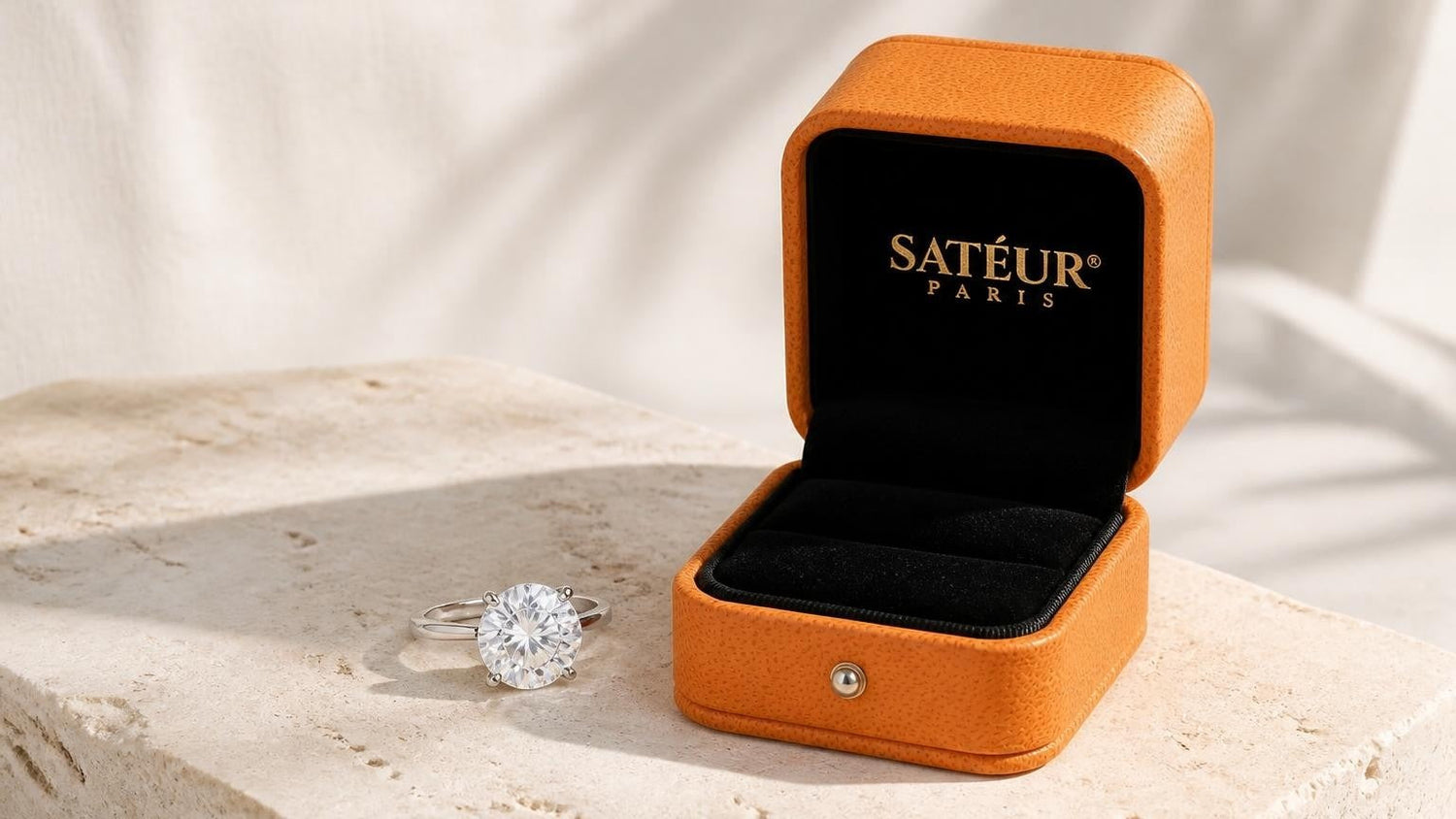
Diamond Simulant Meaning: What It Is, How It Works, and Why It Matters
A diamond simulant is a gemstone engineered to display the visual appearance of a mined diamond — the same brightness, the same white brilliance, the same refined presence — without the geological rarity or the associated price. The term covers a broad category, from entry-level cubic zirconia to advanced trademarked gems that replicate a flawless diamond with the naked eye.
Understanding diamond simulant meaning matters because not all simulants perform equally. The category spans a wide spectrum of optical precision, durability, and long-term clarity retention. Knowing the distinctions helps you choose with intelligence, not assumption. This guide covers the full landscape: what simulated diamonds are, how they differ from natural diamonds and lab-grown diamonds, and where each type sits on the performance spectrum.
Key Takeaways
- A diamond simulant is any gem designed to look like a mined diamond — it is not a diamond, but it replicates the optical qualities of one.
- Premium simulants achieve D-E colour grading and Excellent cut proportions, indistinguishable from a mined diamond with the naked eye.
- Diamond simulants differ from lab-created diamonds in composition, manufacturing process, and optical behaviour — they are distinct categories.
- Durability varies sharply: cubic zirconia shows visible wear within 1–3 years; premium simulants like Satéur Gems® retain their brilliance for life.
- Entry-level Satéur simulant jewellery begins at approximately $88, versus thousands for equivalent mined-diamond pieces.
- Moissanite produces more fire than a diamond; Satéur Gems® replicates the clean white brilliance of a flawless diamond — the most diamond-accurate look available.
What Is a Diamond Simulant
A diamond simulant is a natural or lab-created material engineered to mimic the optical properties of a mined diamond. The defining characteristic is visual: a well-made simulant captures the same D-E colour range, the same Excellent-cut symmetry, and the same white refracted brilliance that defines a fine diamond. It achieves this without being a diamond in chemical composition.
The category is deliberately broad. Cubic zirconia, white sapphire, moissanite, and advanced proprietary gems are all diamond simulants. What separates them is the precision of their replication — how accurately they match a diamond's optical behaviour, and how long they sustain that performance.
The simulant meaning is sometimes confused with lab-created diamond. These are not the same thing. A lab-created diamond is chemically identical to a mined diamond — the same carbon crystal structure, the same physical properties, grown in a controlled environment rather than extracted from the earth. A diamond simulant shares the look of a diamond, not its composition. This is a meaningful distinction, and an honest one. The two categories serve different intentions.
For those drawn to The 1% Ring collection, this distinction is central to the value proposition: the brilliance of a flawless diamond, available at approximately 1% of the price. That is the simulant category at its most refined.
How Diamond Simulants Compare to Mined Diamonds
The clearest way to understand diamond simulants is through direct comparison. Premium simulants converge closely on a mined diamond's visual performance. Budget simulants diverge significantly — and visibly. The table below captures the key distinctions across the full simulant category, from the highest-performing options down to basic cubic zirconia.

| Property | Mined Diamond | Satéur Gems® | Moissanite | Cubic Zirconia | White Sapphire |
|---|---|---|---|---|---|
| Colour grade | D–Z range | D–E (flawless) | D–E | Varies, often warm | Near-colourless |
| Refractive index | 2.42 | ~2.39 | ~2.65 | ~2.15 | ~1.77 |
| Mohs hardness | 10 | ~8.8 | ~9.25 | 8–8.5 | 9 |
| Optical character | Crisp white brilliance | Clean white brilliance — diamond-accurate | Vivid rainbow fire | Glassy; dulls quickly | Milky; low dispersion |
| Long-term clarity | Permanent | Retains for life | Retains for life | Clouds within 1–3 years | May cloud over time |
| Composition | Carbon crystal | Trademarked — not disclosed | Silicon carbide | Zirconium dioxide | Aluminium oxide |
| Entry price (solitaire) | $3,000–$10,000+ | From $138 | From $98 | $50+ | From $30 |
The picture is clear. At the premium tier, Satéur Gems® and moissanite are daily-wear gems that sustain their brilliance indefinitely. At the entry tier, cubic zirconia and white sapphire carry optical limitations that accumulate visibly over time. The practical choice within the premium tier comes down to one question: which visual signature do you want.
Key Optical Properties: Colour, Cut and Fire
Three properties define how a diamond simulant performs visually. Each one separates the exceptional from the adequate.
Colour refers to the absence of warm tints. A D-rated diamond — the top of the scale — is perfectly colourless. Premium simulants engineered to D-E standards match this precisely. Cubic zirconia frequently shows yellow or greyish tones as it ages; white sapphire carries a characteristic milky haze. For a simulant that reads as a flawless diamond with the naked eye across the table, colour fidelity is non-negotiable.
Cut determines how light enters and returns through a gem. An Excellent-cut simulant with precisely calibrated facet angles will return light in the same pattern as a well-cut diamond. Inferior cuts — common in budget simulants — leak light from the base, creating a flat, glassy appearance. The 58-facet round brilliant cut, standard across premium gem categories, is the benchmark.
Fire is where simulants diverge most clearly. Natural diamonds produce crisp white brilliance with controlled dispersion — a sharp, refined sparkle. Moissanite, with a refractive index of approximately 2.65, produces more rainbow fire than a diamond — vivid and colourful, beautiful in its own register, but visually distinct from a diamond. Satéur Gems®, with a refractive index closer to diamond (~2.39), replicates the clean white brilliance of a flawless diamond — the most diamond-accurate optical signature available in the simulant category.

For those who want the precise look of a diamond — not a vivid interpretation of one — the optical distinction matters. Both moissanite and Satéur Gems® are extraordinary gems. They are designed for different preferences.
Durability for Everyday Wear
Durability is one of the most practical considerations in simulant selection. A gem rated for everyday wear must resist scratching, maintain its surface polish, and sustain its optical performance across years of contact with hard surfaces — countertops, keyboards, metals, fabrics.
The Mohs scale measures scratch resistance on a 1–10 continuum, with mined diamond at 10. Premium simulants sit well within the everyday-wear band: Satéur Gems® at approximately 8.8 Mohs, moissanite at approximately 9.25 Mohs. The practical gap between these two is negligible — both resist the materials a ring typically encounters in daily life, and both sustain their brilliance indefinitely.
Cubic zirconia, rated 8–8.5 Mohs, occupies the same theoretical band but performs very differently in practice. Micro-fractures accumulate from daily contact with dust, granite, and fabric. Within one to three years, the surface hazes. The gem that looked brilliant at purchase reads dull and artificial within years. This is the core difference between an entry simulant and a premium one: long-term optical retention.
White sapphire, at Mohs 9, is hard — but its low dispersion means it lacks the brilliance that makes the simulant category compelling for those seeking the diamond look. It is durable but not visually competitive as a diamond substitute.
For engagement rings or daily-wear jewellery, the practical conclusion is clear: premium-tier simulants — Satéur Gems® and moissanite — are the only simulant categories built for a lifetime of wear.
The Satéur Gems® Advantage: Premium Look at Accessible Price
Satéur Gems® is a trademarked diamond simulant engineered to replicate the specific visual signature of a flawless D-E mined diamond. Its refractive index (~2.39) sits close to diamond (~2.42), producing the clean, white brilliance that defines a fine diamond's presence. This is not the vivid rainbow fire of moissanite — it is the restrained, precise sparkle of a flawless natural diamond. The most diamond-accurate simulant in the category.
The gem is graded D-E colour, cut to Excellent proportions across 58 facets, and crafted to hold its brilliance for life. Satéur Gems® has a Mohs hardness of approximately 8.8 — built for daily wear, including rings worn every day. The composition of Satéur Gems® is proprietary and not publicly disclosed — the optical performance and specifications speak for themselves.
This is The New Diamond Standard: the look of a $10,000 mined diamond, beginning at $88. Not a compromise — a recalibration of what jewellery value means. The 1% Ring® that started a movement, now worn by over 100,000 customers across 150 countries.

For those who approach fine jewellery with the same intelligence they bring to any considered purchase, the case for a premium diamond simulant is among the clearest in luxury goods. The gem reads as a flawless diamond with the naked eye. The price difference is real. The choice is intelligent.
The distinction between simulated diamonds and their mined counterparts was once a conversation had in hushed tones. Today it is the foundation of a new standard — one that values discernment over expenditure, and presence over provenance.

Satéur Destinée Ring™
The look of a flawless diamond, for 1% of the price.
Compare to a $10,000 mined diamond
Joined by 100,000+ couples across 150+ countries.
Discover The 1% RingFree worldwide shipping · 30-day returns · Lifetime Satéur Care
FAQ: Diamond Simulants Explained
What does diamond simulant mean?
A diamond simulant is any gem — natural or lab-created — engineered to display the visual appearance of a mined diamond. It matches the colour, cut, and brilliance of a diamond without sharing its chemical composition. Simulants range from basic cubic zirconia to advanced trademarked gems like Satéur Gems®, which replicate a flawless D-E diamond with the naked eye.
How are diamond simulants made?
Most premium diamond simulants are grown in a laboratory through controlled crystallisation processes. The specific manufacturing method varies by material — moissanite is grown from silicon carbide; proprietary simulants use closely held formulations engineered for optical precision. The goal in each case is the same: D-E colour, Excellent-cut proportions, and brilliance that lasts.
What is the difference between a diamond simulant and a lab-created diamond?
A lab-created diamond is chemically identical to a mined diamond — the same carbon crystal structure, grown in a laboratory rather than extracted from the earth. A diamond simulant shares the look of a diamond — the colour, cut, and optical brilliance — but differs in composition and manufacturing method. Both are non-mined options, but they are distinct categories. Lab-grown diamonds suit those who want the exact chemical structure; simulants offer an alternative optimised for visual impact and accessible pricing.
Can a diamond simulant be worn daily in an engagement ring?
Premium diamond simulants — specifically Satéur Gems® (~8.8 Mohs) and moissanite (~9.25 Mohs) — are built for daily wear. Both resist the everyday contact that dulls softer materials, and both sustain their brilliance indefinitely. Cubic zirconia, by contrast, begins to cloud within one to three years of regular wear. For a ring worn daily, selecting a premium-tier simulant is essential.
Why do diamond simulants cost less than mined diamonds?
Mined diamonds are priced partly on geological scarcity and partly on a marketing architecture built over decades. The actual optical performance — colour, cut, brilliance — can be replicated through advanced gem-crafting technology at a fraction of the extraction and distribution cost. A premium simulant like Satéur Gems® achieves D-E colour and Excellent cut proportions; the difference is composition, not appearance. The result: the same presence at approximately 1% of the price of a comparable mined diamond.
How long do diamond simulants typically last?
Longevity varies sharply by simulant type. Cubic zirconia and white sapphire show visible degradation — hazing, micro-scratching, dulling — within one to three years of daily wear. Premium simulants are engineered for permanence: Satéur Gems® and moissanite retain their clarity and brilliance for life under normal wear conditions. This is the defining practical distinction between an entry simulant and a premium one.
The diamond simulant category has matured considerably. For those who approach jewellery with the intelligence the choice deserves, a premium simulant — at 1% of the mined diamond price, with equivalent visual impact — represents one of the clearest value propositions in contemporary luxury. This is The New Diamond Standard.
















Deja un comentario
Este sitio está protegido por hCaptcha y se aplican la Política de privacidad de hCaptcha y los Términos del servicio.