

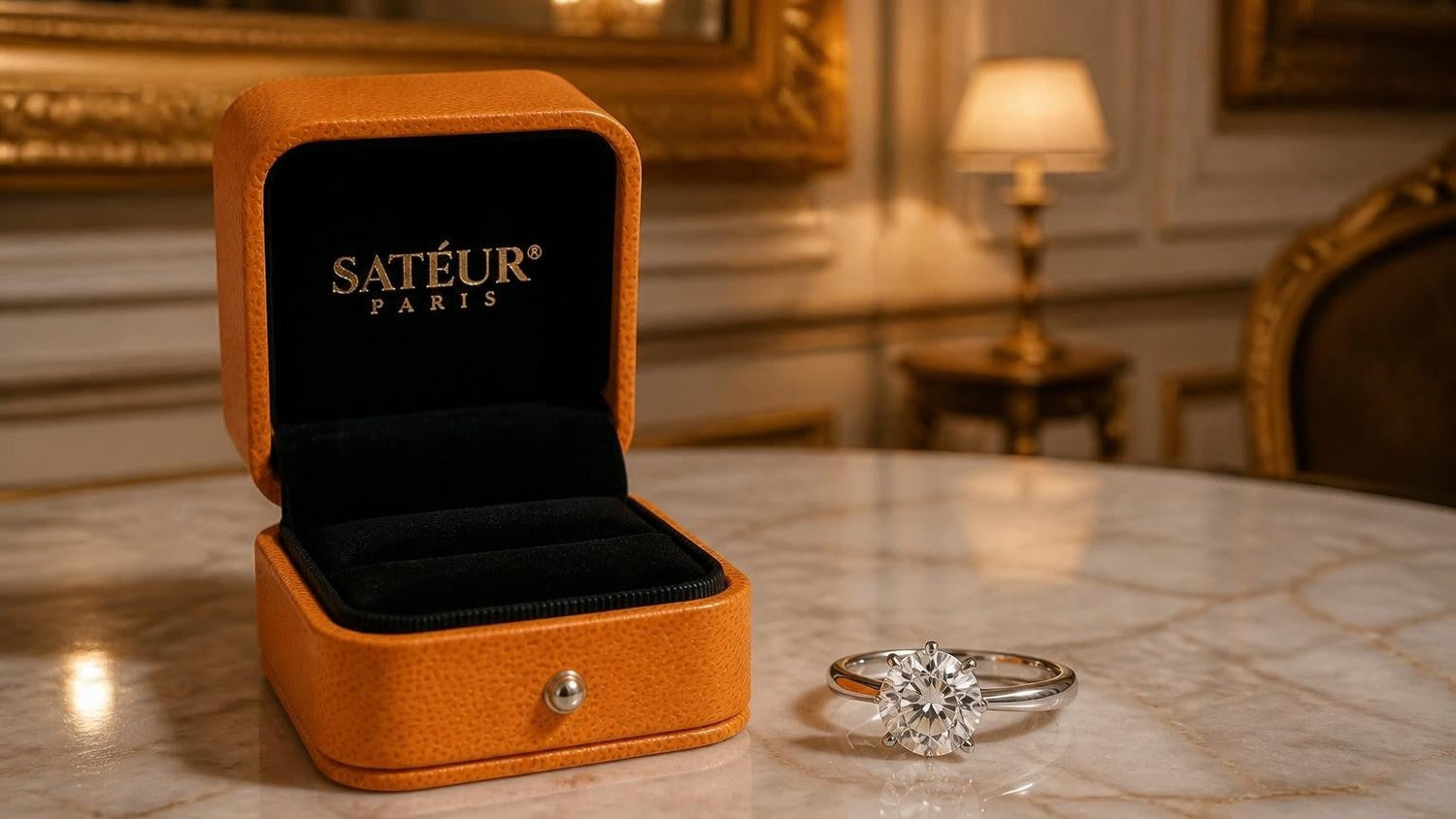
Real vs Fake Diamond Shine: What the Light Actually Shows
The question arrives the same way every time: does it sparkle like a real diamond? The answer depends on what you mean by sparkle — and the science behind that word is more interesting than most people expect. Real vs fake diamond shine is not a simple binary. It is a spectrum of optical physics, and once you understand it, the choice becomes surprisingly clear.
This article walks through how diamond shine actually works, how simulants compare on each optical dimension, and where the real differences between real and fake diamond look sit in practice. The short answer: with the naked eye, the gap is narrower than the industry has traditionally suggested — and with certain simulants, it is effectively invisible.
Key Takeaways
- Real diamonds graded D–E colour with Excellent cut return crisp, white light — a distinct optical signature.
- Cubic zirconia shows noticeably different optics: lower refractive index, faster cloudiness, and a flat, glassy return of light.
- Moissanite produces approximately 2.4× the fire dispersion of a diamond — vivid rainbow sparkle that is beautiful but visually distinct from diamond.
- Satéur Gems® are engineered for diamond-accurate brilliance: clean, white light return that reads as a flawless diamond to the naked eye.
- Mined diamonds average thousands per carat. Satéur Gems® deliver a comparable visual profile from approximately $138.
- Diamond simulants are openly positioned as diamond-look alternatives — not imitations, and not mined diamonds.

Real vs Fake Diamond Shine: What You Need to Know
The phrase "real vs fake diamond shine" carries a loaded assumption: that there is a clear line between authentic and counterfeit, and that the line is visible. In practice, the optics of gemstones do not divide neatly that way. What matters is refractive index, dispersion, cut geometry, and clarity — and on those measures, different gemstones fall at different points on a spectrum.
A "fake" diamond in the traditional sense — glass, plastic, or a low-grade cubic zirconia — is visually detectable to anyone paying attention. The light return is flat, the stone clouds quickly, and the colour is inconsistent. But a well-cut simulant with high refractive index and correct faceting is a different category of object entirely. Understanding that distinction is the first step.
For a broader look at how real and fake diamonds compare across durability, price, and optics, the full comparison is worth reading alongside this piece.
What Real Diamonds Look Like
A real diamond of D–E colour with an Excellent cut grade produces what the industry calls brilliance: the return of white light through the crown facets. It is not the most fire-heavy gemstone — that distinction belongs to others — but it is distinctively crisp. The white flash is clean, precise, and consistent across the stone.
Under daylight or diffuse indoor light, a well-cut diamond displays what the industry calls scintillation — the play of bright and dark as the stone moves. The pattern is sharp. The whites are white, not yellow, not grey. The colour grade matters enormously here: an H or lower colour diamond introduces a warmth that shifts the entire optical character. D–F is the tier where "diamond shine" as a concept fully resolves.
Real diamonds also carry a refractive index of approximately 2.42. That figure controls how light bends inside the stone. Higher refractive index generally means more light return — and at 2.42, diamond sits well above glass and most simulants, though not above moissanite.
Diamond Simulants and Diamond-Look Alternatives
Diamond simulants are distinct gemstones and manufactured materials that are openly positioned as diamond-look alternatives. They are not mined diamonds, they do not share diamond's chemical composition, and no reputable brand presents them as such. The category covers a wide range of optical quality.
At the low end: standard cubic zirconia. At the high end: precision-cut moissanite and trademarked simulants engineered specifically to replicate the white-brilliance profile of a D–E diamond. The gap between those two endpoints is substantial.
Satéur operates at the high end. The The 1% Ring collection is built around Satéur Gems® — a trademarked diamond simulant engineered to match the colour, cut standard, and brilliance profile of a flawless diamond. It is the product that built the movement: the same appearance, at approximately 1% of the mined-diamond price.

How Diamond Shine Differs Across Gemstones
The optical differences between gemstones come down to three measurable properties: brilliance (white light return), fire (dispersion of light into spectral colours), and scintillation (sparkle pattern as the stone moves). Each gemstone sits at a different point on each axis.
| Property | Mined Diamond | Satéur Gems® | Moissanite | Cubic Zirconia |
|---|---|---|---|---|
| Brilliance (white light) | Crisp, clean white | Clean white — diamond-accurate | Strong — with visible rainbow | Moderate — dulls over time |
| Fire / Dispersion | ~1.3 (reference) | RI ~2.39 — restrained fire | ~2.4× diamond's fire (RI ~2.65) | Lower — flat spectral return |
| Hardness (Mohs) | 10 | ~8.8 | ~9.25 | ~8.5 (clouds, scratches) |
| Colour grade equivalent | D–Z (varies) | D–E equivalent | D–E equivalent | Varies — often yellowish |
| Price per carat (approx.) | $3,000–$15,000+ | From ~$138 | From ~$98 | $50+ |
The key insight from this table: the real divide is not between "diamond" and "everything else." It is between high-refractive-index, precision-cut simulants and the low-quality alternatives. Cubic zirconia belongs in a different category from moissanite or Satéur Gems®.
Colour and Clarity in Real Diamonds
Diamond colour grading runs from D (perfectly colourless) through Z (visibly warm). The D–E tier — the upper end of the colourless range — is where diamond achieves its characteristic clean white appearance. Below F or G, a slight warmth enters, and by H the difference is perceptible in direct comparison.
Clarity describes the presence of inclusions — internal characteristics that affect how light moves through the stone. A VS+ diamond passes light cleanly; a heavily included stone scatters it in ways that reduce the precision of the sparkle. The "diamond look" most people recognise — the one worth comparing to — is a D–E, Excellent-cut, VS+ stone.
Satéur Gems® are engineered to this same visual standard. D–E colour equivalent. Cut to Excellent symmetry. The result is a gemstone that reads, across the table and to the naked eye, as a flawless diamond — without the price of one.
Fire and Brilliance Explained
Fire and brilliance are related but distinct properties. Brilliance is the return of white light. Fire is the dispersion of light into spectral colours — the rainbow flashes that appear as the stone moves. A gemstone can have high brilliance with low fire, or high fire with lower white-light dominance.
Mined diamonds have a dispersion value of approximately 0.044 — the reference point the industry has used for a century. Moissanite, a lab-created gemstone, has a dispersion of approximately 0.104 — roughly 2.4 times that of diamond. This produces the vivid, rainbow-forward sparkle moissanite is known for. It is beautiful. It is also visually distinct from diamond under close observation.
Satéur Gems® are designed around a different target: not maximum fire, but maximum diamond-accuracy. The optical profile — RI approximately 2.39, dispersion restrained — returns the clean, white-dominant brilliance that characterises a fine mined diamond. The difference between Satéur Gems® and moissanite is precisely this: Gems® reads as diamond. Moissanite reads as something exceptional in its own right, with more spectral colour in the flash.
Understanding how these optical differences actually appear in Satéur vs diamond comparisons puts the theory into visual context.
Why Satéur Gems® Deliver Diamond Appearance at a Fraction of the Cost
The mined-diamond market prices stones on rarity. A 1-carat D–E Excellent diamond costs between $5,000 and $12,000 at retail. That price is not primarily determined by the optical properties of the stone — it is driven by scarcity, distribution markups, and a century of positioning. The look itself is separable from the price.
Satéur Gems® enter the market at approximately $138 — approximately 1% of a comparable mined diamond. That figure is not a mark-down. It is a structural consequence of using precision-engineered simulants that do not carry the scarcity premium of mined stones.
The real diamond sparkle vs fake question dissolves here. There is no "fake" in the meaningful sense. There is a trademarked diamond simulant — Satéur Gems® — that delivers the D–E colour equivalent, the Excellent cut, and the clean white brilliance of a flawless diamond. And there is a mined stone that delivers the same optical result at 100× the price.
Over 100,000 customers across 150 countries have made this calculation and arrived at the same place.

Choosing the Right Gemstone
The choice between a mined diamond, a moissanite, and a Satéur Gems® simulant is a visual and personal one — not a moral one. Each has a clear optical identity.
Choose a mined diamond if you want the original — the geological provenance, the industry grading, the stone whose optical profile set the standard. Expect to pay several thousand pounds or dollars for a quality example.
Choose moissanite if vivid, rainbow-forward fire is the aesthetic you want. It is a real lab-created gemstone with exceptional hardness (~9.25 Mohs) and a brilliance profile more spectacular than diamond in terms of colour output. It is its own thing — not a substitute, but a legitimate choice.
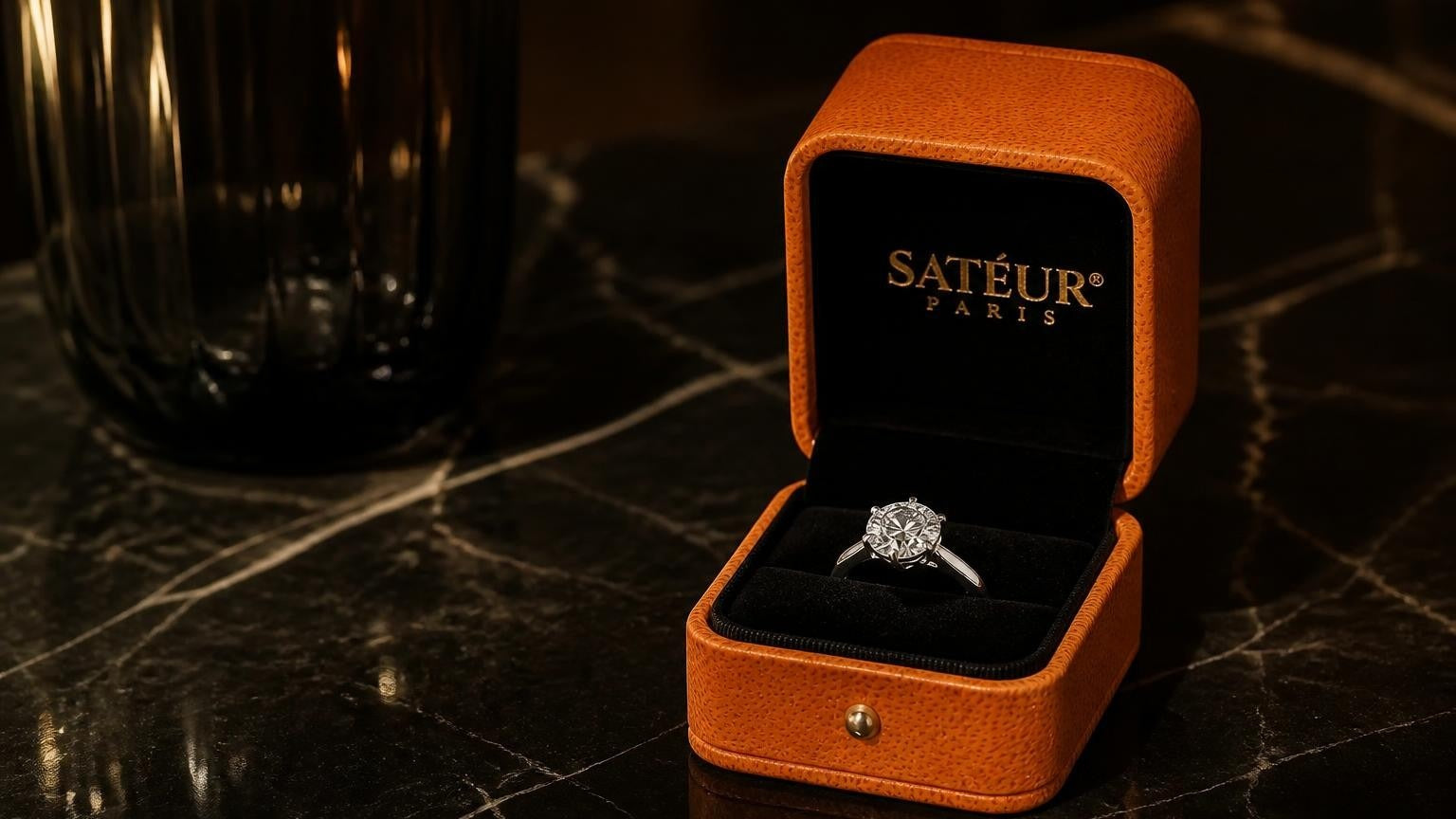
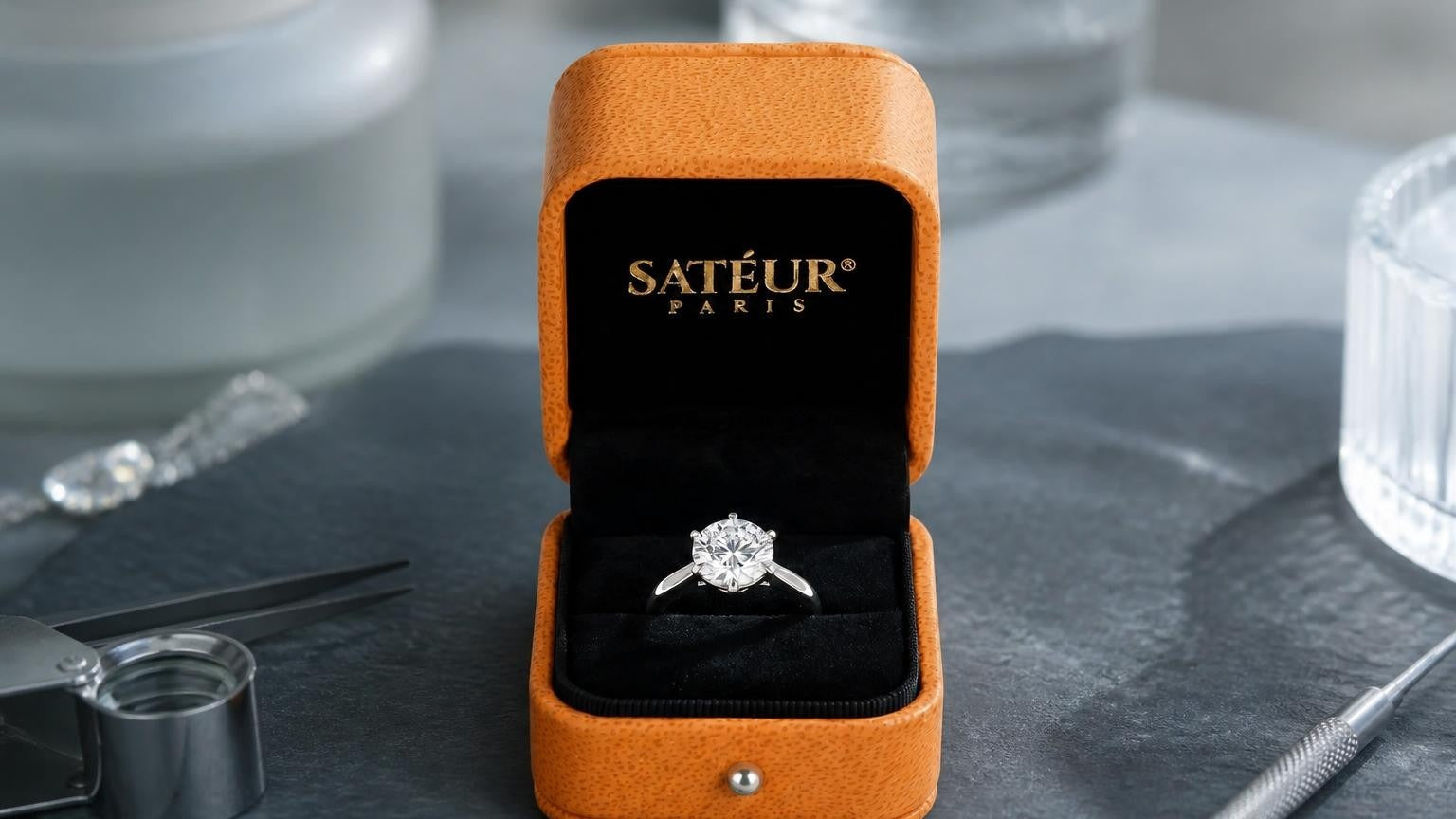
Choose Satéur Gems® if the clean white brilliance of a flawless diamond is what you are after — and you would prefer to spend approximately 1% of the price. The Satéur Destinée Ring™ is the entry point: 1-carat round cut, 18k white gold finishing, D–E colour equivalent. The icon. The 1% Ring®.

Satéur Destinée Ring™
The look of a flawless diamond, for 1% of the price.
Compare to a $10,000 mined diamond
Joined by 100,000+ couples across 150+ countries.
Discover The 1% RingFree worldwide shipping · 30-day returns · Lifetime Satéur Care
Common Questions About Diamond Authenticity
What is the difference between real diamond shine and simulant shine?
Real diamonds at D–E colour with Excellent cut return clean, white-dominant light — crisp brilliance with moderate fire. High-quality simulants like Satéur Gems® replicate this white-light profile precisely. Moissanite produces approximately 2.4× the fire dispersion of diamond — more rainbow colour in the flash. Standard cubic zirconia has a flatter, duller light return and clouds over time. The optical gap between a quality simulant and a mined diamond is, with the naked eye, effectively invisible.
Can you see a difference in sparkle between a real diamond and a diamond simulant?
Between a mined diamond and a precision-engineered simulant like Satéur Gems®, the difference is not visible with the naked eye in everyday wear. Both return clean, white-dominant light consistent with D–E colour and Excellent cut. Between a mined diamond and moissanite, there is a visible — though not unflattering — difference: moissanite shows more rainbow fire. Between a mined diamond and standard cubic zirconia, the difference is more apparent over time as CZ loses its surface quality.
What colour should a real diamond have?
D–F is the colourless range — the tier where diamond shows no perceptible warmth and achieves its characteristic clean white appearance. G–H is near-colourless and difficult to distinguish from D–F in most settings. I–J and below shows increasing warmth. The "diamond shine" most people associate with fine jewellery is a D–E Excellent cut stone — and that is the colour standard Satéur Gems® are engineered to meet.
Why do some gemstones sparkle more than diamonds?
Fire — the dispersion of light into spectral colours — varies by gemstone. Diamond has a dispersion value of approximately 0.044. Moissanite has approximately 0.104, which is roughly 2.4× higher. This is why moissanite under certain light conditions produces vivid rainbow flashes that exceed what a diamond of the same cut would show. It is a real optical property of the gemstone, not a manufacturing flaw. The trade-off is that this higher fire makes moissanite visually distinct from diamond — beautiful on its own terms, but not a direct diamond facsimile.
Are diamond simulants suitable for engagement rings?
Yes. Satéur Gems® rate approximately 8.8 on the Mohs hardness scale — extremely durable for daily wear. Moissanite rates approximately 9.25. Both are well within the range suitable for engagement rings, which are designed to be worn every day for decades. The Satéur engagement ring collection is built around this standard: gemstones that hold their brilliance for life, in settings designed for permanence.
How do I choose between a real diamond and a diamond-look alternative?
The decision comes down to three things: optical priority, provenance priority, and price. If you want the geological original and the industry certification, a mined diamond is that choice. If you want vivid fire and don't require diamond-accuracy, moissanite is exceptional value. If you want the clean white brilliance of a D–E flawless diamond and would rather spend approximately 1% of the mined-stone price, Satéur Gems® is the answer. There is no wrong answer — only the one that matches what you are actually looking for.
The question of real diamond shine is ultimately an optical one, not a moral one. Light behaves according to physics. A gemstone engineered to D–E colour equivalent, Excellent cut, and diamond-accurate refractive index returns light in the same way a mined stone does. The Satéur Destinée Ring™ — The 1% Ring® — was built on that fact. The New Diamond Standard® is not about imitation. It is about discernment.
















Deja un comentario
Este sitio está protegido por hCaptcha y se aplican la Política de privacidad de hCaptcha y los Términos del servicio.