

Simulated Diamond Meaning: What Diamond Simulants Actually Are
A simulated diamond — also called a diamond simulant — is a gemstone engineered to replicate the visual appearance of a mined diamond. The term describes any gem that achieves the look of a diamond: the white brilliance, the precision cut, the clarity impression of a D–E colour stone. It does not describe chemical composition. A simulated diamond is defined by what it resembles, not what it is made of.
The category spans several materials. Moissanite, a lab-created gemstone, sits at the premium end — harder than most simulants, with vivid fire. Cubic zirconia occupies the entry tier. Proprietary simulants like Satéur Gems® are engineered specifically to replicate the clean, restrained brilliance of a flawless diamond. The common thread is intent: each is built to deliver the diamond aesthetic. For a deeper look, see what simulated diamonds are and what a simulated diamond is in everyday jewellery.
Key Takeaways
- Diamond simulants are gems engineered to look like mined diamonds — the category is defined by appearance, not chemistry.
- Satéur Gems® achieve approximately 8.8 Mohs hardness — extremely durable for daily wear including engagement rings.
- Moissanite, a lab-created gemstone, has approximately 9.25 Mohs hardness and returns more vivid fire than a mined diamond.
- Entry-level Satéur Gems® jewellery begins at approximately $138 — roughly 1% of equivalent mined diamond pricing.
- Lab-created gemstones and diamond simulants are distinct categories: the former are chemically specific materials; the latter prioritise the diamond aesthetic.
What Is a Simulated Diamond
A simulated diamond is any gemstone fashioned to mimic the optical and aesthetic qualities of a natural diamond. The emphasis is on appearance. Unlike lab-grown diamonds — which share the chemical structure of mined stones — diamond simulants make no claim to being diamonds. They are evaluated on their own terms: colour, cut, brilliance, durability.
The clearest distinction: a lab-grown diamond is a real diamond, grown in a controlled environment. A diamond simulant is a gem that looks like a diamond without being one. Both serve the consumer who wants the diamond aesthetic; only one carries certification confirming identical composition.
Within the simulant category, quality varies considerably. D–E colour grade and Excellent cut are the baseline for any simulant worth wearing. Below that, the resemblance to a mined diamond becomes noticeably less convincing.

How Simulated Diamonds Differ From Mined Diamonds
The differences fall into four areas: origin, chemistry, optical character, and price.
Origin. Mined diamonds form under intense geological pressure over billions of years. Diamond simulants are produced in laboratories, with consistent quality specifications achievable from every production run.
Chemistry. Mined diamonds are pure crystallised carbon. Simulants are chemically distinct materials — moissanite is silicon carbide; cubic zirconia is zirconium dioxide; Satéur Gems® do not publicly disclose composition, by design. What they share is the engineering intent: replicating the visual signature of diamond.
Optical character. Mined diamonds exhibit crisp white brilliance — achromatic, precisely directed light return. Moissanite, with a refractive index of approximately 2.65, produces more fire than a diamond — vivid, rainbow-forward sparkle that is optically distinct from diamond. Satéur Gems®, with a refractive index of approximately 2.39, are calibrated for the clean white brilliance of a flawless diamond. Cubic zirconia can look similar when new, but clouds over time.
Price. A one-carat mined diamond at D–E colour, Excellent cut retails for approximately $10,000. The equivalent visual presence in Satéur Gems® begins from $138. The gap is not a reflection of optical experience. It reflects geological scarcity and a marketing infrastructure built over a century.
Durability and Everyday Wear Performance
The Mohs hardness scale measures scratch resistance. Mined diamonds sit at 10. Premium diamond simulants come close: Satéur Gems® achieve approximately 8.8 Mohs; moissanite approximately 9.25 Mohs. Both are extremely durable, built for everyday wear including engagement rings.
The gap between 8.8 and 9.25 is negligible in daily life. Both materials hold their surface and brilliance for decades under normal wearing conditions. Cubic zirconia, at approximately 8.5 Mohs, is prone to surface clouding as micro-abrasions accumulate — the durability divergence that separates premium simulants from entry-level options.

Optical Properties: Colour, Clarity, and Brilliance
Three properties determine how a diamond simulant reads to the eye: colour grade, clarity, and light return.
Colour. Diamond colour grades run from D (colourless) to Z (visibly warm). D–E colour represents the finest, most colourless stones. Satéur Gems® are calibrated to D–E — no visible warmth or tint under normal lighting.
Clarity. Simulants manufactured to precise standards are routinely produced with no visible inclusions under ordinary viewing conditions. Eye-clean quality is the baseline expectation for premium simulants.
Brilliance and fire. Brilliance is white light return; fire is spectral dispersion. For the diamond look, restraint in fire is the target — diamond's signature is clean, white, directed light. Satéur Gems® deliver this: refractive index approximately 2.39, the clean white brilliance of a flawless diamond. Moissanite, at approximately 2.65, returns approximately 2.4 times the fire of a mined diamond — vivid and distinctive, but a different optical experience. Neither is inferior; they serve different preferences.

The Satéur Gems® Value Proposition
Satéur Gems® are a trademarked diamond simulant engineered for one purpose: the look of a flawless diamond, at approximately 1% of the price. The composition is not publicly disclosed — a deliberate choice that mirrors the practice of other proprietary gem formulations. The specifications that matter are disclosed: D–E colour, Excellent cut, approximately 8.8 Mohs, refractive index approximately 2.39.
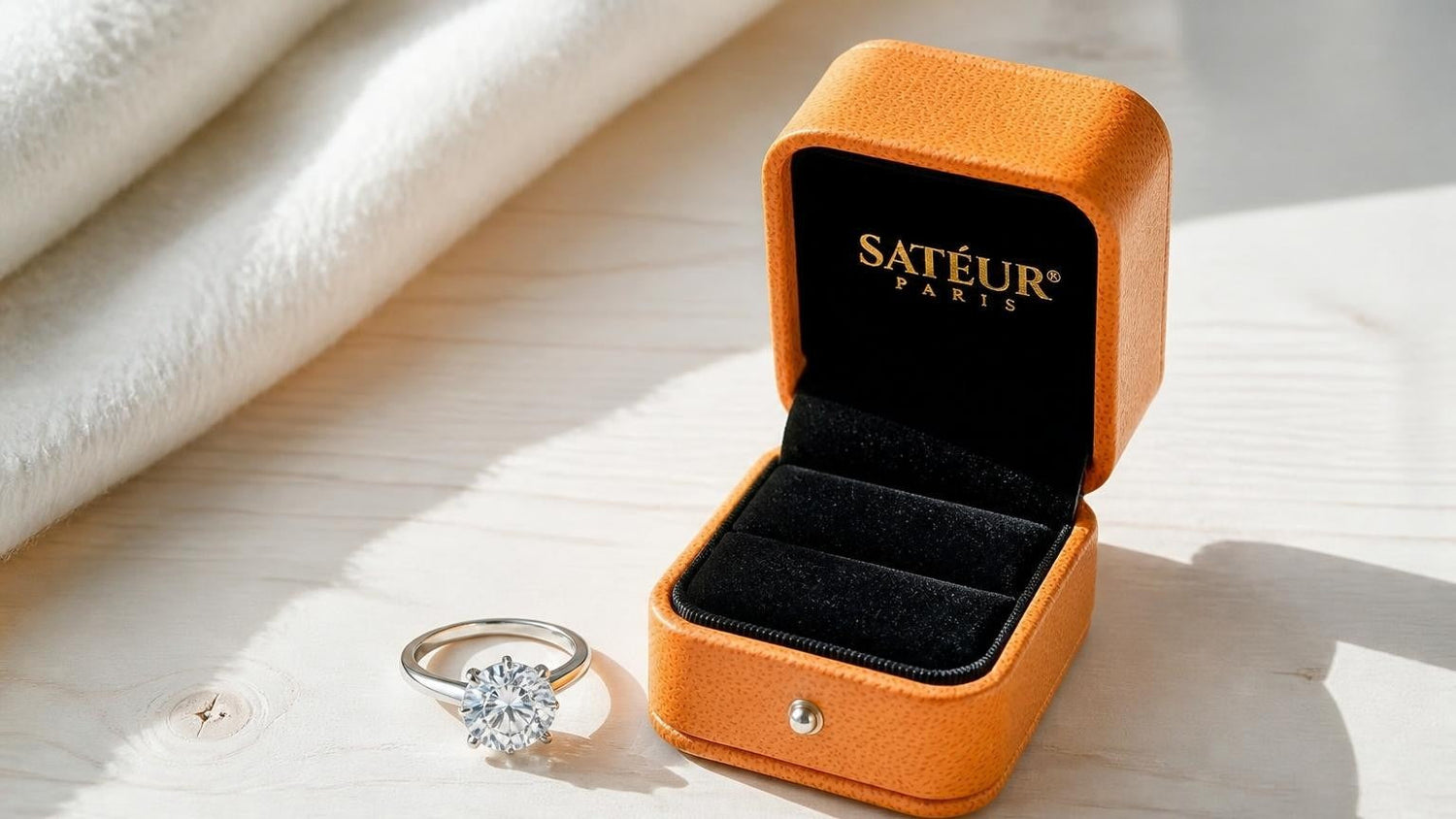
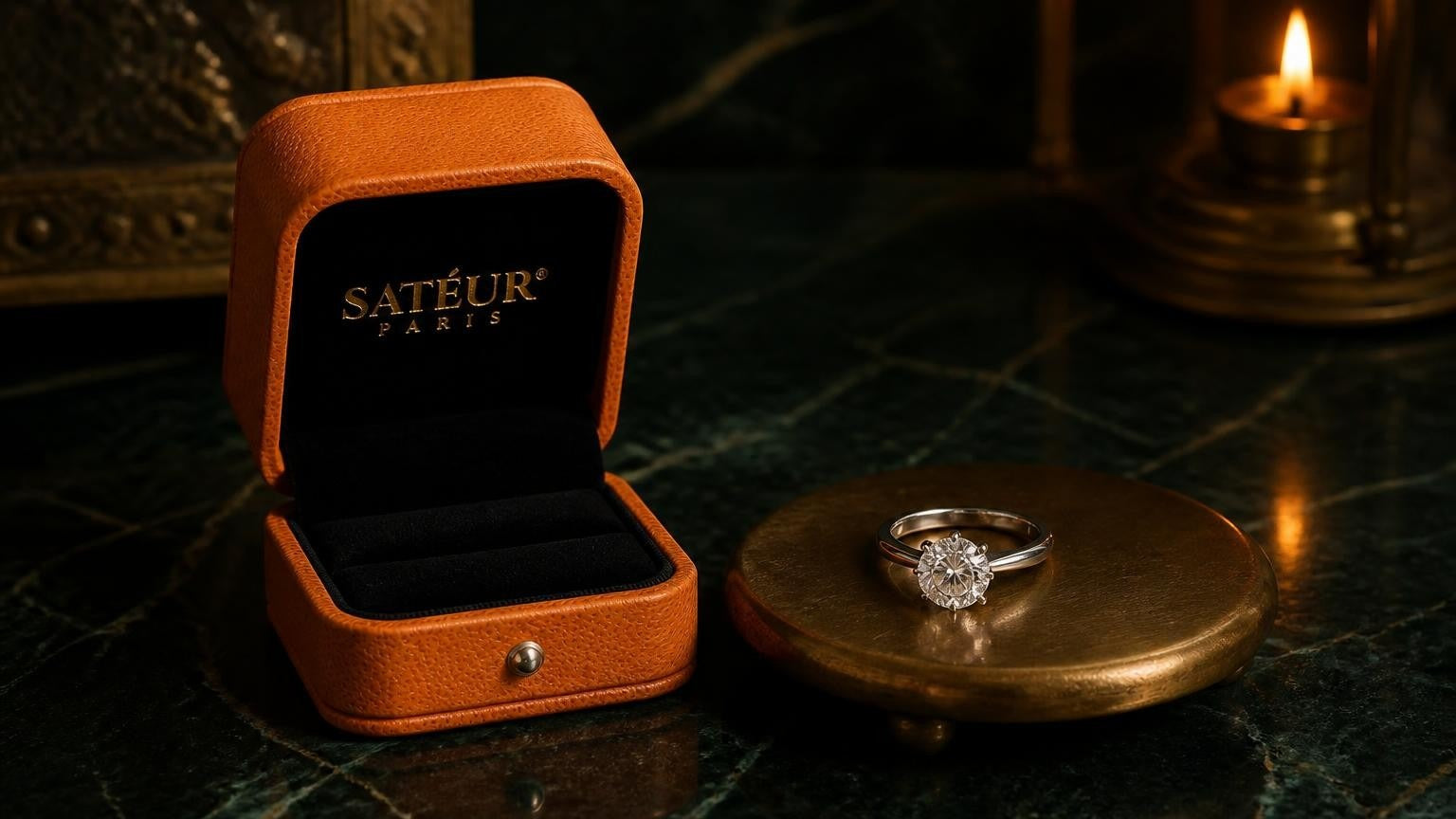
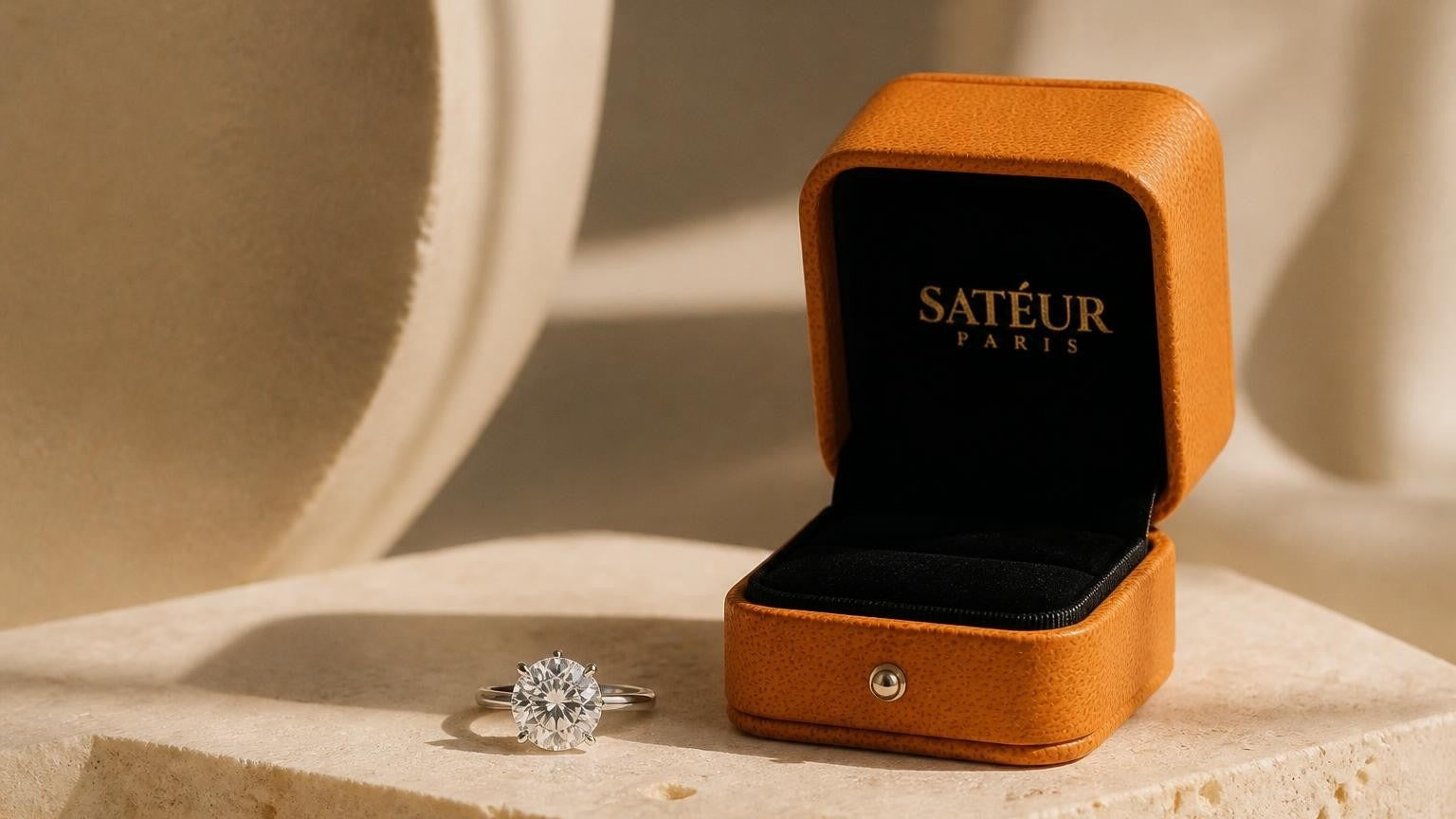
The entry point is the The 1% Ring® collection — specifically the Satéur Destinée Ring™, a 1.00 carat round-cut Satéur Gems® set in 18k white gold finish. It is the piece that defines The New Diamond Standard: a ring that compares to a $10,000 mined diamond, priced to reflect the intelligence of the choice rather than the geology of the stone.
For those drawn to vivid fire, Satéur's moissanite ring collection offers the same commitment to precision — D–E colour, Excellent cut — with the distinctive spectral brilliance of silicon carbide. The choice between the two tiers is an optical preference, not a quality hierarchy.

Satéur Destinée Ring™
The look of a flawless diamond, for 1% of the price.
Compare to a $10,000 mined diamond
Joined by 100,000+ couples across 150+ countries.
Discover The 1% RingFree worldwide shipping · 30-day returns · Lifetime Satéur Care
The category is defined by its range. Satéur's simulant jewellery spans earrings from $88 through rings and complete sets — all built to the same optical specification. The price difference between a Satéur Gems® piece and its mined diamond equivalent is not a compromise. It is a reallocation from geological scarcity to precision craftsmanship.
FAQ: Simulated Diamonds and Diamond Simulants
What exactly is a simulated diamond?
A simulated diamond is a gemstone engineered to replicate the visual appearance of a mined diamond. The category includes moissanite, cubic zirconia, and proprietary simulants such as Satéur Gems®. The defining characteristic is optical resemblance — D–E colour, precision cut, white brilliance. Simulated diamonds are not chemically identical to mined diamonds; they are distinct materials calibrated for the diamond aesthetic.
How do simulated diamonds compare visually to mined diamonds?
Premium diamond simulants are visually indistinguishable from mined diamonds with the naked eye. Satéur Gems® deliver the clean white brilliance of a flawless diamond — D–E colour, Excellent cut, refractive index approximately 2.39. Moissanite returns more vivid, rainbow-forward fire than a mined diamond, which gives it a distinctive optical character. In ordinary wearing conditions, premium simulants are convincing at close range.
Are simulated diamonds durable enough for engagement rings?
Yes. Premium diamond simulants — Satéur Gems® at approximately 8.8 Mohs, moissanite at approximately 9.25 Mohs — are extremely durable and appropriate for engagement rings intended for daily wear. Both hold their surface brilliance for decades under normal conditions. Cubic zirconia is less durable and prone to clouding; it is not the best choice for continuous-wear jewellery.
What is the price difference between a simulated diamond and a mined diamond?
Substantial. A one-carat mined diamond at D–E colour, Excellent cut retails for approximately $10,000. Equivalent visual presence in Satéur Gems® is available from $138 for earrings, with ring settings well under $1,000. The price difference reflects geological scarcity and a century of diamond-industry marketing — not the optical experience for the wearer.
Do simulated diamonds cloud or discolour over time?
Premium simulants do not cloud or discolour. Satéur Gems® and moissanite retain their optical properties under standard conditions and with normal jewellery care. Cubic zirconia is the exception — prone to surface clouding as micro-abrasions accumulate. When evaluating a simulated diamond for longevity, Mohs hardness is the key indicator.
What colour grades are available in diamond simulants?
Premium diamond simulants are manufactured to D–E colour grades — colourless to near-colourless on the GIA scale, representing the finest end of the diamond colour range. Satéur Gems® are calibrated to this standard. The colour grade of a simulant matters most in combination with cut quality — both D–E colour and Excellent cut are required for the full diamond-accurate appearance.















Deja un comentario
Este sitio está protegido por hCaptcha y se aplican la Política de privacidad de hCaptcha y los Términos del servicio.