


Are Moissanite Diamonds Real? The Honest Answer.
The question contains its own confusion. "Moissanite diamonds" implies moissanite is a type of diamond. It is not. Moissanite is a real gemstone — a lab-created silicon carbide with its own chemical identity, its own optical properties, and its own place in fine jewellery — that is distinct from a diamond in every measurable sense. Calling it a fake diamond misunderstands what it is. Calling it a real diamond misrepresents it. The more useful question is: what does moissanite actually offer, and is it worth choosing?
This article answers that directly. The myth is that moissanite is merely an imitation. The truth is that it is a gemstone with a Mohs hardness of approximately 9.25, a light dispersion approximately 2.4 times that of a diamond, D-E colour grading, and a price point at roughly 3–5% of equivalent mined diamonds. Those are not the properties of an imitation. They are the properties of a distinct and considered choice. For a broader view of how moissanite compares to other diamond alternatives, that guide covers the full landscape.
Key Takeaways
- Moissanite is a real gemstone — lab-created silicon carbide — not a diamond and not a fake gemstone.
- At approximately 9.25 Mohs hardness, moissanite is among the most durable gemstones in fine jewellery, suited to daily engagement ring wear.
- Moissanite displays D-E colour grading and approximately 2.4 times the light dispersion (fire) of a diamond.
- A 1-carat moissanite retails from approximately £230–£300, versus £1,500–£12,000 for an equivalent mined diamond.
- Satéur moissanite engagement rings start from approximately $88 — fine-jewellery quality at a fraction of traditional diamond pricing.
- The choice is not real versus fake. It is which gemstone best reflects your values and aesthetic.
What Is Moissanite.
Moissanite is a gemstone composed of silicon carbide. It was first identified in 1893 by French chemist Henri Moissan inside a meteorite crater in Arizona — hence the name. Natural moissanite is extraordinarily rare, found almost exclusively in meteorite impact sites. The moissanite sold in jewellery today is lab-created: grown in controlled conditions to achieve consistent colour, clarity, and optical performance at scale.
That origin matters. Lab-created does not mean lesser. It means precision. Every Satéur moissanite gemstone is produced to D-E colour specifications and Excellent cut standards — the same grading language applied to diamonds. The result is a gemstone with measurably superior fire to a mined diamond, at a fraction of the cost, with no mining provenance concerns.
Moissanite is not a simulated diamond or an imitation gemstone. It is a distinct material — silicon carbide — with its own chemical composition, its own optical signature, and a growing standing in fine jewellery among buyers who prefer knowing exactly what their ring is made of.

What Is a Diamond.
A diamond is a gemstone composed of pure carbon, crystallised under extreme heat and pressure — either within the earth over billions of years, or in a laboratory within weeks. The chemical structure is identical in both cases. Mined and lab-grown diamonds are, by every measure, diamonds.
Diamonds were long positioned as the only acceptable choice for an engagement ring — a position built largely through decades of marketing by the mining industry. That narrative has shifted. Both IGI-certified lab-grown diamonds and sophisticated gemstone alternatives are now widely chosen with full understanding of what they are.
Understanding what a diamond is helps clarify what moissanite is not — and what it offers that a diamond does not. The differences are real, measurable, and for most buyers, secondary to the meaning the ring carries.
Moissanite and Diamond: Side-by-Side Comparison.
The most useful way to evaluate a moissanite diamond comparison is to examine the properties that affect daily experience: appearance, durability, colour, and cost. The table below uses accurate figures.
| Property | Moissanite | Mined Diamond |
|---|---|---|
| Is it a diamond? | No — silicon carbide (SiC) | Yes — carbon crystal |
| Origin | Lab-created | Natural (or lab-grown) |
| Mohs Hardness | ~9.25 | 10.0 |
| Light Dispersion (Fire) | 0.104 — ~2.4× a diamond | 0.044 |
| Refractive Index | ~2.65 | ~2.42 |
| Colour Grade | D-E (colourless) | D–Z (varies by stone) |
| 1-Carat Price Range | ~£230–£300 | ~£1,500–£12,000 |
| Satéur Starting Price | From ~$88 | — |
Appearance and Sparkle.
To the naked eye, moissanite and a high-quality diamond appear strikingly similar. Both are colourless gemstones with brilliant faceting and strong light return. The difference lies in the character of the sparkle, not the presence of it.
A diamond returns predominantly white light — a crisp, controlled brilliance. Moissanite exhibits significantly higher fire: the rainbow dispersion that occurs when light separates into its spectral components. With a dispersion value of 0.104 — approximately 2.4 times that of a diamond — moissanite produces a vivid, spectral sparkle that is most visible in strong direct light. Under candlelight or diffused indoor lighting, the two gemstones are visually indistinguishable with the naked eye in terms of colour and brilliance for most observers.
Those who want the most diamond-accurate look — the clean, white brilliance of a flawless diamond — will find that in Satéur's Gems® tier. Those drawn to vivid fire and moissanite's distinctive character will find their answer in the moissanite ring collection from $88.

Durability and Daily Wear.
A moissanite engagement ring rated at approximately 9.25 Mohs — the second-hardest gemstone used in fine jewellery — will not scratch from contact with most materials encountered daily. It will not cloud. The silicon carbide composition is chemically stable and does not react with skin oils or household products in ways that degrade its brilliance.
The practical difference between moissanite's 9.25 and diamond's 10 is negligible in daily wear. Both gemstones are durable enough for daily ring use; the 0.75 Mohs difference does not affect the experience of wearing the ring. A Satéur moissanite engagement ring worn today holds its sparkle for life.
For a deeper view of how moissanite performs within the moissanite engagement ring landscape, that article addresses the full context of the choice.
Colour and Clarity.
Earlier generations of lab-created moissanite occasionally showed a slight grey or green tint in certain lighting — a characteristic eliminated in contemporary production. Modern moissanite is produced to D-E colour specifications: near-colourless to colourless, matching fine diamond appearance in colour terms with the naked eye.
Clarity is consistently high in well-produced moissanite. The controlled lab-creation process yields stones with minimal internal inclusions. Those comparing moissanite against lab-created diamond options will find that at D-E grade level, the comparison is favourable. The meaningful difference lies in the gem type's distinct optical signature — not in visible quality under normal conditions.

The Satéur Value Proposition.
Satéur was built on one observation: the value of a gemstone is not determined by what you paid for it. A moissanite engagement ring with D-E colour grading, Excellent cut, and 9.25 Mohs hardness is not a compromise. It is a considered choice. The New Diamond Standard was built on precisely this premise — that intelligence, not expenditure, is the measure of how well you chose.
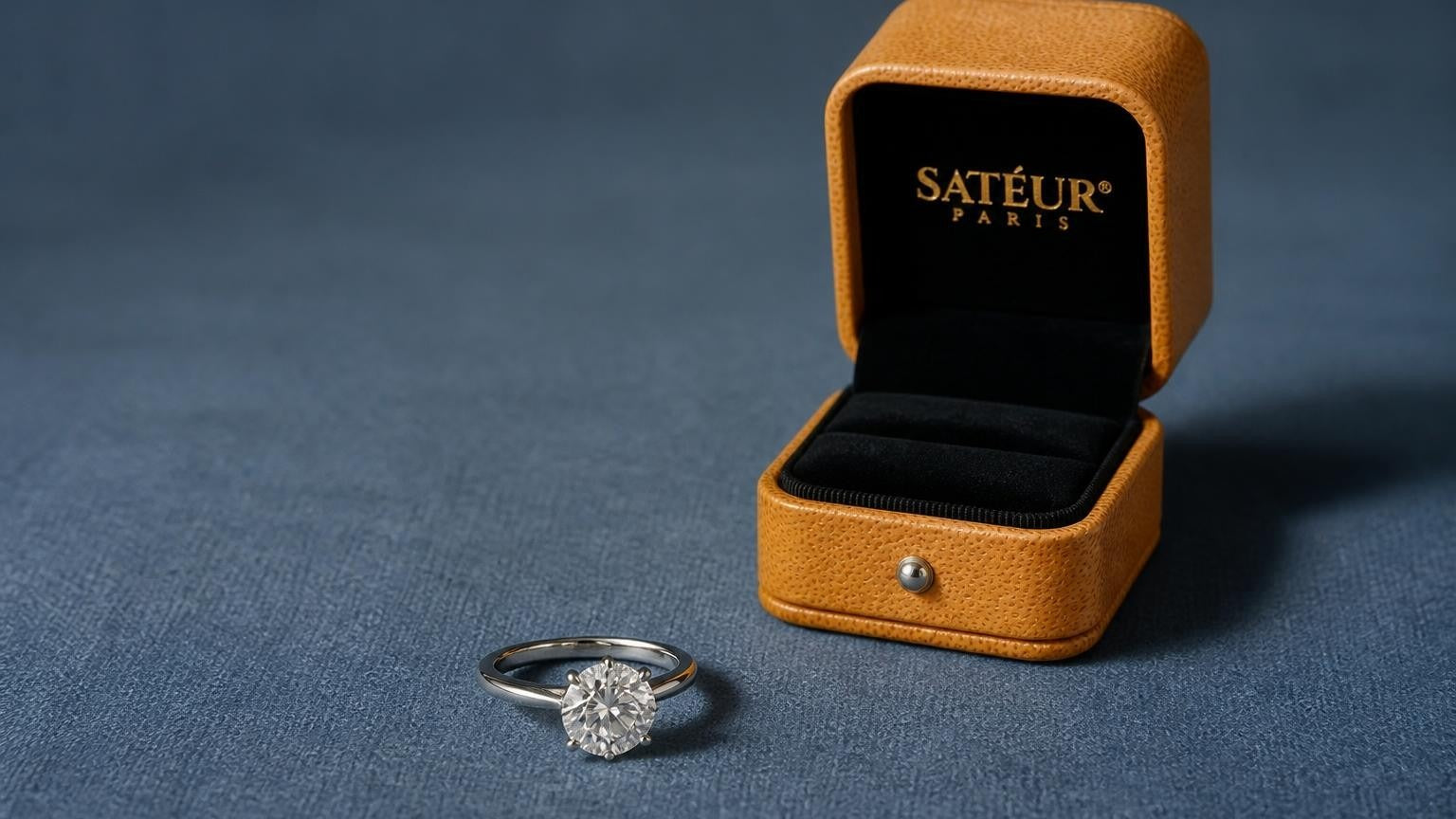
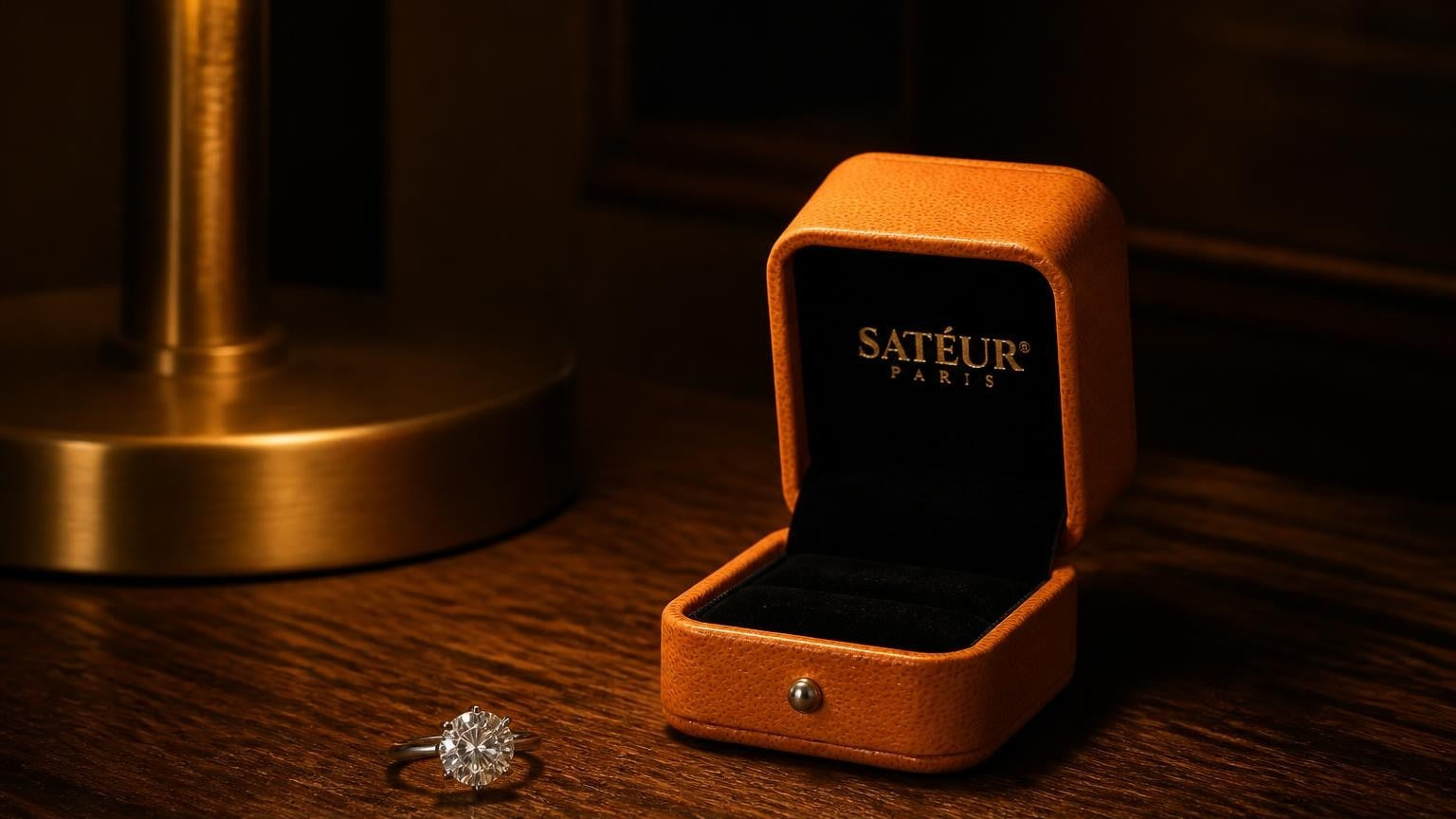
The Satéur Destinée Ring™ — The 1% Ring® — starts from approximately $88 in the moissanite tier. Fine-jewellery construction. Precision-cut silicon carbide. 18k gold finish setting. The look of rings priced ten to fifteen times higher. The difference is not the ring. It is the reasoning behind it.
Browse the Satéur moissanite collection — every piece built to hold its brilliance for life, at a price that does not require a reason.

Satéur Destinée Ring™
The look of a flawless diamond, from 1% of the price.
Compare to a $10,000 mined diamond
Joined by 100,000+ couples across 150+ countries.
Discover The Moissanite CollectionFree worldwide shipping · 30-day returns · Lifetime Satéur Care
The myth was that choosing moissanite meant settling. The truth — visible in every D-E colourless gemstone, in every 9.25 Mohs stone built to last a lifetime — is that it means choosing with clarity. Not the clarity of a certificate. The clarity of knowing exactly what you have, and why you chose it.
Frequently Asked Questions
What is moissanite and how is it made?
Moissanite is a gemstone composed of silicon carbide (SiC). Naturally occurring moissanite is extremely rare — found almost exclusively in meteorite impact sites. The moissanite used in jewellery today is lab-created, grown under controlled conditions to achieve consistent D-E colour, Excellent cut specifications, and a Mohs hardness of approximately 9.25. It is a distinct gemstone with its own chemical identity — not a diamond and not an imitation of one.
How do moissanite and diamond appearance differ to the naked eye?
Under most lighting conditions, moissanite and a high-quality diamond are visually indistinguishable with the naked eye in terms of colour. The key difference is sparkle character: moissanite displays approximately 2.4 times the fire (rainbow light dispersion) of a diamond, producing a more vivid, spectral sparkle. Diamond returns predominantly white light. This is a difference in aesthetic preference, not quality.
Is moissanite durable enough for an everyday engagement ring?
Yes. Moissanite rates approximately 9.25 on the Mohs hardness scale — the second-hardest gemstone used in fine jewellery. It resists scratching and does not cloud with standard care, holding its optical properties indefinitely. It is well-suited to daily wear as an engagement ring.
What colour and clarity grades does moissanite typically offer?
Modern lab-created moissanite is produced to D-E colour specifications — near-colourless to colourless. Earlier generations sometimes showed a slight grey or green tint in certain lighting; contemporary production has eliminated this. Clarity is generally high, with minimal visible inclusions under normal viewing conditions.
How does the cost of moissanite compare to a mined diamond?
A 1-carat moissanite typically retails from approximately £230–£300. An equivalent mined diamond ranges from £1,500 to £12,000 depending on cut, colour, and clarity. Satéur moissanite engagement rings start from approximately $88 — fine-jewellery quality at approximately 3–5% of the cost of a comparable mined diamond ring.
Will moissanite cloud or become cloudy over time with wear?
No. Moissanite does not cloud with wear. Its silicon carbide composition is chemically stable and does not react with skin oils, cleaning products, or normal environmental exposure in ways that affect optical clarity. A moissanite gemstone maintained with standard jewellery care will retain its brilliance indefinitely.















Deja un comentario
Este sitio está protegido por hCaptcha y se aplican la Política de privacidad de hCaptcha y los Términos del servicio.