

Which Hand Do You Wear an Engagement Ring On?
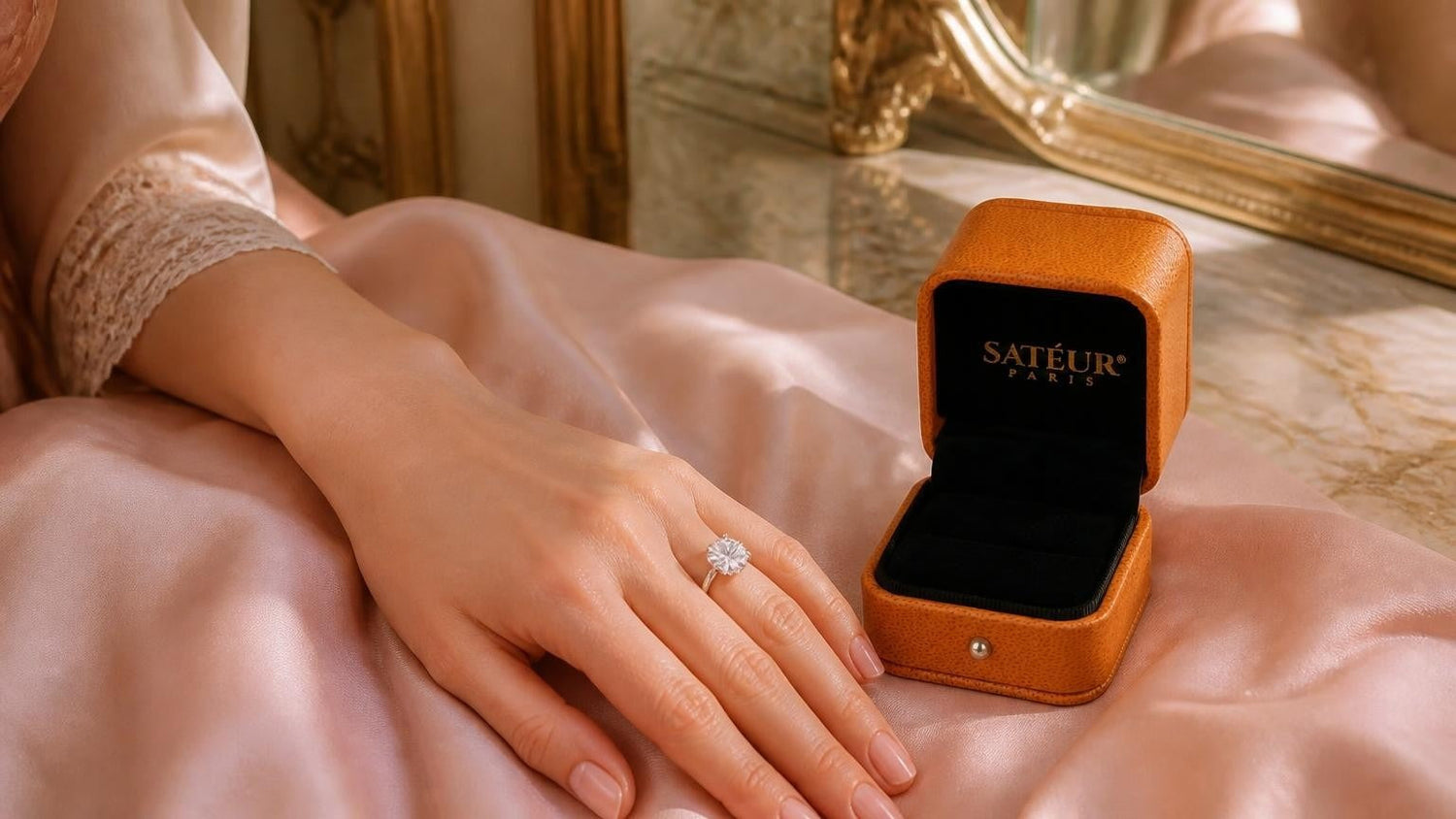
In most Western countries, the engagement ring is worn on the fourth finger of the left hand — positioned above the wedding band once that ceremony takes place. It is a convention rooted in historical belief and centuries of social habit. But it is a convention, not a rule. Across cultures and countries, ring placement varies considerably. Understanding why clarifies what is right for you.
Key Takeaways
- In the US, UK, and most of Western Europe, engagement rings are worn on the fourth finger of the left hand.
- Germany, Austria, Norway, and parts of Eastern Europe traditionally wear the engagement ring on the right hand instead.
- The wedding band sits closest to the hand, with the engagement ring stacked above it on the same finger.
- Wearing your ring on the right hand is entirely valid — in many traditions, it is the default.
- Ring metals — 18k white gold, yellow gold, and rose gold — remain standard regardless of which hand you choose.
- Satéur Gems® entry price begins at approximately $138, offering the appearance of a premium stone at roughly 1% of a mined diamond's cost.
Engagement Ring Tradition by Region
The left-hand tradition traces back to an old Roman idea of the vena amoris — the "vein of love" — said to run directly from the fourth finger to the heart. No such anatomical vein exists, but the sentiment embedded itself in Western custom and endured across centuries. In the United States, United Kingdom, Canada, Australia, France, and most of Western Europe, the left ring finger remains the default for wearing an engagement ring.
In Central and Northern Europe, the opposite holds. Germany, Austria, Norway, Denmark, and large parts of Eastern Europe — including Poland, Greece, and Russia — traditionally place the engagement ring on the right hand. In these countries, the right hand carries no lesser significance. It is simply the established cultural norm, as settled as the left-hand tradition elsewhere. Many couples from these regions continue wearing the ring on the right hand throughout their marriage.
India, Brazil, and Colombia also observe the right-hand convention in some communities, reflecting the breadth of engagement ring customs across the world. Jewish tradition varies further: some ceremonies place the ring on the right index finger during the ceremony itself, then move it to the left ring finger afterward.
For those navigating a marriage that bridges two cultural traditions, it is worth discussing which convention feels most resonant. There is no obligation to follow the custom of the country you currently live in over the tradition you grew up with.
If you are also exploring which finger an engagement ring goes on, the companion piece covers every digit — including less common choices like the middle finger and what those signal historically.


Which Hand Is Correct
Neither hand is incorrect. Convention is geography. The question worth asking is which tradition holds meaning for you and your partner — and which hand feels most comfortable for daily wear.
Practical considerations matter here. Most people are right-handed. A ring worn on the left hand is less likely to encounter daily impact, abrasion, or household tasks than one worn on the dominant hand. For active wearers — those who work with their hands, practise sport, or type extensively — the non-dominant hand offers a degree of natural protection for the setting and the gemstone.
Some wearers choose the right hand entirely outside of any regional tradition, simply because it suits their aesthetic preference or hand anatomy. This is equally valid. The ring's meaning is not altered by which side of the body it occupies. What matters is that the ring is comfortable and worn consistently, not that it follows a particular cultural playbook.
Left Hand vs Right Hand
A useful reference across the main conventions:
| Countries / Regions | Engagement Ring Hand | Wedding Band Hand |
|---|---|---|
| US, UK, Canada, Australia, France | Left ring finger | Left ring finger (below engagement ring) |
| Germany, Austria, Norway, Denmark | Right ring finger | Right ring finger |
| Poland, Greece, Russia, Ukraine | Right ring finger | Right ring finger |
| India (some regions) | Right ring finger | Varies by tradition |
| Brazil, Colombia | Right ring finger (engagement); moves left at wedding | Left ring finger (post-ceremony) |

Engagement Ring and Wedding Band Placement
In Western tradition, the wedding band is worn closest to the heart — which means closest to the hand — sitting below the engagement ring on the same finger. This places the wedding band as the first ring in the stack, with the engagement ring above it. The symbolism is intentional: the band, exchanged at the ceremony, is seated innermost.
In practice, there are two common approaches on the wedding day itself. Some choose to move the engagement ring to the right hand during the ceremony, so the wedding band can be placed directly on the bare left ring finger in the correct order. The engagement ring is then returned on top of the wedding band after the ceremony concludes. Others simply stack the wedding band above the engagement ring during the ceremony and adjust the order later — either at a jeweller or by slipping the rings off and replacing them in the right sequence.
When both rings are worn on the right hand — as in the German and Austrian tradition — the same logic applies: the wedding band sits closest to the hand, engagement ring above. The symbolic hierarchy transfers regardless of which hand carries the rings.
The metals of each ring should complement each other. An 18k white gold engagement ring pairs most naturally with a white gold wedding band; rose gold with rose gold; yellow gold with yellow gold. Mixing metal finishes is a deliberate design choice some make intentionally, but matching finishes remain the most harmonious approach — and avoid any risk of softer and harder metals wearing against each other differently over decades of daily wear.
Wearing Your Rings Together
Once both rings are in place, the pair creates a distinct visual. The engagement ring — typically featuring a central gemstone — sits above, drawing the eye upward. The wedding band frames it below, often in a simpler or matching profile. This stacking has its own aesthetic logic: a curved or contoured wedding band can nestle seamlessly against a solitaire setting, while a flat band creates a clean graphic contrast that some wearers prefer.
Some wearers choose to wear the engagement ring alone for everyday occasions and reserve the full stack for formal events. Others prefer the permanence of both rings together from the day after the wedding. There is no obligation in either direction — wearing both or wearing one is a personal rhythm, not a rule.
Wearing the rings together also raises questions about ring profiles and how different settings sit against each other. A high cathedral solitaire setting, for instance, lifts the central gemstone considerably above the band, which means a flush eternity band will leave a visible gap. A lower bezel or tension setting sits closer to the finger and stacks more naturally. It is worth considering both rings together when selecting either piece.
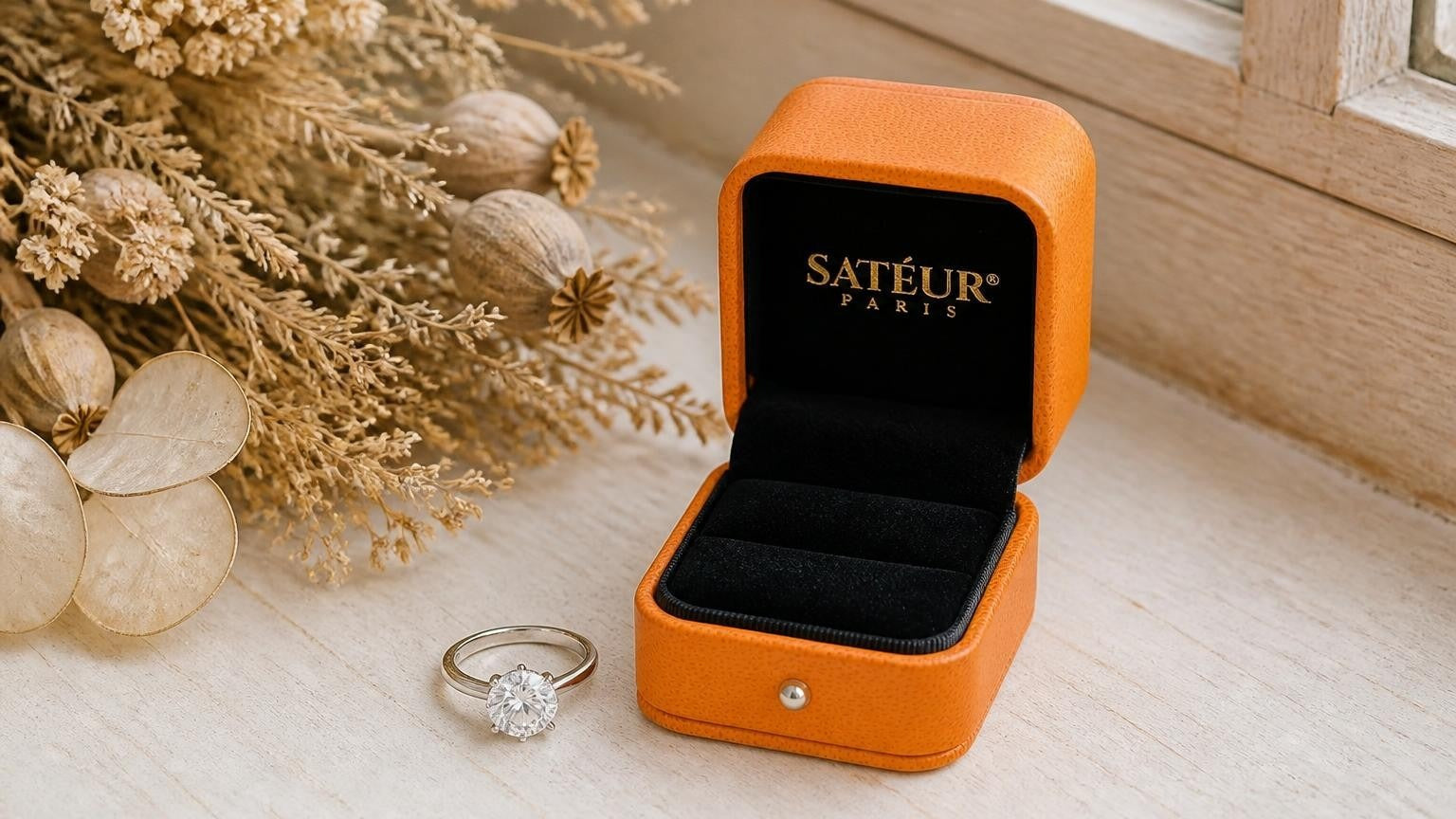
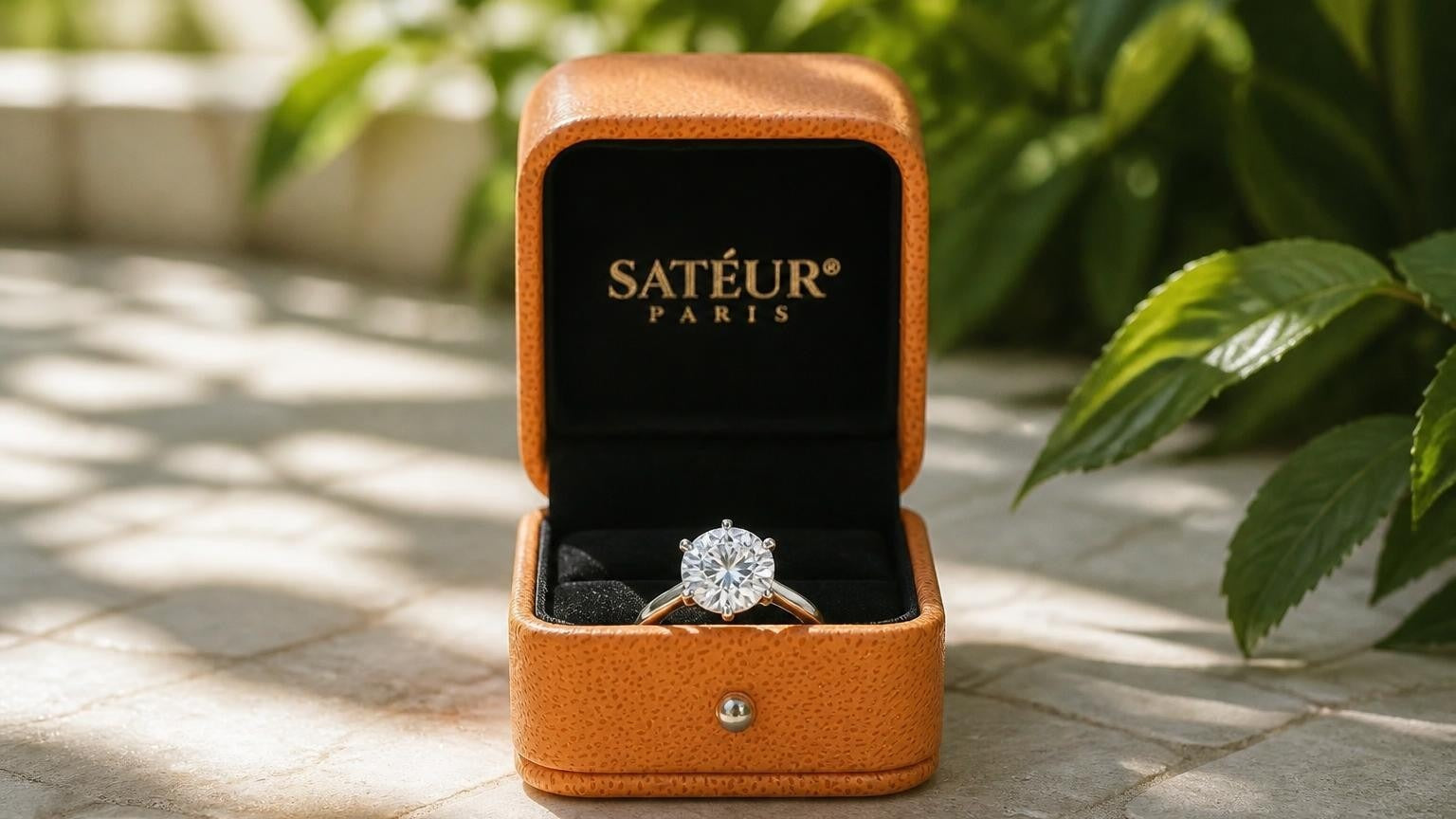
For detailed guidance on the ceremony moment and how to present the ring, the complete guide to engagement ring boxes covers storage, presentation, and the considerations that make the moment feel considered rather than improvised.
Explore the full engagement ring collection to see how different settings and profiles look — a useful reference when considering how your engagement ring and wedding band will sit together on the hand.
Satéur Gems®: The Diamond-Look Choice
The choice of gemstone matters as much as the hand it is placed on. Satéur Gems® — the trademarked diamond simulant at the heart of The 1% Ring® — are graded at D-E colour with an Excellent cut. They carry the clean, white brilliance of a flawless diamond: diamond-accurate, visually indistinguishable from a mined diamond with the naked eye. The Mohs hardness is approximately 8.8, making them extremely durable and built for everyday wear.
Entry price begins at approximately $88 — compared to a mined diamond equivalent at $10,000 or more. The appearance is the same across the table. The difference is where the rest of the money goes.
Satéur Gems® sit comfortably in all standard ring settings — solitaire, pavé, halo — and work with any metal finish: 18k white gold finish, yellow gold finish, or rose gold finish. Whatever hand you choose, and whatever regional tradition you observe, the gem performs identically.
For those considering how men might wear an engagement ring in different traditions, the men's engagement ring collection extends the same standard to a broader range of profiles and band widths.

Satéur Destinée Ring™
The look of a flawless diamond, for 1% of the price.
Compare to a $10,000 mined diamond
Joined by 100,000+ couples across 150+ countries.
Discover The 1% RingFree worldwide shipping · 30-day returns · Lifetime Satéur Care
Whichever hand the ring is placed on — left or right, fourth finger or otherwise — the gemstone reads the same. It catches the same light. It sits with the same quiet authority. The tradition you follow shapes the placement; the gem shapes the presence.
Every Satéur Gems® ring is built for a lifetime of daily wear — the standard by which The New Diamond Standard® is measured.
Frequently Asked Questions
Which hand should I wear my engagement ring on?
In the United States, United Kingdom, and most of Western Europe, the engagement ring is worn on the fourth finger of the left hand. In Germany, Austria, Norway, and much of Eastern Europe, the right hand is traditional. Both are correct — the choice depends on which cultural convention is meaningful to you and your partner.
Do I wear my engagement ring and wedding band on the same finger?
Yes, in most Western traditions both rings are worn on the left ring finger. The wedding band sits closest to the hand, with the engagement ring stacked above it. In right-hand traditions — such as in Germany and Austria — the same stacking order applies on the right ring finger.
What is the correct order to stack an engagement ring and wedding band?
The wedding band is worn first — closest to the hand — with the engagement ring stacked above it. To achieve this on the wedding day, many move the engagement ring to the right hand during the ceremony so the band can go on the bare left ring finger in the correct order, then return the engagement ring on top afterward.
Does engagement ring placement differ by country or culture?
Yes. Countries including the US, UK, Canada, Australia, and France use the left hand. Germany, Austria, Norway, Greece, Poland, and Russia traditionally use the right. India, Brazil, and Colombia observe mixed or region-specific conventions. Jewish ceremony traditions also vary, with some placing the ring on the right index finger during the ceremony itself.
Can I wear my engagement ring on my right hand?
Entirely. In many countries, the right hand is the traditional default. Outside of those traditions, wearing an engagement ring on the right hand is a personal choice that carries no lesser significance. Some wearers prefer it for practical reasons — dominant-hand protection being the most common — or simply for aesthetic preference.
How do I choose between different metal finishes for an engagement ring?
18k white gold finish offers a cool, bright setting that maximises the visible brilliance of the gemstone. Yellow gold gives a warmer, heritage feel. Rose gold reads as contemporary and romantic. The most harmonious approach is to match the engagement ring and wedding band in the same finish, though deliberate contrast is a design choice some wearers make intentionally.

















Deja un comentario
Este sitio está protegido por hCaptcha y se aplican la Política de privacidad de hCaptcha y los Términos del servicio.