

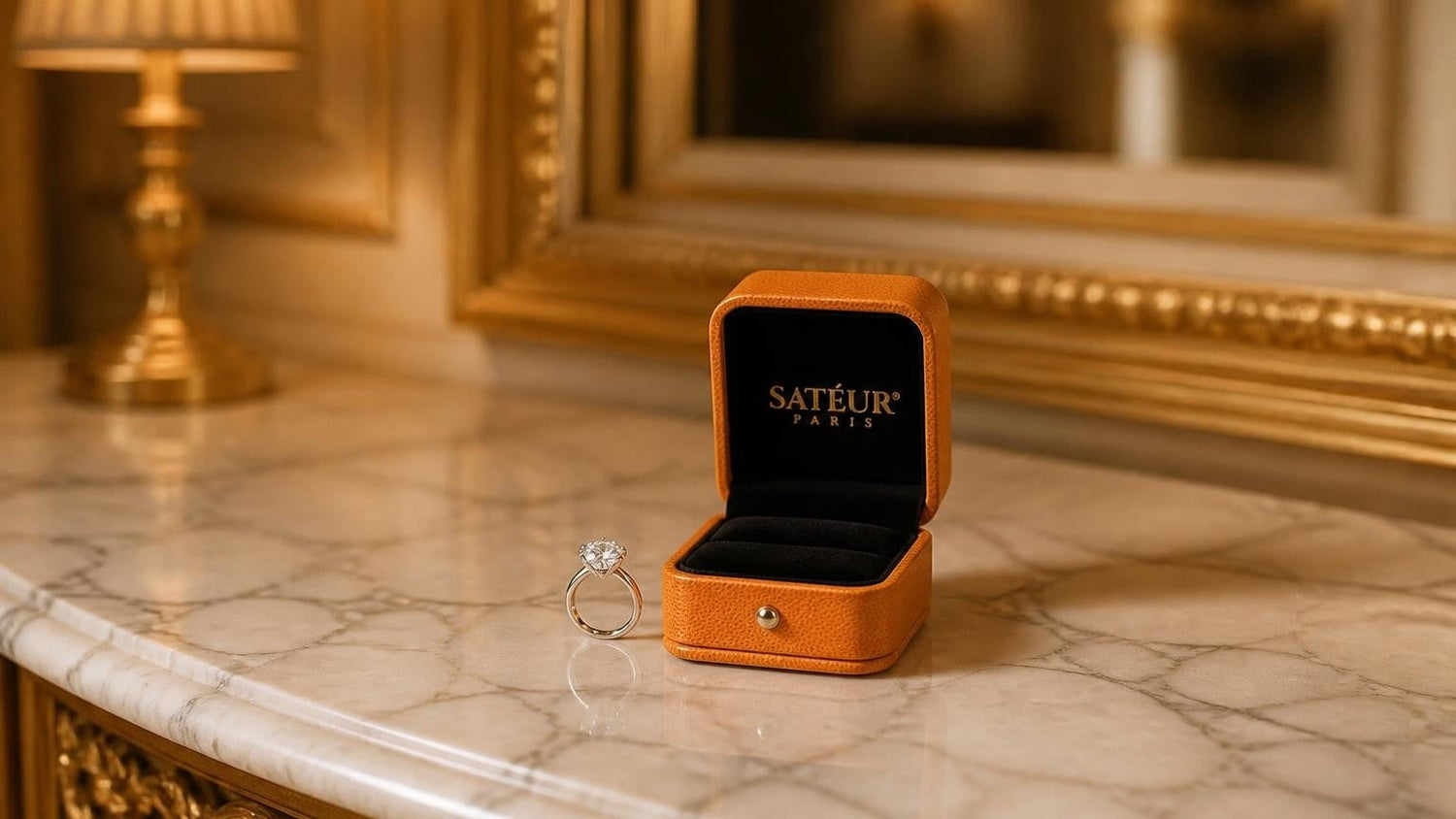
Average Price of an Engagement Ring: What You Actually Need to Know
The average price of an engagement ring in the United States sits between $3,500 and $6,500, depending on stone choice, metal, and setting style. That figure, cited annually by surveys from The Knot and industry analysts, masks a wide range — from under $1,000 for modest bands to $50,000 and beyond for exceptional mined diamonds. Understanding what moves the cost of an engagement ring, and whether you need to move it that high, is the more useful question. For a full breakdown of how these figures are calculated, see the engagement ring cost guide.
Key Takeaways
- The median engagement ring cost in the US ranges from $3,500 to $6,500 depending on stone type and location.
- Mined diamond engagement rings average $5,500–$7,500; diamond simulants start from ~$138 with comparable visual impact.
- Stone type is the single largest cost driver — accounting for up to 70–80% of total ring price.
- Lab-grown diamonds cost roughly 50% less than mined diamonds on average, with identical chemical and optical properties.
- Satéur Gems® deliver D-E colour and Excellent cut at approximately 1% of a mined diamond's price, starting from $138 for engagement rings.
- The "three-month salary" rule has no cultural or financial basis — it was an advertising construct from the 1980s.
Average Engagement Ring Cost in the US
Survey data from The Knot's annual Real Weddings Study places the average cost of an engagement ring at around $6,000, with a wide distribution. Millennial and Gen Z buyers tend to spend closer to $3,500–$4,500, while buyers in metropolitan areas — New York, Los Angeles, San Francisco — often report figures above $8,000. Regional variation is significant: a ring purchased in a major coastal city carries substantial retail overhead that rural or online buyers avoid entirely.
Several factors push the average up without adding to the visual quality of the ring. Retailer markups on mined diamonds typically range from 30% to 100% above wholesale. Grading reports, certification fees, and branded settings add further cost. The result is that a significant share of the average price of an engagement ring goes toward categories that are invisible at the table.
Stone type and carat weight together account for 60–80% of total ring cost. A round brilliant 1-carat diamond with good colour clarity (G-H colour, VS1-VS2 clarity, Excellent cut) in a simple solitaire setting typically costs $3,500–$5,500 from an independent retailer. Move to D-E colour and IF clarity, and the same stone doubles in price — for a visual difference that requires laboratory instruments to detect.
| Stone Type | Typical Price Range (1ct) | Visual Character |
|---|---|---|
| Mined Diamond | $5,000–$15,000+ | Crisp white brilliance — the benchmark |
| Lab-Grown Diamond | $1,200–$4,000 | Identical optical structure to mined |
| Moissanite | From ~$98 | More fire than a diamond — vivid rainbow sparkle |
| Satéur Gems® | $138–$500+ | Clean white brilliance — diamond-accurate |
How Much Should You Spend on an Engagement Ring
The three-month salary rule — the idea that an engagement ring should cost roughly three months of the buyer's income — has no financial or cultural basis. It was introduced as an advertising campaign by De Beers in the 1980s, then quietly revised upward (from two months to three) when the original figure failed to move enough volume. It is not a tradition. It is a sales target.
A more useful framework centres on what the ring will look like after years of daily wear — not on what category of stone it contains. A cheap cubic zirconia set in sterling silver will cloud and scratch within months of regular use. A well-crafted ring in an 18k gold finish with a durable centre stone will hold its brilliance for decades. The cost question and the quality question are not the same question.
Most financial advisors recommend keeping total engagement costs under 5% of annual household income. For a dual-income household earning $120,000 combined, that suggests a ring budget of $3,000–$6,000. Within that range, stone selection determines whether the average cost engagement ring looks like a $500 purchase or a $10,000 one — the metal and setting rarely account for more than $500–$1,200 of the difference.
A growing share of buyers are separating the emotional significance of the ring from the industry convention around its price. The ring is not the relationship. What it looks like — its cut, its light, its presence on the hand — is a question of craftsmanship, not spend.
Engagement Ring Budget by Stone Type
The centre stone is the dominant cost variable. Metal type is the secondary one. Platinum adds roughly $400–$900 over a comparable 18k gold setting. Halo and pavé designs add $300–$800 depending on the number and size of accent stones. For most buyers, the meaningful budget decision is entirely about the centre stone — everything else is a refinement within a relatively narrow cost band.
Mined diamonds are graded on the 4Cs: colour, clarity, cut, and carat weight. Colour clarity is particularly important — the jump from G-H colour to D-E colour, or from VS1 to FL clarity, commands significant price premiums for differences that trained gemologists identify under magnification, not the naked eye. A 1-carat, G colour, VS1 clarity, Excellent cut diamond from a reputable independent retailer costs $3,500–$5,500. The same ring with a D colour, IF clarity stone doubles or triples in price.
Lab-grown diamonds carry identical chemical and optical properties to mined diamonds and are certified by the same grading laboratories. A 1-carat lab diamond in D-F colour, VS+ clarity, Excellent cut typically costs $1,000–$3,000 — roughly 50% less than its mined equivalent at current market prices.
Moissanite — a lab-created gemstone — offers excellent durability at approximately 9.25 Mohs hardness and delivers more fire than a diamond, meaning it produces more vivid, rainbow-coloured light. A 1-carat equivalent in moissanite typically costs $300–$600. For buyers who want a disclosed, lab-created gemstone with vivid sparkle, moissanite rings represent an established and well-regarded option.

Diamond vs. Diamond Simulant: What You Get for Your Budget
Diamond simulants are gemstones engineered to replicate the visual appearance of a diamond. The category spans a wide quality range — from inexpensive cubic zirconia, which clouds and scratches within a year of daily wear, to precision-cut simulants that are visually indistinguishable from mined diamonds with the naked eye. The engagement ring market's shift toward alternatives is not new, but the quality ceiling at the upper end of the simulant category has risen significantly.
The relevant question for budget planning is not whether a stone is a diamond but whether it will still look like one after five, ten, and twenty years. A diamond's optical durability is its real value proposition. At the upper end of the simulant category, that same durability is achievable for considerably less — and the visual result across the table is identical.
Satéur Gems® are a trademarked diamond simulant. They are not diamonds — they do not carry diamond grading reports, and the composition is proprietary. What they carry is D-E equivalent colour, Excellent-cut symmetry, and a refractive index that produces the clean, white brilliance of a flawless diamond. Under normal viewing conditions — across the table, in natural light, at dinner — they read as a flawless diamond to the naked eye. The hardness is approximately 8.8 Mohs: fully suited to daily ring wear without clouding or chipping under normal conditions.
The cost engagement ring equation changes entirely at this tier. Where an equivalent mined-diamond ring might cost $10,000 or more, a Satéur Gems® ring delivering the same visual impact starts at $138. The difference in the light the stone throws — the white brilliance catching across the room — is not visible to the people in that room.

Why Satéur Gems® Shift the Cost Equation
The average cost of an engagement ring is high primarily because the diamond industry built its pricing around artificial scarcity and controlled distribution. A mined 1-carat diamond's brilliance is not ten times greater than a Satéur Gems® 1-carat equivalent — but the price often is. The difference is not optical. It is supply-chain architecture.
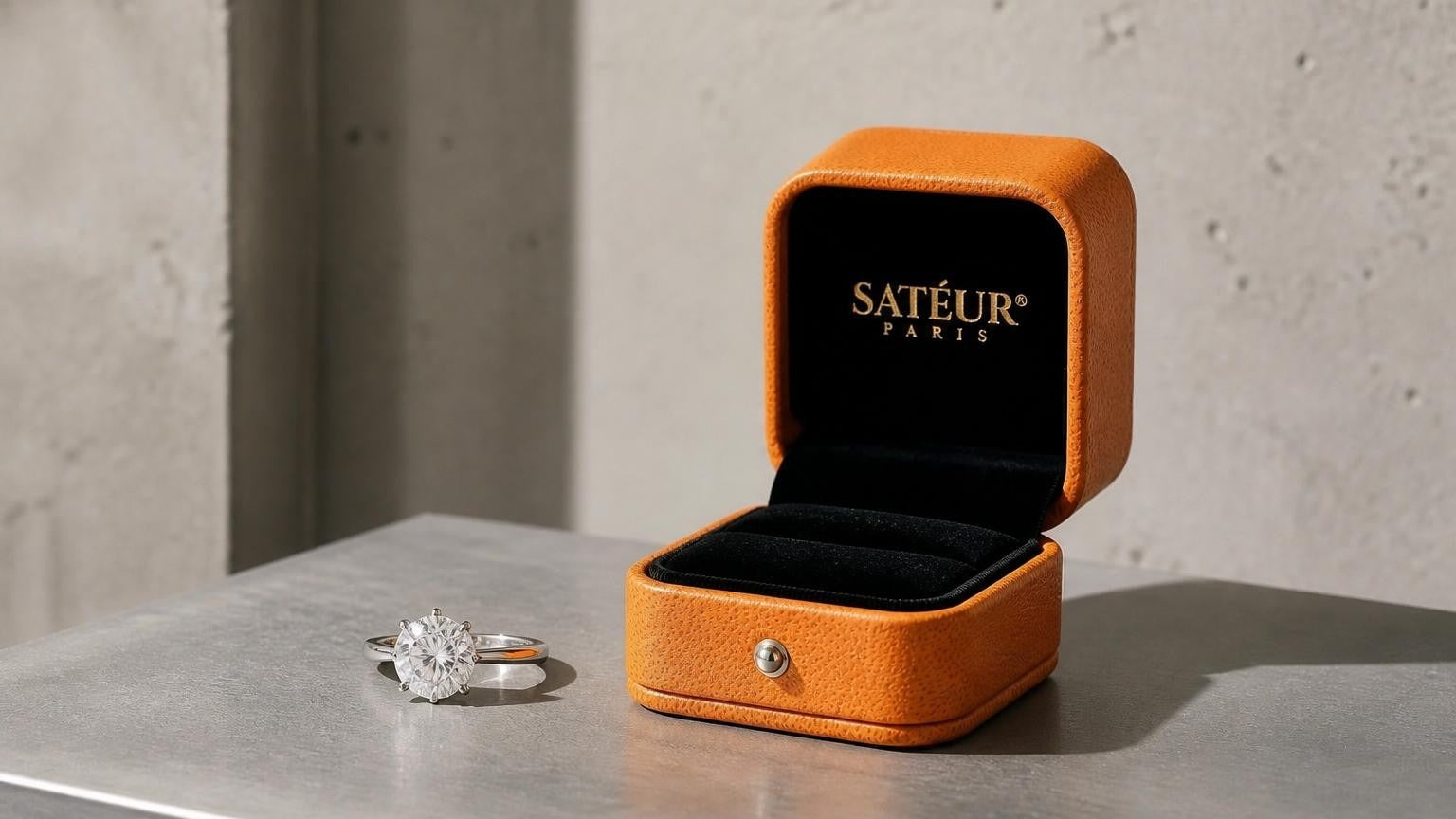
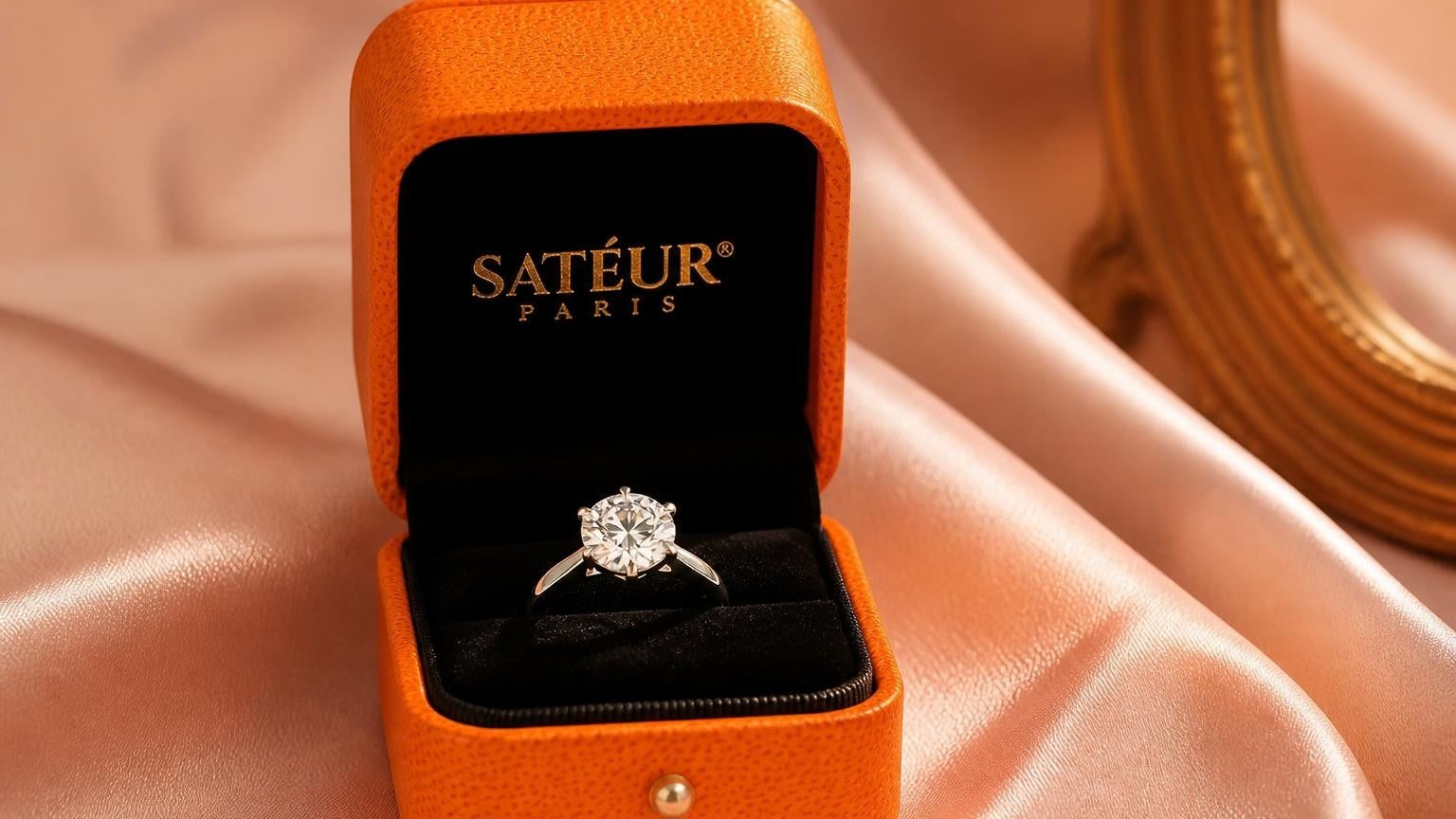
Satéur Gems® begin at $138 for The 1% Ring, the signature engagement ring in the collection. A 2-carat equivalent in Satéur Gems® — a size that commands $24,000 or more in mined diamond — is accessible at a fraction of that cost. The visual presentation at the moment of proposal is identical. The financial impact is not. And the ring budget freed by that difference is real money — the kind that funds a honeymoon, a deposit, or the first year of building a life.
This is the premise behind The New Diamond Standard: that intelligence in gemstone selection is not a compromise. It is the smarter choice. For those who want the look of a flawless diamond and are not invested in the geological origin of the stone, Satéur Gems® shift the cost equation entirely. Compare to a $10,000 mined diamond — the engagement ring collection begins at $138.

Satéur Destinée Ring™
The look of a flawless diamond, for 1% of the price.
Compare to a $10,000 mined diamond
Joined by 100,000+ couples across 150+ countries.
Discover The 1% RingFree worldwide shipping · 30-day returns · Lifetime Satéur Care

The broader engagement ring market is moving in the same direction. Lab-grown diamonds now account for roughly 40–50% of new engagement ring sales in the US, driven primarily by cost. The move toward stones that prioritise visual quality over geological origin is not a passing trend — it is a structural shift in how buyers understand and define value in fine jewellery.
For couples researching average engagement ring cost across stone categories, Satéur occupies a distinct position: visual parity with fine mined diamonds, at a price point that allows the budget to go toward the life being built rather than an industry convention being upheld. The rings on offer at sateur.com span a range of settings, carat weights, and styles — each sharing the same diamond-accurate centre stone.
FAQ: Engagement Ring Pricing and Value
How much should I budget for an engagement ring in 2025?
Most financial guidance suggests keeping total engagement costs under 5% of annual household income. For a couple earning $100,000 combined, that means a ring budget of roughly $3,000–$5,000. Within that range, stone selection determines visual impact. A Satéur Gems® ring at $400–$800 offers the same diamond-accurate appearance as a mined-diamond ring at $6,000–$12,000. The three-month salary rule has no financial or cultural basis; it was an advertising construct from the 1980s.
What is the difference between a mined diamond and a diamond simulant?
A mined diamond is a natural mineral, graded and certified for its colour, clarity, cut, and carat weight. A diamond simulant is a gemstone engineered to replicate the visual appearance of a diamond — it is not a diamond and does not carry a diamond grading report. The relevant difference for most buyers is optical: does it look like a diamond in normal conditions? For Satéur Gems®, the answer is yes — visually indistinguishable to the naked eye. The distinction matters primarily for insurance, resale, and certification purposes.
Can a diamond simulant look as beautiful as a mined diamond to the eye?
Yes — with the naked eye, a high-quality diamond simulant is visually indistinguishable from a mined diamond in normal viewing conditions. Satéur Gems® carry D-E equivalent colour and Excellent-cut precision, producing the clean white brilliance of a flawless diamond. In ambient light, across the table, or in photographs, they read as a fine mined diamond. The difference requires specialised instruments to detect; in everyday wear it is not visible.
How long do diamond simulants like Satéur Gems® last in daily wear?
Satéur Gems® have a Mohs hardness of approximately 8.8, placing them firmly in the durable gemstone range and making them well-suited to daily ring wear. They will not cloud, discolour, or chip under normal conditions. For comparison, cubic zirconia sits at around 8.0–8.5 Mohs and begins to cloud from surface micro-scratches within a year of regular wear. Satéur Gems® are engineered to hold their brilliance for decades.
What does the "three-month salary" rule mean today?
Very little. The rule was introduced by De Beers in the 1980s as part of a marketing campaign designed to establish a spending benchmark for diamond rings. It was originally positioned as two months' salary, then revised upward to three months to increase average transaction value. There is no cultural tradition behind it, no financial logic supporting it, and no obligation to observe it. The ring should reflect the relationship, the taste of the person wearing it, and the couple's actual budget — not an advertising guideline from forty years ago.
How does Satéur pricing compare to other stone options?
A Satéur Gems® engagement ring begins at $138 for The 1% Ring, with larger stones and more elaborate settings ranging to $400–$800 for most styles. A comparable mined diamond ring in the same carat weight and colour grade costs $5,000–$15,000. Lab-grown diamonds in the same specification cost $1,200–$4,000. Moissanite in the same size costs $300–$600. Satéur Gems® sit at the most accessible price point while delivering diamond-accurate visual quality — approximately 1% of a mined diamond equivalent in cost.














Deja un comentario
Este sitio está protegido por hCaptcha y se aplican la Política de privacidad de hCaptcha y los Términos del servicio.