

Diamond Simulant: What They Are and How They Compare
A diamond simulant is a gemstone engineered to replicate the visual appearance of a mined diamond — the brilliance, the colour, the presence — without sharing its chemical composition. The category has evolved significantly. What was once dominated by clouding cubic zirconia now includes sophisticated options with D-E colour grades, Excellent cut ratings, and hardness values that make them genuinely suited to lifelong wear. For those exploring engagement rings and fine jewellery beyond the traditional path, understanding how diamond simulants differ — and which performs best — is the natural starting point.
Key Takeaways
- Diamond simulants replicate diamond's appearance without sharing its chemistry — a distinct category from lab-grown diamonds.
- Leading simulants achieve D-E colour grades and Excellent cut ratings, meeting the visual standards of premium natural diamonds.
- Satéur Gems® delivers the restrained, white brilliance of a flawless diamond, with ~8.8 Mohs hardness for everyday fine jewellery.
- Moissanite is a separate, openly disclosed lab-created gemstone; its higher refractive index (~2.65) produces ~2.4× diamond's fire — vivid, rainbow-forward sparkle distinct from diamond's look.
- Diamond simulants cost approximately 1% of a comparable mined diamond; Satéur entry pieces start at $88.
- Approximately 80% of mined diamond rough fails to meet jewellery-grade standards; simulants are engineered to consistent D-E colour and Excellent cut every time.
What Is a Diamond Simulant
A simulant diamond — also referred to as a simulated diamond — is any gemstone, natural or lab-created, that approximates the optical qualities of a mined diamond without sharing its carbon lattice structure. The definition is visual, not chemical. A simulant achieves what matters to the eye: white light reflection, fire (dispersion), and scintillation.
The category encompasses several distinct materials. Cubic zirconia (CZ), the most widely recognised, entered mainstream jewellery in the 1970s. White sapphire, a natural gemstone, produces a milky and diffuse light return — different in character from diamond. Moissanite, a lab-created silicon carbide gemstone, emerged as a premium simulant in the late 1990s with notably higher fire than a diamond. More recently, purpose-engineered trademarked gemstones — Satéur Gems® among them — have been developed to match diamond's colour accuracy, Excellent cut, and long-term durability in fine jewellery.
What distinguishes the modern premium simulant from earlier generations is engineered consistency. Approximately 80% of mined diamond rough fails to meet jewellery-grade standards; simulants, grown and cut to exacting specification, deliver D-E colour and Excellent cut reliably. The variability that defines the mined diamond market simply does not exist in a well-made simulant.


Key Specs: Colour, Cut, and Durability
The meaningful measures for any diamond simulant are the same applied to natural diamonds: colour, cut, hardness, and the character of light return. Below is a direct comparison across the primary alternatives.
| Property | Satéur Gems® | Moissanite | White Sapphire | Cubic Zirconia | Mined Diamond |
|---|---|---|---|---|---|
| Colour Grade | D-E | D-F | Near-colourless | D (initially) | D-Z |
| Cut Grade | Excellent | Excellent | Variable | Variable | Excellent–Poor |
| Mohs Hardness | ~8.8 | ~9.25 | 9.0 | ~8.0–8.5 | 10 |
| Refractive Index | ~2.39 | ~2.65 | ~1.77 | ~2.15 | 2.42 |
| Light Profile | Diamond-accurate white brilliance | ~2.4× diamond fire — vivid rainbow sparkle | Milky, diffuse — reads unlike a diamond | Dull, clouds within 1–3 years | Benchmark: crisp white brilliance |
| Long-term Clarity | Permanent brilliance | Permanent brilliance | Retains look, lacks diamond fire | Clouds and scratches | Permanent |
| Price (1ct equivalent) | From ~$138 | From ~$98 | From ~$50 | $50+ | $4,000–$12,000+ |
Satéur Gems® and moissanite stand apart from the other simulants in longevity. Cubic zirconia scratches and develops a characteristic cloudiness within months of daily wear; white sapphire retains its hardness but returns a milky, diffuse light that reads unlike a diamond. Both Satéur Gems® and moissanite are extremely durable gemstones, built for everyday fine jewellery, holding their brilliance for life.
The distinction between the two is one of character. Moissanite, with a refractive index of ~2.65, disperses light into visible rainbow fire — approximately 2.4× that of a mined diamond. It is vivid and beautiful, but distinct from diamond's look. Satéur Gems®, with an RI of ~2.39, returns the clean, restrained white brilliance of a flawless diamond. That is the precise quality the Maison was engineered to deliver.
Diamond Simulant vs Lab-Grown Diamonds
This is the most common confusion in the category, and the distinction is precise. Lab-grown diamonds are not diamond simulants. A lab-grown diamond shares the exact chemical and crystallographic structure of a mined diamond — it is carbon, formed under identical conditions in a controlled environment, certified by independent bodies such as the IGI.
A simulant — whether Satéur Gems®, moissanite, or cubic zirconia — is a different material entirely. It approximates the look of a diamond without being a diamond, chemically or structurally. This is not a deficiency. It reflects a deliberate engineering choice: to optimise a gemstone for visual performance and intelligent price rather than chemical identity.
For those who require the specific chemistry of a diamond — IGI certification, carbon pedigree — Satéur offers lab-grown diamonds within its range. For those whose priority is the look of a flawless natural diamond at the most considered price point, a high-grade simulant is the more rational route.
The price difference between the two paths is material: a quality lab-grown diamond in 1 carat typically runs $800–$2,000. A Satéur Gems® piece in the same visual weight begins around $138. Both vastly outperform mined diamond on value. The decision rests on whether chemistry or optics is the priority.
Why Choose a Diamond Simulant
The practical case for diamond simulants has strengthened considerably as the category has matured beyond cubic zirconia. Three arguments carry particular weight.
Consistent quality by design. Engineered simulants are cut to specification: Excellent cut, D-E colour, every time. The variability of mined diamonds — where most rough is commercial grade and premium stones require significant selection — does not exist in a well-made simulant. Every gemstone meets the same visual standard.
Value as discernment, not discount. A 1-carat mined diamond of comparable visual quality commands $4,000–$12,000. A quality simulant with D-E colour and Excellent cut achieves the same presence — across the table, to the naked eye — for approximately 1% of that figure. The choice is not compromise. It is a considered redirection of resources.
Durability for real life. The earlier generation of simulants — dominated by cubic zirconia — earned a justified reputation for short lifespan. The premium tier today is a different matter entirely. Satéur Gems® (~8.8 Mohs) and moissanite (~9.25 Mohs) are both extremely durable, built for daily wear, and hold their brilliance indefinitely. Unlike cubic zirconia, they do not cloud, scratch readily, or require replacement.
Satéur Gems®: The Value Proposition
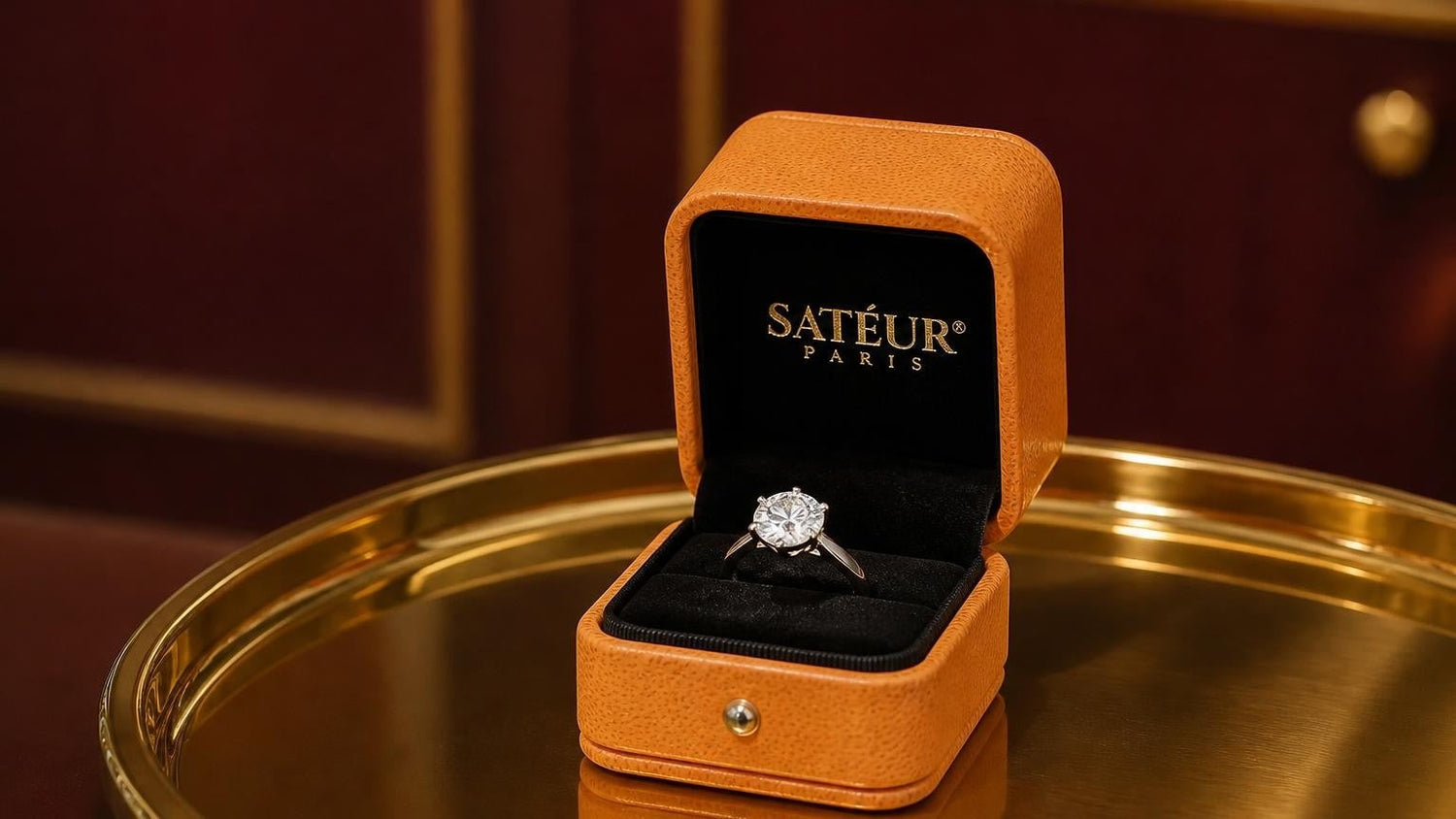
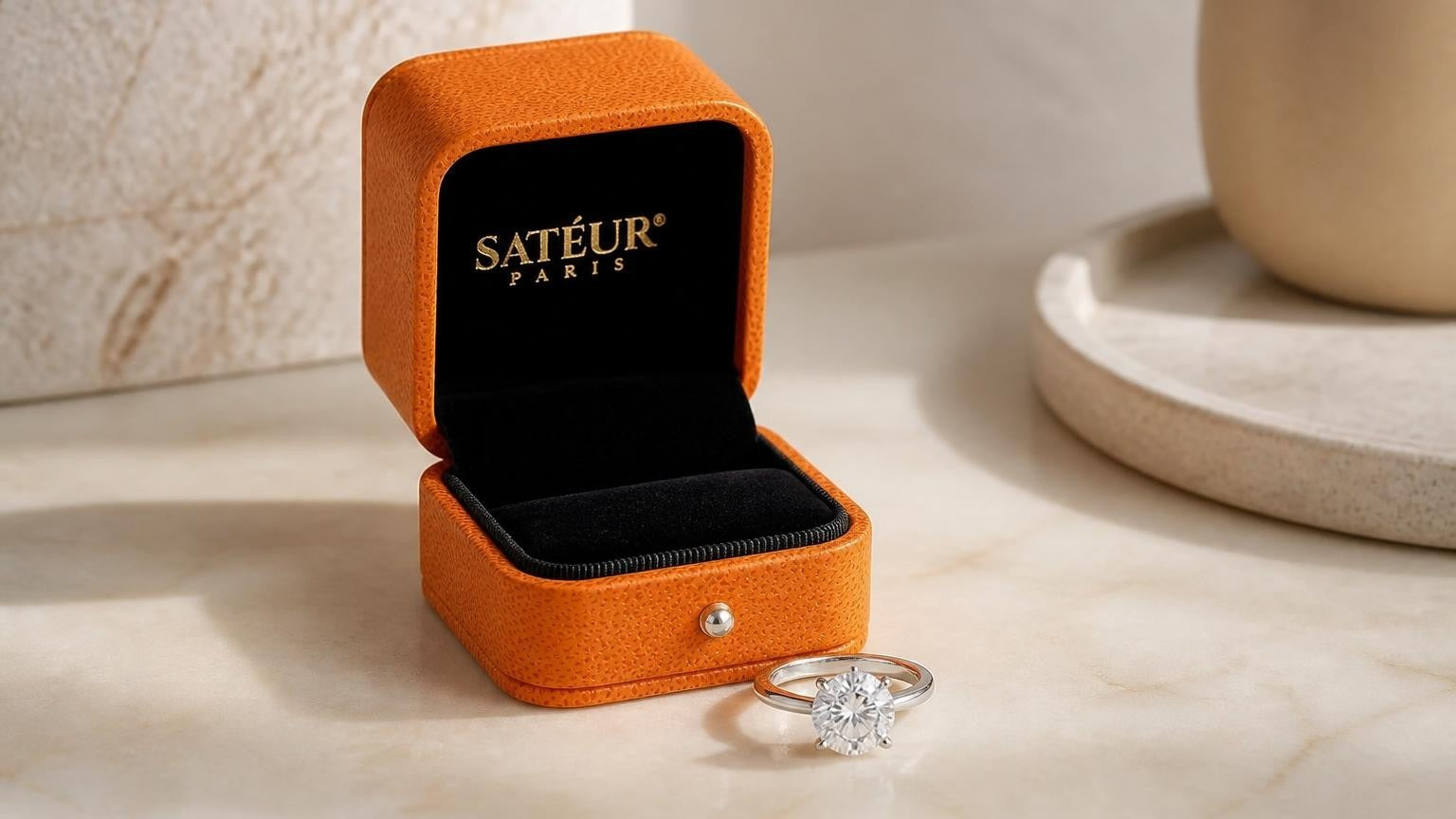
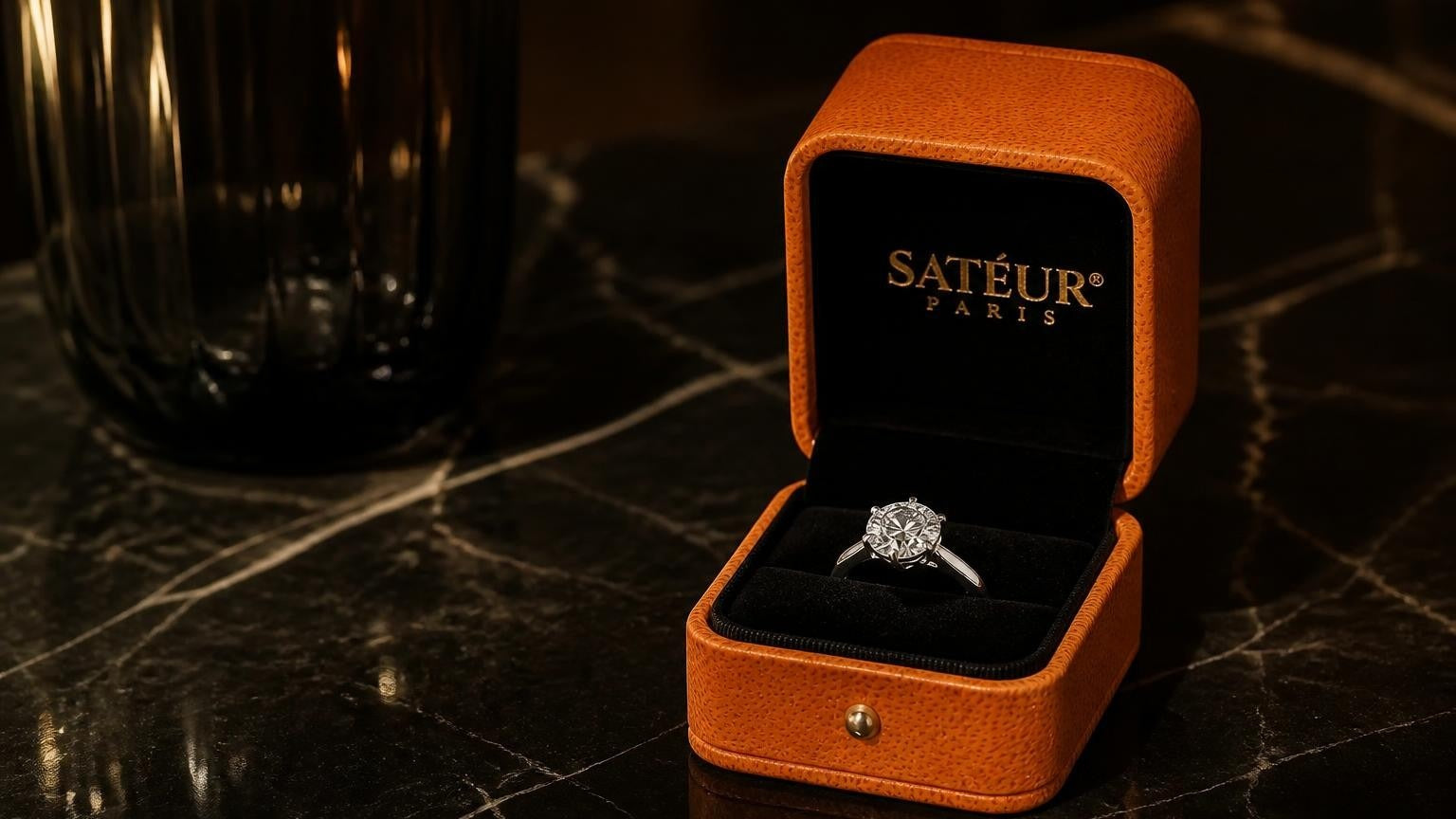
Satéur Gems® is the Maison's flagship gemstone — a trademarked diamond simulant engineered for diamond-accurate brilliance. The specification: D-E colour grade, Excellent cut, refractive index ~2.39, and approximately 8.8 Mohs hardness. Extremely durable, built for everyday fine jewellery. It is the gemstone at the centre of The 1% Ring® — the piece that established The New Diamond Standard.
The defining quality of Satéur Gems® is its light profile. It returns the clean, white brilliance of a flawless diamond — not a vivid rainbow fire, not a milky diffusion. With the naked eye, it is visually indistinguishable from a natural diamond of comparable grade. Across the table, in real light, it reads as a genuine fine diamond.
Entry price for a Satéur Gems® piece is $138 — the Destinée Earrings, the Maison's best-selling piece, now with over 10,000 orders. The flagship ring delivers the 1-carat look that compares to a $10,000 mined diamond. Over 100,000 customers across 150+ countries have chosen this path.
The composition of Satéur Gems® is proprietary, in the tradition of perfumers who guard their formulas. What is disclosed: D-E colour, Excellent cut, an RI of ~2.39, and a performance record of 100,000 customers. Everything relevant to the choice is known. The one thing withheld is the material name, and only that.

Satéur Destinée Ring™
The look of a flawless diamond, for 1% of the price.
Compare to a $10,000 mined diamond
Joined by 100,000+ couples across 150+ countries.
Discover The 1% RingFree worldwide shipping · 30-day returns · Lifetime Satéur Care
The moissanite collection, beginning at $98, offers a distinct aesthetic path — higher fire, vivid rainbow sparkle — for those who prefer that character. Both tiers are built for lifelong wear. Which is right depends entirely on which optical profile speaks to you.
Frequently Asked Questions
What is a diamond simulant?
A diamond simulant is a gemstone engineered to replicate the visual qualities of a mined diamond — white brilliance, fire, and scintillation — without sharing its chemical composition. Premium simulants such as Satéur Gems® achieve D-E colour grades and Excellent cut ratings, performing as diamond-accurate alternatives for fine jewellery and everyday wear.
How does a diamond simulant differ from a lab-grown diamond?
A lab-grown diamond shares the exact chemical structure of a mined diamond — it is carbon, formed identically, certified by bodies such as the IGI. A diamond simulant is a different material that approximates diamond's visual appearance without being chemically identical. Both are legitimate choices; the difference is whether chemistry or optics is the priority.
What colour and clarity grades do Satéur Gems® achieve?
Satéur Gems® achieves D-E colour grades and Excellent cut ratings — the same standard applied to premium natural diamonds. With a refractive index of approximately 2.39, its light profile is diamond-accurate: clean, white brilliance rather than the vivid rainbow fire of higher-RI gemstones such as moissanite.
Will a diamond simulant scratch or cloud over time?
It depends on the simulant. Cubic zirconia, with a Mohs hardness of ~8.0–8.5, scratches and clouds with daily wear. Satéur Gems® (~8.8 Mohs) and moissanite (~9.25 Mohs) are both extremely durable gemstones, built for lifelong wear, and do not cloud or degrade over time. White sapphire retains its structure but returns a milky, diffuse light unlike a diamond's sparkle.
Is a diamond simulant suitable for engagement rings and everyday wear?
Yes. Premium diamond simulants — Satéur Gems® and moissanite — carry the hardness and optical stability required for engagement rings and daily fine jewellery. The 1% Ring® has been worn every day by customers across 150+ countries. The practical record is strong.
How much can I expect to spend on a diamond simulant piece from Satéur?
Satéur Gems® pieces begin at $138 for the Destinée Earrings. The flagship ring — a 1-carat Satéur Gems® in 18K white gold finishing — carries a mined-diamond comparison value of approximately $10,000, at 1% of that figure. The collection spans multiple carat weights and settings.
Make Your Choice
The category of diamond simulants has matured well past its cubic zirconia origins. The substantive choice today sits across three distinct paths: a lab-grown diamond (identical chemistry to a mined diamond, $800–$2,000 per carat), moissanite (higher fire than a diamond, vivid rainbow sparkle, from ~$138), or Satéur Gems® (diamond-accurate white brilliance, D-E colour, Excellent cut, from $138).
Each answers a different question. Lab-grown diamond answers: I want a real diamond, grown differently. Moissanite answers: I want vivid fire and lab credibility. Satéur Gems® answers: I want the precise look of a flawless natural diamond, at 1% of the price.
The look of a flawless diamond. A considered price. A piece that holds its brilliance for life. That is what a diamond simulant, chosen carefully, delivers. The New Diamond Standard begins with that choice.















コメントを残す
このサイトはhCaptchaによって保護されており、hCaptchaプライバシーポリシーおよび利用規約が適用されます。