


In the moissanite vs lab grown vs natural diamond decision, natural and lab-grown diamonds look the same to the naked eye, so the real differences are price, resale and story. A one-carat natural of good color and clarity runs about $5,000 in 2026 against about $1,000 for the same grades grown in a lab (TheDiamondPrice, June 2026), and moissanite is a few hundred dollars for the same size.
Watch: Natural vs Lab Grown vs Moissanite: The Honest 2026 Comparison (10:01), presented by Oliver Hart on the Satéur channel.
Key Takeaways
- Natural and lab-grown diamonds look identical to the naked eye, because a lab diamond is the same material in the same crystal, with the same refractive index of 2.42.
- A one-carat natural (G color, VS2 clarity, excellent cut) sits near $5,000 in 2026; the same grades grown in a lab sit near $1,000 (TheDiamondPrice, June 2026).
- Diamond scores 10 on the Mohs scale and moissanite 9.25, so all three are built for daily wear.
- Resale guides put diamond jewelry at 20 to 60 percent of its cost new (Diamonds.pro, March 2026), and lab-grown wholesale prices fell about 85 percent from 2015 to 2025 (Paul Zimnisky, April 2026).
- A dual heat-and-electricity tester separates moissanite from diamond; only a grading lab separates natural from lab-grown.
How to compare moissanite, lab-grown and natural diamond: the scoreboard
A simpler method than a list of twenty facts: score the three on the five things buyers actually compare, then pick the one that matches your reason for buying. For the one-to-one version of each pairing, see our guides to moissanite vs lab-grown diamond and lab-grown vs natural diamond. This page is the three-way decision.

Picture a composite buyer: thirty-one, about $5,000 to spend, a ring size on a sticky note, a proposal planned for March. Every row below changes what that person should buy.
| Test | Natural diamond | Lab-grown diamond | Moissanite |
|---|---|---|---|
| Look to the naked eye | Identical to lab-grown | Identical to natural | Brighter, with more rainbow fire |
| Price for a 1-carat look | About $5,000 | About $1,000 | A few hundred dollars, loose |
| Durability (Mohs) | 10 | 10 | 9.25 |
| Resale | Some: 20 to 60 percent of cost new | Very little | Small market |
| Who can tell | A grading lab | A grading lab | A dual tester, sometimes the eye in sunlight |
Price figures: 1 ct G VS2 excellent cut, TheDiamondPrice 2026; moissanite is a 6.5 mm loose round, 2026 listings. The video walks through each row, starting at 0:32.
Look: natural vs lab-grown vs moissanite
A diamond bends light with a refractive index of 2.42, which is why a well-cut one throws light back up at you instead of letting it leak out the bottom. A lab-grown diamond has the same number because it is the same material, carbon in the same crystal. Origin is the only difference, and light cannot see origin.

A natural diamond grew 150 to 200 kilometers underground, and the oldest dated are around 3.5 billion years old (GIA, Gems & Gemology, Winter 2018 and Fall 2024). A lab diamond grew in a chamber.
Moissanite is a different gem altogether. Its refractive index is about 2.65, higher than a diamond's, and it splits white light into colors more than twice as strongly: dispersion of 0.104 against 0.044 for diamond. That is the rainbow fire people notice, especially in sunlight: gorgeous to some eyes, a little too colorful to be a diamond to others.
So the first fork is simple. If you want people to see a diamond, the closest match is a diamond, natural or lab-grown. If you want people to see sparkle, moissanite gives you more of it. Oliver covers the look from 0:59.
Who can tell: testers, grading labs and the naked eye
A diamond moves heat roughly five times better than copper, about 2,200 W/m·K against about 400 (Coherent; IEEE Spectrum). The classic diamond tester uses exactly that: touch a metal tip to the gem and measure how fast the heat disappears.

The catch is moissanite. It conducts heat so well that a tester measuring heat alone reads diamond. In the video, a loose moissanite on a basic heat tester does exactly that, and it is not a trick. Newer dual testers add a second check, electricity: diamond does not conduct it, moissanite does, so a dual tester names the gem correctly (Brilliant Earth). That part is at 2:10.
Natural versus lab-grown is harder. A lab diamond passes both tests, so it takes a grading lab. When GIA grades a lab-grown diamond it laser-inscribes the words "Laboratory-Grown" on the diamond itself (GIA). The honest answer: anyone with the right tester will know moissanite for what it is, and nobody without a lab will know which diamond is which.
Durability: all three are built for daily wear
Diamond scores 10 on the Mohs scale of hardness, the top of the scale, natural or lab-grown. Moissanite scores 9.25, only a step below and harder than almost anything else you could wear on your hand.

Hardness only measures scratch resistance. GIA describes diamond as very hard but only somewhat tough: it has four cleavage directions, so a hard knock at the wrong angle can chip it, whether the diamond cost $5,000 or $1,000. GIA points to the setting, since prongs that cover the corners and edges protect the most exposed parts of the stone (GIA). Durability is the dullest row on the board, and that is good news: none of the three is worth an extra dollar for being tougher. Oliver covers it from 3:10.
Price: what a one-carat look costs in 2026
The average engagement ring cost $4,600 in 2025, according to The Knot's survey of more than 10,000 couples (The Knot 2026 Real Weddings Study, via Rapaport, February 2026). Against that, the one-carat look runs from about $5,000 for a natural (1 ct G VS2, excellent cut) to about $1,000 for the same grades grown in a lab (TheDiamondPrice, 2026).

Moissanite is lighter than diamond, so it is sold by size, and the one-carat look is about 6.5 millimeters across. Loose, that is usually a few hundred dollars (Brilliant Earth listings, 2026). For a longer breakdown, see moissanite vs diamond price.
In the same Knot study, 61 percent chose a lab-grown center diamond, and those diamonds averaged 2 carats against 1.6 for natural. People did not take the lower price: they took a bigger diamond. For our composite buyer, $5,000 buys one carat of natural, or a noticeably bigger lab-grown diamond with money left over. Oliver covers price from 3:55.
Resale: what each is worth the day after you buy it
In 2018, De Beers launched its own lab-grown brand, Lightbox, at a flat $800 a carat (GIA, Gems & Gemology, Winter 2018). In May 2025 it was closing it, saying wholesale lab-grown prices had fallen about 90 percent since launch (De Beers, via Rapaport, 9 May 2025). Analyst Paul Zimnisky put the drop in lab-grown prices at about 85 percent between 2015 and 2025 (via Money, 17 April 2026). We unpack why in why diamond prices are falling.

So a lab-grown diamond is a beautiful thing to wear and a hard thing to sell: when new ones keep falling in price, old ones have few buyers.
Here is the part most people do not expect: natural does not hold its value either. Resale guides put diamond jewelry at between 20 and 60 percent of what it cost new (Diamonds.pro, March 2026). One ring, bought for $4,500, was shopped to three buyers. The offers were $1,850, then $1,200 after commission, then $1,000. That is up to $3,500 gone, on a half-carat stone.
Put in dollars: pay $5,000 for natural and you can lose $3,500; pay $1,000 for lab-grown and the most you can lose is $1,000. Moissanite has a small resale market, and nobody should buy it for one. The $5,000 was never going to come back; the question is how much of it becomes the look you want. The video picks this up at 4:51.
The top-grade diamond look and what it costs
If you are not buying to resell, the honest question is the smallest amount you can pay for the look you actually want. For most people that look is a flawless one. A one-carat natural at the very top of the color and clarity scale runs from about $8,000 to $15,000 (Whiteflash, April 2026; one listing, a 1.07 ct D IF, was $12,581 at Ritani).

That is the gap a diamond simulant is built for: the look of a flawless diamond for a fraction of that price. In the video it is the fourth column, filled in for only two rows: the look and the price (from 6:26). Among diamond alternatives, it is the one built for exactly that question.
What you are really paying for: origin, size, sparkle or the look
If most couples now choose lab-grown, why does anyone still buy natural? Because a natural diamond is something the Earth made once and will never make again. That rarity story is the entire point for some people. But it is something you know, not something anyone across the table sees.

Lab-grown is the size story, though its price is still moving. In the second quarter of 2026, wholesale lab-grown prices were down 13 percent from a year earlier, according to analyst Edahn Golan (via JCK). Two-carat rounds fell 20 percent, while one-carat rounds rose 1 percent. At one carat the fall looks to be leveling off; bigger sizes are still sliding.
That matters if you are tempted to wait. You are proposing in March, not trading a commodity. If a lower price next year would ruin the ring for you, you were buying it as an asset, and none of these is one. Buy the one you would be happy wearing if the price never moved again. The video covers this from 7:08.
The final scoreboard: which diamond should I buy?
People pick the gem first and the reason second. They buy natural because someone said it holds value, then see what value means. Or they buy moissanite because it is the lowest price, then wish it looked whiter. Choose the reason first and the gem follows. There are only four reasons on the board.

| If your reason is | Choose | Because |
|---|---|---|
| Origin | Natural diamond | You are at peace paying for a story nobody else can see |
| Size | Lab-grown diamond | You want a diamond, full stop, and would rather spend the difference on size or the honeymoon |
| Sparkle | Moissanite | You love color and fire more than you love the word diamond |
| The look of a flawless diamond | A diamond simulant | You want how a flawless diamond looks across the dinner table, for the least you can pay |
Back to the composite buyer: thirty-one, $5,000, March. They cross out resale, because nobody sells an engagement ring they plan to keep, and durability, because all three pass. Two rows are left, the look and the price, and the question changes from which ring is worth the most to which one they will look at every single day.

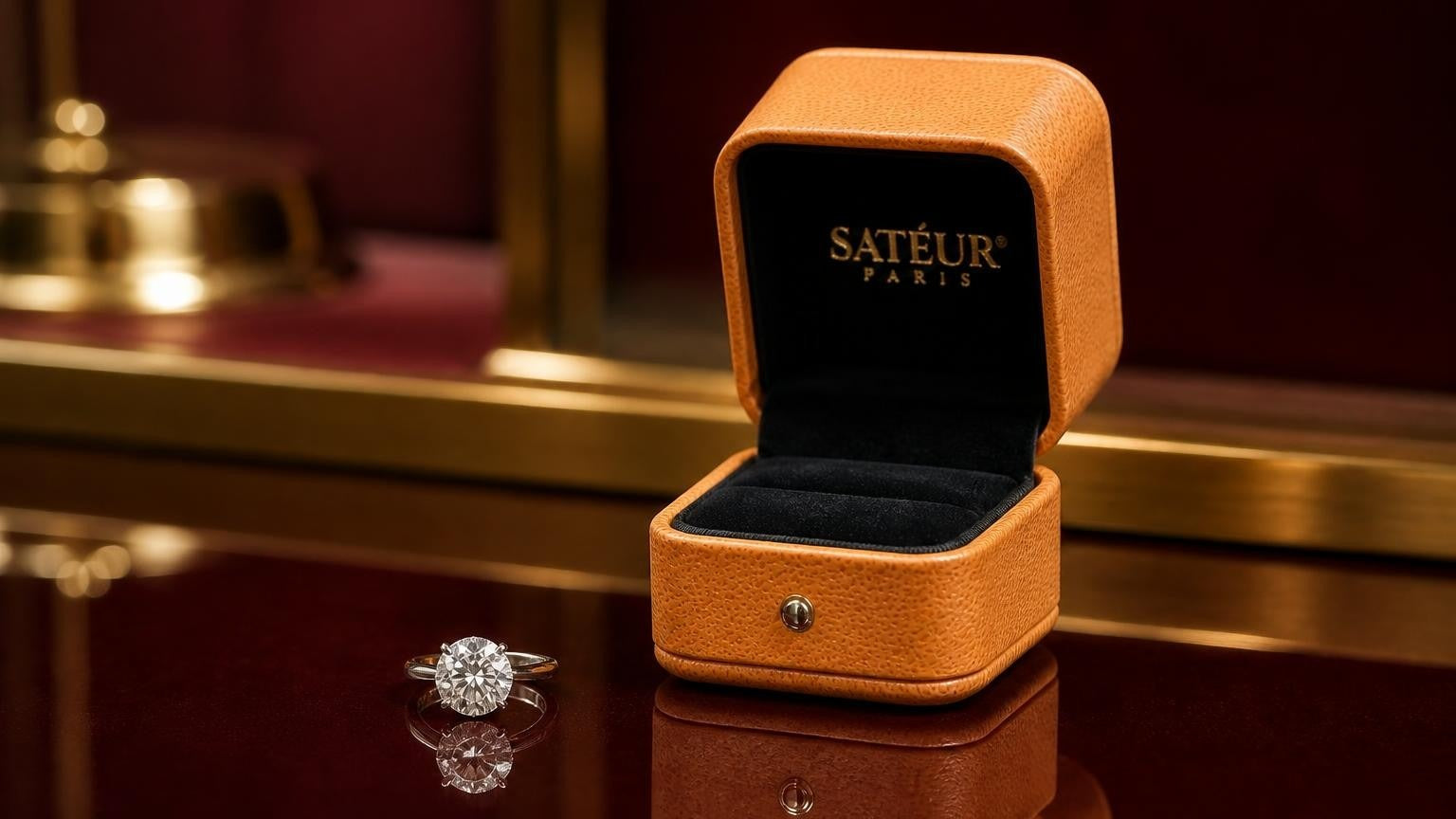
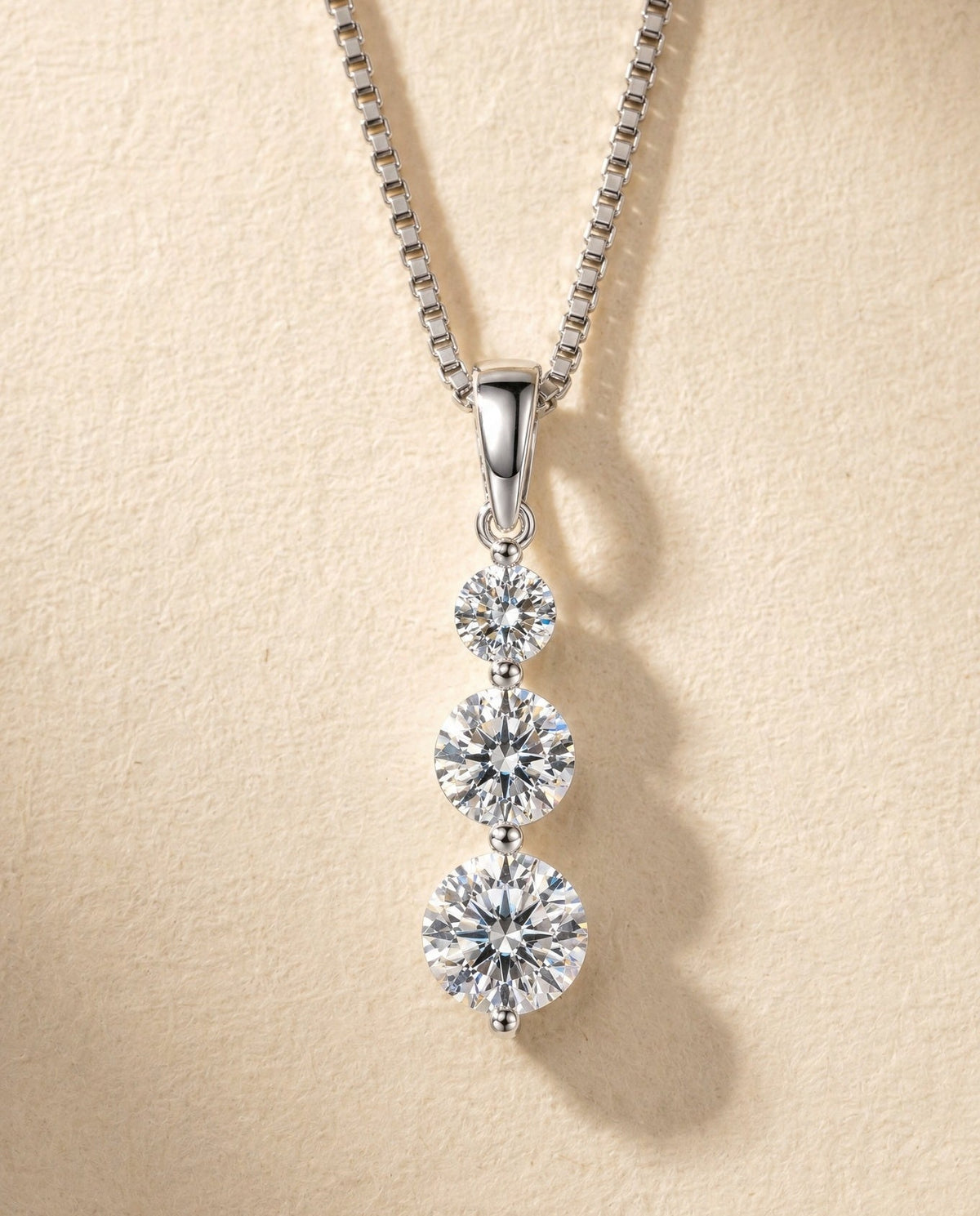
Satéur Destinée Ring™
The look of a flawless diamond, for 1% of the price.
Compare to a $10,000 mined diamond
Joined by 100,000+ couples across 150+ countries.
Discover The 1% RingFree worldwide shipping · 30-day returns · Lifetime Satéur Care
Frequently Asked Questions
What is the difference between moissanite, lab-grown and natural diamond?
Natural and lab-grown diamond are the same material and differ only in origin. Moissanite is a different gem, with a higher refractive index (about 2.65 against 2.42), more rainbow fire and a lower price.
Which diamond should I buy?
Choose the reason first: natural for origin, lab-grown for size, moissanite for sparkle. The final scoreboard above shows the full set.
Is lab-grown diamond less expensive than natural?
Yes: about $1,000 lab-grown against about $5,000 natural for one carat, G VS2, excellent cut (TheDiamondPrice, 2026).
Can you tell natural from lab-grown diamond by eye?
No. They look identical to the naked eye and both pass basic and dual testers. It takes a grading lab; GIA laser-inscribes "Laboratory-Grown" on the lab-grown diamonds it grades.
Does moissanite pass a diamond tester?
A heat-only tester reads moissanite as diamond. A dual tester that also checks electricity identifies it, because diamond does not conduct electricity and moissanite does.
Which holds its value best?
None of the three, well. Natural recovers 20 to 60 percent of its cost new (Diamonds.pro, March 2026); lab-grown has very little resale and moissanite a small market.
Is a lab-grown diamond a diamond?
Yes. A lab-grown diamond is a diamond: same hardness (10 on the Mohs scale) and same refractive index (2.42) as a natural one, because it is the same material.
Sources
- TheDiamondPrice, 30 June 2026: natural vs lab diamond price report 2026
- GIA, Gems & Gemology, Winter 2018: how diamonds form in the deep Earth; oldest dated diamonds, Fall 2024
- Moissanite refractive index, dispersion and Mohs: Wikipedia; diamond figures from published gem data (GIA)
- Thermal conductivity: Coherent; IEEE Spectrum
- Testers: Brilliant Earth, does moissanite pass a diamond tester
- Laser inscription: GIA
- Durability and settings: GIA, how to protect a diamond from chipping
- $4,600 average ring, 61 percent lab-grown, 2.0 vs 1.6 ct: The Knot via Rapaport, 19 February 2026
- 6.5 mm moissanite prices: Brilliant Earth, 2026
- Lightbox $800 a carat (2018): GIA, Gems & Gemology, Winter 2018; closure and 90 percent wholesale fall: De Beers via Rapaport, 9 May 2025
- 85 percent fall, 2015 to 2025: Paul Zimnisky via Money, 17 April 2026
- Resale 20 to 60 percent and the $4,500 ring: Diamonds.pro, March 2026
- Top-grade one-carat $8,000 to $15,000: Whiteflash, 16 April 2026
- Q2 2026 lab wholesale prices: Edahn Golan, via JCK, 10 Aug 2026
Satéur is not affiliated with, endorsed by or sponsored by GIA, De Beers, Lightbox, The Knot, Rapaport, JCK, Money, Diamonds.pro, Whiteflash, Brilliant Earth or any person named here. Figures are as reported on the dates given. The buyer is a composite example. Oliver Hart is an AI presenter.

















コメントを残す
このサイトはhCaptchaによって保護されており、hCaptchaプライバシーポリシーおよび利用規約が適用されます。