

How Much Is a 1 Carat Lab Grown Diamond?
A 1 carat lab grown diamond typically sells for between $800 and $2,500, depending on colour, clarity, and cut grade. That is roughly 30 to 50 percent of what an equivalent mined diamond commands. The price gap has widened as lab production has scaled — how much is a 1 carat lab-grown diamond is one of the most searched jewellery questions of the decade, and the answer continues to move in the buyer's favour.
For those weighing the full landscape, there is a third option beneath lab diamonds: diamond simulants such as Satéur Gems® — trademarked gemstones engineered to replicate the diamond look at approximately 1% of the mined diamond cost, starting from $88.
Key Takeaways

- A 1 carat lab grown diamond ranges from roughly $800 to $2,500 — 30–50% of a comparable mined diamond.
- Lab grown diamonds are chemically identical to mined diamonds and will pass standard diamond testers.
- D (colorless) and VVS1 clarity are the most popular specifications for 1 carat lab diamonds.
- Cut quality has the greatest impact on brilliance — Excellent or Ideal cut grades are preferred.
- Satéur Gems® deliver D-E colour and approximately 2.4× the fire of mined diamonds from $88 — a diamond simulant, not a lab diamond.
- Satéur's 1.00 carat round cut lab-created diamond ring is IGI-certified and set in solid 18K white gold.
What Is a 1 Carat Lab Grown Diamond
A lab grown diamond is a real diamond. It has the same chemical composition, crystal structure, and optical properties as a mined diamond — carbon atoms arranged in a cubic lattice. The only difference is its origin: a controlled environment rather than the earth's crust. How much a 1 carat lab created diamond costs is lower not because of what it is, but because of how it was made.
Lab grown diamonds are certified by independent gemological laboratories. The most widely recognised is IGI (International Gemological Institute), which grades lab diamonds using the same 4Cs framework applied to mined diamonds: cut, colour, clarity, and carat weight.
At 1 carat, a round brilliant lab diamond measures approximately 6.4–6.5mm in diameter. It is the most popular carat weight for engagement rings — substantial enough to carry presence on the hand, calibrated enough to suit most ring settings without requiring custom sizing.
Because lab grown diamonds are chemically identical to mined diamonds, they will pass standard diamond testers. They share the same Mohs hardness rating of 10 — the hardest naturally occurring material — making them as durable for everyday wear as any mined diamond.
Lab Grown Diamond Price Per Carat
The price of a 1 carat lab diamond varies significantly by quality tier. The table below illustrates typical retail ranges for round brilliant cuts, compared to mined equivalents at the same specifications.
| Quality Tier | Colour / Clarity | Lab Grown (1ct) | Mined Equivalent |
|---|---|---|---|
| Entry | G–H / SI1–SI2 | $800 – $1,200 | $3,500 – $5,000 |
| Mid | E–F / VS1–VS2 | $1,200 – $1,800 | $5,000 – $8,000 |
| Premium | D / VVS1–VVS2 | $1,800 – $2,500 | $8,000 – $14,000 |
| Simulant (Satéur Gems®) | D–E / Excellent cut | From $88 — diamond-look gemstone, not a lab diamond | |

Lab grown diamond prices have compressed year on year. What cost $3,000 for a 1 carat D/VVS1 in 2020 can now be found for under $2,000 from reputable retailers. This is a function of supply: as more production facilities come online, volume increases and per-unit cost falls.
Setting material also affects the total ring cost. A 1 carat lab diamond in a 14K gold solitaire setting will price differently from the same diamond in solid 18K white gold with a pavé band. The stone is only part of the equation.
How Lab Grown Diamonds Compare to Mined Diamonds
Lab grown diamonds typically range from 30 to 50 percent of the price of natural diamonds with equivalent 4Cs specifications. That differential is not about quality — it is about supply chain. A mined diamond passes through extraction operations, sorting, cutting, polishing, and multiple distribution layers before reaching a retailer. A lab grown diamond does not carry that cost structure.
Optically and physically, there is no meaningful difference with the naked eye. A D-colour Excellent-cut lab grown diamond and a D-colour Excellent-cut mined diamond produce the same brilliance, fire, and scintillation under the same lighting conditions.
The significant practical consideration is resale value. Natural diamonds have historically held residual market value; lab grown diamonds currently do not command comparable secondary market prices. For buyers whose primary concern is the ring worn daily — not a financial instrument — this distinction rarely changes the purchase decision.
For those exploring the full range of lab grown diamonds, the choice typically comes down to budget, certification preference, and setting quality rather than any optical trade-off.

Color and Clarity Standards for 1 Carat Lab Diamonds
The most popular colour choice for a 1 carat lab diamond is D — the highest grade on the GIA/IGI scale, meaning completely colourless. D-colour diamonds appear bright white under all lighting conditions and pair cleanly with both white gold and platinum settings.
The most popular clarity choice is VVS1 — Very, Very Slightly Included, grade 1. At this level, inclusions are invisible to the naked eye and detectable only under 10× magnification. For a round brilliant cut at 1 carat, VVS1 is widely considered the practical ceiling: anything above it (Internally Flawless, Flawless) carries a premium with no visible benefit in a worn ring.
Cut quality has the most immediate impact on how a diamond looks. An Excellent or Ideal cut grade maximises light return — the percentage of incoming light that exits through the table of the diamond as brilliance. A D/VVS1 diamond with a Good cut will appear flatter and duller than a G/VS2 diamond with an Excellent cut. Cut should be prioritised first.
When specifying a 1 carat lab diamond, the combination most buyers land on is D or E colour, VS1 or VVS1 clarity, Excellent cut, round brilliant shape. This positions the diamond at the premium mid-tier — high specification without the Internally Flawless premium.
Satéur's Diamond Simulant Alternative
Satéur offers two distinct paths for those drawn to diamond-look fine jewellery.
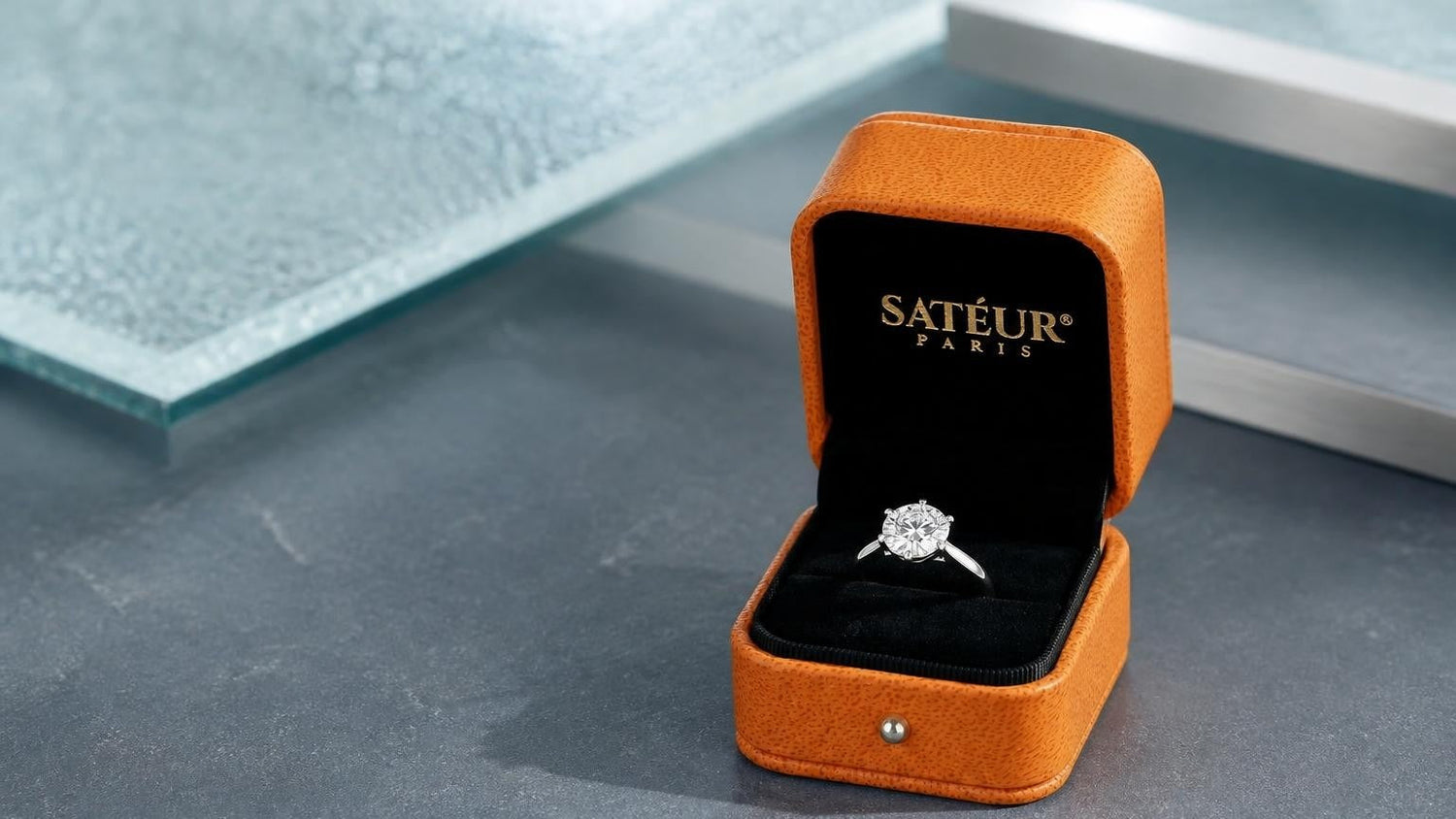
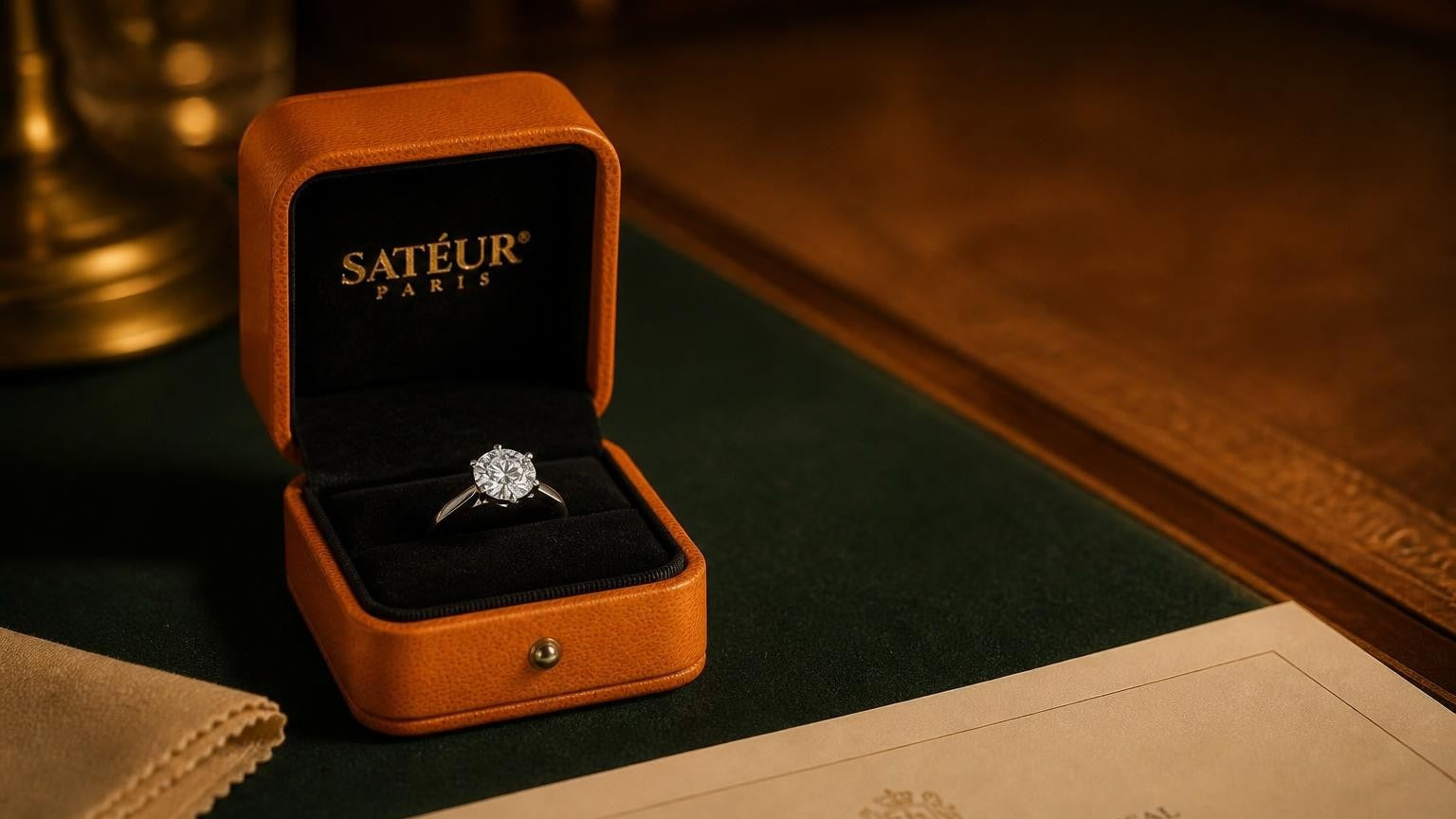
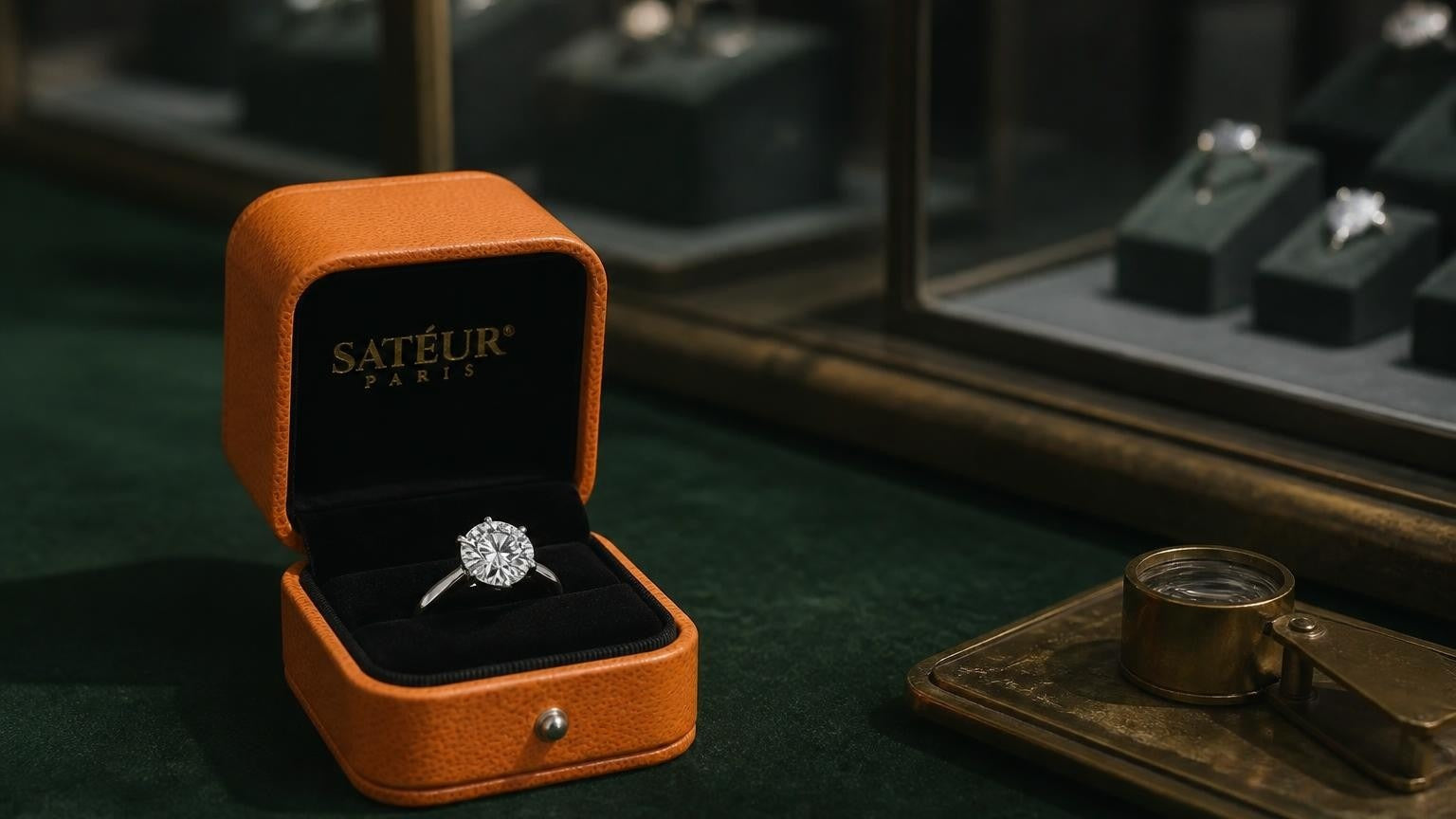
The first is a genuine lab-created diamond line. The Satéur Destinée Diamond Ring™ — The 1% Ring® — features a 1.00 carat round cut IGI-certified lab diamond in a solid 18K white gold setting. It is a real diamond in every material sense: chemically identical to a mined diamond, graded to the same standards, carrying the same Mohs 10 durability. For buyers who want the certification and the word diamond without qualification, this is the offering.

Satéur Destinée Diamond Ring
A real, IGI-certified lab-grown diamond, hand-set in solid 18K gold — a fraction of the mined-diamond price.
Compare to a $10,000 mined diamond
Joined by 100,000+ couples across 150+ countries.
Shop the Destinée Diamond RingFree worldwide shipping · 30-day returns · Lifetime Satéur Care
The second path is Satéur Gems® — a trademarked diamond simulant engineered for the diamond look rather than diamond chemistry. Satéur Gems® feature D-E colour, Excellent cut, and approximately 2.4 times the fire of mined diamonds. They are not lab grown diamonds. They do not carry diamond certification. What they offer is a compelling visual alternative at approximately 1% of a mined diamond's cost — entry pieces begin at $88.
The distinction matters. A lab-created diamond is chemically a diamond. A Satéur Gem® is a diamond simulant: different composition, different price tier, different decision. Both exist at Satéur because they answer different questions. Those exploring the broader diamond-look range can compare lab created diamond rings alongside the simulant options to make that distinction clearly.
For those considering larger carat weights, the 30–50% price advantage over mined diamonds compounds significantly at scale. 3 carat lab grown diamond rings illustrate how far that differential extends when the carat weight triples.
Frequently Asked Questions About Lab Grown Diamonds
How much does a 1 carat lab grown diamond cost?
A 1 carat lab grown diamond typically costs between $800 and $2,500 at retail, depending on colour, clarity, and cut grade. D-colour VVS1-clarity Excellent-cut diamonds sit at the top of that range; G-colour SI1 diamonds with a Good cut sit at the lower end. The total ring cost will also include the setting, metal type, and any additional design elements.
Are lab grown diamonds cheaper than natural mined diamonds?
Yes. Lab grown diamonds typically range from 30 to 50 percent of the price of natural diamonds for equivalent 4Cs specifications. That gap reflects supply chain differences, not quality differences. Lab grown diamonds are chemically identical to mined diamonds — the lower price is a function of how they are produced, not what they are.
What color and clarity should I choose for a 1 carat lab diamond?
The most popular combination is D colour (completely colourless) with VVS1 clarity (inclusions invisible to the naked eye, detectable only under magnification). In practice, E or F colour with VS1 or VS2 clarity offers nearly identical appearance at a lower cost. Cut quality is the most impactful variable: prioritise Excellent or Ideal cut above clarity and colour grade when the budget requires a trade-off.
Do lab grown diamonds last as long as mined diamonds?
Yes. Lab grown diamonds share the same Mohs hardness rating of 10 as mined diamonds — the highest on the scale. They are equally resistant to scratching and equally suited to daily wear, including engagement rings worn continuously. There is no durability trade-off between a lab grown diamond and a mined diamond of equivalent specifications.
What is the difference between a lab grown diamond and a diamond simulant?
A lab grown diamond is chemically identical to a mined diamond — same carbon crystal structure, same hardness (Mohs 10), same optical properties. It passes standard diamond testers. A diamond simulant, such as Satéur Gems®, is engineered to replicate the appearance of a diamond but has a different chemical composition and does not carry diamond certification. Simulants typically cost significantly less — Satéur Gems® begin at $88 — and offer a compelling visual alternative, but they are a distinct category from lab grown or mined diamonds.
How do I compare lab diamond prices across retailers?
Compare diamonds using the same 4Cs specification: carat weight, colour grade, clarity grade, and cut grade. Ensure each diamond carries a grading report from a recognised laboratory such as IGI or GIA. Beyond the diamond itself, factor in setting metal (18K versus 14K gold versus platinum), setting style, and retailer warranty terms. Price differences on identical specifications reflect retailer margin and sourcing — the underlying diamond quality is consistent when the certification grade matches.
The lab grown diamond market rewards the informed buyer. Understanding what the 4Cs deliver in practice — and where the practical ceiling of visible improvement lies — makes the price comparison clear. Explore the full range of lab grown diamonds at Satéur to find the specification that fits.











コメントを残す
このサイトはhCaptchaによって保護されており、hCaptchaプライバシーポリシーおよび利用規約が適用されます。