

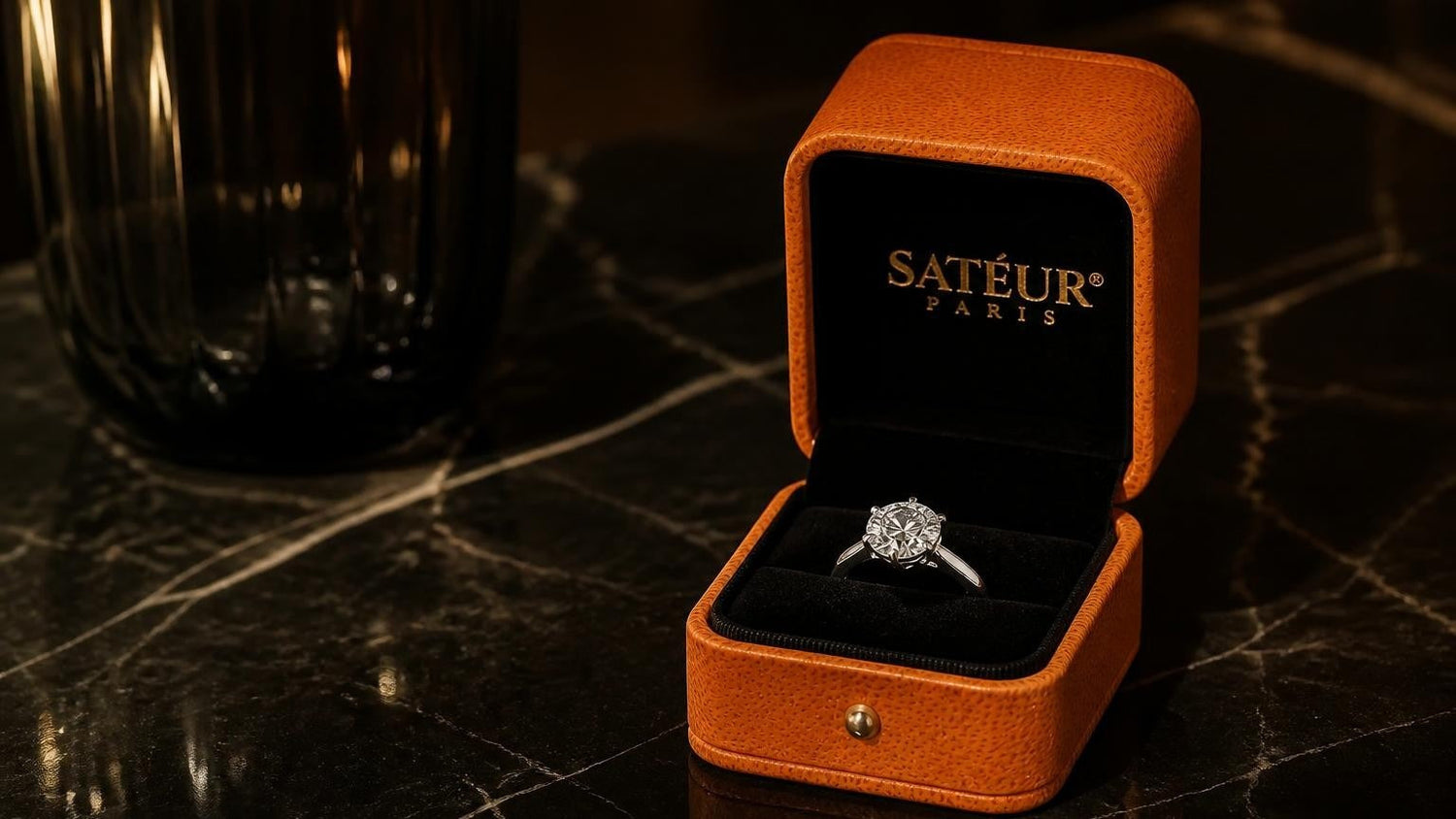
How to Tell If a Diamond Is Fake: Visual Characteristics and What to Look For
Knowing how to tell if a diamond is fake begins with understanding what a real diamond actually looks like — how it interacts with light, how it handles colour, and what its surface reveals to an informed eye. This is not about professional equipment or laboratory testing. It is about the observable, visual language of genuine gemstones.
The distinction between a mined diamond and a diamond simulant has become more nuanced as gem-crafting technology advances. High-quality simulants can replicate the look of a flawless diamond so faithfully that, with the naked eye and under natural light, the differences are negligible. Understanding these differences — and why they matter less than most people assume — is the foundation of intelligent jewellery choice.
Key Takeaways
- Real diamonds produce crisp white light reflections; some simulants show more rainbow-coloured fire.
- D–E colour grading is the benchmark for top-quality diamonds and premium simulants alike.
- Visual inspection under natural daylight reveals more about optical character than most expect.
- Diamond simulants enter the market at approximately 1% of the price of comparable mined diamonds.
- With the naked eye, high-quality simulants like Satéur Gems® are visually indistinguishable from a flawless diamond.
- Certification (GIA, IGI) is the definitive authentication for mined and lab-grown diamonds.
Visual Characteristics of a Real Diamond
A genuine mined diamond has a specific visual signature that comes from its crystalline carbon structure. The most telling characteristic is how it handles light — not just how much it reflects, but the quality and distribution of that reflection.
Under natural daylight, a real diamond produces a quality known as scintillation: sharp, white flashes of light punctuated by smaller, more intense points of brilliance. The internal reflections appear clear, not cloudy. The stone looks alive, and yet composed — never garish.
A diamond also has a characteristic known as adamantine lustre — a surface quality unlike glass, quartz, or most other transparent materials. Viewed from above, the table facet appears almost mirror-like. The edges of a well-cut diamond are sharp and precise. Natural wear does not round them easily.
Colour in a high-quality diamond is an absence of colour. A D or E colour grade means the stone is chemically pure enough to appear entirely colourless. This is the reference point for premium moissanite and for trademarked simulants like Satéur Gems® — both are assessed against this same standard.
Light Refraction and Sparkle Patterns

Light refraction is where different gem materials diverge most clearly. A mined diamond has a refractive index of approximately 2.42. This means light entering the stone bends at a specific angle, producing the diamond's characteristic brilliance pattern: sharp white flashes, moderate fire (coloured dispersion), and a sense of depth.
Moissanite has a refractive index of approximately 2.65, which produces more coloured fire — visible rainbow dispersion — than a diamond under direct light. This makes moissanite optically distinctive. To an experienced eye under bright illumination, the difference is observable: moissanite's sparkle has a vivid, rainbow-forward character that exceeds what a diamond produces.
Satéur Gems® — with a refractive index of approximately 2.39 — is calibrated specifically for diamond accuracy. It produces the clean, white brilliance of a flawless diamond, without the excess fire of moissanite. Under natural daylight or soft indoor light, the visual output reads as a flawless diamond. This is the defining choice for those who want the diamond look, precisely.
Cubic zirconia (CZ), an older and lower-grade simulant, exhibits far more dispersion than a diamond and lacks the depth of brilliance. CZ also scratches over time — its hardness is significantly lower than that of diamond or premium simulants.
Colour and Clarity Grading
Colour grading is a standardised measure of how much colour a diamond displays. The GIA scale runs from D (perfectly colourless) through Z (noticeable yellow or brown tint). For engagement rings and fine jewellery, D–G colour is considered excellent. D–E is the apex — stones so chemically pure they appear water-white.
Clarity grading assesses internal inclusions and surface blemishes on a scale from Flawless to Included. A flawless diamond is exceptionally rare. Most diamonds sold in retail carry SI1–VS2 clarity, meaning small inclusions are present but not visible to the naked eye.
High-quality simulants are assessed using the same colour language. Satéur Gems® is crafted to the equivalent of D–E colour — colourless, with the precise optical output of a top-tier mined stone. The visual profile across the table and at arm's length is indistinguishable from a flawless diamond with the naked eye.
What clarity grading tells you, ultimately, is how the stone will look in daylight and artificial light. For a simulant crafted to replicate a flawless diamond, the answer is: exactly like that.
Diamond Simulants: What to Expect

The category of diamond simulants covers a wide spectrum. At one end: cubic zirconia, which was ubiquitous in the 1980s and 1990s and is immediately distinguishable to a trained eye by its excessive rainbow fire and tendency to cloud. At the other: premium simulants like moissanite rings and Satéur Gems®, which are crafted to modern optical and durability standards.
What to expect from a high-quality simulant:
- Colour consistency: D–E equivalent, colourless throughout the stone.
- Sparkle character: varies by material — Satéur Gems® for diamond-accurate white brilliance, moissanite for vivid rainbow fire.
- Durability: both Satéur Gems® (~8.8 Mohs) and moissanite (~9.25 Mohs) are extremely durable and built for everyday wear. The difference between 8.8 and 9.25 on the Mohs scale is negligible in daily life.
- Longevity: a quality simulant holds its brilliance for life. There is no clouding, no degradation.
The category term simulant carries no implication of inferiority. It simply describes a stone engineered to replicate the visual properties of a diamond — not to deceive, but to offer the same look at a fraction of the cost. That is a different proposition entirely from a "fake."
Satéur Gems® as a Diamond Simulant Alternative
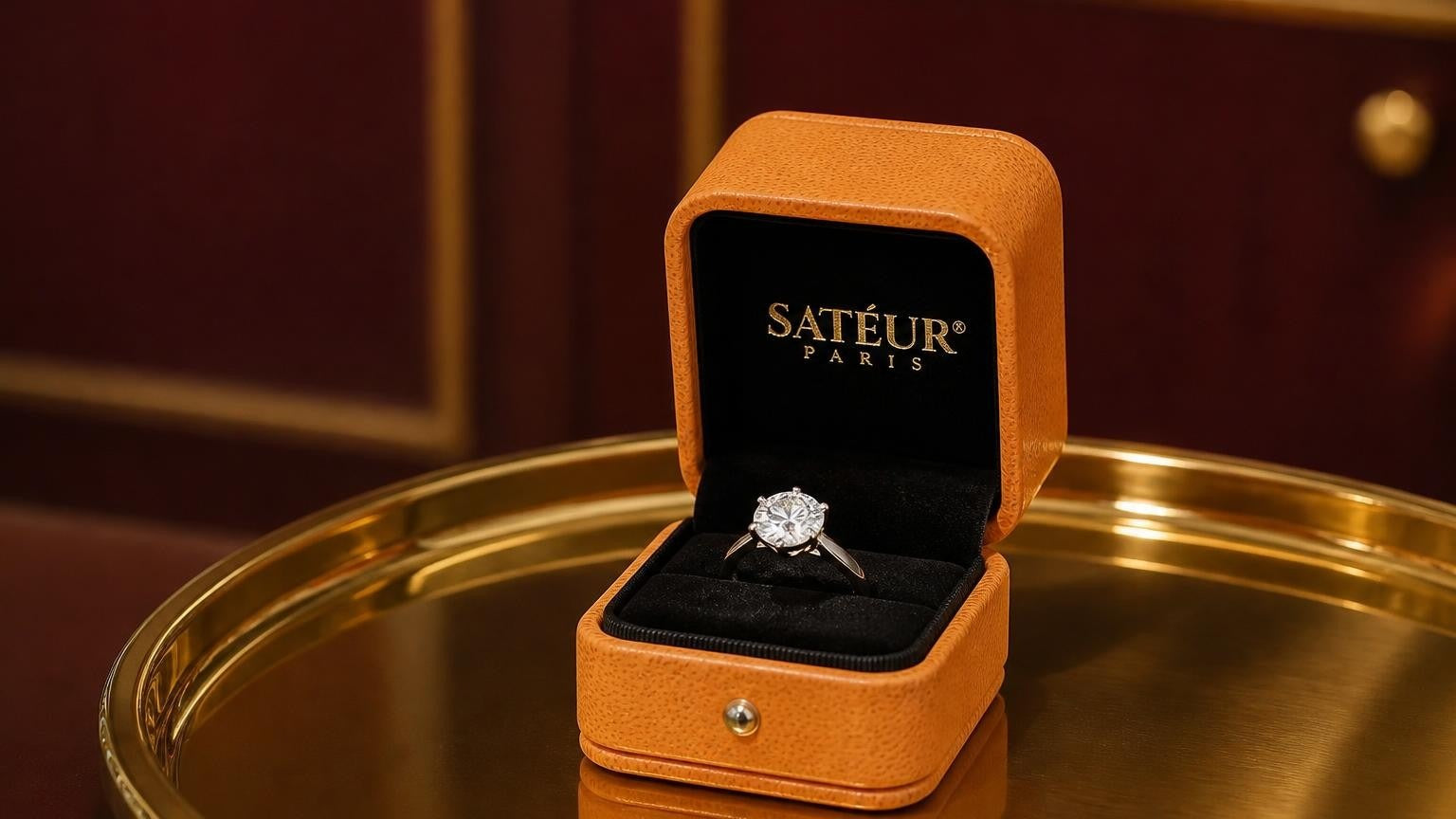
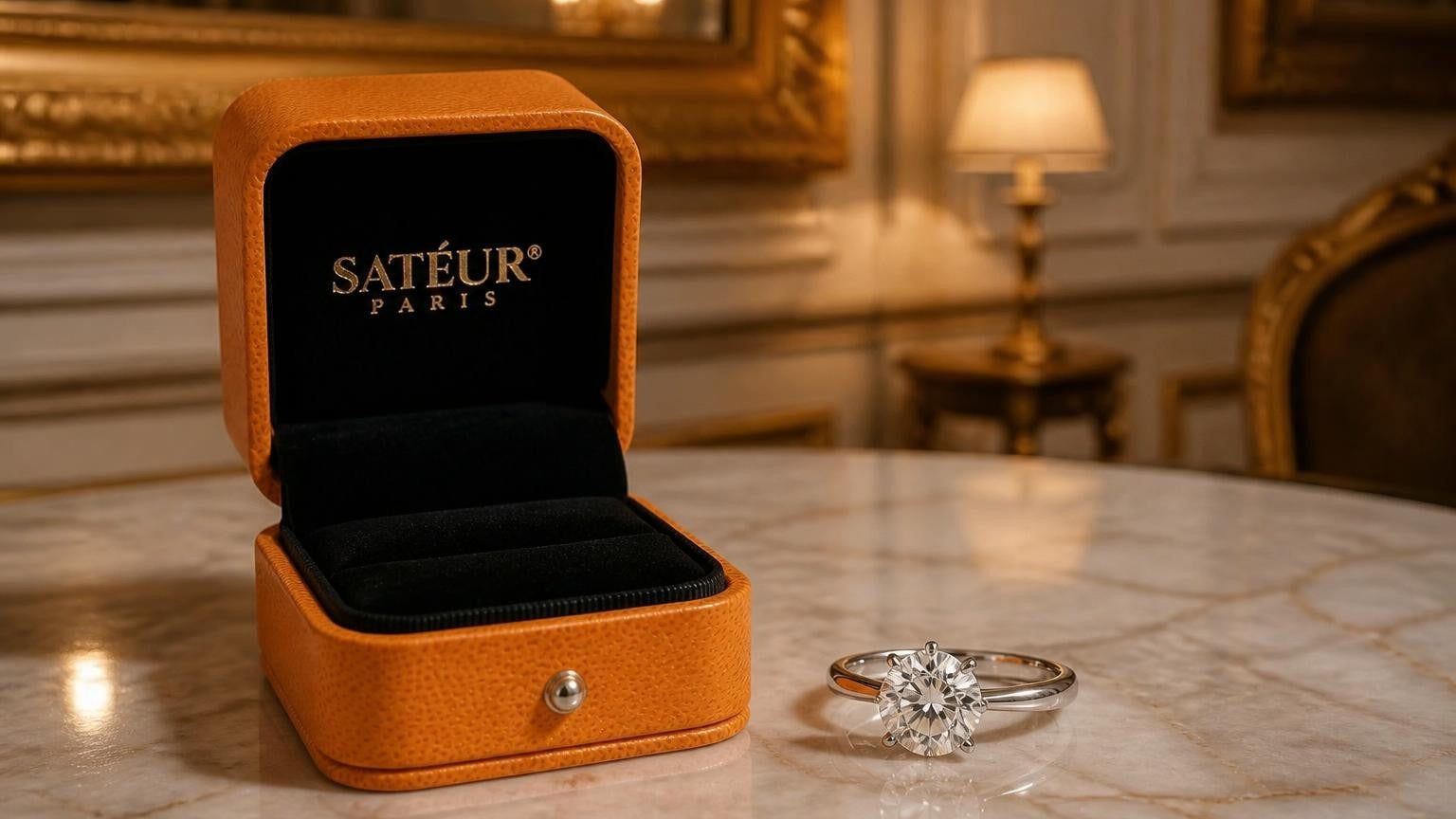
Satéur Gems® is a trademarked diamond simulant, crafted to replicate the look of a flawless diamond. The composition of the gemstone is proprietary — not disclosed publicly, which follows the same model as other branded gem materials (the brand, not the material, is the mark). What is disclosed: colour grade D–E equivalent, refractive index approximately 2.39, Mohs hardness approximately 8.8, and a 58-facet excellent cut that maximises the diamond-accurate brilliance.
Satéur is transparent about what Satéur Gems® is: a simulant. Not a diamond. Not a lab-grown diamond. A gem engineered to give the same visual experience as a flawless mined diamond — for approximately 1% of the price. The Satéur Destinée Ring™, The 1% Ring®, begins at $138. A comparable mined diamond ring would cost upwards of $10,000.
This is not a secret. It is the point. The New Diamond Standard® is built on the premise that the look of a flawless diamond — the light, the presence, the meaning — does not require a six-figure price. With Satéur Gems®, there is nothing to hide. You choose the look, openly and intelligently.

Satéur Destinée Ring™
The look of a flawless diamond, for 1% of the price.
Compare to a $10,000 mined diamond
Joined by 100,000+ couples across 150+ countries.
Discover The 1% RingFree worldwide shipping · 30-day returns · Lifetime Satéur Care
How to Evaluate a Diamond Purchase

When purchasing any diamond or diamond simulant, there are four practical criteria worth applying before any other consideration.
Certification. For mined diamonds and lab-grown diamonds, GIA and IGI certification is the definitive authentication. A certificate documents cut, colour, clarity, and carat weight, independently verified. Any vendor selling a mined diamond without certification is a vendor to reconsider.
Source transparency. For simulants, the standard is brand transparency — a clear declaration of what the stone is. Satéur states plainly: Satéur Gems® is a trademarked diamond simulant. Moissanite is a lab-created gemstone. Neither is a diamond. Both are sold as exactly what they are.
Optical assessment. Under natural daylight, view the stone from above the table facet. A real diamond — or a premium simulant made to replicate one — will show crisp, white reflections. If the stone appears grey and cloudy, or if coloured fire is excessive for its size, that tells you something about the material.
Value context. A mined diamond is priced partly on rarity. A simulant is priced on craftsmanship and optical output. At approximately 1% of the mined diamond price, a Satéur Gems® piece delivers identical visual presence. The decision is not about quality — it is about what the buyer is actually paying for.
For those interested in the engagement ring category more broadly, or how simulants hold up in real proposals, this piece on spotting a fake diamond ring and the case for Satéur covers the question from a buyer's perspective. These four criteria simplify an otherwise opaque market considerably.
Why Diamond Simulants Offer Value
The diamond industry's pricing is built partly on a century of marketing and partly on controlled supply. The price of a one-carat D-colour mined diamond reflects its rarity, its supply-chain markup, and its cultural positioning — not purely its optical properties. A simulant engineered to the same visual standard is priced on what it actually cost to produce.
For buyers who want the look of a flawless diamond — for themselves or as a gift — the value proposition of a premium simulant is straightforward. At $88, the Satéur Destinée Ring™ delivers a 1.00-carat round-cut stone in 18K white gold finish with the clean, white brilliance of a flawless diamond. The same look in a mined diamond would require a budget ten to twenty times higher.
The lab-grown diamond category offers another point of comparison: chemically identical to mined diamonds, IGI-certified, and priced significantly below comparable mined stones. Lab diamonds are real diamonds — the same chemical and optical structure, grown in a controlled environment rather than mined from the earth. Satéur's lab diamond line is the option for buyers who specifically want a certified diamond, not a simulant.
Understanding these three categories — mined diamond, lab-grown diamond, and diamond simulant — is the whole picture. The choice is not about what is fake. It is about what you are actually choosing to buy.
Over 100,000 customers across 150+ countries have approached the question of diamond jewellery differently. The 1% Ring® exists precisely because the look of a flawless diamond does not have to cost what a flawless diamond costs. That is The New Diamond Standard®.
Frequently Asked Questions
What optical properties distinguish a mined diamond from a diamond simulant?
A mined diamond's refractive index of approximately 2.42 produces crisp white brilliance with moderate fire. Moissanite (~2.65 RI) produces more vivid, rainbow-coloured dispersion — observable under direct light. Satéur Gems® (~2.39 RI) is calibrated for diamond-accurate white brilliance. Under natural daylight with the naked eye, a high-quality simulant like Satéur Gems® is visually indistinguishable from a flawless diamond.
Can a diamond simulant maintain its appearance over time?
Yes. Premium simulants like Satéur Gems® (~8.8 Mohs) and moissanite (~9.25 Mohs) are extremely durable and built for everyday wear. Both hold their brilliance for life — there is no clouding, yellowing, or optical degradation over time. This is categorically different from lower-grade simulants such as cubic zirconia, which can cloud and scratch within a few years.
What colour grades are available in high-quality diamond simulants?
Premium simulants are crafted to D–E colour equivalent — the same standard as top-tier mined diamonds. Satéur Gems® is produced to this specification, appearing entirely colourless and replicating the water-white appearance of a flawless diamond. This is the benchmark for the category.
How does light dispersion differ between diamonds and simulants?
Diamonds produce balanced brilliance — a combination of white light reflection and moderate rainbow fire. Moissanite produces significantly more rainbow-coloured fire (its dispersion is approximately 2.4× that of a diamond), which gives it a distinctive, vivid sparkle. Satéur Gems® is designed for diamond accuracy: clean, white brilliance without the excess fire of moissanite.
Why do jewellers recommend specific simulants for engagement rings?
The primary criteria for an engagement ring stone are durability, optical quality, and colour consistency. Both moissanite (~9.25 Mohs) and Satéur Gems® (~8.8 Mohs) meet the durability threshold for daily wear comfortably. The choice between them is optical: moissanite for vivid, rainbow-forward sparkle; Satéur Gems® for diamond-accurate white brilliance. Both are far more durable and optically superior to older simulants like cubic zirconia.
What budget should I expect for a quality diamond-look piece?
A comparable mined diamond ring — 1.00 carat, D–E colour, excellent cut — costs upwards of $10,000. The Satéur Destinée Ring™, a 1.00-carat round-cut Satéur Gems® ring in 18K white gold finish, begins at $138. That is approximately 1% of the mined diamond price for the same visual presence. Moissanite rings start around $98–$138. Lab-grown diamonds, while significantly less expensive than mined diamonds, sit at a higher price point than simulants.
















댓글을 남기세요
이 사이트는 hCaptcha에 의해 보호되며, hCaptcha의 개인 정보 보호 정책 과 서비스 약관 이 적용됩니다.