

Is an SI Diamond Real or Fake? The Clarity Grade Decoded
The short answer: an SI diamond is entirely real. SI — Slightly Included — is a diamond clarity grade assigned by the Gemological Institute of America. It describes the presence of small internal inclusions visible under 10× magnification. It says nothing about a diamond being genuine or counterfeit. An SI diamond is a natural mined diamond, graded and certified like any other.
The confusion is understandable. In a market crowded with simulants, lab-grown stones, and genuine alternatives, the word "included" can sound like a warning. It is not. Diamond clarity is one of the four Cs used to grade every natural diamond — colour, cut, carat, and clarity. SI sits in the middle of the diamond clarity scale, between VS2 (Very Slightly Included) and I1 (Included). Natural diamonds in SI clarity grades are graded by GIA and represent a mid-tier value point on the scale.
This article decodes what SI really means, how SI1 differs from SI2, and why some buyers choose a path that removes the inclusion question entirely. For context on how real diamonds behave under different conditions, see our guide to identifying real diamonds under UV light.
Key Takeaways
- SI (Slightly Included) is a GIA diamond clarity grade — an SI diamond is a genuine, real diamond.
- SI1 stones in smaller carat weights often appear eye-clean; SI2 inclusions are frequently visible to the naked eye above 0.5 carat.
- Diamond clarity grades run from FL (Flawless) to I3; SI sits between VS2 and I1.
- Natural mined diamonds in SI clarity are graded by GIA and represent a mid-tier value point on the scale.
- Diamond simulants such as Satéur Gems® have no natural inclusions — every stone delivers consistent, flawless visual clarity.
- Satéur Gems® start at approximately 1% of the price of a comparable mined diamond.
What Does SI Mean in Diamonds?
SI stands for Slightly Included. It is one of eleven clarity grades on the GIA diamond grading scale, which runs from FL (Flawless) at the top to I3 (heavily Included) at the bottom. The full scale: FL · IF · VVS1 · VVS2 · VS1 · VS2 · SI1 · SI2 · I1 · I2 · I3. SI occupies the seventh and eighth positions — below the premium tiers, well above the grades where inclusions plainly affect the stone's appearance and put the diamond clarity at real risk.
SI diamonds contain inclusions — small internal characteristics such as crystals, feathers, clouds, or pinpoints — visible under 10× magnification. These formed during the diamond's growth, billions of years underground. They are natural records of how the stone came to exist. The GIA diamond clarity grade places that internal fingerprint on a standardised scale so buyers can evaluate and compare stones consistently.
A GIA-graded SI diamond carries a full grading report documenting the type, size, location, and nature of its inclusions. This transparency is why GIA certification is the global standard. The SI clarity grade is a factual description — it tells a buyer where the diamond sits on the scale, and what to examine before purchase. The real test is how those inclusions read in the finished piece.

SI1 vs SI2: Visible Inclusions and Eye-Clean Standards
Within the SI tier, SI1 and SI2 differ meaningfully in everyday wear. The distinction matters most in stones above 0.5 carat, where inclusions become easier to see without magnification.
SI1 diamonds often appear eye-clean in stones below 1 carat. The inclusions exist — they appear under 10× magnification — but at normal viewing distance they typically do not distract. A buyer who reviews the GIA plot and selects a stone with inclusions positioned toward the girdle, or hidden under a prong, can achieve excellent visual results at a lower price than VS2. The key test is reading the GIA inclusion map rather than relying on the grade alone.
SI2 diamonds are less predictable. In stones above 0.5 carat, inclusions are often visible to the naked eye. The same stone that reads clean in a photograph can show a visible cloud or feather in direct light. SI2 can represent value — but carries more visual risk than SI1 and demands greater due diligence before purchase.
Neither grade disqualifies a stone from being a genuine, beautiful diamond. The clarity grade is a data point, not a verdict. Two SI1 stones at the same carat weight and price can look very different depending on cut quality, inclusion type, and where those inclusions fall within the diamond. The GIA plot is the essential reference — and the real test of an SI stone is always visual, not just a grade on paper.
| Clarity Grade | Inclusions under 10× magnification | Naked-eye visibility (~1 carat) | Typical value position |
|---|---|---|---|
| VS2 (above SI) | Minor, somewhat difficult to find | Virtually always eye-clean | Higher — consistent diamond clarity, lower rarity premium than VVS |
| SI1 | Noticeable, relatively easy to find | Often eye-clean in smaller carat weights | Mid-tier — strong value trade-off |
| SI2 | Very noticeable, immediately apparent | Often visible without magnification above 0.5ct | Lower — higher visual risk |
| I1 (below SI) | Obvious under magnification | Visible in most stones, affects brilliance | Lowest — significant optical impact |
Is an SI1 Diamond a Good Value Choice?
For some buyers, yes. SI1 occupies a significant place in the natural diamond market because these stones price below VS grades while delivering acceptable eye-cleanliness when selected with care. A 1-carat SI1 with good colour and excellent cut can represent genuine value — and for many buyers it is the best clarity grade available within a given budget — but realising that value requires studying the GIA inclusion map and comparing multiple stones.
A feather inclusion positioned centrally in the table of a round brilliant reads very differently from a crystal near the girdle under a prong. Two SI1 stones at the same grade and carat weight can look entirely different in practice. The real test is not the grade — it is the specific GIA plot for that specific diamond. The clarity designation alone is not sufficient for purchase decisions.
There is also a broader question worth asking: what is this purchase actually for? For buyers who want a certified natural diamond at a mid-market price, a carefully selected SI1 is a legitimate choice. For buyers whose priority is the visual standard of a flawless diamond at the most intelligent price — with no inclusions at all — the path diverges. The engagement ring market today offers more paths than the traditional SI/VS trade-off.
Diamond Clarity Grades Explained
The GIA diamond clarity scale exists because no two natural diamonds are identical. Every stone that forms underground carries a unique internal fingerprint. The scale gives buyers a standardised vocabulary for those differences — eleven grades, from Flawless to heavily Included.
At the top, FL and IF stones have no inclusions visible under 10× magnification. They represent less than 1% of all diamonds graded. VVS1 and VVS2 contain inclusions extremely difficult to see even under magnification — the territory of collectors and high-investment purchases. VS1 and VS2 are the grades many jewellers recommend as the value sweet spot: essentially impossible to see without tools, without the rarity premium of FL or VVS.
SI1 and SI2 sit one step below VS2. The step matters: VS2 inclusions are minor and difficult to locate under magnification; SI inclusions are easier to find under 10× and may become visible to the naked eye in larger carat weights. Below SI, I1, I2, and I3 carry inclusions that are obvious and affect optical quality — the grades where the diamond clarity cost is plainly visible in the stone itself.
Diamond clarity interacts with the other Cs in ways that matter for purchase. A flawless diamond with a poor cut will not sparkle. An SI1 with excellent cut and strong colour can be genuinely beautiful. The real test of quality, in jewellery-wearing conditions, is the visual standard the finished piece delivers — not a single variable on a grading scale.

Satéur Gems®: The Diamond-Look Alternative at 1% of the Price
There is a different answer to the diamond clarity question — one that removes the inclusion trade-off entirely.
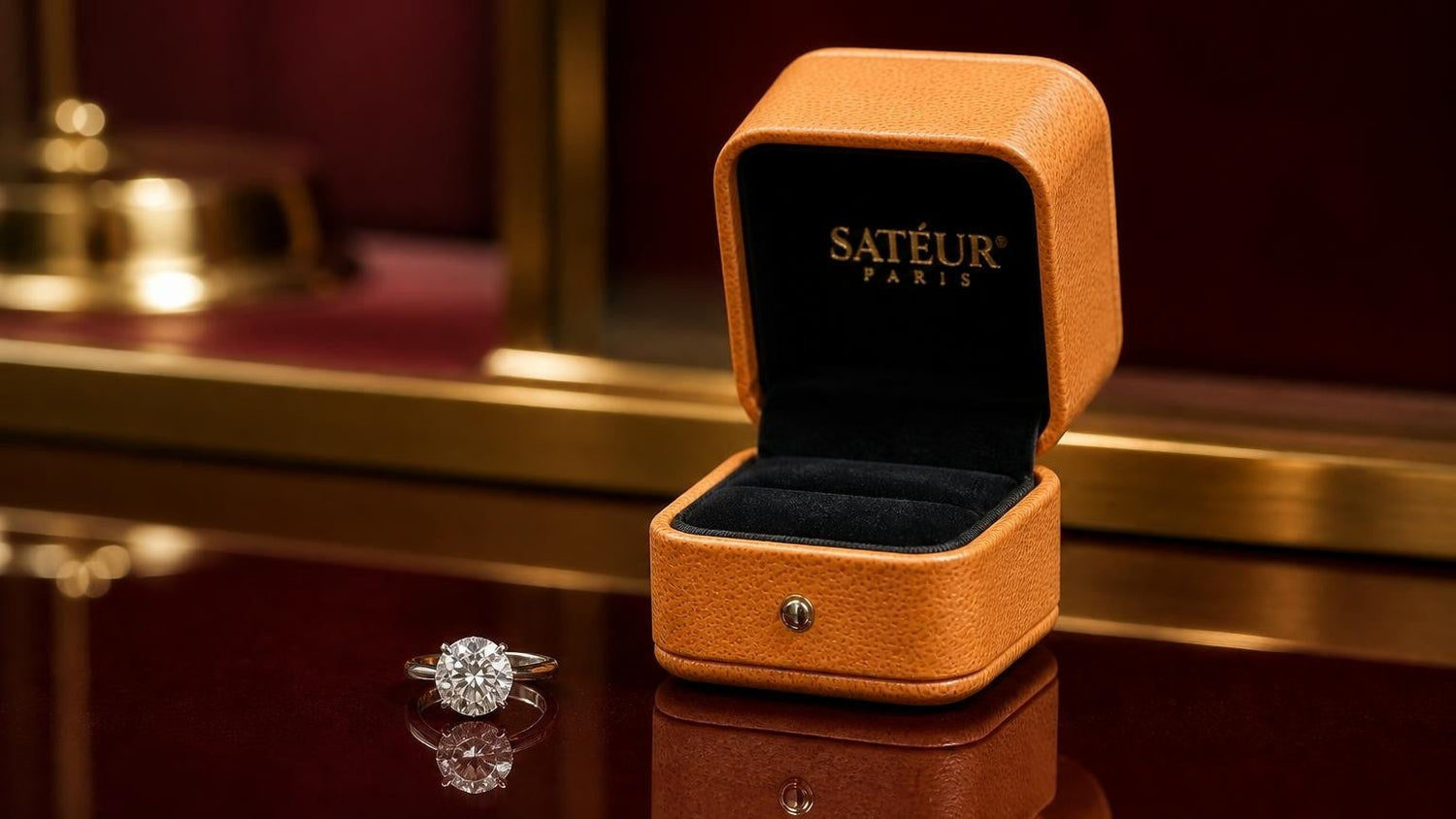
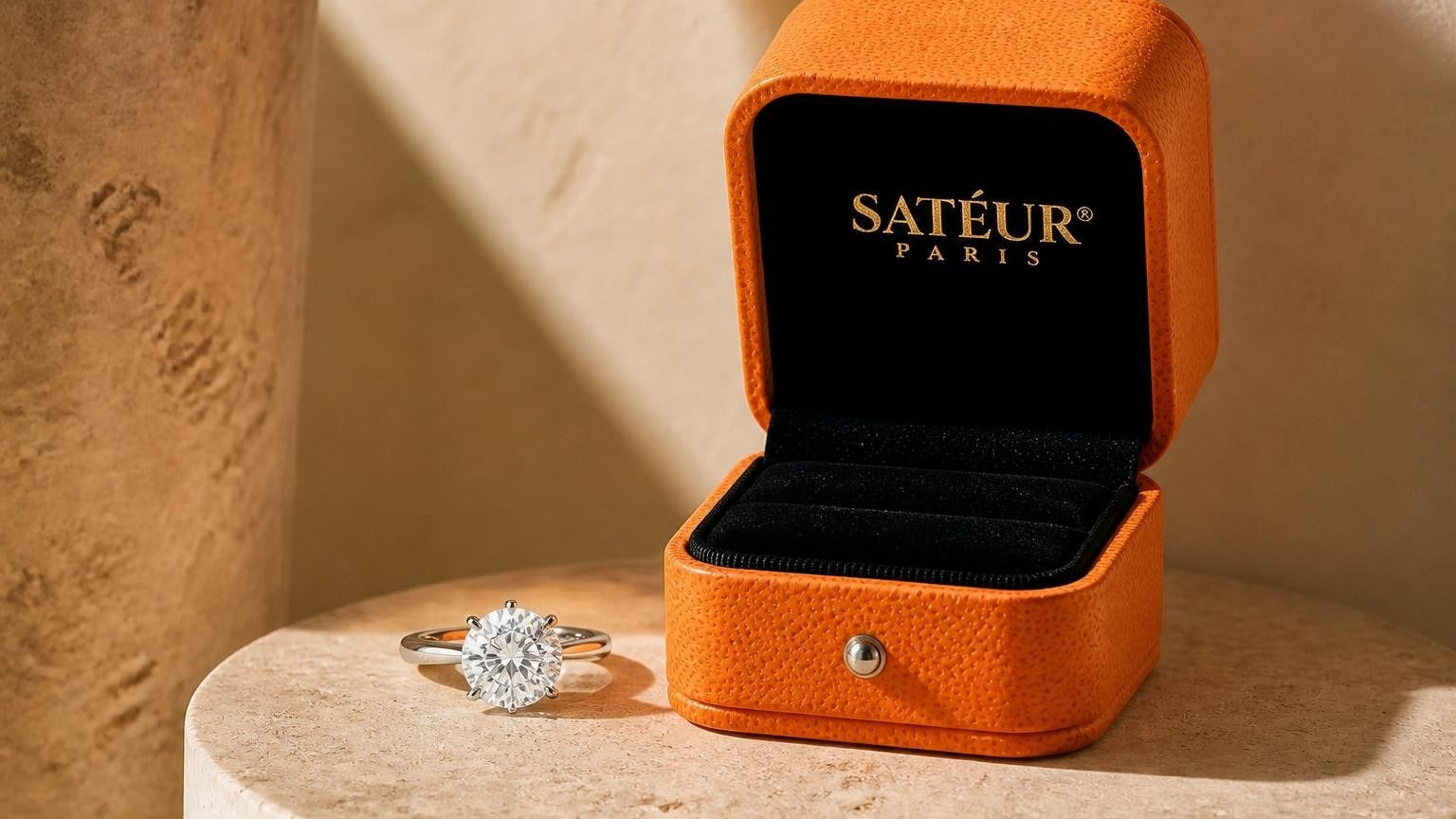
Satéur Gems® is a trademarked diamond simulant engineered to replicate the look of a flawless diamond. Every stone is produced under controlled conditions, meaning there are no natural inclusions. There is no SI1 or SI2 — every Satéur Gems® stone delivers the visual standard of a Flawless diamond in colour and clarity, to the naked eye. D-E colour equivalent. Excellent cut. The clean, white brilliance of a fine diamond, across the table and in daylight.
The price: approximately 1% of a comparable mined diamond. The Satéur Destinée Ring™ — The 1% Ring® — begins at a fraction of what a 1-carat SI1 natural diamond costs. The visual result holds the same standard. The inclusions are absent by design.
Satéur Gems® carry a Mohs hardness of approximately 8.8 — extremely durable, built for everyday wear, holding their brilliance for life. The 18k white gold finishing is a finish, not solid gold, which is how the Maison maintains its standard at this price point. Transparency is part of what The New Diamond Standard® means.

Satéur Destinée Ring™
The look of a flawless diamond, for 1% of the price.
Compare to a $10,000 mined diamond
Joined by 100,000+ couples across 150+ countries.
Discover The 1% RingFree worldwide shipping · 30-day returns · Lifetime Satéur Care
Searching for SI Diamonds: Natural, Lab-Created, and Simulant Options
The diamond and diamond-look jewellery market offers three distinct categories, each with its own clarity story.
Natural mined diamonds are graded on the GIA diamond clarity scale. They can be SI1, SI2, or any other grade. Their inclusions are real. Their price reflects not only the stone's physical characteristics but the rarity premium of natural diamonds and the GIA certification infrastructure. Natural diamonds in SI clarity represent a mid-tier value point — accessible to a wider range of buyers, but still measured in thousands of dollars for engagement-ring carat weights.
Lab-created diamonds are chemically identical to mined diamonds and graded on the same clarity scale. They can carry SI, VS, or FL grades — lab growth also produces inclusions, though differently from mined stones. Satéur's lab diamond collection offers IGI-certified stones for buyers who want the real diamond chemical structure without the mined premium.
Diamond simulants — including Satéur Gems® and moissanite — do not grow with inclusions. Moissanite is a lab-created gemstone, not a diamond; it delivers more fire than a diamond — vivid, rainbow-forward sparkle that differs from diamond's crisp white brilliance. Put moissanite and Satéur Gems® to the test side by side: Satéur Gems® reads as diamond-accurate — the restrained, clean white look — while moissanite reads as distinctly vivid. Neither tests as an included stone. Both test as optically excellent. The difference is in what look you want.
Choosing between these paths is not about settling. It is about understanding what each one actually delivers — and which question you are trying to answer.

The diamond clarity conversation ultimately comes down to what matters most in the finished piece. Natural diamonds carry inclusions because they are genuinely natural — formed over billions of years. That history has real value for some buyers. For others, the test is simpler: does the stone look flawless at the table, in real light, in real jewellery? Both are legitimate priorities. The market now has clear answers to both.
An SI diamond is real. A Satéur Gems® piece is also real — in its craftsmanship, its visual standard, its daily durability. The two are not in competition. They answer different questions. The smarter choice is the one that answers yours.
Explore the full collection: The 1% Ring by Satéur.
FAQ: SI Clarity, Real Diamonds, and Diamond Simulants
What does SI mean in diamond clarity grading?
SI stands for Slightly Included. It is one of eleven clarity grades on the GIA diamond grading scale, indicating inclusions visible under 10× magnification. SI1 and SI2 sit in the middle of the scale — between VS2 above and I1 below. An SI diamond is a genuine, real diamond. The grade describes its internal characteristics, not its authenticity.
How visible are inclusions in SI1 versus SI2 diamonds?
SI1 inclusions are often not visible to the naked eye in smaller stones, depending on inclusion type and position. SI2 inclusions are frequently visible without magnification in stones above 0.5 carat. Neither grade guarantees eye-cleanliness. The GIA grading plot for the specific stone should always be reviewed before purchase — the diamond clarity grade alone does not determine how inclusions will read in the finished piece.
Is an SI clarity diamond a good value for an engagement ring?
SI1 can represent good value when chosen carefully — reviewing the GIA inclusion map, understanding the type and position of inclusions, and comparing multiple stones before deciding. A well-selected SI1 with excellent cut and strong colour can deliver an eye-clean result at a lower price than VS2. SI2 carries more visual risk. The value is real, but so is the care required to find it. The real test is always the specific stone's GIA plot, not the grade in isolation.
What is the difference between a natural diamond and a diamond simulant?
A natural diamond is a carbon gemstone formed underground over billions of years, graded on the GIA diamond clarity scale and priced according to the four Cs. A diamond simulant — such as Satéur Gems® — is a different material engineered to replicate the visual appearance of a diamond. It is not a diamond, and Satéur is transparent about this. What Satéur Gems® delivers is the look of a flawless diamond: D-E colour equivalent, excellent cut, clean white brilliance — at approximately 1% of the price of a comparable mined stone.
How do diamond simulants compare to mined diamonds in appearance?
Satéur Gems® is designed to replicate the clean, white brilliance of a flawless diamond. Produced under controlled conditions, Satéur Gems® stones have no natural inclusions — every stone delivers D-E colour and excellent cut consistently. To the naked eye, the visual result matches that of a fine natural diamond. The difference is that a natural diamond carries a GIA certificate and a rarity premium; Satéur Gems® carries neither, and costs approximately 1% of the price. The real-world test of both is how they look across a table in natural light — and on that test, Satéur Gems® is indistinguishable with the naked eye from a flawless stone.
What alternative options exist if SI clarity diamonds are outside your budget?
There are two main paths. The first is to consider I1-clarity natural diamonds, which reduce price but increase visible inclusions significantly. The second is a diamond simulant. Satéur Gems®, starting at approximately 1% of a comparable mined diamond's price, delivers the flawless visual standard — no inclusions by design, D-E colour equivalent, excellent cut — in a piece crafted by the Maison. For buyers whose priority is the look of a flawless diamond rather than a natural diamond certificate, it is the more intelligent choice.














댓글을 남기세요
이 사이트는 hCaptcha에 의해 보호되며, hCaptcha의 개인 정보 보호 정책 과 서비스 약관 이 적용됩니다.