

Lab-Grown vs Natural Diamond: The Complete Comparison
The question of lab grown vs natural diamond has become one of the defining conversations in modern jewellery. Two stones, identical in chemistry. One formed over billions of years beneath the Earth's mantle. The other created in weeks inside a controlled laboratory environment. Both graded by the same independent institutes, to the same exacting standards. Understanding the real differences — and the real similarities — is the only way to make an intelligent choice.
This guide covers everything: how each diamond originates, how they compare across the Four Cs, what certification means, and where the price gap actually comes from. For couples exploring lab-grown vs traditional diamonds for engagement rings, the distinction matters — and so does the answer.
Key Takeaways
- Lab-grown and natural diamonds share identical chemical, physical, and optical properties.
- Lab-grown diamonds are typically 30–50% more affordable than equivalent natural diamonds.
- Both receive the same IGI and GIA grading — the Four Cs apply equally to both.
- Natural diamonds take billions of years to form; lab-grown diamonds are created in weeks.
- Both are suitable for engagement rings and fine jewellery with proper care.
- Satéur lab diamonds are IGI-certified, D-E colour, Excellent cut, from approximately $88.
Lab-Grown vs Natural Diamonds
At the chemical level, there is no difference between a lab-grown diamond and a natural diamond. Both are pure carbon arranged in a cubic crystal structure — the same lattice, the same hardness, the same optical response to light. A natural diamond forms under extreme pressure and heat deep within the Earth over one to three billion years, transported to the surface by volcanic activity. A lab-grown diamond replicates those same conditions in a controlled environment, compressing the process into weeks rather than aeons.
The distinction is origin, not composition. Both are real diamonds — the International Gemological Institute (IGI) and the Gemological Institute of America (GIA) grade them using identical criteria. The Four Cs — Carat, Colour, Clarity, Cut — apply without differentiation. What varies is the supply chain, the timeline, and the price.
| Property | Lab-Grown Diamond | Natural Diamond |
|---|---|---|
| Chemical composition | Pure carbon (cubic crystal) | Pure carbon (cubic crystal) |
| Formation time | Weeks (controlled environment) | 1–3 billion years (Earth's mantle) |
| Hardness (Mohs) | 10 | 10 |
| Refractive index | 2.42 | 2.42 |
| Grading standard | IGI / GIA Four Cs | IGI / GIA Four Cs |
| Price (1ct equivalent) | 30–50% less than natural | Full market benchmark |
| Certification | IGI, GIA, GCAL | IGI, GIA, GCAL |
| Ethical sourcing clarity | Traceable supply chain | Variable; Kimberley Process applies |

How Lab-Grown Diamonds Are Created
Two primary methods produce lab-grown diamonds. The first is High Pressure High Temperature (HPHT), which recreates the extreme conditions of diamond formation in the Earth's mantle — typically 1,400–1,600°C under 70,000 atmospheres of pressure. A small diamond seed is placed with carbon and a metal catalyst; the carbon crystallises around the seed over days or weeks.
The second is Chemical Vapor Deposition (CVD). A diamond seed is placed inside a chamber filled with carbon-rich gas — typically methane. Microwave energy breaks the gas into carbon atoms, which layer onto the seed in a precise crystalline pattern. CVD produces high-quality diamonds with exceptional clarity and is increasingly the preferred method for the finest lab-grown stones.
In both cases, the result is a diamond. Not a simulant, not an approximation — the same carbon crystal that forms in the Earth. The only material difference is time and environment.

Comparing the Four Cs
The Four Cs framework — Carat, Colour, Clarity, Cut — was developed to create a universal language for diamond quality. It applies to lab-grown and natural diamonds equally. A 1.00ct D-colour Excellent-cut lab-grown diamond and a 1.00ct D-colour Excellent-cut natural diamond carry the same grading language on their certificates.
Carat measures weight — 0.2 grams per carat — and is a direct expression of size. Lab-grown diamonds span the same carat range as natural diamonds, from under 0.30ct to well above 5ct.
Colour is graded D through Z, where D-E represents colourless — the cleanest, brightest expression of white light through the stone. Lab-grown diamonds regularly achieve D-E grades due to the precise nature of CVD growth.
Clarity grades internal and surface characteristics. Lab-grown diamonds often reach VS (Very Slightly Included) and above grades, again reflecting the controlled growth environment. Natural diamonds of equivalent clarity are progressively rarer and more expensive as grades rise.
Cut is the human variable — it determines how light travels through the diamond and returns to the eye. An Excellent cut maximises brilliance regardless of whether the diamond was grown in the Earth or a laboratory.
Durability and Longevity
Both lab-grown and natural diamonds sit at 10 on the Mohs hardness scale — the maximum. They are the hardest naturally occurring material, and this property is unchanged by how the diamond was formed. Lab-grown diamonds have the same scratch resistance, the same resilience to daily wear, and the same optical stability over decades as their mined counterparts.
For engagement rings designed for lifelong wear, both diamonds perform identically. The fear that a lab-grown diamond will fade, discolour, or degrade over time has no basis in chemistry or material science. The crystal structure is the same. The durability is the same.
Proper care — periodic professional cleaning, avoiding abrasive contact — extends the brilliance of any diamond, lab-grown or natural. Neither requires special treatment beyond routine maintenance.
Certification and Grading Standards
Independent certification is the proof of quality for any diamond. The International Gemological Institute (IGI) and the Gemological Institute of America (GIA) grade both lab-grown and natural diamonds using identical methodology. A certified diamond comes with a report specifying its exact carat weight, colour grade, clarity grade, cut grade, and additional optical characteristics. This applies equally across all lab diamond categories — rings, earrings, and beyond.
For lab-grown diamonds, IGI certification is the most widely recognised standard. It confirms the stone's properties independently — without relying on the seller's representation. When comparing lab-grown diamonds across different sources, certification is the reliable baseline.
For natural diamonds, GIA certification has historically been the dominant standard. Both institutes maintain rigorous, consistent methodology. Neither is more valid than the other. What matters is that a certificate exists, is current, and matches the stone being purchased.
Price: Lab-Grown and Natural Diamond Comparison
The price gap between lab-grown and natural diamonds is substantial and growing. Lab-grown diamonds are typically 30–50% more affordable than comparable natural diamonds of equivalent quality. A 1.00ct D-colour VS1-clarity Excellent-cut natural diamond trades at approximately $5,000–$8,000 at retail. The same specifications in a lab-grown diamond trade at $1,500–$3,500 depending on source.
The price difference reflects supply economics, not quality. Natural diamonds are governed by geological scarcity and a complex mining and cutting supply chain spanning decades. Lab-grown diamonds are manufactured, with supply limited primarily by production capacity rather than geological occurrence. As production scales and technology improves, lab-grown diamond prices have fallen markedly over the past decade.
For buyers who prioritise the specific properties of a diamond — hardness 10, the exact carbon-crystal brilliance, IGI certification — lab-grown diamonds offer the same material reality at a fraction of the cost. That is not a compromise. It is a different economic choice reaching the same object.

Satéur Lab Diamonds: Certified Quality at Accessible Pricing
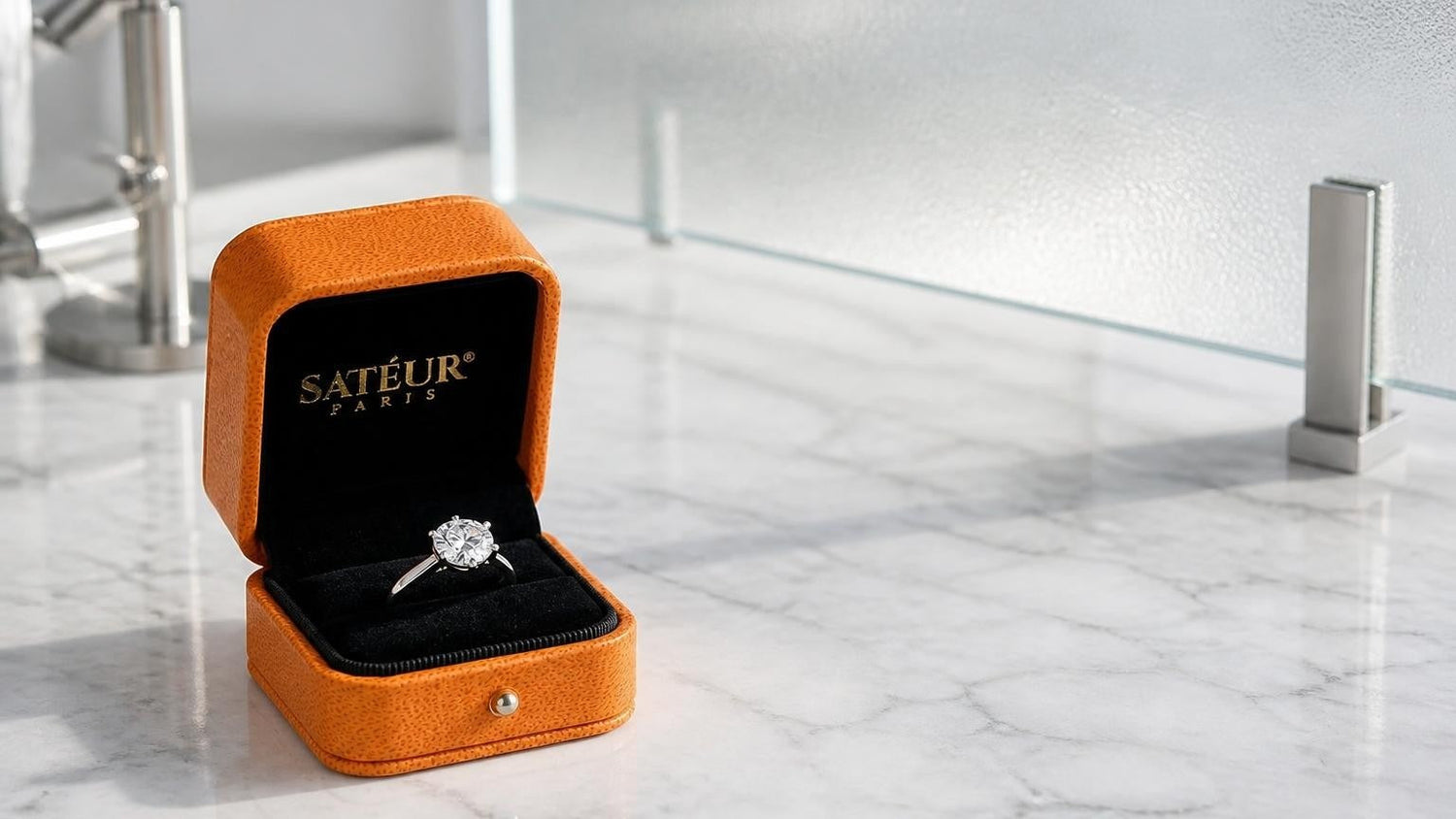
Satéur's lab diamond collection brings IGI-certified lab-grown diamonds into reach without the traditional jewellery markup. Every Satéur lab diamond is graded D-E colour with Excellent cut — the same specification parameters used to describe the finest diamonds available. Entry-level pieces start from approximately $88, making certified diamond ownership genuinely accessible.
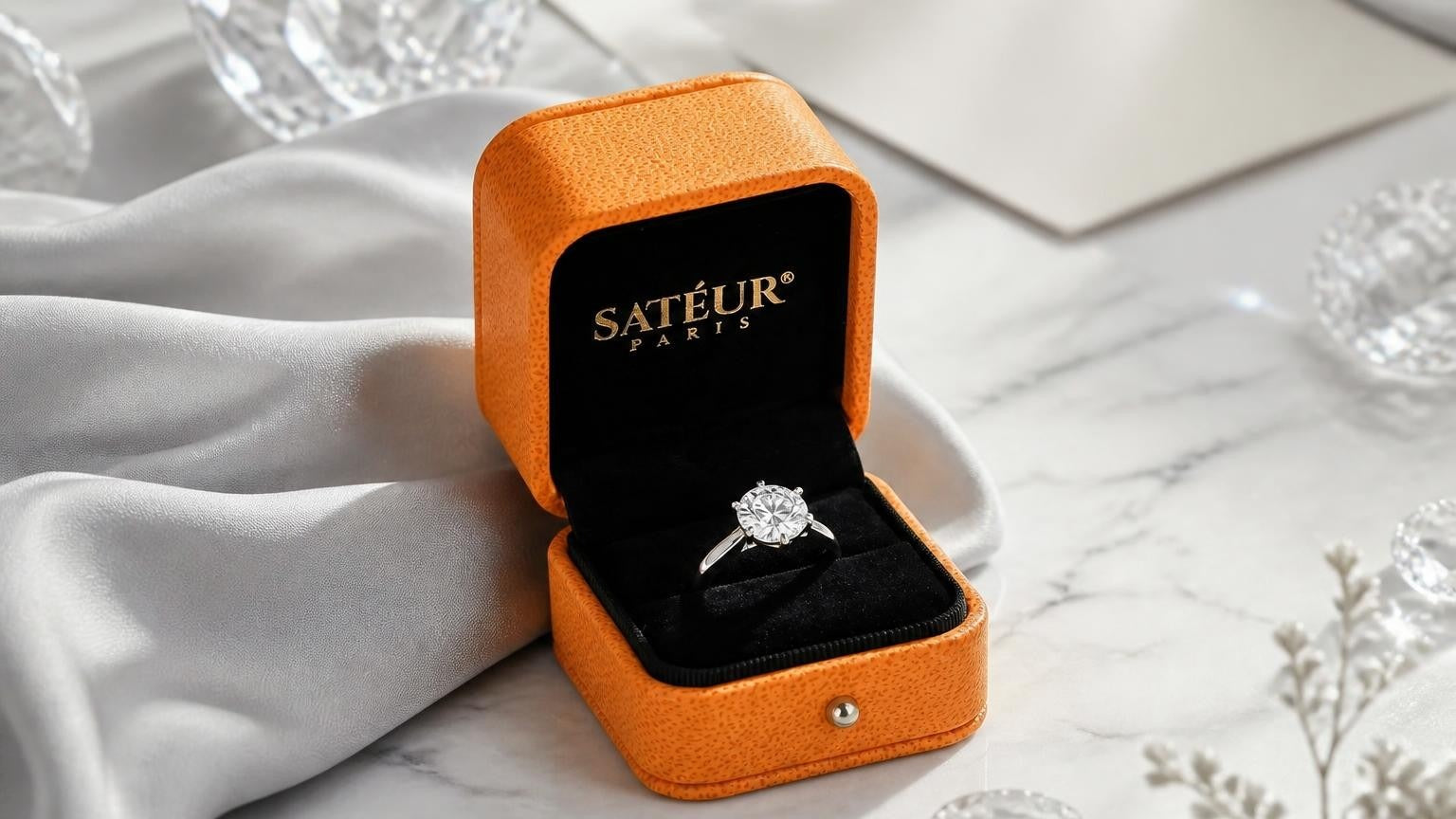
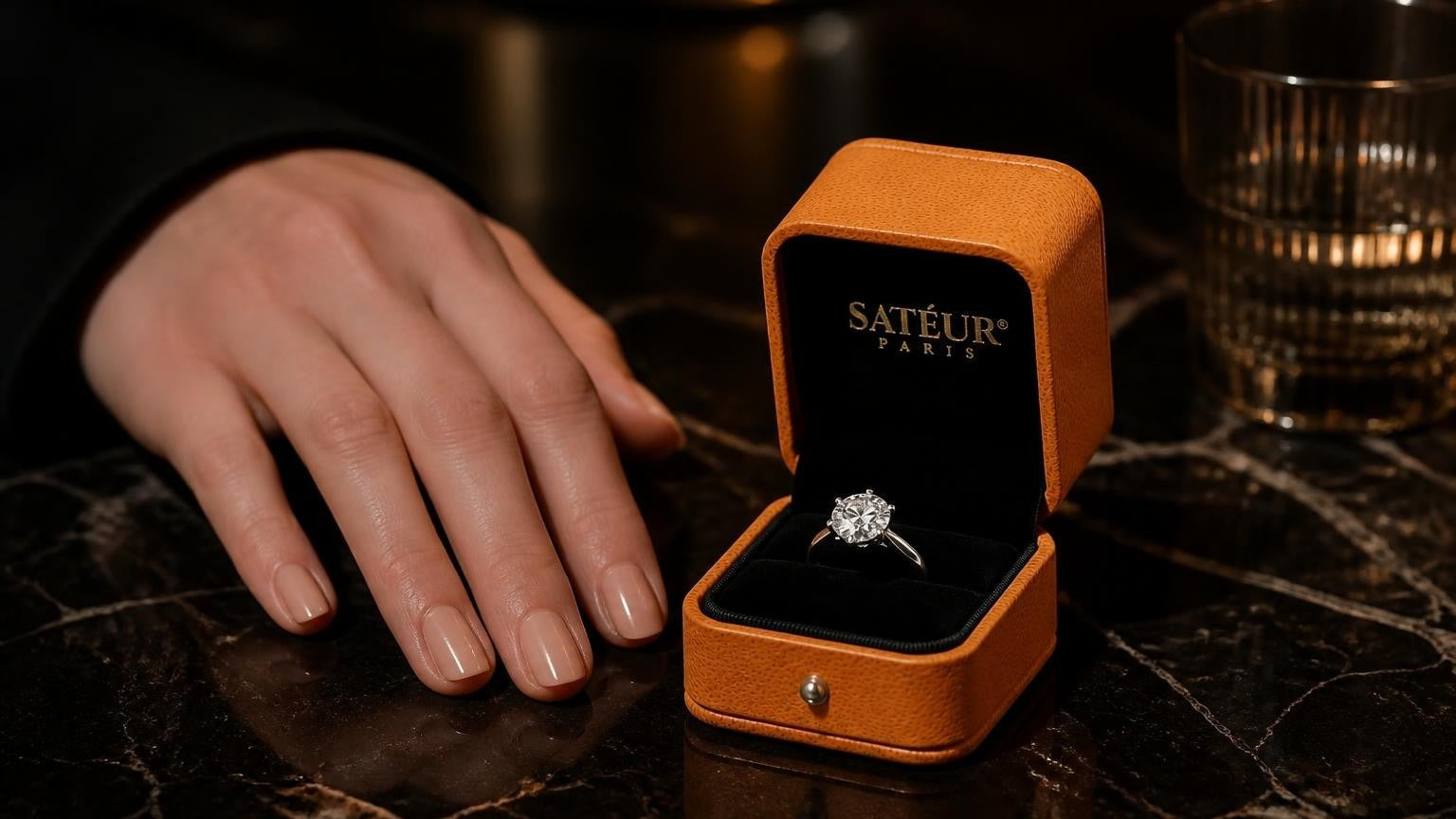
The Satéur Destinée Diamond Ring™ — set in an 18k gold-finish band with a 1.00 carat round-cut lab-grown diamond — is a precise expression of that proposition: the look of a flawless, certified diamond, for 1% of the price of a comparable mined stone. It is the same material. A different economic path to it.

Satéur Destinée Diamond Ring™
The look of a flawless diamond — IGI-certified, hand-set in 18k white gold, from $88.
Compare to a $10,000 mined diamond
Joined by 100,000+ couples across 150+ countries.
Shop the Destinée Diamond RingFree worldwide shipping · 30-day returns · Lifetime Satéur Care
For those exploring the full range of certified lab-grown options, the Satéur lab-grown diamond engagement ring collection covers a range of cuts, carat weights, and settings — each with the same certification standard applied.
Choosing Between Lab-Grown and Natural Diamonds for Your Jewellery
The choice between a lab-grown and natural diamond is not a question of quality. It is a question of values and economics. If geological origin — the idea that a specific stone formed in the Earth over billions of years — holds meaning for you, a natural diamond is the right choice. That meaning is real. So is its price premium. For those who have already reached a decision, the Satéur engagement ring collection covers both certified lab diamond and Satéur Gems® options.
If what matters is the diamond itself — the carbon crystal, the hardness of 10, the certified colour and clarity, the light performance — a lab-grown diamond achieves the same outcome. It is graded to the same standard, set in the same metals, and worn on the same hands. The difference exists in how it was formed and what that costs.
For engagement rings built around lab-grown diamonds, the case is straightforward: a certified, Excellent-cut D-colour lab diamond performs identically in a ring setting to its natural equivalent. Both options, considered with clarity, are intelligent choices — for different reasons.
Frequently Asked Questions
What is the difference between lab-grown and natural diamonds?
Lab-grown and natural diamonds are chemically identical — both are pure carbon in a cubic crystal structure, with the same hardness (Mohs 10), the same refractive index (2.42), and the same optical properties. The difference is origin: natural diamonds form over one to three billion years in the Earth's mantle, while lab-grown diamonds are created in controlled laboratory environments in a matter of weeks. Both are graded by the same independent gemological institutes using identical Four Cs criteria.
How are lab-grown diamonds created?
Lab-grown diamonds are produced using two primary methods. Chemical Vapor Deposition (CVD) grows a diamond crystal by layering carbon atoms from a gas onto a diamond seed inside a chamber. High Pressure High Temperature (HPHT) replicates the conditions found in the Earth's mantle — extreme heat and pressure — to crystallise carbon around a seed. Both processes produce genuine diamonds with the same chemical structure as natural diamonds.
Are lab-grown diamonds certified?
Yes. Lab-grown diamonds receive the same independent grading as natural diamonds from institutes including the IGI (International Gemological Institute) and the GIA (Gemological Institute of America). The certification report specifies carat weight, colour grade, clarity grade, and cut grade — identical criteria applied to both lab-grown and natural stones. IGI certification is the most widely used standard for lab-grown diamonds.
What is the price difference between lab-grown and natural diamonds?
Lab-grown diamonds are typically 30–50% more affordable than natural diamonds of equivalent quality. For a 1.00ct D-colour VS1-clarity Excellent-cut stone, a natural diamond retails at approximately $5,000–$8,000, while a lab-grown equivalent trades at $1,500–$3,500. The difference reflects supply economics rather than any difference in the diamond itself. Satéur lab-grown diamonds, IGI-certified with D-E colour and Excellent cut, start from approximately $88 for entry-level pieces.
Do lab-grown diamonds have the same durability as natural diamonds?
Yes. Both lab-grown and natural diamonds rate 10 on the Mohs hardness scale — the maximum. They share identical scratch resistance, resilience to daily wear, and long-term optical stability. Lab-grown diamonds do not fade, discolour, or degrade over time. The crystal structure is the same as a natural diamond, and so is the durability. Both are equally suitable for everyday jewellery, including rings worn continuously.
Can lab-grown diamonds be used in engagement rings and fine jewellery?
Yes. Lab-grown diamonds are fully suitable for engagement rings, wedding bands, and all fine jewellery. With Mohs hardness of 10, they withstand daily wear without compromise. They are set using the same metalwork, in the same settings — prong, bezel, pavé — as natural diamonds. Many couples now choose lab-grown diamonds for engagement rings specifically, combining certified quality with a more considered approach to value. Satéur's lab-grown diamond engagement rings use IGI-certified stones in 18k gold-finish settings designed for long-term wear.















댓글을 남기세요
이 사이트는 hCaptcha에 의해 보호되며, hCaptcha의 개인 정보 보호 정책 과 서비스 약관 이 적용됩니다.