

Lab Diamond Sparkle vs Moissanite: Key Differences Explained
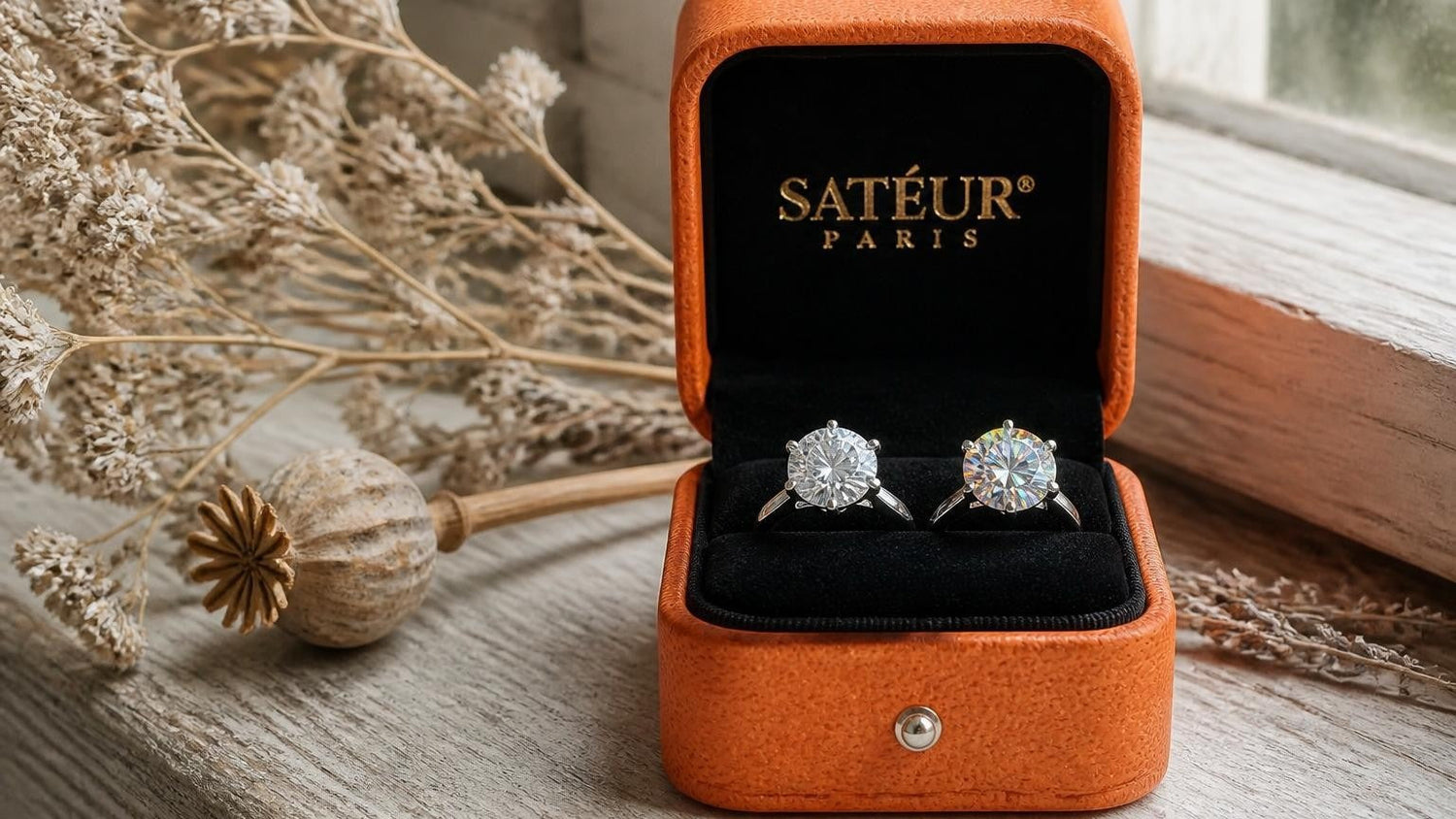
Two gemstones. Very different light. When comparing lab diamond sparkle vs moissanite, the distinction is not brightness — it is character. A lab-grown diamond returns the same crisp, white brilliance as a mined diamond. Moissanite returns more fire: a vivid, rainbow-forward dispersion that is measurably different to the naked eye. Understanding that difference is the whole decision. For a deeper look at the moissanite category, start with our moissanite collection overview.
Key Takeaways
- Lab-grown diamonds are chemically and optically identical to mined diamonds — the same crystal structure, the same crisp white brilliance.
- Moissanite has approximately 2.4 times the fire of a diamond, producing a vivid rainbow sparkle distinct from diamond's white flash.
- Lab-grown diamonds cost 40–60% less than comparable mined diamonds. Moissanite costs significantly less again.
- Moissanite ranks 9.25 on the Mohs scale — extremely durable and well-suited to everyday engagement ring wear.
- Satéur's moissanite rings deliver the appearance of a flawless diamond for approximately 1% of traditional diamond pricing.
- The right choice depends on one question: do you prefer diamond-accurate white brilliance, or a more vivid, rainbow-forward sparkle?
What Is a Lab-Grown Diamond
A lab-grown diamond is a real diamond. It shares the same chemical composition — pure carbon in a cubic crystal structure — and the same optical properties as a mined diamond. The difference is origin: one forms underground over millions of years; the other is produced in a controlled environment over weeks, using either High Pressure High Temperature (HPHT) or Chemical Vapour Deposition (CVD) methods.
Lab-grown diamonds are graded on the same 4Cs scale by the same independent gemological institutes that certify mined stones. Top-tier lab-grown diamonds carry D–E colour grades with Excellent cut grades, achieving near-flawless optical performance. They typically cost 40–60% less than a comparable mined diamond. The stone itself is indistinguishable from mined diamond with the naked eye — and under gemological grading, only the origin differs.

What Is Moissanite
Moissanite is a distinct lab-created gemstone — not a diamond, not a diamond simulant, but its own gemstone category with its own optical signature. Naturally occurring moissanite is extraordinarily rare; the gem available today is produced in laboratories from silicon carbide.
What defines moissanite optically is its dispersion: approximately 2.4 times the fire of a diamond. Where a diamond returns a precise, white-dominant flash, moissanite scatters light into a broader spectrum of colour. This produces the vivid, rainbow-forward sparkle moissanite is known for. Moissanite ranks 9.25 on the Mohs hardness scale, making it extremely durable and well-suited to daily wear in engagement rings and fine jewellery. For a full comparison of moissanite and natural diamond properties, see our guide on moissanite vs diamond sparkle.
Sparkle and Optical Performance
This is where the two gemstones diverge most visibly. Lab-grown diamonds return what jewellers call white light — a bright, sharp, silver-white flash that precisely mirrors the optical performance of a fine mined diamond. The fire (colour dispersion) is present but controlled: subtle flares of spectral colour appear in direct light, never dominating the stone's character.
Moissanite operates differently. Its higher refractive index (~2.65 vs a diamond's ~2.42) and greater dispersion (0.104 vs 0.044) mean that light entering the stone fans into a wider spectrum. The result is vivid rainbow flashes — beautiful, but distinctly different from a diamond's restraint. In bright sunlight or under direct indoor lighting, the difference is visible to the naked eye.

Neither is superior in an absolute sense. They serve different preferences. Those who want the precise look of a flawless diamond — white, restrained, diamond-accurate — will gravitate toward lab-grown diamonds or toward gemstones engineered for diamond-accurate brilliance. Those who want maximum visible fire and a more vivid sparkle signature will find moissanite compelling.
A third option worth noting: Satéur Gems®, our trademarked diamond simulant, is engineered specifically for that diamond-accurate look — the clean, white brilliance of a flawless diamond — while pricing at around 1% of traditional diamond cost. For a full three-way comparison, see our guide to moissanite vs diamond vs lab diamond.
Durability and Hardness Comparison
Diamond is the hardest natural material at 10 on the Mohs scale. Lab-grown diamonds share that rating. Moissanite ranks 9.25 — the second hardest gemstone used in jewellery, and well above the threshold for everyday wear without concern for scratching or chipping under normal conditions.
In practical terms, both lab-grown diamonds and moissanite are extremely durable choices for engagement rings and daily-wear jewellery. The 0.75-point Mohs difference has no meaningful impact on real-world wearability. Both gemstones will hold their brilliance for life. For a direct durability analysis, our moissanite vs lab-grown diamond article covers the hardness question in detail.
Colour and Clarity Grades
Lab-grown diamonds are graded to the same IGI or GIA colour and clarity standards as mined stones. Premium lab diamonds are available in D–F colour (colourless to near-colourless) at VS+ clarity, making them visually equivalent to the finest mined diamonds.
Moissanite is graded differently. Premium moissanite is produced to a near-colourless or colourless standard equivalent to the D–F diamond colour range. Lower-quality moissanite can show a slight greyish or greenish tint in certain lighting — a consideration worth noting when selecting a stone. Reputable sources supply only near-colourless and colourless grades.

Price Comparison: Lab Diamond vs Moissanite
| Property | Lab-Grown Diamond | Moissanite | Satéur Gems® |
|---|---|---|---|
| Composition | Pure carbon, cubic crystal | Silicon carbide | Trademarked simulant (composition undisclosed) |
| Mohs Hardness | 10 | 9.25 | ~8.8 |
| Optical Character | Crisp white brilliance, diamond-accurate | High fire, vivid rainbow dispersion | Clean white brilliance, diamond-accurate |
| Price (1ct solitaire) | ~£800–£2,500 | ~£98–£400 | From ~£138 |
| Certification | IGI / GIA graded | Independent lab reports available | Satéur quality guarantee |
| vs Mined Diamond | 40–60% less | ~90–95% less | ~99% less |
Lab-grown diamonds cost significantly less than mined diamonds — typically 40–60% for comparable grades — but remain a substantial purchase. A 1-carat D-colour VS1 lab diamond typically retails between £800 and £2,500 depending on cut and certification. Moissanite is priced considerably lower: a premium near-colourless 1-carat moissanite is available from around £98 to £400. The price gap reflects not just the cost of production but the different market positioning of each gemstone.
For buyers whose primary criterion is diamond-accurate look at the furthest remove from traditional diamond pricing, the moissanite rings category and the Satéur Gems® range each offer different answers to the same question.
Satéur's Moissanite Value Proposition
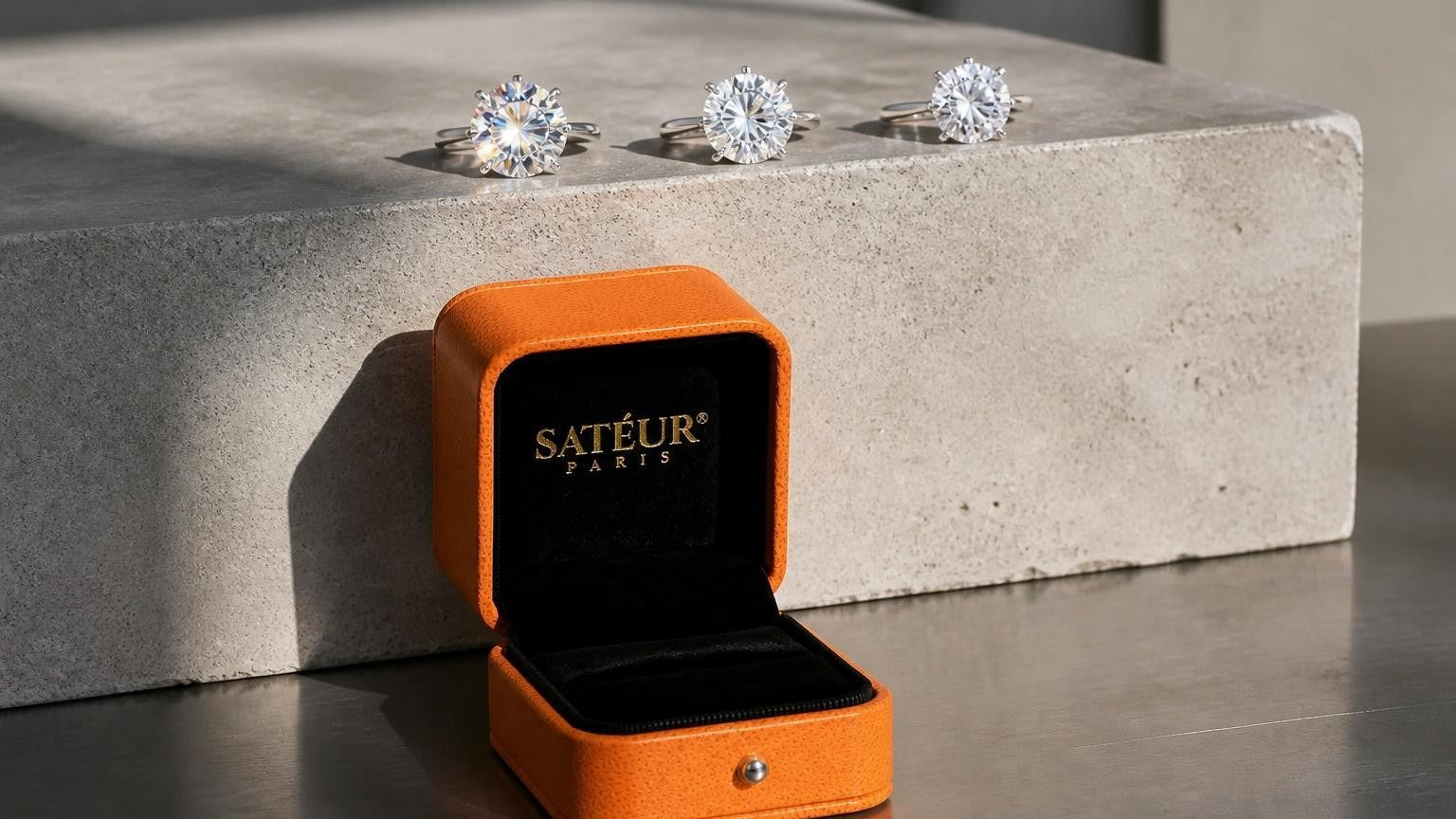
Satéur's moissanite rings are set in 18k gold finish and cut to the same exacting standards we apply across all tiers. The 1.00 carat round brilliant moissanite in a solitaire setting delivers the visual scale of a fine engagement ring, with that characteristic vivid fire, at a price that reframes the entire category.

Satéur Destinée Ring™
The look of a flawless diamond, for approximately 1% of the price.
Compare to a $10,000 mined diamond
Joined by 100,000+ couples across 150+ countries.
Discover The 1% RingFree worldwide shipping · 30-day returns · Lifetime Satéur Care
Over 100,000 customers across 150+ countries have chosen a different path. The engagement ring market built its perceived value on artificial scarcity. The New Diamond Standard is built on something more durable: the intelligence of the choice.
Choosing Between Lab Diamond and Moissanite
The decision reduces to one optical question and one financial one. Optically: do you prefer the diamond-accurate white brilliance of a lab-grown diamond (or a simulant engineered for the same effect), or the vivid, high-fire rainbow sparkle of moissanite? Both are beautiful. They are not interchangeable to the eye of someone who knows what to look for — but both are beyond reproach in quality, durability, and craftsmanship.
Financially: lab-grown diamonds still command a meaningful price for the certification and the precise diamond identity. Moissanite offers the durability and presence of a fine gemstone at a fraction of that cost. For couples who want the diamond-look at the furthest possible remove from traditional diamond pricing, engagement rings from Satéur — whether moissanite or Gems® — represent the clearest expression of that logic.
The question was never which gemstone costs more. It was always: which choice reflects how you actually think about value.
Frequently Asked Questions
What is the difference between a lab-grown diamond and moissanite?
A lab-grown diamond is chemically and optically identical to a mined diamond — pure carbon in a cubic crystal structure, graded to the same IGI or GIA standards. Moissanite is a distinct lab-created gemstone made from silicon carbide. The two differ in composition, optical character, price, and sparkle signature: lab diamonds return crisp white brilliance; moissanite returns vivid rainbow fire from its higher dispersion.
Does moissanite sparkle more than lab diamonds?
Moissanite produces approximately 2.4 times the fire of a diamond, meaning it disperses light into a broader, more vivid rainbow spectrum. A lab-grown diamond returns brighter, crisper white flashes. Both gemstones are highly brilliant — the difference is in character, not intensity. Moissanite's sparkle is more vivid and rainbow-forward; lab diamond sparkle is restrained and diamond-accurate.
Is moissanite less durable than lab-grown diamonds?
Moissanite ranks 9.25 on the Mohs hardness scale; lab-grown diamonds rank 10. In everyday wear — engagement rings, daily-wear jewellery — this difference has no practical consequence. Moissanite is the second-hardest gemstone used in fine jewellery and holds its brilliance permanently. Both are excellent choices for rings worn every day.
Can moissanite be distinguished from diamond by the naked eye?
In many settings and lighting conditions, moissanite is visually similar to diamond with the naked eye. Under direct bright light, the higher fire of moissanite produces rainbow flashes that differ from a diamond's white brilliance — an experienced eye may notice the difference. Premium near-colourless moissanite in an excellent cut is a compelling diamond alternative across the table in normal social lighting.
Which option offers better long-term value: lab diamond or moissanite?
Neither lab diamonds nor moissanite holds resale value the way rare mined diamonds once did — lab diamond prices have declined significantly as production has scaled. Moissanite holds its brilliance permanently and is priced to reflect its position as a distinct, non-diamond gemstone. For long-term wearability, both are excellent. For long-term financial return, jewellery is rarely an investment vehicle regardless of the stone chosen.
What colour grades are available in moissanite engagement rings?
Premium moissanite is produced to near-colourless (equivalent to G–H diamond colour) and colourless (equivalent to D–F) grades. Satéur's moissanite rings use near-colourless and above, ensuring no visible tint in normal lighting. The 1.00 carat round solitaire is available in 18k white and yellow gold finish settings across the moissanite solitaire ring range.















Laat een reactie achter
Deze site wordt beschermd door hCaptcha en het privacybeleid en de servicevoorwaarden van hCaptcha zijn van toepassing.