



Moissanite, lab diamonds, and mined diamonds occupy the same visual territory but are fundamentally different materials — and the decision between them comes down to three things: how much fire you want, how much you want to spend, and whether you need a certified diamond. Moissanite rates 9.25 on the Mohs scale and produces approximately 2.4 times the fire of a diamond; lab diamonds are chemically identical to mined diamonds and IGI-certifiable; mined diamonds remain the reference for rarity and resale.
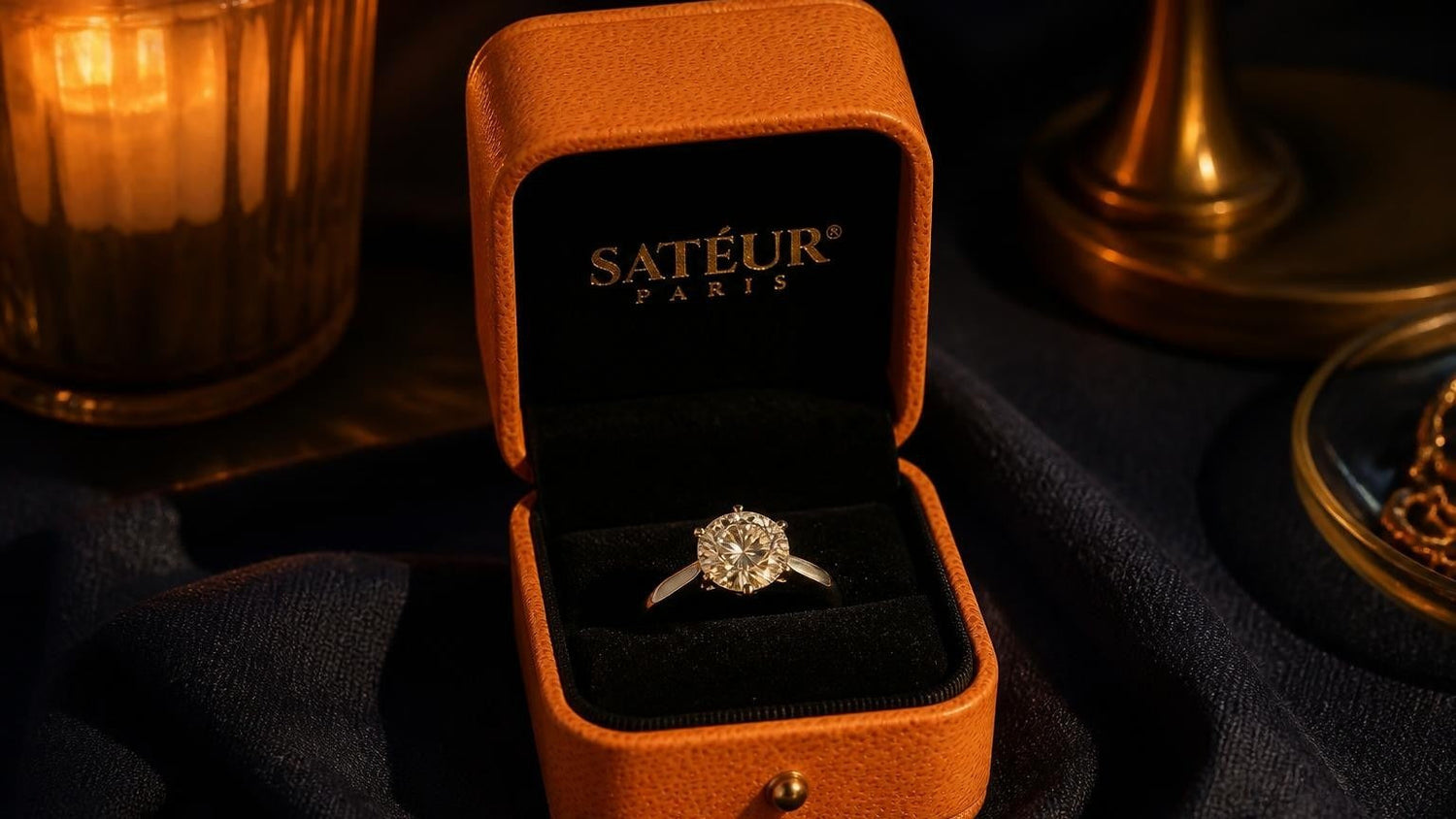
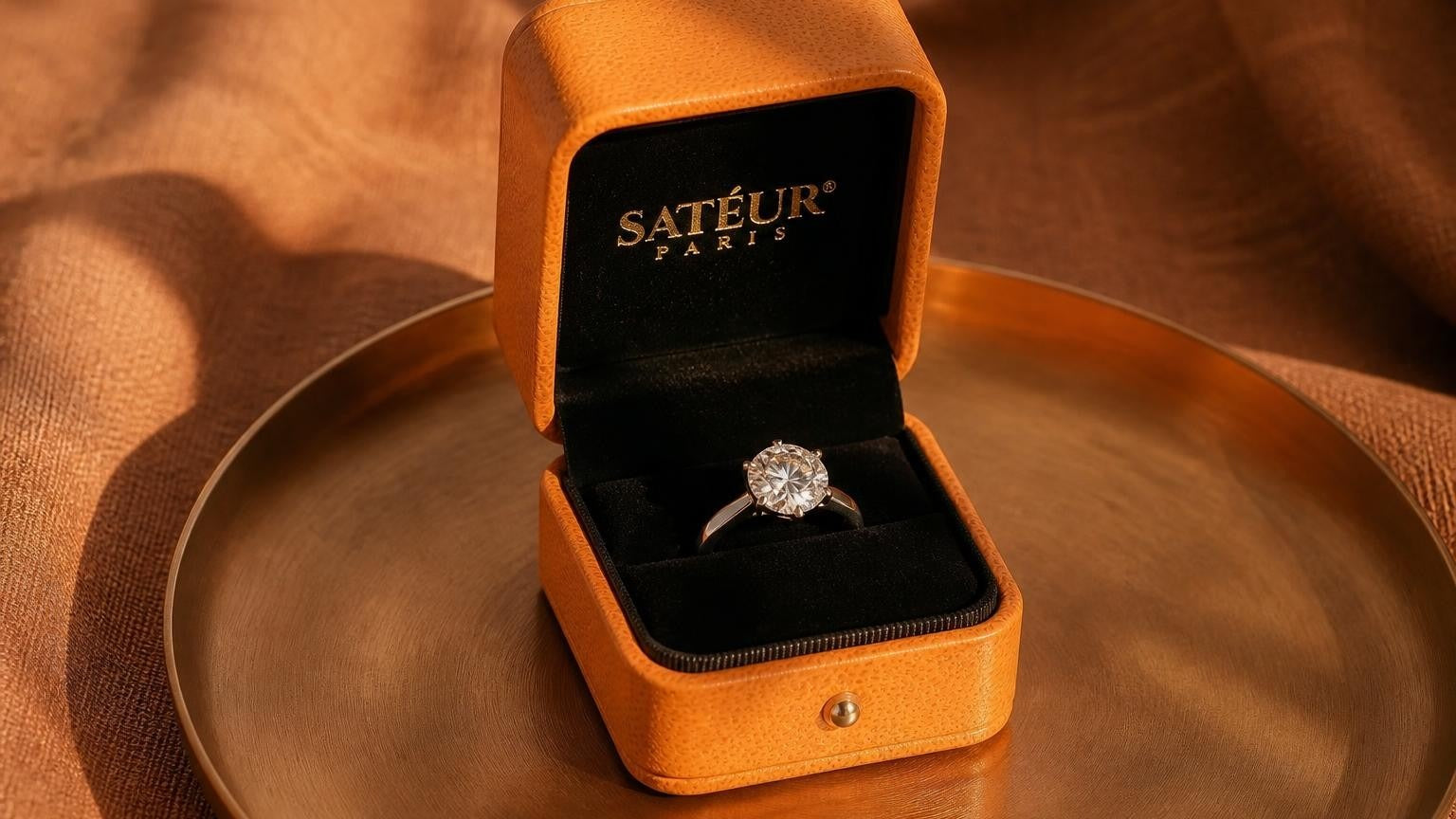
If you want the look of a flawless diamond without the mined-diamond price, Satéur's Destinée Ring™ — hand-set in an 18k white-gold finish, from $138 — is the most direct answer. This guide covers all three stones so you can make an informed choice.
Key Takeaways
- Moissanite rates 9.25 on the Mohs hardness scale; lab diamonds rate 10 — both exceed the durability needed for daily wear.
- Moissanite's refractive index produces approximately 2.4 times the fire of diamond — measurable, and noticeable under bright light.
- Lab diamonds are chemically identical to mined diamonds and can be IGI-certified; moissanite is a distinct lab-created gemstone with different optical properties.
- Modern moissanite is produced at D–E colour grades with Excellent cut quality, making colour differences minimal in most lighting.
- Satéur's moissanite collection starts from $138 — typically 60–70% below comparable lab diamond pricing for the same carat weight.

What Are Moissanite and Lab Diamonds?
Moissanite is a lab-created gemstone composed of silicon carbide. It was first discovered in 1893 in a meteorite crater; all commercial moissanite today is grown in controlled laboratory conditions. It is openly disclosed as a distinct gemstone — not a diamond, but a premium simulant prized for its exceptional hardness and extraordinary optical fire.
Lab diamonds are real diamonds. They share the same carbon crystal structure, chemical composition, and optical properties as mined diamonds — the only difference is origin. Grown in a laboratory using high-pressure high-temperature (HPHT) or chemical vapour deposition (CVD) processes, they can be independently graded and IGI-certified just like mined stones.
Mined diamonds are extracted from the earth and have been the traditional engagement ring stone for over a century. They carry rarity, heritage, and established resale markets — at a significantly higher price per carat.
Key Physical Differences
The physical differences between these three stones are well-documented and worth understanding before you buy.
| Property | Moissanite | Lab Diamond | Mined Diamond |
|---|---|---|---|
| Composition | Silicon carbide (SiC) | Carbon (same as mined) | Carbon |
| Mohs Hardness | ~9.25 | 10 | 10 |
| Refractive Index | 2.65–2.69 | 2.42 | 2.42 |
| Fire (dispersion) | 0.104 — ~2.4× diamond | 0.044 | 0.044 |
| Colour grade | D–E (modern) | D–Z (graded) | D–Z (graded) |
| Certification | Manufacturer certificate | IGI / GIA certifiable | GIA / IGI certifiable |
| Price per carat (approx.) | $300–$600 | $800–$2,000 | $4,000–$15,000+ |
Both moissanite and lab diamonds are fully suitable for everyday wear. The Mohs hardness difference (9.25 vs 10) is measurable but not meaningful for rings — neither stone scratches under normal conditions. The optical difference, however, is real: moissanite throws considerably more spectral fire, which some buyers find compelling and others find distinct from diamond.
Appearance and Sparkle
Lab diamonds and mined diamonds are optically identical — there is no visual difference with the naked eye. Both produce the crisp white brilliance that defines what most people picture when they think "diamond sparkle."

Moissanite's higher refractive index (2.65–2.69 vs 2.42) means it bends and disperses light more aggressively. The result is vivid rainbow spectral fire — particularly noticeable under direct lighting. In diffuse or candlelight settings, the difference is subtler. Modern D–E colour moissanite has essentially eliminated the faint yellow or grey tints that were common in earlier stones.
The practical question is personal taste: if you want maximum sparkle with a distinct rainbow quality, moissanite delivers it. If you want the precise optical signature of a diamond, a lab diamond matches it exactly at a fraction of the mined-diamond price.
Durability and Longevity
All three stones are well-suited to everyday wear, including engagement rings intended to be worn for decades.
- Moissanite (Mohs ~9.25) — the second-hardest gemstone used in jewellery, behind only diamond. It does not cloud, scratch, or degrade with time. For context, a kitchen knife scores around 5.5 on the Mohs scale.
- Lab diamond (Mohs 10) — the hardest natural material. Chemically identical to mined diamond in every durability measure.
- Mined diamond (Mohs 10) — the same durability as lab diamond. The hardness difference from moissanite is real but has no practical impact on daily wear.
For more detail on how moissanite holds up long-term, see our guide on lab diamond vs moissanite durability.

Price Comparison
Price is usually the deciding factor in the moissanite vs lab diamond debate. The differences are substantial.
- Mined diamonds — a one-carat round-cut mined diamond of decent quality starts around $4,000–$6,000 for the stone alone, before setting costs.
- Lab diamonds — typically 50–70% less than mined equivalents for the same carat, colour, and clarity. A one-carat lab diamond runs approximately $800–$2,000 depending on the grade.
- Moissanite — significantly less than lab diamonds for equivalent visual size. A one-carat equivalent moissanite typically costs $300–$600. Satéur's moissanite collection starts from $138 — see the moissanite ring collection.
For a side-by-side sparkle analysis, see lab diamond sparkle vs moissanite.

Satéur's Moissanite Value Proposition
Satéur's moissanite rings are hand-set in an 18k gold finish — available in white, yellow, or rose — at prices that start from $138. The stones are produced at D–E colour grades with Excellent cut quality, the same specifications used in premium moissanite jewellery sold at three to four times the price.
The comparison is straightforward: a one-carat mined diamond engagement ring typically costs $5,000–$10,000. A comparable Satéur moissanite ring delivers the same visible brilliance — and considerably more fire — for around 1–3% of that cost.
Compare at $10,000. From $138.
Browse the full moissanite ring collection or explore the moissanite vs lab-grown diamond guide for a deeper comparison.
Environmental and Ethical Considerations
Environmental and ethical questions have become central to the engagement ring decision for many buyers.
- Mined diamonds — extraction is energy-intensive and carries documented environmental and supply-chain concerns. Certifications such as the Kimberley Process exist but have acknowledged limitations.
- Lab diamonds — no mining involved. Energy-intensive production, though the footprint depends on the power source of the facility. Fully ethical in terms of supply chain.
- Moissanite — lab-created from silicon carbide. No mining, no supply chain opacity. Generally considered the most environmentally benign of the three.
Neither lab diamonds nor moissanite involve mining. The choice between them is primarily optical and financial, not ethical.
Which Stone Suits Your Needs?
There is no universally correct answer — the right choice depends on what you value.
- Choose mined diamond if certification, rarity, and established resale value are important, and budget is not the primary constraint.
- Choose lab diamond if you want a certified real diamond at a significantly lower price, with the identical optical properties of a mined stone.
- Choose moissanite if you want maximum sparkle, strong durability, and the best value — and you are comfortable with a gemstone that is distinct from diamond but visually brilliant in its own right.
For most buyers prioritising visual impact and value, moissanite is the rational choice. For buyers who specifically want a diamond — with its certification, resale market, and cultural weight — lab diamonds offer that at a much more accessible price than mined.
How to Choose Between Moissanite and Lab Diamonds
If you have narrowed to these two, the deciding questions are:
- Do you want certified diamond status? If yes, lab diamond. If the certification matters less than the visual result, moissanite.
- What is your budget? Moissanite is typically 60–70% below lab diamond for equivalent visual size. At the same carat weight, moissanite offers considerably more ring or setting for the money.
- How do you feel about fire? Moissanite has distinctly more spectral fire. In bright or direct light, it is noticeable. Most people find it attractive; a small group prefers diamond's more restrained white brilliance.
Either choice is a strong one. Both are durable enough for lifetime wear, ethically produced, and available in every cut and setting style.
Frequently Asked Questions
What is the main difference between moissanite and lab diamonds?
Moissanite and lab diamonds are different materials. Moissanite is a lab-created gemstone made from silicon carbide — it is not a diamond. Lab diamonds are real diamonds, chemically identical to mined diamonds, grown in a laboratory. The key practical differences are price (moissanite is typically 60–70% less), optical fire (moissanite produces approximately 2.4 times the spectral fire of diamond), and hardness (moissanite Mohs ~9.25, lab diamond 10 — both fully suitable for daily wear).
Is moissanite durable enough for an engagement ring?
Yes. Moissanite rates 9.25 on the Mohs hardness scale, making it the second-hardest gemstone commonly used in jewellery. It does not scratch, cloud, or degrade under normal conditions. Moissanite rings are routinely worn for decades without visible deterioration. The hardness difference from a lab or mined diamond (which rate 10) has no practical impact on everyday ring wear.
Will moissanite look noticeably different from a diamond to others?
To the naked eye in most settings, no — particularly with modern D–E colour moissanite. The main visible difference is fire: moissanite throws more vivid rainbow spectral colour under bright light, which most people find attractive. The shape, size, and overall brilliance of a moissanite ring are visually indistinguishable from a diamond ring across the table or in a photograph. The distinction is in optical character, not overall appearance.
How much can you save by choosing moissanite over a lab diamond?
Typically 60–70% for the same visual carat weight. A one-carat lab diamond runs approximately $800–$2,000 depending on grade; a comparable moissanite costs $300–$600. Satéur's moissanite rings start from $138, while lab diamond rings begin around $998. The savings are substantial — and can be applied to a higher-quality setting or a larger stone.
Do moissanite and lab diamonds require different care?
No meaningful difference. Both can be cleaned with mild soap and warm water, or ultrasonic cleaners. Both are hard enough to resist everyday scratching. Neither requires special storage or handling. Avoid harsh chemicals (bleach, chlorine) and extreme temperature shocks with either stone — standard care advice for all fine jewellery.
Which option is more ethical or environmentally responsible?
Both moissanite and lab diamonds avoid the environmental and supply-chain concerns associated with mining. Moissanite (silicon carbide) generally has a slightly lower production footprint than lab diamonds, which require significant energy for growth. Neither involves mining or the transparency limitations of the mined diamond supply chain. The ethical difference between the two is minimal — both are responsible choices compared to mined diamonds.
Satéur Destinée Ring™
The 1% Ring®

The look of a flawless diamond — from $138.
Hand-set in 18k gold finish. Free shipping. 30-day returns.
Shop the Destinée Ring™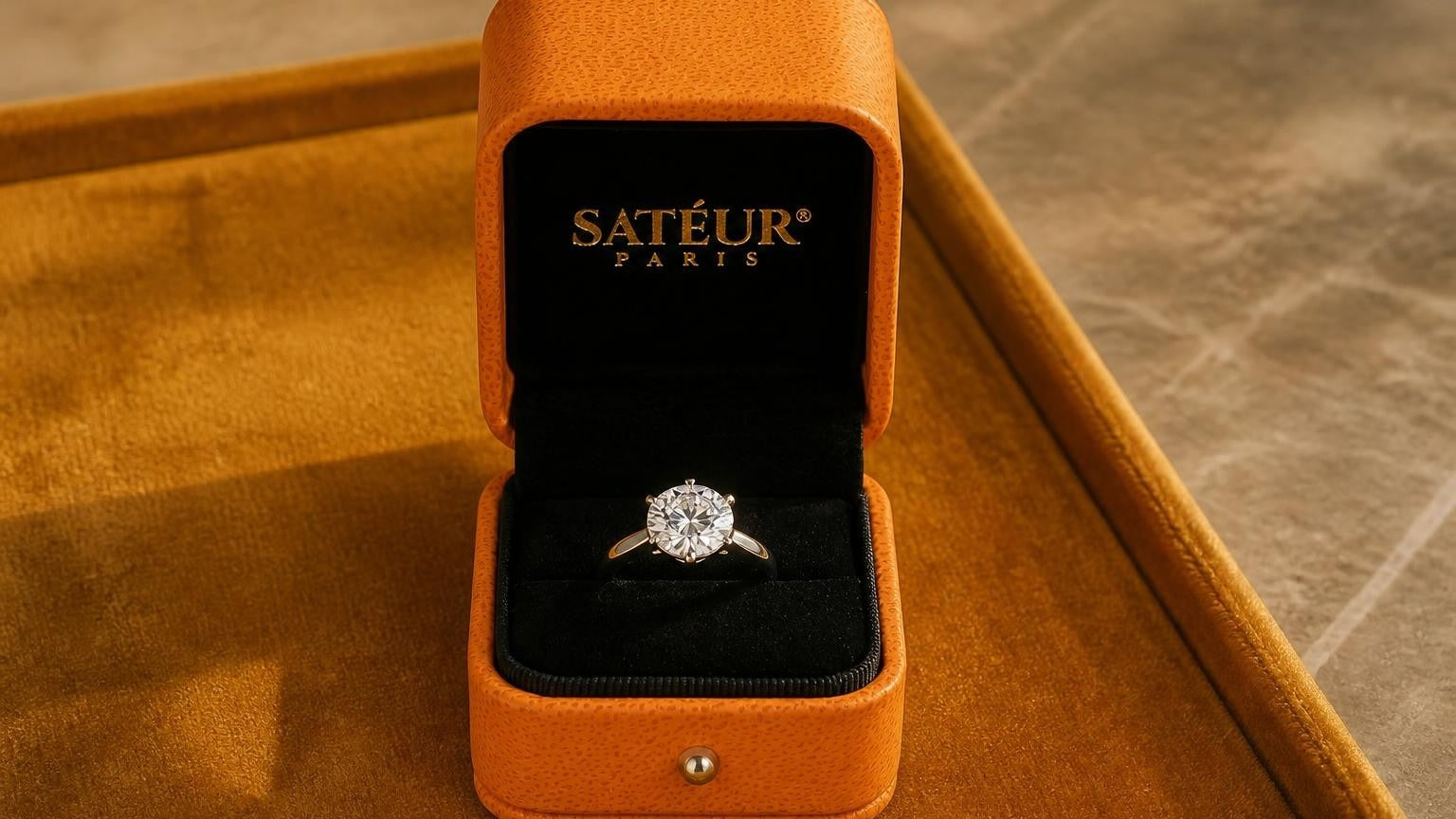















Leave a comment
This site is protected by hCaptcha and the hCaptcha Privacy Policy and Terms of Service apply.