

What Is a Simulated Diamond?
A simulated diamond — also called a diamond simulant — is a gemstone engineered to replicate the look of a mined diamond while being composed of a different material. It achieves the same colourless brilliance, the same cut proportions, and the same presence on the hand. What it does not share is the carbon composition, the mining history, or the price.
The category is broad. Cubic zirconia. Moissanite. Satéur Gems®. Each is a distinct material with its own optical properties, hardness, and price point. What they hold in common is a deliberate decision: to deliver the diamond look through a different, often superior, path.
Key Takeaways
- A simulated diamond looks like a diamond but is composed of a different material — it is not a lab-grown diamond.
- Premium simulants achieve D-E colour grades and Excellent optical cut profiles, matching the appearance of fine mined diamonds with the naked eye.
- Moissanite rates 9.25 on the Mohs scale — extremely durable for daily wear, including engagement rings.
- Cubic zirconia rates 8–8.5 Mohs and tends to cloud within a year or two of everyday wear.
- Simulants cost roughly 1% of equivalent mined diamond prices. Entry designs begin near $88.
- Satéur Gems® are engineered for diamond-accurate white brilliance — the closest visual match to a flawless mined diamond across the table.

Understanding Diamond Simulants
The phrase "simulated diamond" describes any gemstone designed to replicate the visual properties of a mined diamond. This is a deliberate design category — not a compromise or a counterfeit. A simulant is marketed honestly as what it is: a different material that achieves the same effect.
The three main simulant types in modern jewellery are cubic zirconia, moissanite, and trademarked proprietary gems — each engineered for a different balance of optical brilliance, durability, and value. Understanding what simulated diamond means in practice starts with separating these three categories clearly.
Cubic zirconia (CZ) is the most widely known simulant. It is a synthetic crystalline compound — zirconium dioxide — cut to diamond proportions. CZ delivers strong initial sparkle at very low cost. Its weakness is durability: at 8–8.5 Mohs, it scratches and clouds with daily wear, typically losing its brilliance within a year or two. CZ is the entry level of the simulant category.
Moissanite is a lab-created gemstone with significantly higher optical performance than CZ. Its fire dispersion is approximately 2.4 times that of a mined diamond — producing vivid, rainbow-forward flashes of colour that are visually distinct from the cleaner white brilliance of a diamond. Moissanite rates 9.25 on the Mohs scale. It is extremely durable, built for everyday wear, and holds its optical quality for the long term.
Satéur Gems® is a trademarked diamond simulant engineered specifically for diamond-accurate appearance. Where moissanite reads with vivid dispersion, Satéur Gems® delivers the restrained, clean white brilliance of a flawless diamond — the precise quality that makes a gem read as a diamond across the table and to the naked eye. The composition of Satéur Gems® is proprietary.
How Simulants Differ from Mined Diamonds
Mined diamonds are composed of carbon, formed under extreme pressure over millions of years. Their value has been shaped by artificial scarcity — a market construct, not an optical one. A simulant shares none of that geological history and none of that inflated pricing. What it shares is the look.
The key physical differences are material composition, hardness, and optical signature. The table below maps these clearly.
| Property | Mined Diamond | Satéur Gems® | Moissanite | Cubic Zirconia |
|---|---|---|---|---|
| Composition | Carbon | Proprietary (trademarked) | Silicon carbide (lab-created) | Zirconium dioxide (synthetic) |
| Colour grade | D–Z range | D–E (colourless) | D–E (colourless) | Variable |
| Mohs hardness | 10 | ~8.8 | 9.25 | 8–8.5 |
| Optical signature | White brilliance | Diamond-accurate white brilliance | High fire, rainbow dispersion | Moderate sparkle |
| Long-term clarity | Permanent | Excellent | Excellent | Clouds with wear |
| Cost vs mined | — | ~1% | ~1–3% | <1% |
It is also worth noting what simulants are not. A simulated diamond is not a lab-grown diamond. A lab-grown diamond shares the same carbon composition as a mined diamond — it is chemically and structurally identical, grown in a controlled environment. Simulants are a separate category: different material, similar look. For a full breakdown of that distinction, see what the different names for diamond alternatives actually mean.

Satéur Gems®: Specs and Naked-Eye Appearance
Satéur Gems® is a trademarked diamond simulant engineered around one specific goal: the look of a flawless diamond, as seen with the naked eye in any normal setting. Not vivid rainbow fire. Not technical similarity. The precise, quiet white brilliance that makes a diamond read as a diamond.
The key specifications: a D-E colour grade, an Excellent cut profile, and a refractive index of approximately 2.39 — calibrated to deliver diamond-accurate light return without the heightened dispersion that would distinguish it from a natural stone visually. The result is a gem that is visually indistinguishable from a flawless mined diamond with the naked eye.
Satéur Gems® rate approximately 8.8 on the Mohs hardness scale — sufficient for confident daily wear, including as an engagement ring. This positions them well above cubic zirconia, which clouds and scratches with everyday use, while occupying a distinct tier from moissanite's higher dispersion.
The composition of Satéur Gems® is proprietary. This is intentional. The Maison chose to focus the conversation on what matters: how the gem performs optically, and what it costs to wear one. Both answers are compelling on their own terms.

Durability and Daily Wear Performance
One of the most common questions about simulated diamonds concerns longevity. Will they hold up? The answer depends entirely on which simulant you are considering.
Cubic zirconia is the weakest performer by a significant margin. At 8–8.5 Mohs, it scratches from everyday contact — keys, surfaces, other metals — and its surface clouds over time as micro-abrasions accumulate. Most CZ pieces lose meaningful brilliance within one to two years of daily wear. For an occasional piece, this is manageable. For a ring worn every day, it is a real limitation.
Moissanite is a different category entirely. At 9.25 Mohs, it is the second hardest gemstone material available. It resists scratching effectively across years of daily use and retains its optical clarity without clouding. For those who prioritise durability alongside a vivid, high-fire sparkle, moissanite performs at the highest level. Satéur's moissanite collection draws only from top-grade lab-created batches.
Satéur Gems® rate approximately 8.8 Mohs — extremely durable by any practical standard, built for the same everyday confidence as moissanite. Both Satéur Gems® and moissanite hold their brilliance for years without intervention. The distinction between them is optical character, not durability class.
For long-term ownership — a ring worn daily for a decade — either Satéur Gems® or moissanite performs reliably. Cubic zirconia does not reach that standard.
The Value Proposition: Cost and Beauty
The economic argument for simulants is direct: they cost roughly 1% of an equivalent mined diamond. A 1-carat mined diamond of comparable colour and cut averages $5,000–$10,000 on the open market. The Satéur Destinée Ring™ — a 1.00-carat round cut Satéur Gems® in 18k gold finish — begins at a fraction of that. Entry designs start near $88.
This is not a compromise. It is a recalibration. The industry built its pricing on scarcity that no longer exists and heritage that no longer holds the weight it once did. The diamond's value was always optical — the light, the weight, the presence on the hand. A well-crafted simulant delivers all three.
The New Diamond Standard is not a lower standard. It is a smarter one. Over 100,000 customers across 150 countries have made this calculation and arrived at the same answer.

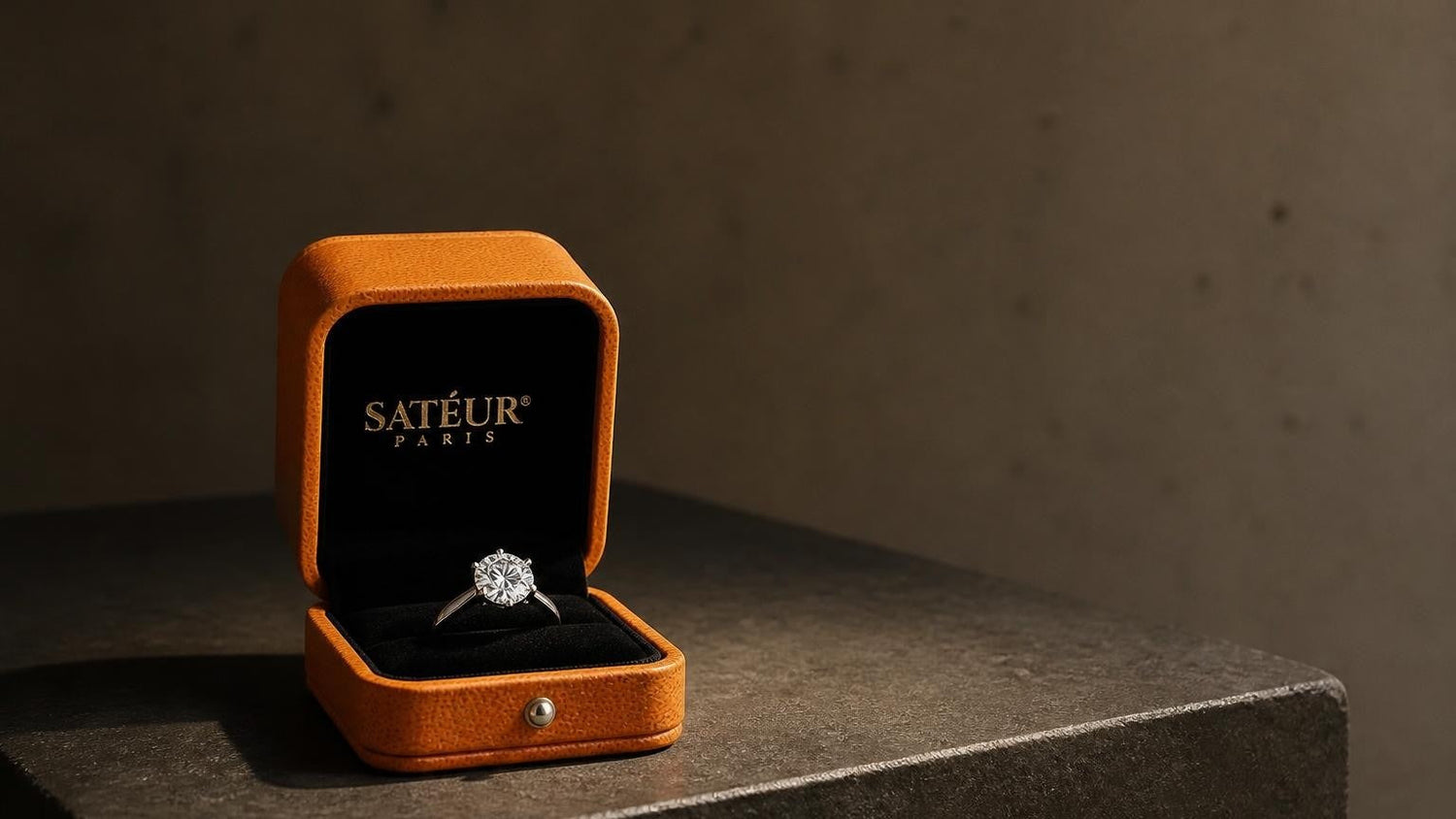
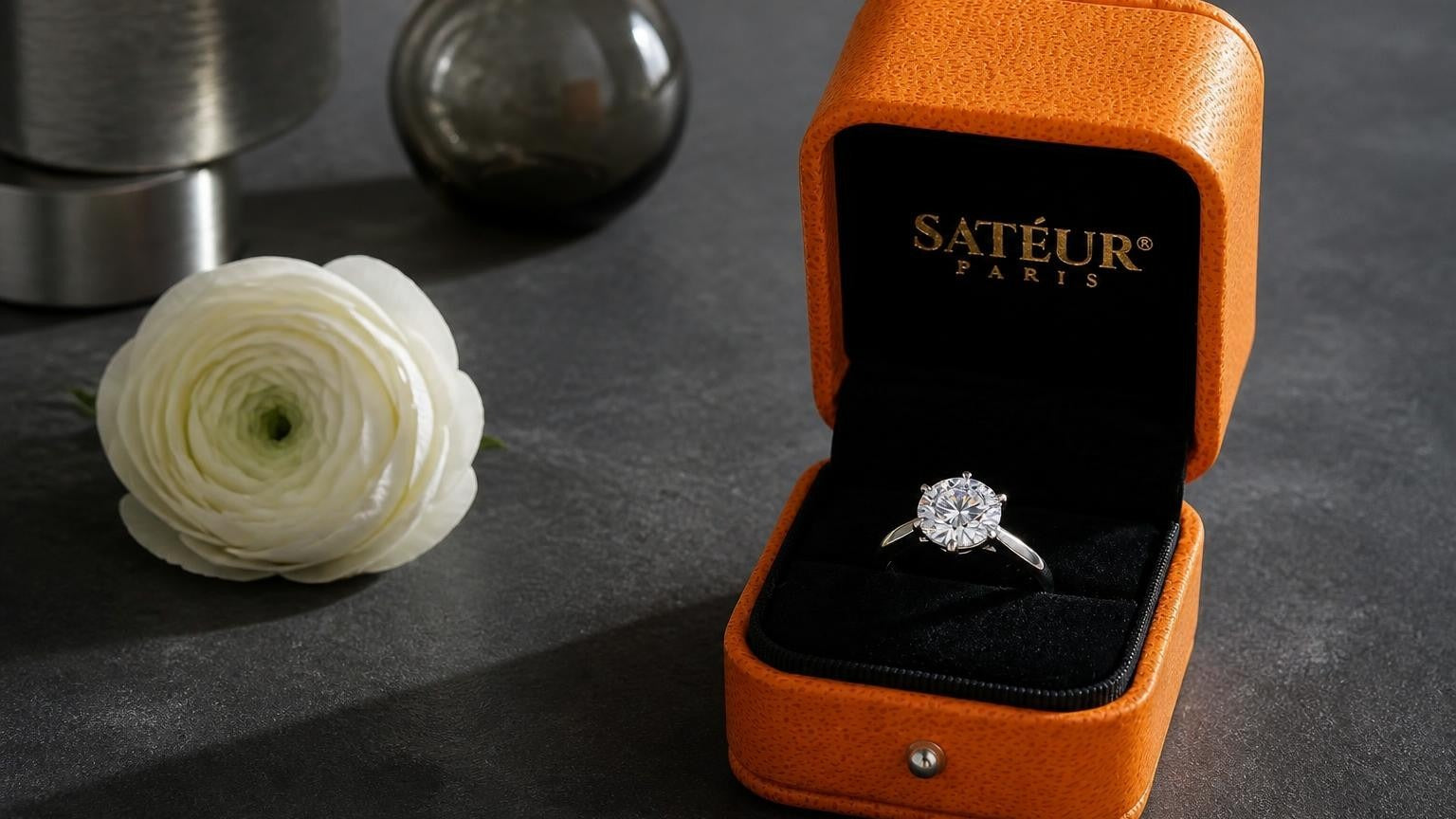
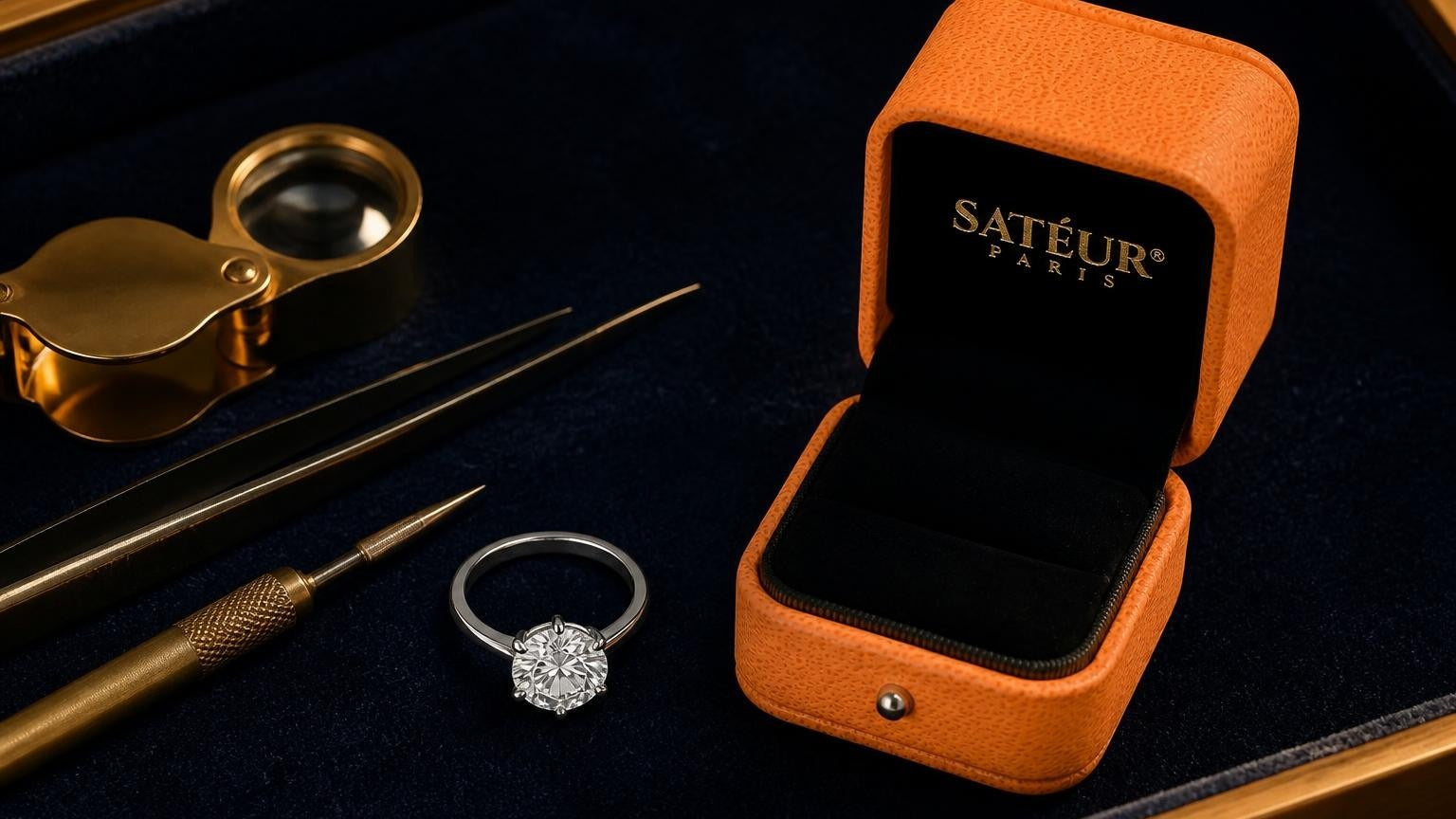
Satéur Destinée Ring™
The look of a flawless diamond — hand-set in 18k gold, from $138.
Compare to a $10,000 mined diamond
Joined by 100,000+ couples across 150+ countries.
Shop Destinée RingFree worldwide shipping · 30-day returns · Lifetime Satéur Care
Frequently Asked Questions
What is the visual difference between a simulant and a mined diamond?
With the naked eye, a high-quality simulant is visually indistinguishable from a mined diamond. Both achieve D-E colour grades and Excellent optical cut profiles. The difference lies in material composition, not in everyday appearance. Satéur Gems® are specifically engineered to replicate the clean, white brilliance of a flawless diamond — the look that matters in any setting.
Are diamond simulants durable enough for engagement rings?
Yes. Premium simulants — including Satéur Gems® and moissanite — are extremely durable and built for everyday wear, including engagement rings. Satéur Gems® rate approximately 8.8 on the Mohs scale; our moissanite rates 9.25. Both hold their brilliance for years without clouding or fading. Cubic zirconia, by contrast, rates 8–8.5 Mohs and tends to cloud within a year or two.
What does 'D-E colour' mean for a simulant gemstone?
D and E are the two highest colour grades in the GIA diamond grading scale, indicating a perfectly colourless appearance. When a simulant achieves a D-E colour profile, it delivers the same colourless, icy-white appearance as the finest mined diamonds — with no visible warmth or tint even in direct light.
How do simulants compare in price to natural diamonds?
Simulants cost roughly 1% of equivalent mined diamond prices. A 1-carat mined diamond averages $5,000–$10,000. The Satéur Destinée Ring™ — a 1.00 carat Satéur Gems® in 18k gold finish — begins at a fraction of that, starting near $88 for entry designs. The look is comparable. The cost is not.
Can a simulant hold its clarity and brilliance long-term?
Premium simulants can maintain their appearance for five or more years with standard care. Satéur Gems® and moissanite both retain their brilliance and clarity over time. Cubic zirconia is the exception — it is softer and more prone to surface scratches that diminish sparkle within a year or two of daily wear.
What design styles work best with simulant gemstones?
Simulants work across every design register. Classic solitaire settings — round, oval, and cushion cuts — are the most popular because they maximise brilliance and mirror the look of traditional diamond rings. Halo and pavé settings amplify the presence. At Satéur, the Destinée solitaire, the Royale statement piece, and the full Eiffel Tower collection are each designed to carry a simulant gemstone with the same visual authority as fine diamond jewellery.
The decision to choose a simulated diamond is not a retreat from beauty. It is a restatement of what beauty actually requires. The light does not know the difference. Neither does anyone across the table. What changes is the number you do not have to say out loud.















留下評論
此網站已受到 hCaptcha 保護,且適用 hCaptcha 隱私政策以及服務條款。