

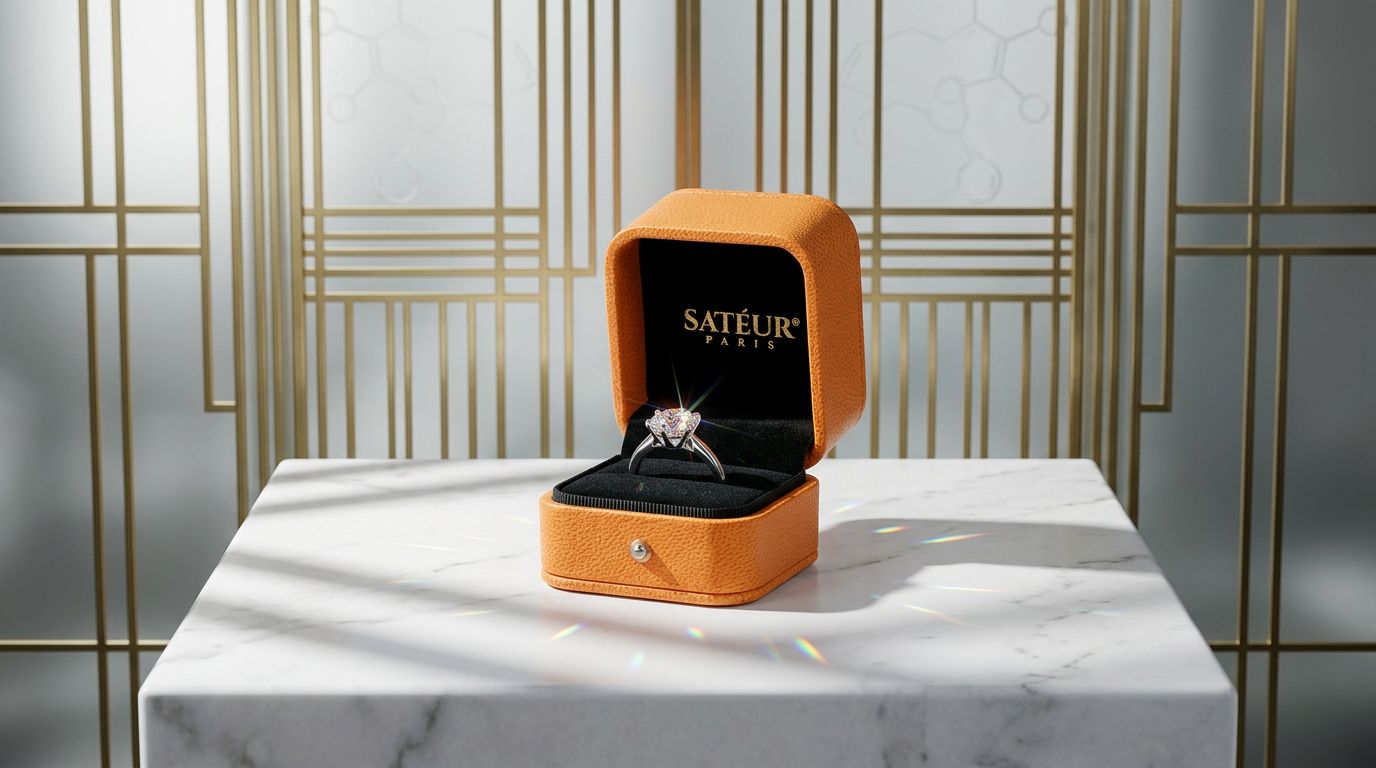
Moissanite Engagement Ring: The Complete Buying Guide
For a century, the engagement ring was a fixed equation: diamond or nothing. The result was not tradition. It was marketing.
In 1947, De Beers invented the two-month salary rule. By 1980, it was three months. The price climbed. The stone remained the same.
Moissanite engagement rings represent the first serious challenge to this mythology. Not because they cost less. Because they reflect intelligence. A gem with higher fire than diamond, hardness suitable for generations, and zero ethical compromise. What is moissanite? It is a distinct gemstone—silicon carbide—discovered in a meteor crater and now perfected in laboratories.

This guide will walk you through everything you need to know: cut selection, quality grading, setting styles, and how to choose a ring that reflects both your taste and your discernment. How does moissanite compare to diamond? The answer lies not in beauty, but in origin and value.
Quick Summary: What You Need to Know
| Brilliance | Higher refractive index than diamond (2.65 vs 2.42) |
| Hardness | 9.25+ on Mohs scale — suitable for daily wear |
| Price Range | Starting from $200 for 1-carat equivalent |
| Best Cuts | Round, oval, cushion — maximize fire and brilliance |
| Top Settings | Solitaire, halo, three-stone, pavé band |
| Certification | GRA or independent laboratory report recommended |
Why Moissanite Engagement Rings Are Rewriting the Rules
The traditional engagement ring narrative was built on a 20th-century marketing campaign. The result: a generation convinced that love must be measured in carats and debt.
Moissanite disrupts this equation entirely. Discovered in a meteor crater in 1893 by French chemist Henri Moissan, natural moissanite is extraordinarily rare—so rare that every moissanite engagement ring today is laboratory-created. Not as a substitute. As an evolution.
The Moissan Legacy
Henri Moissan won the Nobel Prize in Chemistry in 1906—not for moissanite, but for isolating fluorine. The gemstone that now bears his name was an accidental discovery: microscopic crystals in an Arizona meteor crater, initially mistaken for diamond. Today's laboratory-created moissanite honors that discovery with controlled perfection—eliminating the inclusions and color variations found in mined stones.
What you gain: a gem with more fire, more brilliance, and zero ethical ambiguity. What you lose: nothing that matters. Moissanite durability rivals diamond for daily wear.
Step 1: Understanding Moissanite Quality Grades
Not all moissanite is created equal. Quality varies by manufacturer, cutting precision, and color grade. Here is what separates the exceptional from the adequate.
Color Grading
Colorless (D-E-F equivalent): The premium tier. Visually identical to a colorless diamond under all lighting conditions. This is what Sateur sources—top 0.1% ultra-premium moissanite with zero detectable tint.
Near-Colorless (G-H-I equivalent): Slight warmth visible only when compared side-by-side with colorless stones. Still beautiful. Still brilliant.
Faint Color (J-K): Noticeable warmth in certain lighting. Avoid unless you specifically prefer vintage-style warmth.
Clarity Standards
Unlike diamonds, moissanite is grown in controlled laboratory environments. The result: near-flawless clarity is the standard, not the exception. Look for stones graded VVS or higher. Inclusions in moissanite are rare and typically microscopic.
Cut Precision
This is where brilliance lives or dies. A poorly cut moissanite—no matter how colorless—will lack fire. Demand excellent or ideal cut grades. The facet alignment must be precise. The proportions must maximize light return.
Sateur moissanite is hand-selected from flawless laboratory-grown batches and cut to 58-facet standards. Every stone is inspected for symmetry, polish, and optical performance before it earns the name.
Step 2: Choosing the Right Cut for Maximum Impact
The cut determines how light moves through the stone. Moissanite's high refractive index (2.65) means it naturally produces more fire than a diamond. Certain cuts amplify this effect. Others soften it.
Round Brilliant: The Classic
The most enduring cut. 58 facets engineered for maximum brilliance. Works in every setting style. Timeless. Versatile. Always appropriate.
Best for: Traditional elegance, solitaire settings, those who want a ring that never feels dated.
Learn more about choosing the perfect carat size for a round moissanite ring.
Oval: The Elongating Statement
An oval moissanite engagement ring offers the brilliance of a round with a more distinctive silhouette. The elongated shape creates the illusion of longer, more elegant fingers. Modern without being trendy.
Best for: Those who want presence without excess, rings that photograph beautifully, brides seeking a balance between classic and contemporary.
Cushion: Soft Geometry, Serious Sparkle
Rounded corners. Large facets. A pillow-like appearance that softens moissanite's intense fire into a warmer glow. Pairs beautifully with halo settings and vintage-inspired bands.
Best for: Romantic aesthetics, vintage lovers, those who prefer a softer sparkle profile.
Discover the appeal of cushion cut moissanite rings.
Emerald: Architectural Elegance
Step-cut facets create a hall-of-mirrors effect. Less fire, more clarity. The emerald cut is for those who value restraint over spectacle. It demands a high-quality stone—every inclusion is visible.
Best for: Minimalists, Art Deco enthusiasts, those who appreciate architectural precision.
Pear, Marquise, Radiant: The Statement Cuts
These cuts make an entrance. Pear and marquise both elongate the finger dramatically. Radiant cuts combine the brilliance of a round with the geometry of an emerald. All three demand confident style.
Best for: Bold personalities, fashion-forward brides, those who want a ring that starts conversations.
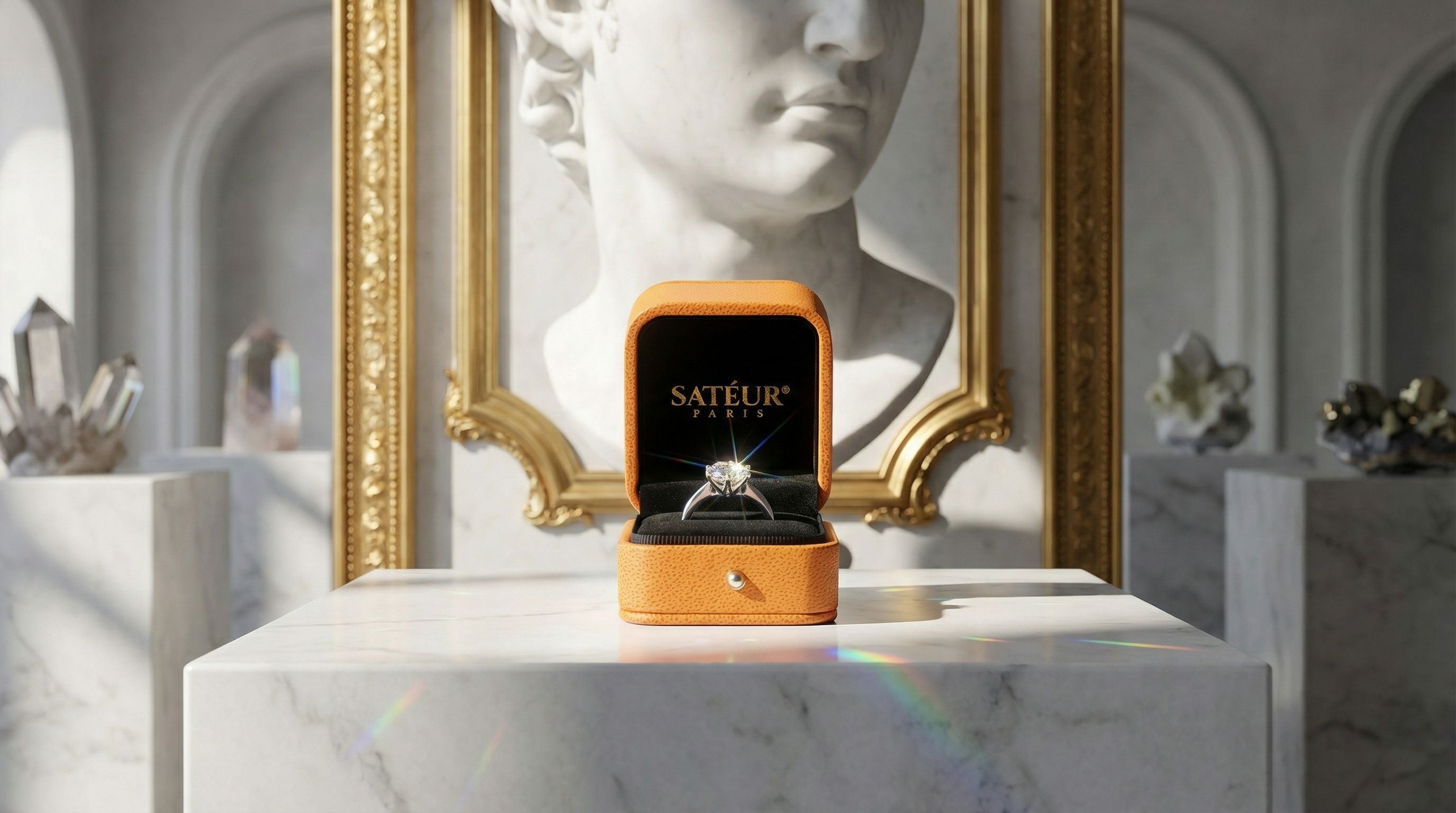
Satéur Destinée Ring™
The No.1 best seller—timeless 6-prong classic design with a brilliant center gem up to 5 carats. The presence of a $10,000 diamond. The intelligence of The 1% Ring. Available in Sateur Gems, Moissanite, and Lab Diamond.
Explore the collectionStep 3: Selecting the Right Setting Style
The setting is the architecture. The stone is the art. Together, they create presence.
Solitaire: Minimal Setting, Maximum Impact
A single stone. Four or six prongs. Nothing else. The moissanite solitaire ring is the purest expression of the gem itself. No distractions. No embellishments. Just brilliance.
This setting works best with high-quality moissanite—colorless, excellent cut, VVS clarity. When the stone is the only element, it must be exceptional.
Halo: Amplified Presence
A center stone surrounded by a ring of smaller accent stones. The halo setting makes the center gem appear larger while adding vintage-inspired detail. Works beautifully with round, oval, and cushion cuts.
Best for: Those who want maximum visual impact, vintage aesthetics, rings that photograph dramatically.
Three-Stone: Symbolic Storytelling
Past, present, future. The three-stone setting carries narrative weight. The center stone is flanked by two smaller gems—often in complementary shapes. Balanced. Meaningful. Timeless.
Best for: Couples who value symbolism, those seeking a setting with built-in story, designs that feel substantial without being oversized.
Pavé Band: Continuous Sparkle
Small moissanite stones set along the band. The result: a ring that catches light from every angle. Pairs well with any center stone cut. Adds texture and brilliance without overwhelming the primary gem.
Best for: Those who want a ring that feels complete, designs that transition seamlessly into wedding band stacking, maximum sparkle per square inch.
Bezel: Modern Protection
The stone is encircled by a metal rim. Sleek. Secure. Contemporary. The bezel setting is ideal for active lifestyles—it protects the stone from impact while creating a clean, minimalist silhouette.
Best for: Minimalists, those with active lifestyles, modern aesthetics.

Step 4: Understanding Moissanite Pricing
Traditional diamond engagement rings average $5,500–$7,500. The same presence, the same brilliance—reimagined through intelligence.
| Carat Equivalent | Moissanite | Comparable Diamond |
|---|---|---|
| 1 Carat | Starting from $200 | $4,000–$6,000 |
| 2 Carats | Starting from $400 | $12,000–$18,000 |
| 3 Carats | Starting from $600 | $25,000–$40,000 |
| 4 Carats | Starting from $800 | $45,000–$70,000 |
| 5 Carats | Starting from $1,000 | $75,000–$120,000 |
The price difference is not about quality. It is about supply chain. Diamonds are controlled by a cartel that has spent a century building artificial scarcity. Moissanite is crafted in laboratories with no mining costs, no middlemen, no markup mythology.
What you pay for: the gem, the craftsmanship, the setting. What you do not pay for: the brand tax, the cartel premium, the legacy of inflated pricing.
Learn the full breakdown in our guide to moissanite price per carat.
Step 5: Choosing the Right Carat Size
Carat size is personal. It is also contextual. What feels balanced on one hand may feel oversized on another. What photographs beautifully may feel impractical for daily wear.
1 Carat: The Classic Starting Point
A 1 carat moissanite ring offers presence without spectacle. It is the size most people expect when they picture an engagement ring. Versatile. Proportional. Always appropriate.
Best for: Those seeking a timeless look, rings that work in all contexts.
2 Carats: The Sweet Spot
A 2 carat moissanite ring is where presence becomes undeniable. Large enough to make a statement. Not so large it feels costume. This is the size range where moissanite's value proposition shines brightest.
Best for: Those who want a ring that commands attention, couples upgrading from a smaller stone.
3+ Carats: Statement Territory
A 3 carat moissanite ring enters statement territory. This is a ring that announces itself. It requires confidence to wear and style to carry. In a diamond, this size would cost a down payment. In moissanite, it remains accessible.
Best for: Bold personalities, those who want a ring that starts conversations, anyone who refuses to compromise on size.
Explore larger sizes: 4 carat moissanite rings and 5 carat moissanite rings.
Step 6: Metal Selection
The metal is the frame. It must complement the stone without competing with it. Your lifestyle determines your metal.
Platinum: The Purist's Choice
Dense. Durable. Naturally white. Platinum does not tarnish or fade. It is the most enduring metal option. Over decades, platinum develops a patina that many consider desirable.
Best for: Those who want a ring that lasts generations, minimalists who value purity, anyone with metal sensitivities.
White Gold: Classic Elegance
White gold (14K or 18K) offers the look of platinum at a different price point. It is rhodium-plated to achieve its bright white finish. The plating will wear over time and require occasional re-plating—a simple process.
Best for: Traditional aesthetics, those seeking a balance between cost and durability, classic solitaire settings.
Yellow Gold: Warm Sophistication
Yellow gold has returned. What once felt dated now feels intentional. It pairs beautifully with colorless moissanite, creating warmth without compromising the stone's brilliance.
Best for: Vintage-inspired designs, those with warm skin tones, anyone seeking a ring that feels both classic and current.
Rose Gold: Modern Romance
Rose gold is an alloy of gold and copper. The result: a warm, pinkish hue that has become synonymous with modern romance. It pairs beautifully with moissanite's fire, softening the intensity into something warmer.
Best for: Romantic aesthetics, those who want a ring that feels contemporary, designs that photograph beautifully.
Lifestyle Context: If you work with your hands, choose platinum or 14K gold. If you prioritize patina and heritage, choose platinum. If you want warmth and vintage resonance, choose yellow or rose gold. The metal is not decoration. It is architecture.
Step 7: Certification and Quality Assurance
Certification matters. It is the difference between a promise and a guarantee.
Look for moissanite certified by GRA (Gemological Research Association) or an independent gemological laboratory. The certificate should include:
- Color grade (D-E-F for colorless)
- Clarity grade (VVS or higher)
- Cut grade (Excellent or Ideal)
- Carat weight equivalent
- Dimensions and proportions
A GRA certified moissanite ring provides documentation that the stone meets the quality standards promised. It is also useful for insurance purposes.
Sateur provides full transparency on every stone. Certification is not an upsell. It is standard.
Step 8: Matching Your Engagement Ring to a Wedding Band
The engagement ring is the statement. The wedding band is the complement. Together, they should feel intentional.
Classic Pairing: Solitaire + Plain Band
A solitaire engagement ring paired with a simple metal band. Clean. Timeless. The wedding band does not compete—it frames.
Stacking: Engagement Ring + Pavé Band
A pavé or channel-set moissanite wedding band adds continuous sparkle without overwhelming the center stone. This pairing works beautifully with round, oval, and cushion cuts.
Matching Sets: Pre-Coordinated Harmony
Some prefer to purchase the engagement ring and wedding band as a set. The bands are designed to fit together perfectly—no gaps, no misalignment. This approach ensures visual continuity.
Discover moissanite engagement ring sets that simplify the decision.
Eternity Bands: Maximum Brilliance
A moissanite eternity band features stones set all the way around the band. It is a bold choice—one that creates a ring stack with uninterrupted sparkle.
Step 9: Where to Buy Moissanite Engagement Rings
The purchase location determines the experience. Online offers selection and transparency. In-person offers tactile assurance.
Online: Selection and Transparency
Purchasing a moissanite engagement ring online provides access to the widest selection, detailed specifications, and transparent pricing. Look for brands that offer:
- High-resolution photography and 360° video
- Full certification and gemological reports
- Transparent return policies (30+ days)
- Lifetime warranties on craftsmanship
- Customer reviews with verified purchases
Sateur offers all of the above. Over 100,000 customers across 150+ countries have chosen to purchase online—not because it is convenient, but because it is transparent.
In-Person: Tactile Confirmation
Some prefer to see the stone in person before committing. If you are considering an in-person purchase, research retailers who specialize in moissanite—not those who treat it as an afterthought.
Read our guide on where to buy moissanite rings in person.
Common Mistakes to Avoid
Choosing size over quality. A poorly cut 3-carat moissanite will never outshine a well-cut 1-carat stone. Prioritize cut grade, then size.
Ignoring metal durability. If you lead an active lifestyle, choose platinum or 14K gold. Softer metals will show wear faster.
Overlooking certification. A certificate is not optional. It is proof that the stone meets the quality standards you are paying for.
Skipping the ring size confirmation. Order a ring sizer or visit a jeweler to confirm your exact size. Resizing is possible, but it is easier to get it right the first time.
Choosing a setting that does not suit your lifestyle. A high-set solitaire may catch on clothing. A bezel or low-profile setting may be more practical for daily wear.
Moissanite vs. Other Gemstones: A Quick Comparison
Sateur Gems represent our proprietary top 1% selection—58-facet stones with D-F color equivalent and exceptional fire. Below, we compare moissanite, diamond, and Sateur Gems across key performance metrics.
| Property | Moissanite | Diamond | Sateur Gem |
|---|---|---|---|
| Brilliance (Refractive Index) | 2.65 | 2.42 | 2.42 |
| Fire (Dispersion) | 0.104 (Higher) | 0.044 | 0.044 |
| Hardness (Mohs Scale) | 9.25 | 10 | 8.5 |
| Durability | Excellent for daily wear | Excellent for daily wear | Excellent for daily wear |
| Price (1 carat equivalent) | Starting from $200 | $4,000–$6,000 | Starting at 1% of diamond price |
| Ethical Sourcing | Laboratory-created | Varies (mined or laboratory) | Laboratory-crafted |
| Certification | GRA or independent laboratory | GIA, IGI, AGS | Certified |
Moissanite offers higher fire than a diamond due to its dispersion rate. It is also more accessible by an order of magnitude. The trade-off: slightly lower hardness (9.25 vs 10)—a difference imperceptible in daily wear.
For a deeper analysis, read our comparison on moissanite vs diamond durability.
The Sateur Standard
Sateur does not sell moissanite engagement rings. We curate them.
Every stone is hand-selected from the top 0.1% of laboratory-grown batches. Every setting is designed to maximize optical performance. Every ring is inspected for symmetry, polish, and presence before it earns the Sateur name.
We do not compete on price. We compete on discernment.
The Destinée Ring™—our signature design—has become the No.1 best seller not because it is the least expensive option, but because it is the most considered one. Timeless 6-prong design. Brilliant center gem up to 5 carats. Available in Sateur Gems, Moissanite, and Lab Diamond.
Explore the full Sateur Moissanite Collection.
Your Moissanite Engagement Ring Checklist
- ☐ Determine budget and carat size
- ☐ Choose cut based on personal style (round, oval, cushion, emerald, pear, marquise, radiant)
- ☐ Select setting style (solitaire, halo, three-stone, pavé, bezel)
- ☐ Choose metal (platinum, white gold, yellow gold, rose gold)
- ☐ Verify certification (GRA or independent laboratory)
- ☐ Confirm ring size
- ☐ Review return policy and warranty
- ☐ Consider wedding band pairing
Final Considerations
A moissanite engagement ring is not compromise. It is clarity.
The questions to ask yourself:
- What cut reflects my personal style?
- What carat size feels proportional to my hand and lifestyle?
- What setting will I still value in 20 years?
- Does the certification match the quality promised?
- Does the brand demonstrate transparency and craftsmanship?
The right ring is not the most expensive one. It is not the trendiest one. It is the one that reflects your values, your aesthetic, and your refusal to confuse luxury with debt.
This is how intelligent engagement begins. Explore the complete moissanite engagement ring buying guide.

Frequently Asked Questions
Is moissanite a good choice for an engagement ring?
Yes. Moissanite offers brilliance that rivals a diamond, hardness suitable for daily wear (9.25 on the Mohs scale), and ethical sourcing through laboratory creation. It is a choice based on intelligence, not compromise.
How much should I spend on a moissanite engagement ring?
Moissanite engagement rings start from $200 for a 1-carat equivalent. The price depends on carat size, setting complexity, and metal choice. Unlike diamonds, the price is not inflated by artificial scarcity.
What is the best cut for a moissanite engagement ring?
Round brilliant is the most enduring for maximum sparkle. Oval offers elongation and modern elegance. Cushion provides vintage-inspired warmth. Emerald suits minimalists. The best cut is the one that matches your aesthetic and lifestyle.
Will moissanite last as long as a diamond?
Yes. Moissanite is one of the hardest gemstones (9.25 on the Mohs scale, just below diamond at 10). It resists scratching, chipping, and clouding. With proper care, a moissanite engagement ring will last a lifetime. Read more about moissanite vs diamond durability.
Can you tell the difference between moissanite and diamond?
To the naked eye, a high-quality colorless moissanite is visually identical to a diamond. Moissanite has slightly more fire (rainbow sparkle) due to its higher refractive index. A trained gemologist can distinguish them under magnification, but in daily wear, the difference is imperceptible.
Will people think my moissanite ring is fake?
Moissanite is not fake. It is a distinct gemstone with its own chemical composition (silicon carbide) and optical properties. To the naked eye, a high-quality colorless moissanite is visually identical to a diamond—often more brilliant due to its higher refractive index. The question is not whether it looks real. The question is whether you value substance over status.
What are the best moissanite brands?
Look for brands that offer GRA certification, transparent sourcing, and top 0.1% quality selection. The best moissanite stones are colorless (D-F), VVS clarity, and excellent cut grade. Sateur curates only the top tier.
Luxury is not what you pay. It is what you choose. Explore The 1% Ring collection.














留下評論
此網站已受到 hCaptcha 保護,且適用 hCaptcha 隱私政策以及服務條款。