

What Knee Do You Propose On?
You propose on the left knee — the left knee touches the ground. That is the answer, and it has been consistent across Western tradition for centuries. The right knee follows from it: it stays raised, bearing your weight, keeping you steady and present in the moment.
But there is more to a proposal than anatomy. The history behind the left-knee rule, the mechanics of getting on one knee without fumbling, which hand holds the ring box — these are the details that separate a rushed gesture from one that feels inevitable. For everything that comes before and after — planning the words, choosing the setting — see the full guide on how to propose.
Key Takeaways
- The left knee goes to the ground. The right knee stays raised.
- The tradition traces to medieval knighthood and pledges of loyalty — not religious ceremony.
- Hold the ring box in your left hand; open the lid with your right.
- Proposing on the wrong knee does not invalidate a proposal — sincerity outranks convention.
- If kneeling is physically difficult, standing or sitting is entirely appropriate.
- The ring matters more than the knee. Choose it with the same care you bring to the moment.

The Quick Answer: The Left Knee
Left knee to the ground. Right knee raised. That is the standard posture for a marriage proposal across virtually every Western tradition. If you have seen a proposal — in a film, in a photograph, in person — this is almost certainly what it looked like.
The rule is consistent enough that etiquette guides, wedding publications, and jewelers all agree on it without debate. Which knee to propose on is not a contested question. It is simply one that people have never been told the answer to until they need it.
Why the Left Knee? History of Kneeling to Propose
The gesture has medieval roots. Knights in courtly tradition knelt on the left knee when swearing allegiance to a lord or pledging devotion to a lady. The left knee was the knee of loyalty and respect. The right knee, by contrast, was associated with religious genuflection — dropping in prayer before God or a saint. Kneeling to propose borrowed from the secular pledge, not the sacred one.
The symbolism carried forward. A marriage proposal is a vow of devotion, a pledge made between two people. The left knee echoes that origin — it is the knee of commitment, not of supplication.
This distinction matters less now than it did in the twelfth century. But the form has outlasted its original context, as ceremony tends to do. The tradition of kneeling to propose — left knee first — endures because it is an immediate, universally understood signal of what is about to happen.
Which Knee to Propose On — Does It Actually Matter?
Which knee to propose on is the same question asked differently — and the honest answer is that the specific knee carries almost none of the meaning. Getting down on one knee at all carries most of it.
No etiquette authority has ever ruled a proposal invalid because someone knelt on the right knee. If you propose on the right knee and your partner says yes, you are engaged. The left-knee rule is a convention — not a contract clause.
That said, if you are going to kneel, the left knee is correct. It is what your partner is likely expecting, consciously or not. Getting the form right means one fewer thing competing for attention in the moment.

How to Kneel When You Propose (Without Fumbling)
The mechanics of getting on one knee gracefully are underrated. Most people have never practiced the movement, and it shows. Here is how to do it with composure.
The Basic Movement
Start from a standing position. Step back slightly with your right foot, then lower your left knee to the ground in a single controlled movement — similar to a lunge. Do not drop suddenly or drop your gaze. Keep your spine upright and your eyes on your partner.
Your right knee should rest at roughly a ninety-degree angle, acting as a brace. If the ground is wet, uneven, or unsuitable, lower yourself briefly and rise quickly — the act of going down is what carries the weight, not the duration of the pose.
Where to Look
Look up at your partner. Not at the ring box. Not at the ground. Eye contact in this moment is not incidental — it is part of what makes the gesture feel like a declaration rather than a transaction.
Which Hand Holds the Ring Box
Hold the ring box in your left hand. Present it open — or open it — with your right. This leaves your right hand free to reach for your partner's hand after the answer, which is the natural next movement.
If the box has a lid, practice opening it smoothly before the moment. A lid that sticks, or a clasp that resists, is a small thing with an outsized effect on the atmosphere. The reveal should feel effortless.
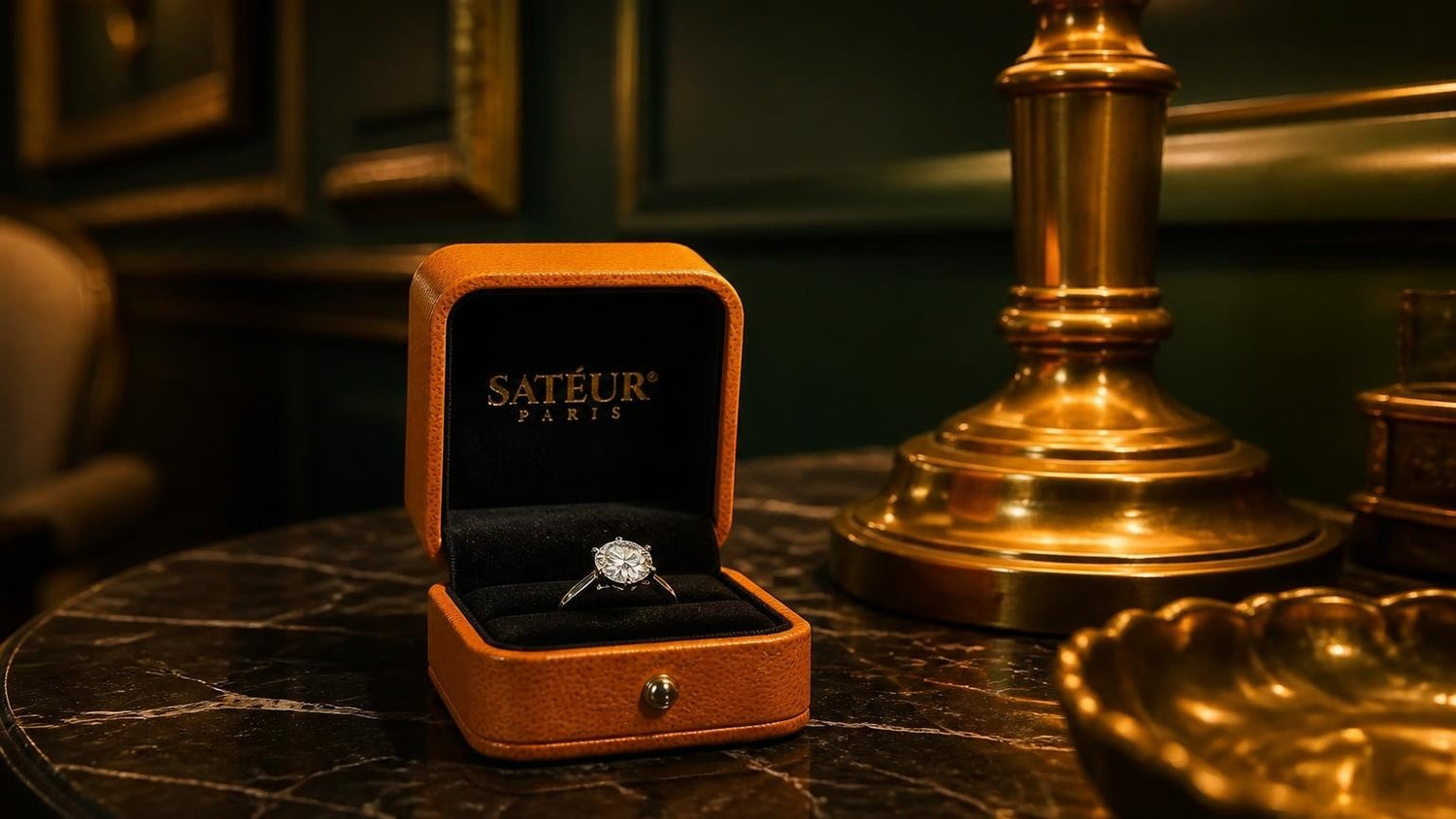
The ring itself matters enormously here. It is the object your partner will look at in the seconds after you ask — and the one they will wear from that moment forward. For many couples, the engagement ring is the most enduring artifact of the proposal. Choose it accordingly.

If Kneeling Is Not an Option
Physical limitations, a formal setting, or personal preference may all make kneeling impractical. None of these circumstances diminish the proposal.
Standing proposals are common and accepted. A proposal made across a restaurant table — seated, face-to-face — can carry as much deliberateness as any kneeling gesture. The ring box, the words, the stillness before you speak: these carry the intention.
The tradition of proposing on one knee exists because it is a physical expression of humility and devotion. If you cannot kneel, or choose not to, the words do that work instead. Your partner knows what you mean.
The 10-Second Proposal Sequence
When the moment arrives, the sequence tends to be: lower the left knee → right knee raised as brace → produce or present the ring box → brief pause → say the words → open the box → wait for the answer → rise.
The pause before speaking matters. It signals that what follows is considered. It gives your partner a moment to register what is happening. Do not rush through it for the sake of nerves.
For ideas on where to stage the moment — places that lend the proposal its own gravity — see the guide to proposal ideas and the curated list of the world's best proposal places. How you phrase the question itself — and the words that lead to it — is covered in full in how to propose to your girlfriend.

Satéur Destinée Ring™
The look of a flawless 1-carat diamond — for about 1% of the price. From $98.
Compare to a $10,000 mined diamond
Joined by 100,000+ couples across 150+ countries.
Shop Destinée RingFree worldwide shipping · 30-day returns · Lifetime Satéur Care
Frequently Asked Questions
Do you propose on your left knee or your right knee?
You propose on your left knee — the left knee touches the ground while the right knee stays raised. This convention traces to medieval traditions of loyalty and courtly devotion, and remains the standard in modern proposals across Western cultures.
Why do people propose on one knee?
Kneeling to propose derives from medieval knighthood, where going down on one knee was a gesture of allegiance, respect, and devotion. The posture has been carried forward as a symbol of sincerity and commitment — a physical expression of the weight of the question being asked.
Which hand do you hold the ring box in when proposing?
Hold the ring box in your left hand. This keeps your right hand free to open the lid and, after the answer, to reach for your partner's hand. Practice the opening beforehand — a lid that sticks at the wrong moment breaks the atmosphere of an otherwise perfect proposal.
Does it matter if you propose on the wrong knee?
No etiquette rule invalidates a proposal made on the right knee. The left knee is the tradition and the expectation, but proposing knee — left or right — does not change what the moment means. The gesture is what registers, not the precise anatomy of it.
Can you propose without kneeling?
Yes. Kneeling is a convention, not a requirement. Standing proposals are entirely appropriate, particularly when kneeling is physically difficult, the setting is formal, or it simply is not how you want the moment to feel. What matters is the sincerity behind the question, not the posture it arrives in.

















留下評論
此網站已受到 hCaptcha 保護,且適用 hCaptcha 隱私政策以及服務條款。