

DIY Jewelry Cleaner: Homemade Solutions for Daily Care
A simple homemade jewelry cleaner — warm water and mild dish soap — removes the residue of daily wear without abrasion. Most everyday buildup on rings, earrings, and necklaces dissolves in minutes with ingredients already in your kitchen. Knowing the right methods, and the ones to avoid, keeps your jewelry brilliant for years. This guide covers the safest DIY options for gold, silver, and the gemstones most people actually wear, including Satéur Gems®, which hold their D–E colour and Excellent cut appearance with nothing more than consistent, gentle cleaning.
Key Takeaways
- Warm water and mild dish soap remove 90% of everyday residue without abrasion.
- Baking soda paste is mildly abrasive and safe for most gemstones including diamond simulants.
- White vinegar's mild acidity dissolves mineral deposits and restores surface clarity.
- Soft-bristled toothbrushes prevent micro-scratching better than paper towels or cloths.
- Satéur Gems® maintain their brilliance with routine gentle cleaning — no specialist products needed.
- Most home-cleaned jewelry stays brilliantly clear for weeks between professional services.
Why Clean Your Jewelry Regularly
Skin oils, hand creams, soap residue, and trace minerals from tap water accumulate on every surface a piece touches. Over time this film dulls the facets of a gemstone and settles into the setting's corners, softening the brilliance you first noticed. Regular cleaning is not a luxury ritual — it is basic maintenance, like wiping a lens.
For fine-finished pieces, consistent cleaning also protects the finish itself. The 18k gold finish on a Satéur Destinée Ring™ responds best to gentle, regular attention rather than occasional harsh intervention. A soft bowl, warm water, and five minutes once a week does more good than an aggressive clean once a month.

Warm Water and Mild Soap: The Foundation Method
This is the method that covers most situations. It is gentle, effective, and requires nothing specialised.
What you need: a clean bowl, warm (not hot) water, a few drops of mild dish soap, a soft toothbrush, a soft lint-free cloth.
- Fill the bowl with warm water. Add two to three drops of dish soap — not a degreasing formula, not antibacterial gel, just plain mild soap.
- Submerge the piece for two to three minutes. The warm soak loosens oils and residue without forcing anything.
- Use the soft toothbrush to gently work around the setting, under the gemstone, and along any engraving. The bristles reach where a cloth cannot.
- Rinse thoroughly under warm running water. Incomplete rinsing leaves a soapy film that dulls the surface almost as much as the original residue.
- Pat dry with the soft cloth. Leave to air-dry completely before storing.
Warm water works better than cold because it reduces surface tension slightly and helps lift organic residue. It does not damage most gemstones at typical tap temperatures.
Baking Soda Paste for Stubborn Buildup
Baking soda (sodium bicarbonate) is mildly abrasive — a useful property when residue has hardened or when silver has tarnished. It is safe for most gemstones, including diamond simulants, but should be used with care on softer gems and delicate finishes.
Method: mix a small amount of baking soda with a few drops of water to form a paste. Apply with a soft toothbrush, working gently in small circles. Focus on areas of visible buildup. Rinse thoroughly and dry immediately. For silver cleaning jewelry, this paste removes light tarnish effectively without the harshness of commercial dips.
Use this method no more than once every few weeks. It is effective precisely because it is slightly abrasive — repeated daily use on gold-finished pieces is unnecessary and eventually counterproductive.

White Vinegar and Water for Shine
White vinegar's mild acidity dissolves mineral deposits — the white chalky film that builds up around settings in hard-water areas. A solution of one part vinegar to two parts warm water, used as a brief soak, restores surface clarity to both gold and silver pieces.
Limit the soak to ten to fifteen minutes. Rinse well and dry completely. Avoid this method on pieces with softer gemstones (opals, pearls, turquoise) — acid weakens their surface over time. For faceted diamond simulants and most hard gems, it is entirely safe.
This is a particularly useful homemade jewelry cleaner for rings worn daily, where mineral deposits from tap water are the primary dulling agent.
Gentle Brushing Techniques for Delicate Pieces
The tool matters as much as the solution. A soft-bristled toothbrush — a children's toothbrush works well — reaches the underside of settings and between prongs without scratching the gemstone or the metal. Paper towels and rough cloths leave micro-scratches on polished surfaces over time; a soft dry cloth is the correct finishing tool.
For earrings and necklaces, the same principle applies: soak, brush gently, rinse, dry with a soft cloth. Chain necklaces benefit from a final shake to release water from the links before drying. Lay pieces flat on a clean cloth rather than hanging to dry, which lets any remaining water pool at the lowest point.
What to Avoid When Cleaning at Home
Certain household products damage jewelry quickly. Avoid these regardless of what you read elsewhere:
- Bleach and chlorine-based cleaners. These degrade gold alloys and degrade the structural integrity of settings. Even brief contact can cause damage that is not immediately visible.
- Toothpaste. Often cited online, toothpaste is too abrasive for polished metal surfaces. It scratches.
- Acetone (nail polish remover). Removes lacquer coatings from costume pieces and may affect certain gem coatings.
- Ultrasonic cleaners for loose-stone settings. If stones are not properly secured, vibration can dislodge them. Have settings checked first.
- Hot water. Extreme heat causes some gemstones to expand and contract, stressing the setting. Warm water is sufficient.
The safest homemade jewelry cleaner is the simplest one: warm water and mild soap. Add complexity only when that method does not fully address the problem.

Care for Satéur Gems®: Simple Daily Maintenance
Satéur Gems® — the trademarked gemstone behind The 1% Ring® — deliver the clean, white brilliance of a flawless diamond and are extremely durable, built for everyday wear. Their D–E colour and Excellent cut appearance are maintained with nothing more elaborate than the methods above.
The warm-water-and-soap method is the right baseline for weekly cleaning jewelry. The baking soda paste can address any localised buildup around the setting. Avoid abrasive cloths and harsh chemical dips, which are unnecessary and potentially damaging to the 18k gold finish.
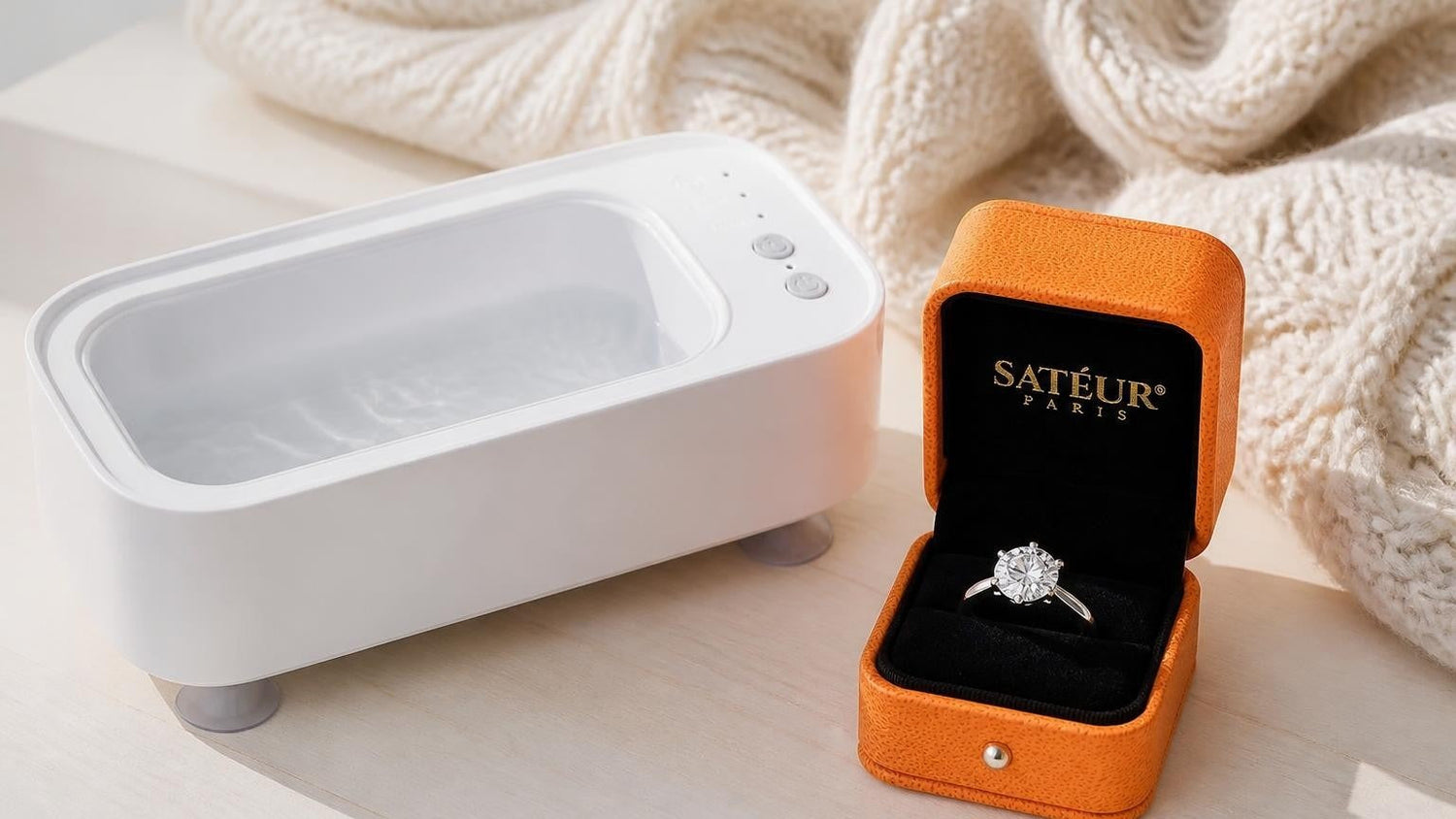
For those who clean jewelry regularly at home, the Satéur Ultrasonic Jewelry Cleaner guide covers a step up from manual cleaning — the same results in less time. The best jewelry cleaner comparison covers options at every level. For pieces in the jewelry cleaner collection, the Satéur 2nd Gen Ultrasonic Cleaner stages a gentle cavitation cycle that replicates the professional clean without the professional cost.
The principle remains the same whether you are cleaning at home or using a machine: gentle, consistent attention preserves brilliance far better than infrequent deep intervention.
When cleaning is part of a regular routine, even the most worn pieces hold their clarity. A few minutes each week is all it takes.

Satéur Destinée Ring™
The look of a flawless diamond, for 1% of the price.
Compare to a $10,000 mined diamond
Joined by 100,000+ couples across 150+ countries.
Shop The 1% RingFree worldwide shipping · 30-day returns · Lifetime Satéur Care
When Should You Use Professional Cleaning?
Home methods handle daily and weekly maintenance well. A professional clean — or an ultrasonic machine — makes sense once a year or when home cleaning does not fully restore brilliance. It is also the right moment to have a jeweller check prong integrity and setting security, especially for pieces worn continuously.
If a ring has lost brilliance after careful home cleaning, the issue is more likely residue in the setting than surface scratching. Soaking for longer before brushing usually resolves it. For persistent dullness, an ultrasonic session — or a visit to a jeweller — will locate the cause.
Frequently Asked Questions
What is the safest homemade jewelry cleaner for everyday use?
Warm water and a few drops of mild dish soap. This removes the oils and residue of daily wear without abrasion or chemical risk. Use a soft toothbrush to reach around settings, rinse thoroughly, and dry with a soft cloth. It is suitable for gold, silver, and most gemstones including Satéur Gems® and moissanite.
How often should you clean jewelry at home?
For rings worn daily, a brief clean once a week with warm water and soap maintains clarity. A deeper clean using baking soda paste can be done once every two to three weeks when visible buildup appears. More frequent cleaning is unnecessary and excessive brushing is counterproductive for gold finishes.
Can you use baking soda on all types of gemstones?
Baking soda paste is safe for hard gemstones — diamonds, moissanite, Satéur Gems®, sapphires, and rubies (Mohs 8 and above). Avoid it on softer gems such as opals, pearls, and emeralds, which can be scratched or chemically affected. When in doubt, use the gentler warm-water-and-soap method instead.
Why does warm water work better than cold water for cleaning?
Warm water reduces surface tension slightly, which helps lift organic residue — skin oils, cream, soap film — more effectively than cold water. It also makes the mild soap more active. Avoid very hot water, which creates unnecessary thermal stress on settings and some gemstones.
Should you dry jewelry immediately after washing?
Yes. Water left sitting in settings, especially around prongs and pavé, can leave mineral deposits from tap water as it evaporates. Pat dry with a soft cloth immediately after rinsing and leave the piece to air-dry completely on a clean surface before storing. This prevents the chalky film that dulls brilliance over time.
What homemade solutions should you avoid?
Avoid bleach, chlorine-based cleaners, acetone, and undiluted vinegar. Toothpaste is too abrasive for polished metal. Boiling water creates thermal stress. These are genuinely harmful — not just ineffective. Stick to warm water, mild soap, diluted vinegar (for mineral deposits), or baking soda paste (for stubborn buildup). If unsure, warm water and soap is always the safe choice.

















留下評論
此網站已受到 hCaptcha 保護,且適用 hCaptcha 隱私政策以及服務條款。