

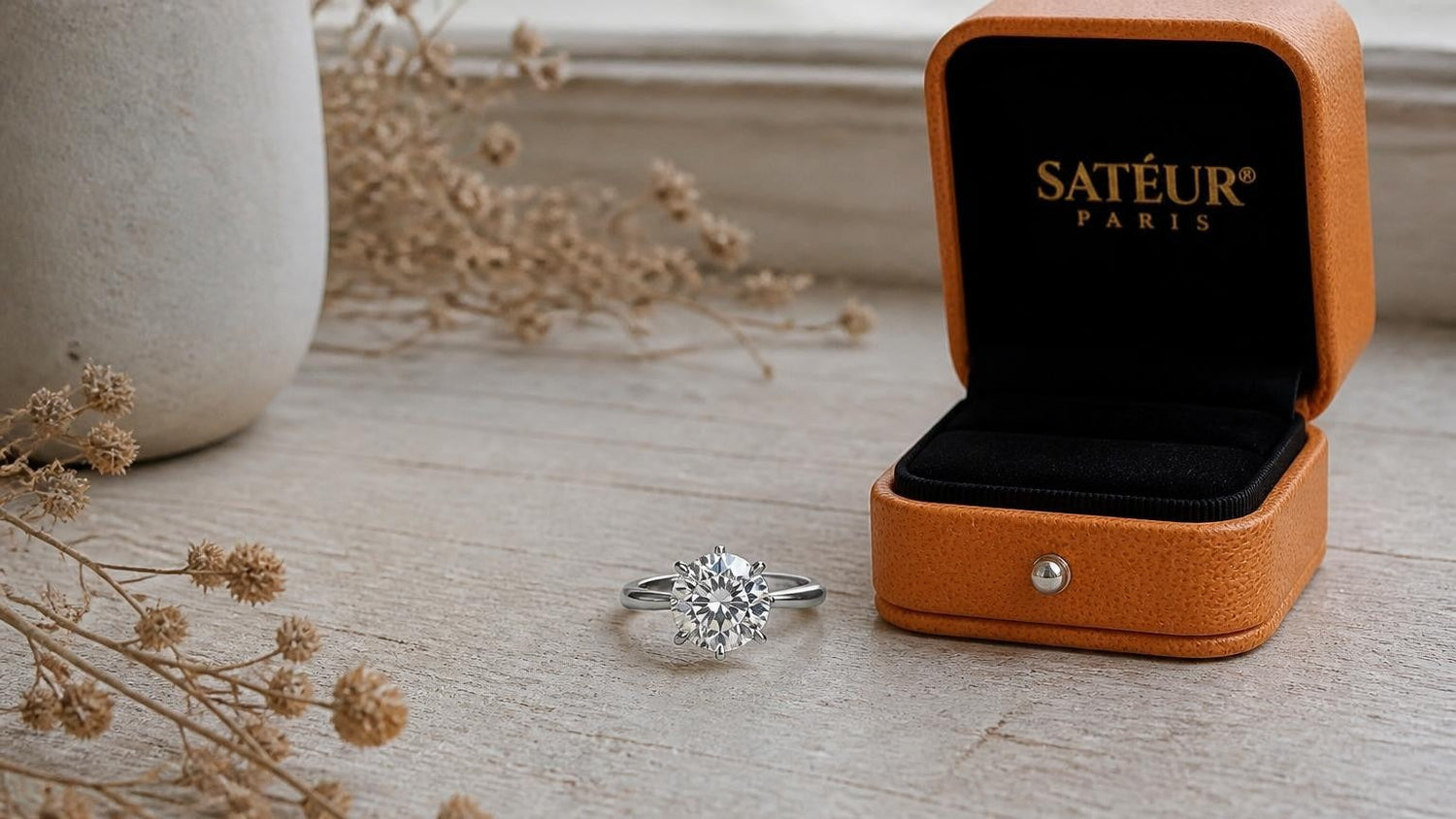
2 Carat Lab Grown Diamond Ring Price: What to Expect in 2024
A 2 carat lab grown diamond ring sits at the centre of every serious engagement ring conversation. The size is visible. The presence is undeniable. And the price — relative to a mined diamond of equivalent grade — has shifted the entire category. This guide covers what a 2 carat lab diamond costs, what drives that price, how grading standards work, and what the smarter alternatives look like for buyers who want the same visual impact without the same commitment.
Lab grown diamonds are part of Satéur's lab diamond collection — IGI-certified, real diamonds grown in a controlled environment and graded on identical scales to mined stones.
Key Takeaways
- A 2 carat lab grown diamond ring typically costs £2,800–£9,500 depending on cut, colour, and clarity grade.
- Lab grown diamonds share the same chemical structure and optical properties as mined diamonds — Mohs 10, identical refractive index.
- IGI certifies lab diamonds on the same D–Z colour and FL–I3 clarity scales used for mined stones.
- The most popular 2 carat lab diamond specifications are F colour, VS1 clarity, Excellent cut.
- A comparable mined 2 carat diamond (D, VS1, Excellent) retails at £18,000–£35,000 — roughly 5–8× more.
- Satéur Gems® — a separate diamond simulant tier — deliver the look of a flawless diamond from £138, at approximately 1% of a mined diamond's price.

Lab Grown Diamonds: 2 Carat Overview
A lab grown diamond is a real diamond. It possesses the same chemical composition (pure carbon, cubic crystal lattice), the same hardness (Mohs 10), and the same optical properties as a diamond extracted from the earth. The only difference is origin: lab grown diamonds are produced in controlled environments over weeks to months using either Chemical Vapour Deposition (CVD) or High Pressure High Temperature (HPHT) methods, whereas mined diamonds form over billions of years underground.
For the 2 carat weight class, lab grown diamonds have fundamentally changed the market. A stone that would have cost £20,000–£35,000 mined is now available IGI-certified at a fraction of that price — the same chemical structure, the same cut precision, the same grading standards applied without compromise.
The result is a category that now attracts buyers who previously considered 2 carat rings out of reach. If you are exploring the best lab grown diamond engagement ring options, the 2 carat round brilliant is the benchmark most comparisons return to.
2 Carat Lab Grown Diamond Price Range
Price varies significantly based on the four Cs — cut, colour, clarity, and carat — as well as the specific certification lab and the seller's margin model. As a working guide for 2024:
| Grade Profile | Lab Grown Price (approx.) | Mined Equivalent (approx.) |
|---|---|---|
| D, IF, Excellent (top tier) | £7,500–£9,500 | £28,000–£40,000 |
| F, VS1, Excellent (popular) | £4,200–£6,000 | £18,000–£28,000 |
| H, VS2, Very Good (value) | £2,800–£4,000 | £12,000–£18,000 |
| J, SI1, Good (entry) | £1,800–£2,800 | £7,000–£12,000 |
Lab grown diamonds cost substantially less than mined equivalents due to controlled growth conditions and shorter production timelines. The stones are not inferior — they are graded identically and possess the same physical properties. The price difference reflects the absence of geological scarcity and the reduced supply-chain overhead of a controlled environment.
Ring setting and metal choice (18k white gold, platinum, rose gold) add a further £400–£2,500 to the total ring price depending on design complexity.
Colour, Clarity and Cut for 2 Carat Lab Diamonds
At 2 carats, a stone is large enough that colour and clarity become visible to the naked eye. The grading decisions matter.
Colour. Lab grown diamonds are graded on the same D–Z scale used for mined diamonds. D is colourless; Z carries a warm yellow tint. For a 2 carat stone, most buyers target D–F for a visibly colourless result. G–H reads near-colourless and offers meaningful savings. Below H, warmth is noticeable at this size — particularly in white or platinum settings. The most popular colour grade for 2 carat lab diamonds is F.
Clarity. The scale runs from Flawless (FL) to Included (I3). For a 2 carat stone, VS1 is the practical sweet spot: inclusions are minor, not visible with the naked eye, and the price premium over SI1 is meaningful. VS2 is a strong value position. SI1 can be eye-clean but requires inspection of the individual grading report before purchase. The most common clarity grade at the 2 carat level is VS1.
Cut. Cut determines how a diamond interacts with light — its brilliance, fire, and scintillation. At 2 carats, Excellent or Ideal cut is non-negotiable. A poorly cut 2 carat stone leaks light and appears smaller and duller than its weight suggests. Cut quality has the highest visual impact per pound spent at this size.

Certification and Grading Standards
IGI — the International Gemological Institute — is the leading certification body for lab grown diamonds globally. IGI-certified lab diamonds are graded on colour, clarity, cut, polish, symmetry, and fluorescence, producing a detailed report that accompanies the stone. The certificate allows buyers to verify quality independently and provides documentation for insurance.
GIA also certifies lab grown diamonds, though its lab-grown programme uses a compressed grading scale (Good/Very Good/Excellent descriptors rather than the full alphanumeric range) — which has led most of the market to prefer IGI for transparency. When comparing 2 carat lab diamond prices, always verify the certification body and confirm you are reading the same grading scale.
A 2 carat lab grown diamond without certification should be treated as ungraded. The price difference rarely justifies the uncertainty at this weight class.
Lab Grown vs. Mined Diamonds: The Value Case
The value argument for lab grown diamonds at the 2 carat level is straightforward. A D, VS1, Excellent 2 carat natural diamond — extracted from the earth — costs £20,000–£35,000. The same specification lab grown: £6,000–£9,000. Both stones are chemically identical — pure carbon, cubic structure, Mohs 10. The price difference is entirely a function of origin and market positioning, not material quality.
Lab grown diamonds do not hold resale value at the same rate as natural diamonds. Buyers who frame the purchase as an investment are comparing the wrong variable — a 2 carat engagement ring is a commitment symbol, not a commodity to liquidate. The question is whether the visual and material quality justifies the price paid. At current lab diamond pricing relative to natural diamonds, the answer is unambiguous.
Natural diamonds retain a cultural premium rooted in decades of industry narrative. That premium is a personal judgment. The stone itself — chemical structure, optical performance, hardness — is the same whether grown in a lab or mined from the earth.
For buyers who want even greater value, the Satéur lab grown diamonds collection presents IGI-certified options designed for the engagement ring market — real lab diamonds, verified grading, without the traditional markup model.

Satéur Destinée Diamond Ring™
The look of a flawless lab diamond. For a fraction of the price.
Compare to a $10,000 mined diamond
Joined by 100,000+ couples across 150+ countries.
Shop the Destinée Diamond RingFree worldwide shipping · 30-day returns · Lifetime Satéur Care
Satéur Gems®: Diamond-Look Alternatives at ~1% Price
Lab grown diamonds sit at one end of the intelligent-value spectrum. At the other end is a different question: what if the goal is the look of a flawless diamond — visually indistinguishable with the naked eye — at approximately 1% of a mined diamond's price?
Satéur Gems® is a trademarked diamond simulant engineered for exactly that purpose. Graded D–E colour and Excellent cut, with a refractive index of approximately 2.39, Satéur Gems® returns the clean, white brilliance of a fine diamond — diamond-accurate, not the vivid rainbow fire of moissanite. Entry pricing begins at £88 for earrings; engagement-style ring designs from £138. The simulant is not a diamond — it is its own category, with its own composition — but the visual result across the table and to the naked eye is the benchmark it is built to meet.
The distinction is material and meaningful. A lab grown diamond is a real diamond, IGI-certified, with the same chemical structure as a mined stone. Satéur Gems® is a simulant — a different gemstone category entirely, priced for buyers who prioritise visual impact over material pedigree. Both are part of Satéur's tiered approach to diamond intelligence.
Explore the full The 1% Ring collection for the complete range of Satéur Gems® designs, or browse engagement ring options across all three tiers.

How to Choose a 2 Carat Lab Diamond
The practical decision tree is shorter than most buyers expect.
Start with cut. Excellent or Ideal — non-negotiable at 2 carats. This is the variable that most affects visual impact. Do not compromise here to chase a higher colour or clarity grade within the same budget.
Choose colour by setting. White gold or platinum amplifies colour differences — stay D–G. Yellow or rose gold settings mask warmer tones, making H–I a credible choice and freeing budget for cut or clarity.
Clarity at VS1 or VS2. Eye-clean, grading-documented, and priced sensibly. SI1 can work — but only after reviewing the specific certificate, not as a category rule.
Verify certification. IGI is the standard. Confirm the report number traces to the live IGI database before purchase.
Consider the ring price total. The stone accounts for 60–75% of a finished ring's price at the 2 carat level. The setting, metal, and any side stones make up the remainder. Budget for both.

For specific 3 carat comparisons and how price scales with weight, see the 3 carat lab grown diamond ring guide, or explore the full 3 carat lab grown diamond range to understand the price-to-carat relationship across the category.
Frequently Asked Questions
What is the average price of a 2 carat lab grown diamond ring in 2024?
A 2 carat lab grown diamond ring averages £3,500–£7,000 for the most popular specification (F colour, VS1 clarity, Excellent cut, IGI-certified), including a standard solitaire setting in 18k white gold. Top-tier grades (D, IF) reach £9,000–£12,000 with premium settings. Entry specifications (H–I, SI1) start from around £2,500–£3,500 for the ring complete.
How do lab grown diamonds compare in colour and clarity to mined diamonds?
Lab grown diamonds are graded on exactly the same colour (D–Z) and clarity (FL–I3) scales as mined diamonds. The grading process is identical — IGI applies the same criteria regardless of whether the stone was grown in a lab or extracted from the earth. A D, VS1, Excellent lab diamond has the same colour and clarity specification as a D, VS1, Excellent mined diamond.
Are 2 carat lab diamonds certified by recognised grading labs?
Yes. IGI (International Gemological Institute) is the primary certification body for lab grown diamonds and issues grading reports for lab stones on the same parameters as mined diamonds — colour, clarity, cut, polish, symmetry, and fluorescence. GIA also certifies lab diamonds. Always purchase a 2 carat lab diamond with an accompanying IGI or GIA certificate, and verify the report number against the lab's online database before completing the transaction.
What colour and clarity grades are most common in 2 carat lab diamonds?
F colour and VS1 clarity represent the most popular combination at the 2 carat level — they deliver a visibly colourless, eye-clean result at a price that remains accessible relative to D, IF grades. G–H colour with VS2 clarity is the second most common choice, offering strong visual quality at a lower price point.
Why are lab grown diamonds less expensive than mined diamonds?
Lab grown diamonds are produced in controlled environments over weeks to months using established scientific processes. Mined diamonds form over billions of years, require significant extraction and logistics infrastructure, and are subject to the artificial scarcity economics of a controlled supply chain. The lab grown diamond is chemically and physically identical to its mined counterpart — the cost difference reflects origin, not quality. As production technology scales, lab diamond prices have continued to fall relative to mined equivalents.
What is the difference between a lab grown diamond and a diamond simulant?
A lab grown diamond is a real diamond — same chemical composition (pure carbon), same crystal structure, same hardness (Mohs 10), same optical properties. It is graded and certified on identical scales to a mined diamond. A diamond simulant, such as Satéur Gems®, is a different material entirely — engineered to replicate the visual appearance of a diamond to the naked eye, but with a distinct chemical composition and different physical properties. Simulants are not diamonds; they are their own gem category. The price difference reflects this distinction: lab grown diamonds start at several thousand pounds for a 2 carat stone; simulants deliver the look from under £200.














اترك تعليقًا
This site is protected by hCaptcha and the hCaptcha Privacy Policy and Terms of Service apply.