



Lab-grown diamonds are chemically and optically identical to mined diamonds, graded by IGI with full certification reports covering the 4 Cs — colour, cut, clarity, and carat weight. Available in D–E colour grades with Excellent cut proportions, they offer the same hardness (Mohs 10), the same refractive index (2.42), and the same crisp white brilliance as their mined equivalents — at approximately 40–60% less.
This guide covers everything worth knowing before selecting a lab-grown diamond engagement ring: the science behind how these diamonds form, how to read a grading report, which settings flatter which diamond shapes, and where the value genuinely lies.
Key Takeaways
- Lab-grown diamonds are chemically identical to mined diamonds and carry IGI grading reports with the same 4 Cs criteria.
- Lab diamonds typically cost 40–60% less than comparable mined diamonds at the same carat weight and colour grade.
- Common colour grades for engagement rings run D–F (colourless) and G–I (near-colourless); Excellent cut maximises light return regardless of origin.
- Both HPHT and CVD production methods produce Type IIa diamonds — the rarest and purest category in mined production.
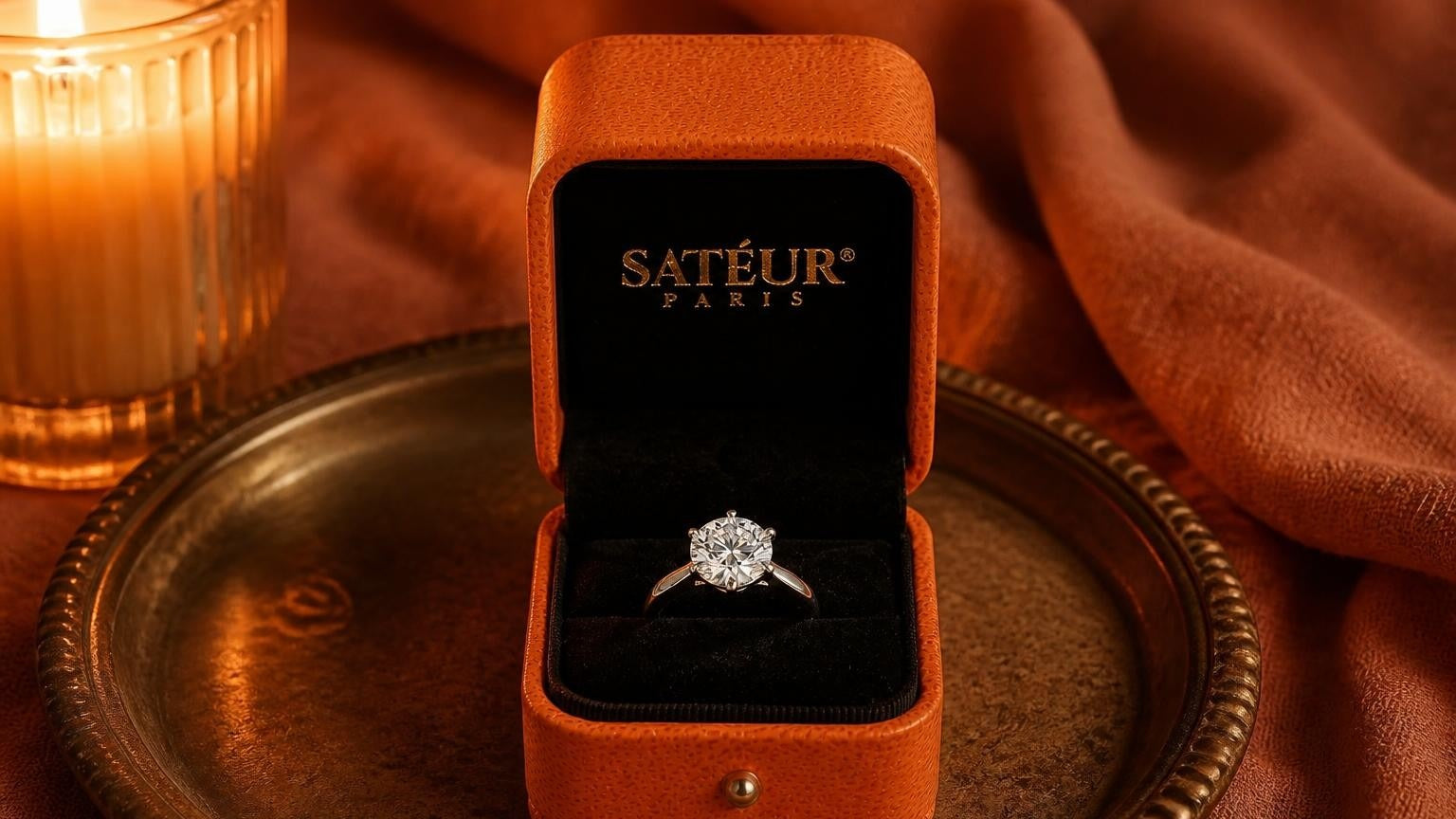
- Satéur's lab-grown diamond tier starts at $1,098 for the 1.00-carat Destinée Diamond Ring™, IGI-certified, in 18k white gold.

Lab-Grown Diamond Engagement Rings
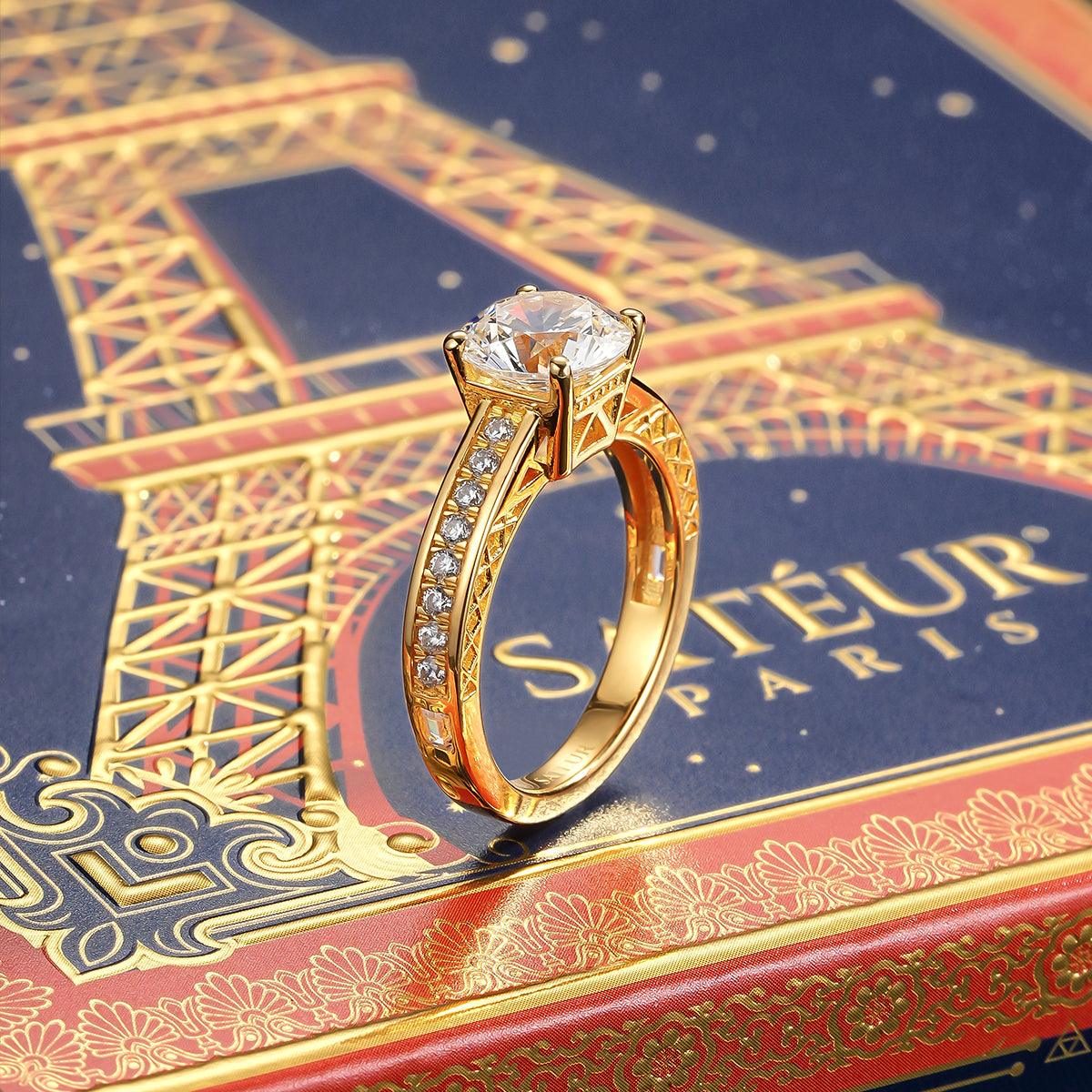
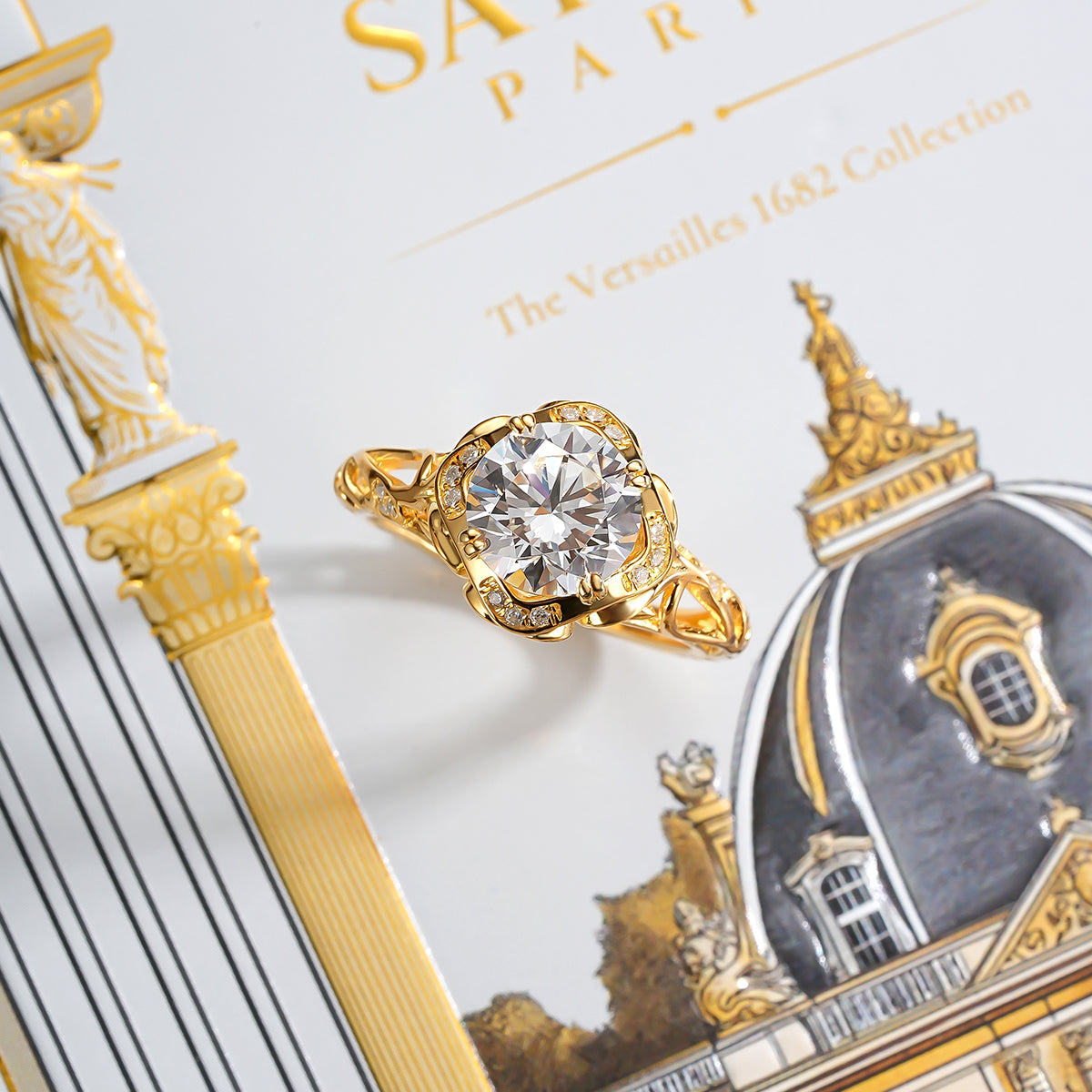
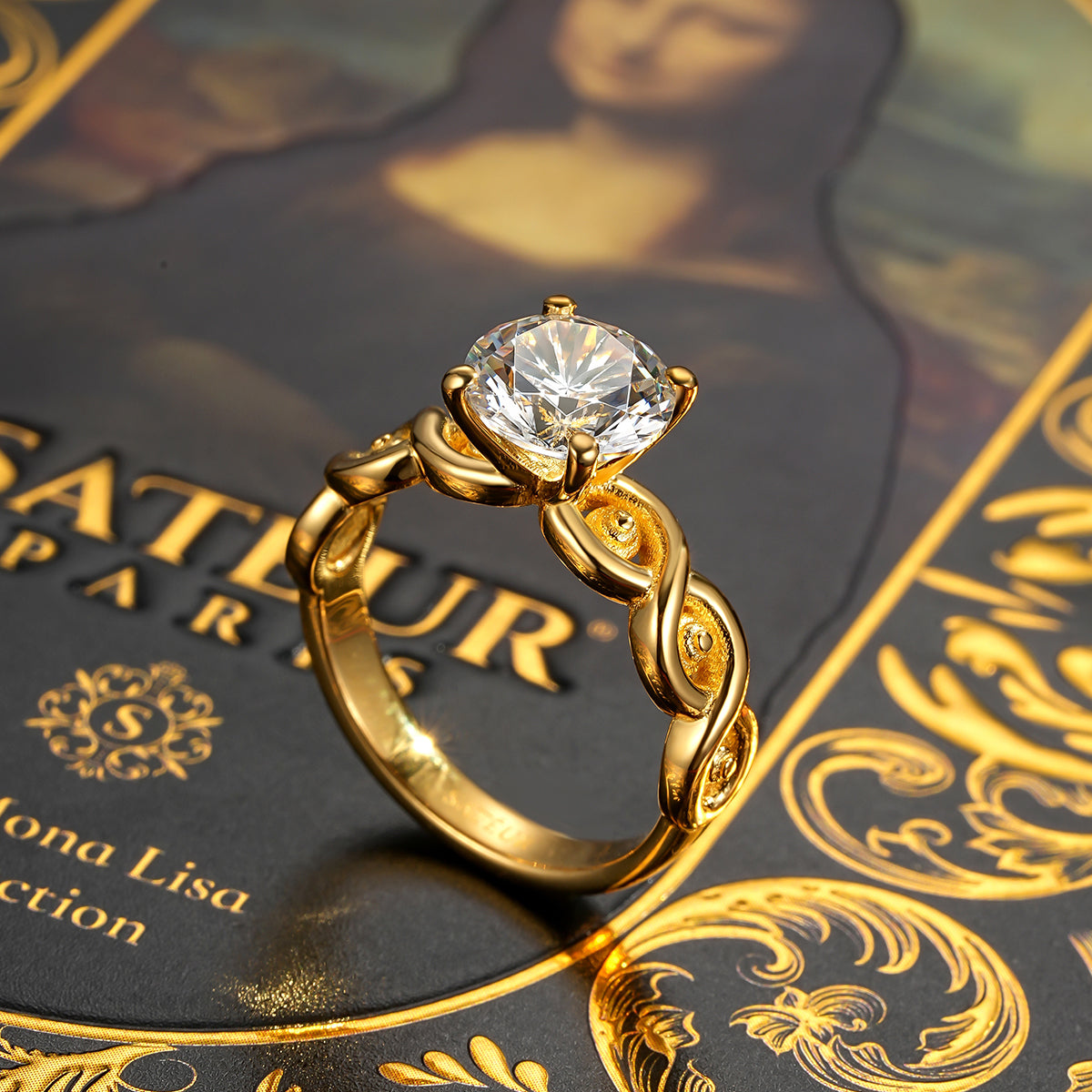
A lab-grown diamond engagement ring carries a real diamond — not a simulant, not a lookalike. The stone is grown using either HPHT (High Pressure High Temperature) or CVD (Chemical Vapour Deposition) technology, both of which produce diamond crystal with the same carbon lattice structure, the same Mohs 10 hardness, and the same 2.42 refractive index as a diamond formed over millions of years underground.
The key distinction between lab and mined is origin, not composition. IGI — the International Gemological Institute — grades lab-grown diamonds identically to mined stones, issuing full certificates with colour, cut, clarity, and carat weight. A D-colour Excellent-cut 1.00-carat lab diamond and a D-colour Excellent-cut 1.00-carat mined diamond are, on every grading instrument, the same gem.
The price difference is significant: lab diamonds typically trade at 40–60% below comparable mined diamonds. A 1.00-carat D/VS1 Excellent-cut mined diamond retails between $6,000 and $10,000. An equivalent lab stone sits between $1,000 and $2,500, depending on retailer and current market conditions.
Why Choose a Lab-Grown Diamond
The case for a lab-grown diamond rests on three intersecting facts: identical physical properties, lower price at equivalent quality, and a supply chain that does not involve mining.
Identical Physical Properties
Both HPHT and CVD diamonds are classified as Type IIa — a category representing less than 2% of all diamonds ever mined. This classification indicates minimal nitrogen impurities, the highest optical transmission, and the strongest light return. In practice, this means a lab-grown D/Excellent stone visually performs at or above the level of most mined diamonds available at retail.
Cost Advantage at Equivalent Quality
The 40–60% price difference allows buyers to select a higher carat weight or cleaner clarity grade within the same budget. A buyer whose budget is $2,500 can choose between a 0.50-carat mined diamond at mid-range clarity or a 1.00-carat lab diamond at VS1–VS2. Both are real diamonds with IGI certification. The trade-off is one of preference, not quality.
Supply Chain Transparency
Lab diamonds are conflict-free by nature: no mining, no land disturbance, no reliance on regional supply chains with variable oversight. For buyers who weigh provenance in their purchasing decisions, the lab origin is the cleaner choice on that dimension alone.

Engagement Ring Settings and Styles
Lab diamonds are set in every standard engagement ring configuration. The diamond itself has no bearing on which setting works — Mohs 10 hardness means it performs identically to a mined stone in any mount. Setting selection depends on aesthetic and practical priorities.
Solitaire
A single stone in a four- or six-prong basket. The most popular configuration for lab diamonds because it puts the full light performance of the stone on display. Suits round brilliant cuts and ovals particularly well, as both maximise scintillation in open light conditions.
Pavé and Halo
Micro-set side stones or a surrounding halo of smaller diamonds amplify apparent size. For lab diamonds already priced below mined equivalents, this option allows a larger visual spread without a substantial premium. Works with round, cushion, and princess cuts.
Three-Stone
A centre stone flanked by two side stones representing past, present, and future. Lab diamonds in three-stone settings allow the buyer to maintain colour and cut consistency across all three stones at a reasonable combined price — a challenge in mined configurations at the same quality tier.
Metal Options
18k white gold is the standard choice for D–F colourless stones: the metal's cool tone does not reflect into the diamond and preserves the stone's colourless appearance. 18k yellow gold and rose gold introduce warmth — suitable for G–I near-colourless stones where a warm undertone blends rather than contrasts. Platinum carries a higher density and a slightly cooler appearance than white gold, and is often chosen for heirloom pieces.
Diamond Quality: The 4 Cs
IGI-graded lab diamonds follow the same 4 Cs framework used for mined stones. Understanding the practical weight of each criterion prevents overspending on grades that make no visible difference.
| The C | Range | Practical Guidance |
|---|---|---|
| Colour | D–Z | D–F colourless; G–I near-colourless (visually identical to D–F when set). H or better for white gold/platinum. I acceptable for yellow or rose gold. |
| Cut | Excellent–Poor | Excellent or Ideal only for round brilliants. Cut determines 70%+ of perceived sparkle; do not compromise here. |
| Clarity | FL–I3 | VS1–VS2 is the practical eye-clean threshold for most buyers. SI1 is often eye-clean on rounds. FL/IF carries a significant premium for inclusions invisible to the naked eye. |
| Carat | 0.30–10.00+ | Lab diamonds allow carat upgrades within the same budget. A 1.00-carat lab at VS2/G/Excellent is a strong standard benchmark. |

Lab-Grown vs. Mined: What You Need to Know
Lab-grown and mined diamonds are the same material. The only differences that matter for a buyer are price, provenance documentation, and — depending on whom you ask — long-term resale value.
Resale Value
Mined diamonds hold resale value better than lab-grown stones because mined supply is constrained. Lab diamond wholesale prices have declined as production has scaled since 2018. For buyers focused on quality at purchase rather than resale, the difference is not material.
Certification Parity
IGI grades lab diamonds on the same scale as mined diamonds, issuing identical certificate formats. Current IGI reports are equivalent to mined stone certificates. Always confirm the grading laboratory and report number before purchase.
Practical Durability
Mohs 10 hardness is the highest on the scale. Lab diamonds behave identically to mined diamonds in daily wear. The ring can be resized, reset, and polished by any qualified jeweller using standard diamond techniques.

Lab Grown Diamond Engagement Rings
The phrase "lab grown diamond engagement ring" describes the same product as "lab diamond engagement ring" — a real diamond, grown by HPHT or CVD, set in an engagement ring mounting. The terminology is interchangeable across retailers and grading laboratories. IGI certification applies uniformly regardless of which phrase a retailer uses.
Popular lab diamond shapes for engagement settings include:
- Round Brilliant — highest light return of any cut; the most requested shape across all diamond tiers.
- Oval — elongates the finger; higher apparent size per carat weight than round brilliant.
- Cushion — soft corners with strong fire; suits yellow and rose gold settings.
- Princess — sharp corners, high brilliance; requires corner-prong protection in the setting.
- Emerald — step-cut faceting; emphasises clarity over fire; best at VS1 or above.
Lab grown diamond engagement rings are available in all major setting styles — solitaire, halo, pavé, bezel — and in all standard engagement ring metals. The 18k gold finish (white, yellow, or rose) is the practical standard; platinum is available for heirloom-grade pieces. See the lab-grown vs natural diamond guide for a detailed breakdown of the differences between origin types.
Satéur's Alternative: Diamond Simulants at 1% of the Price
Satéur occupies a distinct position in the diamond-look category. The Satéur Gems® tier — a trademarked diamond simulant — delivers the clean white brilliance of a flawless diamond at approximately 1% of the price of a comparable mined stone. It is not a lab-grown diamond; it is a separate gem category with its own optical properties, disclosed specifications, and trademark.
For buyers exploring lab diamond rings who want to understand the full range of options: Satéur Gems® is a lower-entry-point alternative focused on visual parity with a flawless diamond at naked-eye viewing distances. Lab-grown diamonds offer certified grading parity with mined diamonds at 40–60% below mined retail. These are different value propositions for different buyer priorities.
Satéur also carries IGI-certified lab-grown diamonds in the Destinée Diamond Ring™ — 1.00-carat round brilliant, 18k white gold, with full certification. This sits at a higher price point than the Gems® tier and is aimed at buyers who want genuine diamond certification. For a wider look at the gem comparison landscape, see the Satéur lab diamond collection overview and the 2-carat lab-grown diamond ring price guide.
Ready-to-Ship and Custom Options
Lab diamond engagement rings divide into ready-to-ship pieces at fixed specifications and custom configurations where the buyer selects the IGI-certified stone and setting separately. Ready-to-ship offers faster delivery and lower total cost; custom allows carat weight, clarity grade, and setting style to be specified individually. Lead times for custom pieces run two to six weeks.
See also the 3-carat lab-grown diamond ring collection for larger-stone options.
Satéur Lab Diamond Value
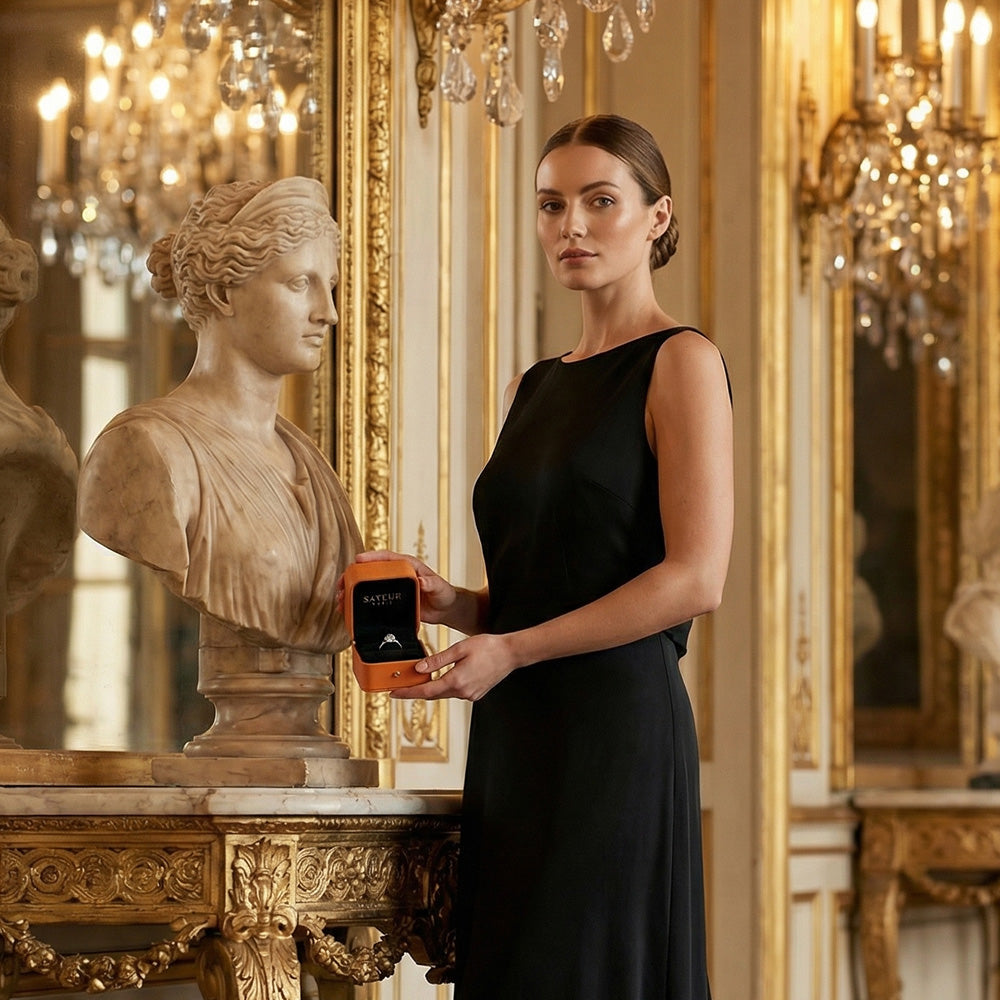
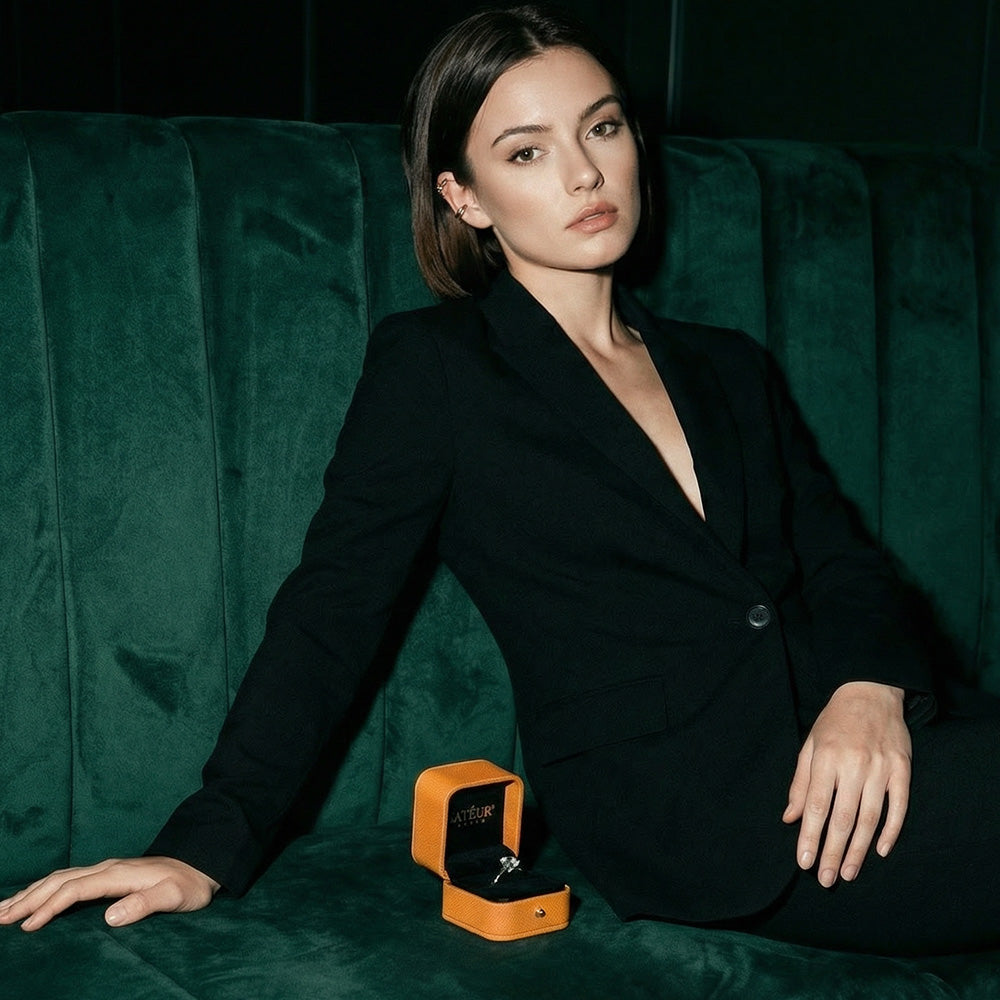
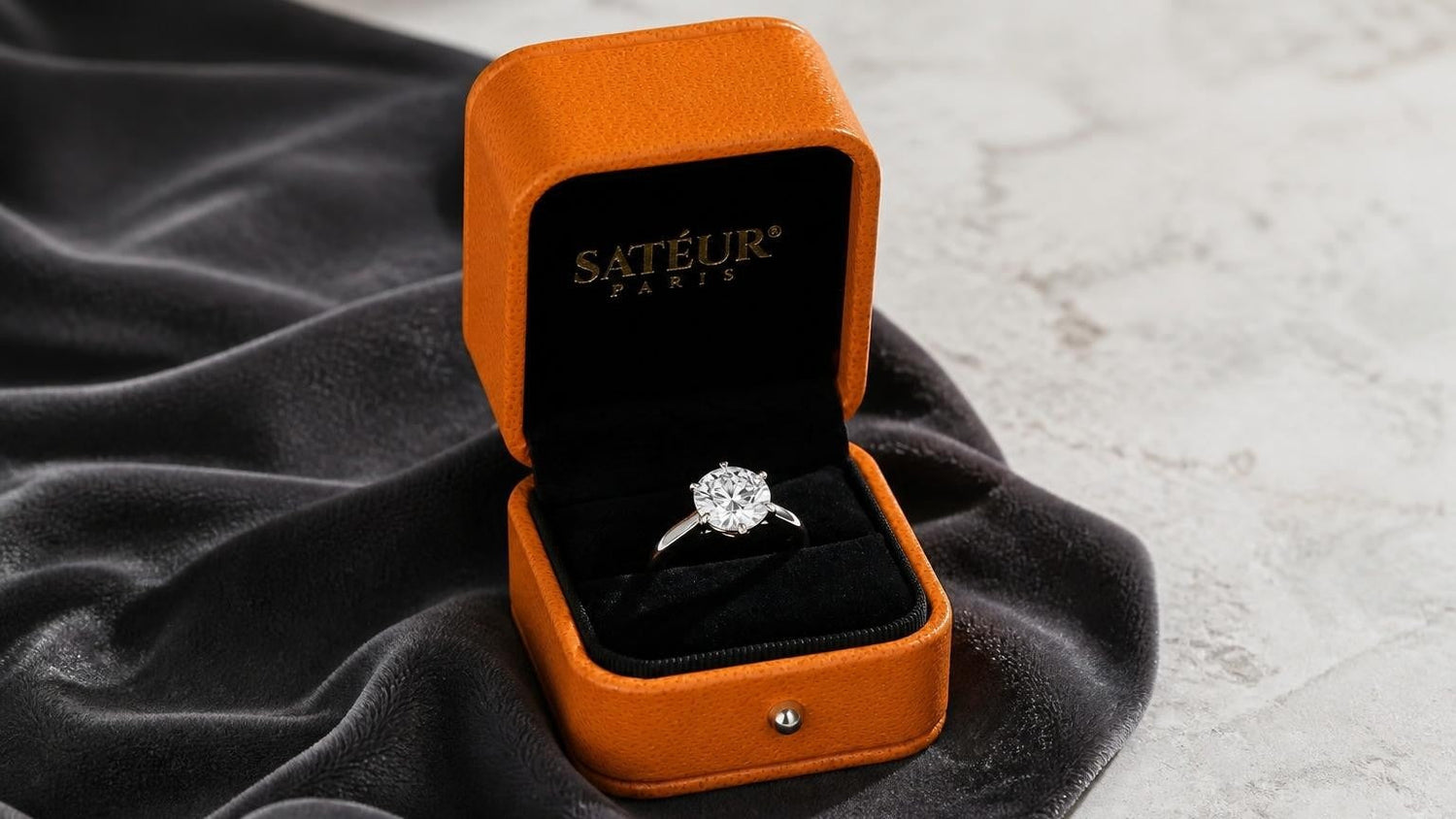
The Satéur Destinée Diamond Ring™ is a 1.00-carat round brilliant-cut IGI-certified lab-grown diamond in 18k white gold. Starting at $1,098, it occupies the accessible entry point of the certified lab diamond segment — a significant distance below a comparable mined stone, and priced at roughly 1% of a premium mined solitaire in the same carat tier.
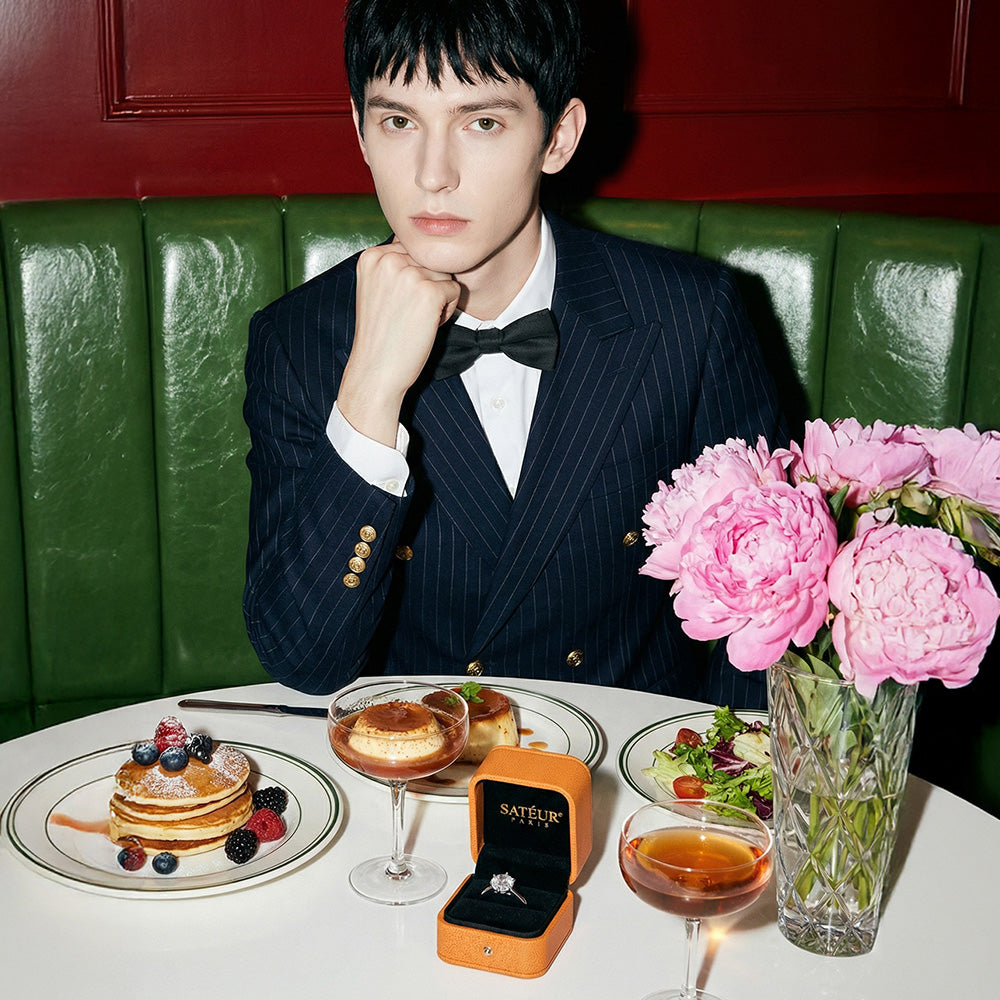
What that price includes: IGI certification with full grading report, 18k white gold finish (D–E colour, Excellent cut), and Satéur's standard fulfilment terms — free worldwide delivery, 30-day returns, and lifetime Satéur Care. The ring is available across a range of finger sizes and ships in Satéur's signature orange box. The 1% Ring® remains the reference piece: the same proportional value framing that anchors the Satéur Gems® tier applies here in a different register — certified diamond, at a fraction of mined retail.
Frequently Asked Questions
What is a lab-grown diamond and how is it made?
A lab-grown diamond is a real diamond produced in a controlled laboratory environment using HPHT or CVD technology. Both methods replicate diamond crystal formation, producing the same carbon lattice, Mohs 10 hardness, and 2.42 refractive index as a mined diamond. IGI grades lab-grown diamonds identically to mined stones.
How do lab-grown diamonds compare to mined diamonds in quality?
Lab-grown and mined diamonds are chemically and optically identical. Both HPHT and CVD processes produce Type IIa diamonds — the purest category. The 4 Cs apply equally and IGI grading criteria are identical. Visual performance at equivalent grades is indistinguishable to the naked eye.
Are lab-grown diamonds certified and graded like mined diamonds?
Yes. IGI issues full grading reports for lab-grown diamonds covering all 4 Cs, fluorescence, and dimensions — the same format as mined stone certificates. GIA also grades lab-grown diamonds. Always verify the report number on the laboratory's website before purchase.
What does the 4 Cs mean when selecting an engagement ring?
Colour, cut, clarity, and carat weight. Cut is the most critical factor for brilliance — always select Excellent or Ideal. D–F colour for white-metal settings, VS1–VS2 clarity as the practical eye-clean threshold. Lab diamonds allow carat upgrades within a given budget at equivalent quality grades.
Can you resize or reset a lab-grown diamond engagement ring?
Yes. Lab-grown diamonds are reset and resized using the same techniques as mined diamonds. Any qualified jeweller can adjust the shank or reset the stone in a new mounting. Mohs 10 hardness makes the stone robust through standard bench work.
What is the difference between a lab-grown diamond and a mined diamond?
Origin only. Mined diamonds form geologically over billions of years; lab-grown diamonds form in weeks in a laboratory. The crystal is chemically and optically identical. Lab diamonds cost approximately 40–60% less than comparable mined stones. Resale value is lower for lab diamonds as supply has grown, but physical properties are equivalent.
What is a lab-grown diamond ring?
A ring set with a diamond grown by HPHT or CVD laboratory process. The diamond is real — not a simulant. It carries IGI certification at the same grades as mined stones and behaves identically in daily wear, available in the same settings, metals, and styles.
How do lab-grown diamonds compare in price to mined diamonds?
Lab-grown diamonds typically cost 40–60% less than mined diamonds of comparable quality. A 1.00-carat D/VS1 Excellent-cut mined diamond retails between $6,000 and $10,000; an equivalent lab stone ranges from $1,000 to $2,500. Buyers consistently access a higher carat weight or clarity grade for the same budget.
Are lab-grown diamonds certified?
Yes. IGI and GIA both issue grading certificates for lab-grown diamonds with full 4 Cs reports. Always confirm certification and verify the report number on the laboratory's public lookup tool before purchase.
What colour and cut grades are available?
Lab-grown diamonds span the full colour range (D–Z) and all cut grades. D–F colour with Excellent cut is the engagement ring benchmark. G–H at Excellent cut is visually equivalent in most settings. For round brilliants, Excellent cut is non-negotiable for maximum light return.
Can I wear a lab-grown diamond ring daily?
Yes. Mohs 10 hardness resists scratching from virtually all everyday materials. Remove for contact sports and heavy manual work to protect the metal setting. Clean with mild soap and warm water; professional prong check every 12–18 months.
Do lab-grown diamonds hold their value?
Lab-grown diamonds have lower resale value than mined diamonds because supply has grown significantly since 2018 and wholesale prices have declined. For buyers focused on quality at purchase — particularly accessing a higher grade within budget — the immediate value proposition remains strong.
Can a lab-grown diamond be set in any engagement ring style?
Yes. Lab-grown diamonds are set in solitaire, halo, pavé, three-stone, and bezel settings using the same techniques as mined stones. 18k white gold, yellow gold, rose gold, and platinum all work with lab diamonds. Setting selection is purely aesthetic, not a function of origin.

Satéur Destinée Diamond Ring™
IGI-certified lab-grown diamond — from $1,098.
D-E colour · Excellent cut · 18k white gold · 1.00 carat
Free worldwide delivery. 30-day returns. Lifetime Satéur Care.
Shop the Destinée Diamond RingFree worldwide shipping · 30-day returns · Lifetime Satéur Care















Leave a comment
This site is protected by hCaptcha and the hCaptcha Privacy Policy and Terms of Service apply.