

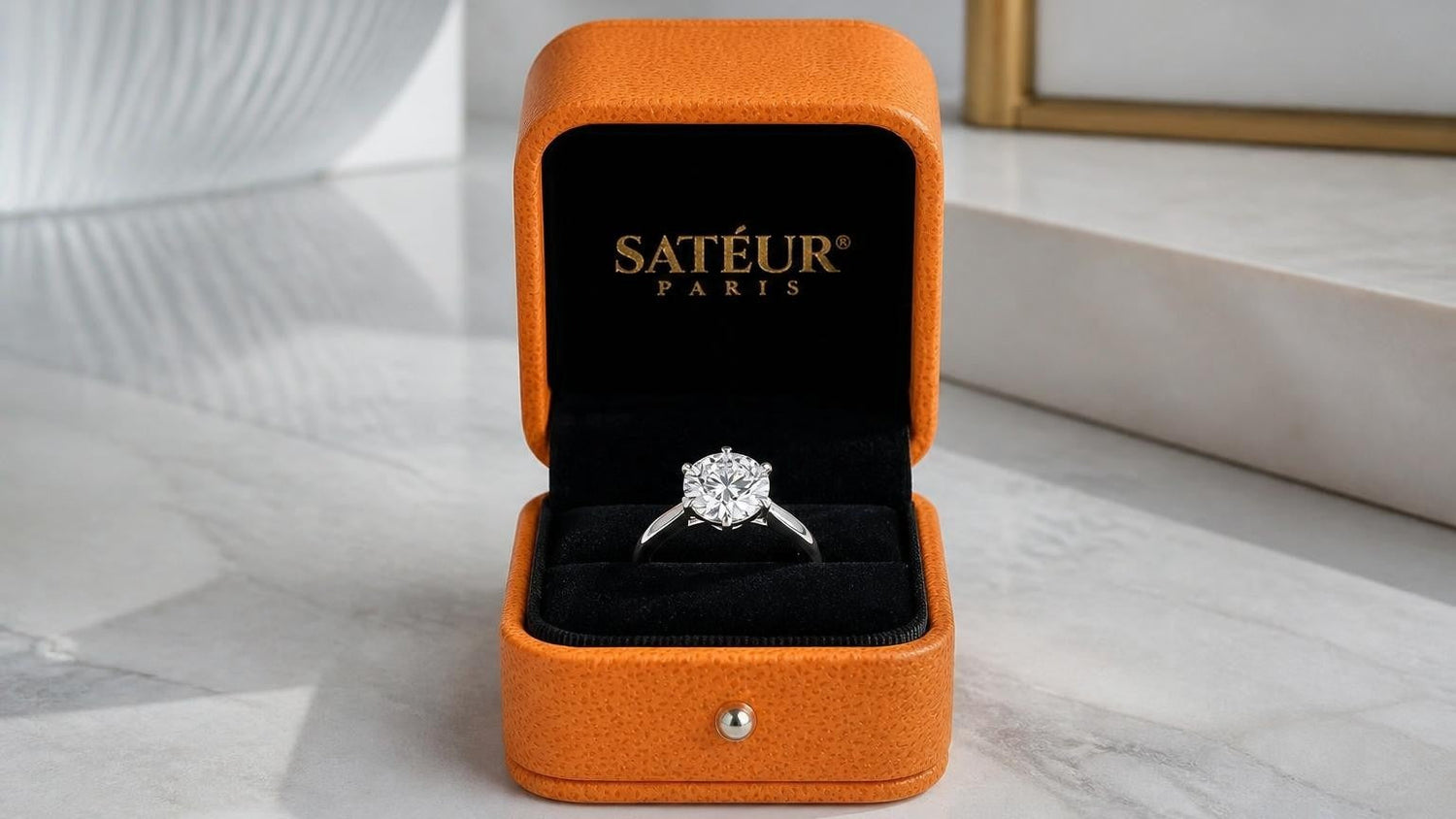
Are Lab Grown Diamonds Real?
Yes. Lab grown diamonds are real diamonds. They are not imitations and not simulants. A lab-grown diamond is the same material as a mined diamond — pure crystallized carbon — graded by IGI on the identical colour and clarity scales, and measuring a perfect 10 on the Mohs hardness scale. The only difference is origin.
One was formed in the earth over billions of years. The other was grown in a controlled environment over weeks. Place them side by side and there is nothing to separate them — not their brilliance, not their fire, not their certification. This is the foundation of our lab-grown diamond collection, and it is worth understanding in full.
Key Takeaways
- Lab grown diamonds are real diamonds — identical chemical and physical structure to mined diamonds.
- They are graded on the same 4Cs (carat, colour, clarity, cut) and certified by IGI and GIA.
- Mohs hardness 10 — the same as a mined diamond, the hardest natural material known.
- Lab diamonds typically cost 50–80% less than mined diamonds of equal specification.
- A grown diamond forms in weeks; a mined diamond took billions of years.
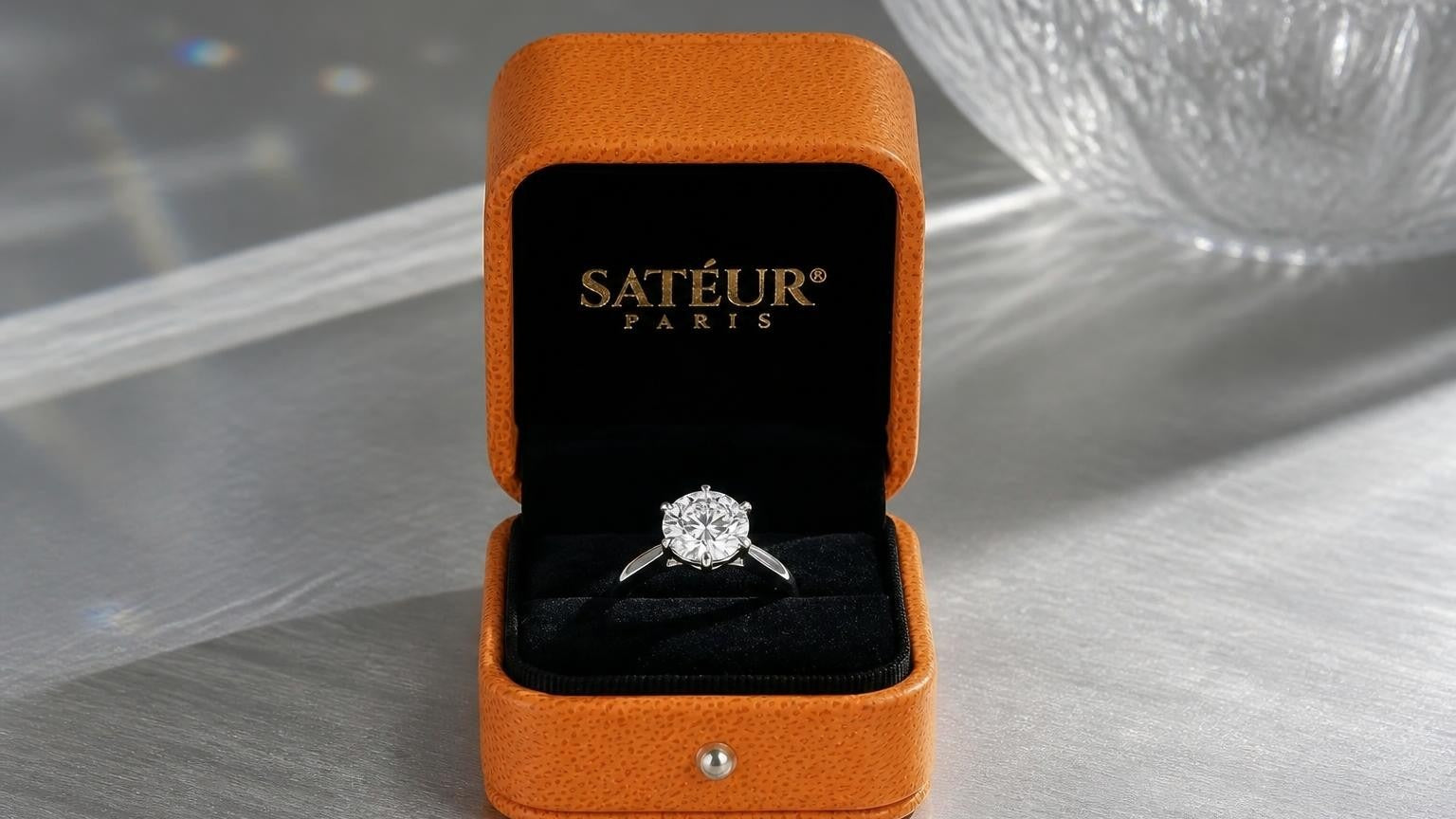
- The Satéur Destinée Diamond Ring sets a 1.00 carat lab-grown diamond in solid 18K white gold.
Chemical and Physical Properties
A diamond is defined by what it is made of, not where it came from. Both lab grown and mined diamonds are crystalline carbon arranged in the same cubic lattice. They share the same refractive index, the same dispersion, the same density, and the same thermal conductivity.
This is why a lab-grown diamond is real in every measurable sense. The properties that make a diamond a diamond — its hardness, its optical behaviour, its molecular architecture — are present in both. There is no second-tier carbon. A lab diamond is not "diamond-like." It is diamond.
Lab diamonds are created through two methods. High Pressure High Temperature (HPHT) recreates the conditions deep within the earth. Chemical Vapour Deposition (CVD) builds the crystal layer by layer from a carbon-rich gas. Both produce real, gem-quality diamonds — only the timeline is compressed.

Lab Diamond vs Mined Diamond — What Actually Differs
The honest answer is: very little. The difference is origin and price, not quality. Below is how the two compare on the properties that buyers care about.
| Property | Lab Grown Diamond | Mined Diamond |
|---|---|---|
| Material | Crystallized carbon | Crystallized carbon |
| Hardness (Mohs) | 10 | 10 |
| Certification | IGI · GIA (same scales) | IGI · GIA (same scales) |
| Formation | Weeks, controlled environment | Billions of years, underground |
| Brilliance & fire | Identical | Identical |
| Typical price | 50–80% less | Market premium |

The single meaningful distinction sits in the laboratory report: a grading certificate notes whether the diamond is laboratory-grown or natural. To the eye, on the hand, across a dinner table, there is nothing to tell apart. For a closer look at how the two stones differ in origin and value, read our guide to lab grown versus natural diamonds.
Certification and Grading — The IGI Standard
A real diamond earns a real certificate. Lab grown diamonds are graded by the same independent laboratories that grade mined stones — most prominently IGI and GIA — and on the identical 4Cs framework: carat weight, colour, clarity, and cut.
That means a lab-grown diamond graded D colour, VS clarity, Excellent cut holds the same grading meaning as a mined diamond with those grades. The report confirms the diamond is laboratory-grown and documents every characteristic to the same standard. Certification is not a courtesy here — it is proof of identity.
Every Satéur lab diamond is IGI-certified. The grading is the same language jewellers have used for a century, applied to a diamond made for a smarter era. Explore the certified pieces in our lab created diamond rings.

Cost and Value — The Real Calculation
If a lab grown diamond is real, why does it cost so much less? Because its price reflects production, not scarcity. The mined-diamond market was built on controlled supply. A grown diamond carries none of that inflation.
A lab-grown diamond typically costs 50–80% less than a mined diamond of equal carat weight, colour, clarity, and cut. The same one-carat brilliance. A fraction of the price. That is not a compromise — it is a correction. Buyers are paying for the diamond, not for an idea of rarity.
This logic scales with size. A larger centre stone that would be out of reach in a mined diamond becomes attainable when grown — which is why pieces like a 3 carat lab grown diamond ring have moved from rare to reachable.
Why Choose a Lab Diamond
A lab diamond gives you a real, certified diamond without the old-school markup. For couples who want the genuine article — the same carbon, the same hardness, the same IGI report — and who would rather direct the difference toward a larger stone or a finer setting, the choice is straightforward.
The Satéur Destinée Diamond Ring™ is the clearest expression of this. A 1.00 carat round-cut lab-grown diamond, hand-set in solid 18K white gold, certified by IGI. Classic proportion, modern clarity — The 1% Ring® that started the movement. It is The New Diamond Standard® made tangible: museum-grade presence at a fraction of the conventional price.
For buyers who want diamond-look brilliance at the entry point of the Maison, Satéur Gems offer a trademarked diamond simulant — D–E colour, Excellent cut, the clean white brilliance of a flawless diamond, from around $88. Two paths. One standard of beauty.

Satéur Destinée Diamond Ring
A real, IGI-certified lab-grown diamond, hand-set in solid 18K gold — a fraction of the mined-diamond price.
Compare to a $10,000 mined diamond
Joined by 100,000+ couples across 150+ countries.
Shop the Destinée Diamond RingFree worldwide shipping · 30-day returns · Lifetime Satéur Care
Frequently Asked Questions
What is the difference between a lab-grown diamond and a mined diamond?
The only real difference is origin. A lab-grown diamond is created in a controlled environment over weeks; a mined diamond formed underground over billions of years. Chemically, physically, and optically they are identical — both are crystallized carbon with a Mohs hardness of 10.
Are lab-grown diamonds certified and graded the same way as natural diamonds?
Yes. Lab-grown diamonds are graded by the same independent laboratories — IGI and GIA — on the identical 4Cs scale of carat, colour, clarity, and cut. The report confirms the diamond is laboratory-grown and documents each grade to the same standard used for mined stones.
How much cheaper are lab-grown diamonds compared to mined diamonds?
A lab-grown diamond typically costs 50–80% less than a mined diamond of equal carat weight, colour, clarity, and cut. The saving reflects production cost rather than artificial scarcity — the same brilliance, without the traditional markup.
What is the resale value of a lab-grown diamond?
Like nearly all jewellery — mined diamonds included — diamonds rarely resell for their retail price. A lab-grown diamond is bought to be worn, not traded. Because the entry price is far lower, the value is in the daily presence of a real, certified diamond rather than in speculation.
Do lab-grown diamonds have the same hardness and durability as mined diamonds?
Yes. A lab-grown diamond scores a perfect 10 on the Mohs hardness scale — exactly the same as a mined diamond and the hardest known natural material. It withstands daily wear identically and is suited to an engagement ring worn every day.
What are the environmental impacts of lab diamond production versus mining?
Lab diamonds are grown in controlled facilities without the land disturbance of large-scale mining. Energy use varies by producer, but the absence of extraction makes the grown route a considered choice for buyers weighing the footprint of their purchase.
Lab grown diamonds are real diamonds. The science settles it, the certification confirms it, and the price simply removes the inflation. The question was never whether they are real — it is whether you still want to pay for the myth of rarity. The 1% Ring® and The New Diamond Standard® were built for those who chose not to. Begin with the lab-grown diamond collection.
















اترك تعليقًا
This site is protected by hCaptcha and the hCaptcha Privacy Policy and Terms of Service apply.