

Nocturne
Paris, five minutes to midnight.

Plate I Plate I — the last train, five minutes to midnight.
There is a train that leaves Paris a little before midnight. The station empties around it. The porters lower their voices. Steam settles on the platform, the clock moves towards twelve, and the carriages wait with their lamps already lit, as though the evening has only just been invented.
*Nocturne* is the edit we made for that train. A rosewood salon car. A gown cut on the bias, black as the window. And on the small table beneath the lamp, a small orange box holding something that looks like a $10,000 diamond and cost one percent of it. Brilliance, after dark.

Scene I The Maison residence, Autumn 2026 — moving image.
The last train before midnight.
The platform smells of rain and iron. A porter carries a trunk he has carried a thousand times. Somewhere above the glass roof, a full moon is doing what it does every October.
She is already aboard. She was always going to be.
A diamond does not need a destination. It needs a window seat.

Scene II A still moment, between courses.
Someone in the corridor wore a mask.
Every night train has a passenger nobody can quite place. Black tie, black satin over the eyes, a door that closes softly at the far end of the carriage.
She noticed. She did not ask. The best journeys keep one secret for themselves.
Rosewood and rain. Nocturne.
Brilliance, after dark.
A meditation on the diamond that looks the part
The great sleeper trains understood something the century has since forgotten. That luxury is mostly light. Brass polished until it glows. Glass frosted until it holds the lamp. Rosewood oiled until it shows the rain on the window back to you. None of it was gold. All of it looked like gold, and nobody on board ever complained.
The Maison learned from the night trains. A Satéur stone is cut to the standard of a flawless diamond, set in the same prongs, and returns the lamp in the same way to the same eye. Across a table, across a carriage, across a platform at midnight, nobody knows. The difference is the price. The look of a $10,000 diamond, for one percent of it.
What that buys is not a smaller diamond. It is a larger evening around one. A ring that can be worn on the last train and the first coffee. Studs that go everywhere the night goes. A pendant that does not wait in the drawer for an occasion.
Maison Satéur keeps a small folio of pieces for the woman who has understood this. The porters would have called her a seasoned traveller. We call her ours.
The look of a $10,000 diamond. For one percent.
Scene IV Set down, not put away.
A small object, in orange.
The Maison's box was not made for trains. It was made for her drawer, her bedside, her travelling case.
On a rosewood table beneath a silk-shaded lamp it looks, briefly, like it was made for this. Orange against the dark wood. Black velvet against the night outside. The lettering catches the same light the brass does.

Scene V A presence, shared at the table.
The night begins.
The whistle. The platform lights holding still in the rain for one more moment. On the velvet seat opposite, a black cat that belongs to no one has decided to stay for the journey.
She will not sleep yet. The box will stay open on the table a little longer, and the ring will go on, and it will be worn through the night and the morning and the winter, in cities that have never seen this train. This was always the agreement.
A folio from the Edit.


Not costume.
Not occasion.
Just brilliance, after dark.
Pieces from the Nocturne Edit.
A small folio of new pieces for the night train. Each engineered to look like a $10,000 diamond, kept for a fraction.
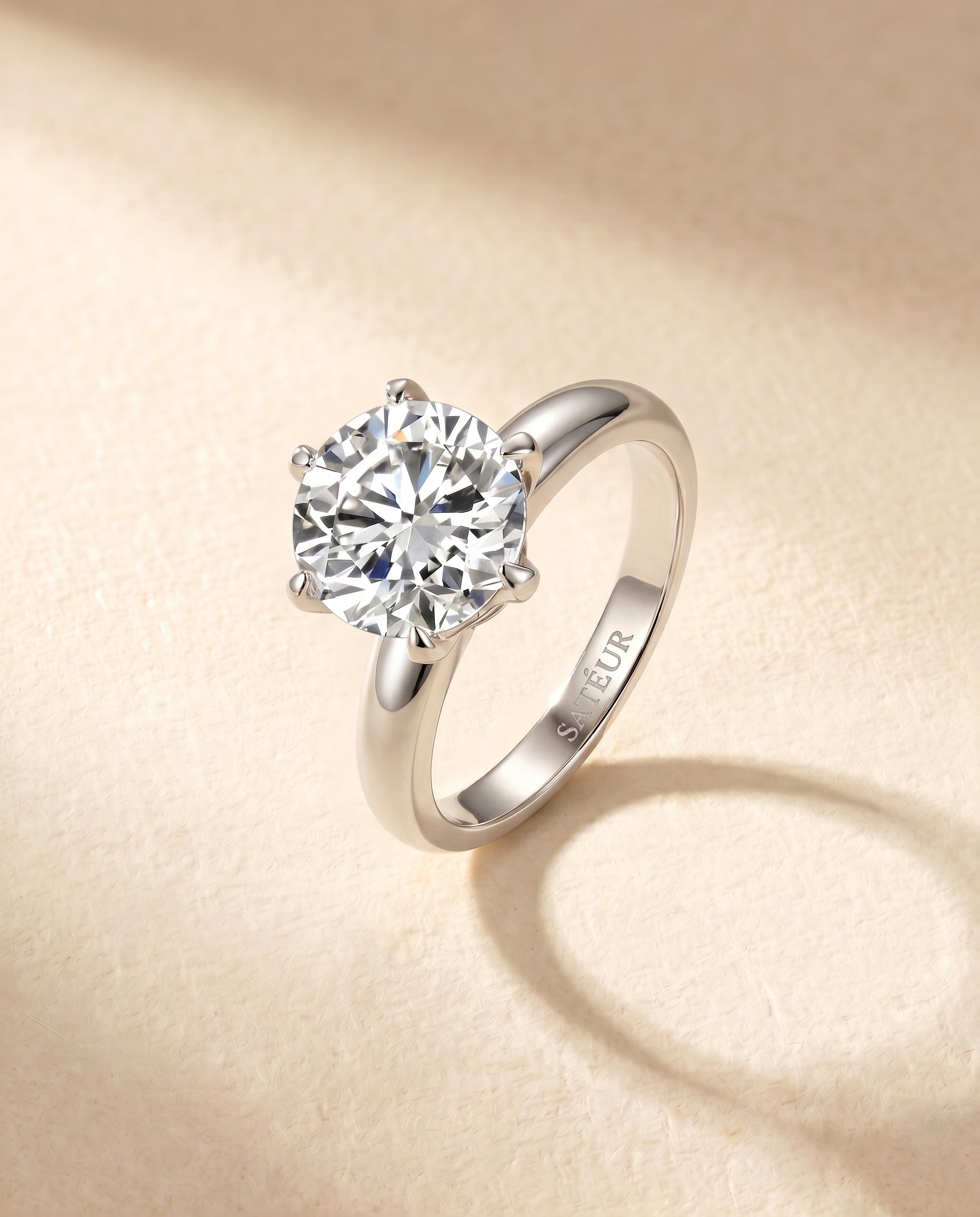

Destiny, in six prongs.


A pair, for the icon.
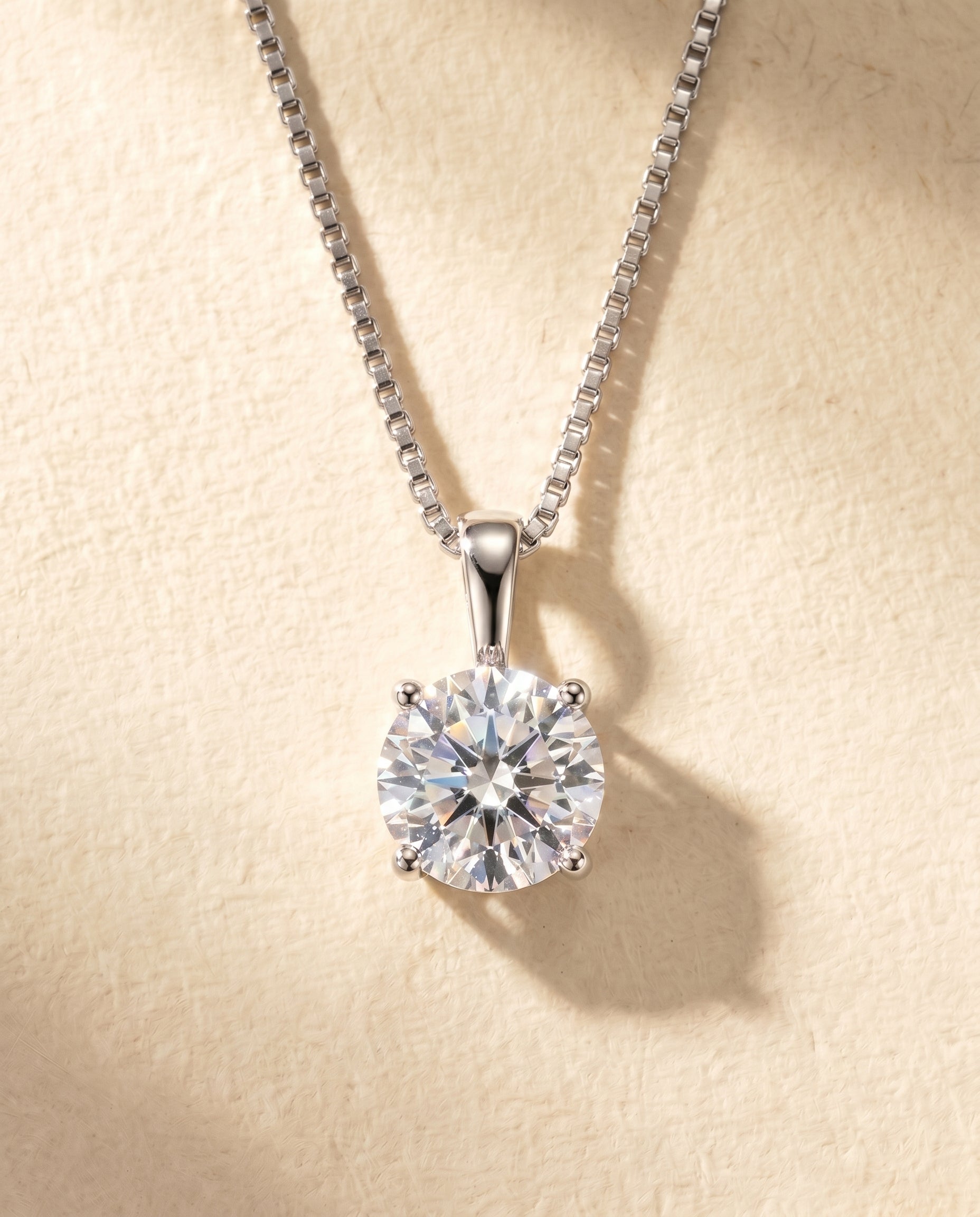
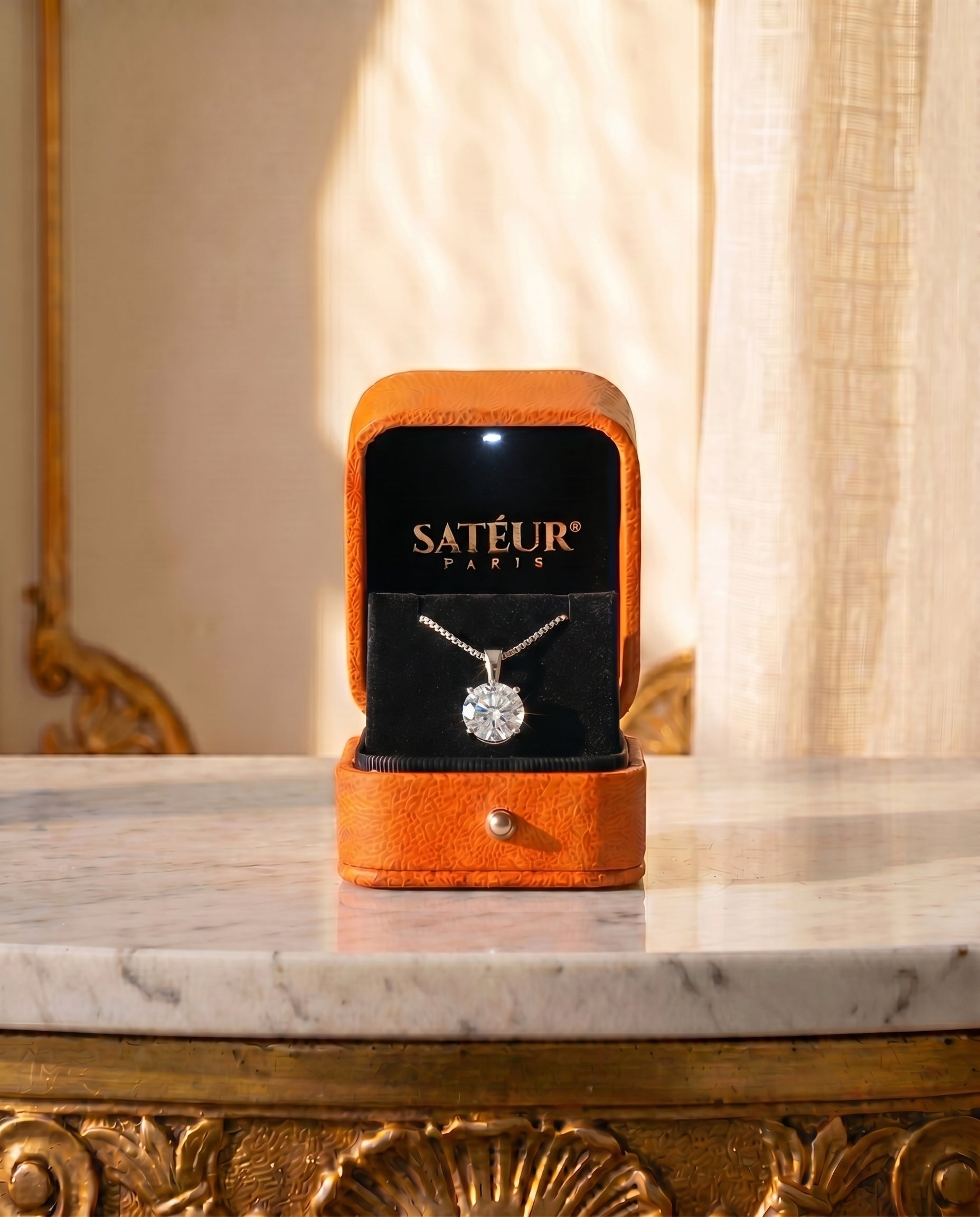
The icon, at the throat.


The arrival, marked.
