

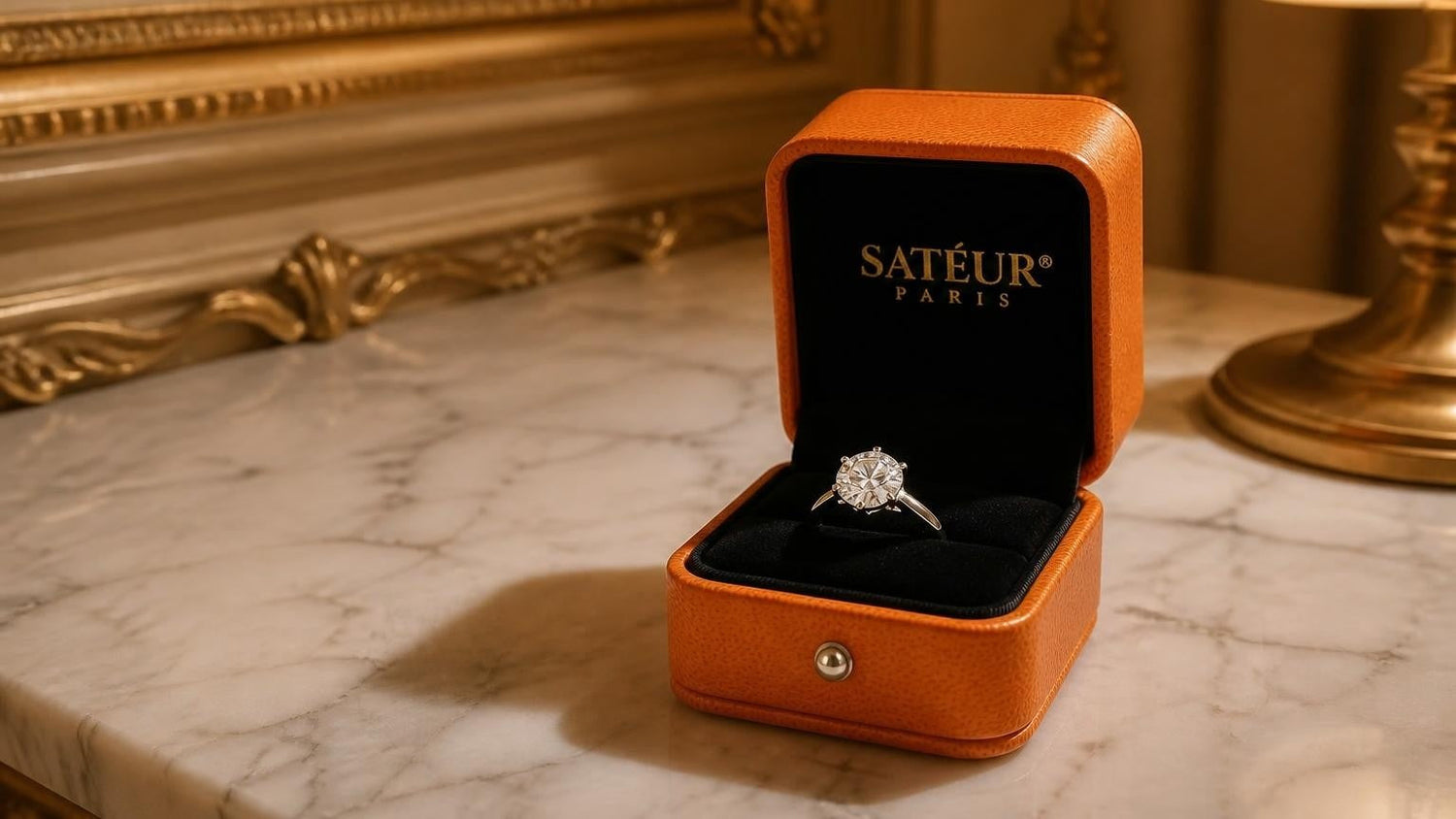
Lab Diamond vs Moissanite Durability: Which Gemstone Lasts?
When comparing lab diamond vs moissanite durability, the answer is direct: both are exceptionally durable gemstones, built for daily wear across a lifetime. The differences that matter lie in hardness numbers, optical character, ethical sourcing, and long-term value — each pointing to a different kind of buyer. This guide covers the facts without inflation.
For a broader look at how these two gemstones compare across brilliance, fire, and cost, see our complete moissanite vs lab-grown diamond guide — the parent reference for this cluster.
Key Takeaways
- Lab diamonds rank Mohs 10 — the hardest known natural substance. Moissanite ranks 9.25 — the second hardest gemstone used in fine jewellery.
- Both are extremely durable for daily wear; neither chips nor scratches under normal conditions.
- Lab diamonds are chemically identical to mined diamonds — same crystal structure, same optics, same certification pathway.
- Moissanite (silicon carbide) exhibits approximately 2.4× the fire of a diamond — vivid rainbow sparkle in direct light.
- Both lab diamonds and moissanite are lab-grown — no mining, no conflict sourcing.
- Satéur's moissanite rings in D–E colour with Excellent cut start from approximately $88 — the diamond look at roughly 1% of premium diamond cost.
What Is a Lab Diamond?
A lab diamond is a real diamond — chemically, physically, and optically identical to a mined stone. It is grown in a controlled environment using either high-pressure high-temperature (HPHT) or chemical vapour deposition (CVD) methods, replicating the natural formation process in days rather than millions of years.
Lab-grown diamonds carry IGI or GIA certification and grade on the same 4C scale as mined diamonds. The only distinction is origin — not structure, not appearance, not durability. For buyers who want certified documentation that the stone is a real diamond, lab-grown diamonds deliver exactly that.
Both lab diamonds and moissanite are ethical alternatives to mined stones — produced without the land disruption, labour concerns, or conflict risks associated with diamond mining. This is a genuine consideration for many buyers comparing the two. Explore the lab diamond collection at Satéur.
What Is Moissanite?
Moissanite is a distinct lab-created gemstone composed of silicon carbide (SiC) — first discovered in a meteorite crater by Henri Moissan in 1893. It is not a diamond simulant in the crude sense; it is a genuine gemstone with its own optical properties, certified gemological profile, and established durability record.
Modern moissanite is grown entirely in laboratories — every stone is lab-created silicon carbide, not mined. It is chemically and structurally different from a diamond, but it produces a diamond-like appearance with notably more fire. For buyers who want gemstone credibility, vivid sparkle, and a clear answer to the moissanite lab diamond comparison, it is a rational and considered choice.
Satéur's moissanite is cut to D–E colour with Excellent cut — starting from $88. Explore the moissanite rings collection or the full moissanite range.

Durability Comparison: Mohs Hardness and Scratch Resistance
The Mohs hardness scale measures a mineral's resistance to surface scratching, from 1 (talc) to 10 (diamond). The higher the number, the more resistant the surface to abrasion from everyday contact with dust, grit, and hard surfaces.
| Property | Lab Diamond | Moissanite | Satéur Gems® |
|---|---|---|---|
| Mohs Hardness | 10 | 9.25 | ~8.8 |
| Scratch Resistance | Exceptional | Excellent | Very Good |
| Daily Wear | Yes | Yes | Yes |
| Toughness | Good | Very Good | Good |
| Long-Term Stability | Permanent | Permanent | Permanent |
| Lab-Grown | Yes | Yes | Yes |
A lab diamond's Mohs 10 rating means only another diamond can scratch it. Moissanite at 9.25 is the second hardest gemstone used in jewellery — harder than sapphire (9.0), harder than ruby, harder than every other stone a ring might encounter during daily life. The practical difference between 9.25 and 10 is negligible in any real-world wear scenario.
Satéur Gems® sits at approximately 8.8 Mohs — still extremely durable and well above any substance encountered in daily life. All three tiers are engineered for lifetime wear. For a dedicated look at how moissanite durability stacks up, see moissanite vs diamond durability.
Optical Properties: Colour, Clarity, and Fire
This is where lab diamonds and moissanite diverge most visibly — and where the choice often resolves itself.
A lab diamond returns the same crisp, white brilliance as a mined diamond. Its refractive index (~2.42) and dispersion values are identical to natural diamond. The light it returns is precise and colourless — what the trade calls icy white brilliance.
Moissanite's higher refractive index (~2.65) and dispersion produce approximately 2.4× the fire of a diamond — vivid, rainbow-forward sparkle that is especially visible in direct sunlight or bright indoor light. This is a distinct aesthetic signature. Some buyers find it more beautiful than diamond. Others prefer the restraint of white brilliance. Neither is superior — they are different.
Satéur Gems® are engineered for diamond-accurate white brilliance — the clean, restrained look of a flawless diamond. This is the defining characteristic of the Satéur Gems® tier: it reads as a fine diamond across the table and to the naked eye.
For a direct visual comparison in different lighting conditions, see moissanite vs diamond side by side. For the full three-tier landscape, the guide on buying moissanite vs diamond vs lab diamond covers each option in depth.
Long-Term Wear: Which Maintains Its Look?
Both lab diamonds and moissanite are optically stable over decades. Neither clouds, fades, nor loses brilliance under normal wear. This distinguishes them from cubic zirconia, which shows surface degradation within years.
Lab diamond: permanent, chemically inert, unaffected by household chemicals, temperature changes, or UV exposure. Its brilliance on day one is its brilliance in twenty years — a property of the diamond crystal structure, shared equally by lab-grown and mined stones.
Moissanite: similarly stable. The concern that moissanite yellows or clouds over time relates to early first-generation stones with lower colour grades. Modern D–E colour moissanite — the grade Satéur sources — remains colourless and brilliant indefinitely. Silicon carbide's crystal structure is among the most stable in gemology.
Both are cleaned with mild soap and warm water. Both are safe for standard ultrasonic cleaning. Neither requires special maintenance under daily conditions.

Satéur Destinée Ring™
The look of a flawless diamond, for 1% of the price.
Compare to a $10,000 mined diamond
Joined by 100,000+ couples across 150+ countries.
Discover The 1% RingFree worldwide shipping · 30-day returns · Lifetime Satéur Care
Price and Value: Lab Diamond vs Moissanite Rings
The cost difference between lab-grown diamonds and moissanite is significant — and it matters for how you think about value.
| Option | Approximate Price (1 ct round) | Certification |
|---|---|---|
| Mined Diamond | $4,000–$12,000+ | GIA / AGS |
| Lab Diamond | $800–$2,500 | IGI / GIA |
| Moissanite | $200–$600 | Brand-certified |
| Satéur Moissanite | From $88 | D–E / Excellent |
Lab-grown diamonds carry certified documentation and the cultural weight of being a real diamond. For buyers who need that — for estate purposes, for family tradition, for a specific expectation — lab diamond is the rational choice.
Moissanite reframes the question entirely. Why does a symbol of commitment require the price of a new car? The look of a flawless diamond. The durability for daily wear. A fraction of the cost. This is The New Diamond Standard. For more on how costs compare across carat weights, see moissanite vs diamond cost per carat.
Who Should Choose Moissanite?
Moissanite suits the buyer who wants diamond-like presence — and possibly more sparkle — without diamond pricing. It is the considered choice for those who understand that a stone's brilliance has no inherent connection to its price tag.
It also suits the buyer who values transparency: moissanite is a real lab-created gemstone with its own identity. It is not pretending to be a diamond — it is a distinct and characterful alternative. Buyers who make the moissanite lab diamond choice knowingly tend to be more satisfied with it over time.
For engagement rings, moissanite opens a different calculation. The same budget that buys a modest mined diamond buys a statement moissanite ring. In most settings and most lighting conditions, the stone is visually indistinguishable with the naked eye from a much more expensive diamond. Satéur's D–E colour Excellent cut moissanite delivers everything the stone is known for — and makes multiple pieces, and multiple occasions, financially possible.

Who Should Choose Lab Diamonds?
Lab diamonds suit the buyer for whom "real diamond" matters as a category — for certification, for family expectation, for a specific occasion where the IGI documentation carries weight. They offer every property of a mined diamond at a fraction of the price, with full certified grading on the same 4C scale.
If the distinction between a real diamond and a lab-created alternative matters to the person receiving the ring, a lab diamond resolves that question cleanly. The lab-grown diamonds collection at Satéur covers this tier. The engagement rings collection spans all three tiers for comparison.

Satéur's Moissanite: Exceptional Value Without Compromise
Over 100,000 customers across 150+ countries have made a different choice. The Satéur Destinée Ring™ — The 1% Ring® — delivers the look of a flawless diamond for 1% of the price. D–E colour. Excellent cut. A stone built for every day and every decade.
The moissanite Satéur uses is not a compromise. It is a position. The New Diamond Standard is not about what you paid. It is about what you chose, and why. Both lab-grown diamonds and moissanite sit within that framework — real stones, ethically grown, without the artificial premium of the traditional diamond industry.
Begin with the icon: The 1% Ring.
Frequently Asked Questions
What is the main difference between lab diamonds and moissanite?
Lab diamonds are chemically identical to mined diamonds — same crystal structure, same composition, same optical properties. Moissanite is a distinct lab-created gemstone (silicon carbide) with its own character: notably more fire (approximately 2.4× the light dispersion of diamond) and a slightly lower Mohs hardness of 9.25 vs 10. Both are genuine, durable gemstones grown in a laboratory. The choice comes down to whether you want the certified "real diamond" identity or the vivid, high-fire brilliance of moissanite at a fraction of the cost.
Which gemstone is harder: lab diamond or moissanite?
Lab diamond ranks Mohs 10 — the maximum on the scale. Moissanite ranks 9.25 — the second hardest gemstone used in fine jewellery, harder than sapphire or ruby. In practical daily wear, the difference between 9.25 and 10 is negligible. Neither scratches under normal conditions. Both are built to last indefinitely.
Does moissanite stay clear over time or does it cloud?
Modern D–E colour moissanite does not cloud. The concern relates to early first-generation stones with lower colour grades. Silicon carbide's crystal structure is among the most stable in gemology. Satéur sources only D–E colour moissanite with Excellent cut — it remains colourless and brilliant under normal wear, cleaned with mild soap and warm water.
Will moissanite show colour or rainbow sparkle in sunlight?
Yes — moissanite's higher dispersion produces more vivid fire than a diamond, visible as rainbow sparkle in direct or bright light. This is the stone's optical signature and a genuine distinction from diamond. Satéur Gems® — the flagship tier — are engineered for diamond-accurate white brilliance, for buyers who prefer that restrained look.
How do lab diamonds and moissanite differ in appearance to the naked eye?
Lab diamonds return crisp, white light — visually indistinguishable from a mined diamond with the naked eye. Moissanite returns more fire — vivid, colourful flashes especially visible in sunlight or photographs. In dim or candlelight, both appear brilliant and similar. The distinction is most visible in direct outdoor light.
Which option offers better long-term value for an engagement ring?
Both hold their appearance permanently — neither clouds, scratches under normal wear, nor loses brilliance. Lab diamonds carry certified resale documentation, though resale values have declined as the market matures. Moissanite has no significant resale market but requires no premium for documentation. For buyers focused on wear, meaning, and presence rather than asset value, Satéur's D–E colour Excellent cut moissanite from $88 offers exceptional long-term value per dollar spent.















اترك تعليقًا
This site is protected by hCaptcha and the hCaptcha Privacy Policy and Terms of Service apply.