

How to Buy an Engagement Ring Debt-Free
The debt-free ring is not a lesser choice. It is a smarter one. Industry surveys consistently cite engagement debt as a primary financial stressor for couples planning a wedding — yet the stress is entirely avoidable. There is no gemological reason a mined stone at $10,000 outshines a well-cut diamond simulant at $138. The look of a flawless diamond is achievable without credit. This guide explains exactly how to find, save for, and buy an engagement ring that respects your money as much as it celebrates the moment.
Key Takeaways
- Engagement debt affects a significant share of newly engaged couples — it is avoidable with a clear saving strategy.
- Debt-free buyers typically spend $500–$2,500; the average mined diamond ring runs $3,000–$7,000.
- Diamond simulants with D-E colour and Excellent cut are visually indistinguishable from mined stones with the naked eye.
- Satéur Gems® entry price starts at approximately $138 — roughly 1% of a comparable mined diamond.
- A Mohs hardness of ~8.8 makes Satéur Gems® durable enough for everyday wear in a ring setting.
- The New Diamond Standard does not require a credit card.
How to Buy an Engagement Ring Debt-Free
The first step is simple: decide what you can pay before you look at anything. Jewellery retail — in-store or online — is designed to move your personal threshold upward. A $3,000 piece feels modest after twenty minutes with a $12,000 tray. The antidote is to set your personal amount independently, in a calm moment, before any browsing begins.
Once you have a number, the process is straightforward. Save to it. Pay outright. The purchase carries no monthly obligation. There is no interest accrual, no question in January of whether the ring was worth what it took to pay it off. The moment is clean. That freedom is part of the gift.
Even buyers who have access to credit often take this path. Not because they have to — because they want the engagement to begin on solid ground. A ring that is fully yours when it arrives on her hand carries a different weight than one still being paid for.
Set a Realistic Engagement Ring Budget
A realistic budget is one you can reach by saving — not by borrowing. The average mined diamond engagement ring in the US costs $3,000–$7,000. For couples who prioritise financial health, the ceiling is typically lower: a personal budget of $500–$2,500, depending on income and how long you want to take to save.
The mechanics are easy to follow. Decide how much you can set aside each month. Divide your target amount by that figure. That gives you your timeline. A $1,000 ring on a $200/month saving plan takes five months. A $500 ring takes less than three. Make sure the amount is fixed before you start looking, so browsing does not move the target.
What matters is that the money is already yours when the ring arrives. There is no credit card statement the following month. No lingering cost attached to the first weeks of being engaged. The purchase is clean — and so is the start of the relationship.
For couples who also want to understand how to present the ring well, the complete guide to engagement ring boxes covers quality markers and what to look for.
Save for Your Ring Without Going Into Debt
Saving for a ring is a form of intentional decision-making. It signals — to yourself, and to a partner if they know — that this commitment starts on solid ground. The practical steps are well established.
Open a dedicated savings account. Label it. Automate a fixed transfer on each pay date. Keep the money separate from everyday spending. When the balance reaches the target, buy. The ring costs exactly what you saved. Nothing more. No interest. No regret.
This approach also gives you time. Time to research gemstone specifications, compare settings, and find exactly what you want — rather than making an impulsive choice under sales pressure. The best ring purchases are rarely spontaneous. They are the result of someone who knew what they were looking for and waited until they could afford it properly.
Once the saving is in place, the second question is where to spend it. That is where specification knowledge helps you get the most for your money.
Engagement Ring Financing vs. Saving Strategies
The jewellery industry has normalised putting engagement rings on credit over the past two decades. Retailers offer payment plans and deferred-interest structures. These products exist because average ring prices have climbed beyond what many buyers can pay outright — and because interest is a margin driver for the store, not a benefit to the buyer.
Take a straightforward example. A $3,500 ring purchased on a 24-month credit plan at a standard consumer rate accrues several hundred dollars in interest. You pay more than the ring is worth, and part of that payment goes to a financial institution with no connection to the engagement at all. Credit cards compound the cost further if balances are not cleared quickly.
Saving first and paying outright costs exactly the purchase price. It also removes a financial obligation from the first months of the engagement — a period most couples prefer to spend on each other and on planning the wedding, not on managing a new debt.
The ring she wears is the same either way. What you pay for it is not. Make sure the difference is working in your favour.

Why Diamond Simulants Offer Better Value
A diamond simulant is a gemstone engineered to replicate the visual characteristics of a mined diamond — the white brilliance, the light return, the presence across the table. The key distinction from a mined stone is origin and cost. The key distinction from a cheap imitation is quality: a well-specified simulant cut to D-E colour and Excellent grade is visually indistinguishable from a mined diamond with the naked eye.
This is not marketing. It follows from optics. The human eye reads colour, brilliance, and cut — not molecular origin. A gemstone that returns D-E colour and clean white light under standard conditions looks like a fine diamond. That is observable, not aspirational.
The price difference follows from material origin, not quality of execution. A mined diamond carries the cost of extraction, certification, and a pricing structure built on scarcity. A precision-engineered simulant does not. The same visual result — the same sparkle, the same presence, the same look on her hand at dinner — arrives at roughly 1% of the cost. Even accounting for personal preference and the meaning of a natural stone, that is a number worth understanding before you decide.
Understanding which finger carries the engagement ring is part of the broader tradition — this guide to engagement ring placement covers the cultural and practical context.
Satéur Gems®: The Debt-Free Alternative
Satéur Gems® is a trademarked diamond simulant engineered to replicate the look of a flawless diamond. The composition is proprietary — this is a deliberate product decision. What is disclosed: the specifications that determine how the gemstone looks and performs in a ring setting every day.
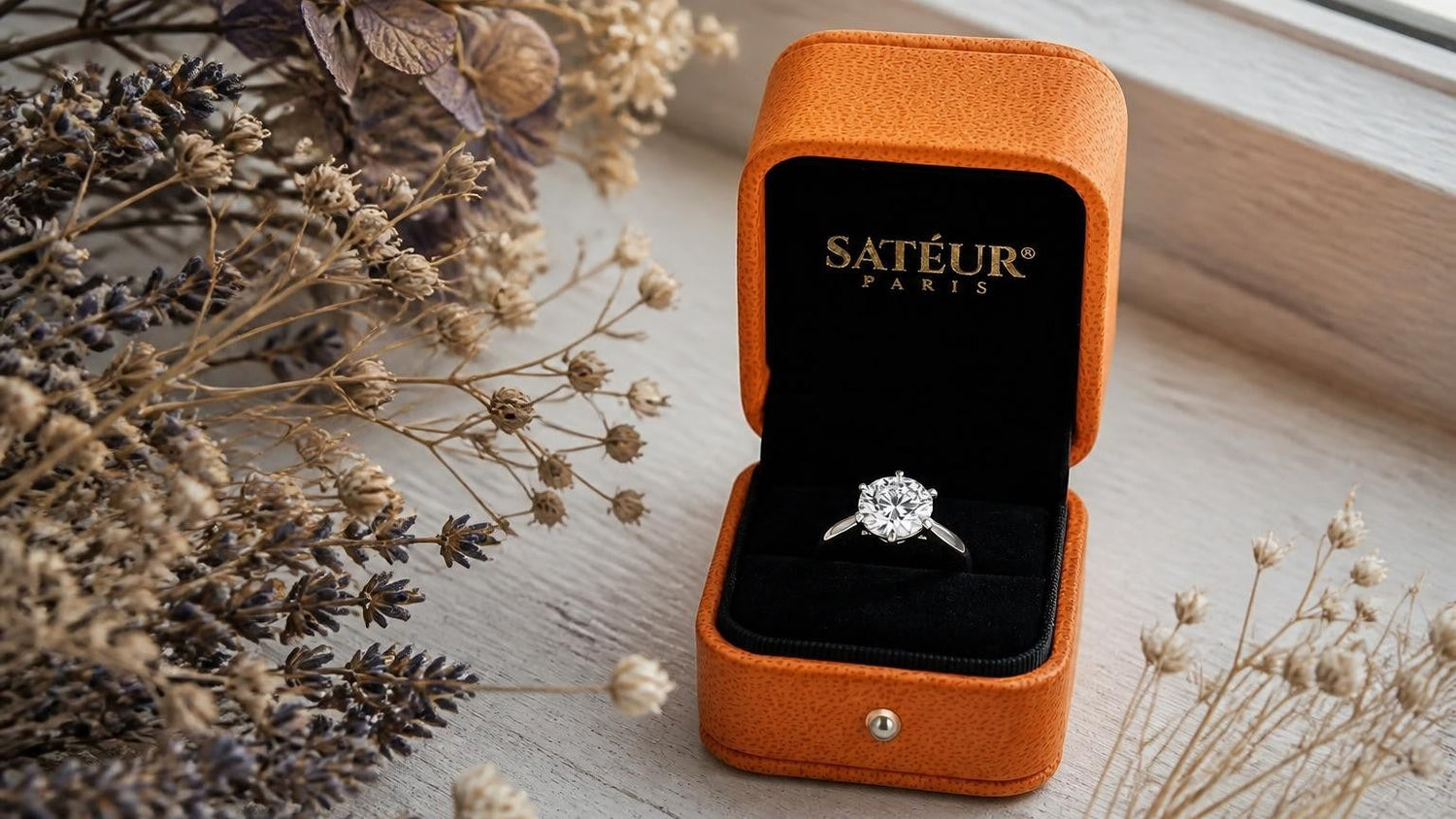
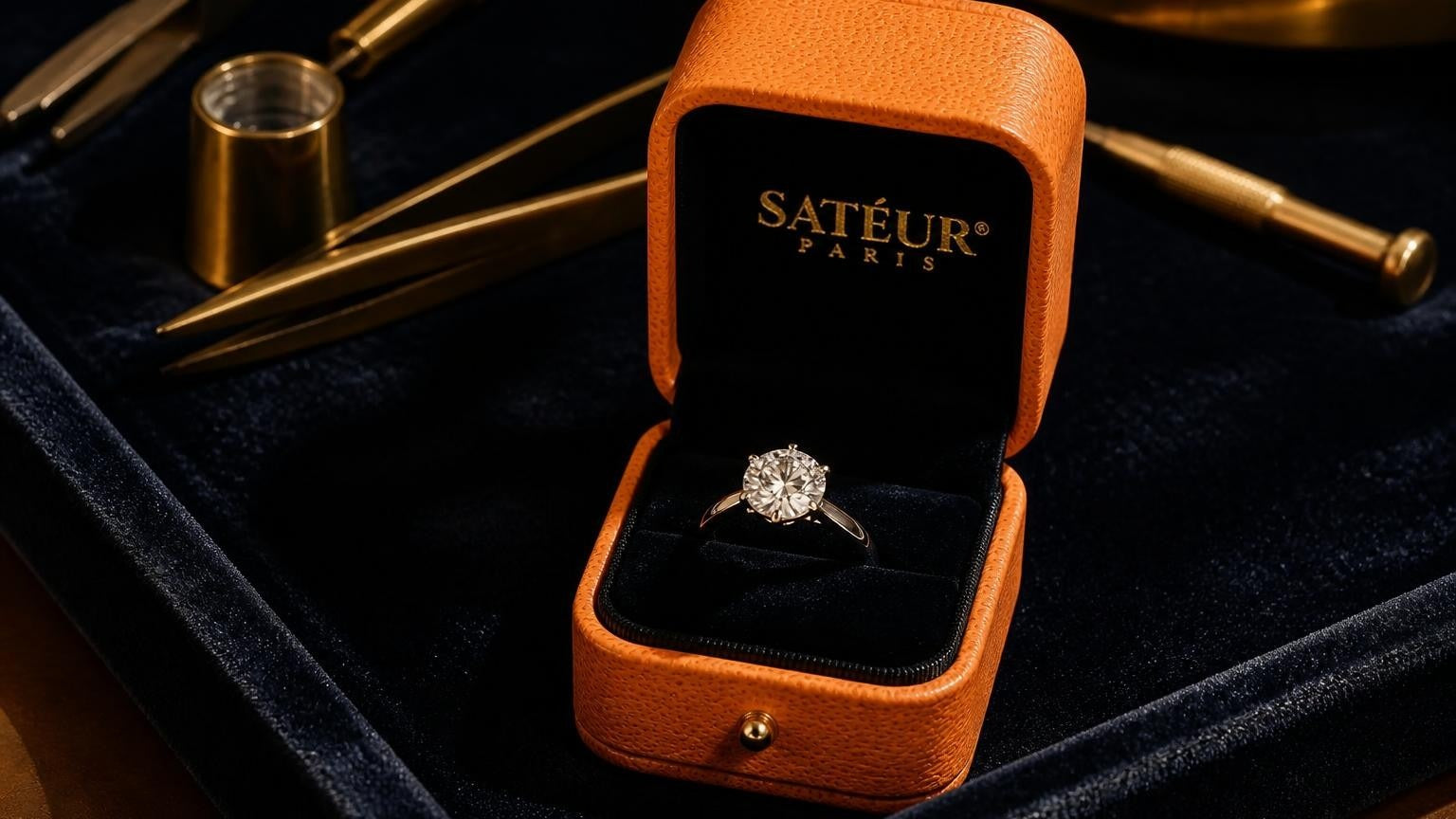
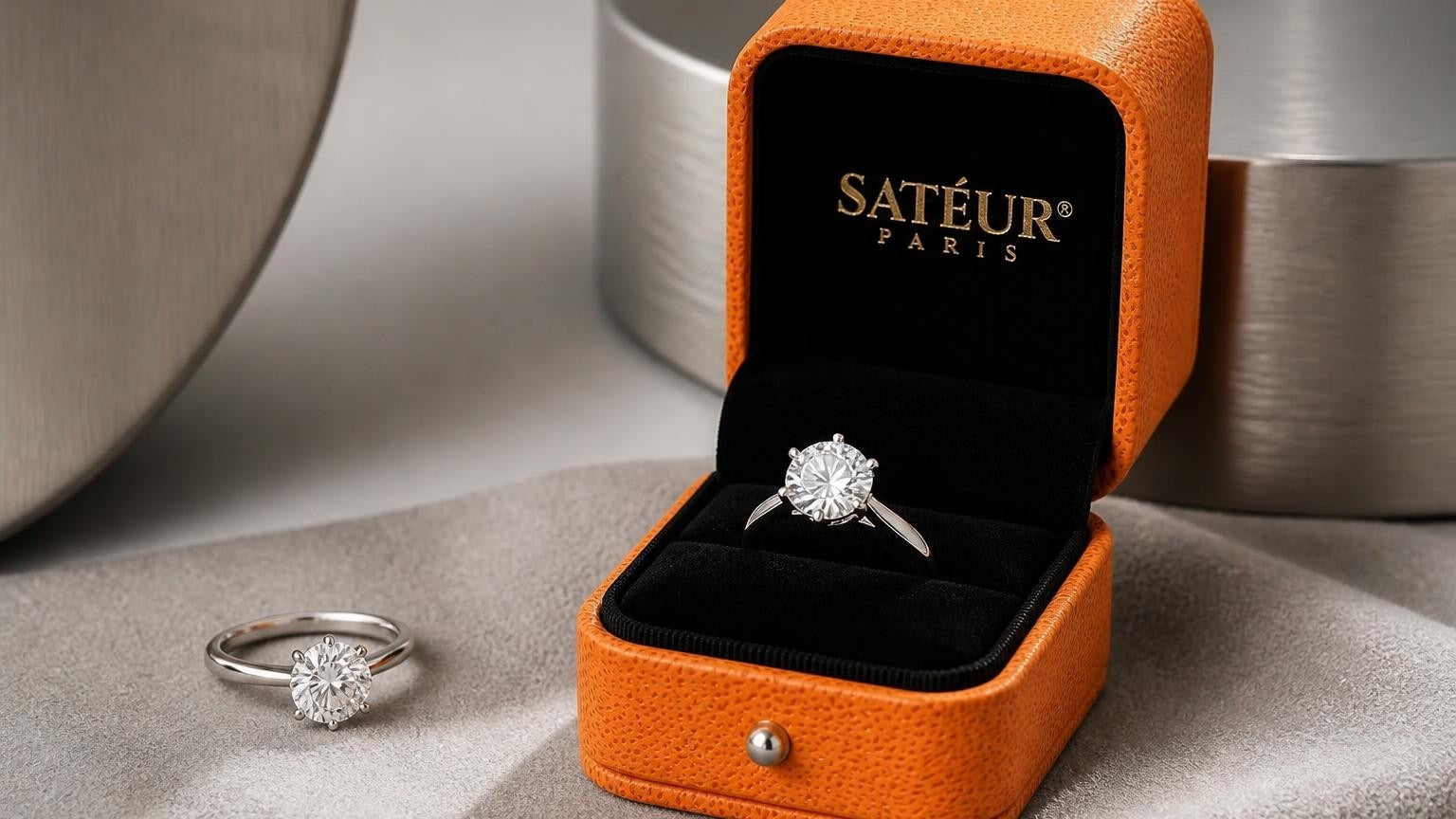
The Satéur Destinée Ring™ — known as The 1% Ring® — starts at $138. The 1.00 carat round cut option is set in an 18k white gold finish. The stone is graded D-E colour and cut to Excellent grade. It reads as a flawless diamond across the table and to the naked eye in normal light. The price places a visually premium engagement ring within reach of any debt-free budget — most buyers can save to this amount in a single month.
The collection scales beyond the entry point. Larger carat presentations — 3, 5, even 7 carats — remain a fraction of comparable mined diamond pricing. For buyers who want to make a personal statement without the associated cost, the options are there.
This is what The New Diamond Standard means in practice: the presence and beauty of a fine diamond, at a price that does not require credit to access.

Satéur Destinée Ring™
The look of a flawless diamond, for 1% of the price.
Compare to a $10,000 mined diamond
Joined by 100,000+ couples across 150+ countries.
Discover The 1% RingFree worldwide shipping · 30-day returns · Lifetime Satéur Care

Specs That Matter: D-E Colour, Excellent Cut, Mohs ~8.8
When evaluating any gemstone for a ring worn every day, four specifications determine real-world performance.
Colour grade. D-E is the top of the international colour scale — colourless to near-colourless. A gemstone in this range shows no visible tint in normal light. Satéur Gems® is engineered to this standard. The result is the clean, white brilliance of a fine diamond rather than a stone that reads slightly yellow or grey.
Cut grade. Excellent cut maximises light return — the measure of how much incident light exits through the crown. An Excellent-cut gemstone produces the brightness and patterned sparkle associated with premium mined diamonds. Cut grade is the single specification most directly tied to how impressive a stone looks on the hand.
Mohs hardness. Satéur Gems® registers approximately 8.8 on the Mohs scale. This is the level of surface hardness needed for a ring worn daily over years. A gemstone that clouds or scratches within twelve months is not a good engagement ring regardless of its colour grade. At ~8.8 Mohs, Satéur Gems® holds its surface and brilliance for life.
Refractive index. At approximately 2.39, Satéur Gems® returns the clean white brilliance of a fine diamond — not the higher-dispersion rainbow fire characteristic of moissanite. For buyers who want a gemstone that looks most like a mined diamond, this is the specification that determines the result. See the full collection at The 1% Ring collection.
Together: D-E colour, Excellent cut, ~8.8 Mohs, ~2.39 RI. These are the specifications of a gemstone that performs like a fine diamond visually and holds up in daily wear. The $138 entry price reflects material origin — not any deficit in these numbers.

Frequently Asked Questions About Affordable Engagement Rings
How much should I realistically budget for an engagement ring without debt?
Debt-free buyers typically allocate $500–$2,500 — well below the $3,000–$7,000 industry average for mined diamond rings. The right amount is one you can reach by saving over a defined period. Within that range, you will find gemstones cut to Excellent grade in quality metal settings with full visual presence. Make sure the number is set before you begin looking, so browsing does not expand the target.
What is a diamond simulant, and how does it compare visually to a mined diamond?
A diamond simulant is a gemstone engineered to replicate the visual characteristics of a mined diamond. A high-quality simulant cut to D-E colour and Excellent grade is visually indistinguishable from a mined diamond with the naked eye. The difference lies in material origin and price — not appearance. Satéur Gems® is a trademarked diamond simulant engineered to replicate the clean white brilliance of a flawless diamond, starting from $138.
Can I find an engagement ring under $500 that looks premium?
Yes. The Satéur Destinée Ring™ starts at $138. The full 1.00 carat round cut option begins at $138 — set in 18k white gold finish with a Satéur Gems® stone graded D-E colour and Excellent cut. The visual result is consistent with rings priced far above $500. There is no credit card required and no financing needed. Help yourself to the full range at sateur.com/products/ring.
What gemstone specifications ensure durability and everyday wearability?
The key durability specification for a ring is Mohs hardness. Satéur Gems® registers approximately 8.8 Mohs — the level needed to resist scratching and clouding through daily wear over years. This is the specification that determines whether a ring still looks new after a decade of being worn. At ~8.8, Satéur Gems® holds its surface. The 18k gold finish setting completes the construction for reliable everyday wear.
Should I use credit cards to pay for an engagement ring, or save first?
Saving first is the sound approach. Credit cards and payment plans add interest cost — sometimes hundreds of dollars — to a purchase that can be made outright. More meaningfully, they introduce a financial obligation into the first months of engagement. Paying with saved money means the ring costs exactly its purchase price, nothing more. With options starting at $88, the saving period is short even on a modest income.
How do I choose between a mined stone and a diamond-look alternative for my budget?
Consider what you are optimising for. If the certificate of a natural stone is part of the meaning, a mined diamond is the right choice — at the budget it requires. If visual result and financial health take priority, a high-specification simulant like Satéur Gems® delivers the look of a flawless diamond at roughly 1% of the mined stone price. Most buyers, once they see both options side by side, find the visual difference negligible to the naked eye. The personal financial difference is not negligible. Make the decision with full information.
The debt-free ring is a personal position: that a marriage begins with better ground beneath it when neither partner is paying off the proposal. Over 100,000 customers across 150+ countries have taken this path. They purchased a ring that looks like a $10,000 mined diamond. They began the engagement without financial strain. The moment was no less real.
The 1% Ring® collection was built for this decision — from $138 entry through to multi-carat presentations, each cut to Excellent grade, each carrying the clean white brilliance of a flawless diamond. Explore the full range at sateur.com/products/ring.
















اترك تعليقًا
This site is protected by hCaptcha and the hCaptcha Privacy Policy and Terms of Service apply.