



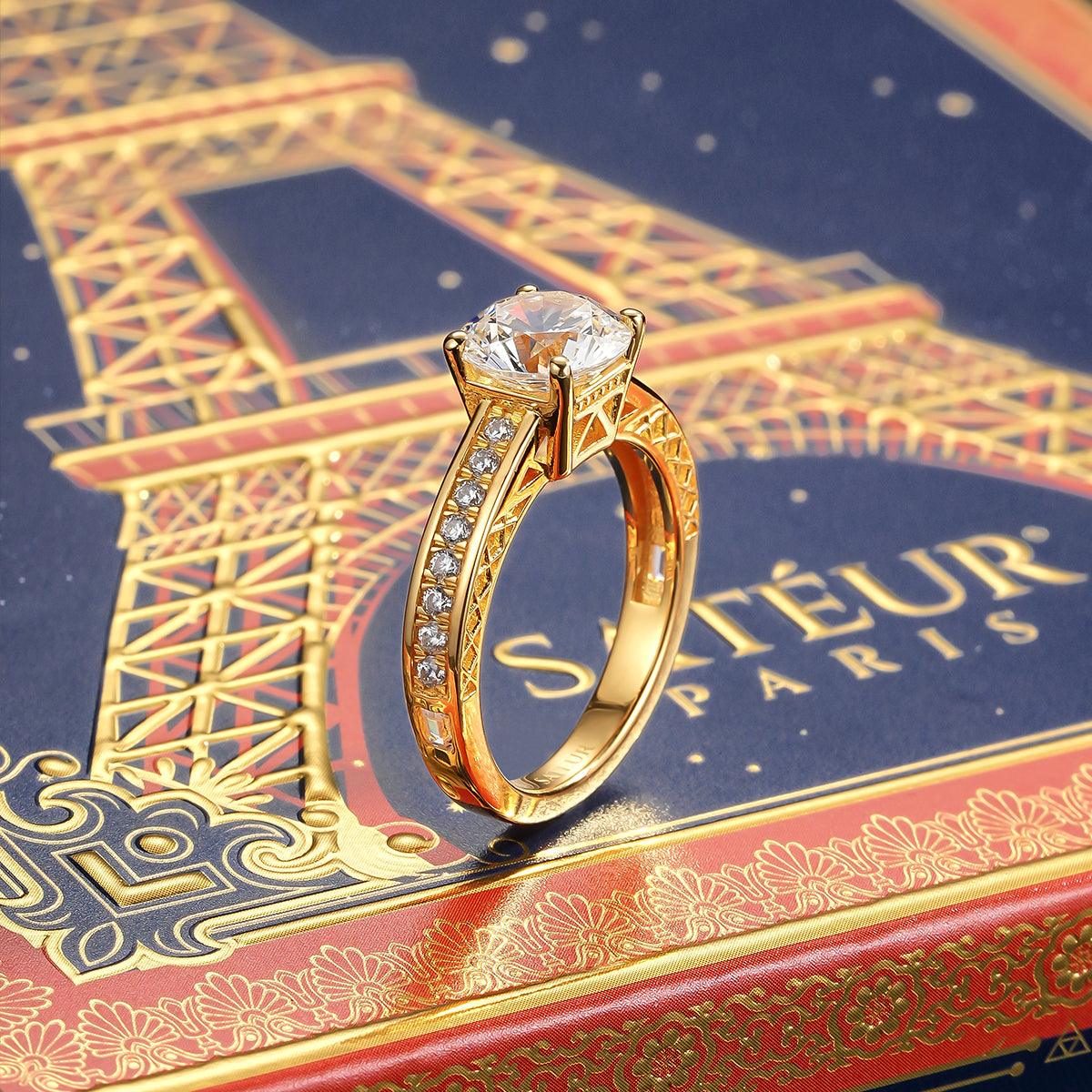
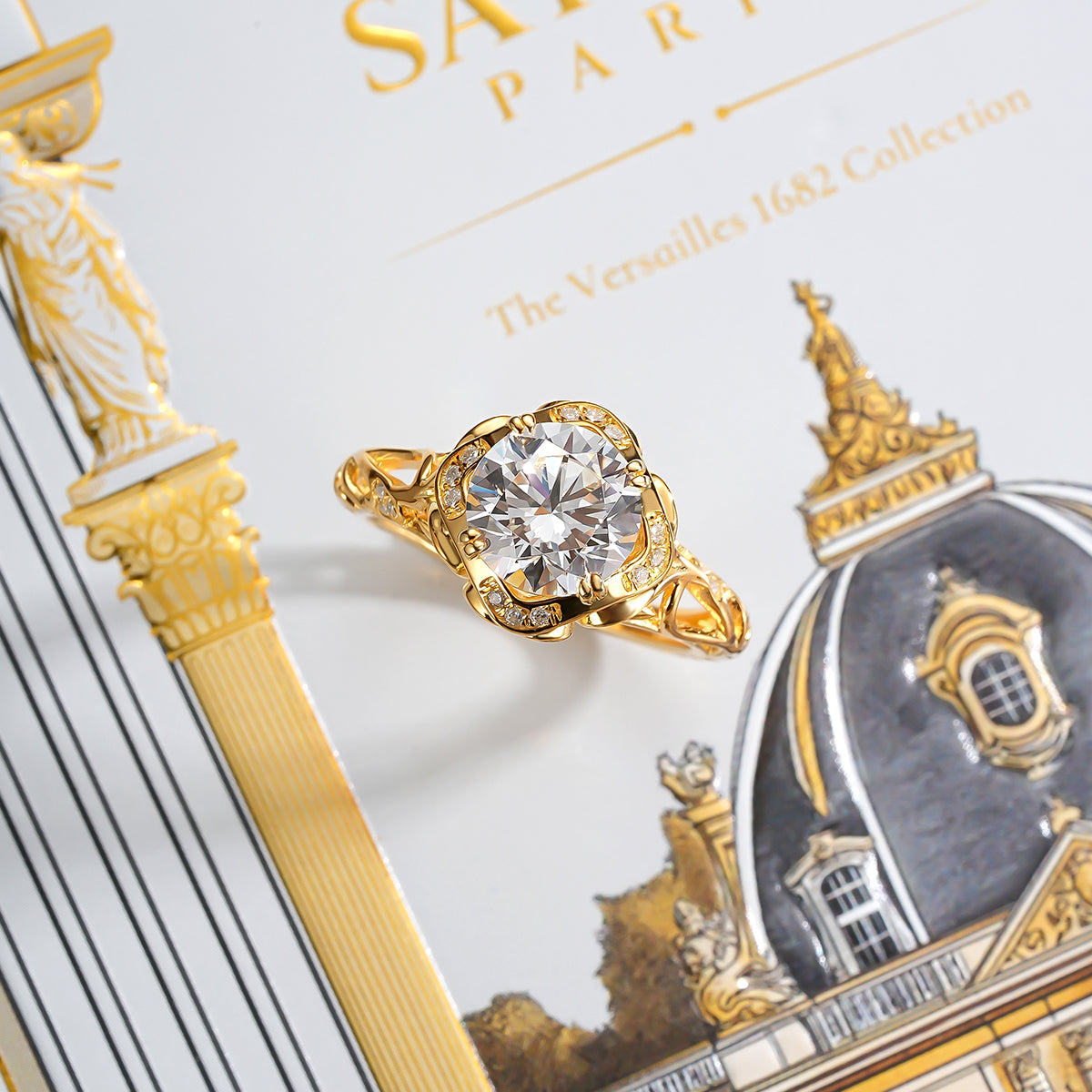
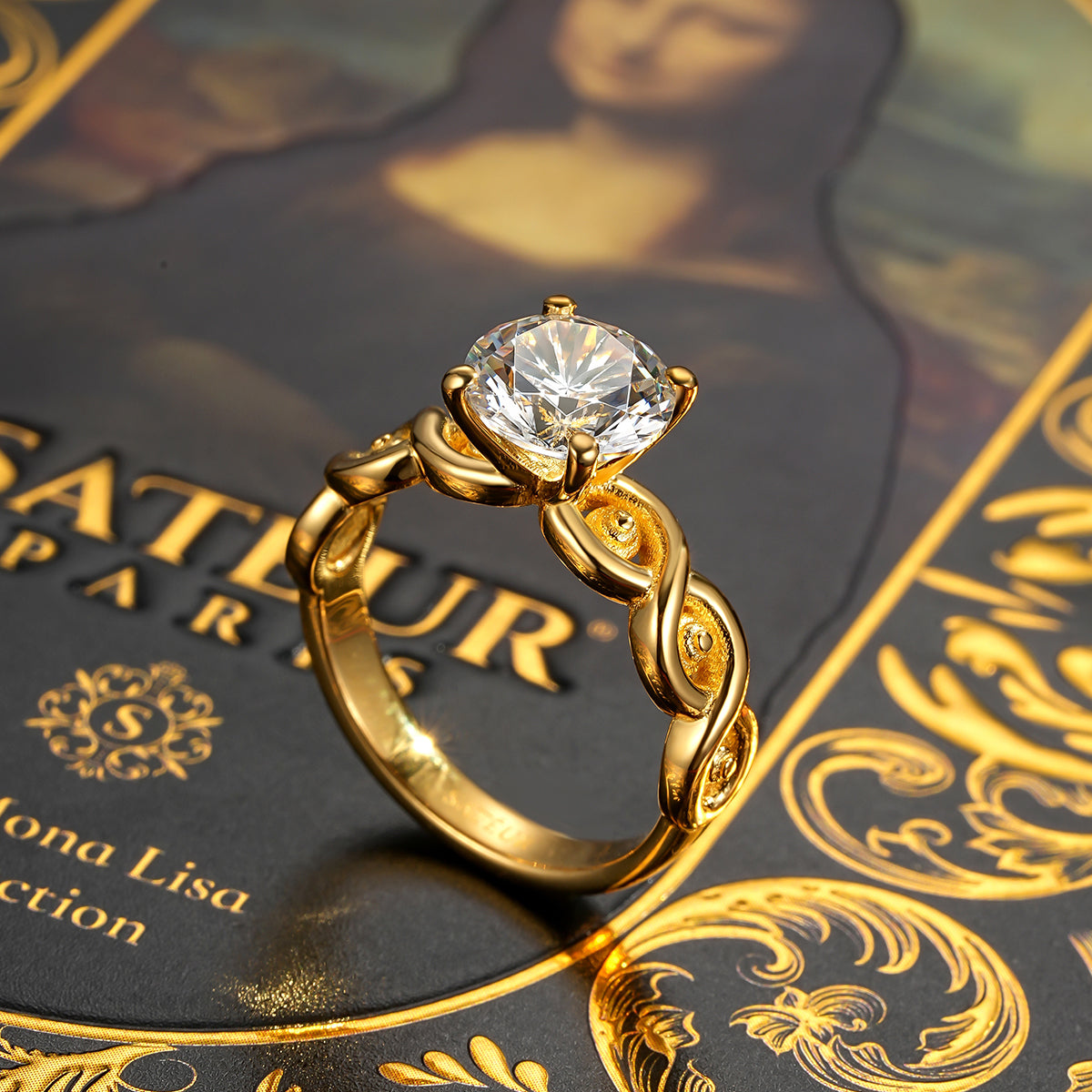

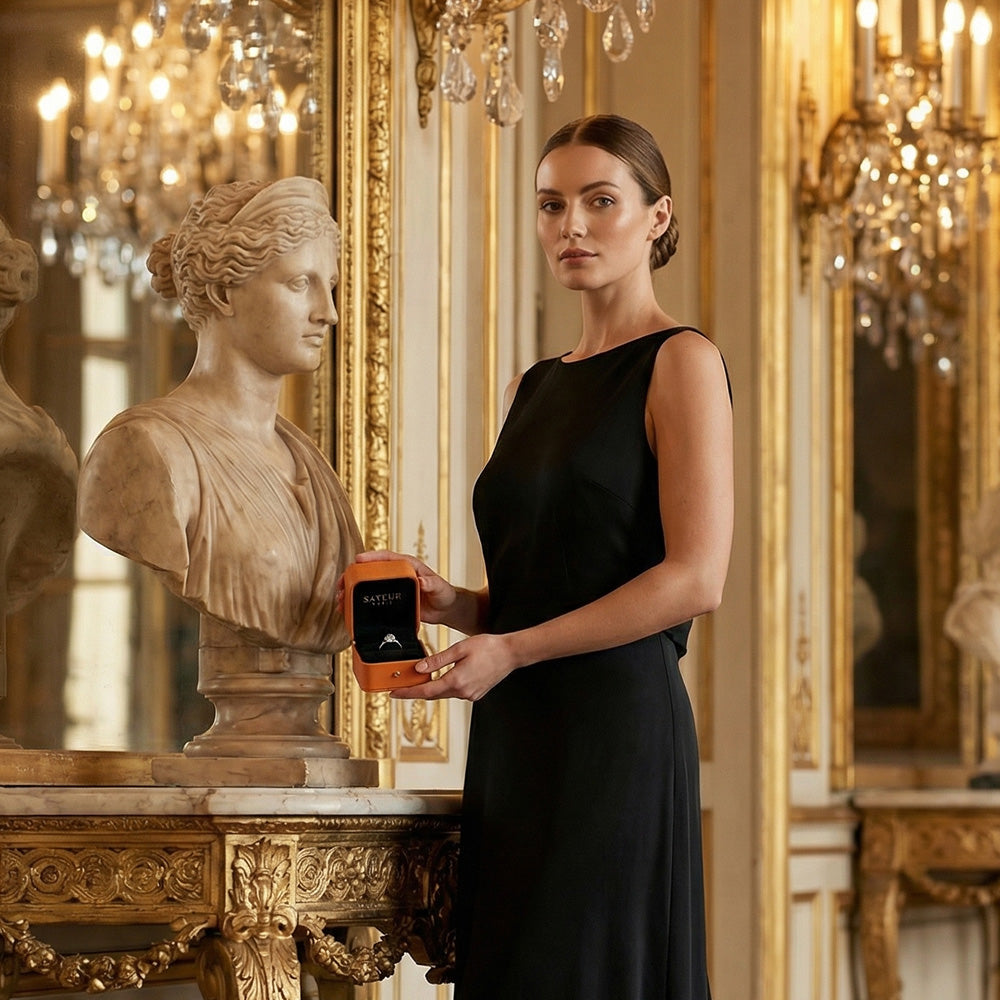

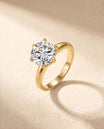

The tradition of wearing an engagement ring on the fourth finger of the left hand originates from the ancient belief in the vena amoris — the "vein of love" — said to run directly from that finger to the heart. In practice, which finger you choose for your engagement ring depends on personal preference, cultural background, and how the ring will be worn alongside a wedding band.
This guide covers the history behind the ring finger, how customs differ by country, how to stack engagement and wedding rings, and the considerations that matter most when choosing where to wear your ring.
Key Takeaways
- The tradition of wearing engagement rings on the fourth finger of the left hand originates from the belief in the vena amoris, or "vein of love."
- Engagement rings can be worn on any finger depending on personal preference, cultural tradition, or hand comfort.
- Many couples choose to stack their engagement ring with a matching wedding band after marriage.
- Ring placement on different fingers carries symbolic meaning across cultures; the ring finger traditionally signifies commitment and romantic partnership.
- Satéur Gems® bridal rings deliver D-E colour stones with Excellent cut from $98, offering the look of a flawless diamond at roughly 1% of mined diamond cost.

Which Finger Do You Wear an Engagement Ring On?
In most Western countries — including the United States, the United Kingdom, Canada, and Australia — the engagement ring is worn on the fourth finger of the left hand. This is commonly called the ring finger, and it sits between the middle finger and the little finger.
The convention is not universal, however. A significant number of countries — including Germany, Norway, Russia, India, Greece, and Spain — traditionally place the engagement ring on the fourth finger of the right hand. In Sweden and Chile, both partners have historically worn engagement rings on the right hand, switching to the left after the wedding ceremony.
For couples today, the choice of hand and finger is increasingly personal. What matters is that the ring fits comfortably, sits securely, and works practically alongside a wedding band if one is planned.
Engagement Ring Tradition and Meaning
The engagement ring as a formal symbol of a commitment pledge has documented roots in ancient Rome. Roman betrothal rings — called anulus pronubus — were typically made of iron and given by a man to a woman as a binding promise of marriage. Gold rings became more common among wealthier Romans over time.
Ancient Egyptians are credited with an even earlier ring-giving tradition, using woven reed and papyrus rings as symbols of eternal cycles. The Greeks adopted and adapted the custom, and it was the Romans who formalised the practice into something resembling the modern engagement ring exchange.
Ring placement on different fingers carries symbolic meaning across cultures. The ring finger, in particular, has long been associated with commitment and romantic partnership — a meaning that persists across most contemporary traditions regardless of which hand is used.
The Fourth Finger: History of the Ring Finger
The specific choice of the fourth finger owes much to a belief held in ancient Western society: that a vein called the vena amoris (Latin for "vein of love") ran directly from the fourth finger of the left hand to the heart. Wearing a ring on this finger was thought to keep one's beloved close at heart.
Modern anatomy does not support the existence of a distinct "vein of love" — all fingers share the same basic venous structure returning blood to the heart. The vena amoris is a poetic idea, not a physiological reality. Even so, the symbolism attached to it has proven durable, shaping engagement ring customs in the English-speaking world for centuries.
The tradition gained particular strength in medieval Europe, where church ceremonies sometimes involved placing the ring on the thumb, then moving it progressively through the fingers while reciting the Holy Trinity, arriving at the fourth finger with "Amen." This ceremonial movement reinforced the fourth finger's association with sacred, lasting commitment.
Left Hand vs Right Hand: Country-by-Country Customs

Which hand the engagement ring is worn on varies significantly by country and religious tradition. The table below summarises the most common conventions:
| Country / Region | Engagement Ring Hand | Notes |
|---|---|---|
| USA, UK, Canada, Australia | Left hand, fourth finger | Most common Western convention |
| Germany, Austria, Netherlands | Right hand, fourth finger | Wedding ring moves to left after ceremony in some regions |
| Russia, Ukraine, Poland | Right hand, fourth finger | Orthodox Christian tradition |
| Norway, Denmark | Right hand | Switched to left after marriage in some families |
| India (Hindu tradition) | Right hand | Left hand considered inauspicious in some traditions |
| Spain, Greece | Right hand | Catholic and Orthodox influence respectively |
| Sweden, Chile | Right hand (pre-wedding), left hand (post-wedding) | Both partners traditionally wear a ring |
If you are part of a bicultural couple, or simply prefer a different placement, there is no universal rule that overrides personal and family convention. Both hands are culturally sanctioned across the world.
Wearing Your Engagement Ring and Wedding Band Together

One of the most practical questions for engaged and newly married couples is how to wear the engagement ring alongside a wedding band. The most common approach in the UK and US is to stack both rings on the same finger — the wedding band worn closest to the hand (innermost), and the engagement ring on top.
This stacking order has a symbolic logic: the wedding band, placed first during the ceremony, sits closer to the heart. The engagement ring rests above it. Some people switch back to their preferred order after the wedding if comfort or fit dictates it.
Practical considerations for wearing two rings together:
- Matching metals: Pairing rings in the same metal finish — both 18k gold finish, for instance — creates a cohesive look and avoids friction between different alloy hardnesses.
- Profile fit: A curved or contoured wedding band is designed to nestle flush against a solitaire setting, preventing gaps and keeping the pair stable on the finger.
- Soldering: Some couples choose to have their rings permanently joined by a jeweller once the wedding is complete, simplifying daily wear.
- Separate fingers: Wearing the wedding band and engagement ring on separate fingers — or moving the engagement ring to the right hand after marriage — is equally valid and suits those who prefer not to stack.
For guidance on finding the right fit before you buy, see our guide to engagement ring sizes and the engagement ring box guide.
Alternative Finger Placements for Your Ring
The ring finger is the default, but it is not the only option. Some people wear engagement rings on other fingers by preference, practical necessity (sizing or anatomy), or cultural choice.
- Middle finger: A wider, more prominent finger that makes a ring highly visible. Some wearers find this comfortable; others prefer not to have a ring on the dominant finger's neighbour.
- Index finger: Historically, pre-Victorian engagement and betrothal rings were often worn on the index finger in some European traditions. It remains a stylistic choice today.
- Thumb: Thumb rings carry a different cultural connotation (self-expression, independence) in contemporary usage but are worn by some as a deliberate reinterpretation.
- Right hand ring finger: As noted above, standard in a significant number of countries. For left-handed people, right-hand placement may also be more practical.
Ultimately, an engagement ring is a personal statement. Wearing it where it fits well and feels right is more meaningful than adhering to a convention that does not suit your lifestyle or hand.
For further context on hand and finger traditions, see which finger to wear an engagement ring on and our companion piece on which hand to use for an engagement ring.
Satéur Gems®: Premium Bridal Rings at Diamond-Look Value

Whatever finger you choose, the ring itself matters. Satéur Gems® are a trademarked diamond simulant engineered to replicate the look of a flawless diamond — D-E colour, Excellent cut — with clean white brilliance that holds up to daily wear.
The Satéur Destinée Ring™ is the brand's entry bridal piece: a 1.00 carat round-cut Satéur Gems® set in an 18k gold finish solitaire, starting from $98. A mined diamond of comparable visual grade would typically cost $5,000–$10,000. The Destinée is designed to sit on the finger for decades, not just occasions.
For those who prefer a disclosed lab-created gemstone with more fire, the Satéur Destinée Ring™ is also available in Satéur Moissanite — a lab-created gemstone that carries its own optical character and is openly disclosed.
Browse the full bridal ring range at Satéur rings.

Satéur Destinée Ring™
The look of a flawless diamond — from $138.
D-E colour · Excellent cut · 18k gold finish
Free worldwide delivery. 30-day returns. Lifetime Satéur Care.
Shop the Destinée RingFree worldwide shipping · 30-day returns · Lifetime Satéur Care
Frequently Asked Questions About Engagement Ring Placement
Which finger should I wear my engagement ring on?
In the United States, UK, Canada, and Australia, the engagement ring is traditionally worn on the fourth finger (ring finger) of the left hand. In Germany, Russia, Norway, India, and several other countries, the right hand is the convention. There is no single global standard — the choice depends on cultural background, personal preference, and practical comfort.
Can I wear my engagement ring on a different finger?
Yes. While the ring finger is the most common choice, many people wear engagement rings on the index finger, middle finger, or even a thumb — whether by preference, hand anatomy, or cultural practice. What matters most is that the ring fits securely and comfortably for daily wear.
Should I wear my engagement ring and wedding band together?
Most couples in Western countries stack both rings on the same finger, with the wedding band worn innermost (closest to the hand) and the engagement ring on top. Some prefer to wear the rings on separate fingers, or to move the engagement ring to the other hand. The choice is personal and practical — there is no obligation to stack.
Does ring placement have different meanings across cultures?
Yes. In Orthodox Christian traditions (Russia, Greece, parts of Eastern Europe), the right hand is the ring hand for both engagement and wedding rings. In some Hindu traditions, the left hand is considered inauspicious, making the right hand the preferred choice. In Sweden and Chile, both partners traditionally wear engagement rings, often switching hands after the wedding ceremony.
What is the history behind wearing rings on the fourth finger?
The custom originates from the ancient Roman belief in the vena amoris — a "vein of love" thought to run directly from the fourth finger of the left hand to the heart. While modern anatomy shows no such distinct vein, the symbolism attached to it has shaped Western engagement ring customs for over two thousand years. Medieval church ceremonies reinforced the association by ceremonially moving the ring to the fourth finger during the betrothal rite.
How do I choose the right ring style for my hand and finger shape?
Slender fingers tend to suit delicate solitaire settings and elongated oval or pear cuts that visually extend the hand. Broader fingers balance well with larger round brilliants, cushion cuts, or cluster styles. If wearing two rings together, a contoured wedding band designed to pair with your chosen solitaire setting will sit flush without gaps. Ring sizing is important: a ring worn on the ring finger should slide on with slight resistance and not turn freely. See our full sizing guide for measurement advice.


















Leave a comment
This site is protected by hCaptcha and the hCaptcha Privacy Policy and Terms of Service apply.