



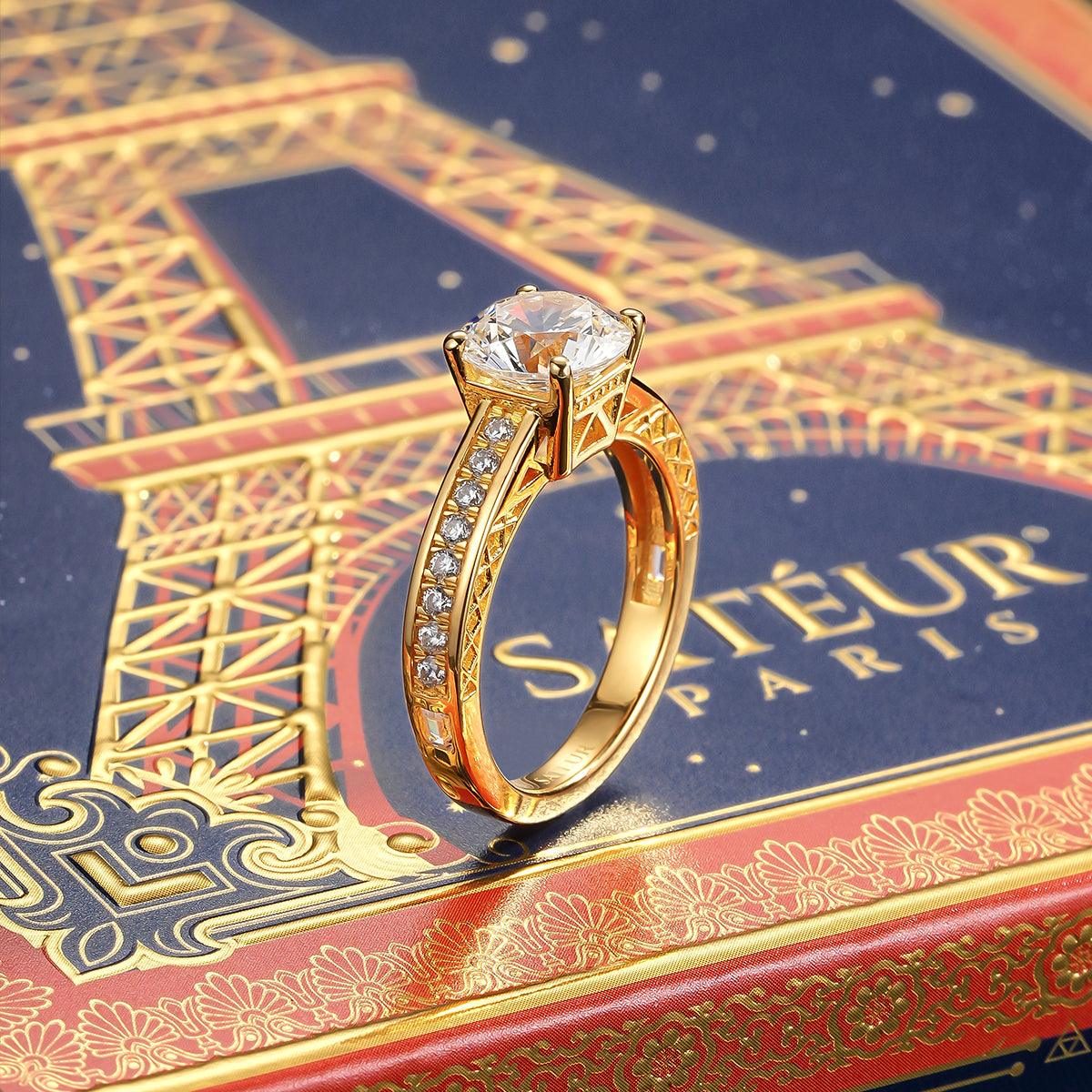
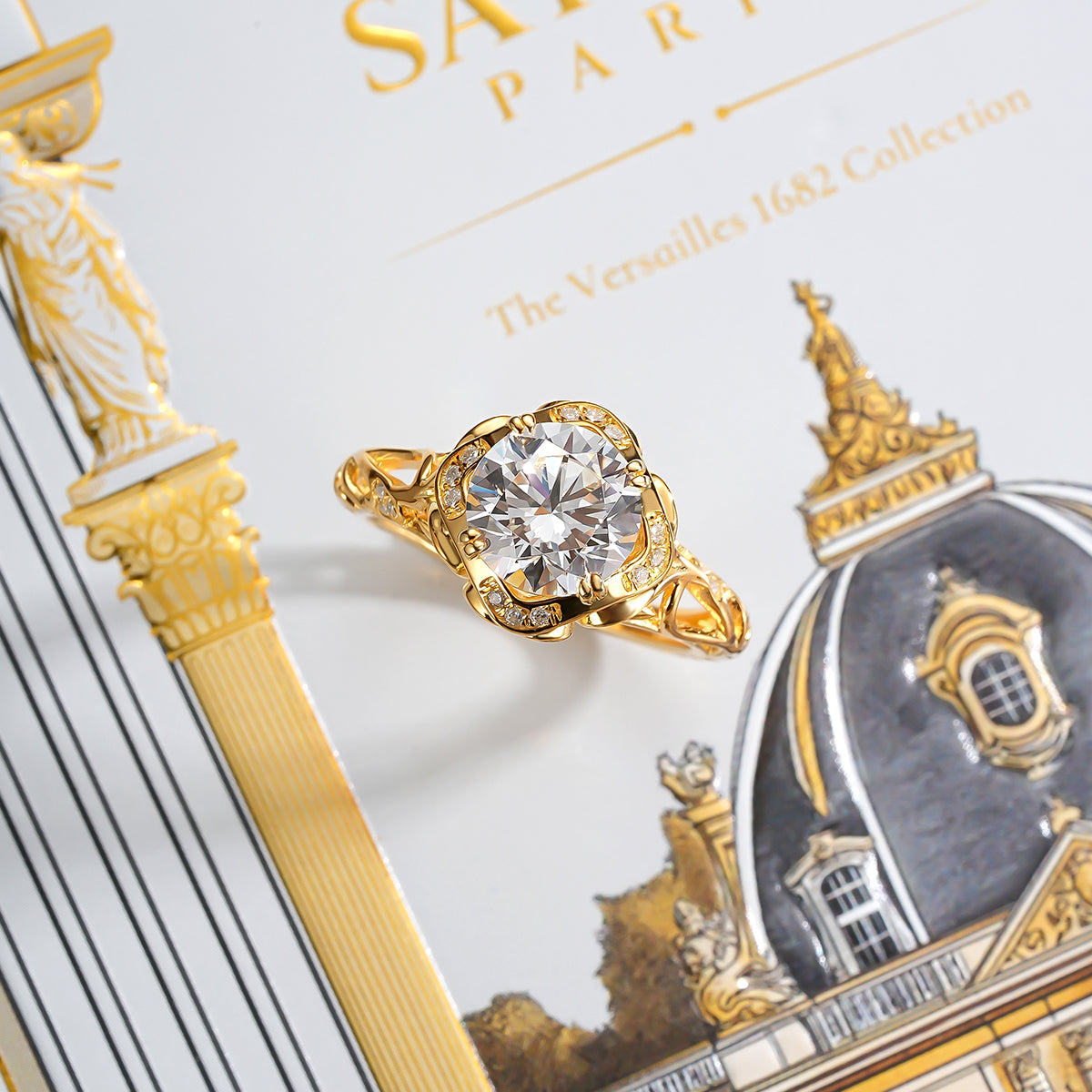
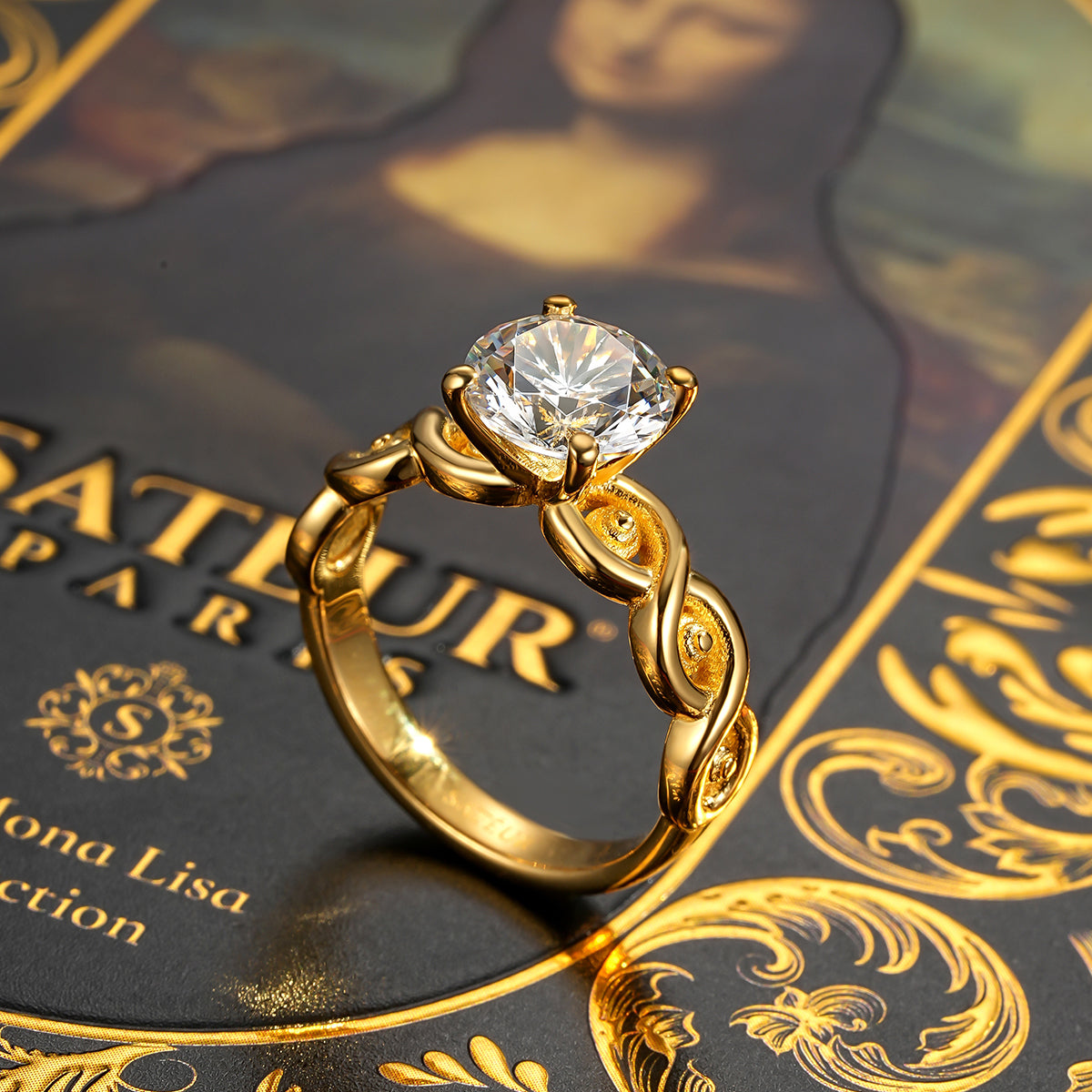
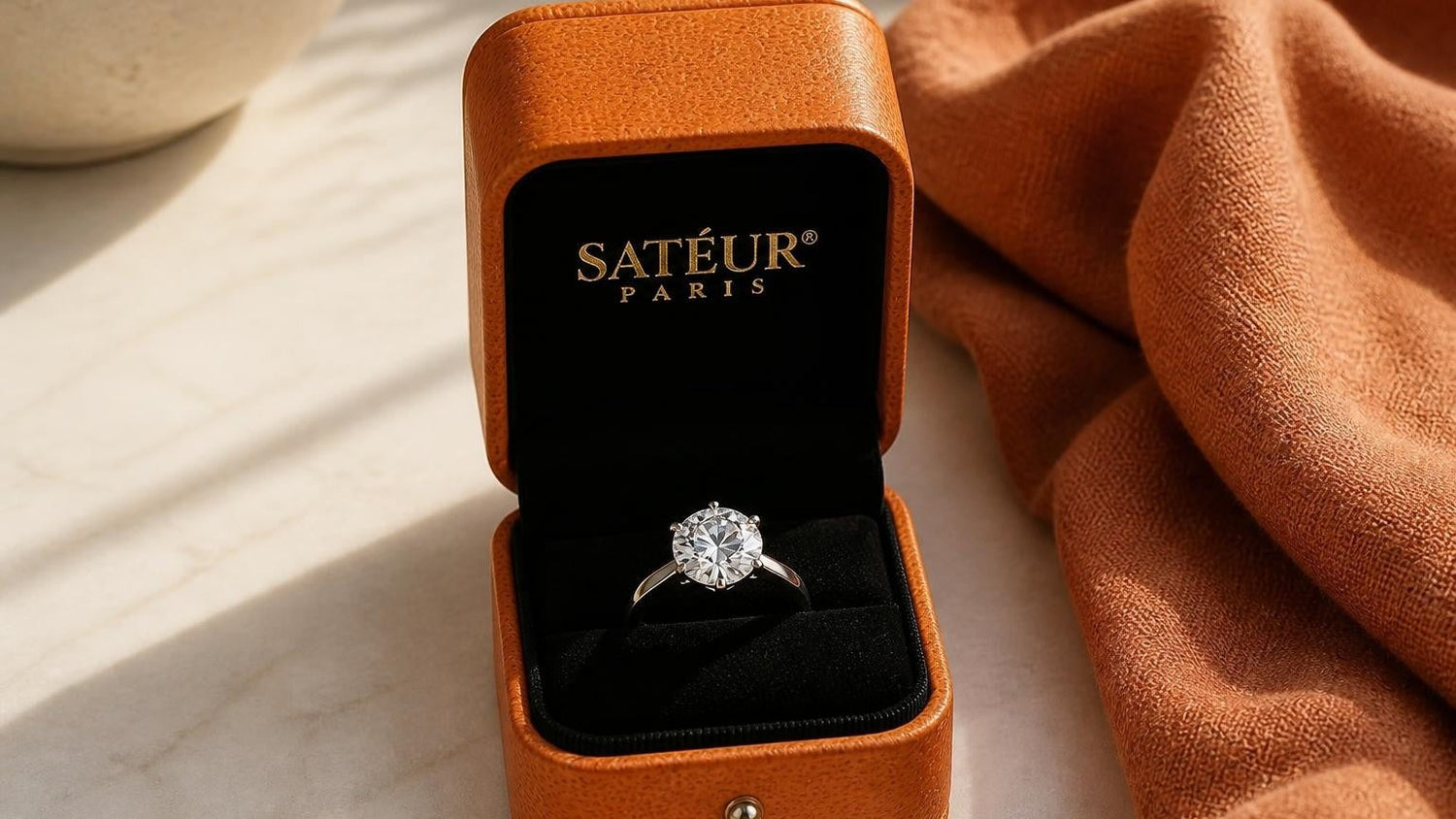
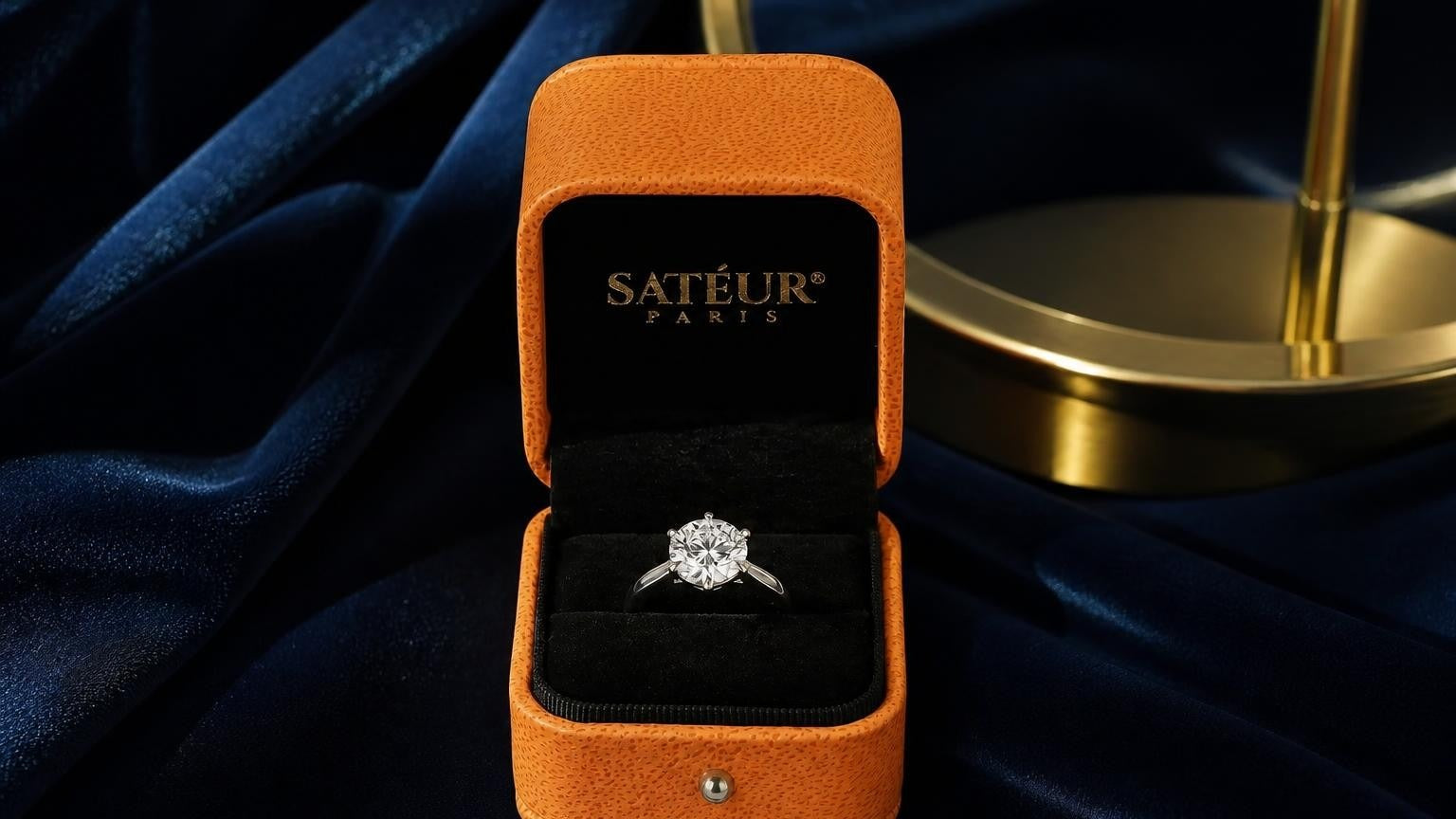
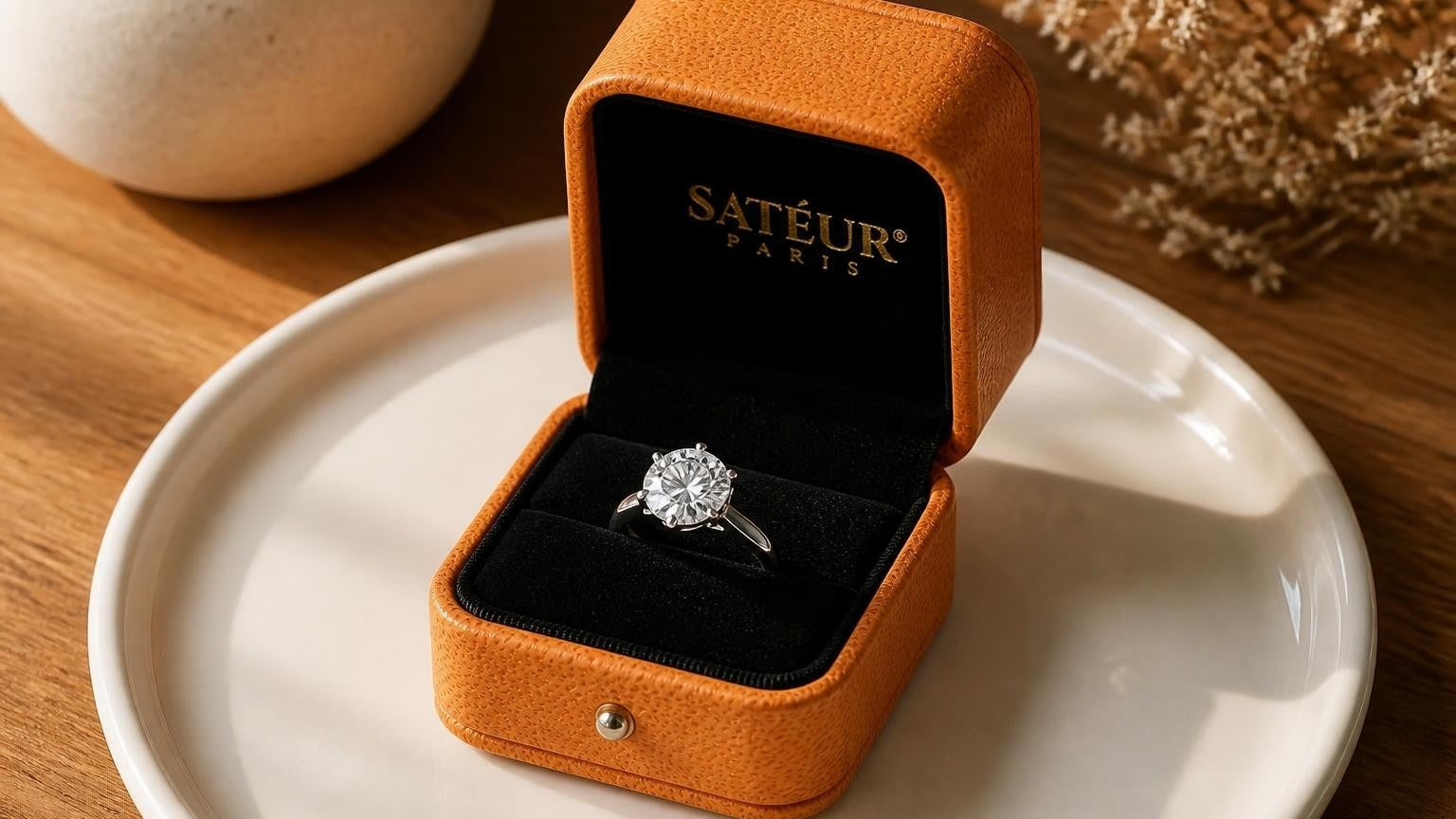
A diamond simulant ring offers the visual presence of a mined diamond — D-E colour, Excellent cut, clean white brilliance — at a fraction of the cost. Satéur Gems® diamond simulants achieve D-E colour grade with Excellent cut specifications; 925 sterling silver provides a tarnish-resistant setting at an accessible price. The quality spectrum runs from entry-level cubic zirconia that clouds within a few years to trademarked simulants engineered for lasting clarity and brilliance. This guide covers what to look for before buying.

Key Takeaways
- Satéur Gems® diamond simulants achieve D-E colour grade with Excellent cut specifications — the same grades used to describe premium mined diamonds.
- 925 sterling silver is tarnish-resistant and a standard precious-metal choice for fine jewellery settings.
- Entry-level simulant ring pricing begins at approximately $68 — roughly 1% of an equivalent mined diamond's cost.
- Moissanite, a lab-created gemstone, rates Mohs ~9.25 and produces approximately 2.4 times the fire of a mined diamond.
- Stackable and bezel-set designs allow broad customisation without premium pricing.
Diamond Simulant Rings: The Maison Value Proposition
"Fake diamond ring" is a search shorthand for a real category: diamond simulant jewellery. A simulant replicates the visual appearance of a mined diamond — the brilliance, the colour, the cut geometry — without the mined-diamond price. A one-carat mined diamond retails from $4,000 to $10,000 or more; a premium simulant ring starts from $68. Both can present D-E colour and Excellent cut to the naked eye.
What to Check Before Buying
- Disclosure: reputable brands name the gem material clearly. Satéur Gems® is a trademarked diamond simulant; moissanite is a lab-created gemstone of silicon carbide. A listing that withholds the material is a warning sign.
- Returns: look for at least 30 days.
- Care programme: a manufacturer's warranty signals confidence in longevity.
- Metal: 925 sterling silver or an 18k gold finish. Avoid unspecified base metals on a ring worn daily.
925 Sterling Silver Settings
925 sterling silver — 92.5% silver, 7.5% alloy — is the standard precious-metal choice for fine jewellery. It is tarnish-resistant, hypoallergenic for most wearers, and holds its finish with basic care. It complements D-E colourless simulants cleanly, with no metal warmth to create a colour contrast.
Sterling Silver vs 18k Gold Finish
- 925 sterling silver: cool white tone, durable, easy to resize.
- 18k gold finish: warm yellow or white tone, premium visual weight. The Satéur Destinée Ring™ uses an 18k gold finish for durability and warmth.
Stackable & Bezel-Cut Styles
Stackable Bands
Stackable rings allow layering of multiple bands — a solitaire simulant alongside a plain gold band, or two different-cut simulant stacks — achieving a customised look without a large single-ring budget.
Bezel Settings
A bezel setting surrounds the gem with a thin metal collar, holding it securely without prongs. For a daily-wear ring, bezel settings significantly reduce maintenance concerns and protect the gem edge.
D-E Colour & Excellent Cut Specs
The GIA colour scale grades diamonds from D (colourless) to Z (light yellow). D-E represents the clearest range — the standard for premium fine jewellery. Satéur Gems® diamond simulants are engineered to D-E, visually colourless in any setting and under any light. Excellent cut maximises brilliance and fire from every facet — together, these two specifications deliver the clean, bright face-up appearance associated with fine diamond jewellery.
Why Colour and Cut Matter More Than Carat
A large simulant in a poor colour grade or mediocre cut reads as visibly inferior to the naked eye. A well-specified one-carat D-E Excellent cut does not. Prioritise colour and cut over carat weight.
Fire & Brilliance: What to Expect

Different simulant materials produce different optical results. Understanding the distinction helps you choose the right stone for how you want the ring to look.
| Gem material | Mohs hardness | Optical character | Longevity |
|---|---|---|---|
| Satéur Gems® | ~8.8 | Clean white diamond-like brilliance | Engineered for long-term wear |
| Moissanite | ~9.25 | Vivid rainbow fire (~2.4× diamond) | Permanent — no degradation |
| Cubic zirconia | 8–8.5 | Initial bright sparkle, visibly dulls | 1–3 years typical (clouding) |
Satéur Gems® produces the clean white brilliance associated with a flawless diamond — not the rainbow fire of moissanite, and not the glassy initial brightness of cubic zirconia. If you want the precise look of a mined diamond, Satéur Gems® is the closer match. If you prefer more prismatic colour in the sparkle, moissanite delivers that — openly, as a lab-created gemstone. For a full comparison, see our guide on diamond simulants vs other alternatives.

Entry Price from ~$68
Premium simulant rings start from approximately $68 — a moissanite or Satéur Gems® solitaire in sterling silver or 18k gold finish. That represents roughly 1% of the price of a comparable mined diamond ring.
Price by Material and Setting
- Cubic zirconia rings: $5–$50. Bright initially; shows wear within one to three years of daily use.
- Moissanite rings: from $68 (Satéur) to several hundred dollars. Lab-created gemstone, permanent optical quality.
- Satéur Gems® rings: from $98 (1ct, 18k gold finish). Trademarked diamond simulant, D-E colour, Excellent cut.
- Mined diamond rings: $4,000–$10,000+ for one carat. Same colour grades, higher price.
For a broader look at options across the category, see our diamond simulant engagement ring collection.
Sizing & Metal Selection

Simulant rings in sterling silver or gold-finish settings can be resized by any jeweller using standard techniques. Most Satéur rings run from size 4 to 11.
Choosing Your Metal
White settings (925 sterling silver, white gold finish) complement D-E colourless simulants most closely. Yellow gold produces a classic engagement ring silhouette; rose gold pairs well with round and cushion cuts.
Care
Mild soap and warm water, pat dry, store separately. Avoid prolonged submersion and harsh chemicals. No professional maintenance schedule required.
FAQ: Diamond Simulants vs. Other Options
What is a diamond simulant and how does it differ from a mined diamond?
A diamond simulant is a gem engineered to replicate the visual appearance of a mined diamond using a different material. Satéur Gems® is a trademarked diamond simulant; moissanite is a lab-created gemstone of silicon carbide. Neither shares the chemical structure of a mined diamond. The difference is material and origin — not the face-up appearance to the naked eye.
Why do Satéur Gems® rings cost significantly less than traditional diamond rings?
Mined diamonds carry costs at every stage — extraction, cutting, certification, retail mark-up. Satéur Gems® are engineered simulants produced without mining, at a fraction of the material cost. The result: a D-E colour, Excellent cut ring from $98 versus $4,000–$10,000+ for a comparable mined diamond.
How do D-E colour and Excellent cut affect the appearance of a simulant ring?
D-E colour means the gem is visually colourless — no yellow or brown tint in any light. Excellent cut positions every facet for maximum light return. Together they produce the bright, clean face-up appearance associated with premium diamond jewellery. Both Satéur Gems® and modern moissanite achieve these grades.
What metal options are available for engagement and wedding bands?
925 sterling silver (cool white, tarnish-resistant), 18k gold finish in yellow, white, or rose, and platinum-clad options are the most common choices. Each can be resized by a jeweller. Satéur rings are available in 18k gold finish as standard.
Are 925 sterling silver rings suitable for daily wear?
Yes. 925 sterling silver — 92.5% silver, 7.5% alloy — is tarnish-resistant, hypoallergenic for most wearers, and holds its finish with basic care. It is a standard precious-metal choice for fine jewellery rings worn every day.
Can simulant rings be resized and repaired like mined diamond jewellery?
Yes. Simulant rings in sterling silver or gold-finish settings can be resized and serviced by any qualified jeweller using standard techniques. The gem material does not prevent sizing, prong re-tipping, or polishing. Satéur rings include a Lifetime Satéur Care programme.
Bundle Offers & Payment Plans
Satéur bundles the Destinée Ring with complementary pieces at reduced set pricing across the engagement rings collection. Buy-now-pay-later is available at checkout — for a ring in the $68–$200 range, per-payment amounts are small. For a related overview of simulant materials and category options, see our guide to diamond simulant ring benefits.

Satéur Destinée Ring™
The look of a flawless diamond — from $138.
D-E colour · Excellent cut · 18k gold finish
Free worldwide delivery. 30-day returns. Lifetime Satéur Care.
Shop the Destinée RingFree worldwide shipping · 30-day returns · Lifetime Satéur Care
















Leave a comment
This site is protected by hCaptcha and the hCaptcha Privacy Policy and Terms of Service apply.