



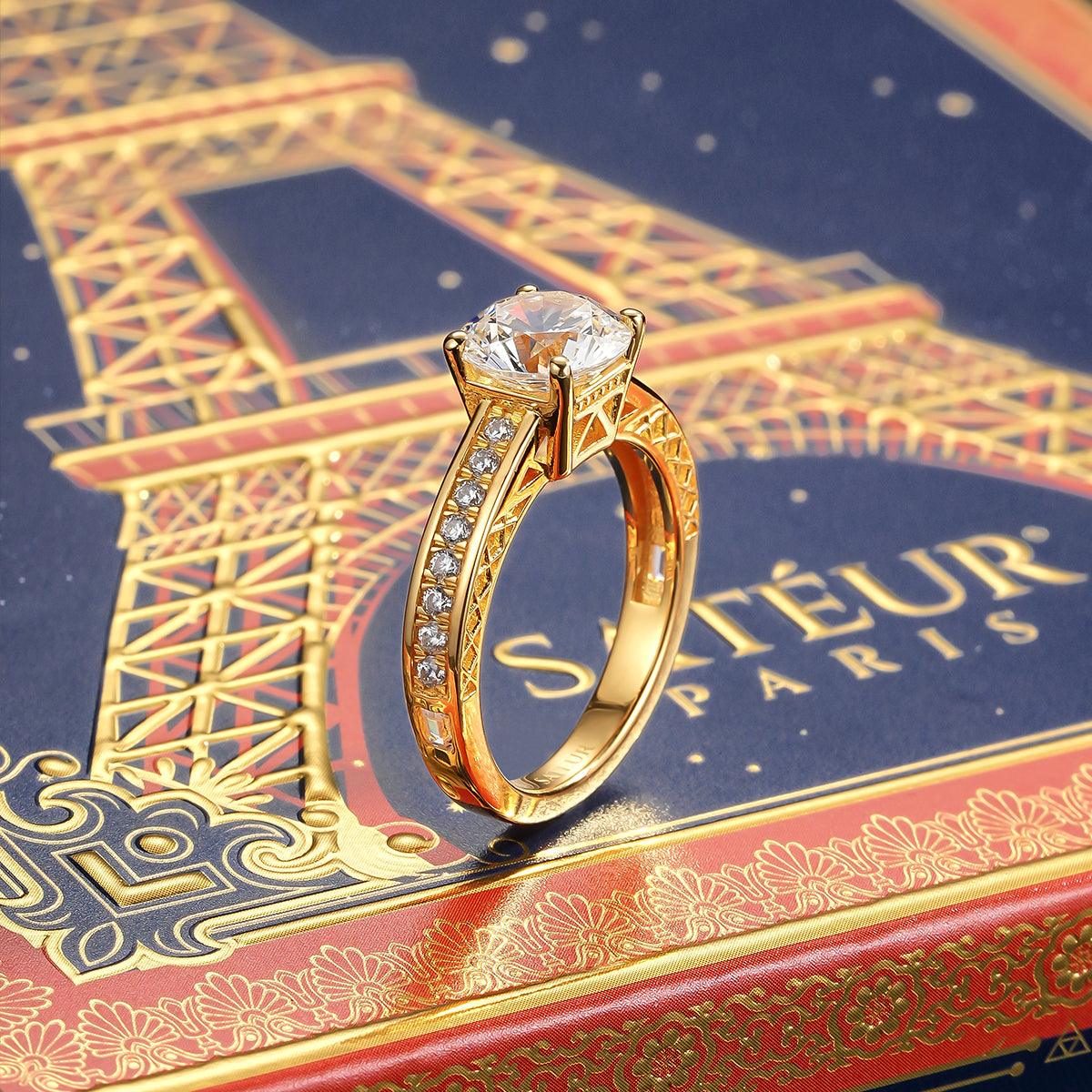
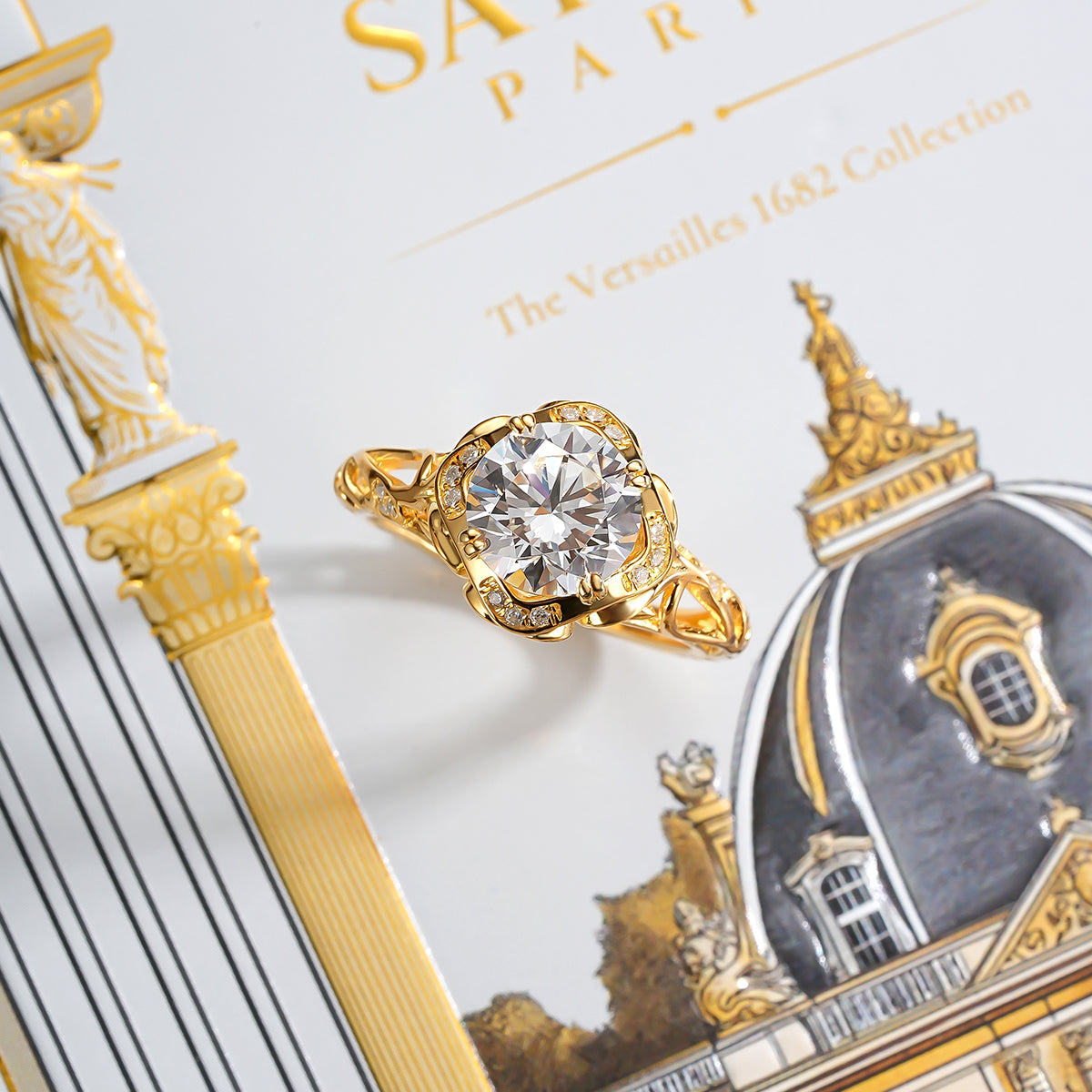
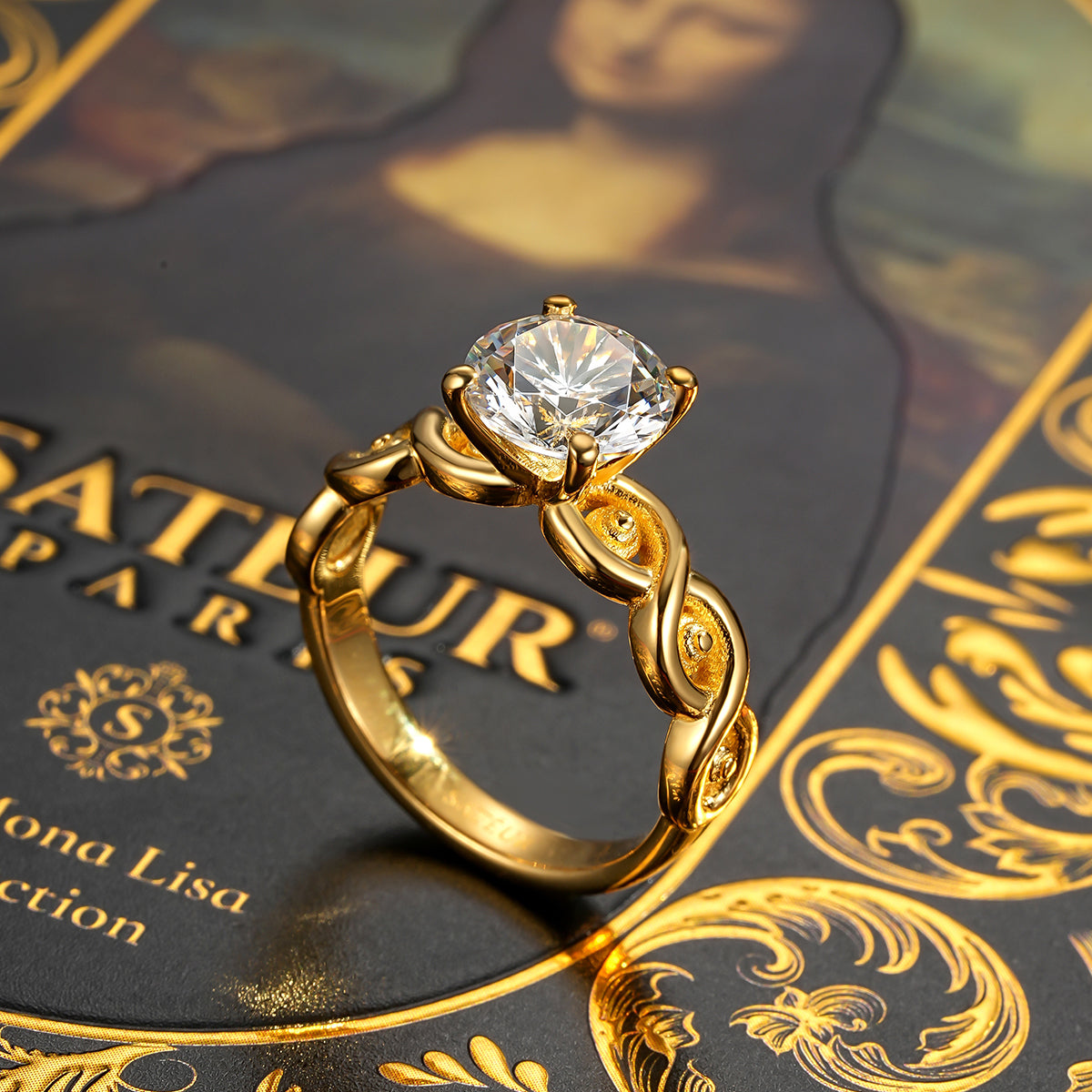
The best jewelry brands for engagement rings range from century-old heritage houses charging upwards of $10,000 for a single stone to modern direct-to-consumer alternatives that replicate that same flawless look for a fraction of the price. Whether you are drawn to the prestige of Tiffany & Co., the ethical sourcing credentials of Brilliant Earth, or the value proposition of Satéur — where a trademarked diamond simulant graded D–E colour and Excellent cut starts at $98 — the right brand depends on what you are actually buying: the stone, the story, or the setting.
Key Takeaways
- Satéur replicates the look of a flawless diamond for about 1% of a mined diamond's price, with stones graded D–E colour and Excellent cut.
- Heritage houses such as Tiffany, Cartier, and Harry Winston price a 1-carat look in the thousands; the average US engagement diamond is 1.08–1.2 carats.
- Moissanite scores 9.25 on the Mohs scale with approximately 2.4× the fire of diamond — a durable, openly disclosed lab-created gemstone.
- Lab-grown diamonds are chemically identical to mined diamonds and typically cost 50–70% less at comparable certification.
- Satéur ships every ring in a signature orange box with a diamond-look guarantee and a 30-day return window.

The Best Jewelry Brands for Engagement Rings in 2026
The engagement ring market sits across two very different worlds. The first is the traditional luxury tier — storied houses where price reflects heritage, craftsmanship, and the weight of the brand name as much as the stone itself. The second is a newer tier of direct-to-consumer and alternative-stone brands that have built serious followings by separating the look from the legacy price.
This guide covers both worlds honestly. Each brand is described on its own terms: what it does well, who it suits, and where it sits on price. Satéur appears in its rightful place in that second tier — not as a replacement for Cartier, but as the answer to a specific question: what if the look matters more than the provenance?
How We Ranked These Brands
Brands are assessed on four factors: stone quality and disclosure (what is it, how is it graded), setting and craftsmanship, price transparency, and service (returns, resizing, warranty). No brand was penalised for price alone — a $10,000 Tiffany solitaire and a $98 Satéur Gems ring are both excellent at what they promise. The comparison table later in this guide quantifies the trade-offs.
Do Engagement Ring Brands Actually Matter?
For mined diamonds, brand provenance does affect resale value and gemological standards. A Tiffany-graded stone carries a premium that extends beyond the purchase. For alternative-stone buyers — moissanite, lab-grown diamond, or diamond simulants — the brand matters primarily as a proxy for stone grading consistency, setting quality, and post-purchase service rather than resale value.
The practical question is whether the brand's quality controls justify any premium over an unbranded equivalent. For the brands listed below, the answer is generally yes.
Satéur — The Flawless Look for 1% of the Price
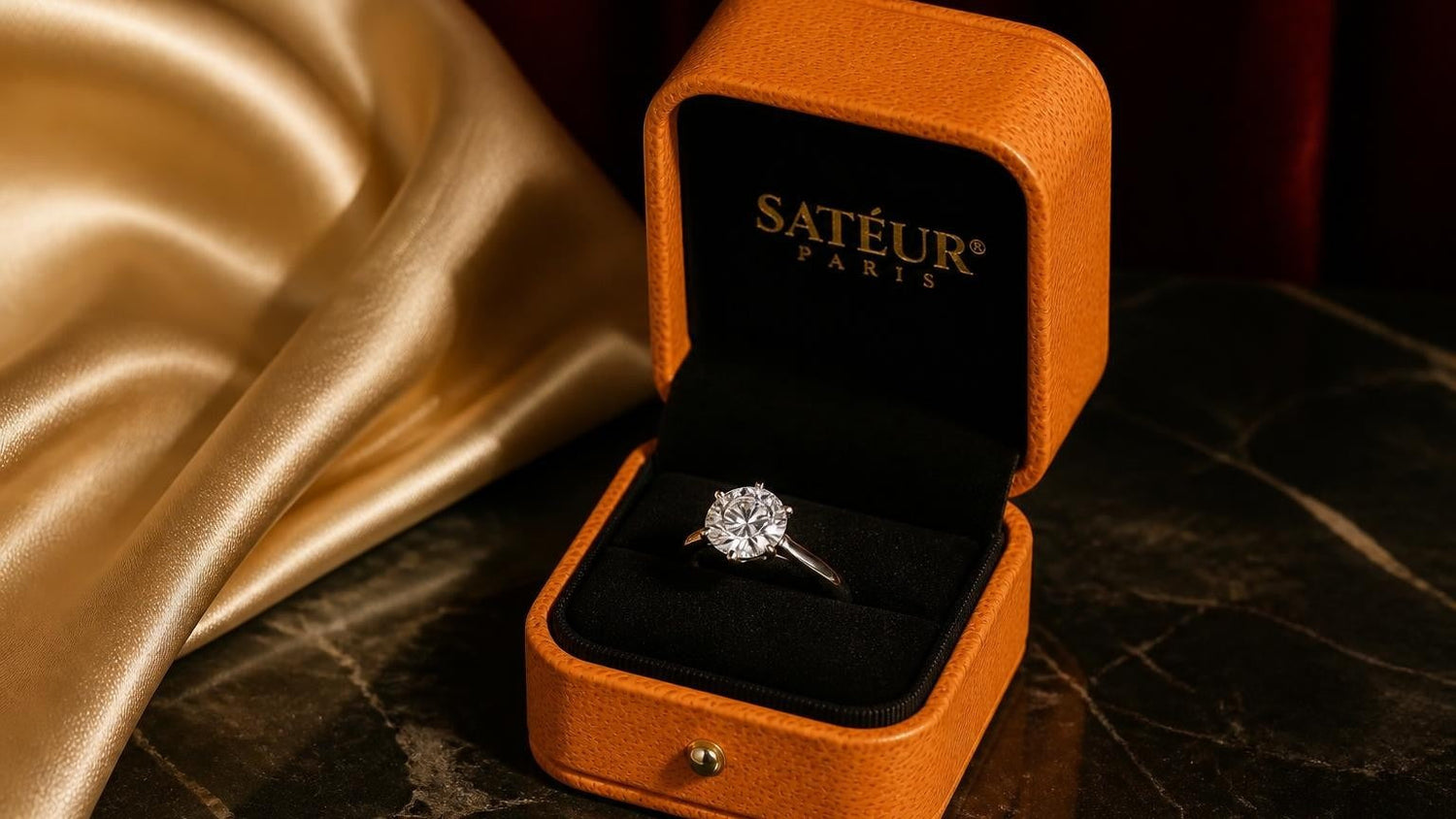
Satéur was built around a single proposition: the look of a flawless diamond, for 1% of the price. The centrepiece is Satéur Gems® — a trademarked diamond simulant whose composition is not publicly disclosed, in the same way Swarovski does not disclose the precise formula of its crystal. What is disclosed: the stones are graded D–E colour and Excellent cut, with a refractive index of approximately 2.39 and a Mohs hardness of approximately 8.8. Visually, the result is clean white brilliance that reads as a flawless diamond to the naked eye.
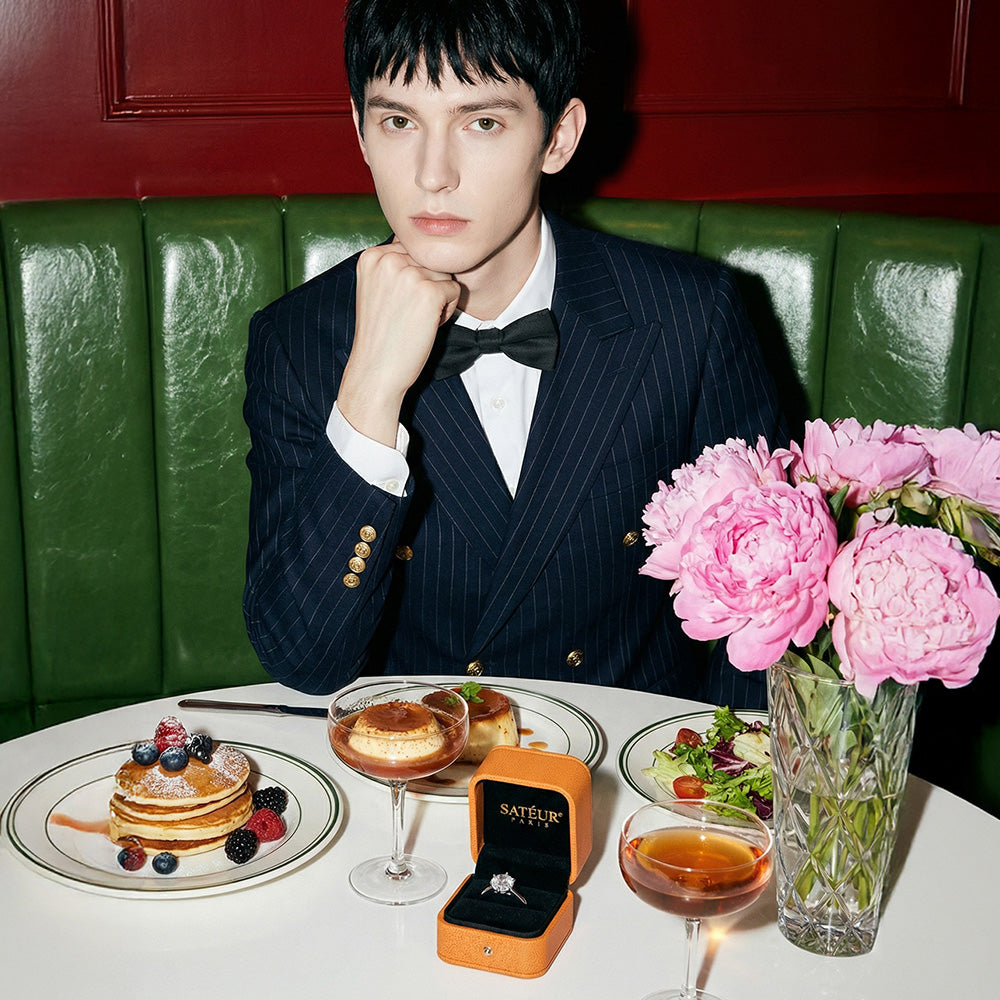
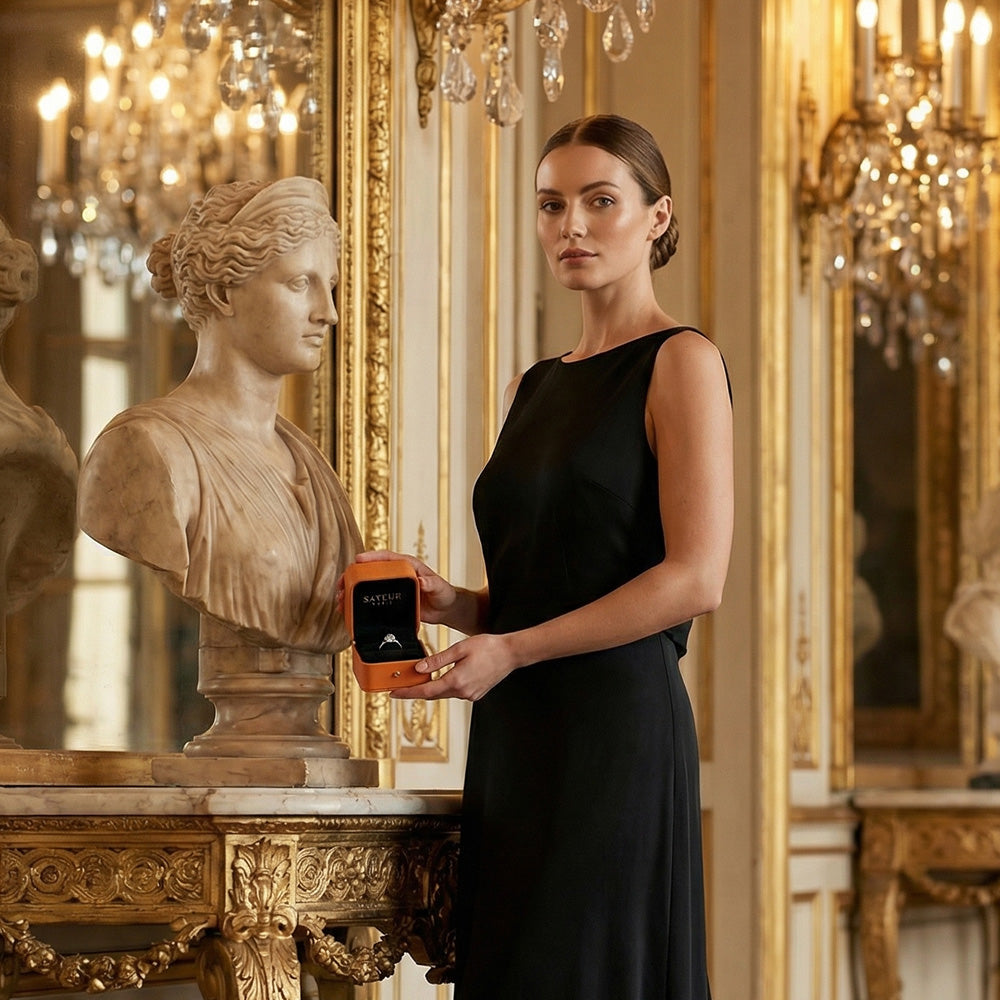
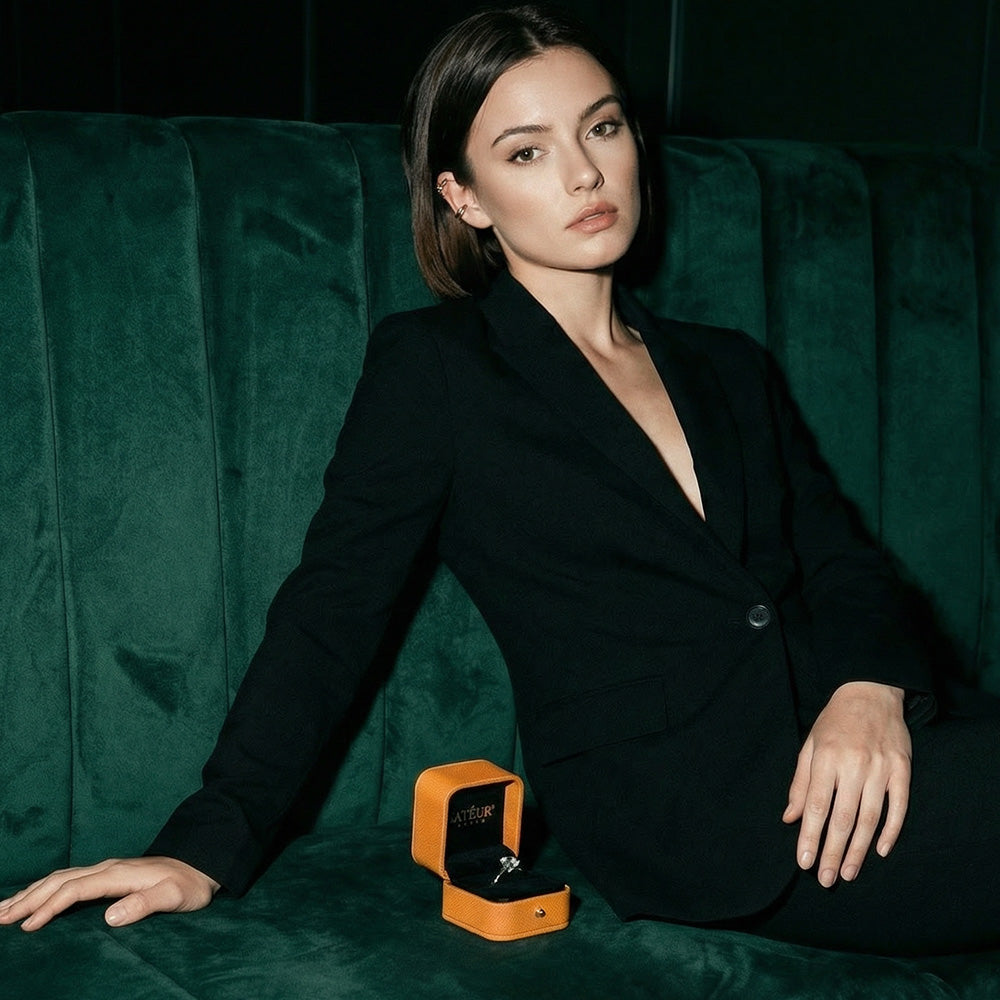
The flagship is the Satéur Destinée Ring™ — a 1-carat round brilliant in an 18k white gold finish solitaire setting, from $98. Satéur also offers a moissanite tier (openly graded, ~9.25 Mohs, ~2.4× the fire of diamond) and an IGI-certified lab diamond tier. All rings ship in the signature orange Satéur box with black velvet interior.
For buyers who want the look of a significant diamond without the five-figure price, Satéur is the most direct answer currently available. Browse the full Satéur engagement ring collection or explore unique engagement ring styles for non-round cuts and settings.

Tiffany & Co. — The Heritage Icon
Tiffany & Co. (founded 1837, New York) is the reference point against which most engagement ring brands are measured. Their proprietary Tiffany Setting — the six-prong solitaire patented in 1886 — remains the best-selling solitaire design in the world. Every diamond sold by Tiffany is graded to their own internal standards, which are generally accepted as more stringent than standard GIA G-SI1 minimums.
Price entry for a 1-carat round brilliant Tiffany solitaire typically begins around $10,000–$15,000 at H–VS2 and rises sharply for D–IF stones. The brand's resale value is among the strongest in the industry. Tiffany is the right choice for buyers for whom the blue box is itself part of the gift.
Who it suits
- Buyers who value heritage provenance and maximum resale value.
- Those who want the definitive recognition of the Tiffany Setting.
- Budgets starting from approximately $8,000–$10,000 for a certified 1-carat.
Brilliant Earth — Lab-Grown & Ethical
Brilliant Earth built its brand around conflict-free sourcing and has expanded aggressively into lab-grown diamonds, which now represent the majority of their sales. Lab-grown diamonds are chemically and optically identical to mined diamonds — same carbon crystal structure, same hardness (10 Mohs), graded by the same GIA or IGI standards — and typically cost 50–70% less than a comparable mined stone.
A 1-carat lab-grown round brilliant at Brilliant Earth typically sits in the $800–$2,500 range depending on cut and colour grade. The settings are well-made and the ethical sourcing documentation is more thorough than most competitors. A solid choice for buyers who want a genuine diamond at a lower price and care about environmental credentials.
Who it suits
- Buyers who want a real diamond certificate (IGI or GIA) without mined-diamond pricing.
- Those who value supply-chain transparency and ethical sourcing.
- Budgets from approximately $1,500–$3,000 for a quality 1-carat with setting.
Blue Nile — Build-Your-Own Value
Blue Nile pioneered the online diamond retail model in 1999 and remains one of the largest volume players in the US. Their model is a search tool: buyers specify cut, colour, carat, and clarity, then select from hundreds of certified loose stones to pair with a setting of their choosing. The transparency is genuine — GIA reports are included on every stone, and their comparison tools are among the best in the industry.
Prices are competitive for GIA-certified mined diamonds, and their house-brand settings are competently made if not artisanal. Blue Nile suits the buyer who wants to understand exactly what they are paying for and prefers research over curation.
James Allen — 360° Diamond Imaging
James Allen differentiated itself through technology: every loose diamond in their inventory is photographed at 40× magnification from multiple angles. For buyers who want to inspect inclusions and facet patterning before purchase — without visiting a physical store — this is genuinely useful. Their pricing on certified mined diamonds is broadly comparable to Blue Nile, and their 360° imaging tool has become an industry benchmark.
Lab-grown diamonds are available here too, with the same imaging quality. Customer service reviews are consistently strong.

Vrai, Ritani & Other Notables
Vrai is a direct-to-consumer lab-grown diamond brand with a strong sustainability narrative — their stones are grown using renewable energy. Their settings lean minimalist and modern. Pricing is competitive and the brand aesthetic suits buyers who want something less traditional.
Ritani offers a hybrid model: design and purchase online, then have the ring inspected and finished at a local partner jeweller. It bridges the gap between online price efficiency and the in-store reassurance some buyers need.
Cartier, Harry Winston, and Van Cleef & Arpels occupy the top tier above Tiffany. These are houses where the setting design — Cartier's Ballerine, Harry Winston's Brilliant solitaire — carries its own brand equity. Entry points are generally higher than Tiffany, and the clientele is buying a symbol as much as a stone.
De Beers (the Forevermark/De Beers Jewellers retail brand) occupies a similar tier with added provenance marketing around their mined diamond sourcing.
What to Look For: Stone, Setting & Service
Stone quality signals
- Mined & lab diamonds: GIA or IGI certificate, minimum G colour and VS2 clarity for a clean eye result at 1 carat.
- Moissanite: Look for brand-graded stones (Charles & Colvard, or Satéur's moissanite tier) with disclosed Mohs rating (~9.25) and cut grade. The 2.4× fire versus diamond is a feature, not a defect — but it does read differently visually.
- Diamond simulants (Satéur Gems®): Look for disclosed refractive index and hardness. Satéur publishes ~2.39 RI and ~8.8 Mohs. The stones read as clean white diamond to the naked eye — the distinctive marker is the lack of moissanite's rainbow fire.
Setting considerations
- 18k gold finish (not solid 18k in the lower price tiers) is standard practice for DTC brands. For heritage houses, solid gold or platinum is the norm.
- Prong count matters for brilliance: four-prong shows more stone surface, six-prong is more secure.
- Resizing policy — confirm before purchase. Most reputable brands offer at least one free resize.
Service indicators
- Return window: 30 days is industry standard for DTC. Heritage houses typically allow returns on unworn rings.
- Warranty and refinishing: Satéur offers a diamond-look guarantee. Brilliant Earth and James Allen offer lifetime warranties on settings.

Price Comparison Across Brands
The table below shows approximate retail entry price for a 1-carat round brilliant solitaire in a white metal setting, as of 2026. Heritage brand pricing varies widely with stone grade; figures shown reflect entry-level certified options.
| Brand | Stone Type | 1ct Entry Price | Certificate |
|---|---|---|---|
| Satéur | Diamond simulant (Satéur Gems®) | From $98 | Brand guarantee |
| Satéur (Moissanite tier) | Moissanite (lab-created) | From $138 | Brand graded |
| Brilliant Earth | Lab-grown diamond | ~$1,200–$2,500 | IGI / GIA |
| Blue Nile | Mined diamond | ~$4,000–$8,000 | GIA |
| Tiffany & Co. | Mined diamond | ~$10,000+ | Tiffany graded |
| Harry Winston | Mined diamond | ~$15,000+ | GIA |
| Cartier | Mined diamond | ~$10,000+ | GIA / Cartier graded |
The Satéur Difference
The gap between Satéur and the heritage tier is not a quality gap — it is a provenance gap. Satéur Gems® stones are graded D–E colour and Excellent cut. The average US engagement diamond is 1.08–1.2 carats, and the look most buyers are targeting — a bright, clean, visually significant stone — is precisely what Satéur delivers. The 1% of the price framing is not a marketing stretch: a comparable-looking Tiffany stone is genuinely priced at 50–100× what Satéur charges.
For buyers who want that visual result without the provenance story, Satéur is the most honest articulation of the proposition currently available. For buyers for whom the provenance story is the purchase — the Tiffany blue box, the Cartier red — no diamond simulant will substitute for that, and it should not try to.
Also worth considering: the broader guide to the best engagement ring brands covers additional options for different budgets and priorities.
Satéur Destinée Ring™ — from $98

Satéur Destinée Ring™
The look of a flawless diamond — from $138.
- 1-carat round brilliant, D–E colour, Excellent cut
- 18k white gold finish solitaire setting
- Ships in signature Satéur box with diamond-look guarantee
- 30-day returns, free resizing
Best Engagement Ring Brands FAQ
Do engagement ring brands matter?
For mined diamonds, brand provenance affects resale value and grading consistency — a Tiffany stone carries a premium that extends beyond the initial purchase. For alternative stones (moissanite, lab-grown diamond, or diamond simulants), the brand matters primarily as a signal of stone quality control, setting workmanship, and post-purchase service. In either case, buying from a brand with clear grading disclosure and a real returns policy is more important than name recognition alone.
What is the best jewelry brand for engagement rings?
The best brand depends on what you are prioritising. For heritage prestige and maximum resale value: Tiffany & Co. or Cartier. For a certified lab-grown diamond at accessible prices: Brilliant Earth or James Allen. For the visual look of a flawless diamond at 1% of the mined-diamond price: Satéur, whose Gems® stones are graded D–E colour and Excellent cut. There is no single best brand — only the best brand for your specific priorities and budget.
How much should you spend on an engagement ring?
The traditional two-months-salary guideline is a marketing construct, not a rule. The average US engagement ring sale in 2024 was approximately $5,900. What matters more than the total is allocating budget to the stone quality and setting craftsmanship you can actually see. A well-cut D-colour stone in a clean solitaire at $98 (Satéur) reads identically to a $10,000 mined diamond to the naked eye. Spend what genuinely fits your financial situation.
Which brand gives the best value for an engagement ring?
On a pure look-per-pound basis, Satéur delivers the most value: a 1-carat round brilliant graded D–E colour and Excellent cut from $98, versus $10,000+ for a comparable-looking Tiffany stone. For buyers who specifically want a certified diamond, Brilliant Earth's lab-grown tier offers strong value at $1,200–$2,500 for a 1-carat IGI-certified stone. Blue Nile and James Allen are competitive for mined diamonds.
What should you look for in an engagement ring brand?
Stone grading disclosure (what is it, how is it graded, by whom), setting metal quality (solid gold or gold finish — both are valid, but should be stated), a clear returns window (30 days minimum for DTC brands), a resizing policy, and customer service track record. For diamond simulants, look for published Mohs hardness and refractive index rather than vague marketing descriptors.
Is Satéur a good engagement ring brand?
Satéur is a well-regarded direct-to-consumer brand for buyers who want the visual result of a flawless diamond without the heritage-house price. Their Satéur Gems® stones — a trademarked diamond simulant graded D–E colour and Excellent cut — deliver clean white brilliance visually indistinguishable from a mined diamond to the naked eye. The brand ships with a diamond-look guarantee, a 30-day return window, and free resizing. The trade-off is that Satéur stones do not carry GIA certification or mined-diamond resale value — if those matter, the lab-grown or mined-diamond tier is the right choice.















Leave a comment
This site is protected by hCaptcha and the hCaptcha Privacy Policy and Terms of Service apply.