






Earrings for Sensitive Ears: What to Look For (Nickel-Free)
Quick Summary: Earrings for Sensitive Ears
| What to Know | The Answer |
|---|---|
| Most common cause of earring reactions | Nickel — triggers contact dermatitis in sensitive skin |
| Safest metals for sensitive ears | Nickel-free sterling silver, titanium, surgical stainless steel, solid gold |
| Dermatologist recommendation | Sterling silver is dermatologist-recommended for nickel-sensitive skin |
| What to avoid | Nickel alloys, brass, cheap fashion metals with undisclosed composition |
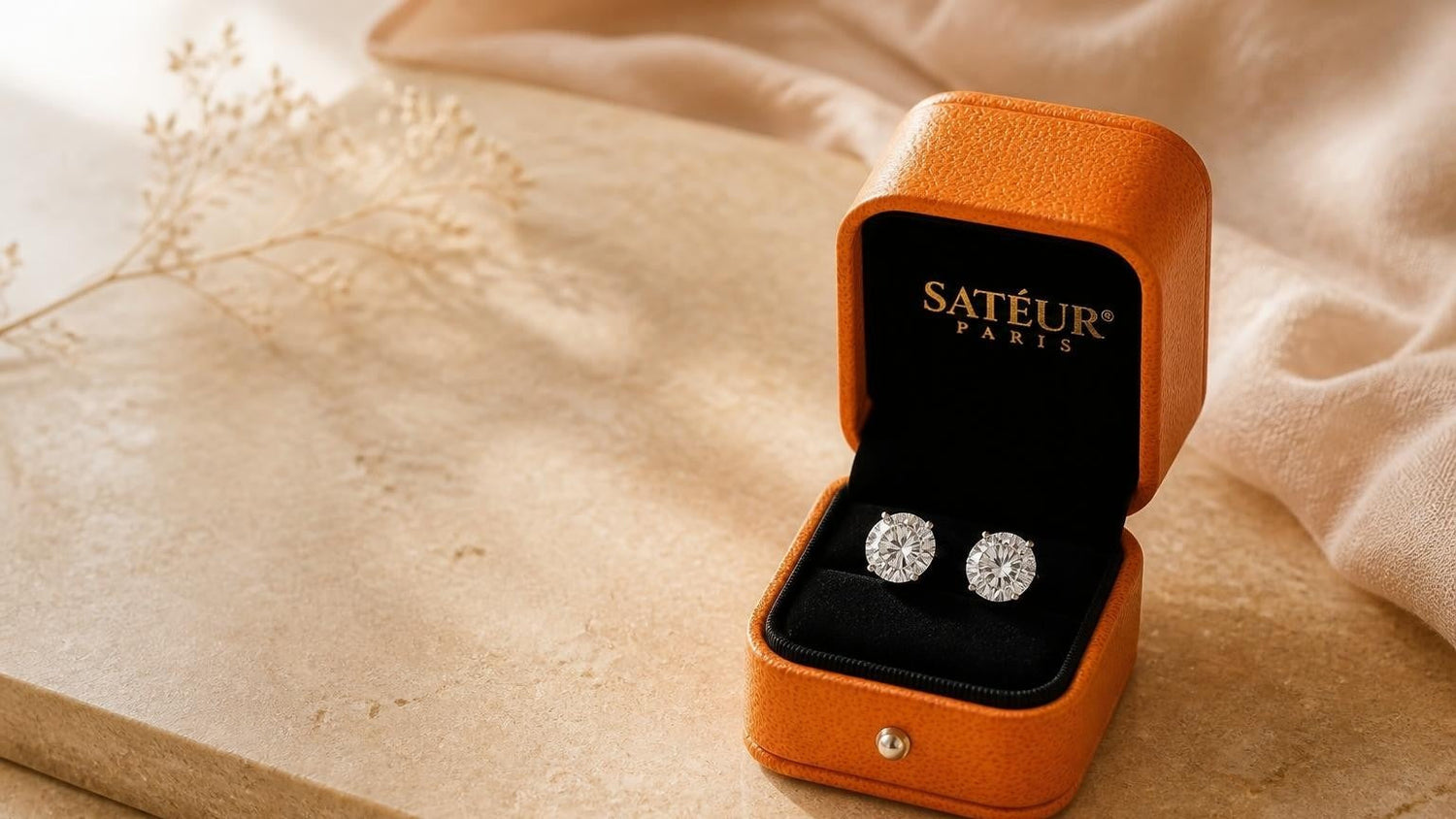
| Satéur earrings | Nickel-free 925 sterling silver finished in 18k gold — safe for sensitive ears |
If your ears itch, swell, or leave green marks after a day of wear, the earrings are the problem — specifically, what they are made of.
Finding the best hypoallergenic earrings for sensitive ears starts with understanding exactly why ears react. Once you know the cause, the solution is straightforward.
This guide covers the science of sensitive ears, the metals that are genuinely safe, the ones to avoid, and how to care for sensitive skin so earrings remain a pleasure rather than an irritant.
Key Takeaways
- Nickel is the most common cause of earring reactions — it triggers contact dermatitis in sensitive skin.
- The safest metals for sensitive ears are nickel-free 925 sterling silver, titanium, surgical stainless steel, and solid gold (14k or higher).
- Sterling silver is dermatologist-recommended for nickel-sensitive skin when verified nickel-free.
- Avoid nickel alloys, brass, and cheap fashion metals with undisclosed composition; gold plating only protects while the layer stays intact.
- Satéur earrings are nickel-free 925 sterling silver finished in 18k gold — safe for sensitive ears.

Why Ears React: Nickel Allergy and Contact Dermatitis
The skin around an earring post is thin, permeable, and in constant direct contact with metal.
When that metal contains nickel, the immune system can read it as a threat. The response is contact dermatitis: redness, itching, swelling, or weeping skin that develops within hours of wearing an earring.
Nickel is the most common cause of earring reactions (contact dermatitis).
Between 10 and 15 percent of the population carries a nickel allergy. The figure is higher among women who have worn low-cost earrings consistently since adolescence.
Each exposure reinforces the sensitivity. A mild itch in your twenties can become a pronounced reaction by your forties.
The allergy is not curable. It is entirely avoidable.
The solution is not to stop wearing earrings for sensitive ears. It is to understand which metals will never trigger a reaction — and choose accordingly.
How Nickel Causes a Reaction
Nickel ions leach from the alloy through contact with skin moisture — sweat, sebum, water.
Once in contact with the epidermis, the ions bond with proteins in the skin and trigger a T-cell immune response.
The reaction intensifies with cumulative exposure. This is why some people develop a nickel allergy only after years of wearing reactive earrings — the sensitisation builds gradually.
For earrings specifically, the risk is highest at the earring post — the metal that passes directly through the piercing channel. A decorative nickel-free front piece on a nickel-alloy post is still a reactive earring.
Green Marks: What They Actually Signal
Green marks on the skin around an earring are not always an allergic reaction. More often, they are caused by copper oxidation from a copper-based alloy.
Copper reacts with skin moisture and oils to form copper chloride — a green patina that transfers to the skin. It is relatively harmless but a clear signal that the earring is made from a low-grade alloy not suited to sensitive ears.
If your ears both mark green and itch, you are likely dealing with two separate issues: copper oxidation and nickel contact dermatitis from the same piece.
What Makes Earrings Safe for Sensitive Ears
Safe earrings for sensitive ears share one defining characteristic: no nickel in the alloy.
Beyond that, the best metals are dense, non-porous, and biocompatible.
There are four properties to evaluate when choosing earrings for sensitive ears:
- Nickel-free composition — explicitly stated and verified, not implied by marketing language
- Solid or solid-finished construction — not a thin plated layer over a reactive base metal
- Smooth, polished posts — rough surfaces harbour bacteria and abrade the piercing channel
- Disclosed metal content — reputable brands test and publish alloy composition across their full range
One distinction matters: hypoallergenic is a description, not a regulated certification.
A brand can label any earring hypoallergenic without clinical verification. What matters is the specific metal content — not the claim on the packaging.
Read the composition. Not the label.
Best Earrings for Sensitive Ears: Metals That Work
Four metals have established clinical and consumer track records for sensitive ears. Understanding the trade-offs in weight, finish, and price helps narrow the choice to what actually works for your skin.

Nickel-Free Sterling Silver: The Dermatologist Standard
Sterling silver — 92.5% pure silver with a 7.5% copper-based alloy — is the dermatologist-recommended standard for nickel-sensitive skin.
When the alloy is certified nickel-free, 925 sterling silver sits alongside titanium and solid gold as one of the safest metals for daily wear.
Sterling silver is also the most design-versatile of the safe metals. It accepts fine detail, high-polish finishing, and precision gem-setting work that titanium cannot match.
For earring studs, drops, and hoops made for daily wear, nickel-free sterling silver is the first metal to consider when choosing earrings for sensitive ears.
The qualification matters: not all sterling silver is nickel-free. Some lower-cost alloys substitute copper with nickel or zinc.
Always verify the alloy composition explicitly. Or choose a brand that certifies nickel-free construction across its entire range.
Titanium: The Surgical Standard
Titanium is one of the most biocompatible metals on earth.
It is used in surgical implants, dental prostheses, and pacemaker casings — not because it is exotic, but because the body does not respond to it at all. Grade 23 titanium (Ti-6Al-4V ELI) is the clinical benchmark.
Implant-grade titanium earrings are appropriate even for fresh piercings or highly sensitised skin.
The trade-off: titanium is less design-flexible than sterling silver. Complex settings and fine surface detail are harder to achieve at this material.
Titanium earrings tend toward simpler, more utilitarian forms. For those whose primary concern is material safety above all else, titanium is a reliable choice for sensitive ears.
Surgical Stainless Steel: The Accessible Option
316L surgical stainless steel is the most widely available hypoallergenic metal in the earring market.
It contains a small amount of nickel — typically 10 to 14 percent — but the nickel is bound within the alloy matrix in a way that significantly reduces ion release. For the majority of people with mild nickel sensitivity, 316L surgical stainless steel is well-tolerated.
The important caveat: surgical stainless steel is not suitable for everyone with a nickel allergy.
Those with confirmed, pronounced contact dermatitis from nickel should choose titanium or certified nickel-free sterling silver instead.
The distinction between mild sensitivity and a true nickel allergy determines whether surgical steel is appropriate for your ears.
Solid Gold: High Karat, Low Risk
Solid gold at 14k, 18k, or 24k contains no nickel in its purest form.
High-karat gold alloys — 18k and above — are generally safe for sensitive ears. The dominant gold content inhibits nickel ion release even when trace alloys are present.
White gold is the exception: many white gold alloys use nickel as the whitening agent. Rhodium plating offers a temporary barrier, but as it wears, the nickel alloy underneath can cause reactions in sensitive individuals.
Solid yellow gold at 18k or higher is the safe choice within the gold family for sensitive skin.
For those who want the warmth and finish of gold without the price of solid construction, a certified nickel-free 925 sterling silver base with an 18k gold finish is an established and dermatologist-approved alternative.
Metals to Avoid for Sensitive Ears
Several metals and finishes are reliably problematic for earrings worn against sensitive skin.
Knowing what to avoid is as useful as knowing what to choose.
| Metal / Finish | The Problem | Risk Level |
|---|---|---|
| Nickel alloys | Primary contact allergen — releases ions through skin moisture | High |
| Brass | Copper-zinc alloy; often contains nickel; causes green marks on skin | High |
| Copper | Green oxidation staining; can cause mild skin irritation with prolonged wear | Medium |
| White gold (nickel-whitened) | Nickel used as whitening agent; rhodium plating wears off over time | Medium–High |
| Gold-plated (unknown base) | Thin gold layer over reactive base metal; plating wears, exposing substrate to skin | Medium–High |
| Fashion alloys (undisclosed) | Frequently contain nickel, lead, or cadmium; no safe assumption can be made | High |
The green marks many people attribute to earring reactions are copper oxidation — a signal of alloy quality, not necessarily an immune response.
But they confirm the earring's construction is not appropriate for sensitive ears or daily wear.
Satéur's Nickel-Free Earrings
A Different Position on Sensitive Skin
Many earring brands built around sensitive skin default to titanium or surgical steel — the easiest materials to certify and the simplest to market.
Satéur took a different position.
The Maison's earrings are nickel-free 925 sterling silver finished in 18k gold — the combination that is both dermatologist-recommended and refined enough to carry from morning to evening.
The choice reflects The New Diamond Standard: not just brilliance, but materials chosen with the same precision as the gems they set.
Satéur earrings are nickel-free 925 sterling silver finished in 18k gold — verified safe for sensitive ears, across every style in the collection.
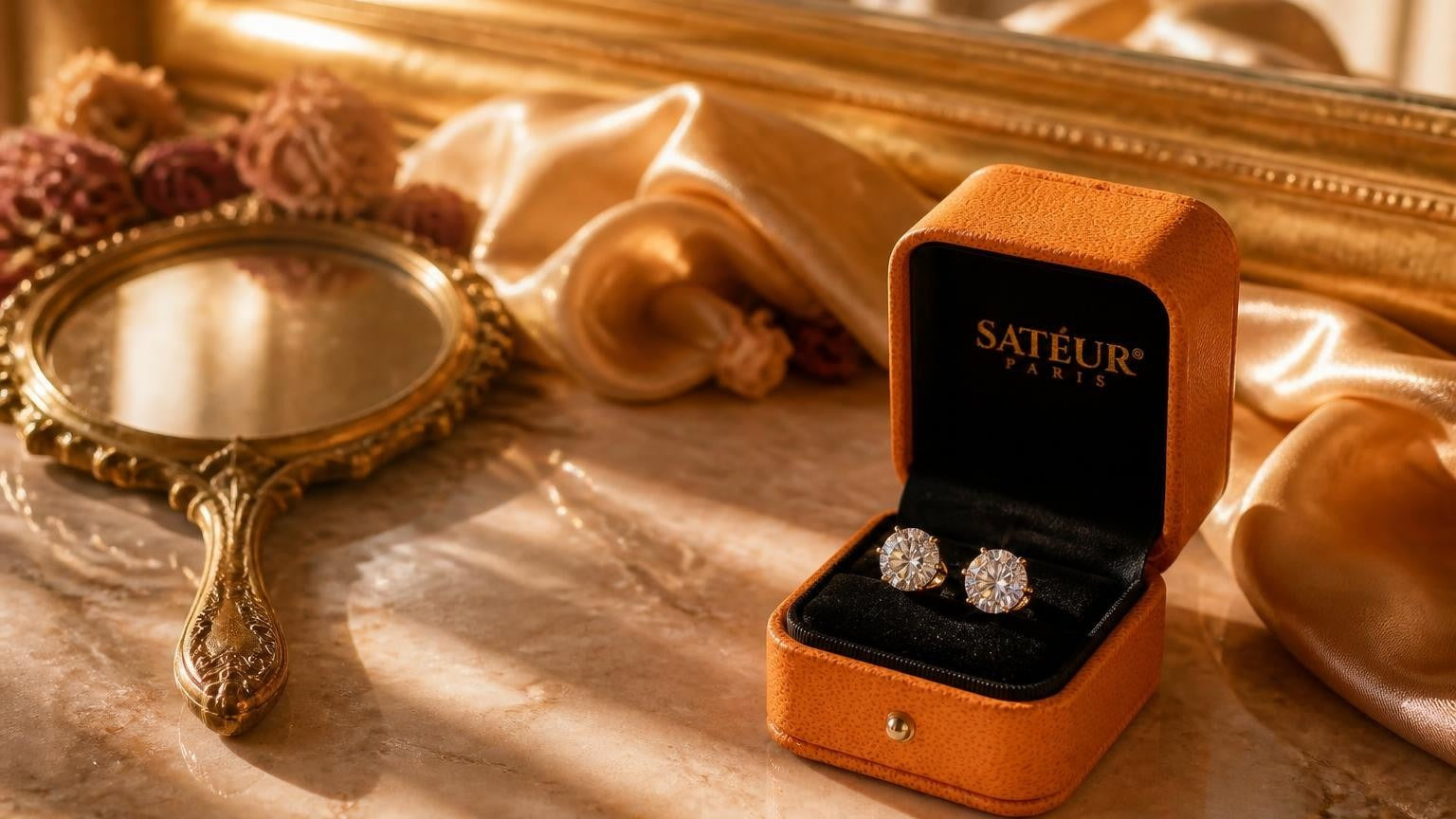
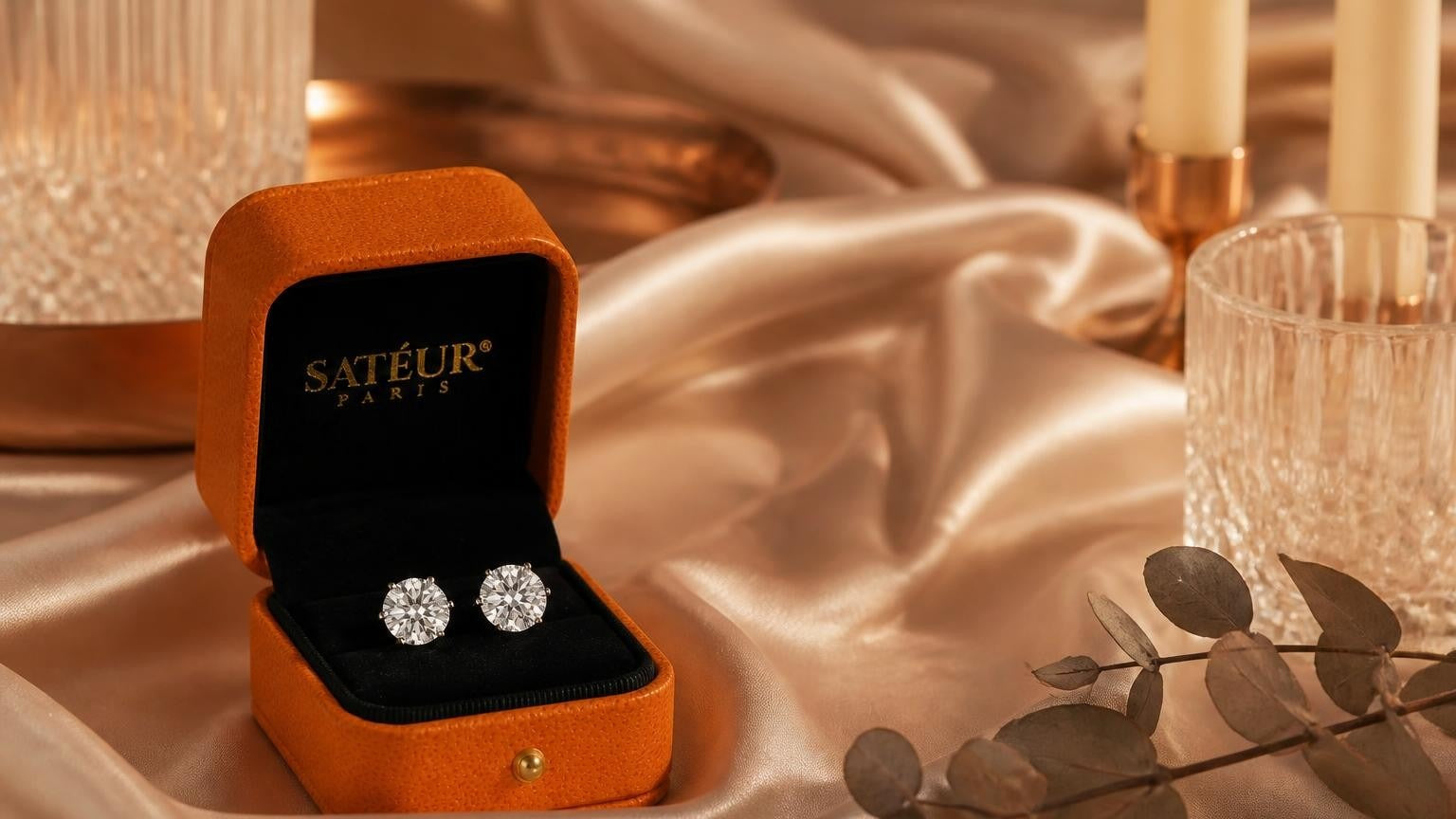
Over 100,000 customers across 150 countries have chosen Satéur. The Destinée Earrings are the Maison's most-ordered pair — 1.00 carat per side in Satéur Gems®, set in nickel-free sterling silver, finished in 18k gold. The scale is deliberate: present without overwhelming, brilliant without requiring explanation.

Satéur Destinée Earrings
The look of a flawless diamond — nickel-free, finished in 18k gold, for 1% of the price.
Compare to a $10,000 mined diamond
Joined by 100,000+ couples across 150+ countries.
Explore the EarringsFree worldwide shipping · 30-day returns · Lifetime Satéur Care
The 18k gold finish is applied over the full piece — not spot-plated or selectively coated.
For those who have spent years limiting earring choices because of reactions, the combination changes what is possible to wear daily.
Browse the complete Satéur earrings collection, or explore the diamond earrings for the moissanite and lab-diamond tiers — each held to the same nickel-free construction standard.

Caring for Sensitive Ears
Even the right earring for sensitive ears benefits from consistent care practices.
The metal is only half the equation. How you maintain both the jewelry and the piercing determines long-term comfort.
Clean Posts Before Each Wear
Bacteria, skin oils, and product residue accumulate on earring posts — particularly at the butterfly backing where debris collects.
Wipe posts with a lint-free cloth dampened with isopropyl alcohol before each wear. Allow to dry completely before inserting.
This applies to all metals, including nickel-free sterling silver and gold finishes. Clean metal is less likely to irritate even moderately sensitive skin.
Rotate and Rest Your Ears
Wearing the same pair continuously — day and night — does not allow the piercing channel to breathe.
Even with hypoallergenic metals, extended uninterrupted wear can cause mild irritation from occlusion alone.
Give your ears one or two nights a week without earrings for sensitive ears, particularly if you have been experiencing any discomfort. The skin around a piercing benefits from air and rest.
Avoid Water Exposure Where Possible
Sterling silver and gold-finished earrings are durable for daily life, but consistent exposure to chlorine, salt water, and shower products accelerates wear on any finish.
Remove earrings before swimming or bathing.
This extends the life of the 18k gold finish and reduces irritation risk for sensitive skin.
Check Backings Carefully
Butterfly backings made from low-grade metals are a hidden source of irritation that many people overlook.
Even if the earring post is nickel-free, a reactive backing in contact with the skin creates the same problem.
Ensure backings match the material standard of the post itself — nickel-free sterling silver or gold-filled construction where possible.
Store Earrings Properly
Store earrings separately in a dry, closed container. Scratched or oxidised surfaces are rougher against the skin and more likely to cause irritation in sensitive ears.
Sterling silver benefits from anti-tarnish storage pouches. A few minutes of care after each wear prevents months of avoidable discomfort.
Frequently Asked Questions
What earrings are best for sensitive ears?
The best earrings for sensitive ears are made from nickel-free metals: certified nickel-free 925 sterling silver, implant-grade titanium, 316L surgical stainless steel, or solid gold at 14k or higher. Avoid earrings with undisclosed alloy compositions, thin gold plating over a reactive base metal, or any piece labelled simply "hypoallergenic" without specifying metal content. Satéur earrings are nickel-free 925 sterling silver with an 18k gold finish — one of the most effective combinations available for sensitive ears.
Is sterling silver good for sensitive ears?
Sterling silver is dermatologist-recommended for nickel-sensitive skin — provided it is verified nickel-free. Standard 925 sterling silver uses a copper-based alloy that carries no nickel risk. Some lower-cost sterling silver uses nickel in the alloy, which is why verifying the composition explicitly matters. Nickel-free 925 sterling silver is one of the safest and most wearable metals available for earrings for sensitive ears.
Why do cheap earrings hurt my ears?
Cheap earrings hurt sensitive ears because low-cost manufacturing routinely uses nickel-containing alloys. Nickel is the most common cause of earring reactions (contact dermatitis). The more frequently you wear earrings with nickel alloys, the more sensitised your immune system becomes to future exposure. Green marks on the skin are usually caused by copper oxidation — a separate signal of alloy quality — but both responses point to metal construction that is not suitable for sensitive skin.
Are gold-plated earrings hypoallergenic?
Gold-plated earrings are hypoallergenic only as long as the gold layer remains intact. Gold plating is a thin coating over a base metal — often brass or a nickel alloy. As the plating wears through friction and moisture, the reactive base metal comes into direct contact with the skin. For sensitive ears, solid gold, nickel-free sterling silver, or titanium are more reliable choices: the safe composition runs through the entire piece, not just the surface.
Jewelry should not come with conditions. For those who have spent years working around reactive earrings, the answer is not compromise — it is better materials. The Satéur earrings collection is built on nickel-free 925 sterling silver with an 18k gold finish: a standard that does not ask you to choose between comfortable wear and considered design.

















Leave a comment
This site is protected by hCaptcha and the hCaptcha Privacy Policy and Terms of Service apply.