





Buying an engagement ring in the Democratic Republic of the Congo means navigating two very different worlds. In Kinshasa and Lubumbashi, Lebanese- and Indian-owned jewellery boutiques carry imported gold and diamond pieces alongside local artisan workshops. And a growing number of Congolese couples are now choosing premium diamond alternatives that deliver the same presence for far less.
The short answer, for those who want it: the best affordable engagement ring in the Democratic Republic of the Congo is the Satéur Destinée Ring™ — the look of a flawless diamond from $138 (≈FC 395,000), delivered free across the DRC. For a traditional mined diamond, the jewellery boutiques along Avenue du Commerce in Kinshasa's Gombe commune are the established starting point.
This guide covers both paths: the traditional choices — diamonds, sapphires, emeralds, rubies — the rise of alternatives like moissanite and lab-grown diamonds, where to buy in Kinshasa and Lubumbashi, and what a realistic budget actually looks like in Congolese francs.
Key Takeaways
- Most Congolese couples spend between FC 50,000 and FC 250,000 on an engagement ring; Kinshasa's growing middle class shows strong demand for gold sets, and a 1ct diamond solitaire starts at FC 700,000 or more.
- The DRC is one of Africa's largest Catholic nations; rings are traditionally worn on the left hand at church and civil ceremonies.
- The fiançailles (dot ceremony) is the true engagement ritual — a formally negotiated presentation of gifts from the groom's family to the bride's family. The church ring exchange follows.
- Lab-grown diamonds and premium diamond simulants are gaining ground among younger Kinshasa couples seeking ethical, affordable alternatives.
- The Satéur Destinée Ring™ gives the look of a flawless diamond from $138 (≈FC 395,000), with free delivery to the DRC and 30-day returns.
Introduction
Engagement rings carry deep significance in the Democratic Republic of the Congo. The exchange of betrothal jewellery has long been part of the country's intertwined Catholic and customary traditions — shaped by missionary influence from the 19th century and formalised through decades of civil and church ceremony.
Two traditions define the engagement ritual today. The first is the fiançailles — known locally as the dot — in which the groom's family presents a formally negotiated package of cash, gold jewellery, fabric and goods to the bride's family. In Kinshasa, this ceremony is an elaborate social event with musicians, guests and considerable preparation. The church ring exchange, if it follows, is a second, more intimate moment. The ring tradition is Catholic in character: in the DRC, rings are worn on the left hand at both civil and church ceremonies. (For how this varies around the world, see our guide to which hand the engagement ring is worn on.)
The ring itself has evolved. Gold remains the dominant metal, and the solitaire the dominant form — but what sits in the setting is increasingly an open question, particularly for a younger generation weighing value and ethics alongside tradition.
Traditional Engagement Ring Options in Congo - Kinshasa
Diamonds have long been the most prestigious choice for engagement rings in the DRC — fitting, given that the country holds some of the world's largest diamond deposits. Three coloured gemstones follow close behind.

- Diamonds — the classic choice, and particularly resonant in a country where the stone is mined. Quality is graded by the 4 Cs: carat, cut, colour and clarity. A well-cut one-carat mined diamond in Kinshasa typically starts at FC 700,000 or more for the stone alone.
- Sapphire — the second most popular choice. Prized for its deep blue, its hardness and its association with wisdom and fidelity. A durable option for those who want colour.
- Emerald — the deep green of renewal. Rarer and softer than sapphire, it rewards a protective setting and careful wear.
- Ruby — passion in mineral form. Durable, rare, and unmistakable in red.
For the band, yellow gold remains the traditional favourite in Kinshasa, with white gold and rose gold increasingly popular for younger couples. The dot ceremony often features a gold set — ring plus earrings or necklace — presented together.
The Rise of Alternative Engagement Ring Options in Congo - Kinshasa
As awareness of the environmental and ethical dimensions of diamond mining has grown, Congolese couples — particularly in Kinshasa — have shown growing interest in alternatives. Three options have emerged most prominently.
- Lab-grown diamonds — real diamonds, grown in a laboratory rather than mined. Chemically and optically identical to mined diamonds, typically 60–80% less expensive, and now available to order internationally. Browse our lab-grown diamond collection for IGI-certified pieces.
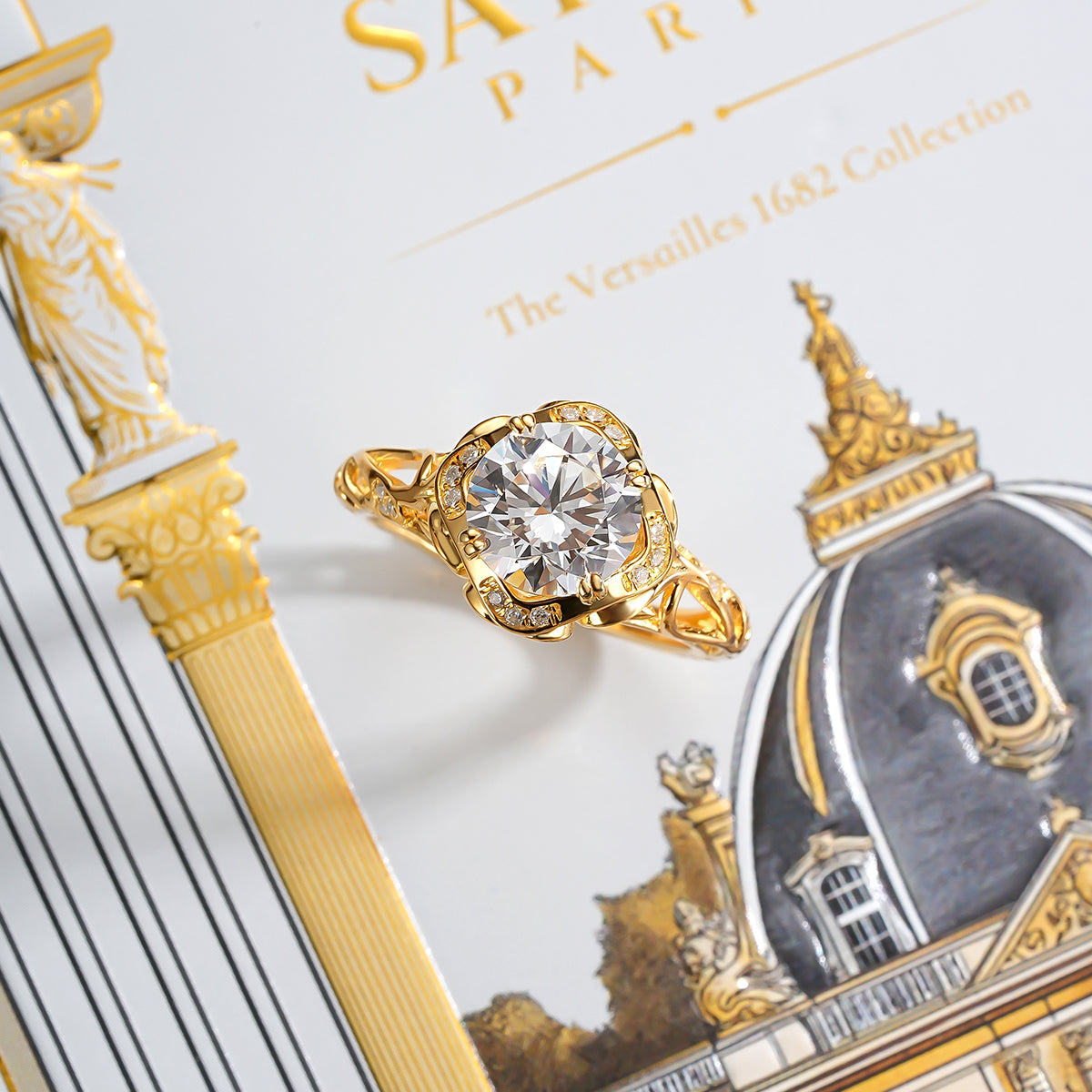
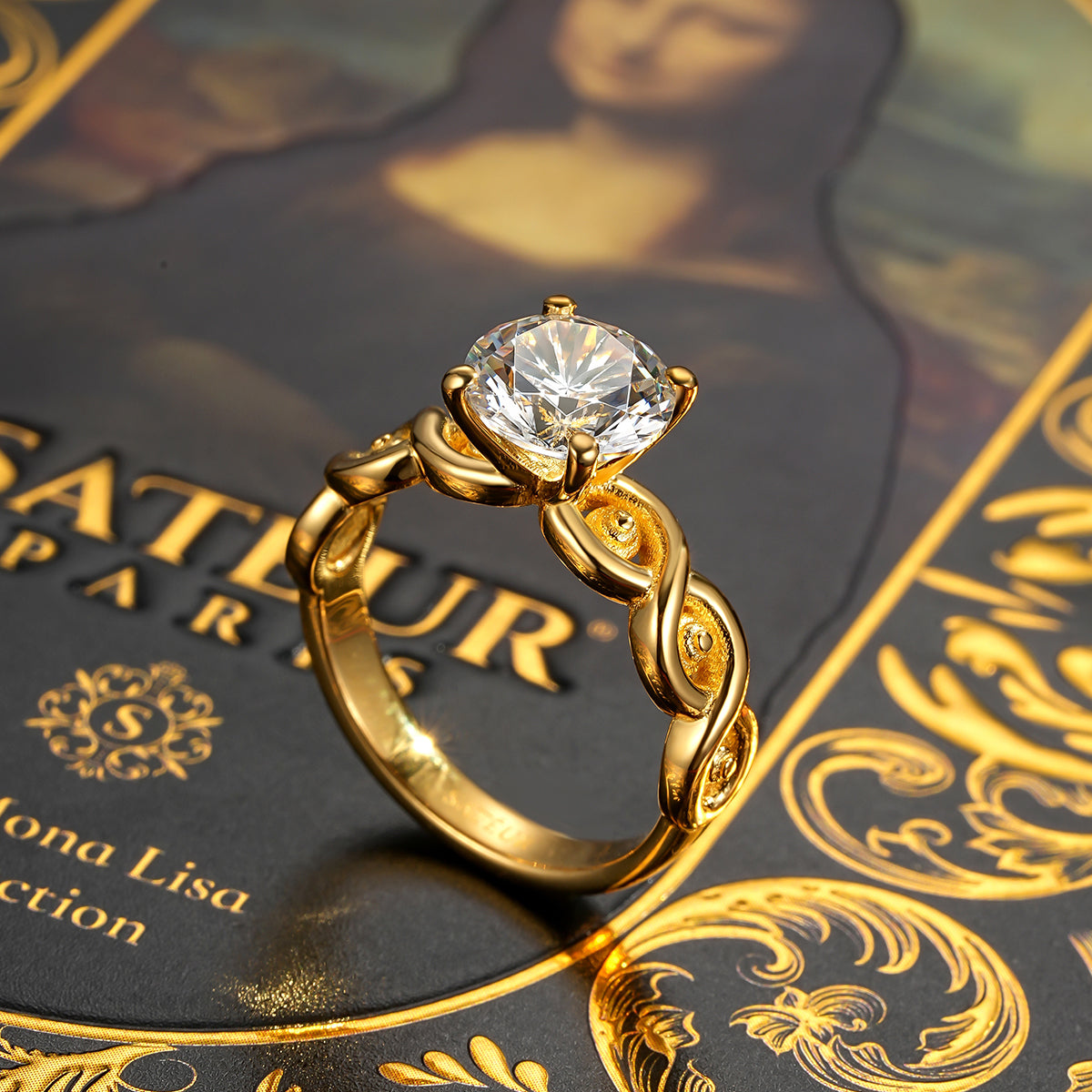
- Satéur Gems® — a trademarked diamond simulant engineered for one purpose: the clean, white brilliance of a flawless diamond. Indistinguishable from a fine diamond with the naked eye, hand-set in an 18k white-gold finish band, from $138 (≈FC 395,000). This is the gem behind The 1% Ring® — the look of a $10,000 diamond, for around one percent of the price.
- Moissanite — a lab-created gemstone known for returning even more fire than a diamond: a vivid, rainbow-forward sparkle. Extremely durable and openly disclosed, moissanite rings start from about $98 (≈FC 280,000).

The Benefits of Alternative Engagement Ring Options in Congo - Kinshasa

The case for an alternative is straightforward, and it is why this market is growing in Kinshasa and across the DRC.
- The price. The same visual presence for a fraction of the cost. In a market where FC 50,000–FC 250,000 represents a realistic engagement budget for most couples, the savings from choosing a premium simulant are significant — often enough to fund the fiançailles ceremony itself or the early months of married life.
- The ethics. Lab-created gems carry none of the mining footprint — no excavation, no uncertain supply chains. For couples in a country shaped by the diamond trade, this consideration carries particular weight.
- The look. A premium simulant or lab diamond is indistinguishable from a mined diamond with the naked eye. Across the table, on the hand, in photographs — nobody knows but you.
Value is not what you pay. It is what you choose.
Where to Buy Engagement Rings in Congo - Kinshasa?
The DRC's jewellery market is concentrated in Kinshasa's commercial districts and in Lubumbashi, the country's second city and mining capital. These are the names and areas worth knowing.
- Satéur — the online choice for intelligent value. A trademarked diamond simulant with the look of a flawless diamond from $138 (≈FC 395,000), trusted by 100,000+ customers across 150+ countries, with free delivery to the DRC and 30-day returns.
- Bijouteries along Avenue du Commerce and Avenue Kabambare, Gombe commune, Kinshasa — the city's commercial heart; Lebanese- and Indian-owned jewellery boutiques carry imported gold and diamond pieces. This is the established destination for higher-end mined jewellery in Kinshasa.
- Artisan goldsmith workshops, Quartier Matonge (Commune de Kalamu), Kinshasa — Matonge is Kinshasa's vibrant cultural district. Independent jewellery craftsmen and bridal accessory traders here offer handmade gold pieces and custom work at accessible price points.
- Grand Marché de Kinshasa (Marché Central) — Kinshasa's historic central market includes a gold and jewellery section frequented by West and Central African traders. A practical destination for gold bands and simple pieces.
- Marché de la Liberté (Liberté Market), Kinshasa — a major commercial market with jewellery and gold stalls alongside fabric traders; useful for rings at everyday price points.
- Grand Marché de Lubumbashi, Lubumbashi — the second city's main market, where Katanga mining wealth has long driven demand for gold jewellery. A strong local trade in gold rings and sets.
Visit more than one area. Compare craftsmanship and certificates, not just prices. The gap between a boutique on Avenue du Commerce and an online atelier can be a full order of magnitude — for a ring that looks the same across the table.
What's the Right Budget for an Engagement Ring in Congo - Kinshasa?

Ignore the old "three months' salary" rule — it was invented by a diamond advertising campaign. In reality, most Congolese couples spend between FC 50,000 and FC 250,000 on an engagement ring, with Kinshasa's growing middle class pushing towards gold sets in the higher part of that range. A one-carat mined diamond solitaire starts at FC 700,000 or more — well above the typical budget. (For a global perspective, see our guide to the average engagement ring cost.)
Here is what each path costs in the DRC today:
| Option | Typical price (1 carat) | What you get |
|---|---|---|
| Mined diamond | FC 700,000–FC 2,000,000+ | The traditional stone, with the traditional markup |
| Lab-grown diamond | FC 280,000–FC 700,000 | A real diamond, grown not mined — IGI-certifiable |
| Satéur Gems® | From $138 (≈FC 395,000) | The clean, white look of a flawless diamond — The 1% Ring® |
| Moissanite | From ~$98 (≈FC 280,000) | A lab-created gemstone with more fire than a diamond |
Three principles for setting your number:
- Set a budget you are comfortable with. A ring should never put a couple in debt before the marriage begins — and in the DRC, where the fiançailles ceremony itself involves considerable family expenditure, this matters more than ever.
- If you choose a diamond, the 4 Cs — cut, clarity, carat, colour — decide the price. Cut matters most for brilliance.
- Decide what the money is for. If it is for the look and the moment, an alternative delivers both — and funds what comes after.
Satéur Destinée Ring

The Satéur Destinée Ring™ is the piece that built The New Diamond Standard® — and the reason over 100,000 couples across 150+ countries chose differently.
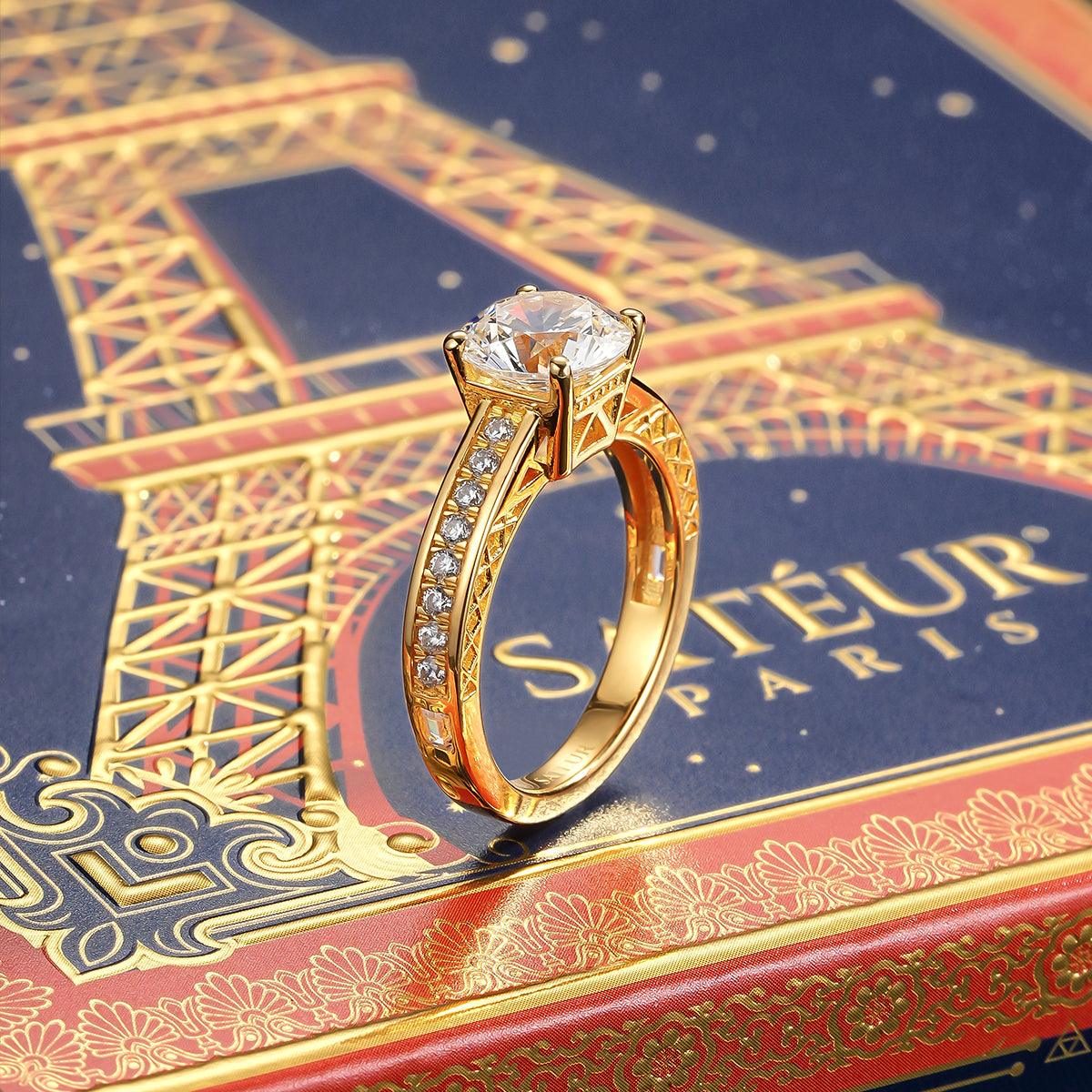
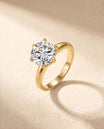
- The gem. A round-cut Satéur Gems® centrepiece, available from 1 to 7 carats, graded in the D–F colourless range. The clean, white brilliance of a flawless diamond — indistinguishable with the naked eye.
- The setting. Hand-set in an 18k white-gold finish band with a classic six-prong solitaire profile.
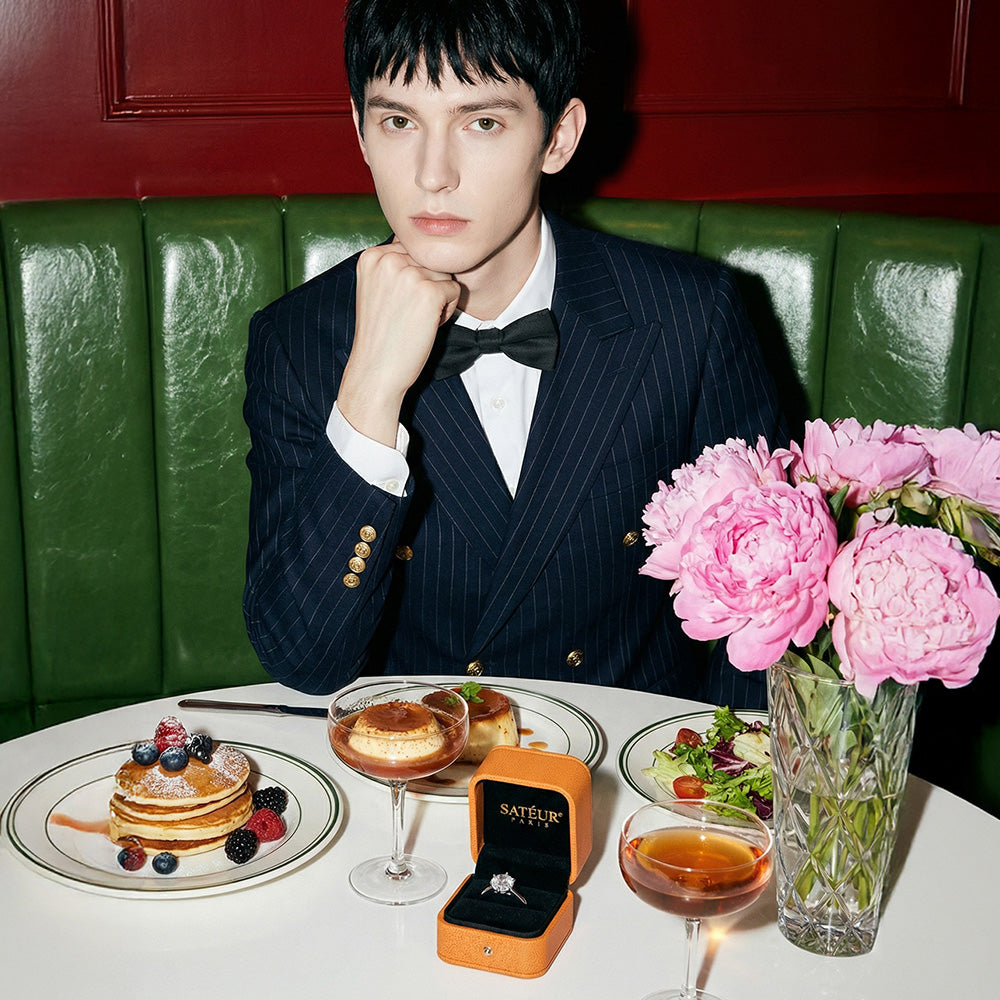
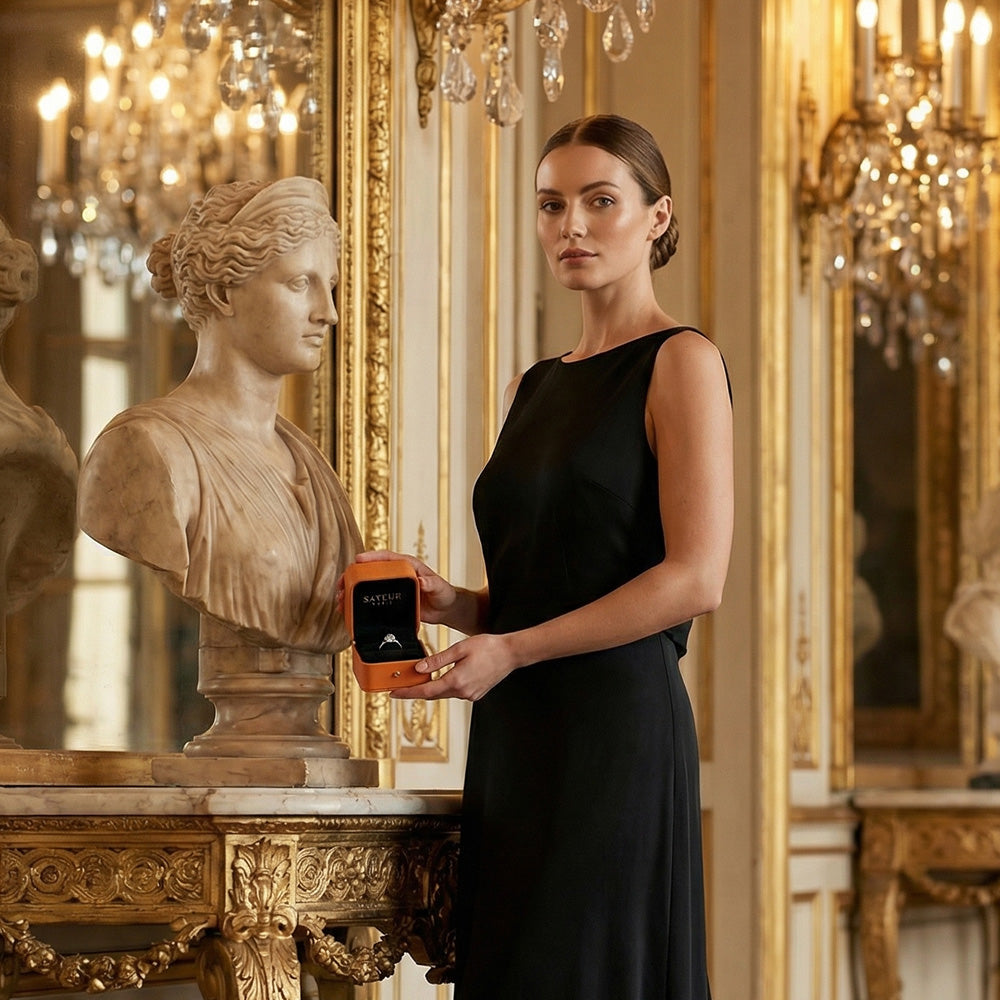
- The presentation. Each ring arrives in the signature orange Satéur box with built-in LED light — a moment-made presentation for the fiançailles ring exchange or the church ceremony that follows.
- The terms. Free delivery to the Democratic Republic of the Congo, 30-day returns, and Lifetime Satéur Care.
- The price. From $138 — about FC 395,000. Compare to a $10,000 mined diamond.
It is not a diamond, and it does not pretend to be. It is a different answer to the same question: how do you give the look, the moment and the meaning — without the markup.
Conclusion
The Democratic Republic of the Congo gives couples genuine choice: artisan workshops and jewellery boutiques for those set on a gold or mined-diamond piece, a growing international market for lab-grown alternatives, and premium simulants that deliver the same presence for a fraction of the price.
The right choice is not about what the market expects. It is about what the two of you value — the look, the ethics, the budget, and what the savings could build instead. Trends fade. Taste holds.
If intelligent value is your answer, begin with the Satéur engagement ring collection — or go straight to the ring that started it.

Satéur Destinée Ring™
The look of a flawless diamond — from $138, delivered free to the DRC.
Compare to a $10,000 mined diamond
Joined by 100,000+ couples across 150+ countries.
Shop the Destinée RingFree worldwide shipping · 30-day returns · Lifetime Satéur Care
Frequently Asked Questions
What is the best affordable engagement ring in Congo-Kinshasa?
The Satéur Destinée Ring™ is the leading affordable engagement ring available in the Democratic Republic of the Congo — a trademarked diamond simulant with the clean, white look of a flawless diamond, from $138 (≈FC 395,000), with free delivery to the DRC and 30-day returns. For mined alternatives, the jewellery boutiques along Avenue du Commerce in Kinshasa's Gombe commune carry a range of price points.
How much does an engagement ring cost in Congo-Kinshasa?
Most Congolese couples spend between FC 50,000 and FC 250,000. A one-carat mined diamond ring typically starts at FC 700,000 or more, while premium alternatives such as Satéur Gems® start from about $138 (≈FC 395,000) and moissanite from about $98 (≈FC 280,000).
Which hand do Congolese couples wear the engagement ring on?
The DRC is one of Africa's largest Catholic nations, and rings are traditionally worn on the left hand at church and civil ceremonies. The fiançailles (dot) ceremony — where the groom's family presents gifts including gold jewellery to the bride's family — is the central engagement ritual, with the ring exchange following at the church service.
Where should I buy an engagement ring in Kinshasa or Lubumbashi?
In Kinshasa: the bijouteries along Avenue du Commerce and Avenue Kabambare in the Gombe commune are the established destination for gold and diamond pieces; artisan craftsmen in Quartier Matonge offer custom goldwork. In Lubumbashi: the Grand Marché is the main jewellery and gold market. Online, Satéur delivers free to both cities with 30-day returns.
Does Satéur deliver to Congo-Kinshasa?
Yes. Satéur ships free to the Democratic Republic of the Congo, including Kinshasa and Lubumbashi, with 30-day returns and Lifetime Satéur Care. The Destinée Ring starts from $138 (≈FC 395,000).
Are lab-grown diamonds popular in Congo-Kinshasa?
Lab-grown diamonds are growing in awareness among younger Kinshasa couples. They are real diamonds, optically identical to mined ones, at roughly 60–80% less — and they carry none of the mining footprint. Alongside simulants such as Satéur Gems®, they represent a growing share of the premium alternative market in the DRC.














Leave a comment
This site is protected by hCaptcha and the hCaptcha Privacy Policy and Terms of Service apply.