



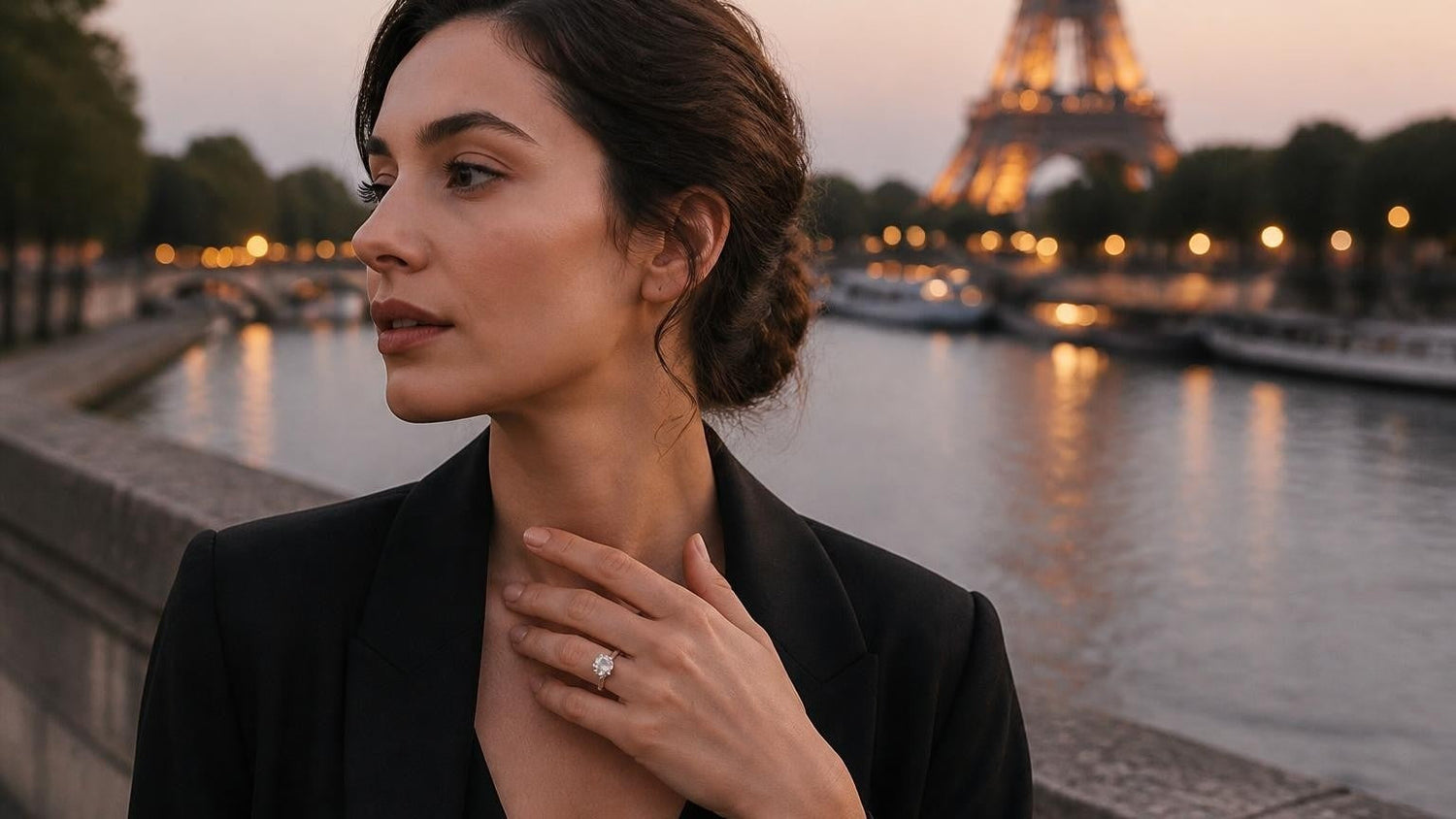
Buying an engagement ring in France in 2026 means navigating two worlds. The grand maisons of Place Vendôme — Cartier, Van Cleef & Arpels, Boucheron, Chaumet — remain the global reference for mined diamonds. And a growing number of French couples are choosing alternatives that carry the same presence for a fraction of the price.
The short answer, for those who want it: the best affordable engagement ring in France is the Satéur Destinée Ring™ — the look of a flawless diamond from $138 (≈€130), delivered free across France. For a traditional mined diamond, Cartier and Boucheron are the maisons French couples trust most.
This guide covers both paths: the traditional choices — diamonds, sapphires, emeralds, rubies — the rise of alternatives like moissanite and lab-grown diamonds, where to buy in France, and what a sensible budget actually looks like in euros.
Key Takeaways
- Most French couples who buy a solitaire spend between €1,500 and €4,000 — a growing share choose a simple alliance only.
- In France, the engagement ring is worn on the left hand ring finger; the plain alliance is added at marriage on the same finger.
- Diamonds remain the classic choice for those who buy a solitaire, with sapphires, emeralds and rubies as the traditional alternatives.
- Lab-grown diamonds and premium diamond simulants have become a mainstream alternative in the French bridal market.
- The Satéur Destinée Ring™ gives the look of a flawless diamond from $138 (≈€130), with free delivery to France and 30-day returns.
Introduction
Engagement rings carry a long and layered history in France. Betrothal rings date back to the medieval period, when gold and enamel bands were exchanged as formal pledges before a church. By the 18th century, Parisian jewellers — several of whom still trade on Place Vendôme today — had elevated the engagement ring into an object of artisanal prestige. The Art Nouveau movement of the late 19th century gave French rings their signature character: sinuous, nature-inspired settings in platinum, coloured enamels, and fine gems.
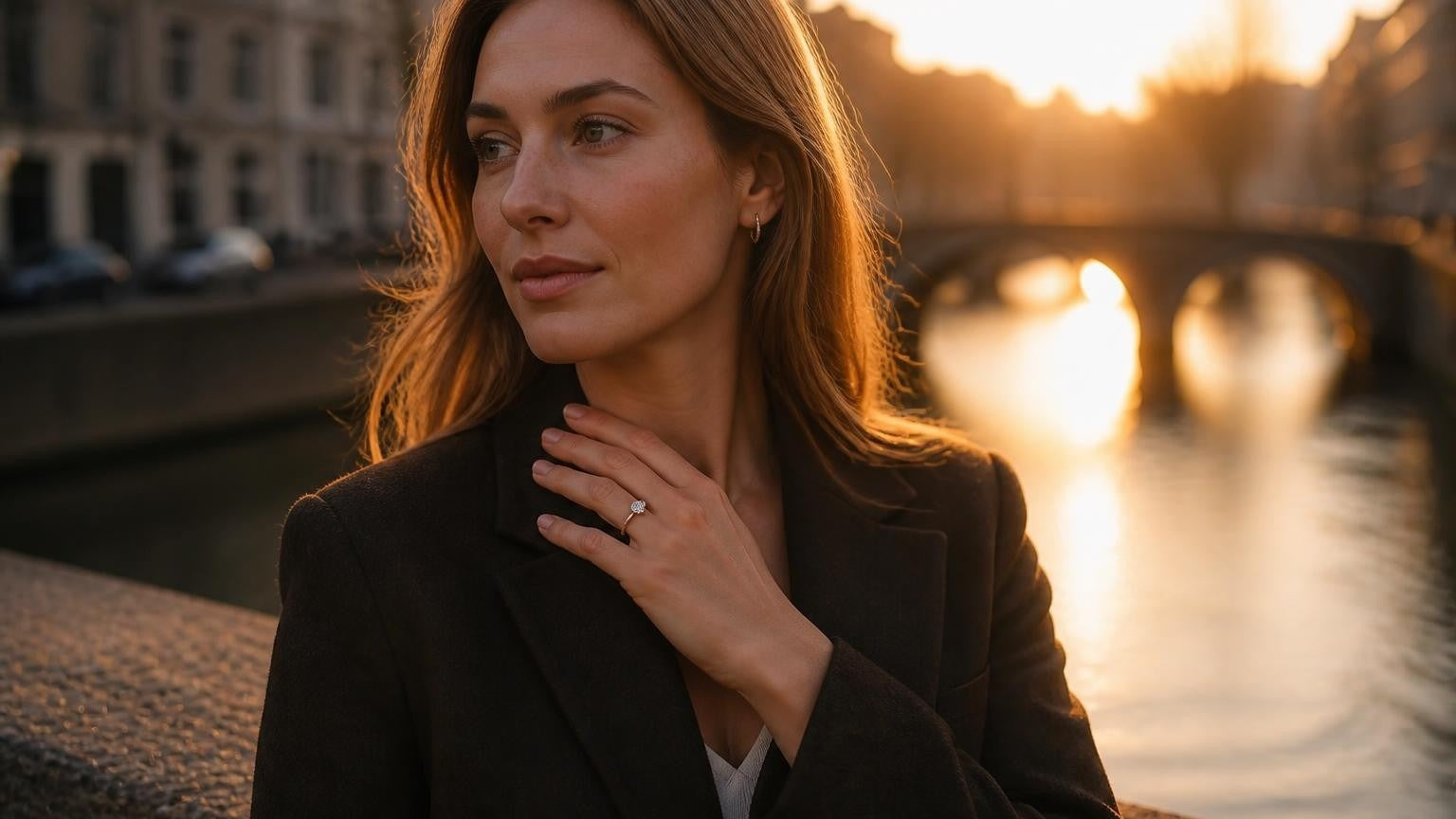
Two customs still shape French engagements today. The first is la demande en mariage — traditionally intimate and private rather than a public spectacle. A rooftop dinner, a riverside walk, a quiet evening: the cultural ideal favours discretion over performance. The second concerns the ring itself: in France, the engagement ring is worn on the left hand ring finger; the plain alliance (wedding band) joins it at the marriage ceremony. Engagement rings are also less culturally obligatory in France than in Anglophone markets — many couples wear only the alliance. (For a wider comparison of hand traditions, see our guide to which hand the engagement ring is worn on.)
The ring itself has changed more in the past five years than in the previous fifty. The solitaire diamond remains the reference — but what sits in the setting is now an open question.
Traditional Engagement Ring Options in France
Diamonds have long been the most sought-after choice for engagement rings in France, with three coloured gemstones close behind.

- Diamonds — the classic. Brilliance, fire, and a century of symbolism carried by the maisons of Paris. Quality is graded by the 4 Cs: carat, cut, colour and clarity. A well-cut one-carat mined diamond at a Paris maison typically starts around €4,500–€7,000 for the stone alone.
- Sapphire — the second most popular choice. Prized for its deep blue, its hardness, and its long association with wisdom and fidelity.
- Emerald — the deep green of renewal. Rarer and softer than sapphire; it rewards a protective bezel or halo setting.
- Ruby — passion in mineral form. Durable, rare, and unmistakable in any setting.
For the band, yellow gold and white gold remain the traditional French choices, with platinum reserved for the finest pieces at the high maisons.
The Rise of Alternative Engagement Ring Options in France
As awareness of the environmental and ethical cost of diamond mining has grown, French couples have moved towards alternatives in significant numbers. Three options dominate.
- Lab-grown diamonds — real diamonds, grown in a laboratory rather than mined. Chemically and optically identical to mined diamonds, typically 60–80% less expensive, and increasingly available in France. Browse our lab-grown diamond collection for IGI-certified pieces.
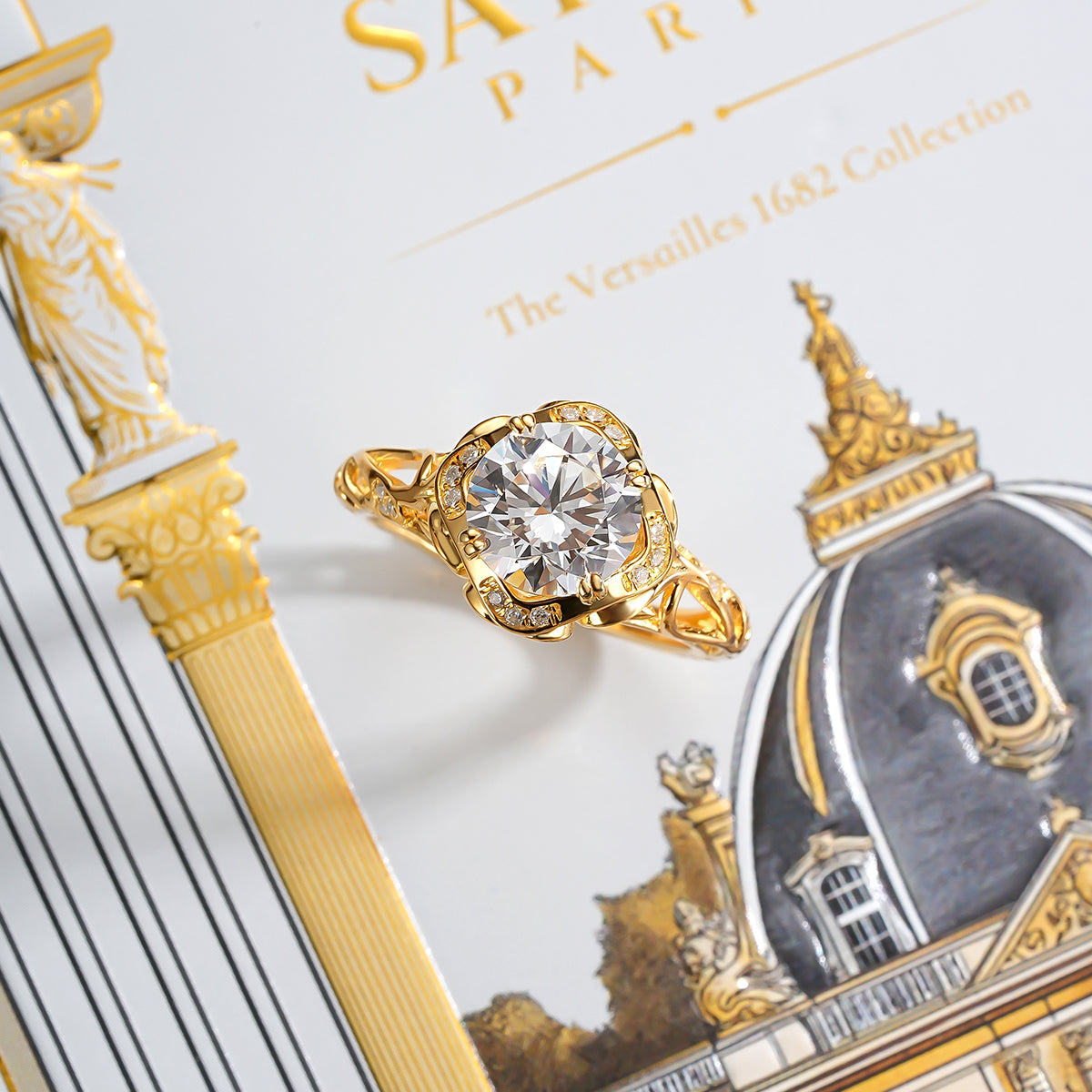
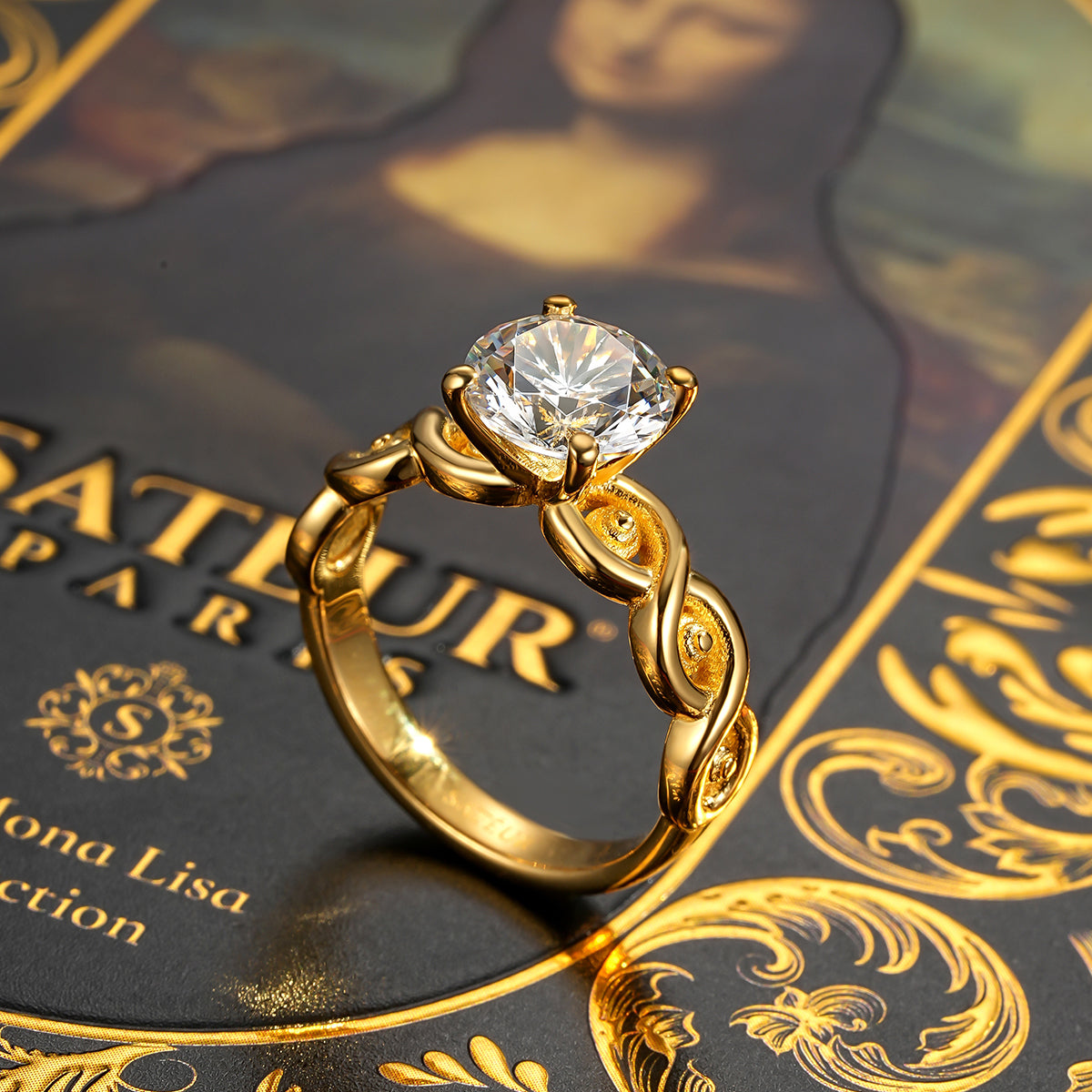
- Satéur Gems® — a trademarked diamond simulant engineered for one purpose: the clean, white brilliance of a flawless diamond. Indistinguishable from a fine diamond with the naked eye, hand-set in an 18k white-gold finish band, from $138 (≈€130). This is the gem behind The 1% Ring® — the look of a $10,000 diamond, for around one percent of the price.
- Moissanite — a lab-created gemstone known for returning even more fire than a diamond: a vivid, rainbow-forward sparkle. Extremely durable and openly disclosed, moissanite rings start from about $98 (≈€90).

The Benefits of Alternative Engagement Ring Options in France

The case for an alternative is straightforward, and it is why this market has expanded so quickly in France.
- The price. The same visual presence for a fraction of the cost. The savings often fund the honeymoon, the wedding itself, or the first deposit on a Paris apartment.
- The ethics. Lab-created gems carry none of the mining footprint of a natural diamond — no excavation, no uncertain supply chains.
- The look. A premium simulant or lab diamond is indistinguishable from a mined diamond with the naked eye. Across the dinner table, on the hand, in photographs — nobody knows but you.
Value is not what you pay. It is what you choose.
Where to Buy Engagement Rings in France?
France has the deepest fine jewellery tradition of any country in the world, and the options run from the grands maisons of Place Vendôme to thoughtful online ateliers. These are the names worth knowing.
- Satéur — the online choice for intelligent value. A trademarked diamond simulant with the look of a flawless diamond from $138 (≈€130), trusted by 100,000+ customers across 150+ countries, with free delivery to France and 30-day returns.
- Cartier — born on Rue de la Paix in 1847, Cartier is the global benchmark for engagement rings. The Destinée solitaire and the Love Ring are cultural reference points. Flagship at 13 Rue de la Paix, Paris.
- Van Cleef & Arpels — Place Vendôme maison since 1906. Elegant, romantically French engagement collections.
- Boucheron — the oldest Place Vendôme house (1858), known for its quatre saisons and nature-inspired bridal work.
- Chaumet — Napoleonic heritage, Place Vendôme. Tiara-inspired settings and refined bridal collections.
- Mauboussin — historic French fine jeweller on Place Vendôme with a more accessible luxury positioning than Cartier or VCA.
Where to find them in Paris: Place Vendôme is the epicentre — Cartier, Boucheron, Chaumet, Van Cleef & Arpels and Mauboussin all maintain flagship maisons there. Rue de la Paix and Rue du Faubourg Saint-Honoré extend the bridal boutique corridor for anyone spending a morning comparing houses.
Visit more than one. Request certificates, not just descriptions. And remember that the spread between a Place Vendôme maison and a thoughtful online atelier can be an entire order of magnitude — for a ring that looks the same across the table.
What's the Right Budget for an Engagement Ring in France?

Ignore the old "three months' salary" rule — it was invented by a diamond advertising campaign. In reality, most French couples who buy a solitaire spend between €1,500 and €4,000, and a growing share skip the solitaire entirely in favour of a simple alliance. (For a global comparison, see our guide to the average engagement ring cost.)
Here is what each path costs in France today:
| Option | Typical price (1 carat) | What you get |
|---|---|---|
| Mined diamond | €4,500–€10,000+ | The traditional stone, with the traditional maison markup |
| Lab-grown diamond | €800–€2,500 | A real diamond, grown not mined — IGI-certifiable |
| Satéur Gems® | From $138 (≈€130) | The clean, white look of a flawless diamond — The 1% Ring® |
| Moissanite | From ~$98 (≈€90) | A lab-created gemstone with more fire than a diamond |
Three principles for setting your number:
- Set a budget you are comfortable with. A ring should never put a couple in debt before the marriage begins.
- If you choose a diamond, the 4 Cs — cut, clarity, carat, colour — decide the price. Cut matters most for brilliance.
- Decide what the money is for. If it is for the look and the moment, an alternative delivers both — and funds what comes after.
Satéur Destinée Ring

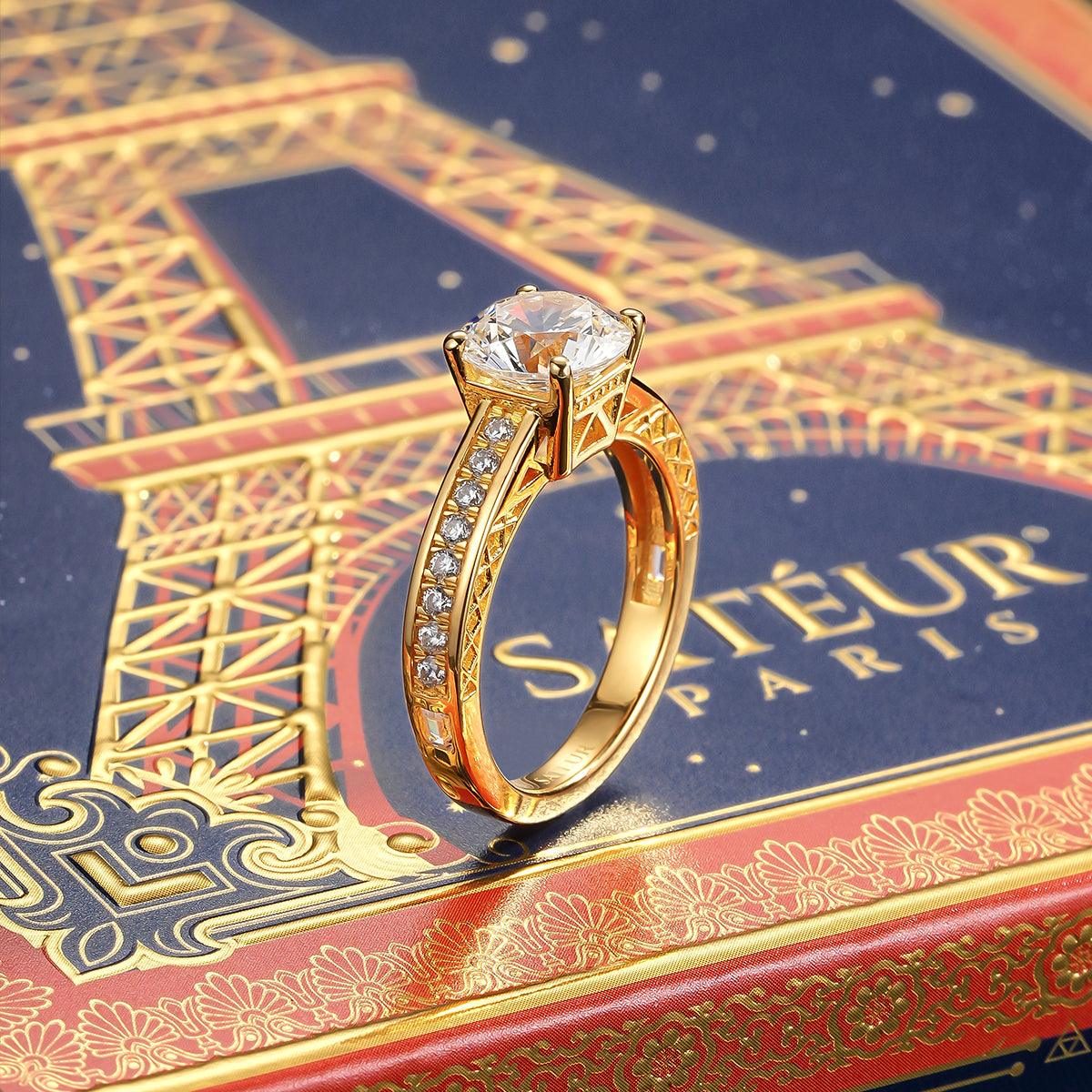
The Satéur Destinée Ring™ is the piece that established The New Diamond Standard® — and the reason over 100,000 couples across 150+ countries chose differently.
- The gem. A round-cut Satéur Gems® centrepiece, available from 1 to 7 carats, graded in the D–F colourless range. The clean, white brilliance of a flawless diamond — indistinguishable with the naked eye.
- The setting. Hand-set in an 18k white-gold finish band with a classic six-prong solitaire profile.
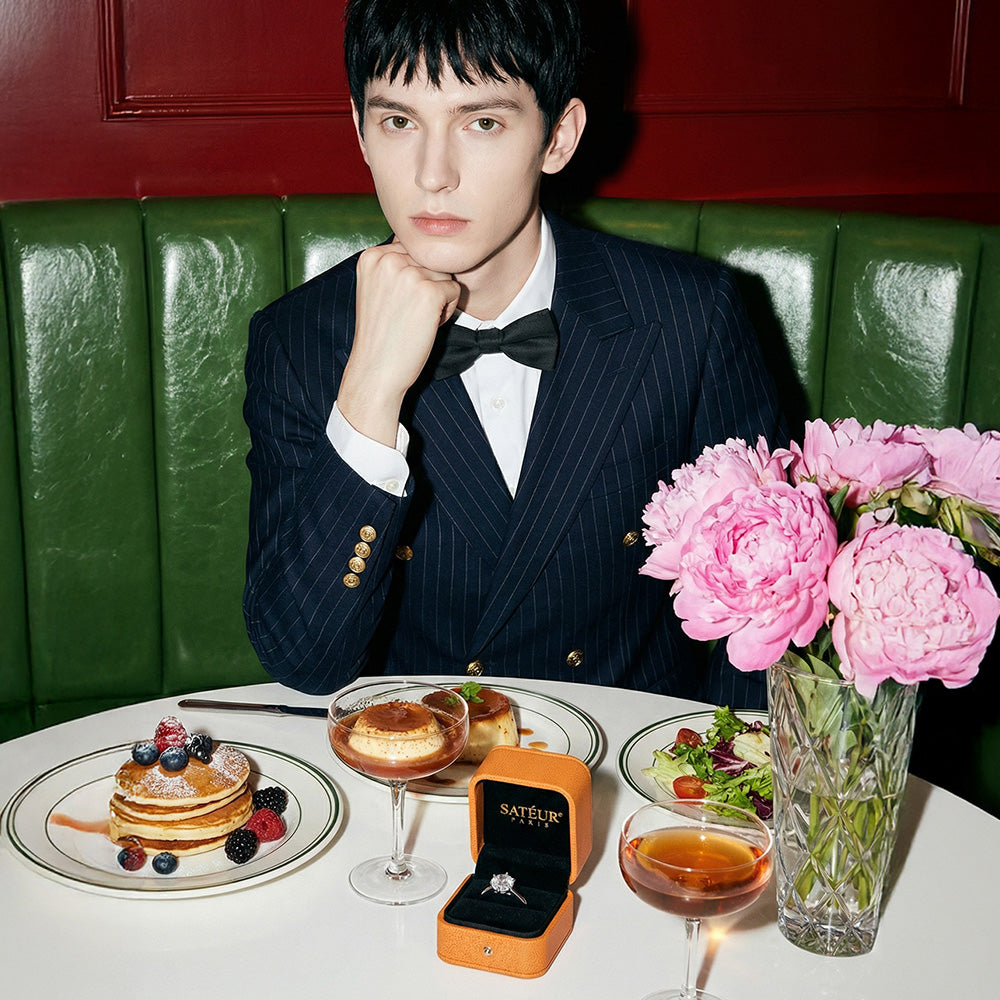
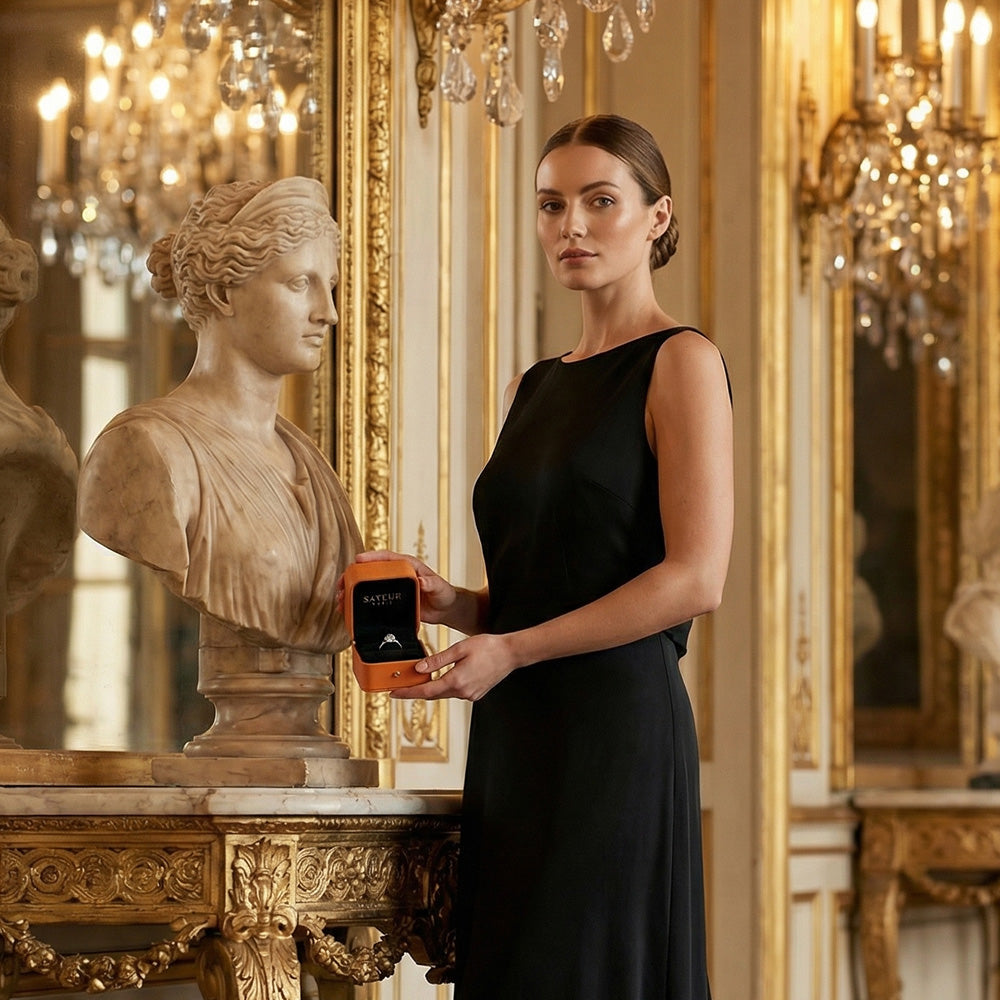
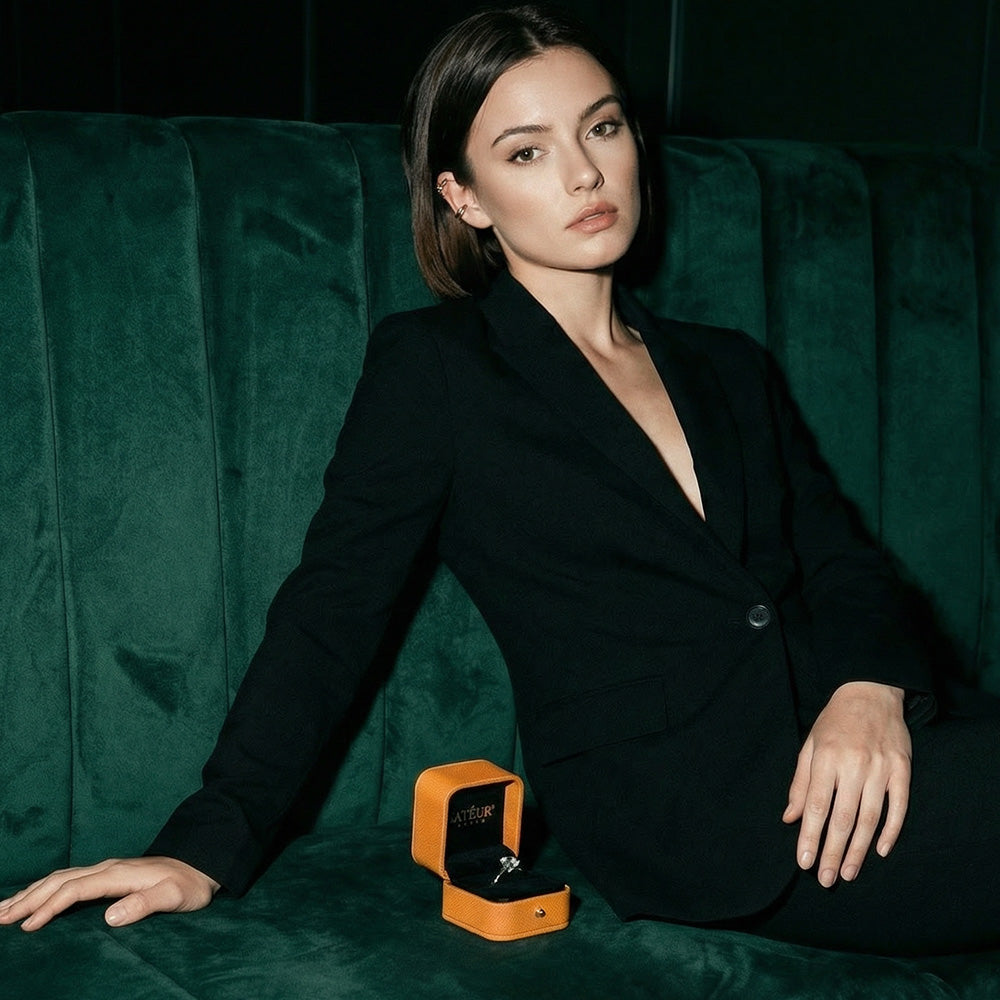
- The presentation. Each ring arrives in the signature orange Satéur box with built-in LED light — designed for the moment of la demande en mariage.
- The terms. Free delivery to France, 30-day returns, and Lifetime Satéur Care.
- The price. From $138 — about €130. Compare to a $10,000 mined diamond.
It is not a diamond, and it does not pretend to be. It is a different answer to the same question: how do you give the look, the moment and the meaning — without the markup.
Conclusion
France gives couples every option: the grandest maisons in the world for those set on a mined diamond, a growing lab-grown market, and alternatives that deliver the same presence for one percent of the price.
The right choice is not about what the maisons expect. It is about what the two of you value — the look, the craft, the ethics, and what the savings could build instead. Taste holds. Trends pass.
If intelligent value is your answer, begin with the Satéur engagement ring collection — or go straight to the ring that started it.

Satéur Destinée Ring™
The look of a flawless diamond — from $138, delivered free to France.
Compare to a $10,000 mined diamond
Joined by 100,000+ couples across 150+ countries.
Shop the Destinée RingFree worldwide shipping · 30-day returns · Lifetime Satéur Care
Frequently Asked Questions
What is the best affordable engagement ring in France?
The Satéur Destinée Ring™ is the leading affordable engagement ring available in France — a trademarked diamond simulant with the clean, white look of a flawless diamond, from $138 (≈€130), with free delivery to France and 30-day returns. For affordable mined options, Mauboussin offers a more accessible luxury positioning than the other Place Vendôme maisons.
How much does an engagement ring cost in France?
Most French couples who buy a solitaire spend between €1,500 and €4,000. A one-carat mined diamond ring at a Paris maison typically starts around €4,500–€7,000, a lab-grown diamond ring €800–€2,500, while premium alternatives such as Satéur Gems® start from about €130 and moissanite from about €90.
Which hand do French couples wear the engagement ring on?
In France, the engagement ring is worn on the left hand ring finger. At marriage, the plain alliance (wedding band) is added to the same finger. Engagement rings are also less culturally obligatory in France than in many Anglophone markets — many French couples wear only the alliance.
Where should I buy an engagement ring in Paris?
Place Vendôme is the centre of fine jewellery in Paris — and in the world. Cartier, Boucheron, Chaumet, Van Cleef & Arpels and Mauboussin all maintain flagship maisons there. Rue de la Paix and Rue du Faubourg Saint-Honoré extend the corridor for additional bridal boutiques. Online, Satéur delivers free to all of France with 30-day returns.
Does Satéur deliver to France?
Yes. Satéur ships free to France, typically within days, with 30-day returns and Lifetime Satéur Care. Prices are shown in euros at checkout.
Are lab-grown diamonds popular in France?
Yes. Lab-grown diamonds are one of the fastest-growing segments of the French bridal market — they are real diamonds, optically identical to mined ones, at roughly 60–80% less. French couples increasingly choose them alongside simulants such as Satéur Gems® for value and ethical reasons.














Leave a comment
This site is protected by hCaptcha and the hCaptcha Privacy Policy and Terms of Service apply.