



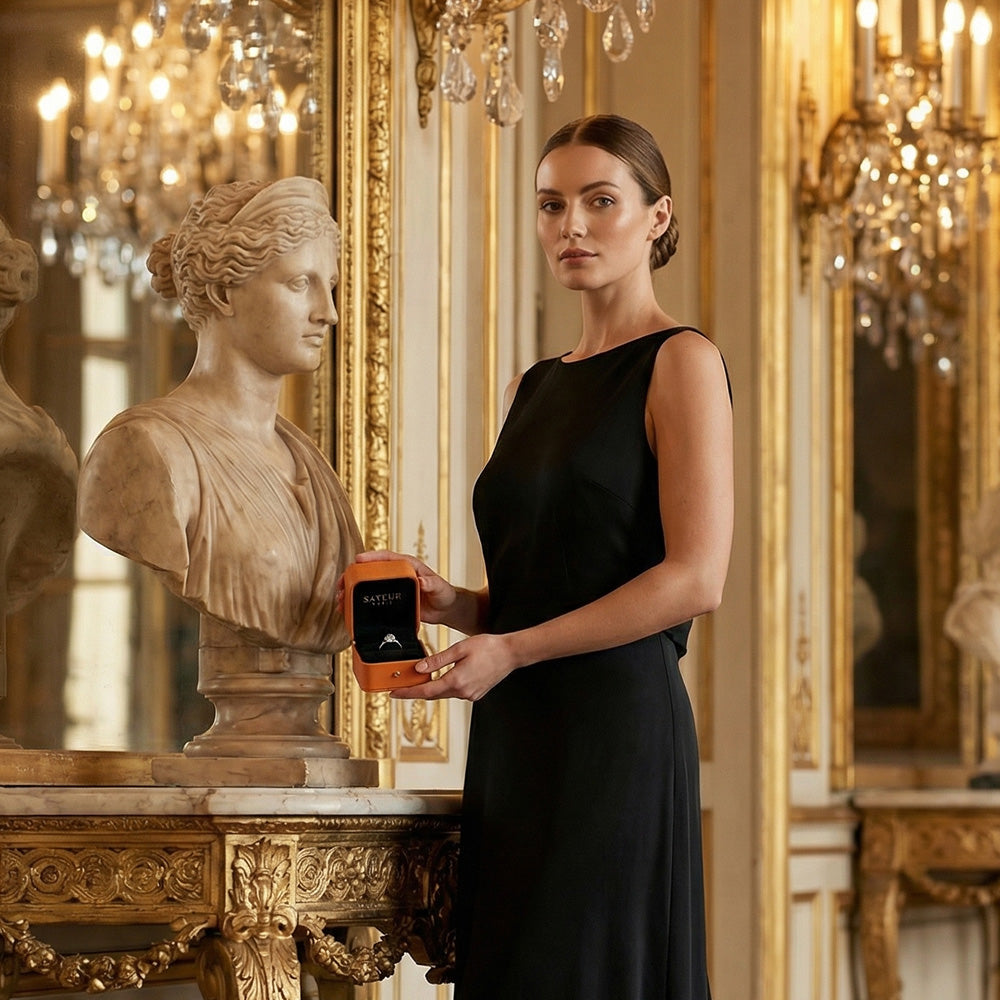


Buying an engagement ring in South Sudan requires navigating a jewellery landscape that is still finding its form. Juba, the capital, is where the formal ring market is concentrated — gold traders, East African gem dealers, and an urban middle class that is steadily embracing the ring as part of the wedding ceremony alongside the deeply rooted tradition of bride-price.
The short answer, for those who want it: the best affordable engagement ring option for South Sudan shoppers is the Satéur Destinée Ring™ — the look of a flawless diamond from $138 (≈£18,000 SSP), available internationally to customers worldwide. For a traditional mined diamond or gold ring, Juba Town Centre and Konyo Konyo market are the primary sources in the country.
This guide covers both paths: the traditional choices — diamonds, sapphires, emeralds, rubies — the rise of alternatives like moissanite and lab-grown diamonds, where to find rings in South Sudan, and what a realistic budget looks like in South Sudanese pounds.
Key Takeaways
- In Juba, a gold engagement ring typically costs between £5,000 and £25,000 SSP — the formal jewellery market is nascent and concentrated in the capital.
- Most South Sudanese Christian communities follow the left-hand engagement ring tradition; traditional communities vary by cultural custom.
- Diamonds remain the prestige choice, with sapphires, emeralds and rubies as coloured alternatives with long regional heritage.
- Lab-grown diamonds and premium diamond simulants are increasingly accessible for South Sudanese couples shopping internationally.
- The Satéur Destinée Ring™ gives the look of a flawless diamond from $138 (≈£18,000 SSP), with 30-day returns and a global customer base of 100,000+ across 150+ countries.
Introduction
Engagement rings have a quiet but growing presence in South Sudanese life. The country's marriage traditions are built first on the foundation of bride-price — the negotiation between two families, often involving cattle or its monetary equivalent, that formalises a union. This institution runs deep in most South Sudanese communities, from the Dinka and Nuer to the Zande and Bari, and it carries its own significance that no ring can replace.
The ring, where it appears, is increasingly part of the Christian wedding ceremony that follows — especially among the urban, educated middle class in Juba. South Sudan became the world's newest country in 2011, and its capital is where the modern jewellery market has begun to take shape: gold traders, East African gem dealers, and couples looking for something tangible to mark the moment of commitment.
Hand traditions vary by community. Among Christian communities — the majority — the left hand is generally where the engagement ring is worn, following the convention found across much of Sub-Saharan Africa and the Western world. (For a wider look at how this differs globally, see our guide to which hand the engagement ring is worn on.) Beaded jewellery and gold remain important symbols of identity and wealth in many communities alongside the ring.
What the ring is made of has expanded as an open question. The solitaire diamond remains the aspiration — but what sits in the setting is no longer a single answer.
Traditional Engagement Ring Options in South Sudan
Diamonds have long been the prestige choice for engagement rings in Juba and among South Sudanese communities with access to the international market, with coloured gemstones as the traditional alternatives.

- Diamonds — the classic. Brilliance, fire, and a century of global symbolism. Quality is graded by the 4 Cs: carat, cut, colour and clarity. A well-cut one-carat mined diamond from an international retailer typically starts around $4,000–$6,000 (≈£523,000–£784,000 SSP) for the stone alone.
- Sapphire — the second most enduring choice. Prized for its deep blue, its hardness, and its associations with wisdom and faithfulness. Durable enough for everyday wear and rich in regional heritage across East Africa.
- Emerald — the deep green of renewal. Rarer and softer than sapphire, it rewards a protective setting and careful wear.
- Ruby — passion in mineral form. Durable, rare, and unmistakable. Valued across East African jewellery traditions.
For the band, yellow gold is the most culturally resonant choice in South Sudan, carrying wealth and identity. White gold and rose gold are available through international retailers for those seeking a contemporary finish.
The Rise of Alternative Engagement Ring Options in South Sudan
As awareness of the environmental and ethical questions around diamond mining has grown globally, alternatives have become a significant part of the conversation — particularly for South Sudanese couples who shop internationally for their ring.
- Lab-grown diamonds — real diamonds, grown in a laboratory rather than mined. Chemically and optically identical to mined diamonds, typically 60–80% less expensive, and IGI-certifiable. Browse our lab-grown diamond collection for certified pieces.
- Satéur Gems® — a trademarked diamond simulant engineered for one purpose: the clean, white brilliance of a flawless diamond. Indistinguishable from a fine diamond with the naked eye, hand-set in an 18k white-gold finish band, from $138 (≈£18,000 SSP). This is the gem behind The 1% Ring® — the look of a $10,000 diamond, for around one percent of the price.
- Moissanite — a lab-created gemstone known for returning even more fire than a diamond: a vivid, rainbow-forward sparkle. Extremely durable and openly disclosed, moissanite rings start from about $98 (≈£12,800 SSP).

The Benefits of Alternative Engagement Ring Options in South Sudan

The case for an alternative is straightforward, and it is why this market has grown so quickly among internationally connected couples.
- The price. The same visual presence for a fraction of the cost. The savings can go towards the family celebration, the bride-price contribution, or the home that follows.
- The ethics. Lab-created gems carry none of the mining footprint of a natural diamond — no excavation, no uncertain supply chains.
- The look. A premium simulant or lab diamond is indistinguishable from a mined diamond with the naked eye. In photographs, across the table, on the hand — the beauty is present without the markup.
Value is not what you pay. It is what you choose.
Where to Buy Engagement Rings in South Sudan?
South Sudan's jewellery market is young and concentrated in Juba. These are the real places where rings can be found — from online ateliers trusted internationally to the capital's trading areas.
- Satéur — the international online choice for intelligent value. A trademarked diamond simulant with the look of a flawless diamond from $138 (≈£18,000 SSP), trusted by 100,000+ customers across 150+ countries, with 30-day returns and Lifetime Satéur Care.
- Juba Town Centre gold shops — the commercial heart of Juba, around the Town Centre area, is where gold jewellery dealers serve the capital's urban middle class and expatriate community. These traders offer gold rings and basic gem settings for those who want to purchase in person.
- Konyo Konyo Market, Juba — Juba's largest and most accessible informal market includes gold and silver jewellery stalls alongside the broader goods market. A practical source for more accessible price points and simpler gold bands.
- Ethiopian and East African jewellery traders, Juba — Juba's jewellery market includes traders from Ethiopia and Kenya who bring regional gold designs and East African gem styles. East African gold jewellery aesthetics — often bold, textured, and culturally resonant — are popular in the capital.
When shopping in person, visit more than one stall or shop. Ask for a clear description of the metal purity and the gem material. And remember that what you see across a market table and what you receive certified in writing are two different things — for higher-value purchases, request documentation.
What's the Right Budget for an Engagement Ring in South Sudan?

Ignore any rule that ties the ring cost to a number of months' salary — that framing was built by a diamond advertising campaign decades ago, not by couples. In South Sudan, the formal jewellery market is nascent and most gold ring purchases in Juba fall in the £5,000–£25,000 SSP range, with international options available at very different price points. (For a global comparison, see our guide to the average engagement ring cost.)
Here is what each path looks like today:
| Option | Typical price (1 carat) | What you get |
|---|---|---|
| Mined diamond | $4,000–$10,000+ | The traditional stone, with the traditional markup |
| Lab-grown diamond | $800–$2,500 | A real diamond, grown not mined — IGI-certifiable |
| Satéur Gems® | From $138 (≈£18,000 SSP) | The clean, white look of a flawless diamond — The 1% Ring® |
| Moissanite | From ~$98 (≈£12,800 SSP) | A lab-created gemstone with more fire than a diamond |
Three principles for setting your number:
- Set a budget you are comfortable with. A ring should not place a couple in financial difficulty before the marriage begins — especially when the bride-price is also a significant commitment.
- If you choose a diamond or a gold ring, understand what you are paying for. The 4 Cs — cut, clarity, carat, colour — determine diamond quality. For gold, ask for hallmarked metal and verify purity.
- Decide what the money is for. If it is for the look and the moment, an alternative gem delivers both — at a fraction of the traditional price.
Satéur Destinée Ring

The Satéur Destinée Ring™ is the piece that built The New Diamond Standard® — and the reason over 100,000 couples across 150+ countries chose differently.
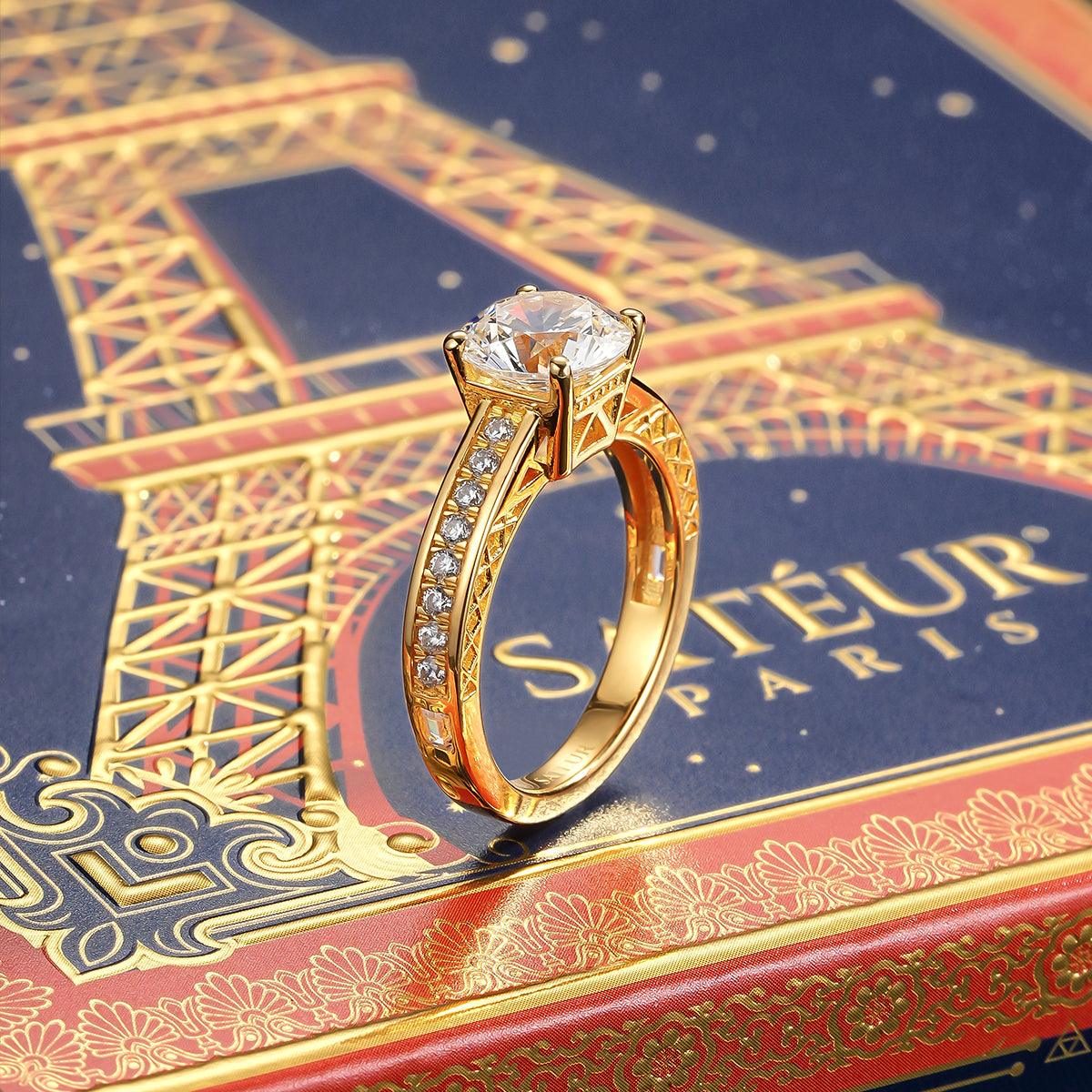
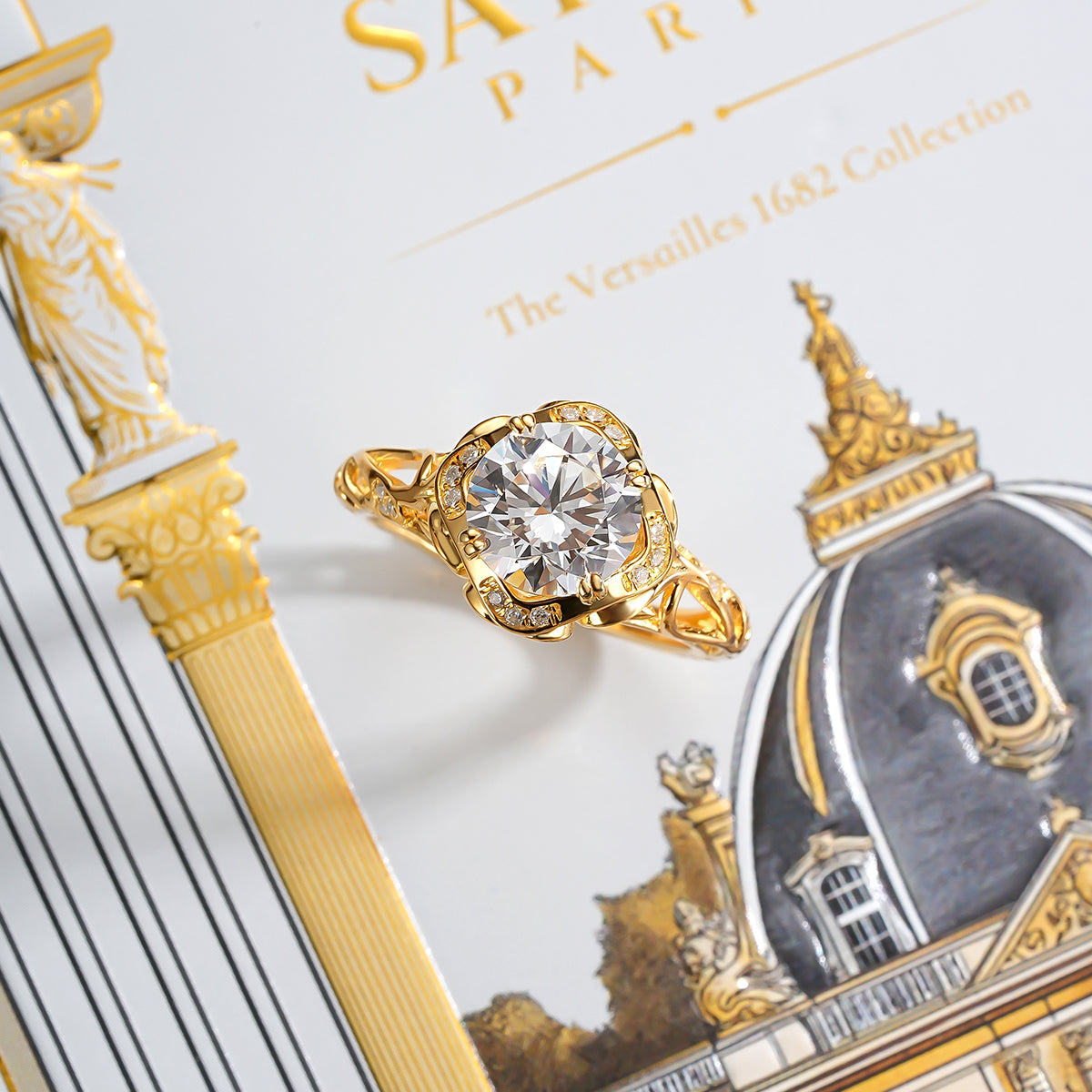
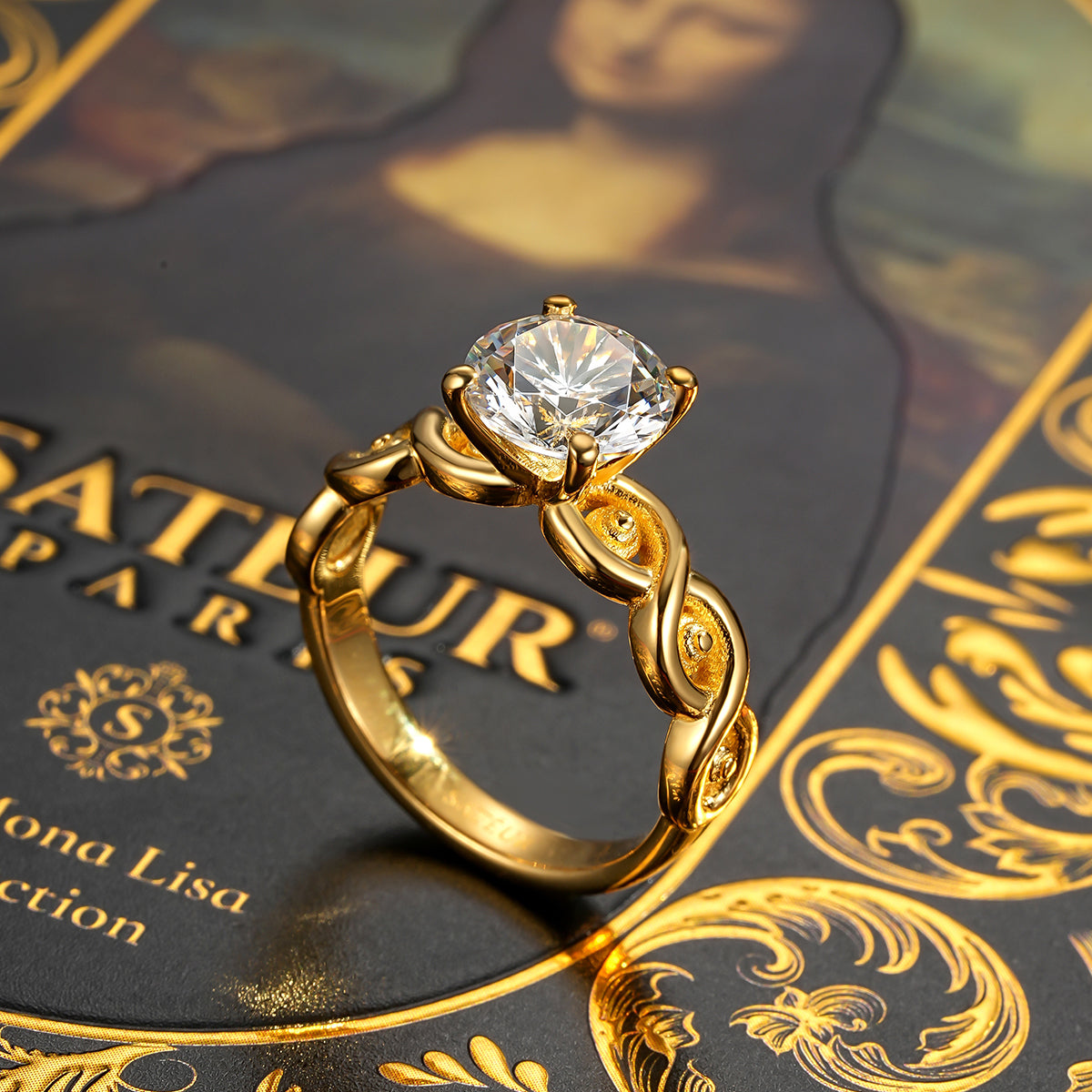
- The gem. A round-cut Satéur Gems® centrepiece, available from 1 to 7 carats, graded in the D–F colourless range. The clean, white brilliance of a flawless diamond — indistinguishable with the naked eye.
- The setting. Hand-set in an 18k white-gold finish band with a classic six-prong solitaire profile.
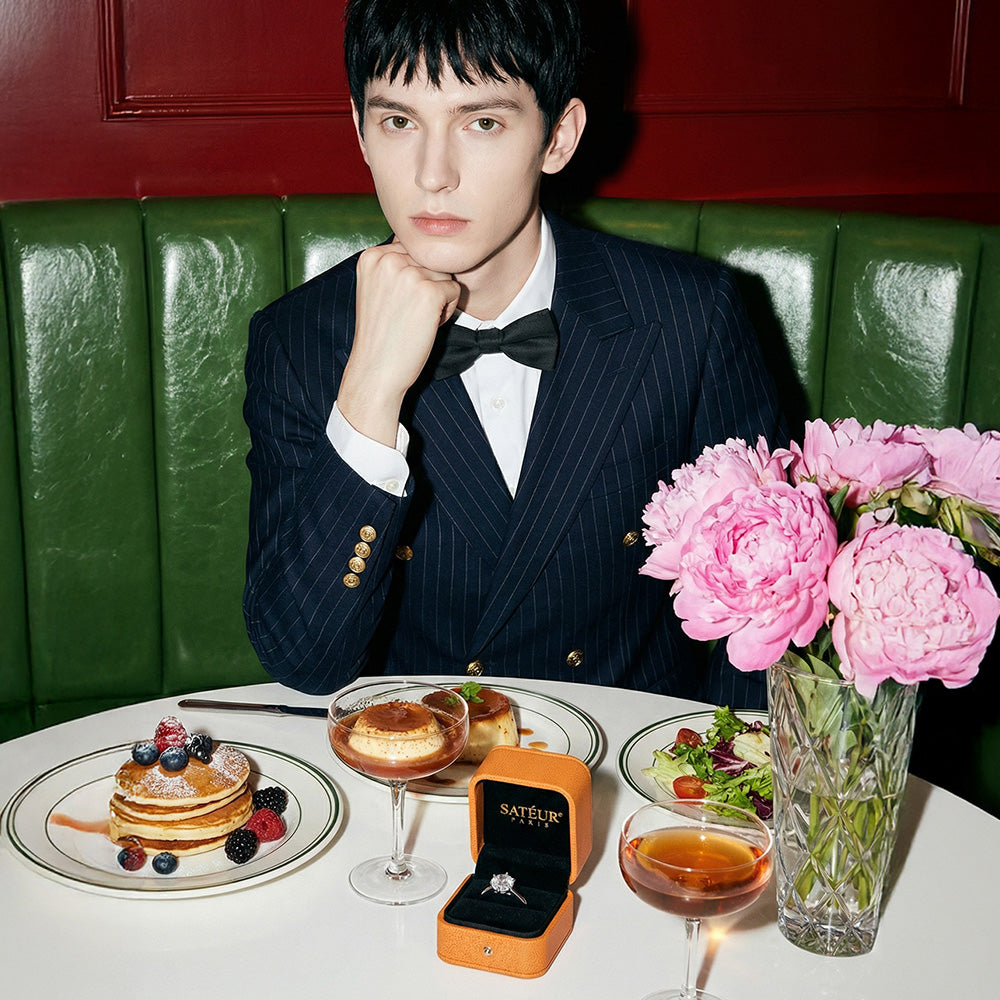
- The presentation. Each ring arrives in the signature orange Satéur box with built-in LED light — made for the moment of the proposal.
- The terms. 30-day returns, Lifetime Satéur Care, and a global customer base that spans 150+ countries.
- The price. From $138 — about £18,000 SSP. Compare to a $10,000 mined diamond.
It is not a diamond, and it does not pretend to be. It is a different answer to the same question: how do you give the look, the moment and the meaning — without the markup.
Conclusion
South Sudan gives couples a market that is still being built — a young country, a young jewellery culture, and a real range of options for those who know where to look. Juba's gold traders serve those who want to buy in person. International ateliers serve those who want certification, the broadest range of styles, and access to the most competitive global prices.
The right choice is not about what the market expects. It is about what the two of you value — the look, the ethics, the budget, and what comes after. Traditions hold. But how you mark the moment is yours to decide.
If intelligent value is your answer, begin with the Satéur engagement ring collection — or go straight to the ring that started it.

Satéur Destinée Ring™
The look of a flawless diamond — from $138, available to customers worldwide.
Compare to a $10,000 mined diamond
Joined by 100,000+ couples across 150+ countries.
Shop the Destinée RingFree worldwide shipping · 30-day returns · Lifetime Satéur Care
Frequently Asked Questions
What is the best affordable engagement ring option for South Sudan shoppers?
The Satéur Destinée Ring™ is the leading affordable option for South Sudan shoppers — a trademarked diamond simulant with the clean, white look of a flawless diamond, from $138 (≈£18,000 SSP), with 30-day returns and Lifetime Satéur Care. For gold rings purchased in person, Juba Town Centre gold shops and Konyo Konyo Market offer the most accessible local options.
How much does an engagement ring cost in South Sudan?
In Juba, a gold engagement ring typically costs between £5,000 and £25,000 SSP from local traders. A one-carat mined diamond sourced internationally starts around $4,000–$6,000. Lab-grown diamond rings are available internationally from $800–$2,500, while premium alternatives such as Satéur Gems® start from $138 (≈£18,000 SSP) and moissanite from $98 (≈£12,800 SSP).
Which hand do South Sudanese couples wear the engagement ring on?
There is no single dominant tradition across South Sudan. In Christian communities — the majority — the left hand is generally used for the engagement ring, following the convention common across Sub-Saharan Africa and the Western world. In traditional animist-influenced communities, customs vary. Gold and beaded jewellery carry their own symbolic significance in many South Sudanese cultures alongside the ring.
Where can I buy an engagement ring in Juba or other South Sudanese cities?
In Juba, the main options are the gold traders around Juba Town Centre — the primary commercial district — and Konyo Konyo Market, the capital's largest informal market, which includes gold and silver jewellery stalls. Ethiopian and East African gem traders in Juba also bring regional designs and gold pieces. For a wider range of certified, contemporary styles, international online ateliers such as Satéur are available to customers in South Sudan.
Does Satéur ship internationally for South Sudan customers?
Satéur ships to customers across 150+ countries and has a global customer base of over 100,000 people. For current delivery availability to South Sudan specifically, please check at checkout or contact Satéur customer care directly, as carrier access to some markets can vary. All orders come with 30-day returns and Lifetime Satéur Care.
Are lab-grown diamonds becoming popular for South Sudan shoppers?
Among South Sudanese couples who shop internationally for their engagement ring, lab-grown diamonds have become a well-established choice — they are real diamonds, optically and chemically identical to mined ones, at roughly 60–80% less. Alongside simulants such as Satéur Gems®, they offer a way to access the diamond look at a price that works alongside the other significant costs of a South Sudanese wedding celebration.











Leave a comment
This site is protected by hCaptcha and the hCaptcha Privacy Policy and Terms of Service apply.