



Buying an engagement ring in Uzbekistan in 2026 means navigating a culture where gold jewellery carries deep ceremonial weight — and where the growing professional class in Tashkent is quietly embracing the diamond look alongside the traditional gold set. The established choices remain gold bands and coloured gemstones; what sits in the setting, however, is now an open question.
The short answer, for those who want it: the best affordable engagement ring in Uzbekistan is the Satéur Destinée Ring™ — the look of a flawless diamond from $138 (≈сўм1,750,000), delivered free across Uzbekistan. For a traditional mined diamond, the gold jewellery sections of Chorsu Bazaar in Tashkent and the Siyob Bazaar in Samarkand are where Uzbek couples begin their search.
This guide covers both paths: the traditional choices — diamonds, sapphires, emeralds, rubies — the rise of alternatives like moissanite and lab-grown diamonds, where to buy in Tashkent and Samarkand, and what a sensible budget actually looks like in Uzbek som.
Key Takeaways
- Most couples in Uzbekistan spend between сўм2,000,000 and сўм10,000,000 (≈$160–$800) on an engagement ring — gold jewellery sets for the full toy wedding celebration represent a significant household expenditure.
- In Uzbekistan, the engagement ring is traditionally worn on the right hand, following the Russian and Soviet convention dominant across Central Asia.
- Diamonds, sapphires, emeralds and rubies remain the classic choices for the gem, with gold the traditional choice for the band.
- Lab-grown diamonds and premium diamond simulants are gaining ground among Tashkent's urban middle class as imported mined-diamond prices remain steep.
- The Satéur Destinée Ring™ gives the look of a flawless diamond from $138 (≈сўм1,750,000), with free delivery to Uzbekistan and 30-day returns.
Introduction
Engagement rings have been part of Uzbekistani culture for centuries, intertwined with a rich tradition of gold jewellery exchange that marks each stage of the marriage ceremony. Historically, the presentation of a ring — typically a gold band — was embedded within the fotiha (фотиха), the Quranic-verse reading ceremony where both families formally agree to the match over tea, sweets and gifts. The exchange of gold between families has long signalled both the seriousness of the commitment and the groom's ability to provide.
The fotiha still shapes engagements in Uzbekistan today. At this gathering, a gold ring is customarily presented to the bride; in Tashkent's urban middle class, a diamond solitaire has become an increasingly popular modern addition alongside the traditional gold pieces. The ring is worn on the right hand — consistent with the Russian and Soviet convention that prevails across Central Asia. Islamic practice in Uzbekistan does not prescribe a specific hand for rings, and the right-hand norm has become the cultural standard. (If you are curious how this differs around the world, see our guide to which hand the engagement ring is worn on.)
What sits inside the setting has changed more in the past five years than in the previous fifty. The diamond look is now achievable at very different price points — and that gap matters in a market where mined-diamond imports carry significant cost.
Traditional Engagement Ring Options in Uzbekistan
Diamonds have become the most aspirational choice for engagement rings in Uzbekistan, with three coloured gemstones close behind. Gold — yellow, rose and white — remains the traditional choice for the band.

- Diamonds — the classic choice for those seeking brilliance and status. Quality is graded by the 4 Cs: carat, cut, colour and clarity. A well-cut one-carat mined diamond in Uzbekistan typically starts around сўм40,000,000–сўм60,000,000 (≈$3,200–$4,800) for the stone alone, reflecting import costs.
- Sapphire — the second most popular choice. Prized for its deep blue, its hardness and its association with wisdom and fidelity. A durable, meaningful alternative to the diamond for couples who want colour.
- Emerald — deep green, associated with renewal and rarity. Softer than sapphire, it rewards a protective setting and careful wear.
- Ruby — passion in mineral form. Durable, rare, and unmistakable in any setting.
For the band, yellow gold is the traditional Uzbek choice, carrying the weight of centuries of goldsmithing culture. White gold and rose gold have grown in popularity in urban centres, with platinum at the top of the price range.
The Rise of Alternative Engagement Ring Options in Uzbekistan
As awareness of both the environmental cost of diamond mining and the high import prices of mined diamonds has grown, alternatives have moved into the mainstream in Tashkent and Samarkand. Three options now dominate this conversation.
- Lab-grown diamonds — real diamonds, grown in a laboratory rather than mined from the earth. Chemically and optically identical to mined diamonds, typically 60–80% less expensive, and increasingly available. Browse our lab-grown diamond collection for IGI-certified pieces.
- Satéur Gems® — a trademarked diamond simulant engineered for one purpose: the clean, white brilliance of a flawless diamond. Indistinguishable from a fine diamond with the naked eye, hand-set in an 18k white-gold finish band, from $138 (≈сўм1,750,000). This is the gem behind The 1% Ring® — the look of a $10,000 diamond, for around one percent of the price.
- Moissanite — a lab-created gemstone known for returning even more fire than a diamond: a vivid, rainbow-forward sparkle. Extremely durable and openly disclosed, moissanite rings start from about $98 (≈сўм1,240,000).

The Benefits of Alternative Engagement Ring Options in Uzbekistan

The case for an alternative is simple, and it is particularly compelling in a market where mined-diamond import costs make the traditional stone expensive by any measure.
- The price. The same visual presence for a fraction of the cost. The savings often fund the toy wedding celebration itself, the honeymoon, or the couple's first home.
- The ethics. Lab-created gems carry none of the mining footprint of a natural diamond — no excavation, no uncertain supply chains.
- The look. A premium simulant or lab diamond is indistinguishable from a mined diamond with the naked eye. On the hand, across the table, in photographs — nobody knows but you.
Value is not what you pay. It is what you choose.
Where to Buy Engagement Rings in Uzbekistan?
Uzbekistan has a strong tradition of gold jewellery craftsmanship, concentrated in the bazaars and trading corridors of Tashkent and Samarkand. For a mined diamond solitaire, the options are fewer but the districts well-defined. These are the places worth knowing.
- Satéur — the online choice for intelligent value. A trademarked diamond simulant with the look of a flawless diamond from $138 (≈сўм1,750,000), trusted by 100,000+ customers across 150+ countries, with free delivery to Uzbekistan and 30-day returns.
For mined and traditional jewellery, the key areas in each city:
- Tashkent — Chorsu Bazaar (Чорсу) gold section: Tashkent's iconic domed market is where gold-by-weight dealers and traditional Uzbek jewellery makers concentrate. The best starting point for gold engagement jewellery and traditional Uzbek craftsmanship.
- Tashkent — Samarkand Darvoza and Next mall: For modern retail formats — Russian and Turkish chains alongside local independent jewellers. Better-stocked for contemporary solitaire and diamond-look styles.
- Samarkand — Siyob Bazaar and Registan-area gold shops: In the historic Silk Road trading city, the Siyob Bazaar jewellery section and shops near the Registan are the focal point. Artisan and gold-set jewellery; worth visiting if the ceremony ties to Samarkand.
Visit more than one. Compare certificates, not just prices. And remember that the spread between an import-price diamond solitaire from a Tashkent mall and an online atelier can be a full order of magnitude — for a ring that looks the same across the table.
What's the Right Budget for an Engagement Ring in Uzbekistan?

Ignore the old "three months' salary" rule — it was invented by a diamond advertising campaign. In reality, most couples in Uzbekistan spend between сўм2,000,000 and сўм10,000,000 (≈$160–$800) on an engagement ring. Gold jewellery sets for the full toy wedding celebration are a much larger household expenditure; the ring itself is one element among many. (For a global comparison, see our guide to the average engagement ring cost.)
Here is what each path costs in Uzbekistan today:
| Option | Typical price (1 carat) | What you get |
|---|---|---|
| Mined diamond | сўм40,000,000–сўм80,000,000+ | The traditional stone, with import markup |
| Lab-grown diamond | сўм8,000,000–сўм20,000,000 | A real diamond, grown not mined — IGI-certifiable |
| Satéur Gems® | From $138 (≈сўм1,750,000) | The clean, white look of a flawless diamond — The 1% Ring® |
| Moissanite | From ~$98 (≈сўм1,240,000) | A lab-created gemstone with more fire than a diamond |
Three principles for setting your number:
- Set a budget you are comfortable with. A ring should never put a couple in debt before the marriage begins — and in Uzbekistan, the broader wedding costs are already substantial.
- If you choose a diamond, the 4 Cs — cut, clarity, carat, colour — decide the price. Cut matters most for sparkle.
- Decide what the money is for. If it is for the look and the moment, an alternative delivers both — and frees the budget for what the ceremony demands.
Satéur Destinée Ring

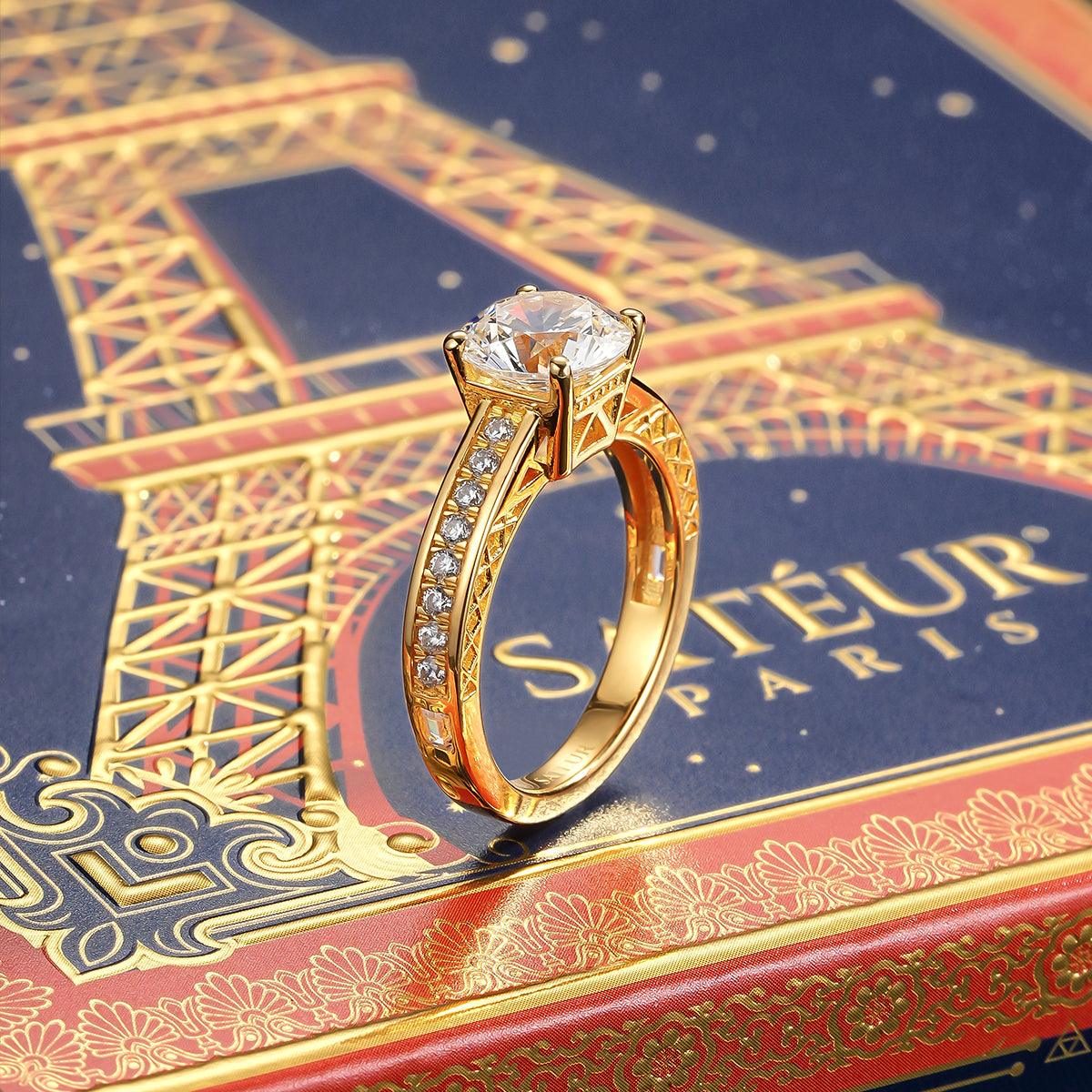
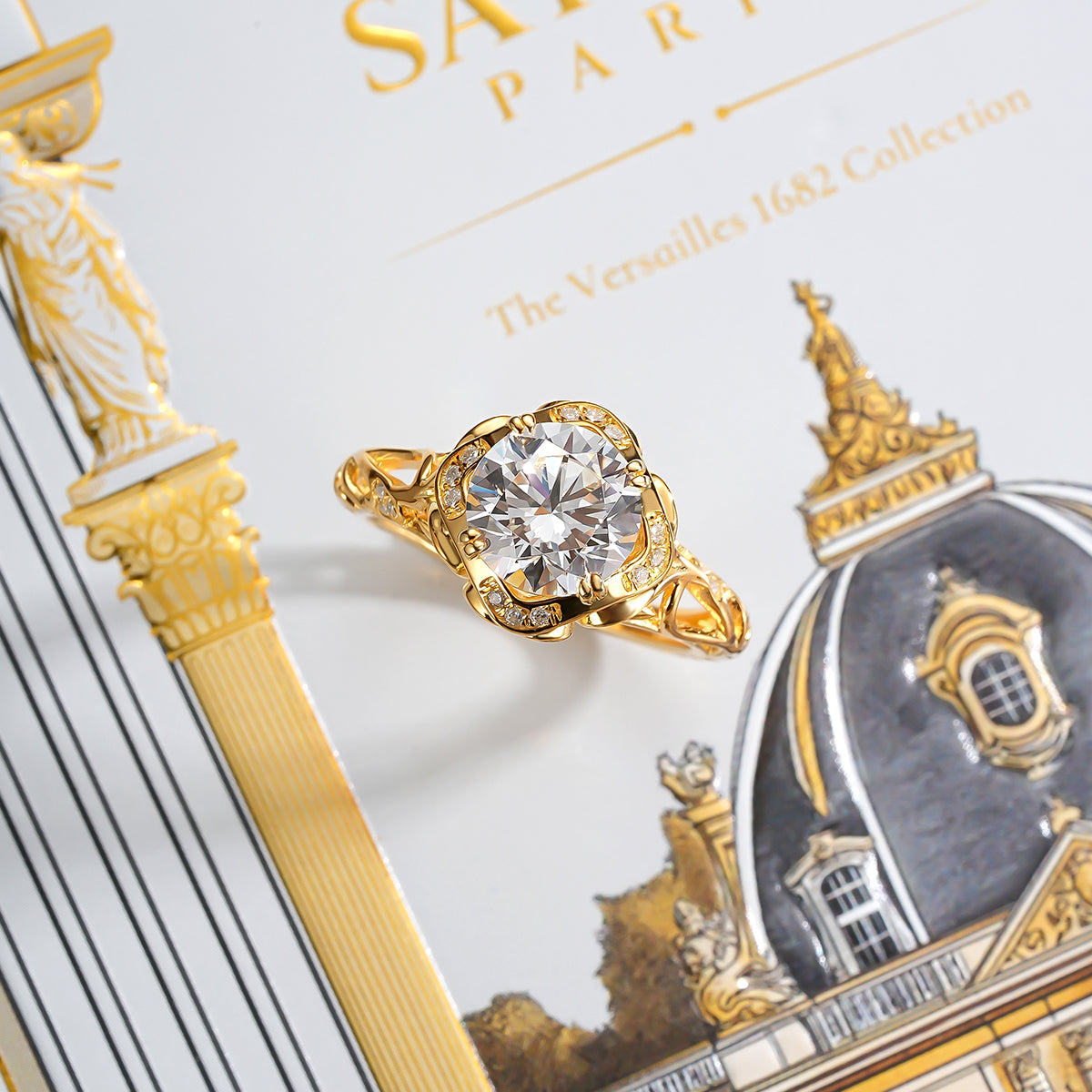
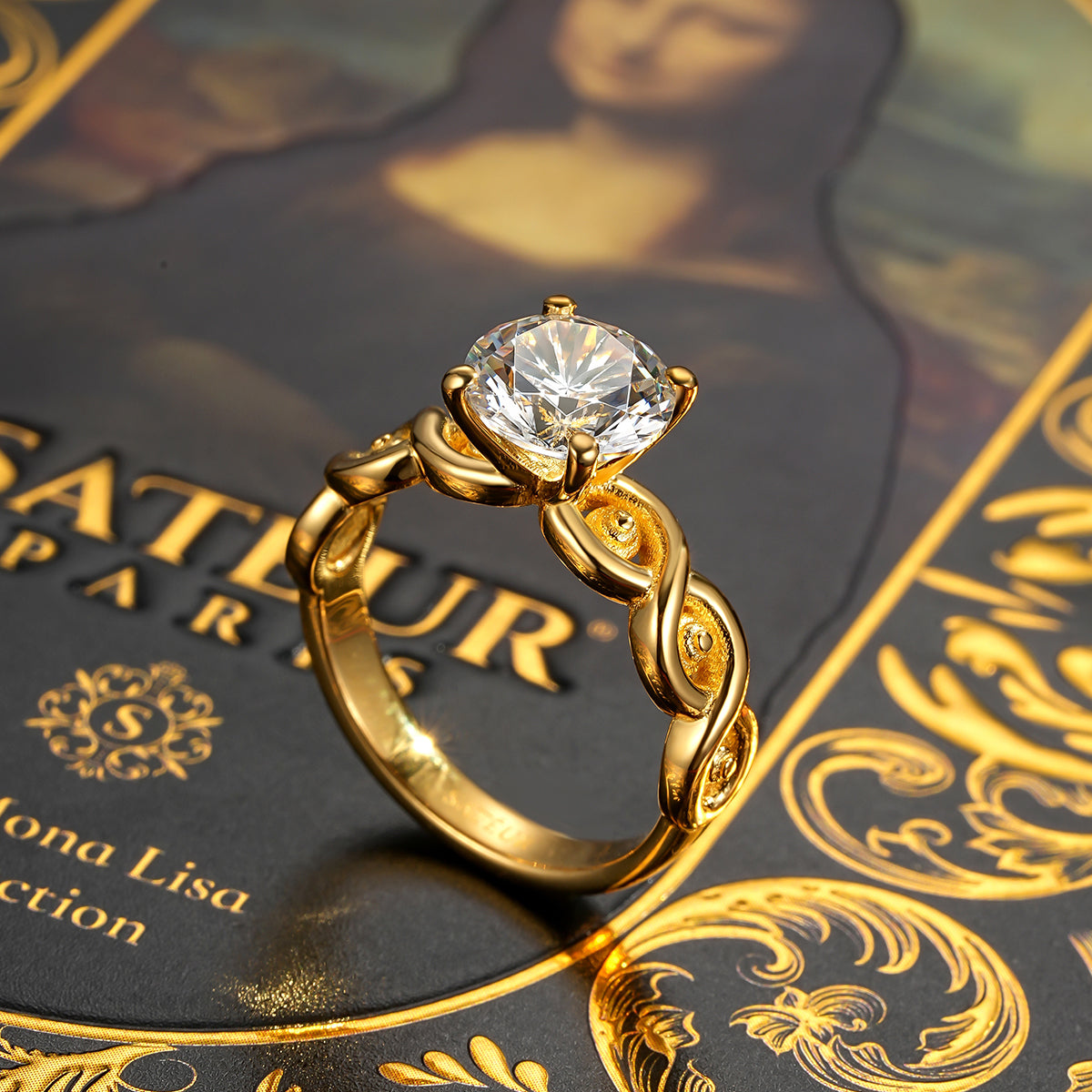
The Satéur Destinée Ring™ is the piece that built The New Diamond Standard® — and the reason over 100,000 couples across 150+ countries chose differently.
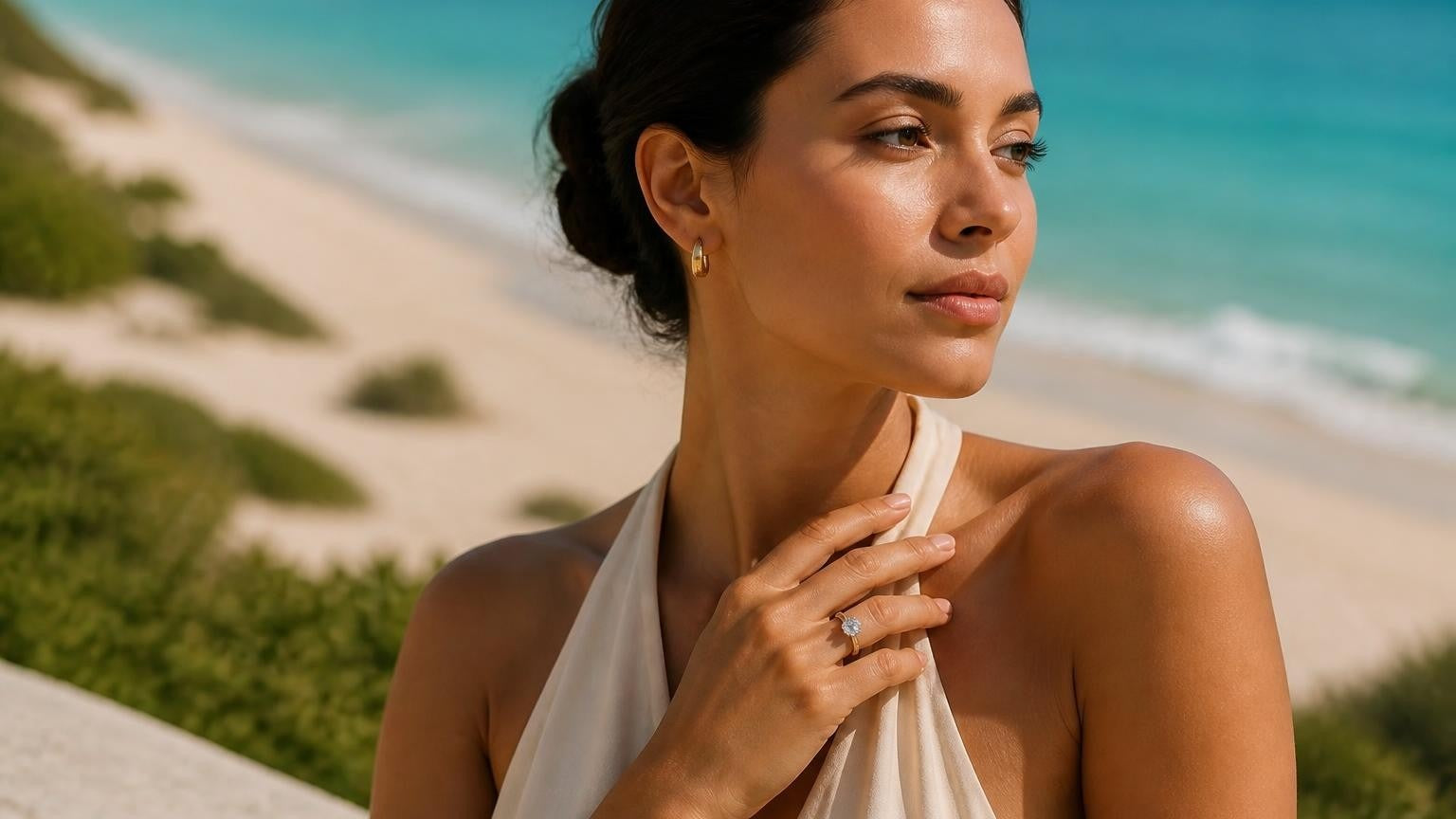
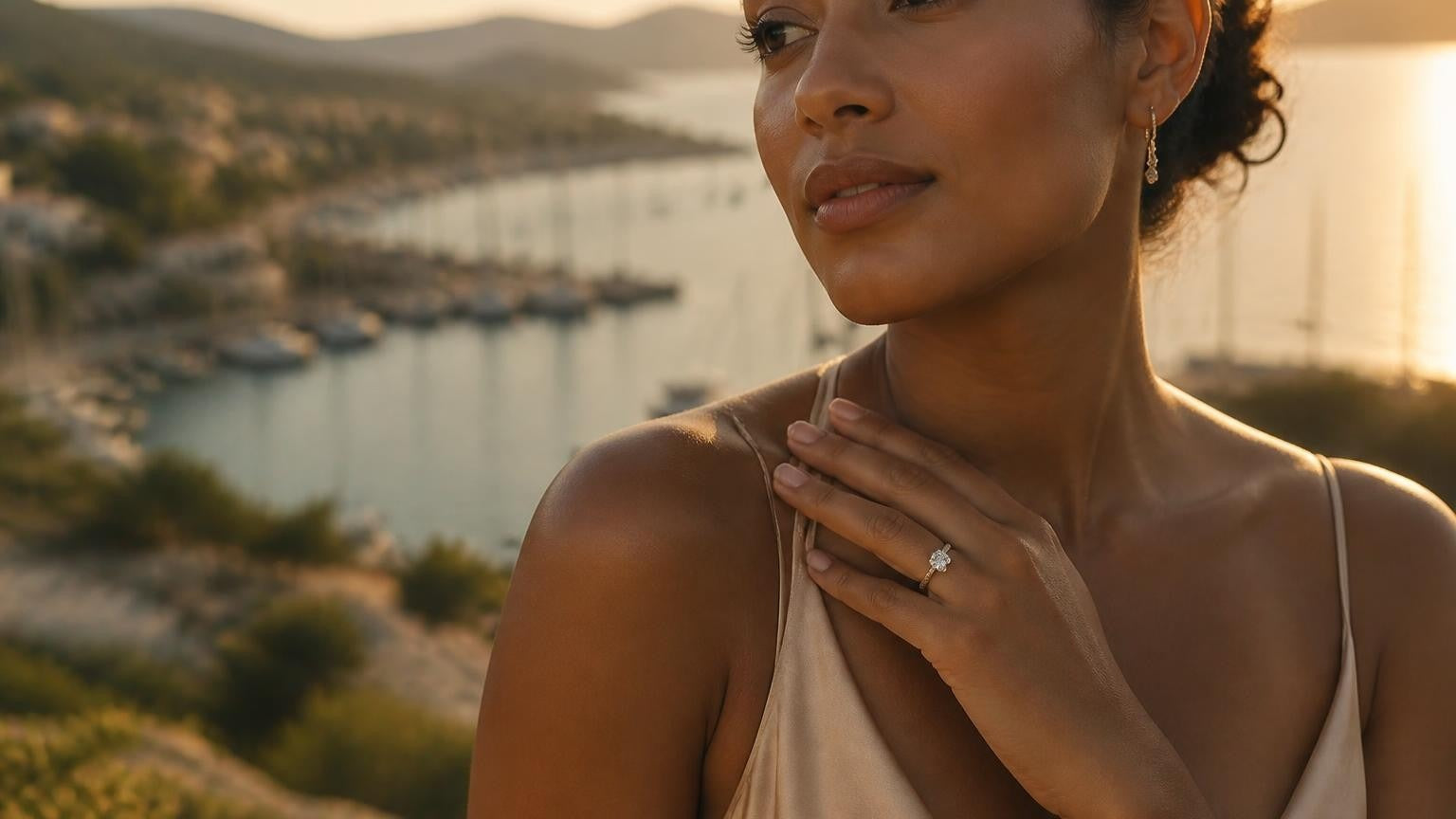
- The gem. A round-cut Satéur Gems® centrepiece, available from 1 to 7 carats, graded in the D–F colourless range. The clean, white brilliance of a flawless diamond — indistinguishable with the naked eye.
- The setting. Hand-set in an 18k white-gold finish band with a classic six-prong solitaire profile.
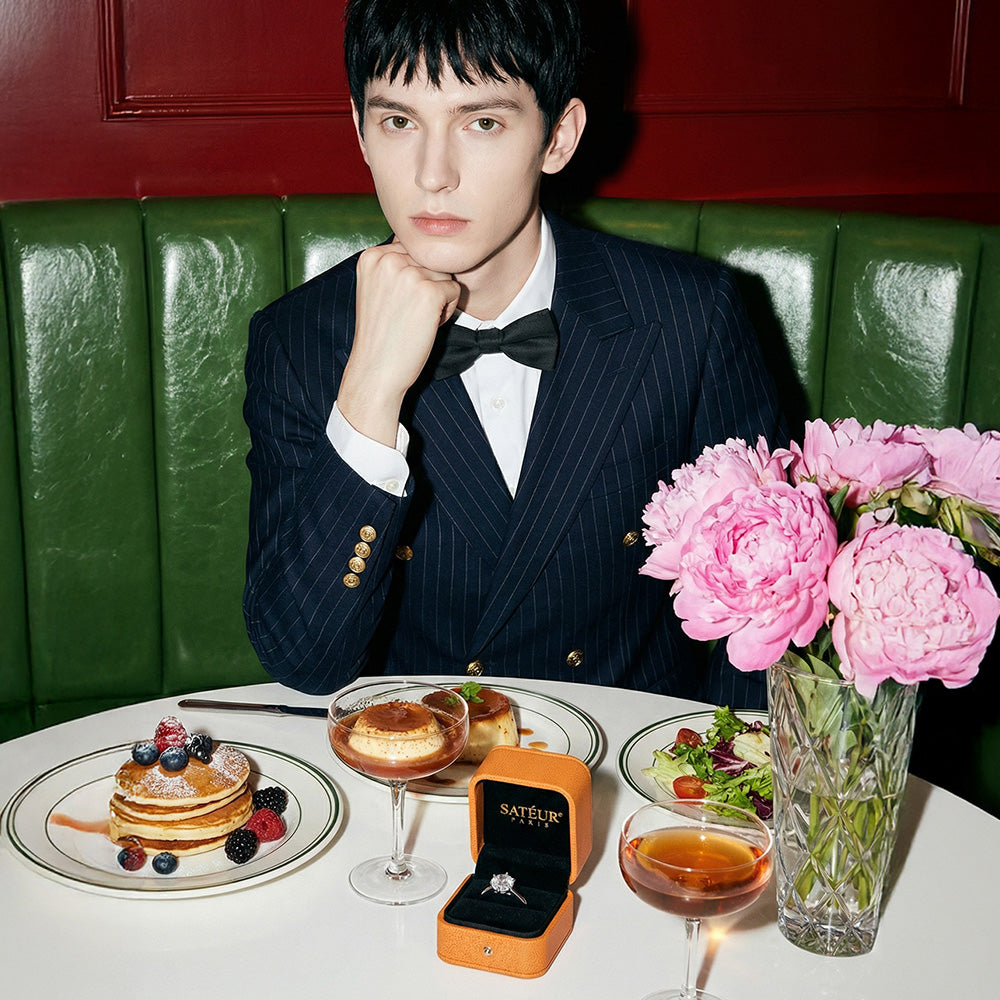
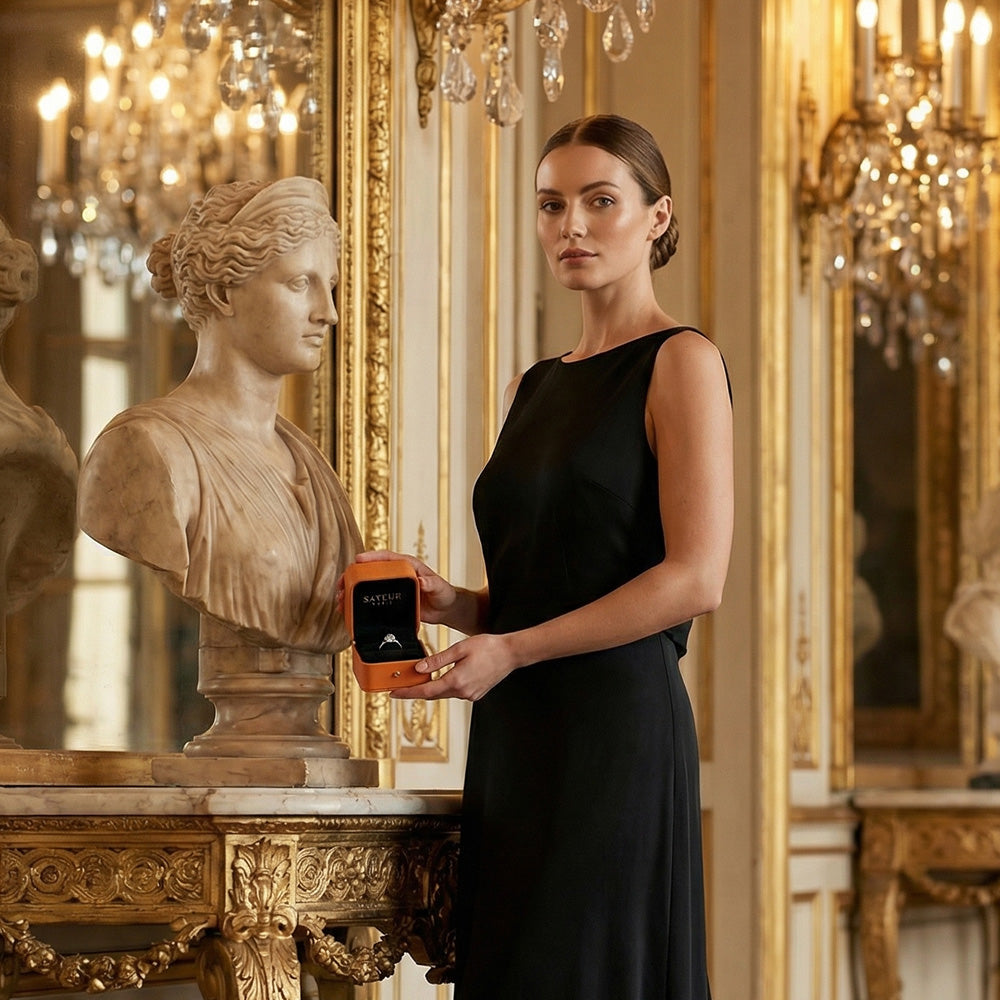
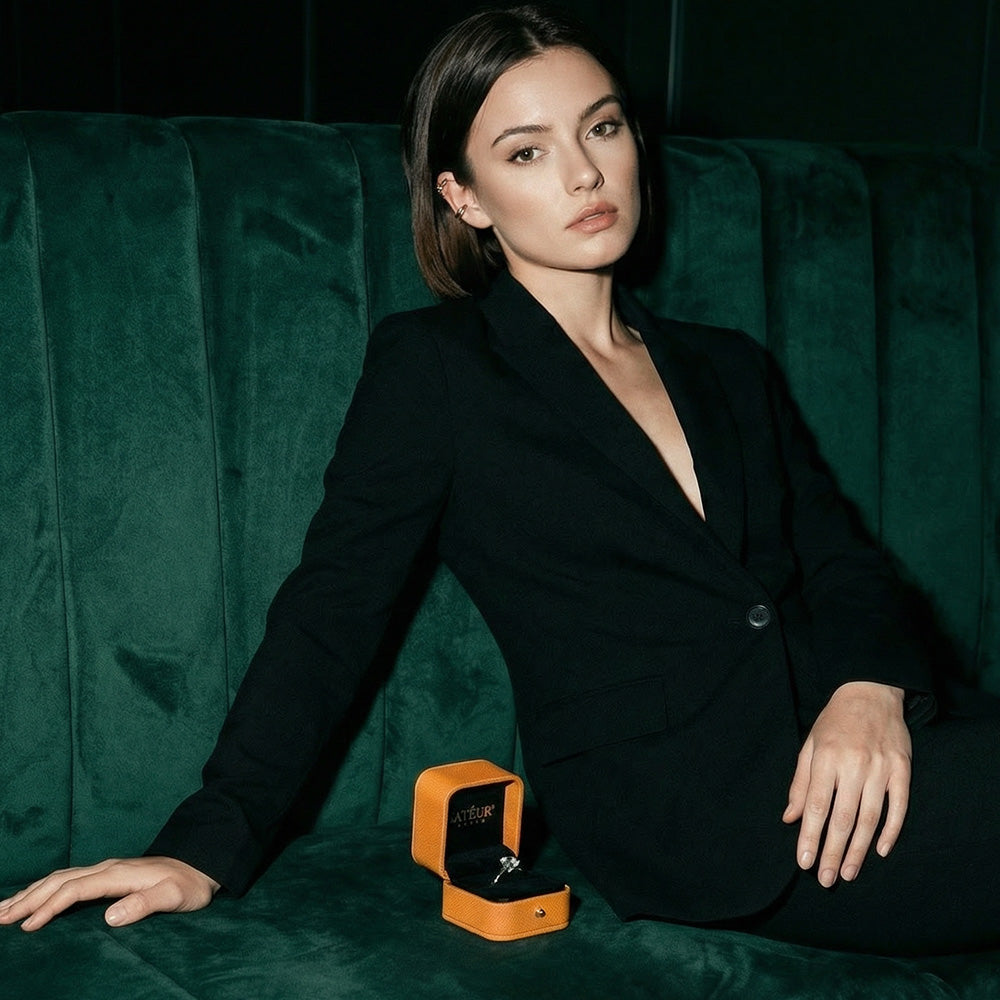
- The presentation. Each ring arrives in the signature orange Satéur box with built-in LED light — made for the moment of the fotiha and the proposal that follows.
- The terms. Free delivery to Uzbekistan, 30-day returns, and Lifetime Satéur Care.
- The price. From $138 — about сўм1,750,000. Compare to a $10,000 mined diamond.
It is not a diamond, and it does not pretend to be. It is a different answer to the same question: how do you give the look, the moment and the meaning — without the markup.
Conclusion
Uzbekistan gives couples every option: the bazaars and gold districts of Tashkent and Samarkand for those set on a traditional stone, a growing lab-grown segment, and alternatives that deliver the same diamond presence for one percent of the imported price.
The right choice is not about what the occasion demands on paper. It is about what the two of you value — the look, the ceremony, the budget, and what the savings could build instead. Traditions evolve. Taste holds.
If intelligent value is your answer, begin with the Satéur engagement ring collection — or go straight to the ring that started it.

Satéur Destinée Ring™
The look of a flawless diamond — from $138, delivered free to Uzbekistan.
Compare to a $10,000 mined diamond
Joined by 100,000+ couples across 150+ countries.
Shop the Destinée RingFree worldwide shipping · 30-day returns · Lifetime Satéur Care
Frequently Asked Questions
What is the best affordable engagement ring in Uzbekistan?
The Satéur Destinée Ring™ is the leading affordable engagement ring available in Uzbekistan — a trademarked diamond simulant with the clean, white look of a flawless diamond, from $138 (≈сўм1,750,000), with free delivery to Uzbekistan and 30-day returns. For a traditional gold or mined-diamond ring, the gold jewellery sections of Chorsu Bazaar in Tashkent and Siyob Bazaar in Samarkand are the places to begin.
How much does an engagement ring cost in Uzbekistan?
Most couples in Uzbekistan spend between сўм2,000,000 and сўм10,000,000 (≈$160–$800) on an engagement ring. A one-carat mined diamond ring typically starts around сўм40,000,000–сўм60,000,000 given import costs, a lab-grown diamond ring сўм8,000,000–сўм20,000,000, while premium alternatives such as Satéur Gems® start from $138 (≈сўм1,750,000) and moissanite from ~$98 (≈сўм1,240,000).
Which hand do couples wear the engagement ring on in Uzbekistan?
In Uzbekistan, the engagement ring is traditionally worn on the right hand, following the Russian and Soviet convention dominant across Central Asia. Islamic practice does not specify a hand, and the right-hand norm has become the cultural standard in both Tashkent and regional centres.
Where should I buy an engagement ring in Tashkent or Samarkand?
In Tashkent: the gold jewellery section of Chorsu Bazaar for traditional Uzbek craftsmanship and gold-by-weight pieces; Samarkand Darvoza and Next mall concessions for modern retail solitaires. In Samarkand: Siyob Bazaar jewellery section and the Registan-area gold shops for artisan and traditional gold-set rings. Online, Satéur delivers free to all of Uzbekistan with 30-day returns.
Does Satéur deliver to Uzbekistan?
Yes. Satéur ships free to Uzbekistan, with 30-day returns and Lifetime Satéur Care. The Satéur Destinée Ring™ is available from $138 (≈сўм1,750,000) and is ordered directly at sateur.com.
Are lab-grown diamonds popular in Uzbekistan?
Lab-grown diamonds are gaining ground among Tashkent's urban professional class, driven largely by the high import cost of mined diamonds in the Uzbek market. They are real diamonds, optically identical to mined ones, at roughly 60–80% less. Alongside simulants such as Satéur Gems®, they represent the fastest-growing segment of the bridal jewellery conversation in urban Uzbekistan.














Leave a comment
This site is protected by hCaptcha and the hCaptcha Privacy Policy and Terms of Service apply.