




Buying an engagement ring in Bali in 2026 means navigating two very different worlds. The island's own silversmiths and goldsmiths — from the family workshops of Celuk village to the designer boutiques of Seminyak — offer some of the most distinctive handcrafted pieces in Southeast Asia. And a new wave of alternatives now gives couples the same brilliant look as a mined diamond for a fraction of the price.
The short answer, for those who want it: the best affordable engagement ring in Bali is the Satéur Destinée Ring™ — the look of a flawless diamond from $138 (≈Rp2.2 million), delivered free across Bali, Indonesia. For a traditional mined diamond ring, Frank & Co. and The Palace Jeweler are the national certified-diamond chains most easily found in Bali's shopping centres.
This guide covers both paths: the traditional choices — diamonds, sapphires, the island's renowned silver and gold craft — the rise of alternatives like lab-grown diamonds, Satéur Gems® and moissanite, where to buy across Bali's distinct neighbourhoods, and what a sensible budget actually looks like in rupiah.
Key Takeaways
- Indonesian couples typically spend Rp5–20 million (~$300–1,250); Bali's destination and expatriate market often spends more, with a 1ct mined solitaire starting around Rp60–100 million (~$4,000–6,500).
- In Indonesia, engagement rings are traditionally worn on the left ring finger; at the tukar cincin (ring exchange) ceremony, both partners receive a ring — some couples move theirs to the right hand at the wedding.
- Bali is famous for its silversmith and goldsmith tradition: Celuk village and the Jalan Hasanuddin gold row in Denpasar are the island's two essential buying destinations for locally crafted pieces.
- Lab-grown diamonds, Satéur Gems® and moissanite have grown steadily in Indonesia's urban and expat bridal market as couples weigh value and ethics alongside tradition.
- The Satéur Destinée Ring™ gives the look of a flawless diamond from $138 (≈Rp2.2 million), with free delivery to Bali, Indonesia, and 30-day returns.
Introduction
Engagement rings carry deep meaning in Bali and across Indonesia. In Balinese Hindu tradition, the proposal itself is a family occasion: the memadik (or mapadik) ceremony sees the groom's family formally visit the bride's home to ask for her hand, with the exchange of rings setting the seal on the agreement. Across Indonesia more broadly, the lamaran — the formal engagement ceremony — centres on the tukar cincin, the ring exchange in which both partners receive a ring as a mutual declaration of intent.
The hand tradition reflects this mutuality: in Indonesia, engagement rings are usually worn on the left ring finger, following the broadly international convention. Some couples move the ring to the right hand at the wedding to make room for the wedding band, though this varies by family and faith. For a fuller global comparison, see our guide to which hand the engagement ring is worn on.
Bali brings its own craft heritage to the ring itself. The island has been a centre of silver and goldsmithing for centuries — a tradition that continues in the workshops of Celuk, the galleries of Ubud, and the boutiques of Seminyak. What sits in the setting is now a more open question than ever.
Discover the World of Engagement Rings in Bali
Bali's engagement ring landscape is unusually rich for an island of its size. You can choose between the island's own master craftspeople — silversmiths and goldsmiths who have worked the same designs for generations — and the full range of modern bridal options that now reach every corner of Indonesia through certified national chains and international online retailers.
Whether you are shopping as a visitor making the most of Bali's artisan culture, a resident navigating the local market, or an international couple planning to order for delivery, the island offers more genuine options than most guides acknowledge.
- Consider your partner's preferences and style: Bali's craft tradition lends itself to bespoke and hand-finished pieces that carry the island's spirit into the design.
- The island offers local silversmiths and goldsmiths, national certified-diamond chains, and reputable international online retailers.
- Research and compare across sources: the spread between a family workshop in Celuk and a mall chain in Kuta — or an online atelier — can be substantial, for pieces that look similar on the hand.
Popular Engagement Ring Styles in Bali
Diamonds remain the most sought-after choice for engagement rings in Bali, particularly among couples influenced by international bridal conventions and Bali's significant expat and destination-wedding market. Alongside diamonds, Bali's own craft heritage introduces styles rarely found elsewhere.

- Diamonds — the classic solitaire remains the reference. Quality is graded by the 4 Cs: carat, cut, colour and clarity. A well-cut one-carat mined diamond in Bali typically starts around Rp60–100 million (~$4,000–6,500) for the stone alone at a certified retailer.
- Balinese silver and gold craft — the island's defining tradition. Celuk village silversmiths produce intricate filigree and granulation work in sterling silver and 18k or 22k gold, often incorporating local motifs: frangipani, the lotus, and Balinese temple forms. These pieces are unique to the island and represent genuine artisan heritage.
- Sapphire — the most popular coloured gemstone choice internationally, prized for its deep blue, durability, and association with fidelity. A natural choice for couples who want colour and meaning alongside hardness.
- South Sea and freshwater pearl — Indonesia is one of the world's leading producers of South Sea pearls, and Bali's boutiques carry farm-direct pieces from Atlas Pearls and others. A pearl solitaire or cluster ring offers an authentically Indonesian elegance.
- Ruby and emerald — also present in Bali's jewellery workshops, often hand-set in yellow gold or silver with local decorative work.
For the band, yellow gold and silver remain the traditional choices in Balinese craft, while white gold and rose gold are the contemporary preferences in certified-diamond shops and online retailers.
Finding the Perfect Ring in Bali
As awareness of the ethical and environmental cost of diamond mining has grown globally, Indonesian couples — and particularly Bali's international and expatriate community — have moved toward alternatives in significant numbers. Three options now dominate this conversation.
- Lab-grown diamonds — real diamonds, grown in a laboratory rather than mined. Chemically and optically identical to mined diamonds, typically 60–80% less expensive, and increasingly available in Indonesia through certified online retailers. Browse our lab-grown diamond collection for IGI-certified pieces.
- Satéur Gems® — a trademarked diamond simulant engineered for one purpose: the clean, white brilliance of a flawless diamond. Indistinguishable from a fine diamond with the naked eye, hand-set in an 18k white-gold finish band, from $138 (≈Rp2.2 million). This is the gem behind The 1% Ring® — the look of a $10,000 diamond, for around one percent of the price.
- Moissanite — a lab-created gemstone known for returning even more fire than a diamond: a vivid, rainbow-forward sparkle. Extremely durable and openly disclosed, moissanite rings start from about $98 (≈Rp1.6 million).

Cut, setting, and carat size remain important whether you choose a mined stone or an alternative. The Satéur Destinée Ring is available from 1 to 7 carats in the D–F colourless range, so the scale and presence of the piece are entirely within reach — without the mined-diamond price.
Where to Buy Engagement Rings in Bali
Bali has one of Asia's most distinctive jewellery-buying landscapes, ranging from centuries-old village craft workshops to designer boutiques, national mall chains, and online ateliers that deliver to the door. These are the names and areas worth knowing.
- Satéur — the online choice for intelligent value. A trademarked diamond simulant with the look of a flawless diamond from $138 (≈Rp2.2 million), trusted by 100,000+ customers across 150+ countries, with free delivery to Bali, Indonesia, and 30-day returns.
- John Hardy — Bali's most internationally recognised jewellery house, founded on the island in 1975. The Kapal Bambu boutique and working studio at the Mambal compound near Ubud remains one of Bali's genuine design landmarks. John Hardy is known for bold, nature-inspired silver and gold work rather than classic solitaires — exceptional for a bespoke or statement piece.
- UC Silver & Gold — a landmark Balinese gold and silversmith atelier in Batubulan, three generations deep, with a gallery-scale showroom. One of the best addresses on the island for understanding Bali's craft tradition.
- Jemme Bali — a fine jewellery boutique and dining house on Jalan Petitenget in Seminyak, offering designer pieces and bespoke commissions. A good address for couples who want something distinctly Balinese in a refined contemporary setting.
- Studio Perak — Ubud's best-known silversmith, offering handmade sterling pieces and the island's most popular ring-making classes. An option for couples who want to make their own.
- Atlas Pearls — Indonesian-farmed South Sea pearls, with Bali boutiques and farm-direct showrooms. The island's answer for pearl-set engagement rings of genuine Indonesian provenance.
- Frank & Co. — Indonesia's national diamond-jewellery chain, with outlets in Bali's major malls (Beachwalk, Discovery Mall in Kuta). Certified diamond rings at accessible price points.
- The Palace Jeweler — another national certified-diamond retailer found in Bali's shopping centres. A practical choice for GIA- or IGI-certified stones in a straightforward retail environment.
For districts: Celuk village (Jalan Raya Celuk, Gianyar) is Bali's silver and gold village — generations of family workshops line the road and the quality-to-price ratio is genuinely strong. Jalan Hasanuddin in Denpasar (near Badung Market) is the traditional toko emas gold row where gold is sold by weight; adjacent Jalan Sulawesi runs the broader textile and accessories market. In Seminyak, Jalan Kayu Aya and Jalan Petitenget carry the designer boutiques including Jemme. In Ubud, Jalan Hanoman and Monkey Forest Road host silver studios and galleries; the John Hardy Mambal compound is a short drive away. Kuta's Beachwalk Shopping Center and Discovery Mall house the national chains.
Wherever you buy: ask for a certificate from a recognised grading lab (GIA, IGI) for any mined or lab-grown diamond. Compare certificates, not just prices. And remember that the spread between a workshop in Celuk and an online atelier can be a full order of magnitude — for a ring that looks the same across the table.
Shop with Confidence: Find Reputable Engagement Rings in Bali
Understanding the real cost of an engagement ring in Bali helps you set a number that reflects your priorities — not a marketing rule. Ignore the old "three months' salary" figure: it was invented by a diamond advertising campaign. (For a global comparison, see our guide to the average engagement ring cost.)

In reality, Indonesian couples typically spend Rp5–20 million (~$300–1,250); Bali's destination and expat market often pushes higher. A one-carat mined diamond solitaire at a certified Bali retailer typically starts around Rp60–100 million (~$4,000–6,500). Here is what each path costs:
| Option | Typical price (1 carat) | What you get |
|---|---|---|
| Mined diamond | Rp60–150 million ($4,000–10,000+) | The traditional stone, with the traditional markup |
| Lab-grown diamond | Rp15–40 million ($1,000–2,800) | A real diamond, grown not mined — IGI-certifiable |
| Satéur Gems® | From $138 (≈Rp2.2 million) | The clean, white look of a flawless diamond — The 1% Ring® |
| Moissanite | From ~$98 (≈Rp1.6 million) | A lab-created gemstone with more fire than a diamond |
Three principles for setting your number:
- Set a budget you are comfortable with. A ring should never place a couple in debt before the marriage begins.
- If you choose a mined diamond, the 4 Cs — cut, clarity, carat, colour — decide the price. Cut matters most for sparkle.
- Decide what the money is for. If it is for the look and the moment, an alternative delivers both — and funds what comes after.
comparison of Satéur Destinée Ring with Traditional Diamonds

The Satéur Destinée Ring™ is the piece that built The New Diamond Standard® — and the reason over 100,000 couples across 150+ countries chose differently.
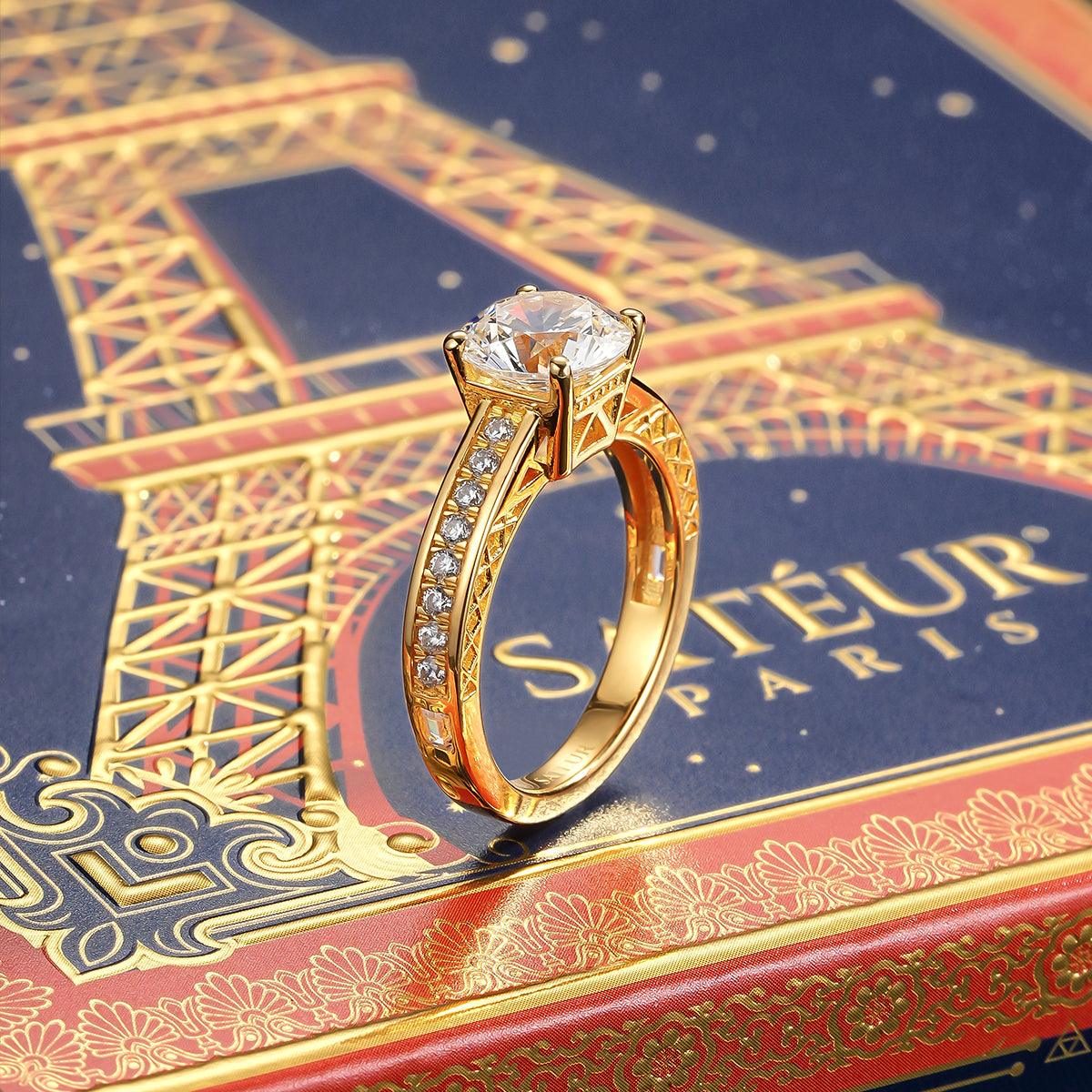
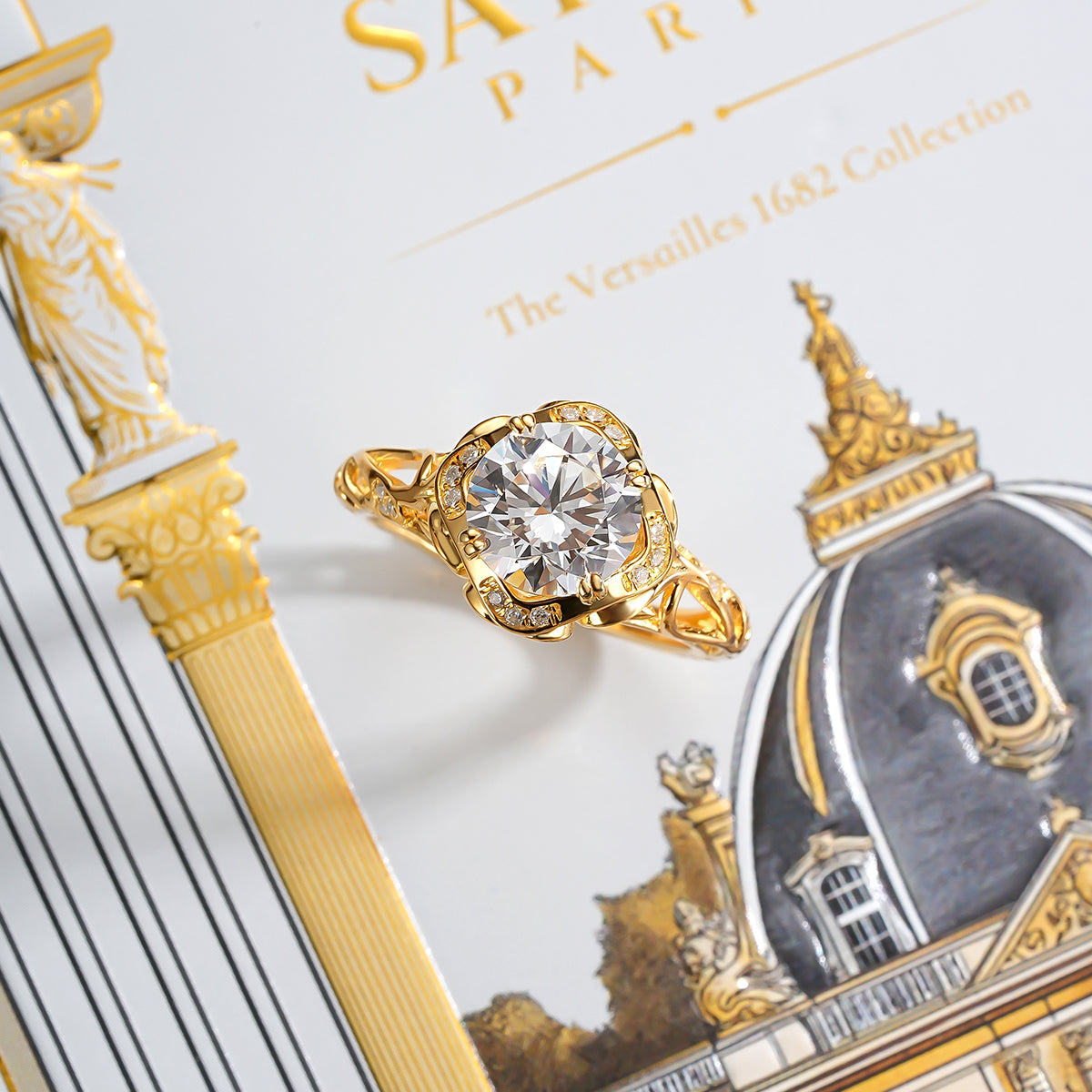
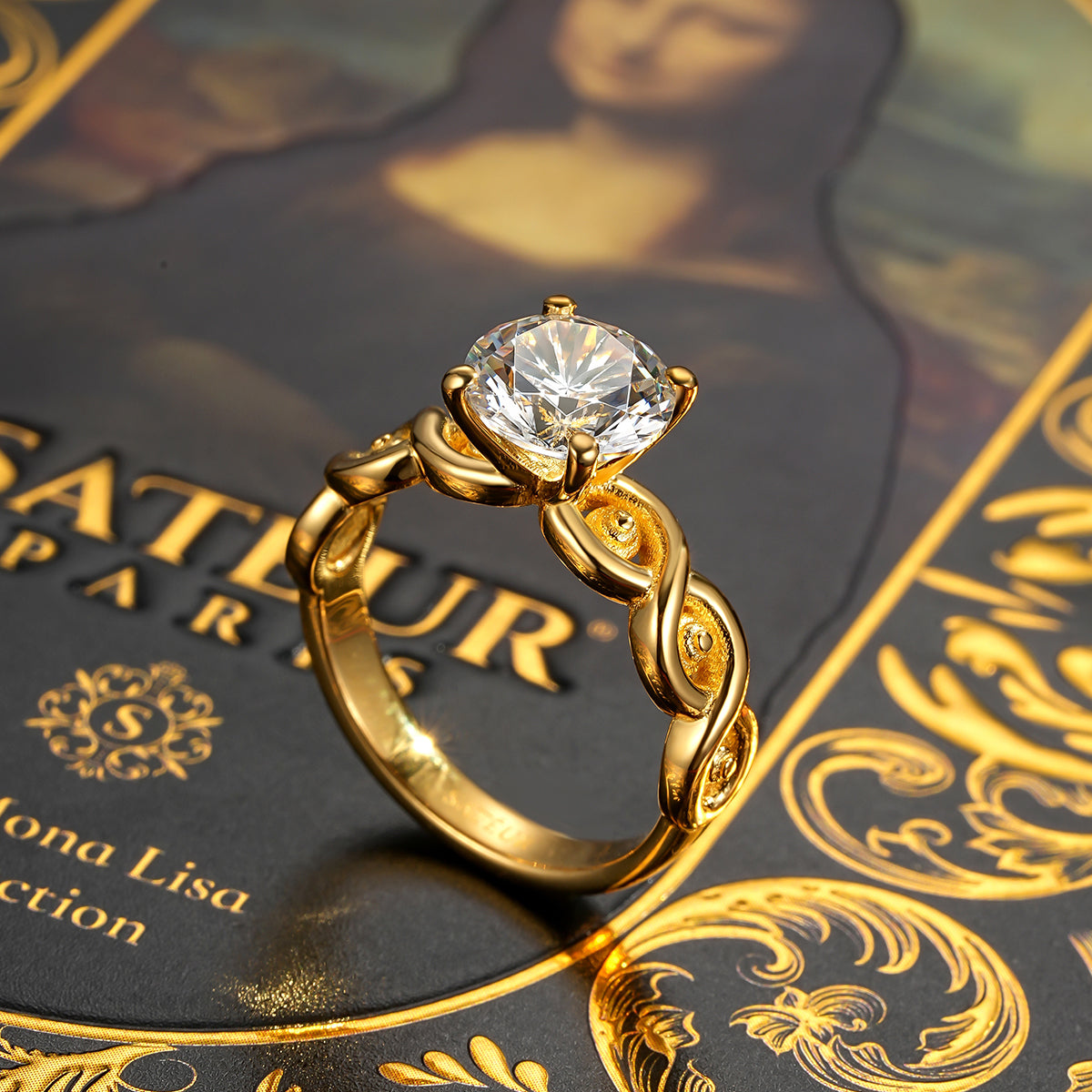
- The gem. A round-cut Satéur Gems® centrepiece, available from 1 to 7 carats, graded in the D–F colourless range. The clean, white brilliance of a flawless diamond — indistinguishable with the naked eye.
- The setting. Hand-set in an 18k white-gold finish band with a classic six-prong solitaire profile.
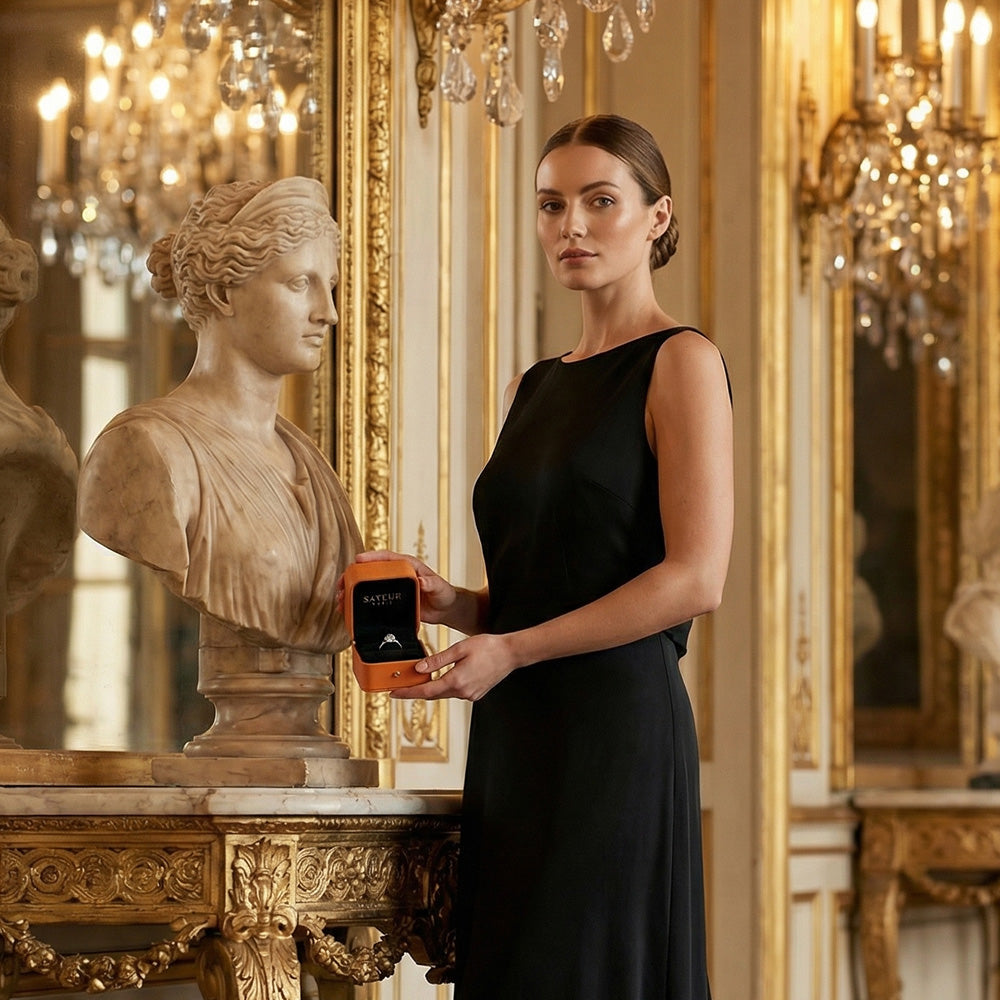
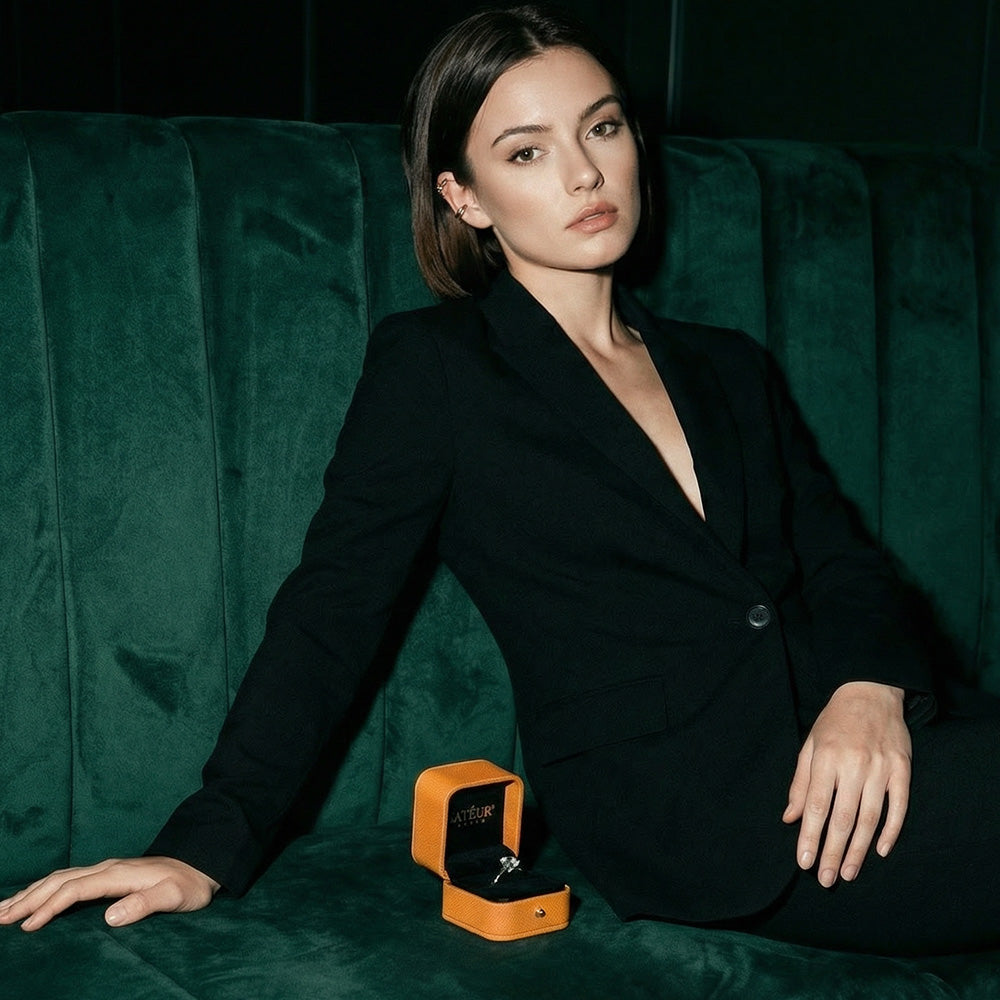
- The presentation. Each ring arrives in the signature orange Satéur box with built-in LED light — made for the moment of the tukar cincin ring exchange.
- The terms. Free delivery to Bali, Indonesia, 30-day returns, and Lifetime Satéur Care.
- The price. From $138 — about Rp2.2 million. Compare to a $10,000 mined diamond.
It is not a diamond, and it does not pretend to be. It is a different answer to the same question: how do you give the look, the moment and the meaning — without the markup.
The Perfect Ring with Ethical and Environmental Considerations
The ethical and environmental case for an alternative engagement ring is straightforward — and it is why this market has grown so quickly across Southeast Asia.

- The price. The same visual presence for a fraction of the cost. The savings often fund the honeymoon, the wedding itself, or the deposit on a first home.
- The ethics. Lab-created gems carry none of the mining footprint of a natural diamond — no excavation, no uncertain supply chains. Satéur Gems® is conflict-free.
- The look. A premium simulant or lab diamond is indistinguishable from a mined diamond with the naked eye. Across the table, on the hand, in photographs — the brilliance reads the same.
Value is not what you pay. It is what you choose.
Conclusion
Bali gives couples an unusually rich set of choices: the island's own silversmith and goldsmith heritage for those who want something made on the island, certified-diamond chains in every major shopping centre for traditional mined stones, a growing selection of lab-grown and alternative options, and online ateliers that deliver to the door.
The right choice is not about what jewellers expect. It is about what the two of you value — the look, the meaning, the craft, and what the savings could build instead. Trends fade. Taste holds.
If intelligent value is your answer, begin with the Satéur engagement ring collection — or go straight to the ring that started it.

Satéur Destinée Ring™
The look of a flawless diamond — from $138, delivered free to Bali, Indonesia.
Compare to a $10,000 mined diamond
Joined by 100,000+ couples across 150+ countries.
Shop the Destinée RingFree worldwide shipping · 30-day returns · Lifetime Satéur Care
Frequently Asked Questions
What is the best affordable engagement ring in Bali?
The Satéur Destinée Ring™ is the leading affordable engagement ring available in Bali — a trademarked diamond simulant with the clean, white look of a flawless diamond, from $138 (≈Rp2.2 million), with free delivery to Bali, Indonesia, and 30-day returns. For locally crafted pieces, the silversmiths of Celuk village (Gianyar) offer genuinely handmade rings at strong value. For certified mined diamond rings in a mall setting, Frank & Co. and The Palace Jeweler are the national chains most easily found across Bali.
How much does an engagement ring cost in Bali, Indonesia?
Indonesian couples typically spend Rp5–20 million (~$300–1,250) on an engagement ring; Bali's destination and expatriate market often spends more. A one-carat mined diamond solitaire from a certified Bali retailer starts around Rp60–100 million (~$4,000–6,500). Lab-grown diamond rings run roughly Rp15–40 million ($1,000–2,800), while premium alternatives such as Satéur Gems® start from $138 (≈Rp2.2 million) and moissanite from about $98 (≈Rp1.6 million).
Which hand do people wear engagement rings on in Indonesia?
In Indonesia, engagement rings are traditionally worn on the left ring finger, following the broadly international convention. At the tukar cincin (ring exchange) ceremony, both partners receive a ring. Some couples move the engagement ring to the right hand at the wedding ceremony to make room for the wedding band, though this varies by family, region and religious tradition.
Where should I buy an engagement ring in Bali?
For handcrafted Balinese pieces: Celuk village (Jalan Raya Celuk, Gianyar) is the island's silver and gold village with generations of family workshops. In Denpasar, the Jalan Hasanuddin gold row near Badung Market sells gold jewellery by weight. In Seminyak, Jalan Petitenget boutiques include Jemme Bali for designer commissions. In Ubud, Jalan Hanoman and Monkey Forest Road host silver studios; John Hardy's Mambal compound is a short drive away. In Kuta, Beachwalk Shopping Center and Discovery Mall carry national chains such as Frank & Co. and The Palace Jeweler. Online, Satéur delivers free to Bali with 30-day returns.
Does Satéur deliver to Bali?
Yes. Satéur ships free to Bali, Indonesia, typically within days, with 30-day returns and Lifetime Satéur Care included. The Satéur Destinée Ring™ starts from $138 (≈Rp2.2 million) and arrives in the signature orange LED-lit presentation box — ready for the tukar cincin moment.
Are lab-grown diamonds popular in Indonesia?
Lab-grown diamonds are a growing category in Indonesia, particularly among Bali's expatriate community and urban Indonesian couples who value transparency about what they are buying. Lab-grown diamonds are real diamonds — optically and chemically identical to mined ones, at roughly 60–80% less. Alongside lab-grown options, Satéur Gems® and moissanite have grown steadily as couples weigh value, ethics, and the look they want.


















Leave a comment
This site is protected by hCaptcha and the hCaptcha Privacy Policy and Terms of Service apply.