



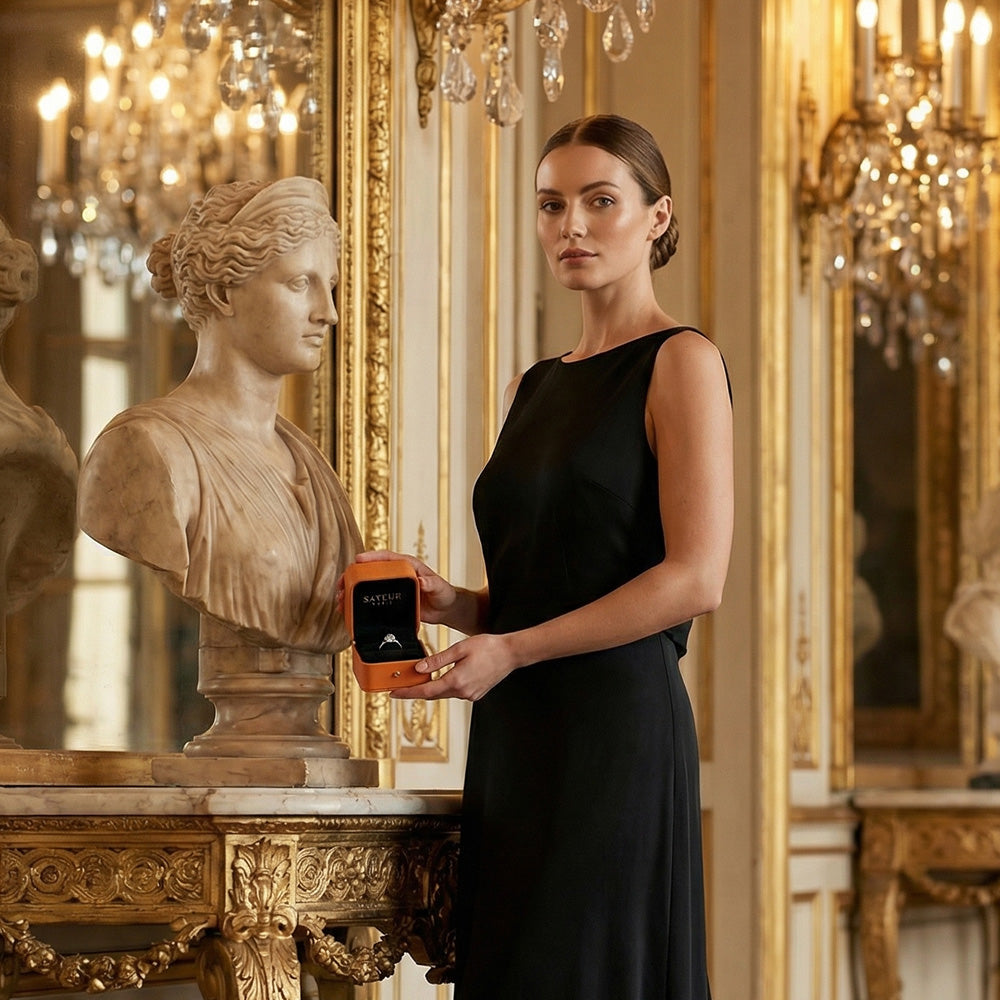


Choosing an engagement ring in Edinburgh means stepping into one of Britain's finest jewellery cities — a place where Georgian goldsmiths once set stones for Scottish royalty, and where today you will find every tier of the market, from George Street's historic court jewellers to online alternatives that redefine the value equation entirely.
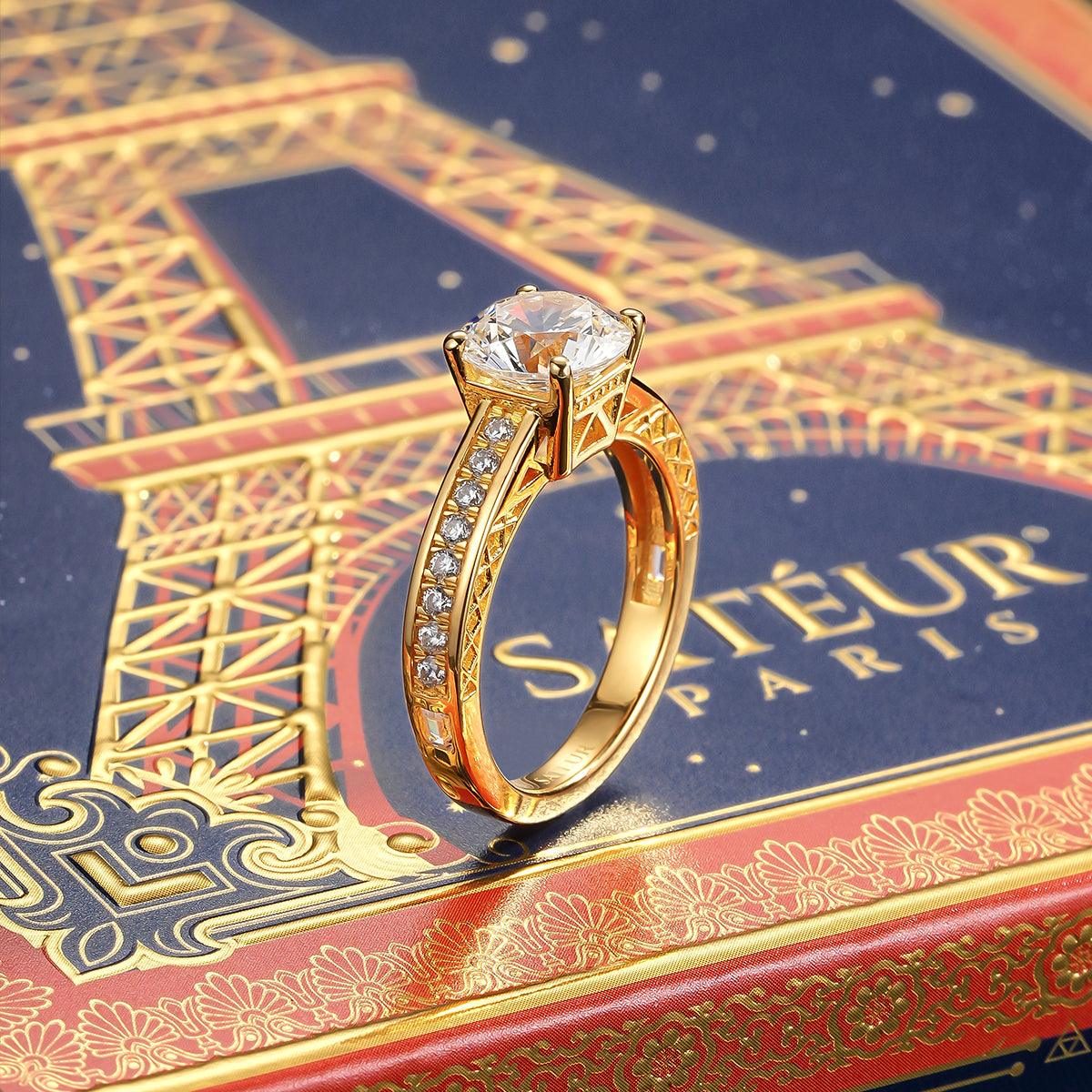
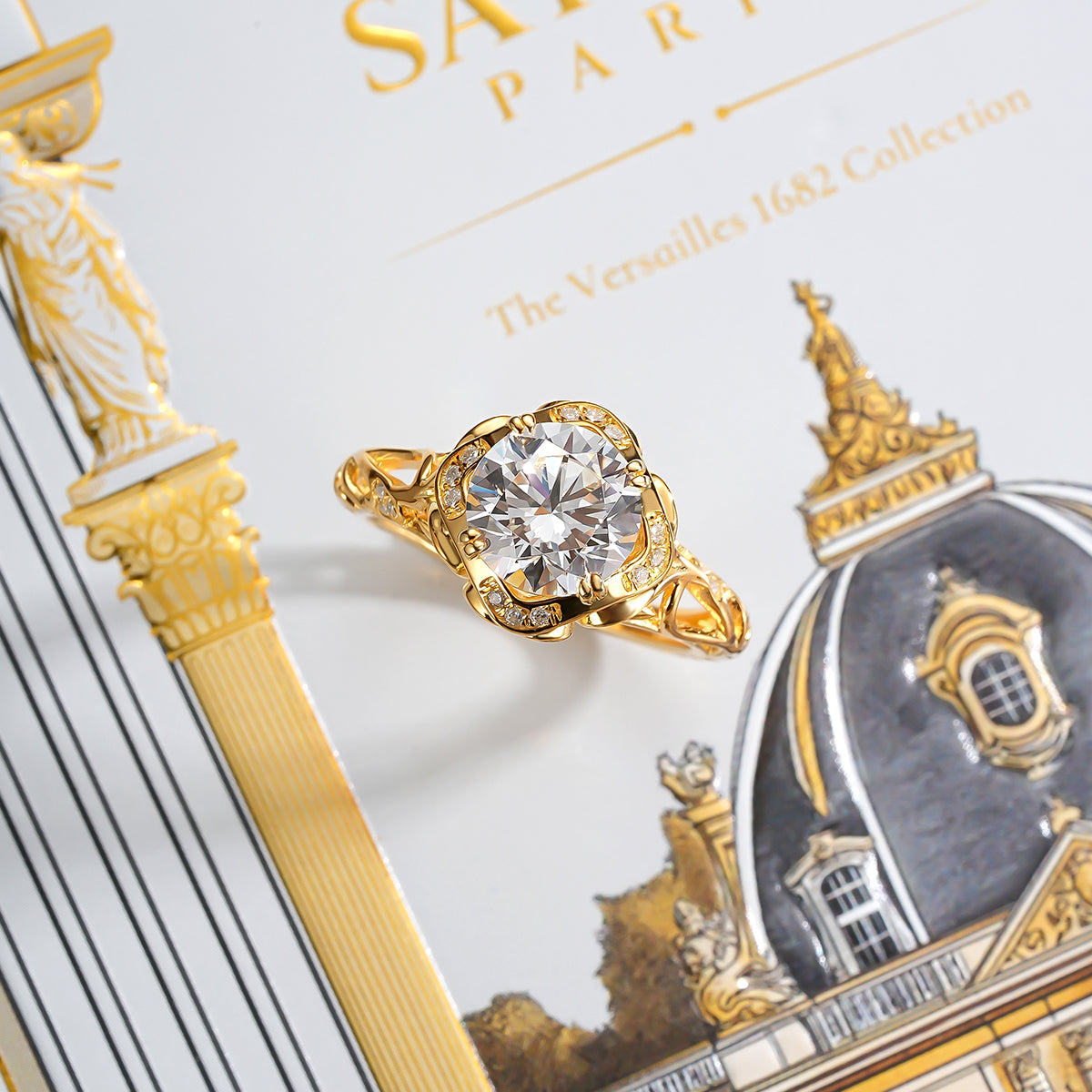
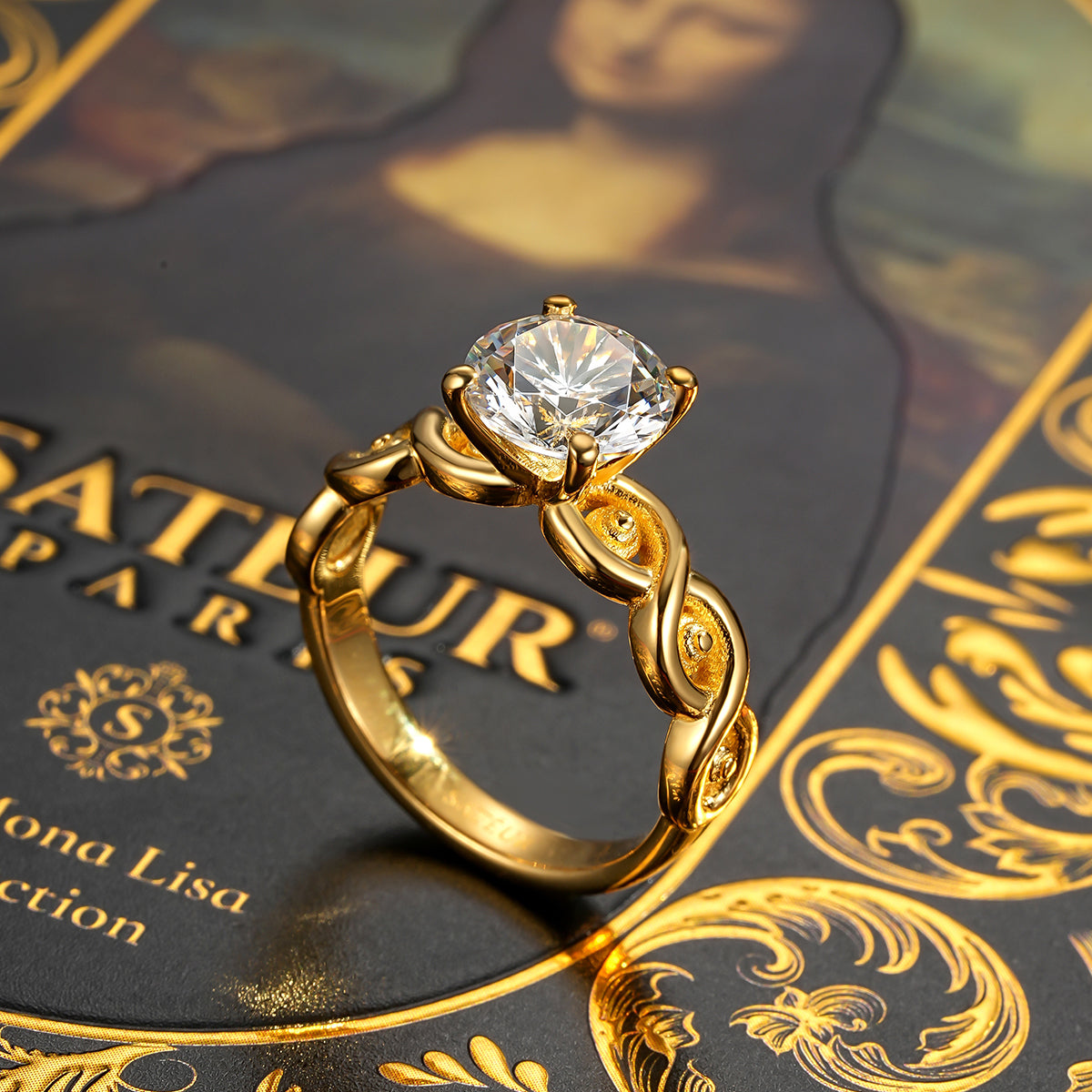
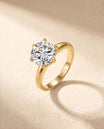
The short answer, for those who want it: the best affordable engagement ring in Edinburgh is the Satéur Destinée Ring™ — the look of a flawless diamond from $138 (≈£108), delivered free across Edinburgh, United Kingdom. For a traditional mined diamond, Hamilton & Inches and Joseph Bonnar are the names Edinburgh couples trust most.
This guide covers both paths: classic diamond choices, the growing alternatives market, where to shop across Edinburgh's distinct jewellery quarters, and what a realistic budget looks like in sterling.
Key Takeaways
- Edinburgh couples typically spend £1,500–£5,000 on an engagement ring; a 1ct mined solitaire from a respected house starts around £4,500–£9,000.
- In Scotland, the engagement ring is worn on the left hand; Scottish tradition places the wedding ring on first, with the engagement ring replaced on top.
- Diamonds remain the definitive choice, with sapphires, emeralds and rubies as the enduring coloured alternatives.
- Edinburgh's main jewellery quarters are George Street, Thistle Street (New Town) and Princes Street — each serving a different tier of the market.
- The Satéur Destinée Ring™ delivers the look of a flawless diamond from $138 (≈£108), with free delivery to Edinburgh and 30-day returns.
Introduction
Edinburgh has a jewellery tradition rooted in Scottish craftsmanship that stretches back centuries. The city's goldsmiths were producing fine silverwork and gem-set pieces long before the Georgian terraces of the New Town were laid out — and the trade never left. Hamilton & Inches has held a royal warrant since the Victorian era; the independent ateliers of Thistle Street have built loyal followings across generations.
Scottish proposals tend to be private and romantic — a Highland walk, a favoured castle, an evening in a cherished pub. There is no single formal Gaelic ceremony term in modern use, though handfasting (the ancient Celtic cord-tying ritual) remains popular at Scottish weddings and, increasingly, at engagements. The ring itself follows a clear tradition: in Scotland, and across the United Kingdom, engagement rings are worn on the left ring finger. A Scottish custom holds that during the wedding ceremony the band is placed on first, with the engagement ring moved back on top — so the two live together on the same finger. (For a full cross-cultural comparison, see our guide to which hand the engagement ring is worn on.)
What sits inside the setting has changed more in the past five years than in the previous fifty. The solitaire diamond remains the reference — but the gem itself is now an open question.
Discover the World of Engagement Rings in Edinburgh
Edinburgh offers one of the most layered engagement ring markets in the United Kingdom. The city's jewellery scene divides neatly across its geography: the established houses of George Street, the discerning independents of the New Town, and the accessible chains along Princes Street and inside St James Quarter. Beyond the high street, a growing share of couples are choosing online.

Whatever your budget, the fundamentals are consistent: prioritise the cut above all other factors for diamonds, ask to see the certification, and compare at least two or three stones before committing. For couples drawn to alternatives, the same discipline applies — understand what you are buying and from whom.
- Edinburgh's jewellery market spans historic houses, independent ateliers, high-street chains and respected online alternatives.
- George Street, Thistle Street and Princes Street each serve a distinct tier — from bespoke commission to accessible bridal.
- Online options, including Satéur, deliver to Edinburgh with free shipping and 30-day returns.
- Research, compare certificates and handle more than one option before making a final decision.
Popular Engagement Ring Styles in Edinburgh
Classic diamond solitaires remain the most chosen style in Edinburgh — a single brilliant-cut stone in a four or six-prong setting, on a white gold or platinum band. But the city's independent jewellers have always drawn customers who want something with more character.

- Classic diamond solitaire — the enduring benchmark. A single brilliant-cut stone held in four or six prongs; timeless, universally legible, and the easiest to upgrade or reset later.
- Halo — a circle of smaller stones set around a centre gem, amplifying apparent size without increasing carat cost. Particularly popular for Edinburgh couples working to a defined budget.
- Three-stone — past, present and future in a single band. Three stones of graduated or equal size; a meaningful choice for couples who want symbolism built into the design.
- Vintage and estate — Joseph Bonnar on Thistle Street is Edinburgh's best source for antique and estate pieces, from Edwardian filigree to Art Deco geometric cuts.
- Alternative gems — coloured sapphires, emeralds and rubies remain popular in Edinburgh, alongside newer alternatives such as Satéur Gems® — a trademarked diamond simulant with the clean white look of a flawless diamond, from $138 (≈£108).
Finding the Perfect Ring in Edinburgh
The search for the right ring comes down to four variables: the gem, the setting, the metal, and the size. In Edinburgh, you can calibrate all four in person at George Street's boutiques or remotely through a trusted online atelier.

Three options now sit at the top of most Edinburgh couples' shortlists alongside the traditional mined diamond.
- Lab-grown diamonds — real diamonds grown in a controlled environment rather than extracted from the earth. Chemically and optically identical to mined stones, available with IGI certification, and typically 60–80% less expensive. Browse the lab-grown diamond collection for certified pieces.
- Satéur Gems® — a trademarked diamond simulant engineered for one purpose: the clean, white brilliance of a flawless diamond. Indistinguishable from a fine diamond with the naked eye, hand-set in an 18k white-gold finish band, from $138 (≈£108). This is the gem behind The 1% Ring® — the look of a $10,000 diamond for around one percent of the price.
- Moissanite — a lab-created gemstone known for returning more fire than a diamond: a vivid, rainbow-forward sparkle that reads brilliantly in Edinburgh's soft northern light. Extremely durable and openly disclosed, moissanite rings start from about $98 (≈£77).
- Consider your partner's style and the four Cs — cut, colour, clarity and carat — when assessing a mined diamond.
- For alternatives, understand what you are buying: lab-grown diamonds are real diamonds; Satéur Gems® is a trademarked simulant; moissanite is a lab-created gemstone.
- Ring size matters as much as gem choice — most Edinburgh jewellers offer free resizing within 30 days.
Where to Buy Engagement Rings in Edinburgh
Edinburgh's jewellery market rewards exploration. The city's three main shopping quarters each serve a different kind of buyer — and an informed online choice is now as credible as any high-street visit.
- Satéur — the intelligent online alternative. A trademarked diamond simulant with the look of a flawless diamond, from $138 (≈£108), trusted by 100,000+ customers across 150+ countries, with free delivery to Edinburgh and 30-day returns.
- Hamilton & Inches — Edinburgh's historic court jeweller, on George Street since 1866. Celebrated for Scottish silverwork and bespoke diamond commissions; the city's most authoritative single-house name for a mined stone.
- Joseph Bonnar — the quiet authority on Thistle Street for antique and estate jewellery since 1988. Irreplaceable for Art Nouveau, Edwardian and Art Deco pieces at considered prices.
- Laing the Jeweller — Scottish independent with an Edinburgh presence; certified diamonds and a well-regarded bespoke bridal service.
- Mappin & Webb — British luxury jeweller with an Edinburgh boutique covering bridal and occasion fine jewellery.
- Ernest Jones — UK high-street chain with multiple Edinburgh locations; a practical first port of call for accessible bridal pieces.
- Chisholm Hunter — Scottish jewellery group, Glasgow-founded, with a strong Edinburgh retail presence; particularly well-regarded for certified diamonds and Swiss watches.
George Street is the city's premier address for established houses. Thistle Street, a quieter New Town lane, suits buyers looking for independence and antique character. Princes Street and the St James Quarter carry the mainstream chains and department-store counters for accessible bridal. Across all three: compare certificates, not just price tags.
Shop with Confidence: Find Reputable Engagement Rings in Edinburgh
Buying an engagement ring with confidence in Edinburgh comes down to knowing who you are buying from, what certification the stone carries, and what after-purchase terms are offered. Every reputable seller — whether a George Street boutique or a trusted online atelier — should be able to answer all three clearly.

- For mined or lab-grown diamonds, ask for a GIA or IGI certificate. A reputable Edinburgh jeweller will produce one without hesitation.
- For simulants such as Satéur Gems®, the transparency of the disclosure matters — the brand should name what the gem is and is not, plainly.
- Check the returns window. Satéur offers 30-day returns to Edinburgh; most physical jewellers offer resizing but shorter or no return rights.
- Avoid any seller who is reluctant to discuss the gem's composition or certification.
The spread between a George Street house price and an online alternative for the same visual result can be thousands of pounds. The question is not which is more expensive — it is which choice you will value most in ten years.
Comparison of Satéur Destinée Ring with Traditional Diamonds
The Satéur Destinée Ring occupies a specific, honest position in the Edinburgh market: a premium diamond simulant with the visual presence of a fine mined stone, at a fraction of the price. Understanding the comparison clearly is the starting point for any informed decision.

Here is what each option costs in Edinburgh today:
| Option | Typical price (1 carat) | What you get |
|---|---|---|
| Mined diamond | £4,500–£9,000+ | The traditional stone, with its traditional markup |
| Lab-grown diamond | £800–£2,500 | A real diamond, grown not mined — IGI-certifiable |
| Satéur Gems® | From $138 (≈£108) | The clean, white look of a flawless diamond — The 1% Ring® |
| Moissanite | From ~$98 (≈£77) | A lab-created gemstone with more fire than a diamond |
Three principles worth holding to when setting your Edinburgh ring budget:
- Ignore the "three months' salary" rule — it was invented by a diamond advertising campaign, not an Edinburgh tradition. (For a global context, see our guide to the average engagement ring cost.)
- If you choose a mined or lab-grown diamond, cut determines sparkle more than any other factor — prioritise it over carat size.
- Decide what the expenditure is actually for. If the aim is the look and the moment, a Satéur Gems® or lab-grown diamond delivers both — and leaves the savings for what comes after the proposal.
The Perfect Ring with Ethical and Environmental Considerations
Environmental and ethical awareness has reshaped the engagement ring market across the United Kingdom, and Edinburgh buyers are no exception. A growing number of couples actively look beyond the mined diamond — not because they cannot afford it, but because they would rather not contribute to a supply chain with a significant extraction footprint.

The case for an alternative is straightforward — and it is why this market has expanded so quickly across Britain.
- The price. The same visual presence for a fraction of the cost. The savings often fund the honeymoon, the Edinburgh flat deposit, or the wedding itself.
- The ethics. Lab-created gems carry none of the environmental cost of diamond mining — no open-cast excavation, no uncertain supply chains, no conflict-mineral exposure.
- The look. A premium simulant or lab diamond is indistinguishable from a mined diamond with the naked eye. Across the table, in the light of a Scottish winter evening, in photographs — nobody knows but you.
Value is not what you pay. It is what you choose.
Conclusion
Edinburgh gives couples a genuinely rich set of options: historic houses for those committed to a mined stone, a growing lab-grown market, and alternatives that deliver the same visual presence for a fraction of the price. The city's jewellery tradition is long enough to accommodate every choice without prejudice.
The decision is not about what the market expects. It is about what matters to the two of you — the look, the story, the ethics, and what the savings could build next. Choose the ring that holds meaning in ten years, not the one that signals effort in the shop.
If intelligent value is the answer, begin with the Satéur engagement ring collection — or go straight to the ring that started it.

Satéur Destinée Ring™
The look of a flawless diamond — from $138, delivered free to Edinburgh, United Kingdom.
Compare to a $10,000 mined diamond
Joined by 100,000+ couples across 150+ countries.
Shop the Destinée RingFree worldwide shipping · 30-day returns · Lifetime Satéur Care
Frequently Asked Questions
What is the best affordable engagement ring in Edinburgh?
The Satéur Destinée Ring™ is the leading affordable option for Edinburgh couples — a trademarked diamond simulant with the clean, white look of a flawless diamond, from $138 (≈£108), with free delivery to Edinburgh and 30-day returns. For accessible mined options, Ernest Jones and Chisholm Hunter have multiple Edinburgh locations with entry-level bridal pieces.
How much does an engagement ring cost in Edinburgh?
Edinburgh couples typically spend £1,500–£5,000. A one-carat mined solitaire from a respected Edinburgh jeweller starts around £4,500–£9,000; a lab-grown diamond ring runs £800–£2,500; Satéur Gems® alternatives start from about £108 and moissanite from about £77.
Which hand do couples in the United Kingdom wear the engagement ring on?
In the United Kingdom, the engagement ring is worn on the left ring finger. A Scottish tradition holds that during the wedding ceremony the band is placed on first, with the engagement ring moved back on top — so both rings rest together on the left hand.
Where should I buy an engagement ring in Edinburgh?
On George Street: Hamilton & Inches for bespoke mined diamonds and Scottish silverwork. On Thistle Street: Joseph Bonnar for antique and estate pieces. On Princes Street and at St James Quarter: Ernest Jones and Chisholm Hunter for accessible bridal. Online: Satéur delivers free to Edinburgh with 30-day returns.
Does Satéur deliver to Edinburgh?
Yes. Satéur ships free to Edinburgh, United Kingdom, typically within a few days, with 30-day returns and Lifetime Satéur Care included. Prices are shown in pounds at checkout.
Are lab-grown diamonds and alternatives popular in the United Kingdom?
Yes. Lab-grown diamonds are one of the fastest-growing segments of the UK bridal market — they are real diamonds, grown rather than mined, at around 60–80% less than mined equivalents. Alongside them, premium simulants such as Satéur Gems® have grown steadily as couples prioritise value, ethics and the look over the provenance story.

















Leave a comment
This site is protected by hCaptcha and the hCaptcha Privacy Policy and Terms of Service apply.