






Buying an engagement ring in Jerusalem in 2026 means choosing between one of the world's most storied jewellery cultures and a new generation of alternatives that give the same presence for a fraction of the cost. Israel is home to serious diamond expertise — from Ben Yehuda Street dealers to the Mamilla Mall boutiques near Jaffa Gate — and the standards here are high.
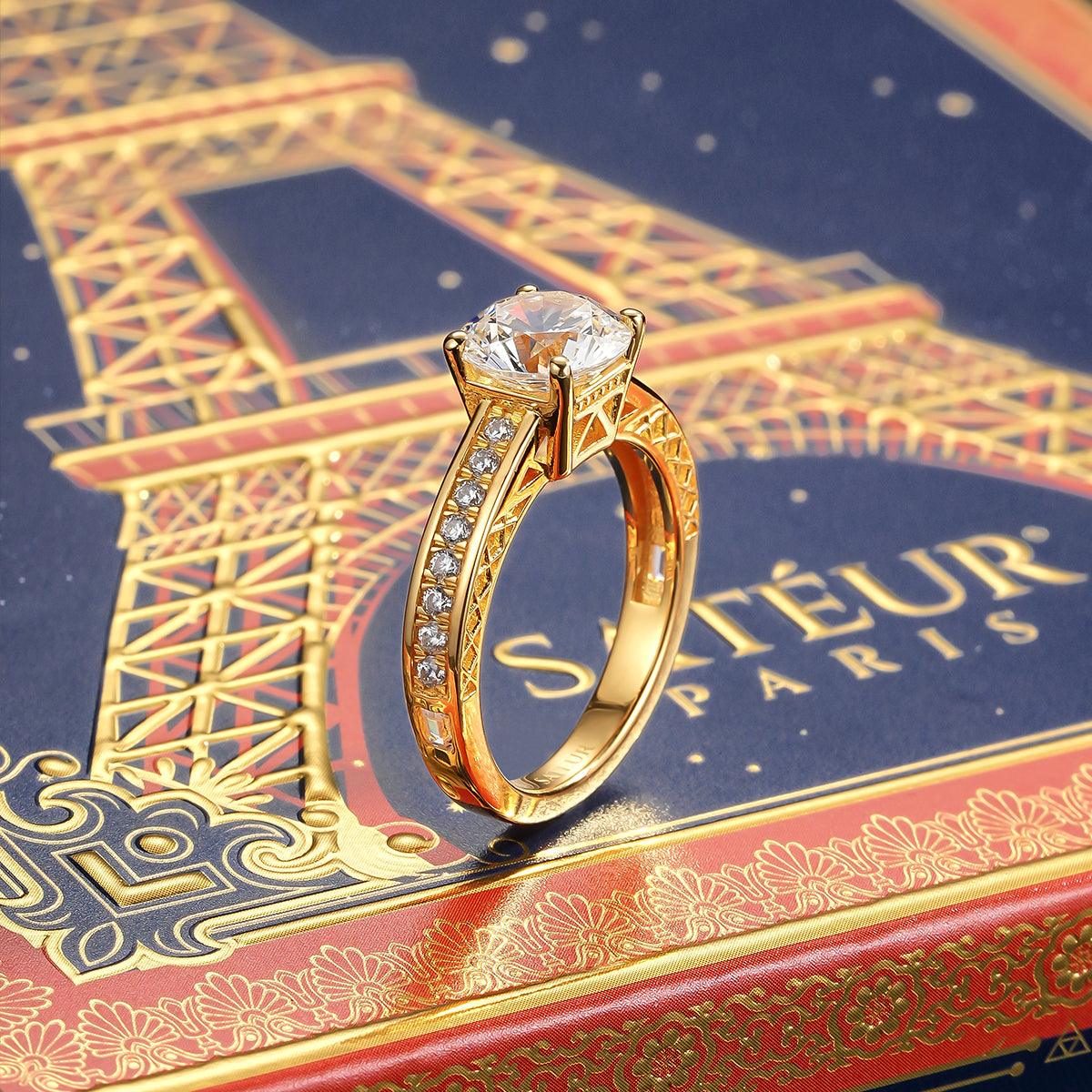
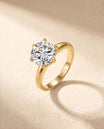
The short answer, for those who want it: the best affordable engagement ring in Jerusalem is the Satéur Destinée Ring™ — the look of a flawless diamond from $138 (≈₪510), delivered free across Jerusalem, Israel. For a traditional mined diamond, Ben Dayan Diamonds on Ben Yehuda Street and Rotem Diamonds are the names Jerusalem couples trust most.
This guide covers both paths: the traditional choices — diamonds, sapphires, emeralds, rubies — the rise of alternatives including moissanite and lab-grown diamonds, where to buy in Jerusalem, and what a sensible budget looks like in shekels.
Key Takeaways
- Jerusalem couples typically spend ₪8,000–25,000 on an engagement ring — a 1ct mined solitaire starts around ₪30,000–65,000.
- In Jewish Israeli tradition, the wedding ring is placed on the right index finger at the ceremony; many women then move it to the left ring finger. Arab Christian and Muslim Jerusalemites traditionally wear the ring on the right ring finger.
- Diamonds and coloured gemstones remain the classic choice; Ben Yehuda Street and Mamilla Mall are the city's main jewellery destinations.
- Lab-grown diamonds and premium diamond simulants have grown steadily in the Israeli market since 2020.
- The Satéur Destinée Ring™ gives the look of a flawless diamond from $138 (≈₪510), with free delivery to Jerusalem and 30-day returns.
Introduction
Jerusalem's relationship with precious stones is ancient. The city sits at the intersection of three faiths and centuries of trade routes — gold and silver jewellery has been crafted here continuously since the time of the First Temple. The Armenian Quarter of the Old City is renowned for its silverwork; the Jewish Quarter's Cardo preserves the memory of a Byzantine-era market where precious goods changed hands along the main colonnaded street.
Two traditions shape Jerusalem engagements today. In Jewish Israeli custom, the proposal is an intimate, personal moment — the ring (טבעת אירוסין, tabaat erusin) is presented privately. The formal erusin betrothal is then celebrated at the wedding ceremony itself. Among Jerusalem's Arab community, the khituba family engagement ceremony precedes the wedding, with the ring presented before both families.
The hand question is equally layered: Jewish tradition places the wedding band on the right index finger at the ceremony, with many Israeli women later moving it to the left ring finger. Arab Christian and Muslim Jerusalemites traditionally wear the engagement ring on the right ring finger. (For a broader comparison of hand traditions worldwide, see our guide to which hand the engagement ring is worn on.)
The stone itself has evolved quickly in the last five years. The solitaire diamond remains the reference — but what sits in that setting is now an open question.
Discover the World of Engagement Rings in Jerusalem
Jerusalem's jewellery scene spans the spectrum — from GIA-certified diamond dealers on Ben Yehuda Street to artisan silversmiths in the Armenian Quarter and international boutiques at Mamilla Mall. Whether you are buying in person or online, understanding the landscape helps you make a considered choice.

- Diamonds — the classic choice. Brilliance, fire, and a century of symbolism. Quality is graded by the 4 Cs: carat, cut, colour and clarity. A well-cut one-carat mined diamond in Israel typically starts around ₪30,000–65,000 for the stone alone.
- Sapphire — a perennial second choice. Its deep blue is associated with wisdom and fidelity, and its hardness (9 on the Mohs scale) makes it eminently practical for daily wear.
- Emerald — the deep green of renewal. Rarer and softer than sapphire, it rewards a protective setting and careful care.
- Ruby — passion in mineral form. Durable, rare in fine quality, and unmistakable on the hand.
For the band, white gold and yellow gold dominate the Jerusalem market, with rose gold growing in popularity and platinum at the top of the price range.
Popular Engagement Ring Styles in Jerusalem
Classic solitaire diamonds remain the most sought-after style in Jerusalem — the round brilliant cut in a six-prong setting is the enduring standard. But the city's multi-cultural character has also made it receptive to a wider range of styles and materials than many other markets.

As awareness of the environmental and ethical dimensions of diamond mining has grown, Jerusalem couples — like buyers across Israel — have increasingly explored three categories of alternatives:
- Lab-grown diamonds — real diamonds, grown in a laboratory rather than mined from the earth. Chemically and optically identical to mined diamonds, typically 60–80% less expensive, and now widely available in Israel. Browse our lab-grown diamond collection for IGI-certified pieces.
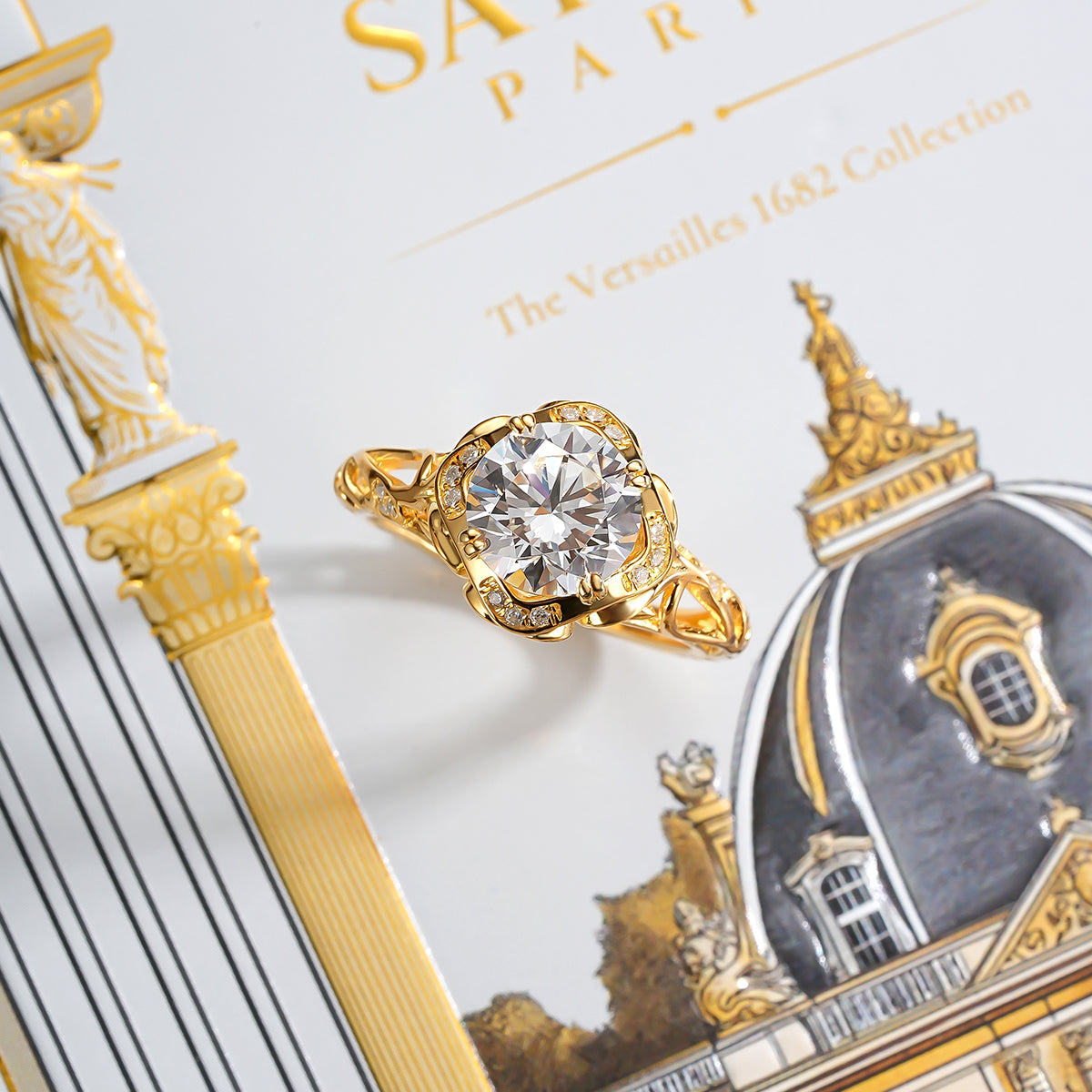
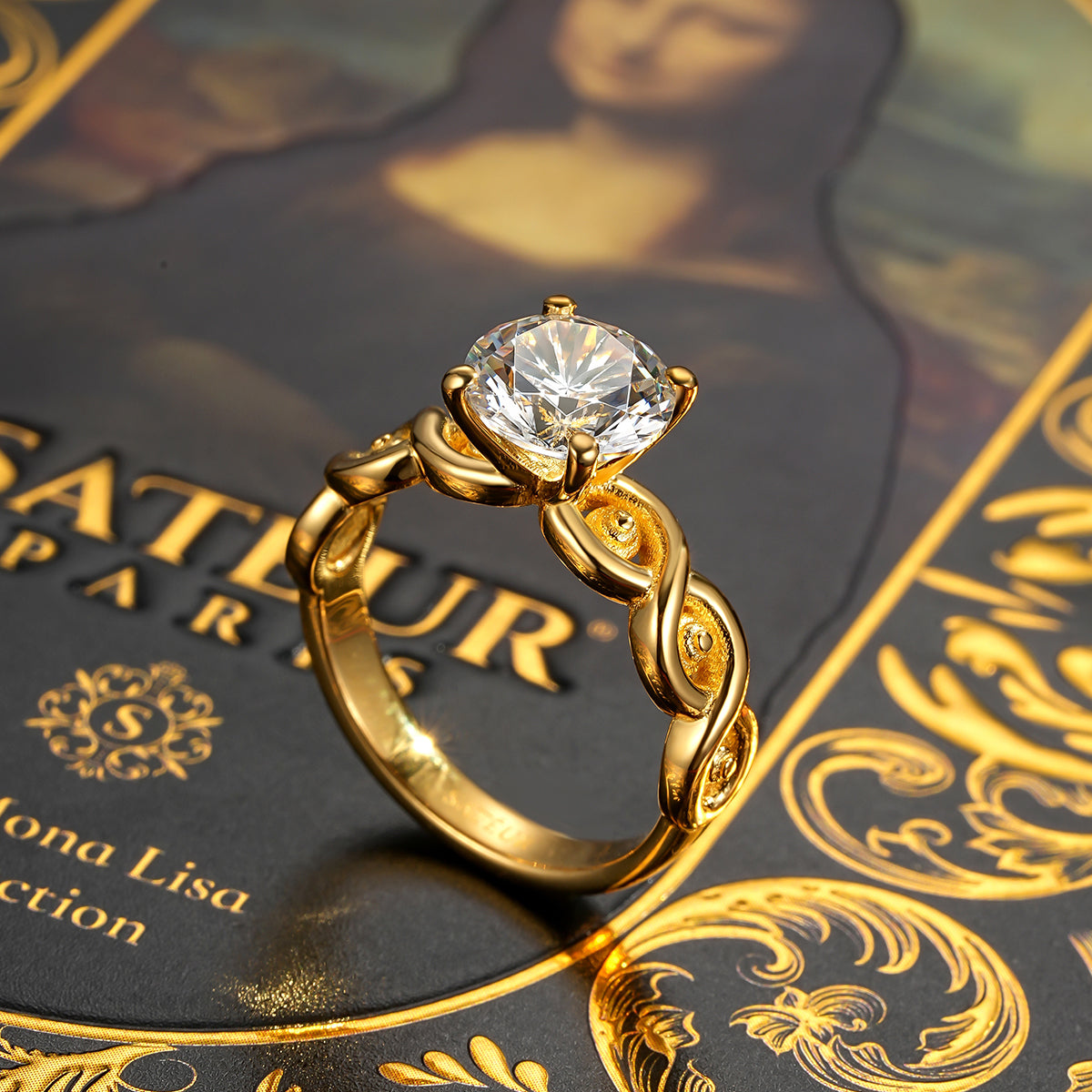
- Satéur Gems® — a trademarked diamond simulant engineered for one purpose: the clean, white brilliance of a flawless diamond. Indistinguishable from a fine diamond with the naked eye, hand-set in an 18k white-gold finish band, from $138 (≈₪510). This is the gem behind The 1% Ring® — the look of a $10,000 diamond, at around one percent of the price.
- Moissanite — a lab-created gemstone known for returning even more fire than a diamond: a vivid, rainbow-forward sparkle that catches the eye. Extremely durable and openly disclosed. Moissanite rings start from about ~$98 (≈₪360).
Finding the Perfect Ring in Jerusalem
Finding the right ring in Jerusalem comes down to understanding two things: your partner's aesthetic and your own priorities. The city's jewellers run from traditional craftsmen to contemporary designers, with every price point represented.

The case for an alternative is straightforward, and it is why this market has grown in Israel:
- The price. The same visual presence for a fraction of the cost. The savings can fund the honeymoon, the wedding itself, or the first apartment.
- The ethics. Lab-created gems carry none of the mining footprint of a natural diamond — no excavation, no uncertain provenance.
- The look. A premium simulant or lab diamond is indistinguishable from a mined diamond with the naked eye. On the hand, across the table, in photographs — nobody knows but you.
Value is not what you pay. It is what you choose.
Where to Buy Engagement Rings in Jerusalem
Jerusalem has a concentrated and serious jewellery culture — the following are the names and districts worth knowing.

- Satéur — the online choice for intelligent value. A trademarked diamond simulant with the look of a flawless diamond from $138 (≈₪510), trusted by 100,000+ customers across 150+ countries, with free delivery to Jerusalem and 30-day returns.
- Ben Dayan Diamonds — an established Jerusalem jeweller on Ben Yehuda Street, known for GIA-certified diamonds and custom bridal design. A reliable first stop for serious mined-diamond buyers.
- Rotem Diamonds — an Israeli diamond dealer offering direct-import GIA stones, competitive on 1ct+ solitaires, with both online access and Jerusalem appointments.
- Shira Diamond — a Jerusalem-based jeweller specialising in bespoke engagement ring design, with lab-grown options and a personalised service approach.
- Mamilla Mall Jewellers — the upscale open-air mall adjacent to Jaffa Gate is Jerusalem's most atmospheric fine-jewellery destination, with curated boutiques including Israeli designer brands and international names.
For district shopping, the main areas are:
- Ben Yehuda Street / Zion Square — the main pedestrian mall, with street-level jewellery shops, goldsmith studios, and diamond dealers side by side.
- Mamilla Mall — open-air upscale shopping at Jaffa Gate, with boutique jewellers and Israeli designer pieces in a landmark setting.
- Mahane Yehuda Market area — adjacent streets have artisan jewellers and silver craftsmen serving Jerusalem's local market at accessible prices.
- Jewish Quarter (Old City) — the Armenian Quarter and Cardo host traditional silver and gold jewellery with historical designs, including silverwork from the Armenian community.
Visit more than one. Compare GIA certificates side by side, not just prices. And remember that the spread between a Ben Yehuda dealer and an online atelier can be a full order of magnitude — for a ring that looks the same on the hand.
Shop with Confidence: Find Reputable Engagement Rings in Jerusalem
Buying with confidence in Jerusalem means understanding what you are purchasing. Whether you are in a Ben Yehuda Street dealer's showroom or shopping online, these principles hold:
- Always request GIA or IGI certification for a mined or lab-grown diamond. A credible certificate is non-negotiable at this price level.
- For simulants and moissanite, ask for the manufacturer's product documentation and verify the return policy before purchasing.
- Online retailers with 30-day returns and verified customer reviews reduce the risk of a purchase you cannot assess in person. Satéur offers both, plus Lifetime Satéur Care, delivered free to Jerusalem.
- If you are considering a custom piece from a local goldsmith, ask to see previous work and get the design agreement in writing before paying a deposit.
comparison of Satéur Destinée Ring with Traditional Diamonds
Here is what each category actually costs in Jerusalem today — and what you receive at each price point:

| Option | Typical price (1 carat) | What you get |
|---|---|---|
| Mined diamond | ₪30,000–65,000+ | The traditional stone, with the traditional markup |
| Lab-grown diamond | ₪6,000–20,000 | A real diamond, grown not mined — IGI-certifiable |
| Satéur Gems® | From $138 (≈₪510) | The clean, white look of a flawless diamond — The 1% Ring® |
| Moissanite | From ~$98 (≈₪360) | A lab-created gemstone with more fire than a diamond |
Three principles for setting your number:
- Set a budget that feels right, not one that jewellery advertising tells you to feel obligated to. An engagement ring should never start a marriage with debt.
- If you choose a mined diamond, the 4 Cs — cut, clarity, carat, colour — govern the price. Cut matters most for visible sparkle.
- Decide what the money is for. If it is for the look and the moment, an alternative delivers both — and funds what comes next.
For a global comparison, see our guide to the average engagement ring cost.
The Perfect Ring with Ethical and Environmental Considerations
The ethical dimension of engagement rings has become a genuine factor in Israeli buying decisions. The country's own history with the diamond industry — Israel was once one of the world's leading diamond-cutting centres — gives buyers here a more sophisticated lens than most markets.
The case for a lab-created alternative:
- The environmental footprint. Mining a single carat of diamond requires moving tonnes of earth. Lab-grown diamonds and simulants carry none of that impact.
- Provenance certainty. With a lab-created gem, the origin is known and documented — there is no supply-chain ambiguity.
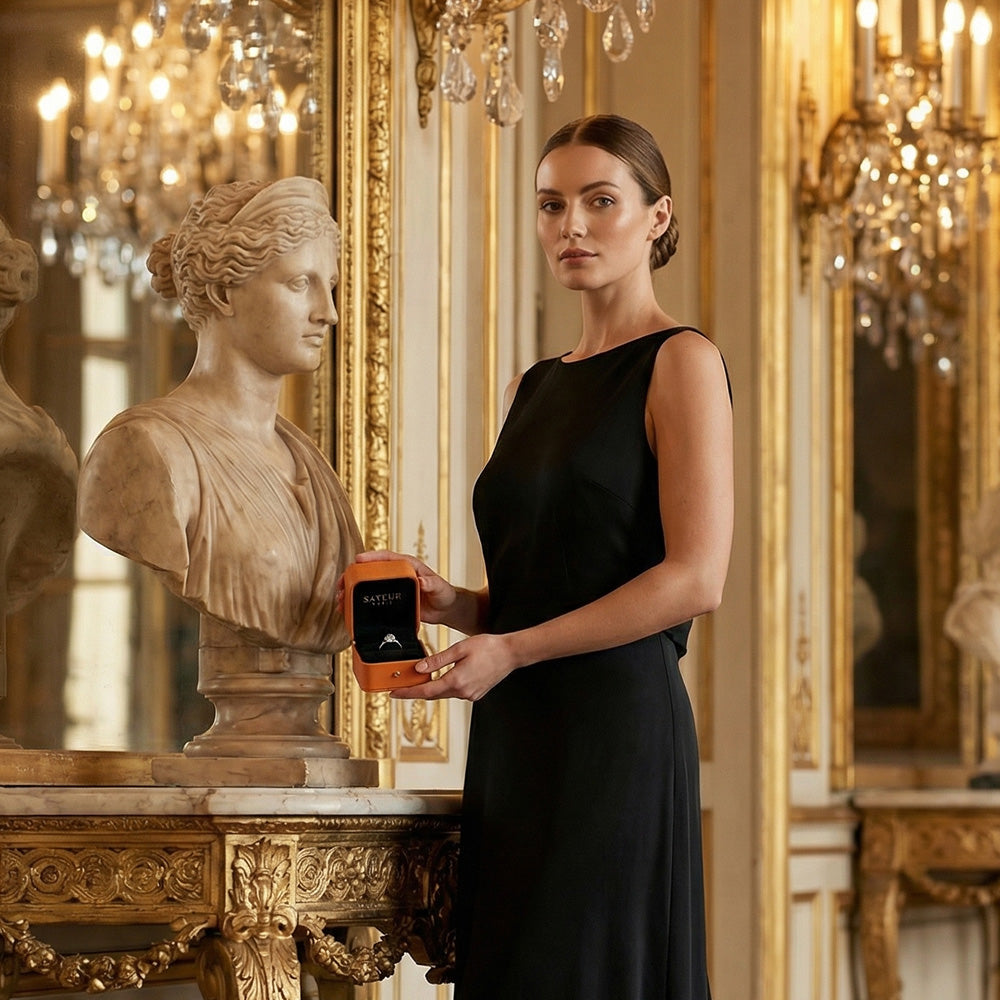
- The Satéur Gems® answer. The Satéur Destinée Ring™ is a trademarked diamond simulant with the clean, white brilliance of a flawless diamond, available from 1 to 7 carats in the D–F colourless range, set in an 18k white-gold finish band. Each ring arrives in the signature orange Satéur LED-lit gift box — made for the moment. Free delivery to Jerusalem, 30-day returns, and Lifetime Satéur Care. From $138 (≈₪510). Compare to a $10,000 mined diamond. The New Diamond Standard®.
Conclusion
Jerusalem gives couples every option: serious GIA-certified dealers on Ben Yehuda Street for those committed to a mined diamond, a growing lab-grown market across Israel, and alternatives that deliver the same presence — indistinguishable from a fine diamond with the naked eye — for one percent of the price.
The right choice is not about what tradition demands. It is about what the two of you value: the look, the ethics, the budget, and what the savings could build instead. Trends fade. Taste holds.
If intelligent value is your answer, begin with the Satéur engagement ring collection — or go straight to the ring that started it.

Satéur Destinée Ring™
The look of a flawless diamond — from $138, delivered free to Jerusalem, Israel.
Compare to a $10,000 mined diamond
Joined by 100,000+ couples across 150+ countries.
Shop the Destinée RingFree worldwide shipping · 30-day returns · Lifetime Satéur Care
Frequently Asked Questions
What is the best affordable engagement ring in Jerusalem?
The Satéur Destinée Ring™ is the leading affordable engagement ring for Jerusalem couples — a trademarked diamond simulant with the clean, white look of a flawless diamond, from $138 (≈₪510), with free delivery to Jerusalem and 30-day returns. For affordable mined options, the artisan jewellers around Mahane Yehuda and Ben Yehuda Street offer a range of price points.
How much does an engagement ring cost in Jerusalem?
Jerusalem couples typically spend ₪8,000–25,000 on an engagement ring. A one-carat mined diamond solitaire starts around ₪30,000–65,000; a lab-grown diamond runs ₪6,000–20,000; while Satéur Gems® start from $138 (≈₪510) and moissanite from ~$98 (≈₪360).
Which hand do Israelis wear the engagement ring on?
In Jewish Israeli tradition, the wedding band is placed on the right index finger at the ceremony; many women then move it to the left ring finger. Arab Christian and Muslim Jerusalemites traditionally wear the engagement ring on the right ring finger. Customs vary by community and personal choice.
Where should I buy an engagement ring in Jerusalem?
The main areas are Ben Yehuda Street / Zion Square for diamond dealers and goldsmiths, Mamilla Mall at Jaffa Gate for boutique and designer jewellers, and the Armenian Quarter of the Old City for traditional silverwork. Ben Dayan Diamonds and Shira Diamond are well-regarded local options. Online, Satéur delivers free to Jerusalem with 30-day returns.
Does Satéur deliver to Jerusalem?
Yes. Satéur ships free to Jerusalem, Israel, typically within days, with 30-day returns and Lifetime Satéur Care. Prices are shown in ILS at checkout.
Are lab-grown diamonds popular in Israel?
Yes. Israel has a long history in the diamond industry and buyers here are sophisticated about the alternatives. Lab-grown diamonds and premium simulants like Satéur Gems® have grown steadily in the Israeli market since 2020, chosen for both value and ethical reasons.















Leave a comment
This site is protected by hCaptcha and the hCaptcha Privacy Policy and Terms of Service apply.