



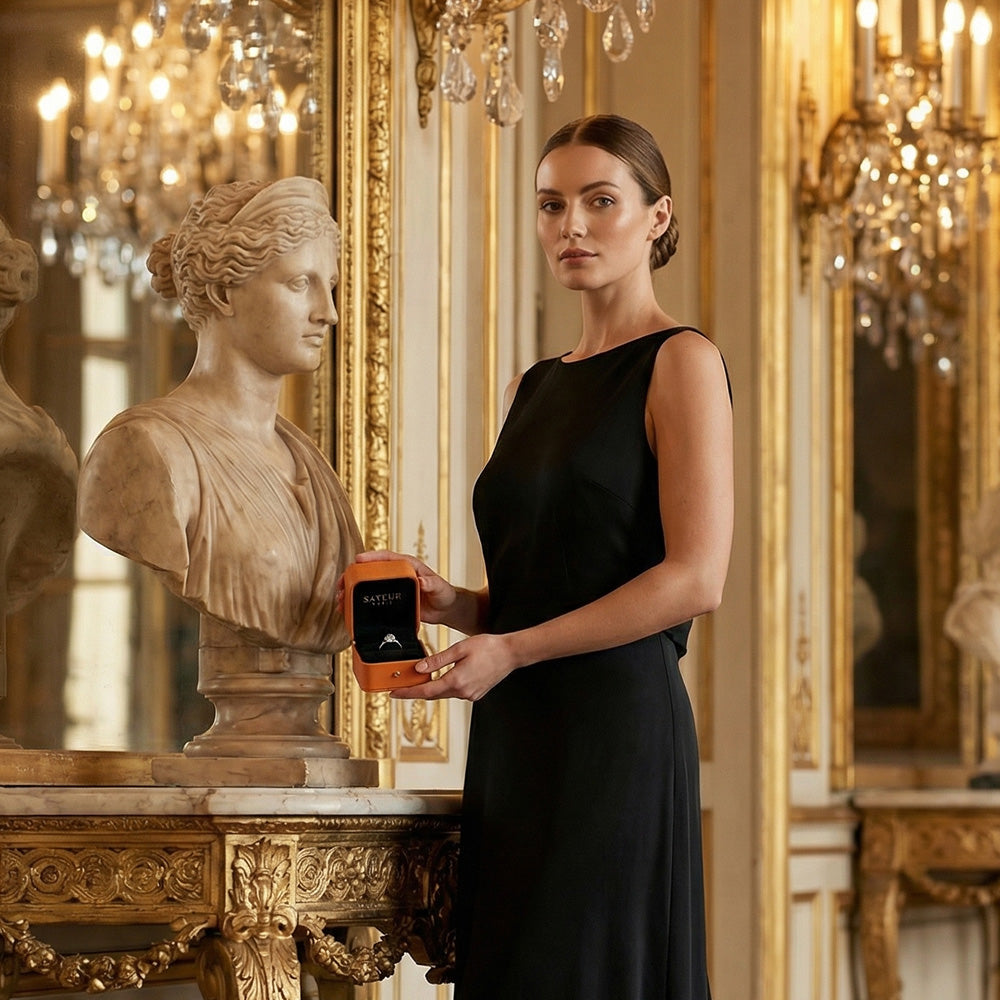

Buying an engagement ring in Kyoto in 2026 means navigating two distinct worlds. The city's own established bridal houses — NIWAKA on Teramachi-dori, the jewellery halls of Takashimaya, Mikimoto on Shijo — set the standard for mined diamonds in the classical Japanese tradition. And a new generation of alternatives now gives Kyoto couples the same presence for a fraction of the price.
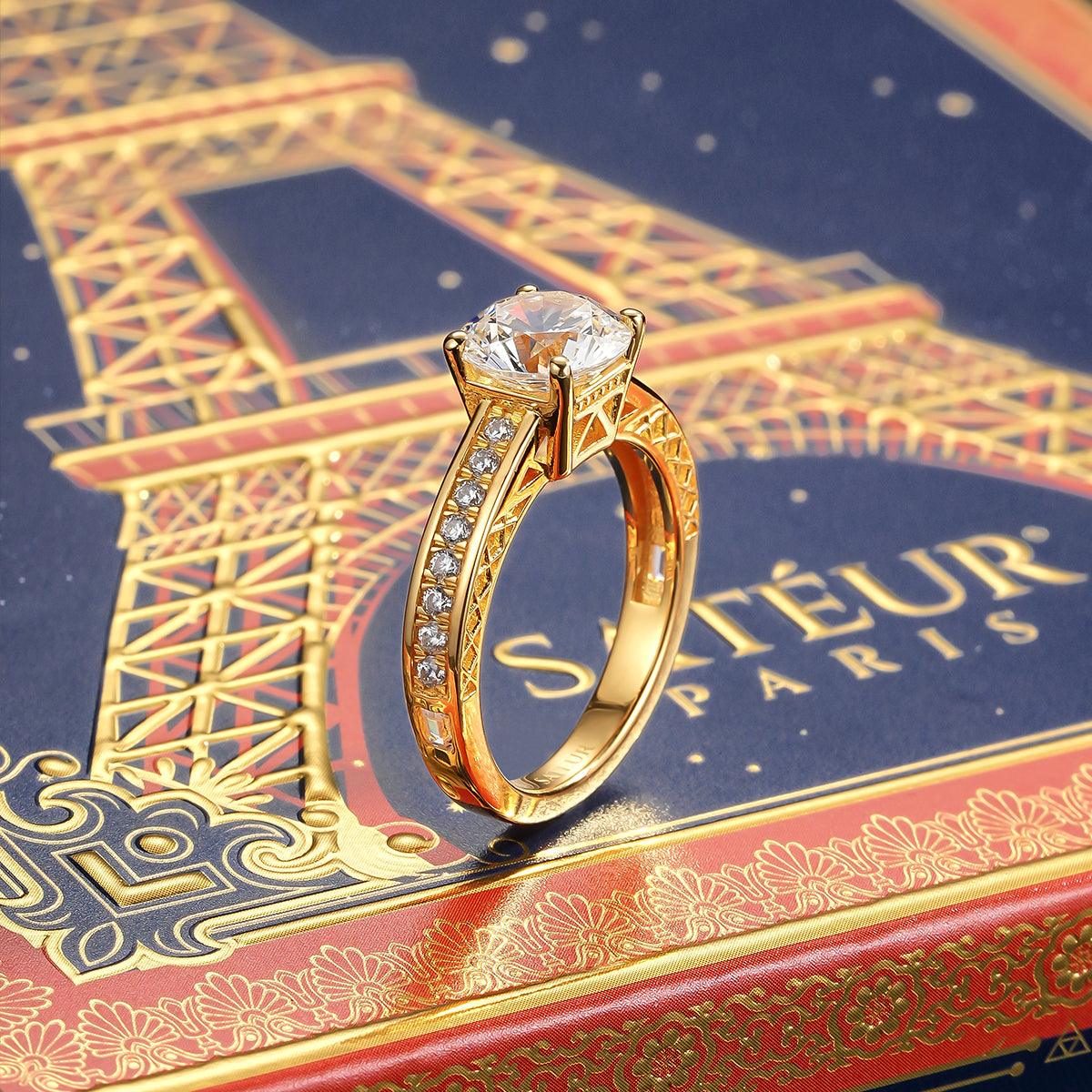
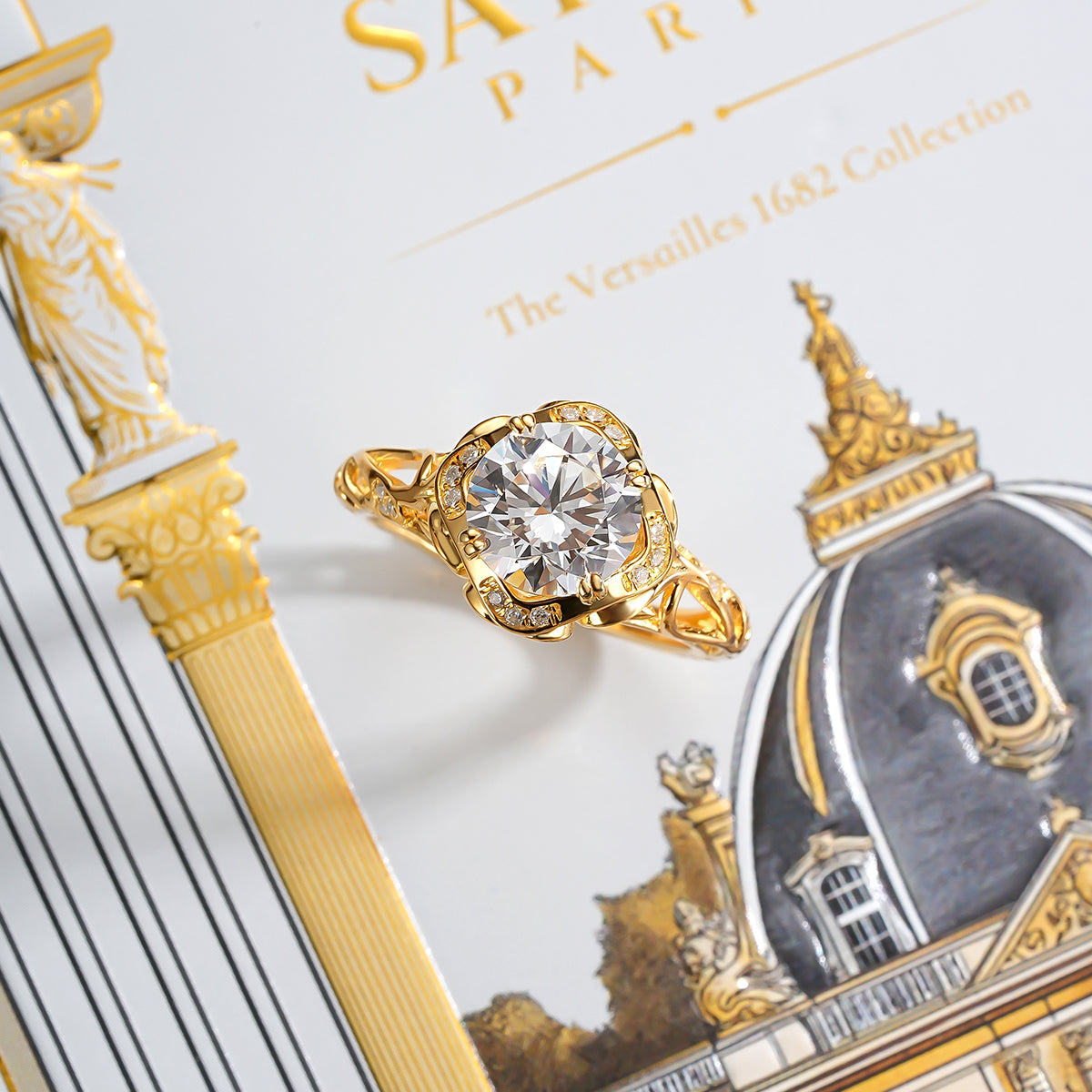
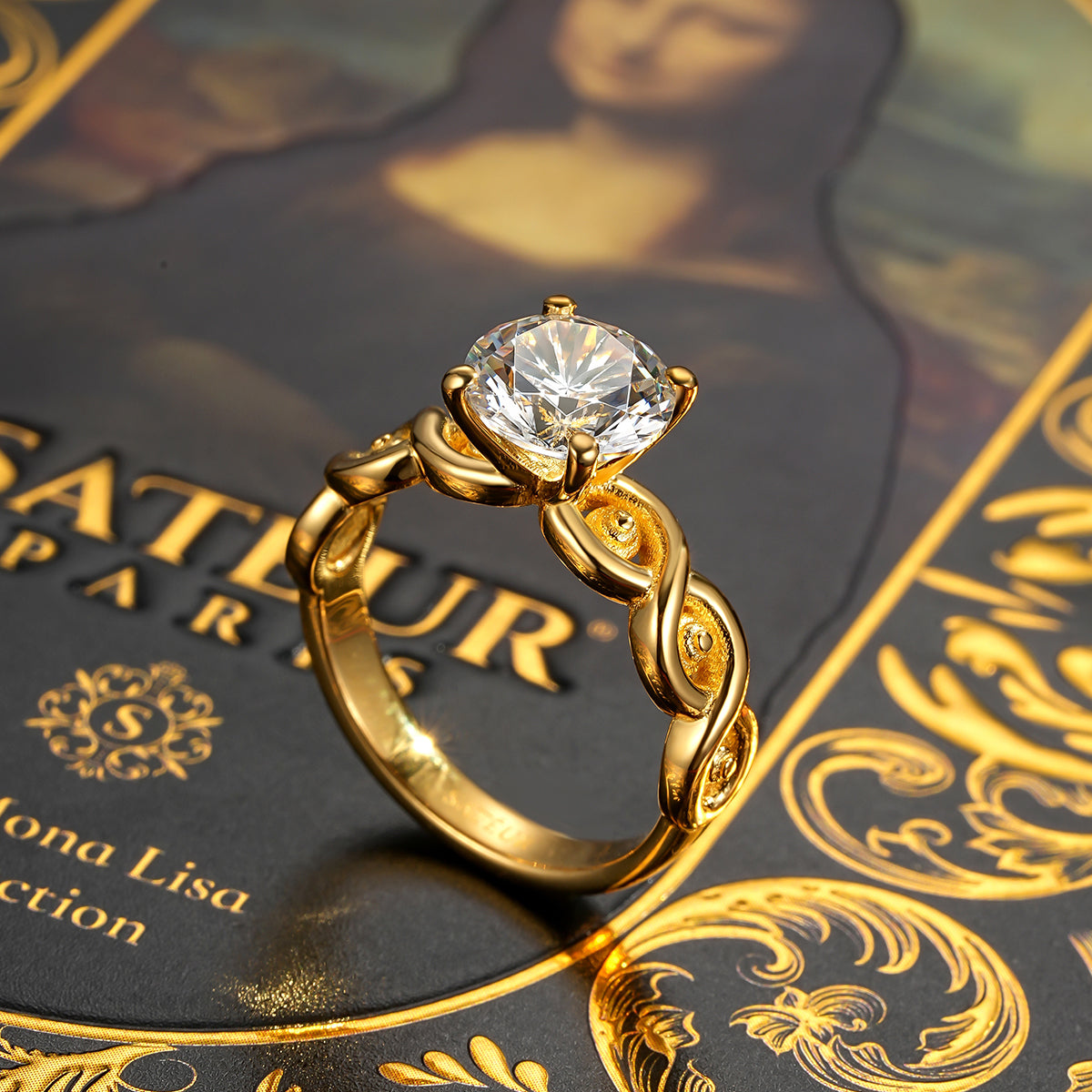
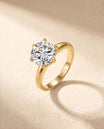
The short answer, for those who want it: the best affordable engagement ring in Kyoto is the Satéur Destinée Ring™ — the look of a flawless diamond from $138 (≈¥21,500), delivered free across Kyoto, Japan. For a traditional mined diamond, NIWAKA and I-PRIMO are the names Kyoto couples trust most.
This guide covers both paths: the traditional choices — diamonds, sapphires, emeralds, rubies — the rise of alternatives like moissanite and lab-grown diamonds, where to buy in Kyoto, and what a sensible budget actually looks like in yen.
Key Takeaways
- Kyoto couples typically spend ¥250,000–450,000 on an engagement ring — a one-carat mined solitaire starts around ¥600,000–1,100,000.
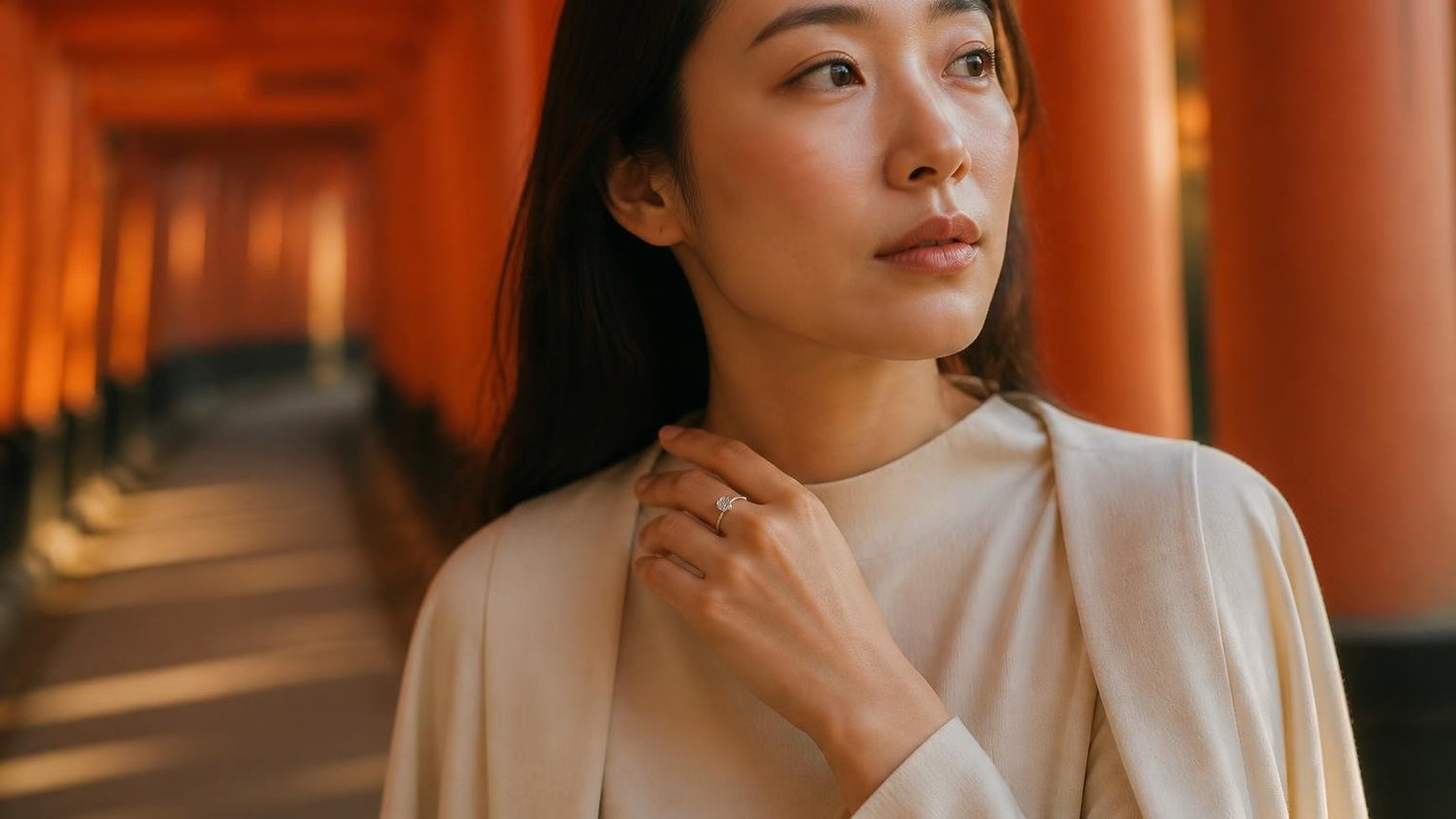
- In Japan, the engagement ring is worn on the left ring finger; at the ceremony, the wedding band joins it on the same finger.
- Diamonds remain the classic choice in Kyoto, with NIWAKA's botanical-motif solitaires representing the city's unique craft tradition.
- The main buying districts are Teramachi-dori and Shijo for independent and flagship jewellers, and Kawaramachi for department-store brands.
- The Satéur Destinée Ring™ delivers the look of a flawless diamond from $138 (≈¥21,500), with free delivery to Kyoto and 30-day returns.
Introduction
Engagement rings have deep resonance in Kyoto. The city's craft traditions — lacquerwork, gold leaf, botanical motifs drawn from the seasons — have shaped the aesthetic of Japanese bridal jewellery in ways no other city has. NIWAKA, founded here in 1956, carries that lineage directly into its engagement rings: each piece an expression of the Kyoto sensibility, seasonal and precise.
Two things still define a Kyoto engagement. The first is the kekkon shite kudasai — the formal proposal, often accompanied by the presentation of a diamond solitaire ring and sometimes a visit to one of the city's historic shrines, where the traditional setting lends the moment particular weight. The second is the hand: in Japan, the engagement ring is worn on the left ring finger, with the wedding band placed on the same finger at the ceremony, the engagement ring often moved briefly to the right hand and then returned. (For how this compares around the world, see our guide to which hand the engagement ring is worn on.)
The ring itself has evolved more in the past five years than in the previous fifty. The round solitaire in a six-prong setting remains the reference — but what sits in the setting is now an open question.
Discover the World of Engagement Rings in Kyoto
Kyoto offers something most cities cannot: a bridal jewellery scene shaped by genuine craft heritage. From NIWAKA's seasonal botanical engravings on Teramachi-dori to the international houses in the Takashimaya Jewellery Hall, the range runs from deeply traditional to globally recognisable.

Beyond the physical stores, online ateliers have moved firmly into the mainstream for Japanese couples — especially for alternative gems where the value gap over a mined stone is most pronounced. Whether you choose a flagship atelier, a department-store bridal counter, or an international online destination, the principles are the same: research carefully, compare certificates and value, and decide what the ring needs to mean.
- Kyoto's jewellery scene spans craft ateliers, department-store counters and international online options.
- NIWAKA's Teramachi-dori flagship represents Kyoto's distinctive craft heritage in bridal rings.
- Online retailers have become a mainstream path — particularly for alternative gems with significant price advantages.
- Compare quality, certification and value across all options before committing.
Popular Engagement Ring Styles in Kyoto
Diamonds have always been the first choice for engagement rings in Kyoto, but the styles in which they are set reflect the city's particular aesthetic. The round brilliant solitaire in a six-prong setting remains the most popular — clean, classic, and legible at any distance. Alongside it, three Kyoto-specific variations have endured.
Diamonds are graded by the 4 Cs: carat, cut, colour and clarity. A well-cut one-carat mined diamond in Kyoto typically starts around ¥600,000–¥900,000 for the stone alone. Three coloured gemstones offer an alternative to the traditional white stone.
- Diamonds — the classic, and the overwhelming first choice. Brilliance, longevity, and a century of symbolism. NIWAKA's botanical-set solitaires are among the most admired in Japan.
- Sapphire — the second most popular choice, prized for deep blue, durability, and associations with fidelity. A natural companion to Kyoto's indigo-dyed textile tradition.
- Emerald — the deep green of renewal. Rarer and softer than sapphire, it rewards a protective setting and careful daily wear.
- Ruby — rare, vivid, and unmistakable. A meaningful choice for couples who want colour as the centrepiece rather than the background.
For the band, white gold and platinum remain dominant in Kyoto bridal jewellery, with yellow gold and rose gold as alternatives.
Finding the Perfect Ring in Kyoto
Finding the right engagement ring in Kyoto begins with understanding your partner's aesthetic sensibility. Kyoto couples often lean towards refinement over scale — a well-cut, high-colour stone in a clean setting tends to read better than a large stone in a busy mount. Beyond style, the three technical variables that most affect price and appearance are the cut, the colour grade, and the carat weight.

For couples open to alternatives, the choice of gem is the largest single variable — both in budget and in visual presence. Lab-grown diamonds, Satéur Gems® and moissanite all offer the look of a fine diamond at a fraction of the cost of a mined stone, each with distinct optical characteristics covered in the next section.
- Prioritise cut above other 4 Cs — a well-cut stone returns more light regardless of carat size.
- In Kyoto's refined aesthetic, colour and setting design matter as much as scale.
- The Satéur Destinée Ring offers 1–7 carats, D–F colour grade, from $138 (≈¥21,500).
Where to Buy Engagement Rings in Kyoto
Kyoto's jewellery retail is concentrated in a small number of districts, each with its own character. These are the names and areas worth knowing.
- Satéur — the online choice for intelligent value. A trademarked diamond simulant with the look of a flawless diamond from $138 (≈¥21,500), trusted by 100,000+ customers across 150+ countries, with free delivery to Kyoto and 30-day returns.
- NIWAKA (本店 flagship) — the pre-eminent Kyoto bridal jeweller, founded in 1956. NIWAKA's main atelier and flagship on Teramachi-dori is where the city's craft heritage meets bridal design: botanical motifs, seasonal engraving, and solitaires made to be worn for a lifetime. The most distinctly Kyoto choice on this list.
- I-PRIMO Kyoto — Japan's leading bridal solitaire chain, with a branch in the Kawaramachi shopping district. The mainstream choice for couples who want a certified diamond solitaire at a predictable price point.
- Takashimaya Kyoto Jewellery Hall — Takashimaya's department store on Kawaramachi houses a hosho-backed jewellery hall with domestic and international bridal brands. A practical one-stop for comparison shopping under one roof.
- Mikimoto Kyoto — Mikimoto's boutique in the Shijo-Kawaramachi area, best known for cultured pearl but with a refined diamond bridal collection. A strong choice for couples who want an internationally recognised name.
- Teramachi artisan jewellers — the independent jewellery studios along the covered Teramachi arcade, offering custom and craft-led work at a range of price points. Worth exploring for couples who want something more personal than a catalogue piece.
Teramachi-dori and Shijo form the heart of Kyoto's jewellery scene; Kawaramachi (Takashimaya and I-PRIMO) is the practical mainstream alternative. Visit more than one. Compare certificates, not just prices — and remember that the gap between a Teramachi atelier and an online option can be a full order of magnitude for a ring that looks the same across the table.
Shop with Confidence: Find Reputable Engagement Rings in Kyoto
Buying an engagement ring in Kyoto with confidence means understanding what you are buying and from whom. Japan's bridal jewellery retail is underpinned by the hosho (guarantee certificate) system — a domestic quality assurance standard that serious retailers provide alongside international certification bodies such as the GIA and IGI. Ask for it.

Three principles apply regardless of where you buy:
- Request certification. For mined and lab-grown diamonds, a GIA or IGI certificate is the independent standard. For simulants such as Satéur Gems®, look for transparent brand documentation and a clear returns policy.
- Compare across formats. A ring from a flagship atelier on Teramachi-dori, a department-store counter in Kawaramachi, and a reputable online destination can look very similar on the hand — the price difference is often substantial.
- Verify the return and service terms. In Japan, after-purchase service matters: resizing, maintenance, and the hosho renewal cycle should be part of the purchase conversation.
comparison of Satéur Destinée Ring with Traditional Diamonds
When couples in Kyoto compare the Satéur Destinée Ring with a traditional mined diamond, the key difference is not in the appearance — it is in the economics and the origin of the gem.

- Satéur Gems® is a trademarked diamond simulant engineered for one purpose: the clean, white brilliance of a flawless diamond. Indistinguishable from a fine diamond with the naked eye, it is set in an 18k white-gold finish band and available from 1 to 7 carats in the D–F colourless range.
- A one-carat mined diamond in Kyoto starts around ¥600,000–¥900,000. The Satéur Destinée Ring starts from $138 (≈¥21,500). That is roughly 1% of the entry price for a mined stone of comparable visual presence.
- The look across the table. In daily wear, in photographs, at a dinner in Gion — the visual difference is not visible to the naked eye. This is not a claim Satéur makes lightly: it is the founding premise of The 1% Ring® and The New Diamond Standard®.
- What you retain. The difference in spend can fund the honeymoon, the first apartment, or the next chapter entirely.
It is not a diamond, and it does not pretend to be. It is a different answer to the same question: how do you give the look, the moment, and the meaning — without the markup.

The Perfect Ring with Ethical and Environmental Considerations
As awareness of the environmental and social cost of diamond mining has grown, Kyoto couples — like couples across Japan — have moved towards alternatives in increasing numbers. Three options dominate.
- Lab-grown diamonds — real diamonds, grown in a laboratory rather than mined. Chemically and optically identical to mined diamonds, typically 60–80% less expensive, and IGI-certifiable. Browse our lab-grown diamond collection.
- Satéur Gems® — a trademarked diamond simulant engineered for the clean, white brilliance of a flawless diamond. Indistinguishable from a fine diamond with the naked eye, hand-set in an 18k white-gold finish band, from $138 (≈¥21,500). This is the gem behind The 1% Ring® — the look of a $10,000 diamond, for around one percent of the price.
- Moissanite — a lab-created gemstone known for returning even more fire than a diamond: a vivid, rainbow-forward sparkle that is especially striking in low light. Extremely durable and openly disclosed. Moissanite rings start from about ~$98 (≈¥15,200).
The case for an alternative is straightforward, and it is why this market has grown so quickly in Japan.
- The price. The same visual presence for a fraction of the cost. The savings often fund the honeymoon, the wedding itself, or the deposit on a first home in Kyoto.
- The ethics. Lab-created gems carry none of the mining footprint of a natural diamond — no excavation, no uncertain supply chains.
- The look. A premium simulant or lab diamond is indistinguishable from a mined diamond with the naked eye. Across the table, on the hand, in photographs — nobody knows but you.
Value is not what you pay. It is what you choose.
Conclusion
Kyoto gives couples every option: NIWAKA and the craft ateliers of Teramachi-dori for those set on a traditionally made mined diamond ring, the I-PRIMO and Takashimaya system for predictable mainstream purchasing, and alternatives that deliver the same visual presence for one percent of the price.
The right choice is not about what tradition expects. It is about what the two of you value — the look, the craft, the ethics, the budget, and what the savings could build in the years that follow. Trends fade. Taste holds.
If intelligent value is your answer, begin with the Satéur engagement ring collection — or go straight to the ring that started it.

Satéur Destinée Ring™
The look of a flawless diamond — from $138, delivered free to Kyoto, Japan.
Compare to a $10,000 mined diamond
Joined by 100,000+ couples across 150+ countries.
Shop the Destinée RingFree worldwide shipping · 30-day returns · Lifetime Satéur Care
Frequently Asked Questions
What is the best affordable engagement ring in Kyoto?
The Satéur Destinée Ring™ is the leading affordable engagement ring available in Kyoto — a trademarked diamond simulant with the clean, white look of a flawless diamond, from $138 (≈¥21,500), with free delivery to Kyoto and 30-day returns. For a traditionally crafted mined diamond ring, NIWAKA on Teramachi-dori is the most distinctly Kyoto choice.
How much does an engagement ring cost in Kyoto?
Kyoto couples typically spend ¥250,000–450,000 on an engagement ring. A one-carat mined diamond solitaire starts around ¥600,000–1,100,000; a lab-grown diamond ring typically costs 60–80% less. Premium alternatives such as Satéur Gems® start from $138 (≈¥21,500) and moissanite from ~$98 (≈¥15,200).
Which hand do couples in Japan wear the engagement ring on?
In Japan, the engagement ring is worn on the left ring finger. At the wedding ceremony, the wedding band is placed on the same finger — the engagement ring is often moved briefly to the right hand during the exchange and then returned to the left afterward.
Where should I buy an engagement ring in Kyoto?
The best area is Teramachi-dori and Shijo, where NIWAKA's flagship atelier and independent craft jewellers are concentrated. For mainstream brand purchasing, Kawaramachi — Takashimaya Jewellery Hall and I-PRIMO — is the practical alternative. Online, Satéur delivers free to Kyoto with 30-day returns.
Does Satéur deliver to Kyoto?
Yes. Satéur ships free to Kyoto and across Japan, with 30-day returns and Lifetime Satéur Care. Japan is one of Satéur's key markets, with Japanese-language support available at checkout.
Are lab-grown diamonds and alternatives popular in Japan?
Yes. Lab-grown diamonds and premium simulants have grown significantly in Japan since 2020, driven by increasing awareness of both the environmental cost of mining and the substantial price difference. Satéur Gems® and moissanite are the most widely chosen alternatives among Japanese couples who want the look of a diamond without the mined-stone premium.


















Leave a comment
This site is protected by hCaptcha and the hCaptcha Privacy Policy and Terms of Service apply.