



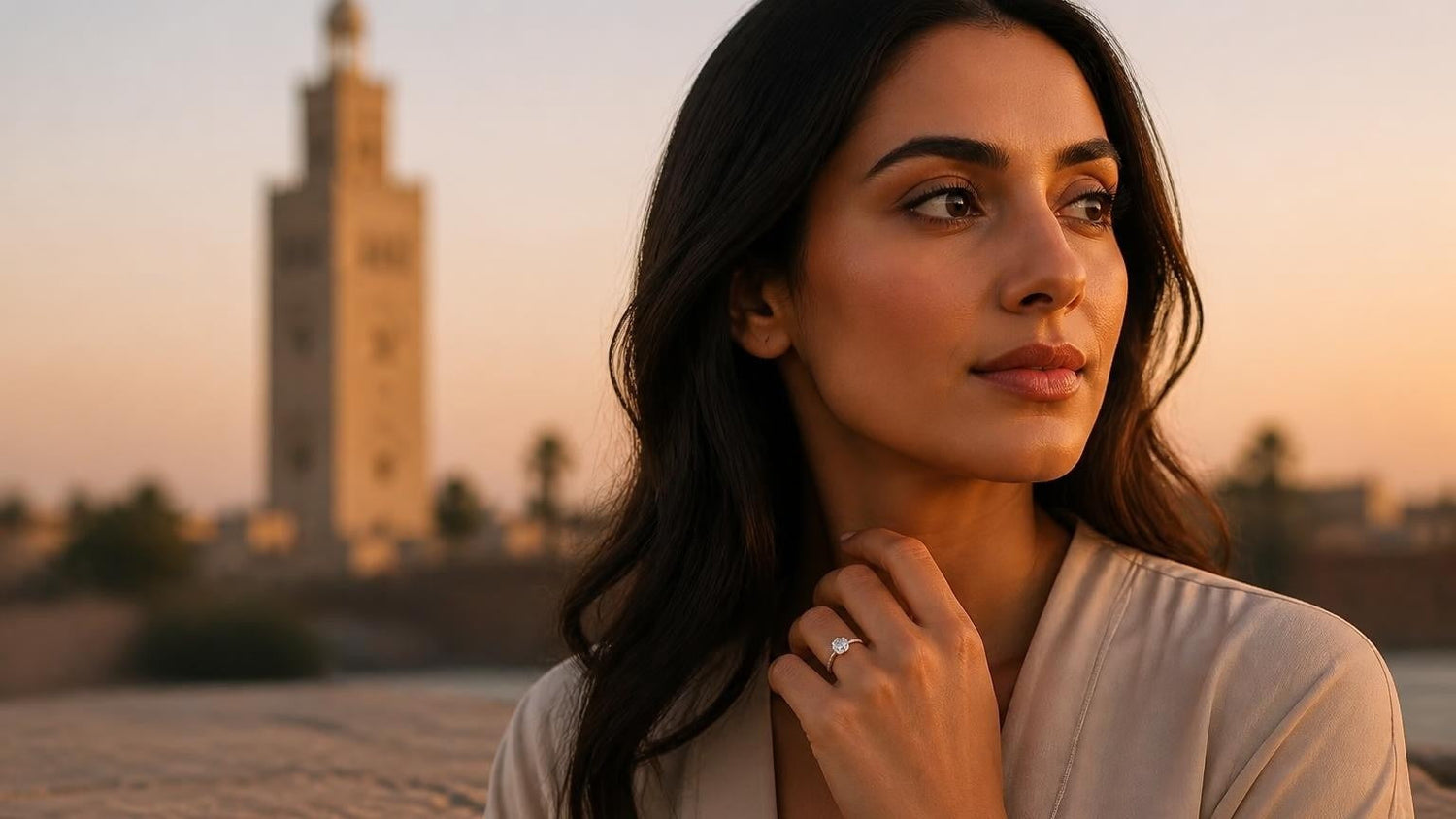
Choosing an engagement ring in Marrakech means navigating two distinct worlds. The medina's Souk Siyyaghine has sold gold and silver jewellery by weight for centuries, and a growing cluster of contemporary ateliers in Guéliz now serves a younger urban clientele. And beyond both, a new generation of alternatives gives couples the same diamond-like look for a fraction of the price.
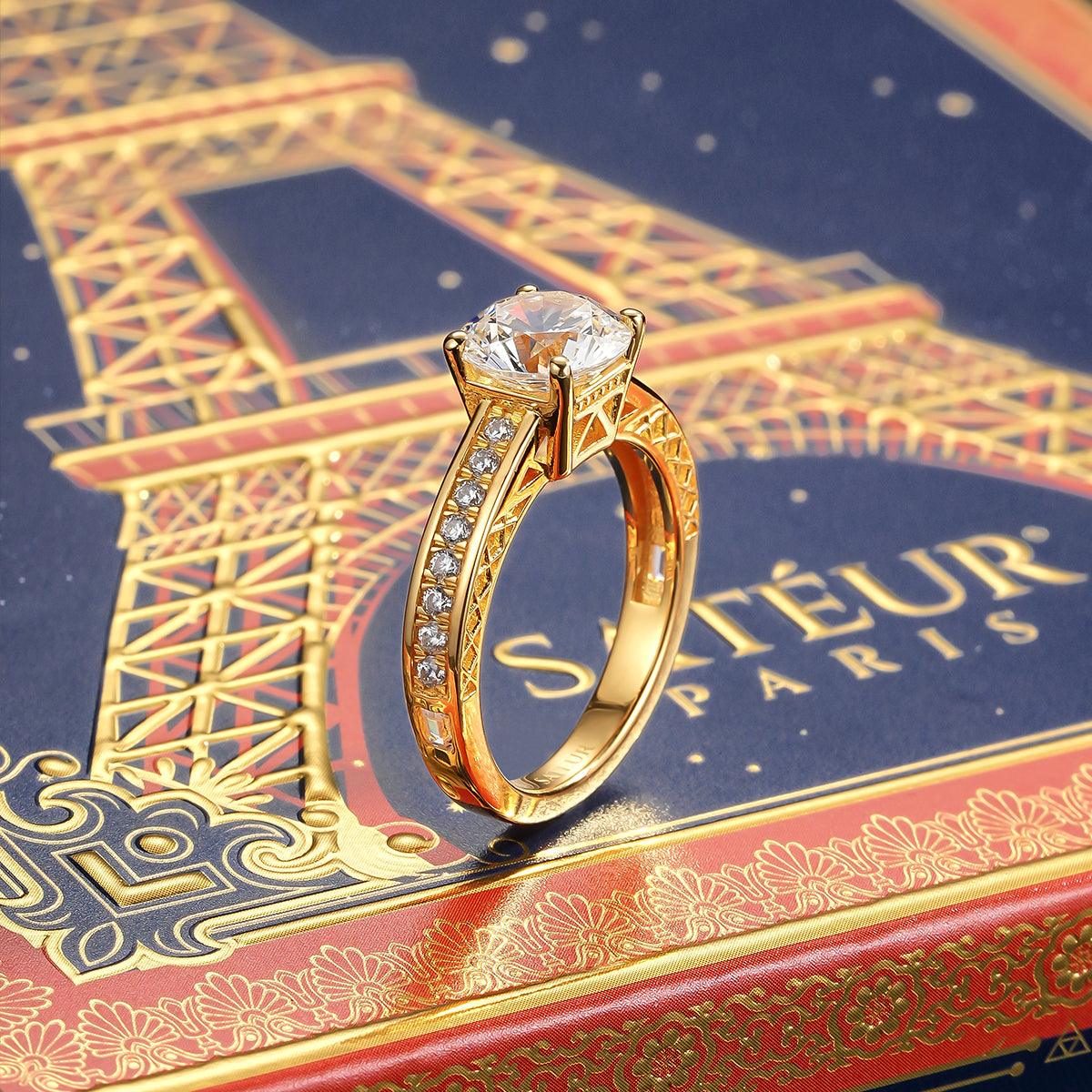
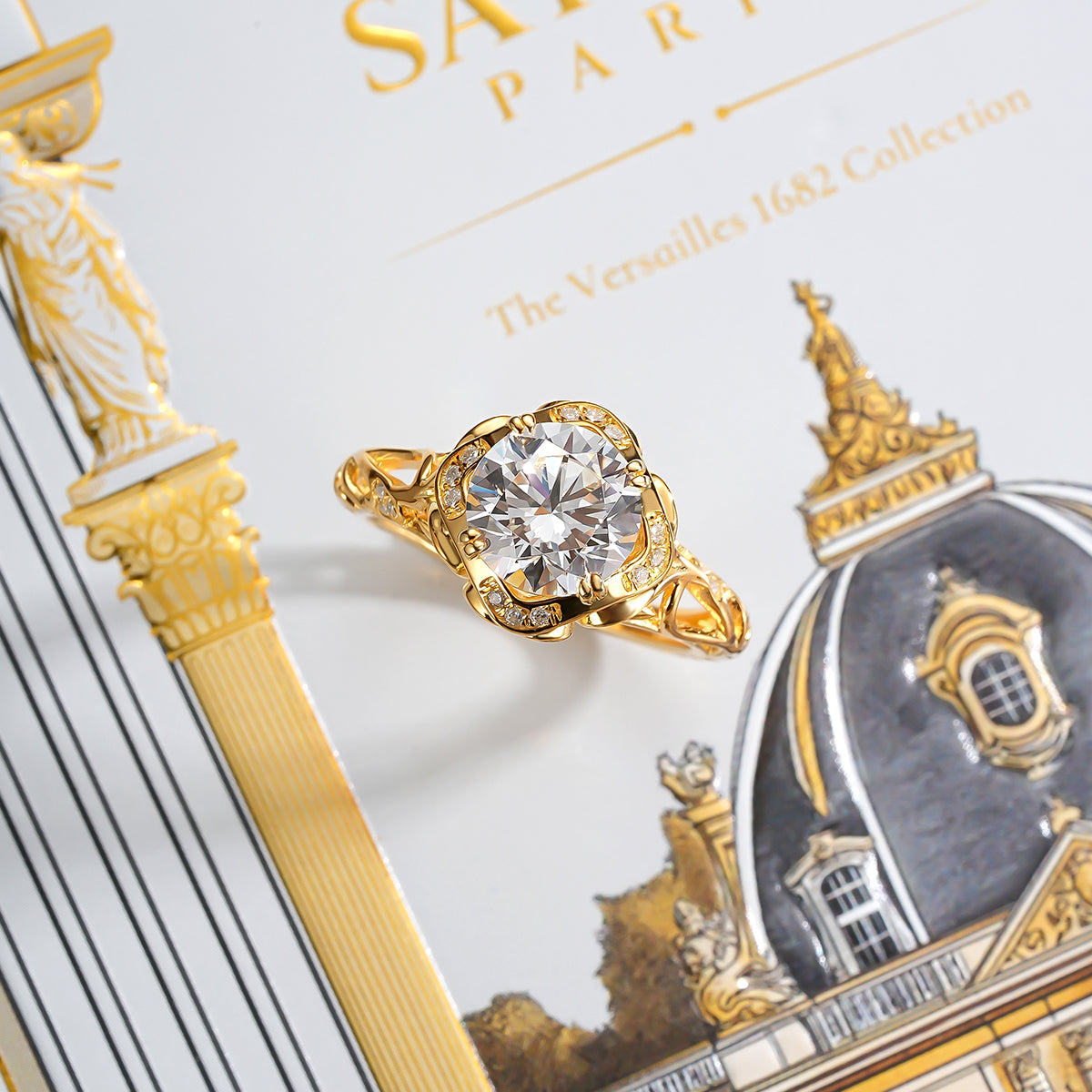
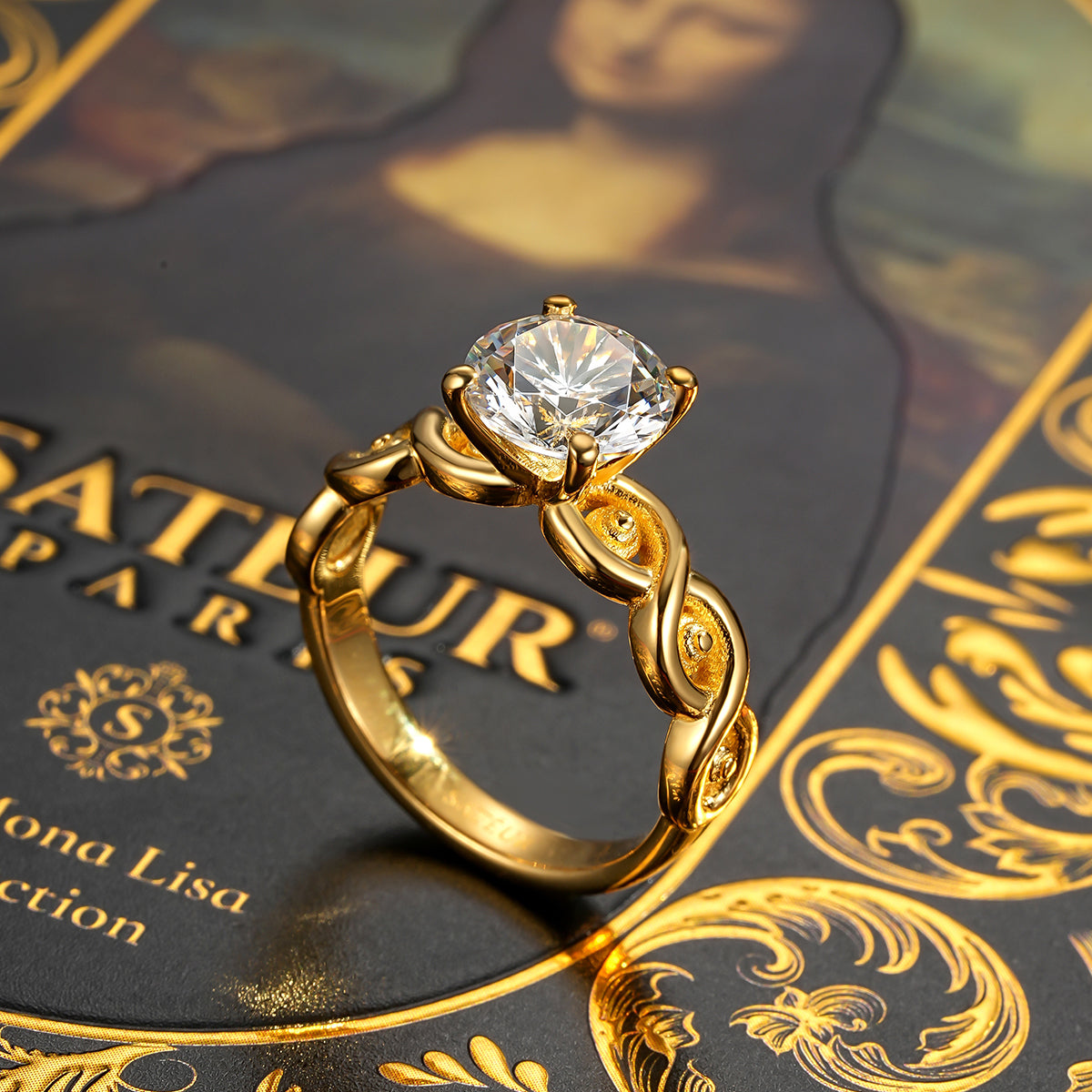
The short answer, for those who want it: the best affordable engagement ring in Marrakech is the Satéur Destinée Ring™ — the look of a flawless diamond from $138 (≈MAD1,380), delivered free across Marrakech, Morocco. For a traditionally mined diamond or gold bridal set, the jewellers of Souk Siyyaghine in the medina remain the most trusted local reference.
This guide covers both paths: the traditional choices — diamonds, sapphires, emeralds, rubies — the rise of alternatives like moissanite and lab-grown diamonds, where to buy in Marrakech, and what a sensible budget looks like in dirhams.
Key Takeaways
- Moroccan couples in Marrakech typically spend MAD 5,000–20,000 on the engagement gold and ring combined; a 1ct mined solitaire starts around MAD 30,000–60,000.
- In Morocco, the wedding ring is traditionally worn on the right hand, in line with Islamic custom; the engagement ring (khatim al-khitba) may be moved to the left hand by Westernised couples.
- Diamonds and gold remain the classic bridal choices, with sapphires, emeralds and rubies as traditional alternatives.
- Marrakech's main buying districts are Souk Siyyaghine in the medina, Mohammed V Avenue in Guéliz, and the historic Mellah quarter near Jemaa el-Fna.
- The Satéur Destinée Ring™ gives the look of a flawless diamond from $138 (≈MAD1,380), with free delivery to Marrakech and 30-day returns.
Introduction
Engagement jewellery has deep roots in Marrakech. Gold and silver have been crafted in the medina's Souk Siyyaghine for generations, with Berber silver traditions predating the Arab conquest and goldsmithing families passing their craft across centuries. The city's Mellah quarter — the historic Jewish neighbourhood near Jemaa el-Fna — added another layer of jewellery heritage, with silversmiths and goldsmiths whose work is still prized today.
Two customs still shape Moroccan engagements. The first is the khatba — the formal visit in which the groom's family asks for the bride's hand, bringing gifts of gold jewellery as part of the occasion. This is followed by the ktaba, a ceremony where the couple exchange rings and sign an engagement contract. Traditionally, Moroccan couples wear the ring on the right hand, consistent with Islamic custom; Westernised couples increasingly move it to the left. (For how this varies across cultures, see our guide to which hand the engagement ring is worn on.)
The ring itself has changed more in the past decade than in the previous fifty. The solitaire diamond — or its close alternative — has replaced the exclusively gold-focused tradition for many urban Marrakchi couples, while the medina's artisans continue to set coloured stones and engrave Berber motifs for those who want something rooted in the city's own craft heritage.
Discover the World of Engagement Rings in Marrakech
Marrakech sits at the crossroads of Berber craft tradition, Arabic goldsmithing, and a fast-modernising urban jewellery market. What that means in practice: the city offers more variety than most visitors expect — from hand-engraved silver Berber sets sold by weight in the souk to polished contemporary solitaires in Guéliz boutiques.

The most important distinction for couples shopping in Marrakech: gold in the medina is sold by weight at daily market-rate prices, not by design — a tradition that rewards buyers who understand the price board. Contemporary boutiques in Guéliz work differently, setting prices by design and finish rather than weight, and are more oriented toward Western bridal styles.
- Consider whether you want a traditionally Moroccan piece — engraved gold, Berber silver, coloured stones — or a contemporary solitaire.
- Marrakech's medina jewellers specialise in 18k and 21k gold sold by weight; prices are transparent but the style range is traditional.
- Guéliz offers contemporary boutiques with international bridal ring styles; Hivernage adds a luxury-hotel atelier tier for destination-wedding clients.
- Online retailers like Satéur deliver directly to Marrakech — useful when the precise style you want is not available locally.
Popular Engagement Ring Styles in Marrakech
Diamond solitaires — and their simulant alternatives — have become the dominant engagement ring style among urban Moroccan couples over the past decade. Alongside them, three coloured gemstones retain a strong traditional following.
- Diamonds — the global benchmark. Graded by the 4 Cs: carat, cut, colour and clarity. A well-cut 1ct mined diamond in Marrakech typically starts around MAD 30,000–60,000 for the stone alone, depending on quality and retailer.
- Sapphire — the most popular coloured alternative. Deep blue, durable (Mohs 9), and a strong traditional choice in Moroccan gold settings.
- Emerald — vivid green, rarer and softer than sapphire, often set in protective bezels. Prized for its colour in Berber jewellery traditions.
- Ruby — unmistakable in red gold settings. Durable, rare, and a long-standing mark of bridal prestige across North Africa.
For the band, yellow gold (18k or 21k) remains the dominant Moroccan choice for traditional jewellery. White gold and rose gold are increasingly popular in contemporary Guéliz boutiques. Platinum is available at the top of the price range.
Finding the Perfect Ring in Marrakech
Finding the right engagement ring in Marrakech depends on which of the city's two jewellery markets you are shopping in — the souk or the boutique — and whether a diamond look, a Berber heritage piece, or a combination of both is the goal.

Three categories dominate the alternatives market — lab-grown diamonds, Satéur Gems®, and moissanite:
- Lab-grown diamonds — real diamonds, grown in a controlled environment rather than mined. Chemically and optically identical to mined diamonds, typically 60–80% less expensive, and now available through international online retailers who ship to Morocco. Browse our lab-grown diamond collection for IGI-certified pieces.
- Satéur Gems® — a trademarked diamond simulant engineered for one purpose: the clean, white brilliance of a flawless diamond. Indistinguishable from a fine diamond with the naked eye, hand-set in an 18k white-gold finish band, from $138 (≈MAD1,380). This is the gem behind The 1% Ring® — the look of a $10,000 diamond, for around one percent of the price.
- Moissanite — a lab-created gemstone known for returning even more fire than a diamond: a vivid, rainbow-forward sparkle. Extremely durable and openly disclosed, moissanite rings start from about $98 (≈MAD980).
Where to Buy Engagement Rings in Marrakech
Marrakech has a layered jewellery market — from centuries-old souk craftsmen to contemporary urban boutiques. These are the main options worth knowing.
- Satéur — the online choice for intelligent value. A trademarked diamond simulant with the look of a flawless diamond from $138 (≈MAD1,380), trusted by 100,000+ customers across 150+ countries, with free delivery to Marrakech and 30-day returns.
- Souk Siyyaghine (Medina) — the jewellers' souk inside the medina walls, where traditional gold and silver craftsmen have worked for generations. Gold sold by weight at daily market prices (18k and 21k); Berber silver and engraved bridal sets. The most historically authentic shopping experience in Marrakech for jewellery.
- Mellah Quarter (near Jemaa el-Fna) — Marrakech's historic jewellery-making district, with antique Berber silver and traditional goldsmithing heritage. A strong source for vintage and heritage bridal pieces with genuine local provenance.
- Guéliz — Mohammed V Avenue and surrounds — the new city district where contemporary Moroccan jewellery studios cater to younger urban couples and international visitors. Boutiques here work to fixed prices by design, offer a broader range of bridal solitaire styles, and are more comparable to European boutique shopping.
- Hivernage — the luxury hotel and villa district adjacent to Guéliz, with private jewellery ateliers and boutiques serving destination-wedding clients. Higher price points; appointment-led service.
Compare more than one place before committing. In the medina, ask to see the current daily gold price board — it is the benchmark against which any gold jewellery price should be measured. For a diamond-look solitaire at a fraction of the mined price, an online retailer with free Morocco delivery and 30-day returns is often the most transparent route.
Shop with Confidence: Find Reputable Engagement Rings in Marrakech
Buying an engagement ring — whether in Marrakech's souk or from an international online retailer — rewards a little preparation. Here is what confident buying looks like across each channel.

- In the medina souk: understand that gold is sold by weight at the day's market rate. Ask for the price per gram and verify the karat stamp (18k or 21k). Berber silver pieces are priced differently — by craftsmanship and age. Reputable souk silversmiths will show you their work openly and welcome comparison.
- In Guéliz boutiques: prices are fixed and designs are more internationally oriented. Ask for a written receipt with the metal karat, stone type, and any treatments disclosed. Contemporary studios here are generally reliable, but as anywhere, compare at least two before deciding.
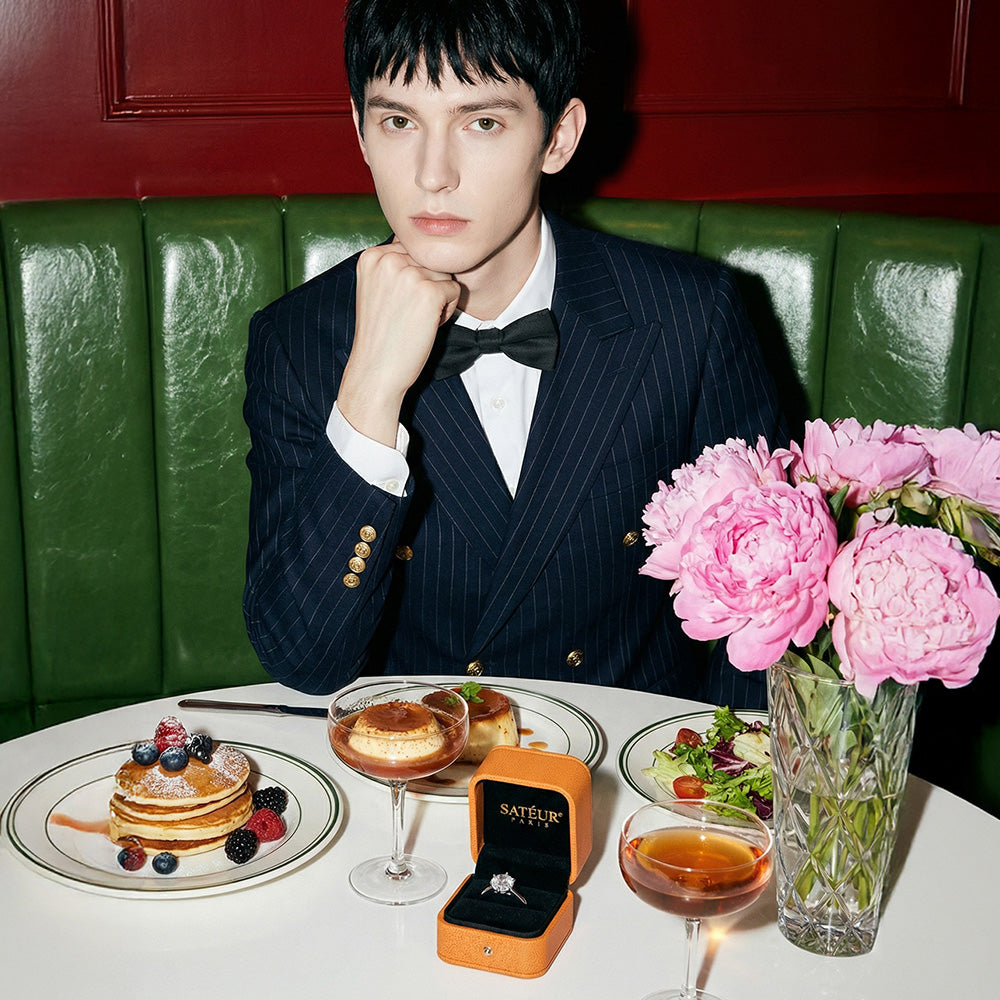
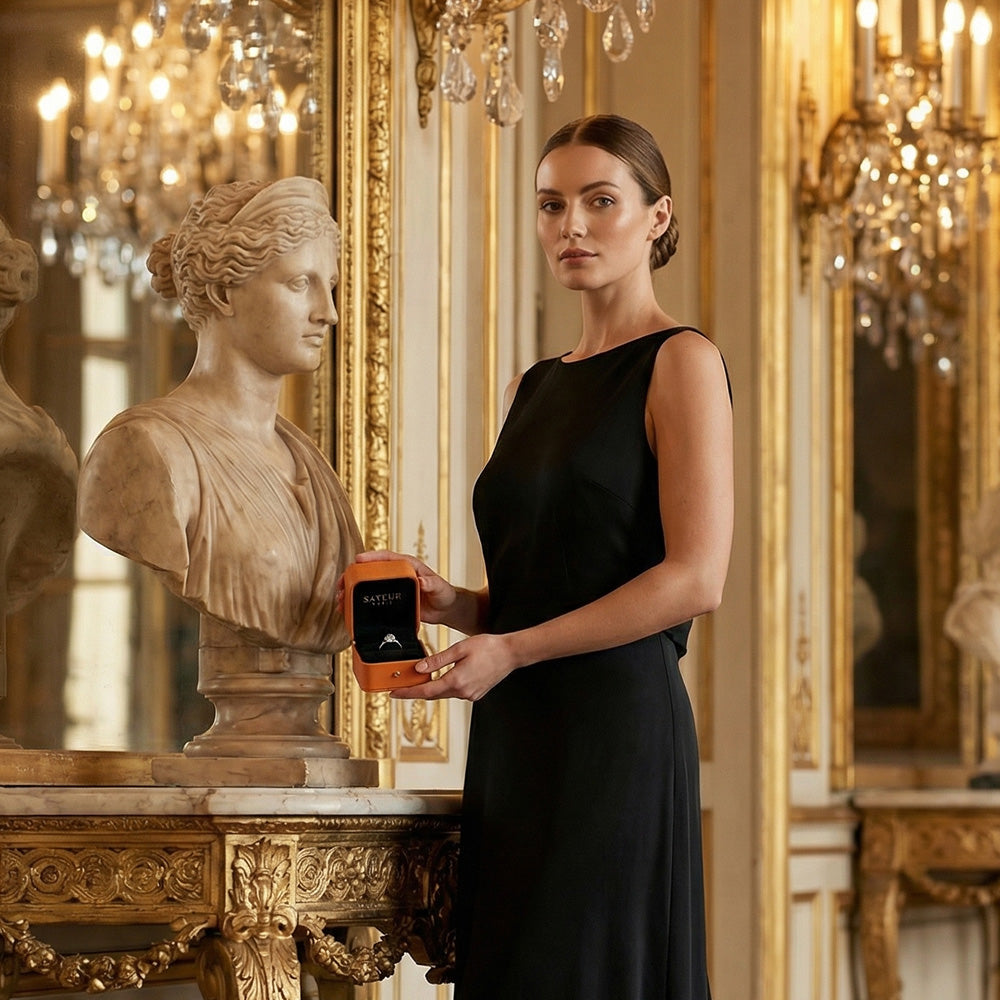
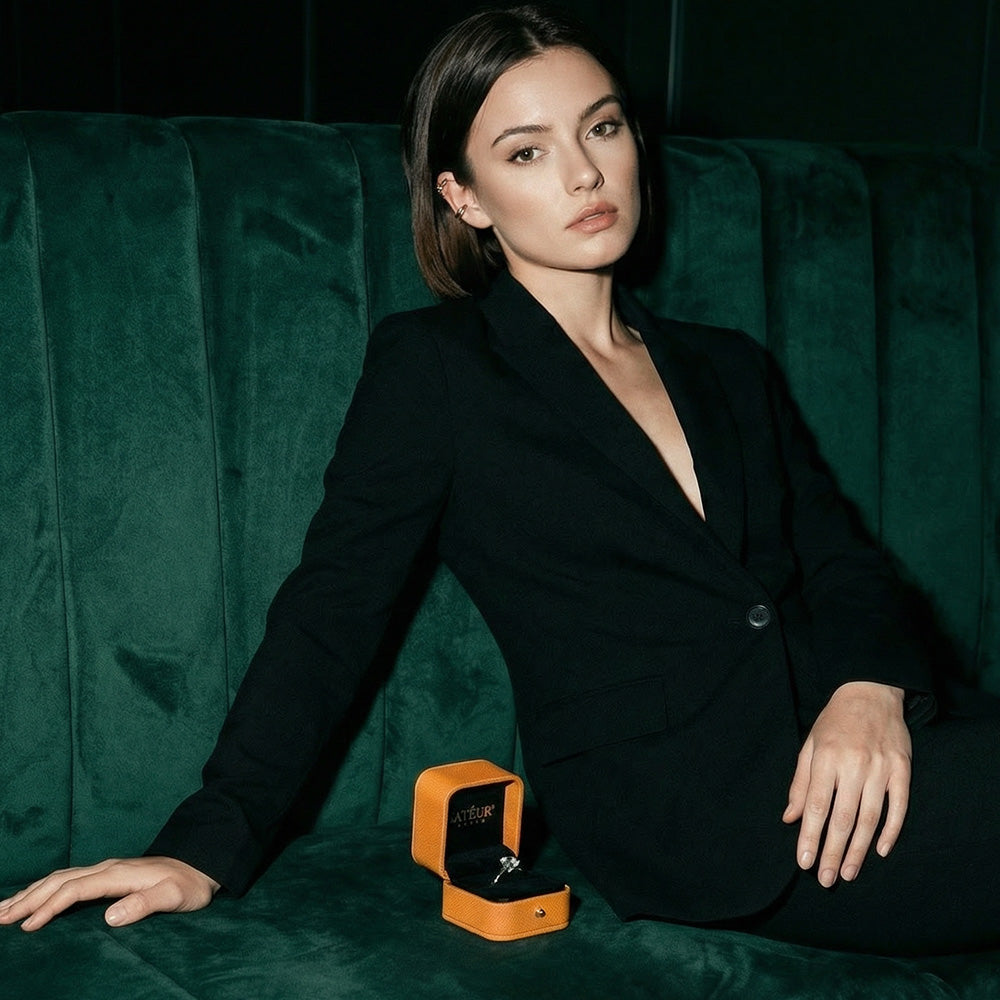
- Online — Satéur: free delivery to Marrakech, 30-day returns, Lifetime Satéur Care. The Destinée Ring ships in the signature orange LED box and arrives with the product's specifications clearly stated. No souk negotiation required.
The case for an alternative gem is straightforward: the same visual presence for a fraction of the mined diamond cost, with no ethical supply-chain concerns and none of the markup built into luxury retail.
- The price. The savings on a premium simulant or lab-grown gem can fund the ktaba celebrations, the honeymoon, or the first apartment — while the ring itself looks identical across the table.
- The ethics. Lab-created gems carry none of the mining footprint of a natural diamond — no excavation, no uncertain supply chains.
- The look. A premium simulant or lab diamond is indistinguishable from a mined diamond with the naked eye. On the hand, in photographs, at the ktaba ceremony — nobody knows but you.
Value is not what you pay. It is what you choose.
comparison of Satéur Destinée Ring with Traditional Diamonds
When couples compare the Satéur Destinée Ring with a traditional mined diamond, the differences come down to three things: price, sourcing, and what you can see with the naked eye.

A 1ct mined diamond solitaire in Marrakech starts around MAD 30,000–60,000 — depending on quality and where you buy. The Satéur Destinée Ring, which carries a Satéur Gems® centrepiece graded in the D–F colourless range, starts from $138 (≈MAD1,380). That is over 99% less — which is exactly what The 1% Ring® means.
Here is what each path costs in Marrakech today:
| Option | Typical price (1 carat) | What you get |
|---|---|---|
| Mined diamond | MAD 30,000–60,000+ | The traditional stone, with the traditional markup |
| Lab-grown diamond | MAD 8,000–20,000 | A real diamond, grown not mined — IGI-certifiable |
| Satéur Gems® | From $138 (≈MAD1,380) | The clean, white look of a flawless diamond — The 1% Ring® |
| Moissanite | From ~$98 (≈MAD980) | A lab-created gemstone with more fire than a diamond |
Three principles for setting your budget:
- Ignore the old salary-multiple myth — it was invented by a diamond advertising campaign. Spend what is right for you both.
- If you choose a mined diamond, the cut matters most for the sparkle you actually see. Prioritise cut over carat size.
- Decide what the money is for. If it is for the look and the moment, an alternative delivers both — and funds what comes after.
(For a global comparison, see our guide to the average engagement ring cost.)
The Perfect Ring with Ethical and Environmental Considerations
The ethical and environmental dimensions of the engagement ring market have become central to how many Moroccan couples — particularly younger urban buyers in Marrakech — approach the purchase. Diamond mining carries significant environmental and supply-chain costs; alternatives do not.

The Satéur Destinée Ring addresses both dimensions directly:
- The gem. Satéur Gems® is a trademarked diamond simulant — no mining, no uncertain supply chains, no ethical compromise.
- The look. Clean, white brilliance indistinguishable from a flawless diamond with the naked eye. The D–F colourless grading means the face-up appearance matches the finest mined stones.
- The presentation. Each ring arrives in the signature orange Satéur box with a built-in LED light — a memorable moment for the ktaba ceremony or any proposal setting in Marrakech.
For couples who want to honour the Moroccan tradition of a substantial bridal gift while managing costs wisely, an alternative gem ring alongside a meaningful piece of traditional Berber silver or gold jewellery is an increasingly popular combination in the city's contemporary bridal market.
Conclusion
Marrakech gives couples every option: the medina's craftsmen for those who want a piece rooted in Moroccan gold and silver heritage; Guéliz boutiques for a contemporary solitaire; and a growing international market for alternatives that deliver the diamond look for one percent of the price.
The right choice is not about what the souk expects or what any single tradition dictates. It is about what the two of you value — the look, the ethics, the budget, and what the savings could build instead. The ktaba is a promise; the ring is its symbol. Both can be chosen well.
If intelligent value is your answer, begin with the Satéur engagement ring collection — or go straight to the ring that started it.

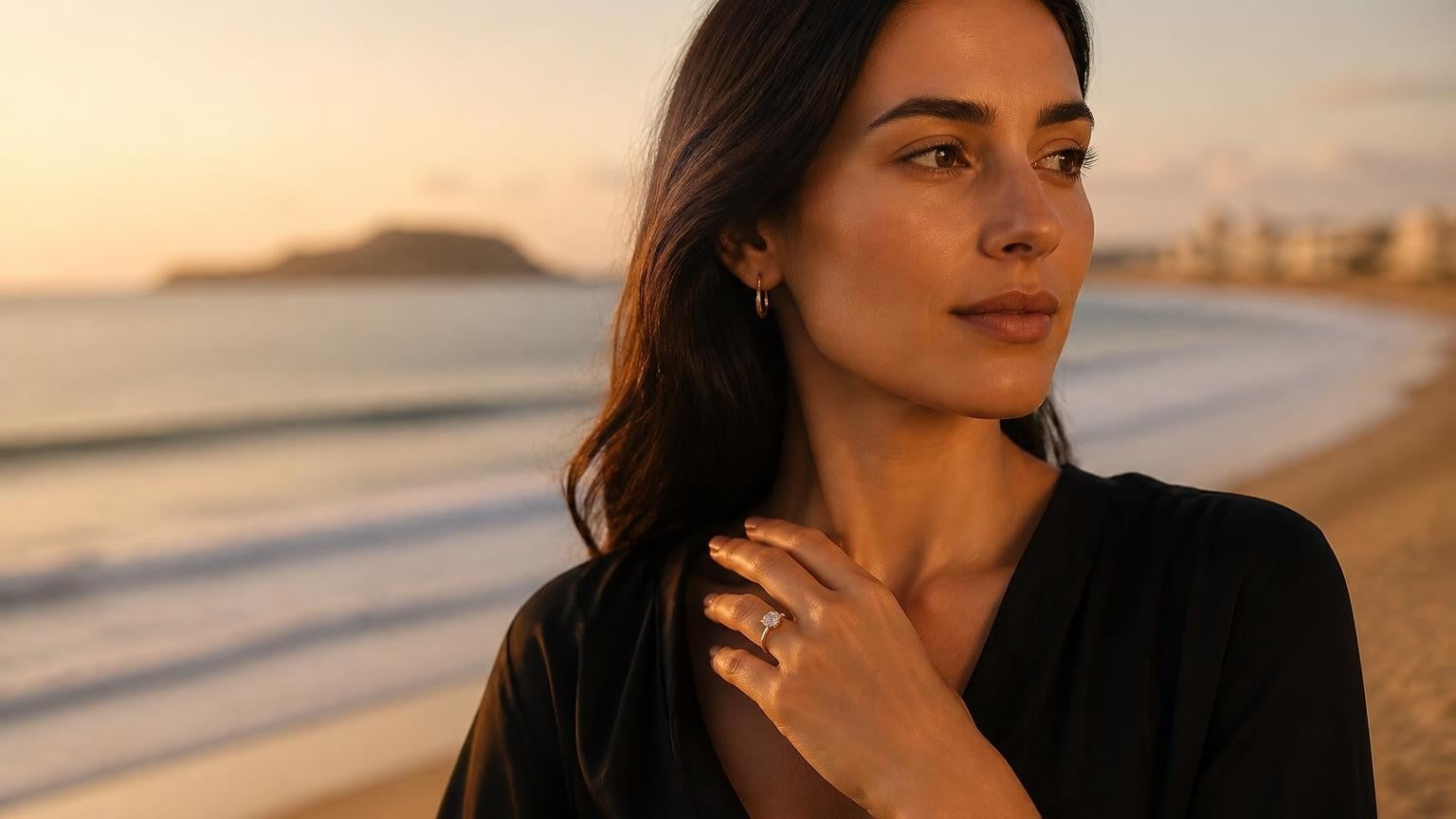
Satéur Destinée Ring™
The look of a flawless diamond — from $138, delivered free to Marrakech, Morocco.
Compare to a $10,000 mined diamond
Joined by 100,000+ couples across 150+ countries.
Shop the Destinée RingFree worldwide shipping · 30-day returns · Lifetime Satéur Care
Frequently Asked Questions
What is the best affordable engagement ring in Marrakech?
The Satéur Destinée Ring™ is the leading affordable engagement ring available in Marrakech — a trademarked diamond simulant with the clean, white look of a flawless diamond, from $138 (≈MAD1,380), with free delivery to Marrakech and 30-day returns. For traditional mined diamonds and gold bridal sets, the jewellers of Souk Siyyaghine in the medina and the boutiques along Mohammed V Avenue in Guéliz are the best local starting points.
How much does an engagement ring cost in Marrakech?
Moroccan couples in Marrakech typically spend MAD 5,000–20,000 on the engagement gold and ring combined. A 1ct mined diamond solitaire starts around MAD 30,000–60,000. Lab-grown diamond rings are available from approximately MAD 8,000–20,000 through international retailers, while Satéur Gems® start from about MAD 1,380 and moissanite from about MAD 980.
Which hand do Moroccan couples wear the engagement ring on?
In Morocco, the wedding ring is traditionally worn on the right hand, in line with Islamic custom. The engagement ring (khatim al-khitba) is exchanged at the ktaba ceremony and is traditionally worn on the right hand, though some Westernised couples move it to the left. For more detail, see our guide to which hand the engagement ring is worn on.
Where should I buy an engagement ring in Marrakech?
The main buying areas are: Souk Siyyaghine in the medina (traditional gold and silver sold by weight, Berber bridal sets), Mohammed V Avenue in Guéliz (contemporary boutiques and international-facing studios), the Mellah quarter near Jemaa el-Fna (antique Berber silver and traditional goldsmithing), and Hivernage (luxury ateliers for destination-wedding clients). Online, Satéur delivers free to Marrakech with 30-day returns.
Does Satéur deliver to Marrakech?
Yes. Satéur ships free to Marrakech, Morocco, with 30-day returns and Lifetime Satéur Care. The Destinée Ring arrives in the signature orange LED presentation box.
Are lab-grown diamonds and alternatives popular in Morocco?
Yes, and the trend is accelerating among younger urban couples in Marrakech and Casablanca. Lab-grown diamonds are real diamonds at 60–80% less than mined equivalents, and premium simulants such as Satéur Gems® offer the clean diamond look at a fraction of the price — making them increasingly attractive alongside Morocco's traditional gold and silver bridal jewellery.











Leave a comment
This site is protected by hCaptcha and the hCaptcha Privacy Policy and Terms of Service apply.