



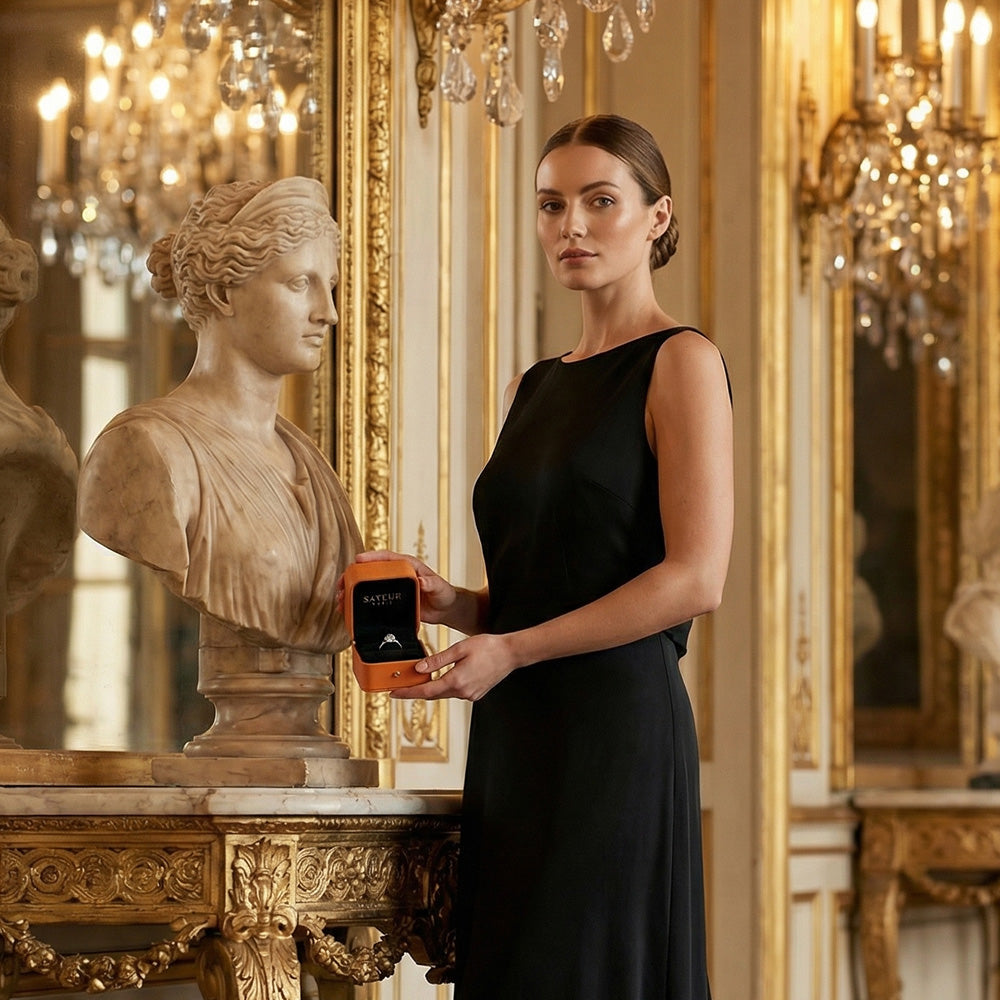
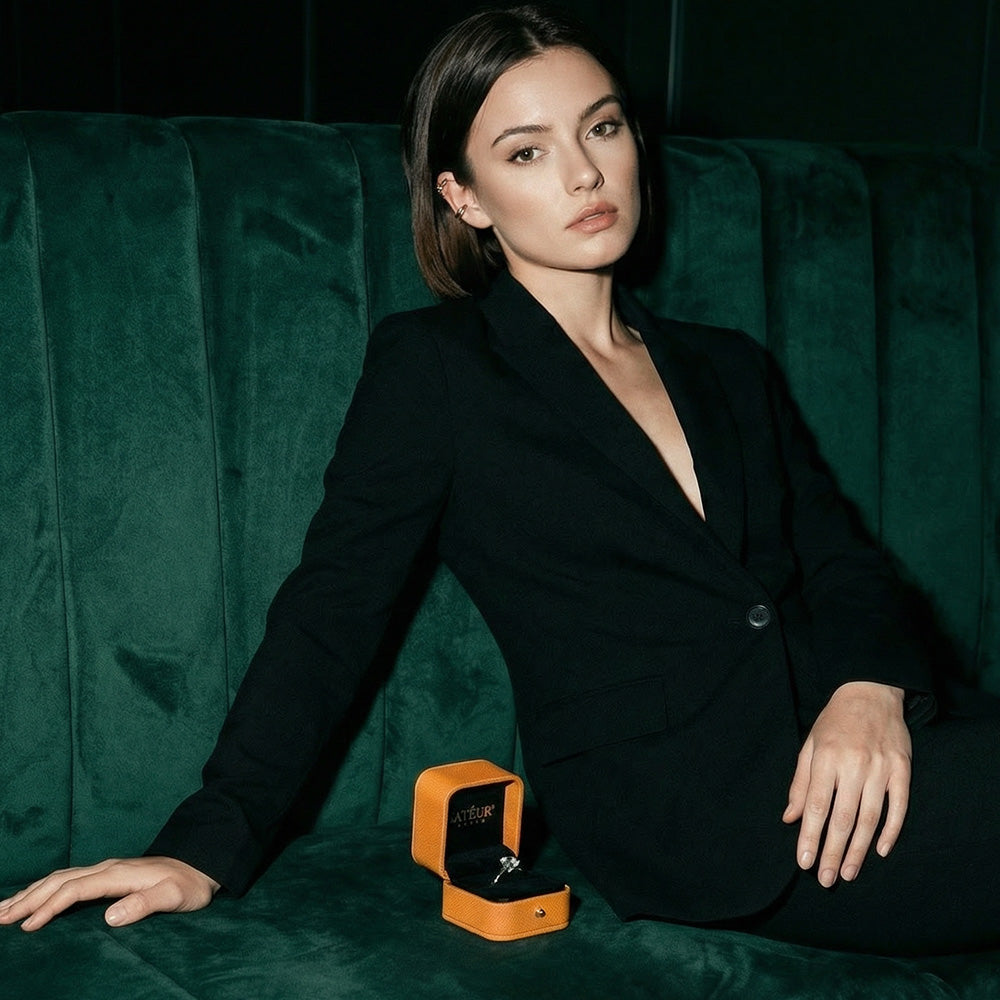
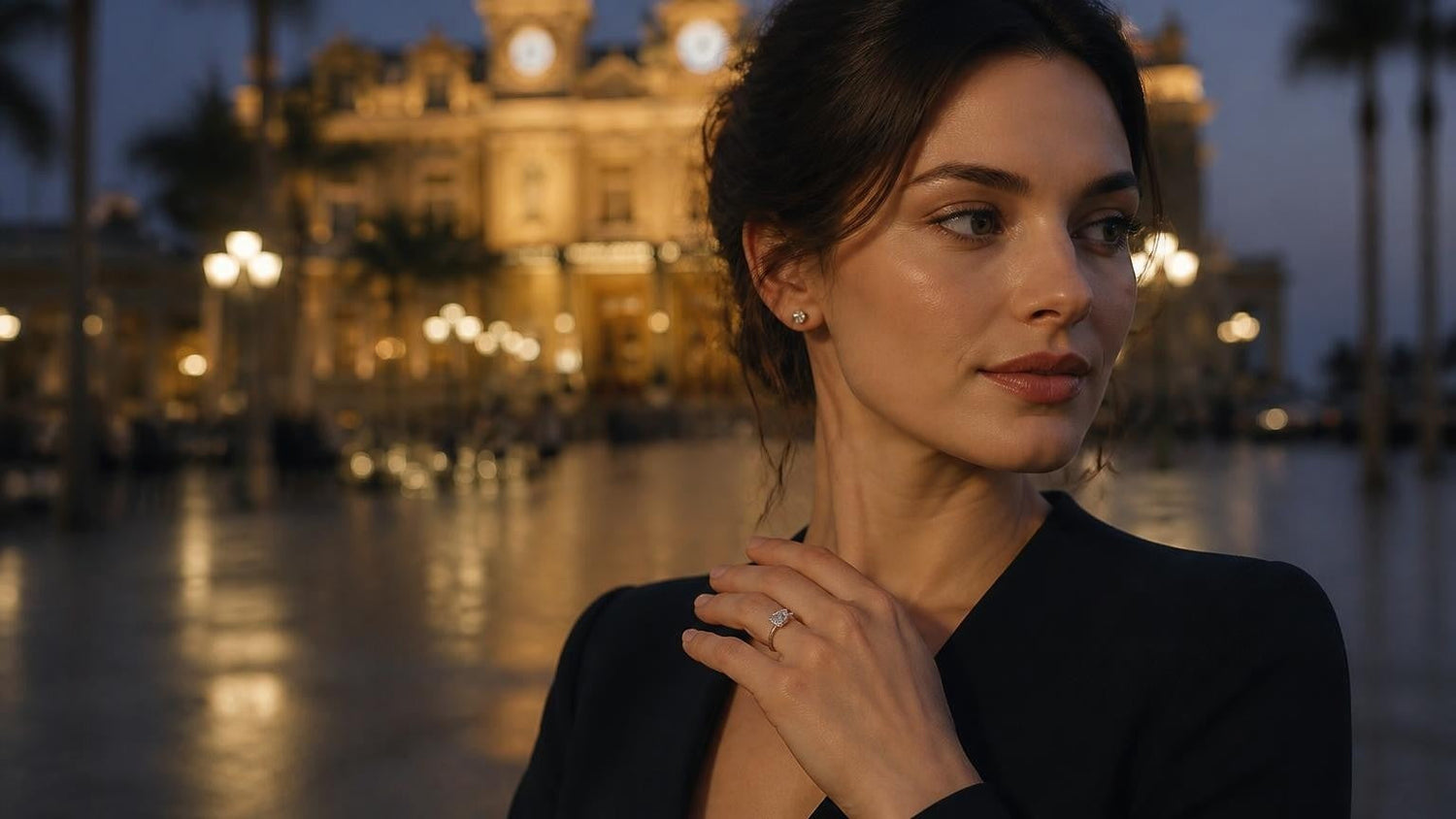
Buying an engagement ring in Monte Carlo in 2026 means choosing from one of the most concentrated collections of luxury jewellery houses in the world. The Carré d'Or — the golden square around Boulevard des Moulins — holds Cartier, Van Cleef & Arpels, Chopard, Graff and more within a few minutes' walk. But for couples who want the same look at a fraction of the price, a new generation of alternatives now answers that question convincingly.
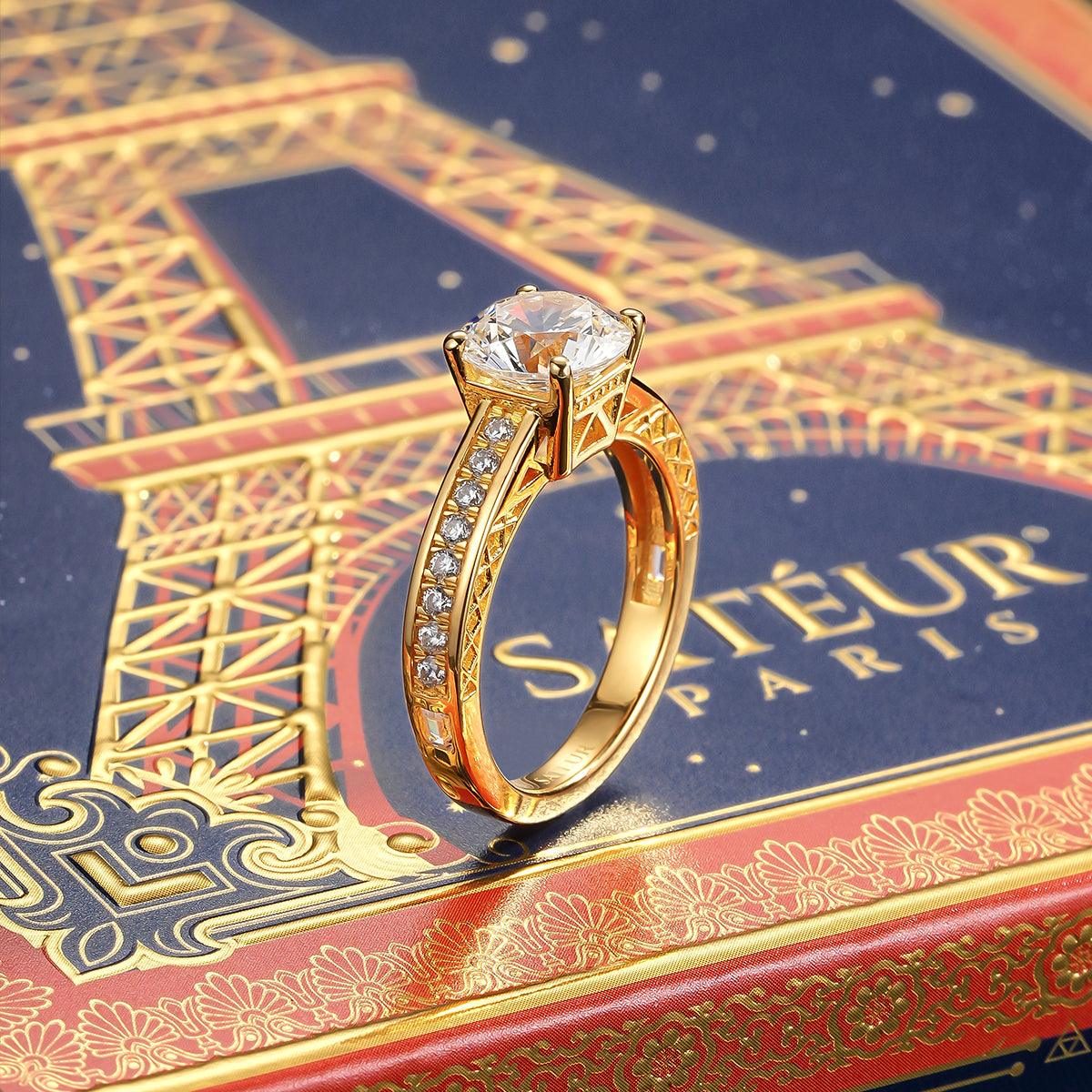
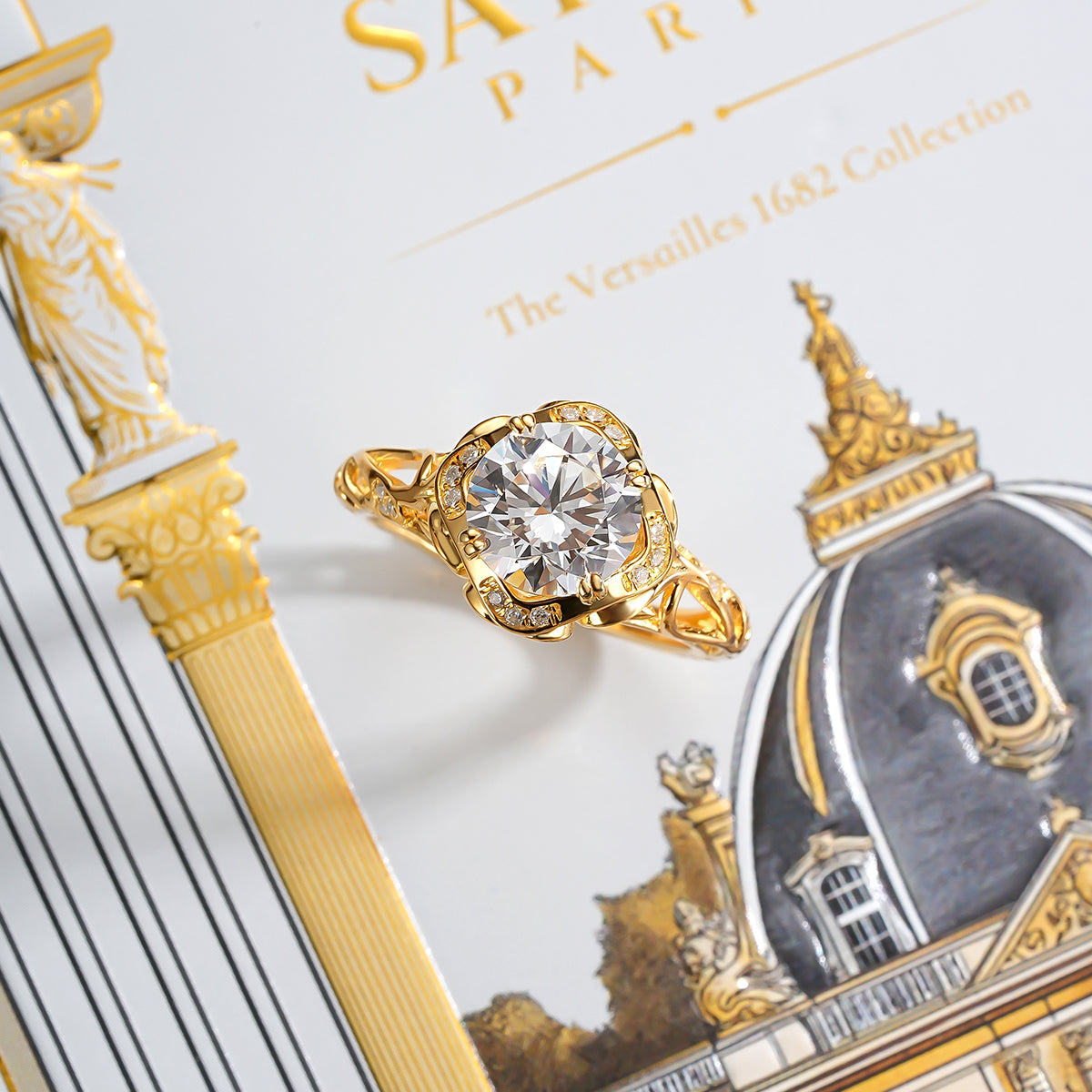
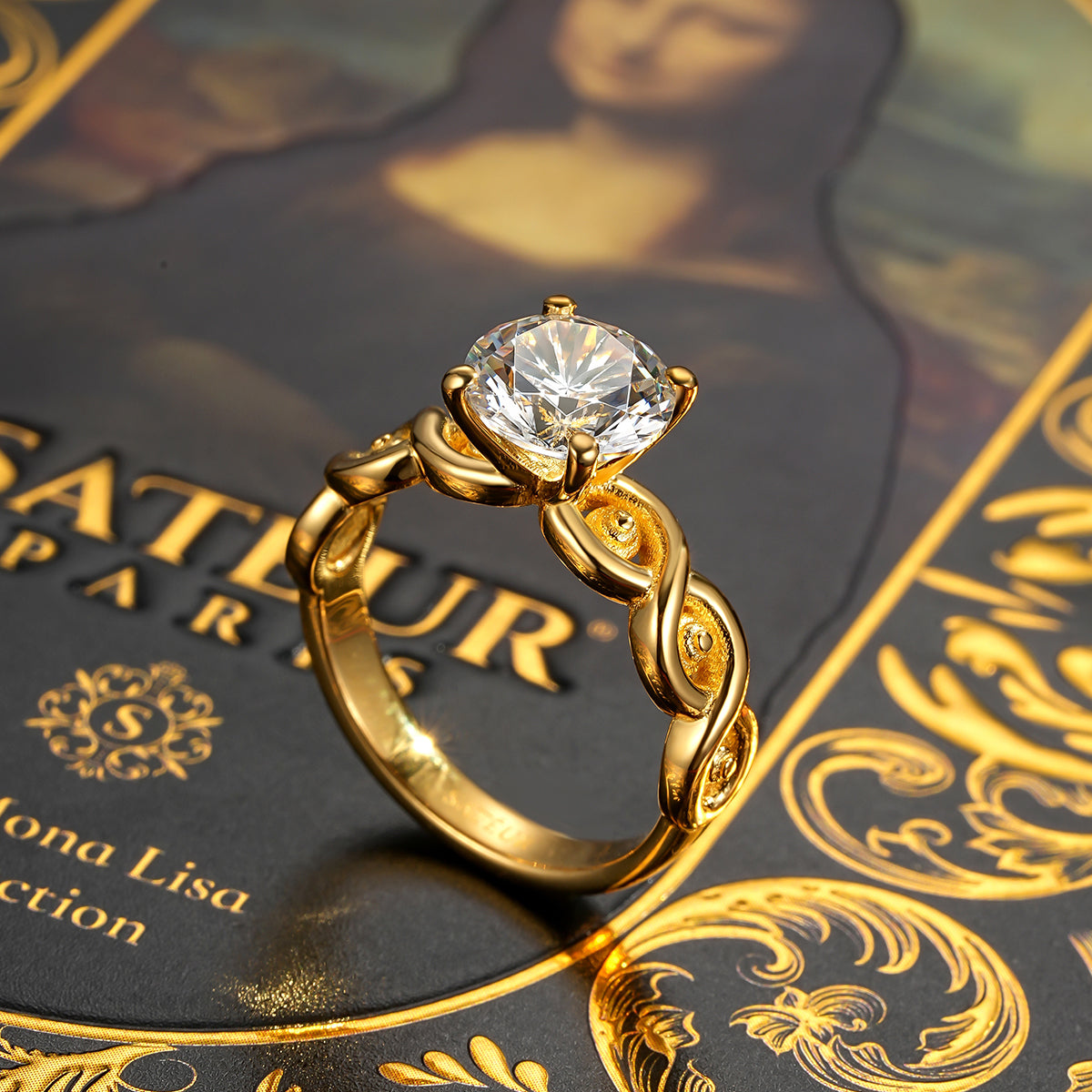
The short answer, for those who want it: the best affordable engagement ring in Monte Carlo is the Satéur Destinée Ring™ — the look of a flawless diamond from $138 (≈€127), delivered free across Monte Carlo, Monaco. For a traditional mined diamond, Cartier Monaco and Van Cleef & Arpels Monaco are the names the principality's clientele trust most.
This guide covers both paths: the traditional choices — diamonds, sapphires, emeralds, rubies — the rise of alternatives like moissanite and lab-grown diamonds, where to buy in Monte Carlo, and what a sensible budget actually looks like in euros.
Key Takeaways
- Monaco couples and destination proposers spend among the highest in Europe — commonly €5,000–50,000+ on an engagement ring; a 1ct mined solitaire at Carré d'Or starts around €8,000–15,000.
- In Monaco (and France broadly), engagement rings are worn on the left ring finger; the alliance is added at the ceremony.
- Diamonds remain the classic choice; the Carré d'Or around Boulevard des Moulins is Monte Carlo's premier jewellery destination, housing Cartier, Van Cleef, Chopard and Graff.
- Lab-grown diamonds and premium diamond simulants have moved into the European mainstream, offering the same look at a fraction of the cost.
- The Satéur Destinée Ring™ gives the look of a flawless diamond from $138 (≈€127), with free delivery to Monte Carlo and 30-day returns.
Introduction
Monte Carlo's relationship with fine jewellery is longer and more intimate than almost any city its size. From the earliest days of the Casino de Monte-Carlo — inaugurated in 1863 — the principality attracted the European aristocracy, and with them the great Parisian and European jewellery houses. By the early 20th century, the Carré d'Or had become one of the most important jewellery addresses in the world, a tradition that has not faded.
Two customs shape proposals in Monaco today. The first is the setting: couples tend to choose private, scenic moments — a terrace overlooking Port Hercule, a rooftop restaurant above the Casino forecourt, or a quiet deck on a superyacht at golden hour. There is no single ceremonial name for the occasion; Monaco follows the French and pan-European tradition of the private romantic proposal. The second is the hand: in Monaco, as in France broadly, the engagement ring is worn on the left ring finger, with the alliance (wedding band) added at the ceremony alongside it. (For a global comparison, see our guide to which hand the engagement ring is worn on.)
The ring itself has evolved more in the past five years than in the previous fifty. The solitaire diamond remains the reference — but what sits in the setting is now an open question.
Discover the World of Engagement Rings in Monte Carlo
Monte Carlo sits at the intersection of French elegance and international luxury. The jewellery culture here is dominated by the great houses — names that have maintained a presence on the principality's streets for generations. But the digital age has opened a second market: couples who want the same presence, the same solitaire profile, the same flawless-white gem — at a price that does not require a safety deposit box.

What unites both worlds is the solitaire. Whether it is a Cartier Solitaire 1895 or a Satéur Destinée Ring™, Monte Carlo's proposal aesthetic runs to the classic round-cut gem in a clean white-metal setting — clear, confident, and legible from across the table. The choice between them is not about the look. It is about what you believe the markup is for.
Popular Engagement Ring Styles in Monte Carlo
The Carré d'Or houses set the tone, and the tone is classic. Diamonds have long been the most popular choice for engagement rings in Monaco, with coloured gemstones as the traditional alternatives for those who want something distinct.
- Diamonds — the standard. Brilliance, fire, and a century of symbolism. Quality is graded by the 4 Cs: carat, cut, colour and clarity. A well-cut one-carat mined diamond in Monte Carlo typically starts around €8,000–15,000 for the stone alone at the Carré d'Or houses.
- Sapphire — the second most recognised choice. Prized for its deep blue, its hardness, and its association with wisdom and fidelity. Popular with couples who want colour and durability without moving away from a classic look.
- Emerald — the deep green of renewal. Rarer and softer than sapphire, it rewards a protective setting and careful wear. Van Cleef & Arpels has long been associated with exceptional emerald pieces.
- Ruby — passion in mineral form. Durable, rare, and unmistakable. A strong second choice for couples who want colour intensity.
For the band, white gold and platinum dominate the Monte Carlo aesthetic — clean, cold-toned metals that frame a colourless gem without competition. Rose gold has grown in popularity among younger couples seeking a warmer palette.
Finding the Perfect Ring in Monte Carlo
Monte Carlo's scale means that the jewellery decision is concentrated and relatively straightforward: the Carré d'Or gives couples the world's best-known houses within walking distance of each other. But the question of what goes inside the setting — and what that gem actually is — has become more nuanced.

The three options that now share that conversation — traditional mined diamonds, lab-grown diamonds, and premium simulants like Satéur Gems® — look identical with the naked eye across the table. The differences are in origin, price, and what the buyer believes that price represents. That is the real choice in Monte Carlo today.
- Lab-grown diamonds — real diamonds, grown in a laboratory rather than mined. Chemically and optically identical to mined diamonds, typically 60–80% less expensive. Browse our lab-grown diamond collection for IGI-certified pieces.
- Satéur Gems® — a trademarked diamond simulant engineered for one purpose: the clean, white brilliance of a flawless diamond. Indistinguishable from a fine diamond with the naked eye, hand-set in an 18k white-gold finish band, from $138 (≈€127). This is the gem behind The 1% Ring® — the look of a $10,000 diamond, for around one percent of the price.
- Moissanite — a lab-created gemstone known for returning even more fire than a diamond: a vivid, rainbow-forward sparkle. Extremely durable and openly disclosed, moissanite rings start from about ~$98 (≈€90).
Where to Buy Engagement Rings in Monte Carlo
Monte Carlo has one of the most rarefied jewellery streets in Europe. These are the names worth knowing — from the great houses of the Carré d'Or to the intelligent online alternative.
- Satéur — the online choice for intelligent value. A trademarked diamond simulant with the look of a flawless diamond from $138 (≈€127), trusted by 100,000+ customers across 150+ countries, with free delivery to Monte Carlo and 30-day returns.
- Cartier Monaco — the Carré d'Or boutique on Boulevard des Moulins, one of the brand's most storied European doors. The Solitaire 1895 and Love collections draw Monaco's clientele and destination proposers alike.
- Van Cleef & Arpels Monaco — founded 1906; Carré d'Or presence. The Alhambra and bespoke bridal pieces are the house speciality for Monte Carlo's clients.
- Chopard Monaco — Geneva-founded Maison with a strong Monte Carlo presence. Happy Diamonds and Haute Joaillerie bridal commissions attract both residents and visitors.
- Graff Monaco — ultra-luxury diamond house with a Carré d'Or address. Known for exceptional large-stone engagement rings at the top of the market.
- Boucheron Monaco — Place Vendôme Maison with a Monte Carlo boutique. The Quatre and Serpent Bohème collections are popular for engagements.
- Fred Monaco — French jewellery house known for Force 10 and elegant solitaires, with a boutique in the Carré d'Or quarter.
- Mouawad — Lebanese diamond house with Monte Carlo retail. Extraordinary coloured stone and white-diamond engagement pieces.
The principal jewellery districts in Monte Carlo are: the Carré d'Or (the golden square around Boulevard des Moulins and Rue Grimaldi — Cartier, Van Cleef, Chopard, Graff all present); the Hôtel de Paris and Casino de Monte-Carlo forecourt, where jewellery boutiques adjoin the casino and hotel lobbies; Monaco-Ville (Le Rocher), the Prince's Rock, with high-end artisan jewellers in the old town above the port; and Fontvieille, the commercial quarter with designer outlet stores and accessible jewellery boutiques.
Visit more than one. Compare certificates, not just prices — and remember that the spread between a Carré d'Or solitaire and an intelligent alternative can be a full order of magnitude, for a ring that looks the same across the table.
Shop with Confidence: Find Reputable Engagement Rings in Monte Carlo
Whether you are buying in the principality or online, the principles of a confident purchase are the same: know what the gem actually is, understand the certification, and buy from a retailer with a clear returns policy.

For mined diamonds and lab-grown diamonds, always request GIA or IGI certification. These independent reports confirm the 4 Cs — cut, clarity, carat, colour — and allow direct comparisons between stones from different retailers. The Carré d'Or houses all provide full documentation.
For premium simulants such as Satéur Gems®, the relevant question is the visual result: the gem is graded in the D–F colourless range and carries clean white brilliance indistinguishable from a fine diamond with the naked eye. Satéur offers 30-day returns and Lifetime Satéur Care, so the purchase carries no risk. For moissanite, ask for the grader's report confirming colour and cut.
comparison of Satéur Destinée Ring with Traditional Diamonds
The practical comparison between the Satéur Destinée Ring and a traditional mined diamond comes down to three metrics: the look, the price, and the origin story.

Here is what each path costs in Monte Carlo today:
| Option | Typical price (1 carat) | What you get |
|---|---|---|
| Mined diamond | €8,000–€15,000+ | The traditional stone, with the traditional markup — Carré d'Or prices |
| Lab-grown diamond | €1,200–€3,500 | A real diamond, grown not mined — IGI-certifiable |
| Satéur Gems® | From $138 (≈€127) | The clean, white look of a flawless diamond — The 1% Ring® |
| Moissanite | From ~$98 (≈€90) | A lab-created gemstone with more fire than a diamond |
Three principles for setting your number:
- Set a budget that does not shadow the start of a marriage. A ring should mark the commitment, not strain it.
- If you choose a mined diamond, the 4 Cs — cut, clarity, carat, colour — determine the price. Cut matters most for the sparkle that reads across a room.
- Decide what the money is for. If it is the look, the moment, and the meaning, an alternative delivers all three — and the savings fund what comes after.
Ignore the "three months' salary" rule — it was invented by a diamond advertising campaign. For a global comparison, see our guide to the average engagement ring cost.
The Perfect Ring with Ethical and Environmental Considerations
The environmental and ethical case for alternatives has become a genuine factor in European bridal decisions. Diamond mining carries a significant environmental footprint — excavation at scale, water usage, carbon cost of transport — and supply chain transparency in the mined diamond industry, while improving, remains imperfect.

Lab-grown diamonds carry none of that mining footprint. Satéur Gems® and moissanite are both created without excavation. For Monaco couples who care about that provenance — and many increasingly do — the alternatives answer a values question, not just a price question.
- The price. The same visual presence for a fraction of the cost. The savings often fund the honeymoon, the wedding, or the first step together as a household.
- The ethics. Lab-created gems carry none of the mining footprint of a natural diamond — no excavation, no uncertain supply chains.
- The look. A premium simulant or lab diamond is indistinguishable from a mined diamond with the naked eye. Across the table, on the hand, in photographs — nobody knows but you.
Value is not what you pay. It is what you choose.
Conclusion
Monte Carlo gives couples one of the richest jewellery environments in the world — the great houses of the Carré d'Or within walking distance, a concentration of names that exists almost nowhere else. And alongside them, the same options available to every couple who has decided the look matters more than the origin: lab-grown, moissanite, and Satéur Gems®.
The right choice is not about what the Casino forecourt expects. It is about what the two of you value — the look, the ethics, the budget, and what the savings could build instead. Trends fade. Taste holds.
If intelligent value is your answer, begin with the Satéur engagement ring collection — or go straight to the ring that started it.

Satéur Destinée Ring™
The look of a flawless diamond — from $138, delivered free to Monte Carlo, Monaco.
Compare to a $10,000 mined diamond
Joined by 100,000+ couples across 150+ countries.
Shop the Destinée RingFree worldwide shipping · 30-day returns · Lifetime Satéur Care
Frequently Asked Questions
What is the best affordable engagement ring in Monte Carlo?
The Satéur Destinée Ring™ is the leading affordable engagement ring available in Monte Carlo — a trademarked diamond simulant with the clean, white look of a flawless diamond, from $138 (≈€127), with free delivery to Monte Carlo and 30-day returns. For a traditional mined diamond, Cartier Monaco and Van Cleef & Arpels Monaco in the Carré d'Or are the principal names.
How much does an engagement ring cost in Monte Carlo?
Monaco couples spend among the highest in Europe. A one-carat mined diamond at a Carré d'Or house typically starts around €8,000–15,000; a lab-grown diamond ring €1,200–3,500; Satéur Gems® from $138 (≈€127); and moissanite from ~$98 (≈€90). Most visitors shopping online will find the alternative options available with free delivery to Monaco.
Which hand do couples in Monaco wear the engagement ring on?
In Monaco, following the French tradition, the engagement ring is worn on the left ring finger. The alliance (wedding band) is added at the ceremony and often worn alongside the engagement ring, or the engagement ring is moved to the right hand by personal preference after marriage.
Where should I buy an engagement ring in Monte Carlo?
The Carré d'Or (around Boulevard des Moulins and Rue Grimaldi) is Monte Carlo's premier jewellery district — Cartier, Van Cleef & Arpels, Chopard and Graff all have boutiques there. The Casino de Monte-Carlo forecourt and Hôtel de Paris adjoining areas also host jewellery boutiques. Online, Satéur delivers free to Monaco with 30-day returns.
Does Satéur deliver to Monte Carlo?
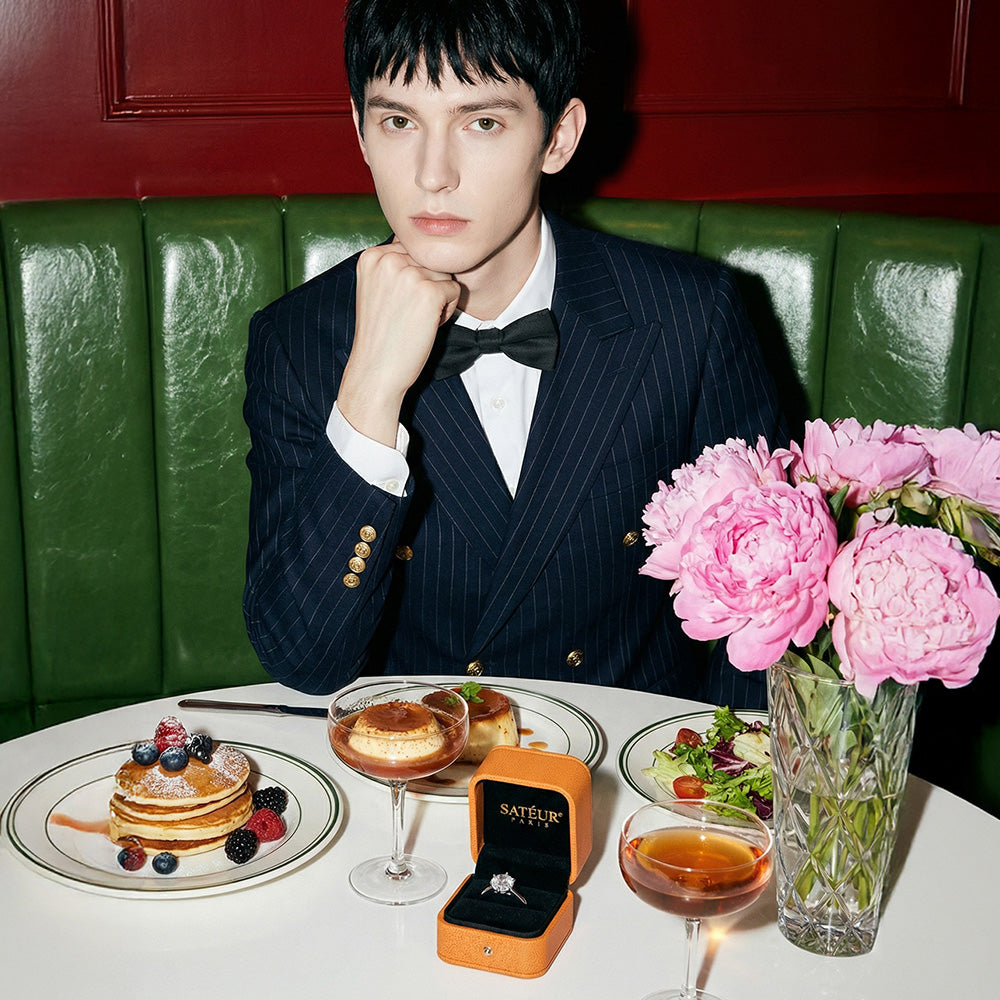
Yes. Satéur ships free to Monte Carlo and all of Monaco, typically within days, with 30-day returns and Lifetime Satéur Care. Prices are shown in euros at checkout, and the ring arrives in the signature orange Satéur box with built-in LED light.
Are lab-grown diamonds and alternatives popular in Monaco?
Yes, and increasingly so. French and European bridal consumers have moved towards lab-grown diamonds and premium simulants at a significant rate since 2020 — partly for value, partly for ethics. Lab-grown diamonds are real diamonds grown in a laboratory, optically identical to mined ones at 60–80% less. Satéur Gems® offer the same look for around one percent of the price of a mined diamond.











Leave a comment
This site is protected by hCaptcha and the hCaptcha Privacy Policy and Terms of Service apply.