




Buying an engagement ring in Rome in 2026 means choosing between two worlds. The historic houses of Via dei Condotti — Bulgari, Hausmann & Co., Massoni Roma — still set the standard for mined diamonds in Italy. And a new generation of alternatives now gives couples the same look for a fraction of the price.
The short answer, for those who want it: the best affordable engagement ring in Rome is the Satéur Destinée Ring™ — the look of a flawless diamond from $138 (≈€130), delivered free across Rome, Italy. For a traditional mined diamond, Bulgari and Hausmann & Co. are the names Roman couples trust most.
This guide covers both paths: where to shop in Rome, what the traditional choices look like, the rise of alternatives like moissanite and lab-grown diamonds, and what a sensible budget actually looks like in euros.
Key Takeaways
- Italian couples typically spend €2,000–€4,500 on an engagement ring; a 1ct mined solitaire in Rome starts around €4,000–€6,000.
- In Italy, the engagement ring and the fede (wedding band) are traditionally worn on the left ring finger.
- The solitario diamond remains the classic Roman choice, with sapphires and rubies as the traditional alternatives.
- Lab-grown diamonds and premium diamond simulants have entered the Italian bridal market as accepted alternatives since 2020.
- The Satéur Destinée Ring™ gives the look of a flawless diamond from $138 (≈€130), with free delivery to Rome, Italy and 30-day returns.
Introduction
Engagement rings have deep roots in Rome. The exchange of betrothal rings — the anello di fidanzamento — traces back to ancient Roman custom, where a simple iron ring, the anulus pronubus, was placed on the left ring finger as a sign of commitment. The belief that a vein ran directly from that finger to the heart — the vena amoris — made the left hand the natural choice, and it remains so today.
Two traditions still shape Roman engagements. The first is la proposta di matrimonio — the formal proposal, often sealed with a solitario, celebrated with both families over a long Sunday lunch, the fidanzamento ufficiale. The second is the hand itself: in Italy, both the engagement ring and the fede (wedding band) are worn on the left ring finger — though in parts of the south the fede traditionally moves to the right hand after the wedding. (For a full comparison across countries, see our guide to which hand the engagement ring is worn on.)
The ring itself has changed more in the past five years than in the previous fifty. The solitario diamond remains the reference — but what sits in the setting is now an open question.
Discover the World of Engagement Rings in Rome
Rome sits at the intersection of ancient craft and modern luxury. The city's jewellery tradition runs from the artisan goldsmiths of the Monti district to the international houses along Via dei Condotti — one of Europe's most concentrated stretches of fine jewellery boutiques.

Rome offers couples several distinct buying paths: the flagship luxury houses on and around Piazza di Spagna, independent ateliers in Monti and Trastevere, antique dealers along Via dei Coronari, and online alternatives that deliver free to any address in Italy. Understanding what each path delivers — and at what price — is the first step.
- Consider your partner's aesthetic: Roman style tends towards the classical and the understated rather than the ostentatious.
- Rome's Via dei Condotti axis and the Monti district offer the widest range of quality jewellers in the city.
- Online alternatives such as Satéur deliver free across Rome, Italy, with 30-day returns — no boutique visit required.
- Research and compare prices and certificates before committing; the spread between a Via dei Condotti flagship and an online atelier can be considerable for a ring that looks the same on the hand.
Popular Engagement Ring Styles in Rome
Classic diamond engagement rings — and in particular the round-brilliant solitario — remain the most popular choice in Rome, but the city's taste runs broad.
A well-cut one-carat mined diamond in Rome typically starts around €4,000–€6,000 for the stone alone. For those who want the same visual presence without that price, alternatives have become a genuine mainstream option.
- Diamonds — the classic. Brilliance, fire, and a century of symbolism. Graded by the 4 Cs: carat, cut, colour, clarity. The round brilliant remains Rome's default.
- Sapphire — prized for depth of colour, hardness, and its association with fidelity. A perennial Roman alternative to the diamond.
- Emerald — the deep green of renewal. Softer than sapphire, it rewards a protective setting and careful wear.
- Ruby — passion in mineral form. Durable, rare, and unmistakable — historically popular in southern Italy.
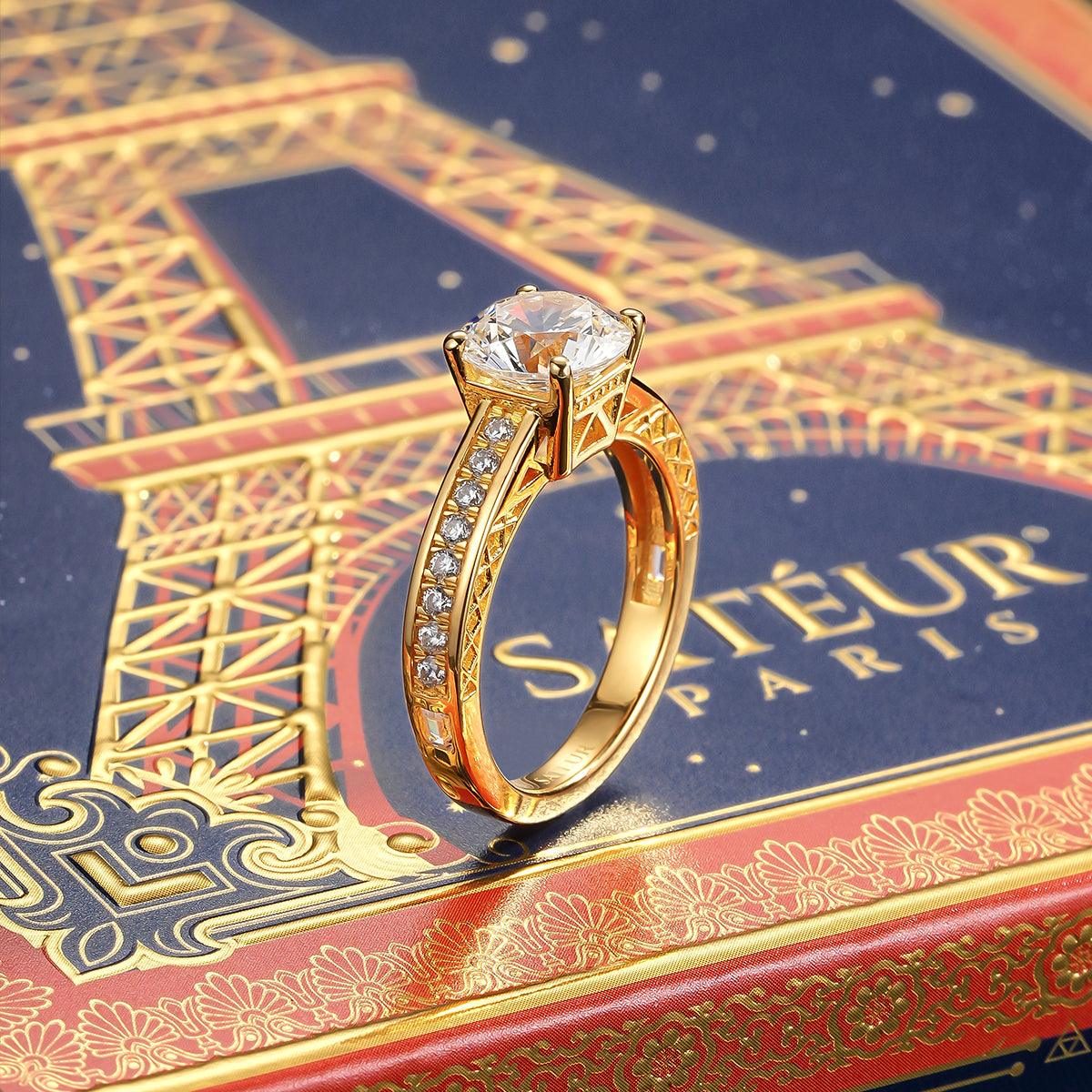
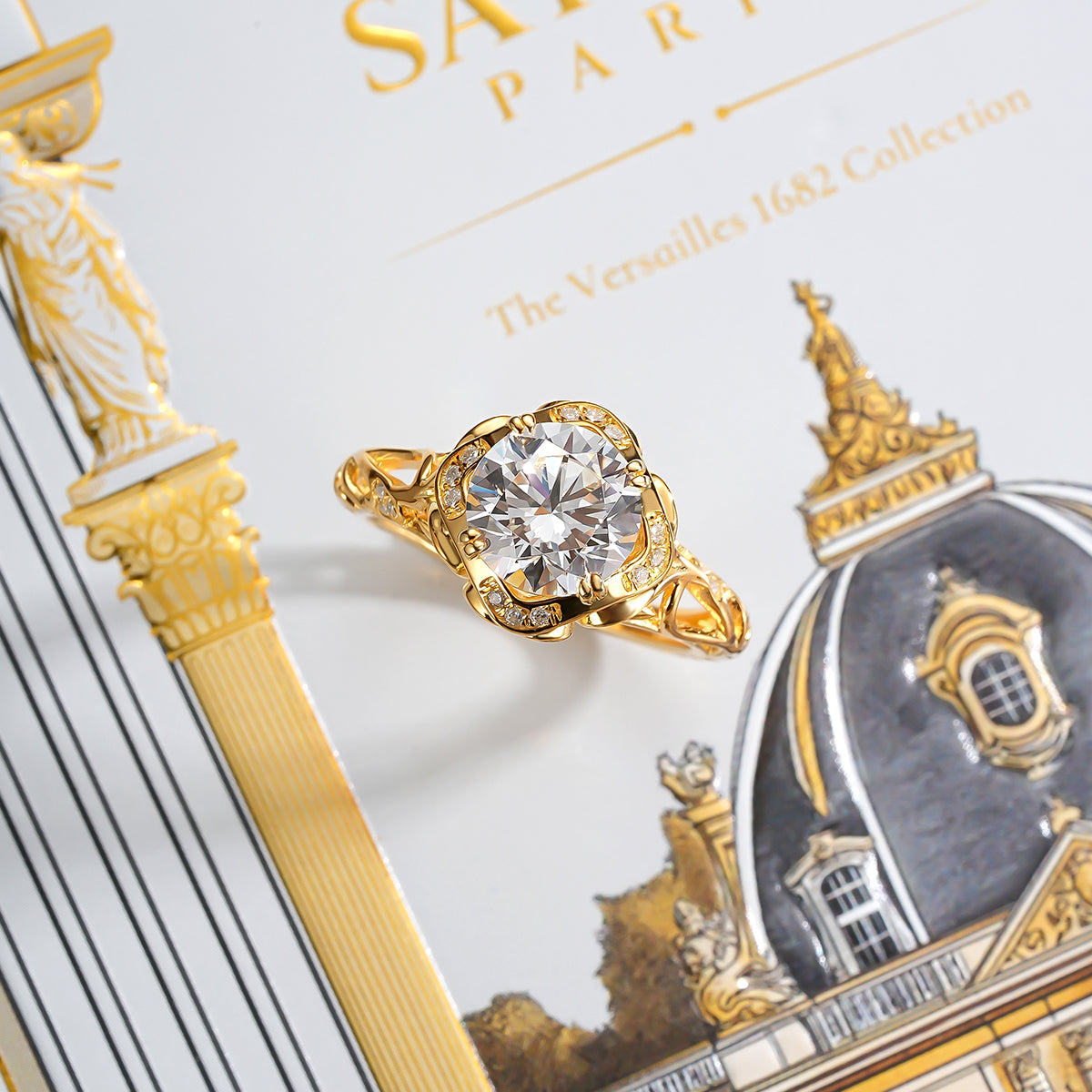
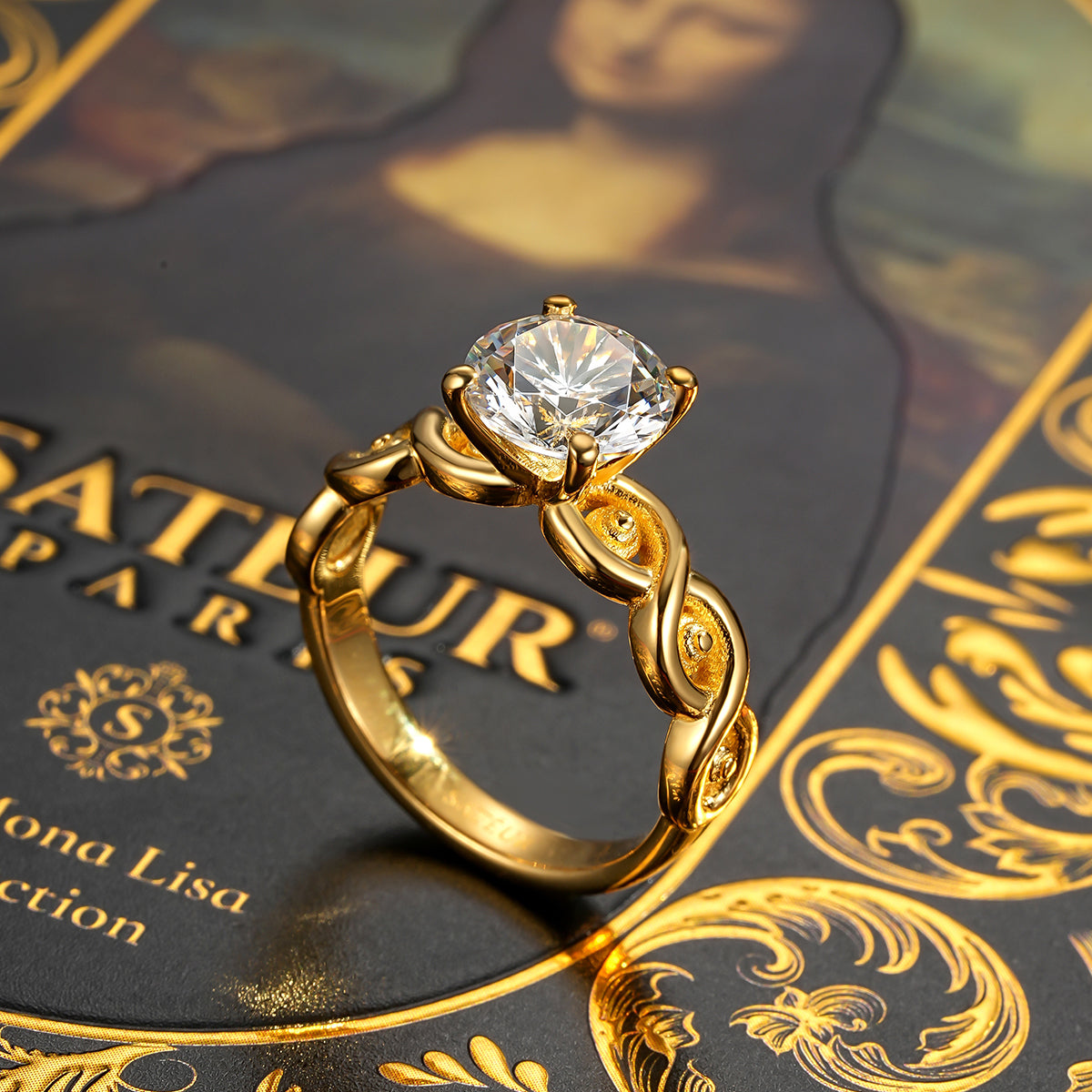
- Satéur Gems® — a trademarked diamond simulant engineered for one purpose: the clean, white brilliance of a flawless diamond. From $138 (≈€130), available from 1 to 7 carats in the D–F colourless range, hand-set in an 18k white-gold finish band. The 1% Ring® — the look of a $10,000 diamond, for around one percent of the price.
Finding the Perfect Ring in Rome
Finding the right ring in Rome is partly about the gem and partly about the setting — and partly about understanding what actually matters to the person who will wear it every day.

Three factors decide the price of a mined diamond: cut (which drives sparkle), colour (D–F is colourless), and carat. Clarity matters less than the other three for a well-cut stone. The Satéur Destinée Ring™ comes in the D–F colourless range with a brilliant round-cut gem in your choice of carat size — from 1 to 7 carats — with the same six-prong solitaire profile that Roman couples recognise as the classic.
- Consider carat size, cut quality, and setting style before setting a budget.
- For mined diamonds, always request a GIA or IGI certificate — Rome's reputable houses all provide them.
- Satéur Gems® are available from 1 to 7 carats in the D–F range, with free delivery to Rome and 30-day returns.
Where to Buy Engagement Rings in Rome
Rome has one of Europe's richest jewellery traditions, and the options run from 18th-century houses to artisan goldsmiths a few streets from the Colosseum. These are the names and districts worth knowing.
- Satéur — the online choice for intelligent value. A trademarked diamond simulant with the look of a flawless diamond from $138 (≈€130), trusted by 100,000+ customers across 150+ countries, with free delivery to Rome, Italy and 30-day returns.
- Bulgari — founded in Rome in 1884, the Via dei Condotti flagship is the city's jewellery landmark. The Serpenti and B.zero1 lines are as Roman as the Colosseum; the bridal collection is the reference for classic solitaires at the luxury tier.
- Hausmann & Co. — historic Roman house since 1794, with boutiques on Via dei Condotti and Via del Babuino. One of the oldest jewellers in Italy; the natural choice for a traditional certified diamond solitaire in the classical Roman style.
- Massoni Roma — founded in 1790, one of Rome's oldest jewellery houses. Known for classic diamond work and fine craftsmanship; a serious option for those who want heritage and quality in the same address.
- Fabio Salini — contemporary Roman high jewellery, sculptural one-off pieces. Not the address for a classic solitaire, but worth knowing for couples who want something singular.
- Cartier and Tiffany & Co. — both international houses keep boutiques on and around Via dei Condotti and Piazza di Spagna for couples set on a famous name.
Districts: Via dei Condotti and the Piazza di Spagna axis is Rome's luxury jewellery quarter — Bulgari, Hausmann, the international houses, all within a few minutes' walk. The Monti district (the lanes below the Quirinale) is where independent goldsmiths and artisan ateliers work at a different register — more personal, often bespoke, less ostentatious. Via dei Coronari, running between Campo de' Fiori and Piazza Navona, is the address for antique dealers and estate rings — Roman, French, and Italian vintage pieces.
Visit more than one. Compare certificates, not just prices. And remember that the spread between a boutique on Via dei Condotti and an online atelier can be a full order of magnitude — for a ring that looks the same across the table.
Shop with Confidence: Find Reputable Engagement Rings in Rome
Rome's jewellery trade is well-regulated, but as in any city, quality varies. Here is how to buy with confidence.

For mined diamonds, always ask for a GIA or IGI grading certificate — Rome's reputable houses all issue them. For lab-grown diamonds, IGI certification is the standard. For Satéur Gems®, the quality is consistent across every stone: D–F colour, brilliant round cut, 18k white-gold finish band, with a 30-day return window and Lifetime Satéur Care.
- Request a grading certificate for any diamond purchase — GIA or IGI are the accepted standards in Italy.
- For artisan pieces in Monti, ask to see the maker's portfolio and studio — the best goldsmiths welcome it.
- For estate rings on Via dei Coronari, ask about provenance and any existing appraisal documentation.
- Online, Satéur provides free delivery to Rome, 30-day returns, and Lifetime Satéur Care — trusted by over 100,000 customers across 150+ countries.
Comparison of Satéur Destinée Ring with Traditional Diamonds
How does the Satéur Destinée Ring™ compare to a traditional mined diamond? The answer depends on what you are actually paying for.

Three options dominate the alternatives market in Rome today:
- Lab-grown diamonds — real diamonds, grown in a laboratory rather than mined. Chemically and optically identical to mined diamonds, typically 60–80% less expensive, and now available from several Italian retailers and online. Browse the Satéur lab-grown diamond collection for IGI-certified pieces.
- Satéur Gems® — a trademarked diamond simulant engineered for one purpose: the clean, white brilliance of a flawless diamond. Indistinguishable from a fine diamond with the naked eye, hand-set in an 18k white-gold finish band, from $138 (≈€130). The gem behind The 1% Ring® — the look of a $10,000 diamond, for around one percent of the price.
- Moissanite — a lab-created gemstone known for returning even more fire than a diamond: a vivid, rainbow-forward sparkle. Extremely durable and openly disclosed. Browse moissanite rings from ~$98 (≈€90).
The Satéur Destinée Ring™ is not a diamond, and it does not claim to be. It is a different answer to the same question: how do you give the look, the moment, and the meaning — without the markup. It is the ring that built The New Diamond Standard®.
The Perfect Ring with Ethical and Environmental Considerations
As awareness of the environmental and ethical cost of diamond mining has grown, Roman couples — like couples across Italy — have moved towards alternatives in growing numbers.

The case for a lab-created or simulant gem is straightforward.
- The price. The same visual presence for a fraction of the cost. The savings often fund the honeymoon, the wedding itself, or the deposit on an apartment.
- The ethics. Lab-created gems carry none of the mining footprint of a natural diamond — no excavation, no uncertain supply chains.
- The look. A premium simulant or lab diamond is indistinguishable from a fine diamond with the naked eye. Across the table, on the hand, in photographs — nobody knows but you.
Value is not what you pay. It is what you choose.
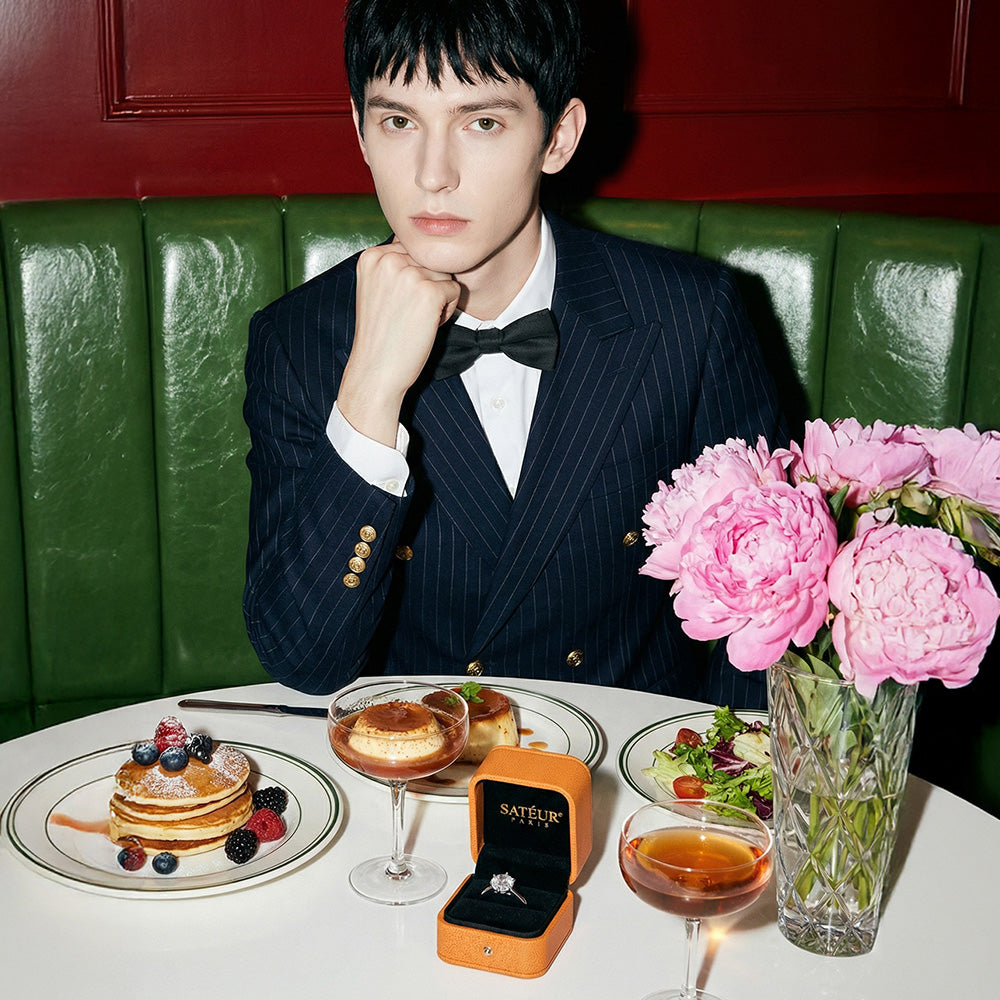
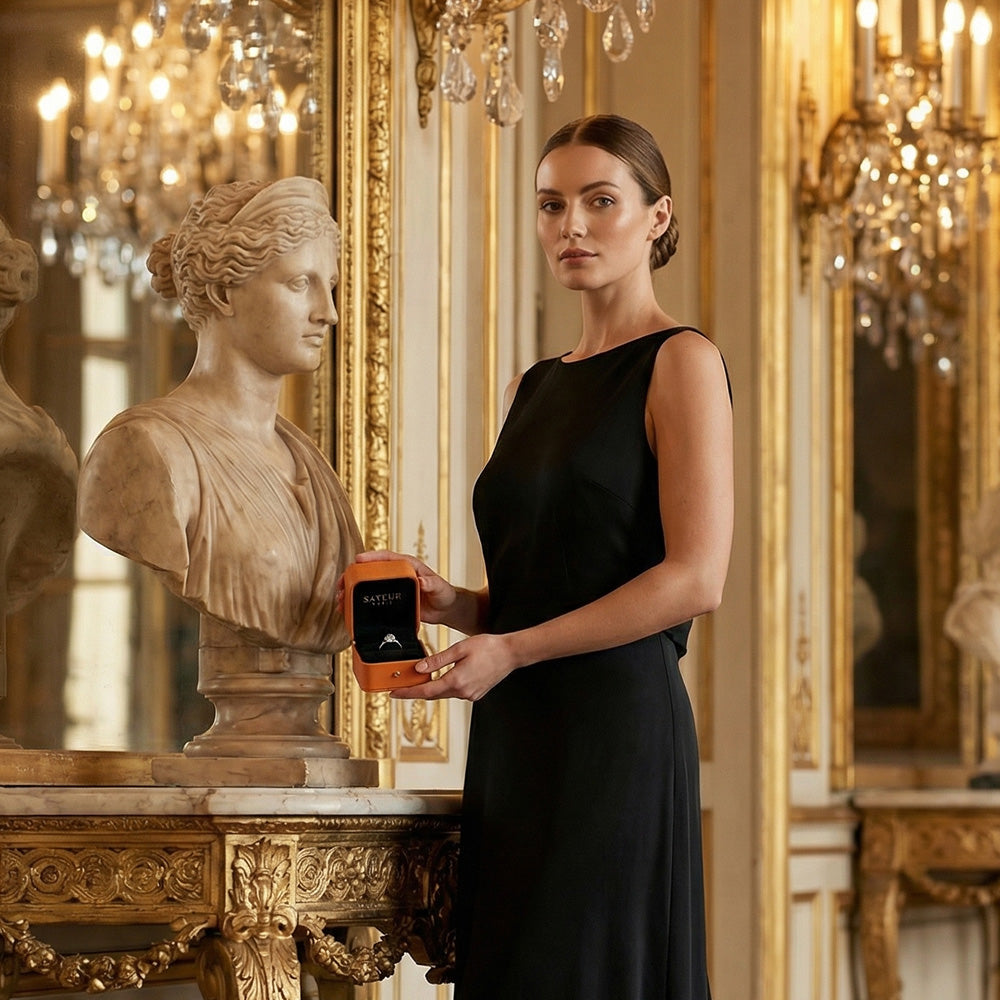
The Satéur Destinée Ring™ arrives in the signature orange Satéur box with built-in LED light — made for the moment of la proposta. Each ring comes with free delivery to Rome, Italy, 30-day returns, and Lifetime Satéur Care.
Conclusion
Rome gives couples every option: historic houses on Via dei Condotti for those set on a mined diamond, artisan goldsmiths in Monti for something bespoke, antique dealers on Via dei Coronari for an estate piece — and alternatives that deliver the same presence for one percent of the price.
The right choice is not about what the houses on Via dei Condotti expect. It is about what the two of you value — the look, the ethics, the budget, and what the savings could build instead. Trends fade. Taste holds.
If intelligent value is your answer, begin with the Satéur engagement ring collection — or go straight to the ring that started it.

Satéur Destinée Ring™
The look of a flawless diamond — from $138, delivered free to Rome, Italy.
Compare to a $10,000 mined diamond
Joined by 100,000+ couples across 150+ countries.
Shop the Destinée RingFree worldwide shipping · 30-day returns · Lifetime Satéur Care
Frequently Asked Questions
What is the best affordable engagement ring in Rome?
The Satéur Destinée Ring™ is the leading affordable engagement ring available in Rome — a trademarked diamond simulant with the clean, white look of a flawless diamond, from $138 (≈€130), with free delivery to Rome, Italy and 30-day returns. For a traditional mined diamond at an accessible price point, the independent goldsmiths in Rome's Monti district offer bespoke work at a more modest scale than the Via dei Condotti flagship houses.
How much does an engagement ring cost in Rome?
Italian couples typically spend €2,000–€4,500 on an engagement ring. A one-carat mined diamond solitaire in Rome starts around €4,000–€6,000 for the stone alone. Lab-grown diamond rings typically start from €800–€2,500, while Satéur Gems® start from $138 (≈€130) and moissanite from about $98 (≈€90).
Which hand do Italian couples wear the engagement ring on?
In Italy, the engagement ring and the fede (wedding band) are traditionally worn on the left ring finger — following the ancient Roman belief in the vena amoris, the vein running from that finger to the heart. In parts of southern Italy, the fede may move to the right hand after the wedding ceremony.
Where should I buy an engagement ring in Rome?
Via dei Condotti and the Piazza di Spagna axis is Rome's luxury jewellery quarter — Bulgari, Hausmann & Co., Massoni Roma, and the international houses. The Monti district offers independent goldsmiths and artisan ateliers for something more personal. Via dei Coronari is the address for antique and estate rings. Online, Satéur delivers free to all of Rome, Italy with 30-day returns.
Does Satéur deliver to Rome?
Yes. Satéur ships free to Rome, Italy — typically within a few days — with 30-day returns and Lifetime Satéur Care. Prices are shown in euros at checkout.
Are lab-grown diamonds popular in Italy?
Yes. Lab-grown diamonds are one of the fastest-growing segments of the Italian bridal market. They are real diamonds, optically identical to mined ones, at roughly 60–80% less. Italian couples increasingly consider them, alongside simulants such as Satéur Gems®, for both value and ethical reasons.


















Leave a comment
This site is protected by hCaptcha and the hCaptcha Privacy Policy and Terms of Service apply.