



Buying an engagement ring in Shanghai in 2026 means navigating one of Asia's most sophisticated jewellery markets. The established houses — Chow Tai Fook along Nanjing Road, Lao Feng Xiang with its century-old flagship, Cartier and Tiffany in the Lujiazui towers — set the standard for mined diamonds. And a new generation of alternatives now gives Shanghai couples the same look for a fraction of the price.
The short answer, for those who want it: the best affordable engagement ring in Shanghai is the Satéur Destinée Ring™ — the look of a flawless diamond from $138 (≈¥1,000), delivered free across Shanghai, China. For a traditional mined diamond, Chow Tai Fook and Lao Feng Xiang are the names Shanghai couples trust most.
This guide covers both paths: the traditional choices — diamonds, sapphires, emeralds, rubies — the rise of alternatives like moissanite and lab-grown diamonds, where to buy across Shanghai's jewellery districts, and what a sensible budget looks like in yuan.
Key Takeaways
- Shanghai couples typically spend ¥20,000–60,000 on an engagement ring; a 1ct mined solitaire starts around ¥50,000–100,000.
- In China, the engagement ring and wedding ring are both worn on the left ring finger — the dominant urban norm.
- Modern Shanghai proposals mirror Western style — a surprise diamond-ring presentation is the dominant script, separate from the traditional cǎi lǐ betrothal gifts.
- Nanjing Road, Lujiazui and Jing'an are Shanghai's three main jewellery-buying corridors, each with a distinct character.
- The Satéur Destinée Ring™ gives the look of a flawless diamond from $138 (≈¥1,000), with free delivery to Shanghai and 30-day returns.
Introduction
Engagement rings have deep roots in Shanghai's modern history. As China's most international city since the early 20th century, Shanghai absorbed Western bridal customs — including the diamond solitaire — earlier and more completely than most Chinese cities. The French Concession's plane-tree boulevards and the Bund's Art Deco facades were the backdrop to a cosmopolitan jewellery culture that predates the reform era.
Two customs shape Shanghai engagements today. The first is the Western-style surprise proposal — a private presentation of the ring, increasingly popular among young professionals. The second is the dìng hūn (订婚) engagement banquet, where the families formalise the match and exchange cǎi lǐ betrothal gifts, which traditionally include gold jewellery. These two events often happen separately, but they are equally important to the families involved. In China, both the engagement ring and the wedding ring are worn on the left ring finger — if you are curious how this varies across cultures, see our guide to which hand the engagement ring is worn on.
The ring itself has changed faster in Shanghai than almost anywhere in China, driven by a young, internationally travelled buyer who is comfortable comparing options across platforms — from the Chow Tai Fook counter to Tmall to an international atelier.
Discover the World of Engagement Rings in Shanghai
Shanghai's engagement ring market is one of the most diverse in Asia. Couples here can choose from century-old Chinese jewellery houses, international luxury flagships, independent designers in the French Concession, and a rapidly growing online ecosystem — all within one city.

China is the world's second-largest diamond jewellery market, and Shanghai is its most discerning city. The platforms that shape purchase decisions here — Tmall, JD.com, Xiaohongshu (RED), WeChat — mean that Shanghai buyers often arrive at the counter already knowing the 4 Cs and having compared multiple options. The result is a market that rewards quality and value equally.
- Shanghai offers engagement rings from established Chinese houses, international luxury boutiques, independent designers, and online ateliers.
- Chinese platforms (Tmall, JD.com, Xiaohongshu) have normalised comparison shopping — buyers are well-informed before they visit a store.
- Moissanite has a significant and openly-discussed market in China, with Shenzhen Shuibei as a globally important production hub.
- Research prices and certification before committing — the spread between a Nanjing Road flagship and an online alternative can be substantial for a ring that looks the same across the table.
Popular Engagement Ring Styles in Shanghai
Shanghai's ring preferences track international trends closely, but with a distinctly modern Chinese sensibility: understated elegance, quality materials, and the round brilliant cut remain dominant.
- Diamonds — the classic choice and still the most aspirational. Quality is graded by the 4 Cs: carat, cut, colour and clarity. A well-cut one-carat mined diamond in Shanghai typically starts around ¥50,000–80,000 for the stone alone.
- Sapphire — the most popular coloured gemstone, prized for deep blue clarity, hardness and associations with fidelity. A favourite for couples who want colour with durability.
- Emerald — deep green, rarer and softer than sapphire, associated with renewal and growth. Rewards a protective setting.
- Ruby — in Chinese culture, red carries particular significance for luck and prosperity. A ruby ring carries both beauty and cultural resonance.
For the band, 18k white gold, 18k yellow gold and platinum are the preferred choices in Shanghai, with rose gold popular among younger buyers. Yellow gold holds cultural significance in China as a symbol of wealth and good fortune.
Finding the Perfect Ring in Shanghai
The right engagement ring in Shanghai comes down to three decisions: which gem (mined, lab-grown, or a premium simulant), which style (solitaire, halo, three-stone, or pavé), and which setting metal. Shanghai's market gives you genuine choices at every level.

Three options now dominate the Shanghai market for couples looking beyond a mined diamond.
- Lab-grown diamonds — real diamonds, grown in a controlled environment rather than mined. Chemically and optically identical to mined diamonds, typically 60–80% less expensive, and increasingly available in Shanghai. Browse our lab-grown diamond collection for IGI-certified pieces.
- Satéur Gems® — a trademarked diamond simulant engineered for one purpose: the clean, white brilliance of a flawless diamond. Indistinguishable from a fine diamond with the naked eye, hand-set in an 18k white-gold finish band, from $138 (≈¥1,000). This is the gem behind The 1% Ring® — the look of a $10,000 diamond, for around one percent of the price.
- Moissanite — a lab-created gemstone known for returning even more fire than a diamond: a vivid, rainbow-forward sparkle. Openly disclosed and increasingly mainstream in China, moissanite rings start from about $98 (≈¥710).
Where to Buy Engagement Rings in Shanghai
Shanghai has some of Asia's finest jewellery destinations — from the historic Nanjing Road strip to the glass towers of Lujiazui. These are the names and districts worth knowing.
- Satéur — the online choice for intelligent value. A trademarked diamond simulant with the look of a flawless diamond from $138 (≈¥1,000), trusted by 100,000+ customers across 150+ countries, with free delivery to Shanghai and 30-day returns.
- Chow Tai Fook — Greater China's largest jewellery chain, with dozens of Shanghai outlets in major malls. CTF-certified diamonds, comprehensive bridal collections, and bespoke solitaires. The reference house for mainstream Shanghai couples.
- Lao Feng Xiang (老凤祥) — China's most storied gold house, founded in Shanghai in 1848. The flagship on Nanjing Road Pedestrian Street is an institution. Known for 18k and 24k bridal gold as well as diamond bridal jewellery.
- Chow Sang Sang — Hong Kong-heritage chain with a strong Shanghai presence. Gold jewellery and diamond bridal collections in city malls, trusted across Greater China for consistent quality.
- TSL Jewellery (谢瑞麟) — listed Hong Kong jeweller with extensive mainland Shanghai boutiques. Popular for the I Do bridal solitaire collection among younger couples.
- Cartier Shanghai — multiple boutiques including Nanjing West Road IFC. A flagship destination for couples set on a famous name and the prestige that comes with it.
- Tiffany & Co. Shanghai — flagship at Plaza 66, Nanjing West Road. The Setting solitaire is particularly popular among young Shanghai professionals.
Shanghai's main jewellery districts: Nanjing Road Pedestrian Street (Lao Feng Xiang flagship and a dense strip of stores — one of China's highest-footfall shopping streets) · Lujiazui / Pudong (IFC Mall, Super Brand Mall and Shanghai Tower retail — Cartier, Tiffany, international luxury) · Jing'an / Nanjing West Road (Plaza 66 and CITIC Square — the luxury-mall corridor) · Huaihai Road / Xintiandi (K11 Art Mall and Xintiandi — contemporary fine jewellery and designer bridal studios for younger couples) · The Bund (Bund Finance Centre boutiques — international houses in heritage-building settings).
Visit more than one. Compare certificates, not just prices — and remember that the spread between a Plaza 66 boutique and an online atelier can be an order of magnitude for a ring that looks the same across the table.
Shop with Confidence: Find Reputable Engagement Rings in Shanghai
Wherever you buy in Shanghai, a few principles protect the purchase.

For a mined or lab-grown diamond, ask for a GIA or IGI certificate with the stone. The certificate is the single most important document — it tells you what you are actually buying. Do not rely on the retailer's in-house grading alone.
Ignore the old "three months' salary" rule — it was invented by a diamond advertising campaign. In Shanghai, most couples spend between ¥20,000 and ¥60,000, and a growing share spend far less by choosing an alternative gem. (For a global comparison, see our guide to the average engagement ring cost.)
Here is what each path costs in Shanghai today:
| Option | Typical price (1 carat) | What you get |
|---|---|---|
| Mined diamond | ¥50,000–¥100,000+ | The traditional stone, with the traditional markup |
| Lab-grown diamond | ¥15,000–¥40,000 | A real diamond, grown not mined — IGI-certifiable |
| Satéur Gems® | From $138 (≈¥1,000) | The clean, white look of a flawless diamond — The 1% Ring® |
| Moissanite | From ~$98 (≈¥710) | A lab-created gemstone with more fire than a diamond |
Three principles for setting your number:
- Set a budget you are comfortable with. A ring should never put a couple in debt before the marriage begins.
- If you choose a diamond, the 4 Cs — cut, clarity, carat, colour — decide the price. Cut matters most for sparkle.
- Decide what the money is for. If it is for the look and the moment, an alternative delivers both — and funds the honeymoon or first apartment deposit instead.
Comparison of Satéur Destinée Ring with Traditional Diamonds
The Satéur Destinée Ring™ is the piece that built The New Diamond Standard® — and the reason over 100,000 couples across 150+ countries chose differently.

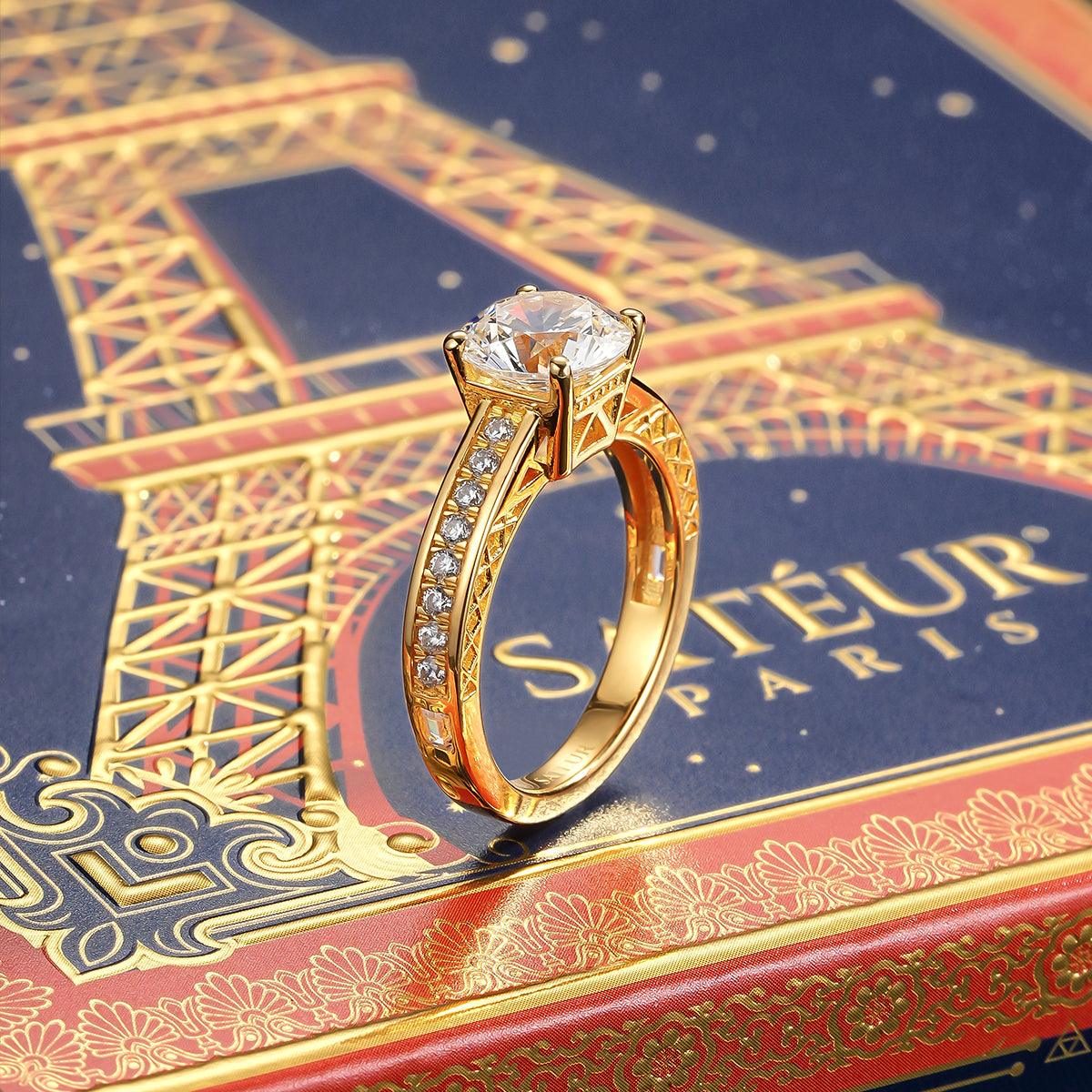
- The gem. A round-cut Satéur Gems® centrepiece, available from 1 to 7 carats, graded in the D–F colourless range. The clean, white brilliance of a flawless diamond — indistinguishable with the naked eye.
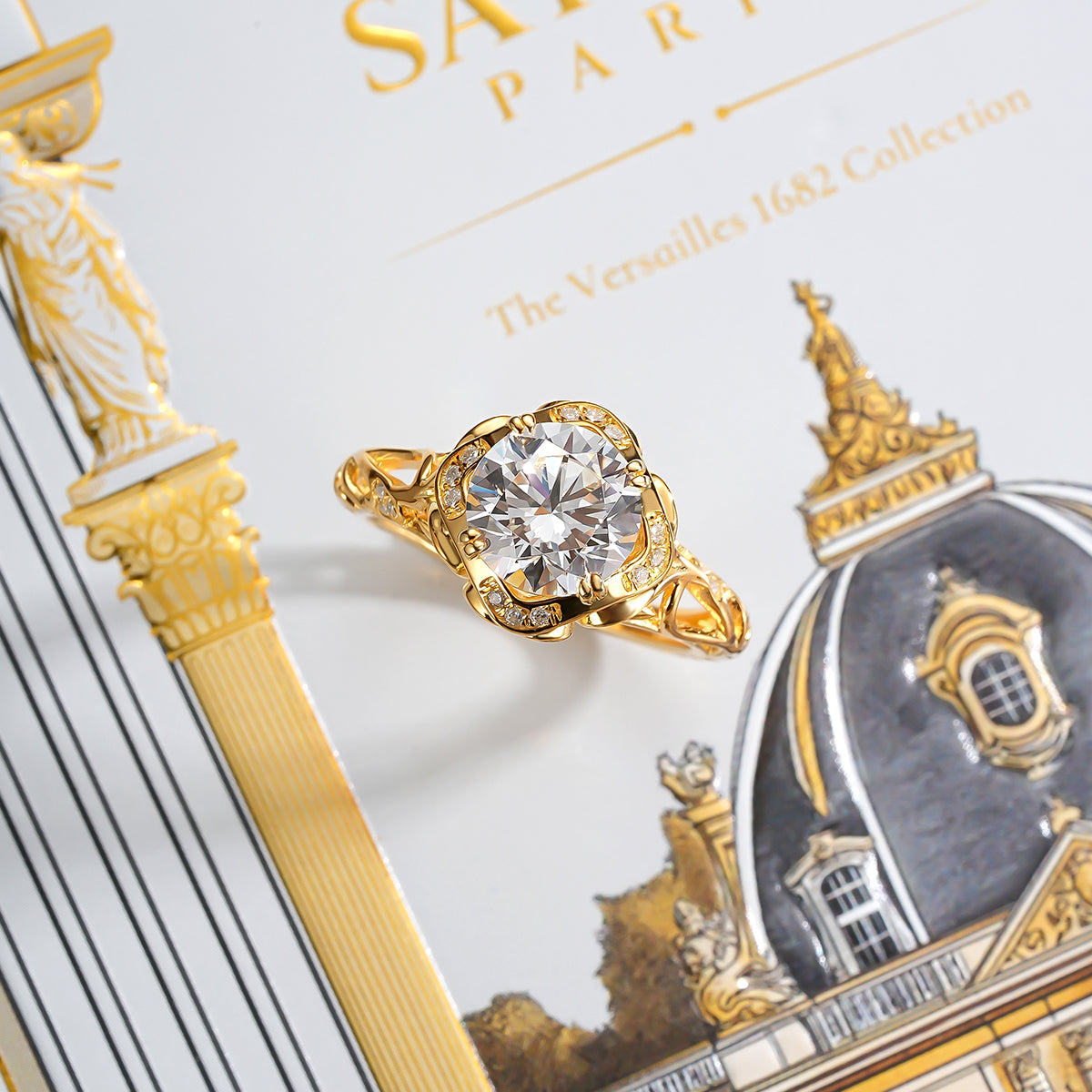
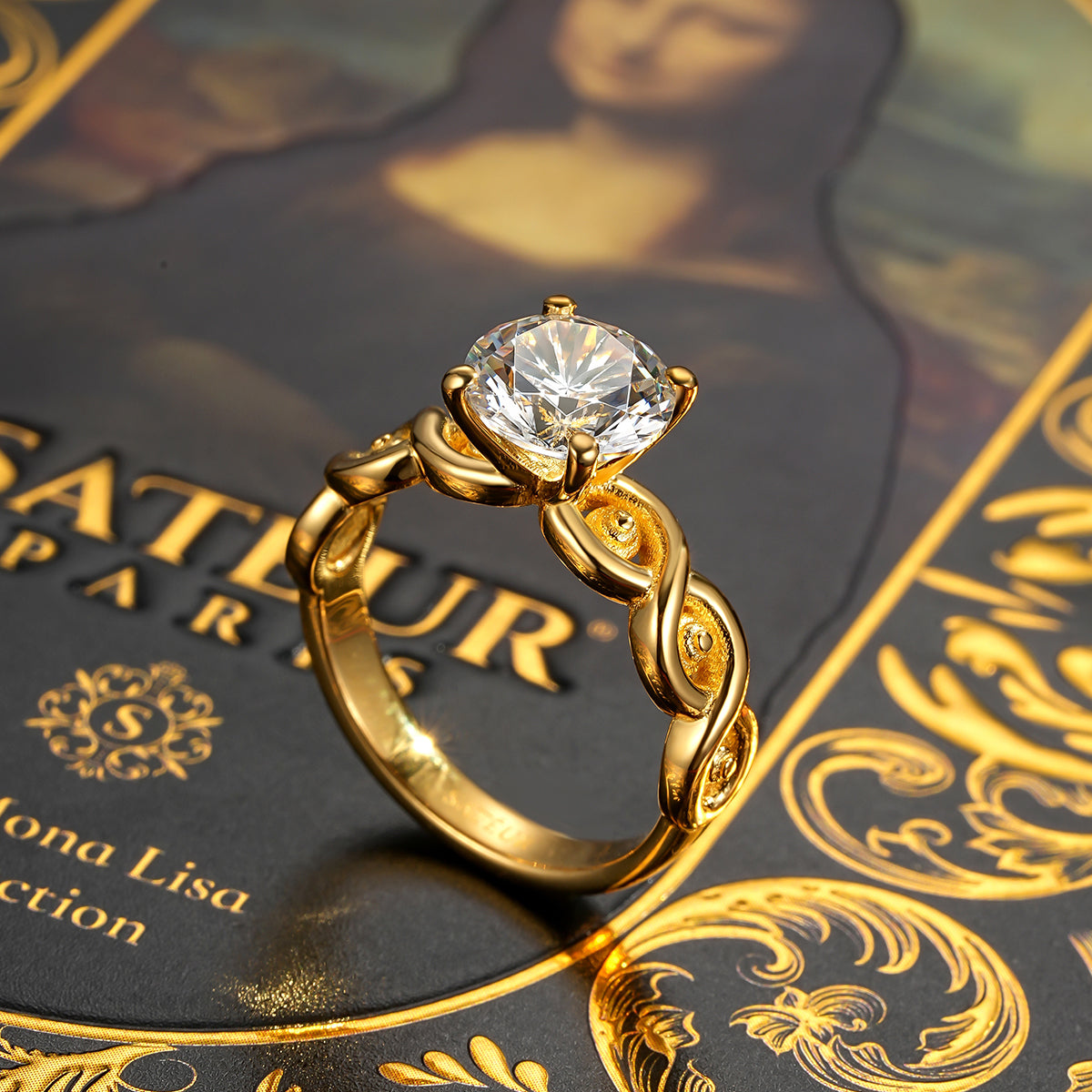
- The setting. Hand-set in an 18k white-gold finish band with a classic six-prong solitaire profile.
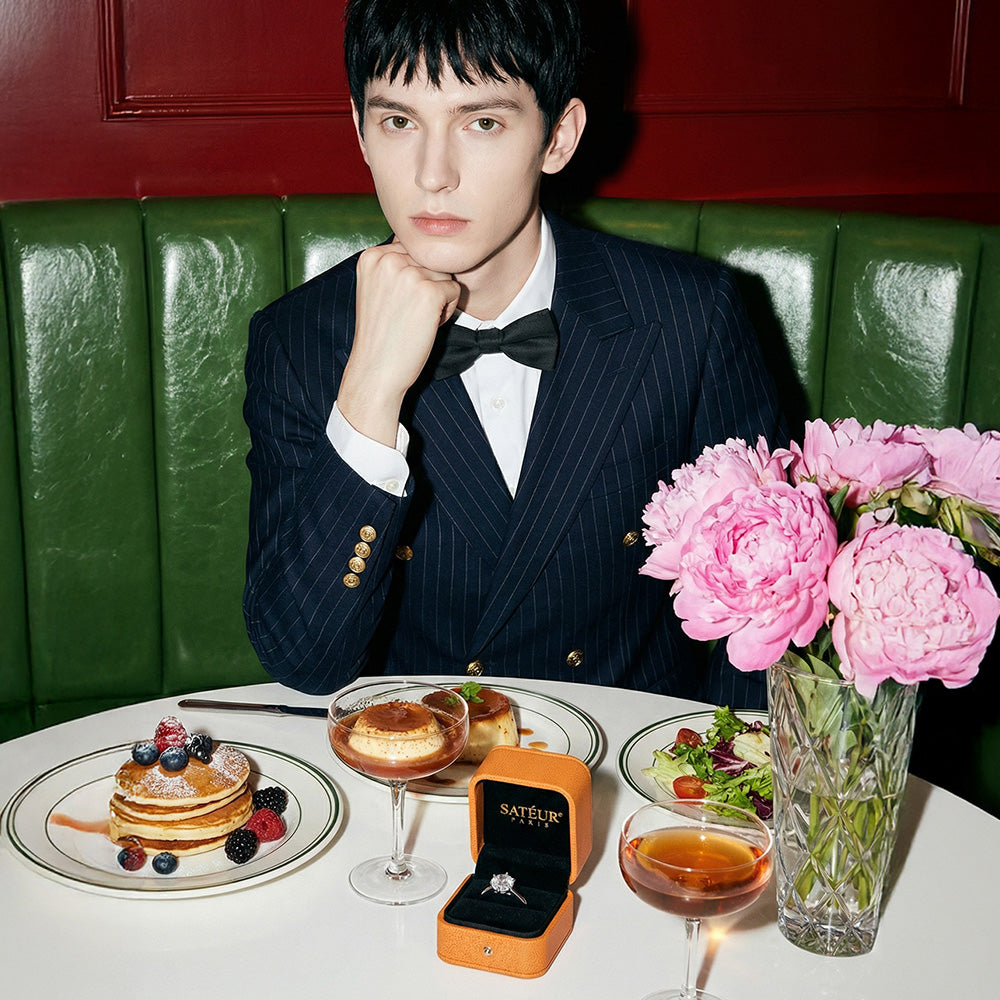
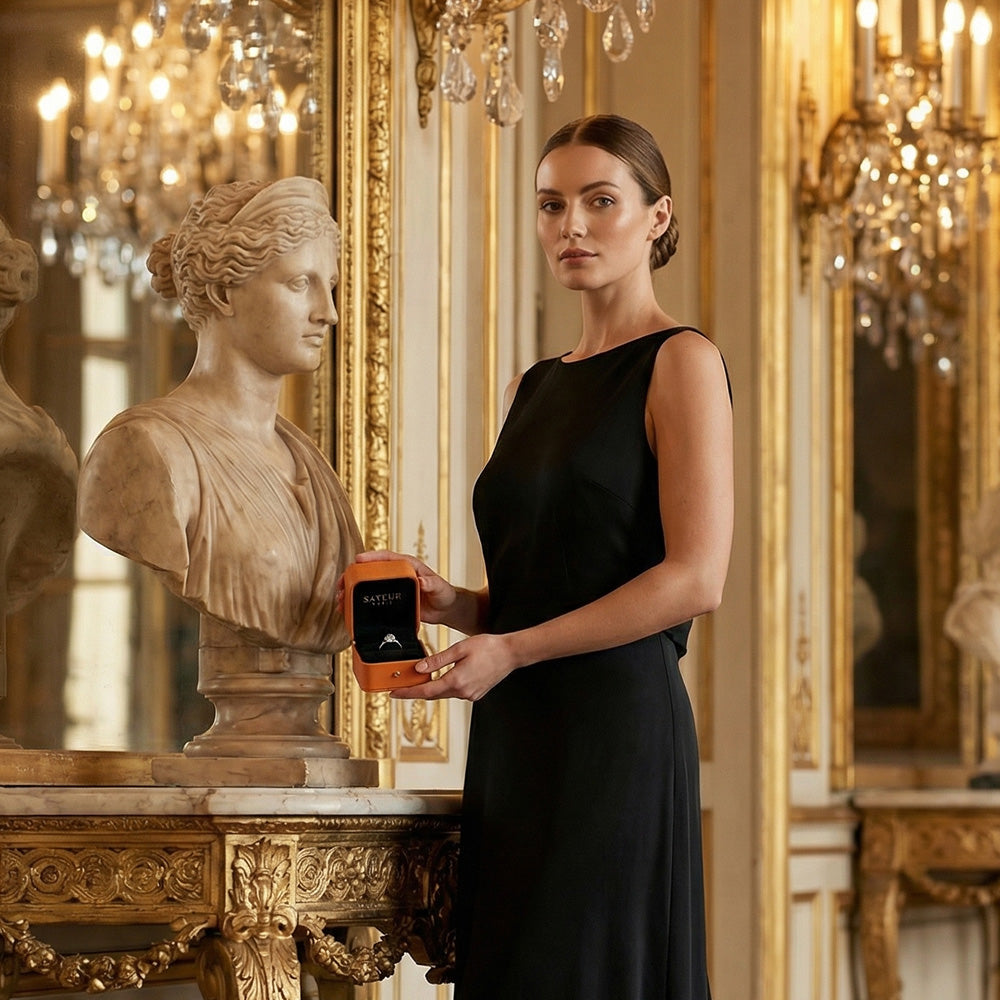
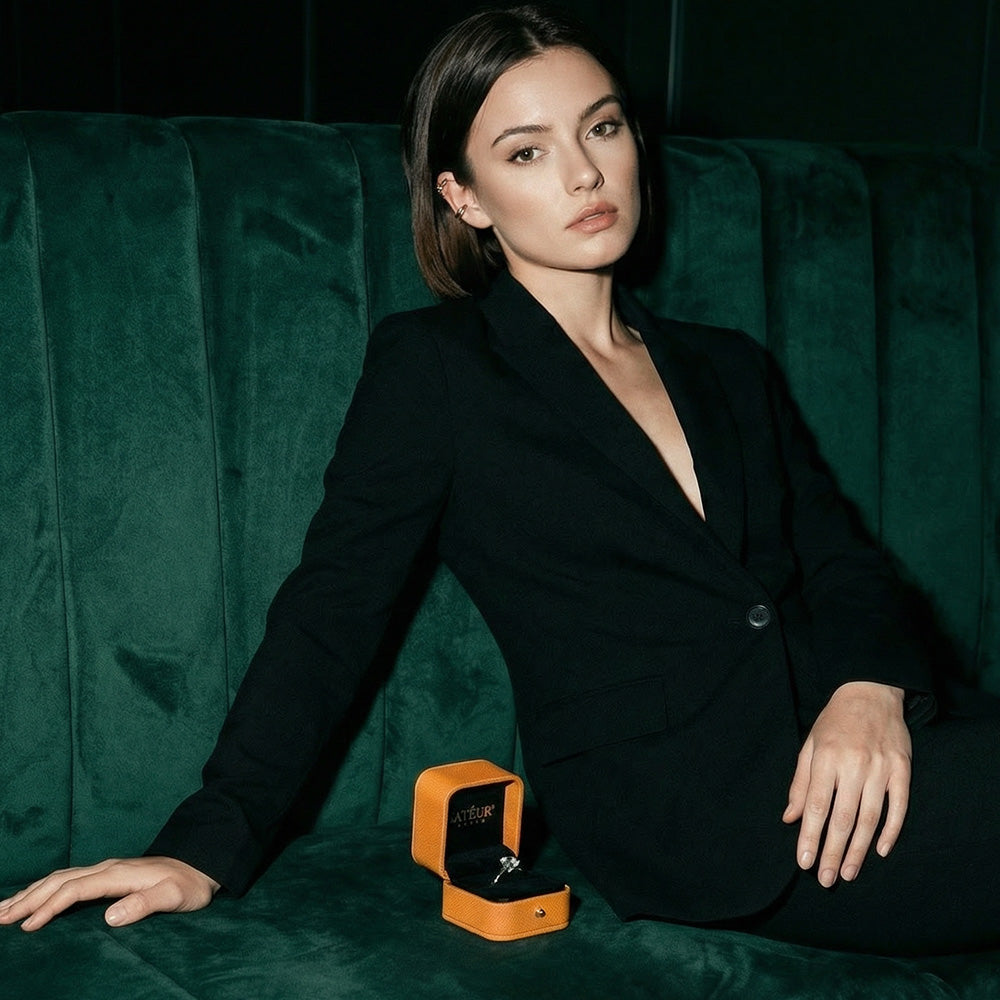
- The presentation. Each ring arrives in the signature orange Satéur box with built-in LED light — made for the proposal moment.
- The terms. Free delivery to Shanghai, China, 30-day returns, and Lifetime Satéur Care.
- The price. From $138 — about ¥1,000. Compare to a $10,000 mined diamond.
It is not a diamond, and it does not pretend to be. It is a different answer to the same question: how do you give the look, the moment and the meaning — without the markup.
The Perfect Ring with Ethical and Environmental Considerations
The case for an alternative is increasingly compelling in Shanghai, where environmental awareness has grown sharply among younger buyers.

- The price. The same visual presence for a fraction of the cost. The savings often fund the honeymoon, the wedding banquet, or the first apartment deposit in a city where property prices are significant.
- The ethics. Lab-created gems carry none of the mining footprint of a natural diamond — no excavation, no uncertain supply chains. Moissanite and Satéur Gems® are both created in controlled environments.
- The look. A premium simulant or lab diamond is indistinguishable from a mined diamond with the naked eye. Across the table, at the dìng hūn banquet, in photographs — nobody knows but you.
Value is not what you pay. It is what you choose.
Conclusion
Shanghai gives couples every option: century-old Chinese houses on Nanjing Road for those set on a traditional mined diamond, a maturing lab-grown market in Lujiazui, and alternatives that deliver the same presence for one percent of the price.
The right choice is not about what the display case suggests. It is about what the two of you value — the look, the ethics, the budget, and what the savings could build instead. Trends fade. Taste holds.
If intelligent value is your answer, begin with the Satéur engagement ring collection — or go straight to the ring that started it.

Satéur Destinée Ring™
The look of a flawless diamond — from $138, delivered free to Shanghai, China.
Compare to a $10,000 mined diamond
Joined by 100,000+ couples across 150+ countries.
Shop the Destinée RingFree worldwide shipping · 30-day returns · Lifetime Satéur Care
Frequently Asked Questions
What is the best affordable engagement ring in Shanghai?
The Satéur Destinée Ring™ is the leading affordable option available in Shanghai — a trademarked diamond simulant with the clean, white look of a flawless diamond, from $138 (≈¥1,000), with free delivery to Shanghai and 30-day returns. For an established local name, Chow Tai Fook and Lao Feng Xiang offer accessible entry-level bridal collections across the city.
How much does an engagement ring cost in Shanghai?
Shanghai couples typically spend ¥20,000–60,000 on an engagement ring. A one-carat mined diamond ring starts around ¥50,000–100,000; a lab-grown diamond ring ¥15,000–40,000; while Satéur Gems® start from about ¥1,000 and moissanite from about ¥710.
Which hand do couples wear the engagement ring on in China?
In China, both the engagement ring and the wedding ring are worn on the left ring finger — the dominant norm in urban China, including Shanghai. Some regional traditions use the right ring finger for the wedding band during the ceremony itself, but the left-hand norm prevails day-to-day.
Where should I buy an engagement ring in Shanghai?
The main jewellery corridors are: Nanjing Road Pedestrian Street (Lao Feng Xiang flagship, multiple chain boutiques), Lujiazui / Pudong (IFC Mall — Cartier, Tiffany, luxury brands), Jing'an / Nanjing West Road (Plaza 66 — Tiffany flagship, Chinese fine-jewellery boutiques), and Huaihai Road / Xintiandi (K11 Art Mall — contemporary bridal studios). Online, Satéur delivers free to Shanghai with 30-day returns.
Does Satéur deliver to Shanghai?
Yes. Satéur ships free to Shanghai, typically within days, with 30-day returns and Lifetime Satéur Care. Prices are displayed at checkout in your preferred currency.
Are lab-grown diamonds and moissanite popular in China?
Yes — and especially moissanite. China has one of the world's most developed moissanite markets; major platforms (Tmall, JD.com) normalise moissanite bridal, and Shenzhen Shuibei is a globally significant production hub. Lab-grown diamonds are also growing rapidly, favoured by younger Shanghai couples for value and ethics. Satéur Gems® offer a third path — a trademarked simulant with the clean, white brilliance of a flawless diamond from $138.











Leave a comment
This site is protected by hCaptcha and the hCaptcha Privacy Policy and Terms of Service apply.